Crystal Encyclopedia
40+YEARS

Blue Quartz

SiO2 + various inclusion minerals (dumortierite: Al7(BO3)(SiO4)3O3; tourmaline: complex borosilicate; ilmenite: FeTiO3; rutile: TiO2; or other phases depending on variety) · Mohs 7 · Trigonal · Throat Chakra

The stone of blue quartz: meaning, mineralogy, and somatic practice.

Clarity & FocusCommunication & TruthStress ReliefEmotional Balance

This page documents traditional and cultural uses of blue quartz alongside emerging research on tactile grounding objects. Crystalis does not claim that blue quartz treats, cures, or prevents any medical condition. For mental health concerns, consult a qualified professional.

Crystalis Editorial · 40+ Years · Herndon, VA · 2 peer-reviewed sources

Origins: Brazil, India, USA (Virginia)

Crystalis

Materia Medica

Blue Quartz

The Calm Frequency

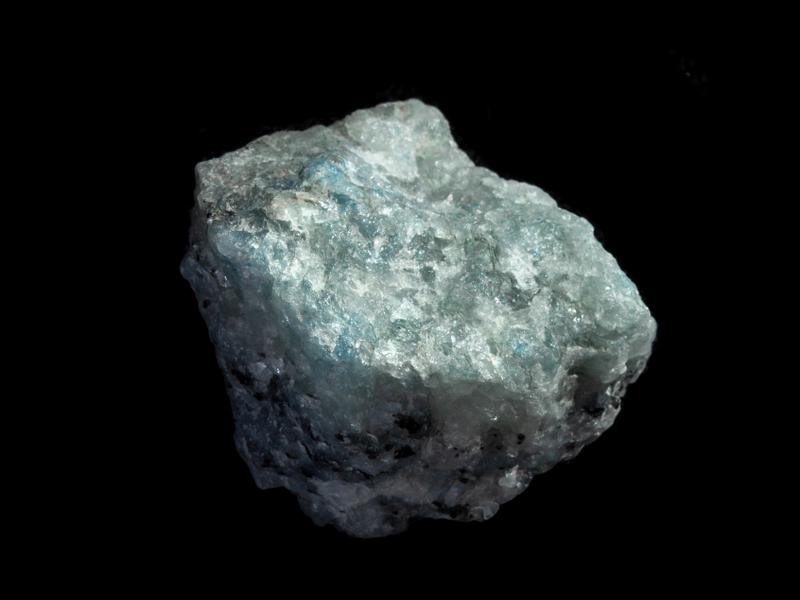
Blue Quartz crystal
Clarity & FocusCommunication & TruthStress Relief
Crystalis

Protocol

The Included Stillness

A quartz that owes its color not to itself but to what it holds inside — dumortierite, tourmaline, rutile — teaching you to honor what lives beneath your surface

3 min

  1. 1

    Hold the Blue Quartz up to natural light. The blue you see is not the quartz itself — quartz is clear. The color comes from microscopic needles of other minerals trapped inside: dumortierite, tourmaline, rutile. The stone is defined by what it includes, not what it is alone. Hold that thought in your chest as you hold the stone in your hand.

  2. 2

    Press the Blue Quartz gently against your left temple. The vitreous surface is smooth, the silky internal sheen catches light at angles. Close your eyes. Feel the stone as a cool disc against the thin skin there. Let the pressure be slight — just enough to know it is present.

  3. 3

    Breathe in through the nose in three stages: belly, ribs, collarbones. Each stage is a different mineral layer inside the quartz. Hold the full breath for 3 counts. Exhale in one smooth release. Repeat 5 times. The inhale is layered. The exhale is unified.

  4. 4

    Move the stone to your right temple. With eyes still closed, scan your internal landscape for anything that feels silky — a thought that keeps catching light from different angles, a feeling you cannot name but keep returning to. Do not analyze it. Let it shimmer like inclusions under a lamp.

Continue in the full protocol below.

tap to flip for protocol

Not every mind wants a revelation. Some want a truer hush.

Blue quartz gets its tone from tiny inclusions or structural conditions dispersed through quartz, often subtle enough that the stone reads as collected rather than charismatic. The color stays because so much fine material agrees to hold it. There is dignity in a quieter signal.

What Your Body Knows

Nervous system states

sympathetic

Sympathetic activation (fight-or-flight/panic):

Blue is the color most consistently associated with parasympathetic activation across research and cultural contexts. Natural blue quartz's particular shade; soft, diffused, not electric or neon; creates a visual signal the nervous system reads as "sky" or "calm water." For sympathetic dominance, the stone provides a chromatic cue for down-regulation. The fact that the blue is created by Rayleigh scattering (the same physics as actual sky) means it produces the same wavelength signature the human visual system evolved to associate with safety and open space. State shift: sympathetic toward ventral vagal through blue-wavelength visual processing.

dorsal vagal

Dorsal vagal collapse (depression/withdrawal):

Blue can deepen dorsal states in some individuals; the "feeling blue" association is culturally embedded. However, natural blue quartz's blue is not the cold, dark blue of depression; it is the soft, hazy blue of dawn or high altitude; colors associated with opening and possibility. For dorsal collapse, pair with a warmer stone (carnelian, citrine) or use specifically during the upswing from dorsal toward social engagement. State shift: dorsal toward ventral vagal only when used at the transition point, not during deep collapse.

sympathetic

Mixed state: sympathetic + ventral (engaged but calm

This is blue quartz's home state. When the nervous system is already in the ideal zone of calm alertness, blue quartz supports sustaining it. The blue wavelength promotes the kind of cognitive clarity associated with ventral vagal function; open attention, creative availability, calm discernment. State support: maintenance and enrichment of optimal ventral vagal tone.

sympathetic

The diffused quality of natural blue quartz's color

Sympathetic depletion with cognitive fog: When the body is exhausted but the mind needs to remain clear (students during finals, caregivers in extended service), blue quartz's association with mental clarity without physical activation makes it supportive. The blue wavelength has been associated in color therapy research with cognitive sharpening independent of physical arousal. State shift: depleted sympathetic toward cognitive ventral vagal function (mind clear, body resting).

Nervous system mapping based on polyvagal theory (Porges, 2011).

Mineralogy

Mineral specs

Chemical Formula

SiO2 + various inclusion minerals (dumortierite: Al7(BO3)(SiO4)3O3; tourmaline: complex borosilicate; ilmenite: FeTiO3; rutile: TiO2; or other phases depending on variety)

Crystal System

Trigonal

Mohs Hardness

7

Specific Gravity

2.65-2.70 (slightly higher than pure quartz due to denser inclusions)

Luster

Vitreous; may show slight silky sheen when fibrous inclusions are oriented

Color

Blue

ca₁a₂a₃120°Trigonal · Blue Quartz

Crystal system diagram represents the general trigonal classification. Diagram created by Crystalis for educational reference.

Traditional Knowledge

Traditions across cultures

Iberian Peninsula (Ollo de Sapo formation): The distinctive blue quartz phenocrysts of the Ollo de Sapo volcanic formation in central Spain have been known since at least the 19th century. The name "Ollo de Sapo" (toad's eye) describes the appearance of the blue quartz "eyes" in the porphyritic rock matrix. Geologists have studied these as indicators of deep crustal processes, with the blue quartz phenocrysts recording temperatures and pressures of the lower crust during the Cambro-Ordovician period, approximately 480-495 million years ago (Raumer & Stampfli, 2018).

Brazilian mining tradition (Bahia): The Bahia region of Brazil produces some of the finest dumortierite-included blue quartz in the world. Local miners call these stones "quartzo azul" and distinguish them from treated or dyed blue stones. The dumortierite inclusions create a violet-to-blue color that is highly prized in both the gem trade and metaphysical markets. Brazilian blue quartz has been continuously mined since the mid-20th century.

Virginia, USA; State mineral context: Blue quartz was considered for designation as Virginia's state mineral (it occurs in the Blue Ridge Mountains). The Virginia specimens derive their color from fibrous inclusions (various reports cite dumortierite, crocidolite, or tourmaline depending on locality). The presence of blue quartz in the Blue Ridge Mountains, whose name derives from the atmospheric scattering that makes distant mountains appear blue, creates a poetic geological correspondence; the mountains and their component minerals are blue by the same physics (Rayleigh scattering).

Tibetan and Himalayan tradition: In Tibetan Buddhist practice, blue stones are associated with the throat chakra and the sky-mind (the nature of mind as vast, clear, and blue like the sky). While lapis lazuli is the primary blue stone in Tibetan tradition, blue quartz specimens from Himalayan sources are sometimes used in meditation practices focused on "sky-gazing" (namkhai neljor); contemplation of the mind's natural state through gazing at blue space (Namkhai Norbu, "The Crystal and the Way of Light," 1986, Snow Lion).

Unknown

Iberian Peninsula (Ollo de Sapo formation)

The distinctive blue quartz phenocrysts of the Ollo de Sapo volcanic formation in central Spain have been known since at least the 19th century. The name "Ollo de Sapo" (toad's eye) describes the appearance of the blue quartz "eyes" in the porphyritic rock matrix. Geologists have studied these as indicators of deep crustal processes, with the blue quartz phenocrysts recording temperatures and pressures of the lower crust during the Cambro-Ordovician period, approximately 480--495 million years ago (Raumer & Stampfli, 2018). 2. Brazilian mining tradition (Bahia): The Bahia region of Brazil produces some of the finest dumortierite-included blue quartz in the world. Local miners call these stones "quartzo azul" and distinguish them from treated or dyed blue stones. The dumortierite inclusions

When This Stone Finds You

What it says when it arrives

You need steadiness more than spectacle. Blue quartz gets its color from tiny inclusions and scatter rather than dramatic external change. Some truths stay calm because they were built through fine grain.

Somatic protocol

The Included Stillness

A quartz that owes its color not to itself but to what it holds inside — dumortierite, tourmaline, rutile — teaching you to honor what lives beneath your surface

3 min protocol

  1. 1

    Hold the Blue Quartz up to natural light. The blue you see is not the quartz itself — quartz is clear. The color comes from microscopic needles of other minerals trapped inside: dumortierite, tourmaline, rutile. The stone is defined by what it includes, not what it is alone. Hold that thought in your chest as you hold the stone in your hand.

    1 min
  2. 2

    Press the Blue Quartz gently against your left temple. The vitreous surface is smooth, the silky internal sheen catches light at angles. Close your eyes. Feel the stone as a cool disc against the thin skin there. Let the pressure be slight — just enough to know it is present.

    1 min
  3. 3

    Breathe in through the nose in three stages: belly, ribs, collarbones. Each stage is a different mineral layer inside the quartz. Hold the full breath for 3 counts. Exhale in one smooth release. Repeat 5 times. The inhale is layered. The exhale is unified.

    1 min
  4. 4

    Move the stone to your right temple. With eyes still closed, scan your internal landscape for anything that feels silky — a thought that keeps catching light from different angles, a feeling you cannot name but keep returning to. Do not analyze it. Let it shimmer like inclusions under a lamp.

    1 min
  5. 5

    Lower the stone to your lap. Open your eyes. Notice that the blue is still there — the inclusions did not leave just because you stopped looking. Neither did whatever you found inside yourself. Set the stone down with both hands.

    1 min

The #1 Question

Can Blue Quartz go in water?

Water Safety CONDITIONAL -- Depends on inclusion type. The quartz host is fully water-safe. However, the safety of water contact depends on which inclusions create the blue color. Dumortierite-included blue quartz: safe for brief water contact; dumortierite is stable and insoluble. Tourmaline-included blue quartz: safe; tourmaline is chemically stable. Ilmenite/rutile-included blue quartz: safe; both are stable oxides. HOWEVER: some commercial "blue quartz" contains crocidolite (blue asbestos) inclusions. If the blue color source is unknown, do NOT use in gem elixirs. For any blue quartz of uncertain provenance, use the indirect method (stone beside, not inside, the water).

Care and Maintenance

How to care for Blue Quartz

Blue quartz is water-safe. Silicon dioxide (SiO2), Mohs 7, chemically inert. The blue color comes from mineral inclusions (dumortierite, tourmaline, or ilmenite) sealed within the quartz matrix, unaffected by water.

Brief to moderate water rinse is completely safe. Recommended cleansing: running water (30-60 seconds), moonlight (overnight), sound (2-3 minutes), smoke (30-60 seconds). Store normally; quartz is durable.

In Practice

How Blue Quartz is used

Your thoughts are racing and your throat is closed. Blue quartz gets its color from dumortierite, tourmaline, or ilmenite inclusions suspended in silicon dioxide. The blue is not a surface coating.

It is internal, structural, woven into the crystal matrix. Mohs 7, trigonal, thermally stable. Place it at the throat or hold it during any practice that requires you to speak slowly.

The weight of quartz (specific gravity 2. 65) at the throat creates proprioceptive awareness of the area where rushing manifests as clipped speech and shallow breathing.

Verification

Authenticity

Blue quartz: Mohs 7 (scratches glass). Specific gravity 2. 65-2.

70. Vitreous luster. The blue should come from inclusions (dumortierite, tourmaline, ilmenite) visible under magnification, not from surface dye.

If the blue appears only on the surface or concentrates along cracks, it is dyed quartz, not naturally blue quartz.

Temperature

Natural Blue Quartz should usually feel cooler than plastic or resin on first touch and warm more slowly in the hand.

Scratch logic

Use 7 on the Mohs scale as the check, not internet myths. A real specimen should behave in line with the hardness listed above.

Surface and luster

Look for a vitreous; may show slight silky sheen when fibrous inclusions are oriented surface quality rather than a painted or plastic shine.

Weight and density

The listed specific gravity is 2.65-2.70 (slightly higher than pure quartz due to denser inclusions). If a specimen feels unusually light for its size, it may deserve a second look.

Geographic Origins

Where Blue Quartz forms in the world

Brazil produces gem-quality blue quartz from Bahia and other states. India yields massive blue quartz from peninsular metamorphic rocks. Virginia (USA) designated blue quartz as its state rock; the color comes from fibrous dumortierite inclusions.

Different localities produce blue through different inclusion minerals (dumortierite, tourmaline, or ilmenite).

FAQ

Frequently asked

What is Blue Quartz?

Blue Quartz is classified as a Natural blue quartz is fundamentally different from synthetic "blue quartz" (dyed, irradiated, or coated). True natural blue quartz derives its color from one of several mechanisms: (1) fibrous dumortierite inclusions creating blue to violet-blue color; (2) oriented tourmaline needles (typically indicolite/schorl) producing blue through selective absorption; (3) nanoscale ilmenite or rutile inclusions creating blue through Rayleigh scattering -- the same physics that makes the sky blue; or (4) in volcanic blue quartz phenocrysts, the blue results from unmixing of TiO2 at approximately 900 degrees C during cooling, creating oriented nano-inclusions that scatter light (Raumer & Stampfli, 2018). Each mechanism produces a distinct shade and character of blue.. Chemical formula: SiO2 + various inclusion minerals (dumortierite: Al7(BO3)(SiO4)3O3; tourmaline: complex borosilicate; ilmenite: FeTiO3; rutile: TiO2; or other phases depending on variety). Mohs hardness: 7 (quartz host); inclusion minerals vary (7 for dumortierite, 7--7.5 for tourmaline, 5--6 for ilmenite). Crystal system: Trigonal (quartz host).

What is the Mohs hardness of Blue Quartz?

Blue Quartz has a Mohs hardness of 7 (quartz host); inclusion minerals vary (7 for dumortierite, 7--7.5 for tourmaline, 5--6 for ilmenite).

Can Blue Quartz go in water?

Water Safety CONDITIONAL -- Depends on inclusion type. The quartz host is fully water-safe. However, the safety of water contact depends on which inclusions create the blue color. Dumortierite-included blue quartz: safe for brief water contact; dumortierite is stable and insoluble. Tourmaline-included blue quartz: safe; tourmaline is chemically stable. Ilmenite/rutile-included blue quartz: safe; both are stable oxides. HOWEVER: some commercial "blue quartz" contains crocidolite (blue asbestos) inclusions. If the blue color source is unknown, do NOT use in gem elixirs. For any blue quartz of uncertain provenance, use the indirect method (stone beside, not inside, the water).

What crystal system is Blue Quartz?

Blue Quartz crystallizes in the Trigonal (quartz host).

What is the chemical formula of Blue Quartz?

The chemical formula of Blue Quartz is SiO2 + various inclusion minerals (dumortierite: Al7(BO3)(SiO4)3O3; tourmaline: complex borosilicate; ilmenite: FeTiO3; rutile: TiO2; or other phases depending on variety).

How does Blue Quartz form?

Formation Story Blue quartz is among the rarest natural color expressions in the quartz family, and its formation is correspondingly complex. Unlike amethyst (colored by irradiated iron impurities in the crystal lattice) or citrine (colored by iron oxidation states), blue quartz cannot be colored by simple elemental substitution within the SiO2 structure. The quartz lattice does not accommodate the chromophores needed for blue. Instead, nature must use a different strategy: embedding other miner

References

Sources and citations

  1. . [SCI]

    DOI: 10.1111/ter.12350

  2. . [SCI]

    DOI: 10.1002/ces2.10058

Closing Notes

Blue Quartz

Blue from inclusions or scattering, depending on the variety. Same SiO2 as clear quartz, same trigonal structure. The color is not in the chemistry but in what the crystal trapped during growth.

The science documents how impurity becomes identity. The practice asks what you carry that you did not choose but cannot separate from who you are.

Bring it into practice

What to do with Blue Quartz next

Move from reference to ritual. Search current inventory for Blue Quartz, build a custom bracelet, or let Sacred Match choose the right supporting stones for you.

Community notes

Threads under Blue Quartz

Open all chats

Shared field notes tied to Blue Quartz appear here, including notes saved from practice.

No shared notes under Blue Quartz yet.

When members save a public field note for this stone, it will appear here.

The archive

Related crystals

Read the Full Crystal Guide

Continue through stones that share intention, chakra focus, or tonal family with Blue Quartz.