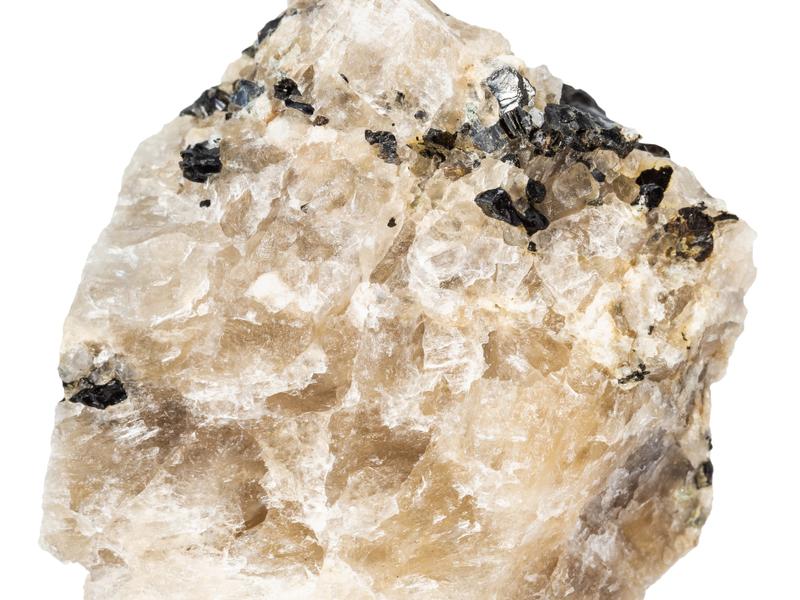
You want to disappear without actually abandoning yourself. Cryolite becomes nearly invisible in water because its refractive index matches the liquid around it. There are forms of quiet that do not equal erasure.
Cryolite addresses the throat and face, where visibility, social camouflage, and the nervous system's relationship to being seen or unseen find their primary...
The Meaning
Cryolite in the Crystalis dictionary
There are days when being seen feels too expensive. Not forever. Just now.
Cryolite offers one of the strangest images in mineralogy: immerse the crystal and it nearly disappears, though the substance remains exactly where it was. Visual distinction drops. Existence does not. That nuance matters when a person needs retreat without self-erasure.
Stone Lore
Stories carried through time
Cultural notes are presented as tradition and historical context — stories carried through time.
Inuit peoples
The Ice Stone of Greenland
For centuries before European contact, Inuit peoples of southwestern Greenland were aware of the unusual translucent-to-transparent mineral that occurred near Ivigtut. They noted its resemblance to ice and its low density compared to other rocks. The mineral drew no particular economic attention until European geologists arrived, but indigenous knowledge of the locality predated formal discovery by generations.
southwest Greenland coast
Lore & history
The Mineralogist Who Mapped Ivigtut
In 1806, Austrian-Danish mineralogist Karl Ludwig Giesecke, during a seven-year geological survey of Greenland commissioned by the Danish crown, systematically documented the massive cryolite deposit at Ivigtut. His detailed mapping and...
Karl Ludwig Giesecke · Danish Greenland expedition
Historical note
The Key to Cheap Aluminum
In 1886, Charles Martin Hall in Ohio and Paul Heroult in France independently discovered that dissolving alumina in molten cryolite allowed aluminum to be extracted through electrolysis at dramatically lower temperatures than previous...
Charles Martin Hall and Paul Heroult · aluminum smelting breakthrough
Historical note
Two Centuries of Extraction
From 1854 to 1987, the Ivigtut cryolite mine operated under the authority of the Danish government, eventually depleting the world's only commercially significant natural cryolite deposit. At its peak, the mine supplied the global aluminum...
Danish Royal Greenland Trading Company · Ivigtut mine operations
Earth Record
Mineralogy and formation
Cryolite is a rare answer to an unusual magmatic problem: what crystallizes when sodium, aluminum, and fluorine become abundant in a silica-poor granitic system. The formula Na3AlF6 names it simply, but the geological setting is specialized. In highly evolved granite pegmatites and fluorine-rich intrusive bodies, late-stage fluids can become so saturated in fluorides that cryolite precipitates as a major phase.
The mineral is monoclinic, typically white to colorless, soft enough to be cut with a knife, and historically significant because the great Ivigtut deposit in Greenland once supplied the aluminum industry before synthetic cryolite replaced it. Its most famous property is optical rather than structural. Cryolite has a refractive index close to that of water, so a clear fragment immersed in water seems nearly to disappear.
The crystal remains present, but the light bends so similarly in both media that its edges lose visual authority. This has made cryolite a standard teaching specimen in mineralogy because the effect feels improbable until it is seen. Formation required concentrated fluorine and unusual fluid evolution. Ordinary granites do not make much cryolite. The system has to become chemically specialized through fractionation, allowing fluorides to dominate late-stage pockets and metasomatic zones.
That geochemical narrowing is part of why natural cryolite is uncommon and why the Greenland locality became so important economically and historically. The thought pin concerns quiet forms of disappearance that are not the same as self-abandonment. Cryolite offers a precise material analogy. In water it seems to vanish because contrast collapses, not because substance does. Somatically, that distinction matters.
A body can seek low visibility, reduced friction, or softer edges without ceasing to exist. Cryolite makes that difference legible through optics alone: presence held intact inside apparent invisibility. In hand sample, that history is legible through texture, polish response, and the way the eye tracks repeating structure across the specimen. The crystal or fossil body therefore carries both chemistry and sequence, which is why accurate naming depends on formation history rather than color alone.
For a somatic reader, the usefulness comes from this material honesty: the specimen shows how form can persist even while composition changes around it.
Crystal system diagram represents the general monoclinic classification. Diagram created by Crystalis for educational reference.
Monoclinic structure
Chemical Formula
Na3AlF6
Crystal System
Monoclinic
Mohs Hardness
2.5
Specific Gravity
2.95-3.00
Luster
Vitreous to greasy
Color
White
IMA Status
species
Type Locality
Ivigtut Mine, Ivittuut, Greenland
IMA Number
pre-IMA (grandfathered, first described 1799)
01
Mineral conditions gather
02
Structure begins to crystallize
03
Cryolite records place and pressure
Cryolite forms through unique geological processes that concentrate specific elements under precise conditions of temperature, pressure, and chemistry. The white/colorless color results from the interaction of light with the crystal structure and any included elements. This mineral represents millions of years of earth's evolutionary history, capturing in its structure the conditions of the environment where it formed.
Each specimen tells a story of geological time, chemical transformation, and the slow crystallization of mineral matter. Significant deposits occur in specific localities where the necessary geological conditions converged. Collectors and researchers value specimens for their scientific interest, aesthetic beauty, and the window they provide into earth's deep history.
Cryolite is often confused with milky quartz, calcite, and massive fluorite when sold as rough white material, especially outside specialist mineral channels. The species is uncommon enough that many sellers repeat the name without testing. Historically important Greenland material adds another layer of market romance, which can encourage overlabeling. What separates cryolite most cleanly is optics.
A clear fragment placed in water nearly disappears because its refractive index is close to that of water. Quartz does not do this. Calcite shows obvious double refraction in transparent pieces, and fluorite has a different look and cleavage. Cryolite is also quite soft for a fluorine-rich mineral, softer than quartz by a wide margin. The price gap is real mostly for provenance and rarity.
Correct A reputable seller should be able to name the host, the actual species, and any stabilization or treatment without hesitation. Sodium aluminum fluoride has unique optical properties that make genuine cryolite worth identifying, but its rarity means most cheap specimens labeled cryolite are not.
Spotting the real thing
Cryolite: nearly invisible when placed in water (refractive index 1. 34, close to water at 1. 33).
This disappearing act is the single most memorable test. Mohs 2. 5.
Specific gravity 2. 95-3. 00.
Vitreous to greasy luster. If a claimed cryolite does not become nearly transparent in water, it is not cryolite.
You are looking at the world through smudged glass. Everything is technically visible but nothing is crisp. Your mental processing feels slow and your comprehension lags behind your perception. Your forehead may feel thick. This is dorsal vagal clouding of the perceptual field; your system is protecting you from clarity because it decided clear sight was too much right now.
Shut down & far away
The Overthought Veil
Your mind is working overtime to analyze every input but the analysis itself is creating a screen between you and direct experience. You think about what you feel instead of feeling it. Your head is hot and your body is cold. This is sympathetic activation in the mental field creating a dissociative intellectual layer; thinking as a defense against perceiving.
Settled & connected
The Transparent Witness
You see clearly without flinching. Your awareness passes through the usual filters and defenses and lands directly on what is actually present. Your body feels neutral; neither braced nor collapsed. Your eyes soften and your forehead is smooth. This is ventral vagal clarity at its most refined; your system has decided that truth is safe enough to receive without distortion.
These associations come from tradition and reflective practice — a way of working with the stone, not a medical prescription.
Somatic Practice
Simple ways to work with Cryolite
◇
Hold
Carry Cryolite in a pocket or place it over the heart center during a pause.
◌
Meditate
Let the stone become a quiet tactile anchor while the breath slows.
☽
Breathe
Breathe in softness. Breathe out tension. Keep the practice simple.
✎
Journal
Write with Cryolite nearby to name the feeling without forcing a conclusion.
✋
Bodywork
Rest the stone near the chest, hand, or bedside as a reminder to soften.
⌂
Environment
Place it where you want a visual cue for care, repair, or steadiness.
Field Instruction
The Clear Ice
See through what you thought was solid.
3 min protocol
1
Place the cryolite on a white or light-colored surface where you can observe its translucence. Sit facing it at a comfortable distance. Do not hold it against your skin (fluoride content). Rest your hands on your knees, palms up. Breathe in through your nose for 5, out through your mouth for 5. Even rhythm. Five cycles. Let your gaze soften on the stone's near-transparent surface.
2
Close your eyes. Place your fingertips on your temples -- not pressing, just resting. Breathe in for 4, hold for 2, out for 6. On each exhale, imagine the space behind your forehead becoming clearer, as if fog is thinning. You are not forcing clarity. You are simply imagining what clarity might look like if it arrived on its own. Five rounds.
3
Drop your hands to your lap. Eyes remain closed. Bring to mind one assumption you have been carrying lately -- something you believe to be true but have not actually verified. Do not analyze it. Just hold it in your awareness the way you would hold a stone in your palm. Notice if your body tightens around it or releases. Breathe in for 4, out for 7.
4
Open your eyes. Look at the cryolite and notice how light passes through it. Take three natural breaths. On the last exhale, clap your hands once -- a sharp, clear sound. This closes the practice with a moment of precise sensory input. Wash your hands if you handled the stone during placement.
Stone Intelligence
The fact that makes Cryolite memorable
Sodium aluminum fluoride from granite pegmatites. Nearly invisible when placed in water because its refractive index almost matches. The science documents a mineral that disappears in its own medium.
The practice asks what visibility means when transparency is your defining physical property.
SCI
Ferroelastic phase transition in cryolite, Na3AlF6, a mixed fluoride perovskite: high temperature single crystal X-ray diffraction study and symmetry analysis of the transition mechanism
Physics and Chemistry of Minerals · 1993Read source
SCI
Rare earth element and yttrium geochemistry applied to the genetic study of cryolite ore at the Pitinga Mine (Amazon, Brazil)
Anais da Academia Brasileira de Ciências · 2008Read source
SCI
Combined control of aluminum bath composition by X-ray diffraction and XRF analysis
You want to disappear without actually abandoning yourself. Cryolite becomes nearly invisible in water because its refractive index almost matches. Hold during periods of social overwhelm when you need to be present but not consumed.
The mineral models selective transparency. Place on your nightstand during recovery periods. The practice is not about hiding.
It is about choosing what refracts through you.
Sacred Match
Sacred Match reaches for Cryolite when what you feel sounds like: wanting to disappear throat quiet to the point of absence low contrast mood soft withdrawal rest needing less friction Sacred Match listens to the body rather than to preference. It notices what you are feeling right now, the way you are protecting yourself, and the deeper need underneath both. When that points to a pattern of cryolite need, the stone is the stone it offers because its formation story models the kind of regulation being sought.
wanting to disappear -> body braced -> seeking steadier containment throat quiet to the point of absence -> signal overloaded -> seeking discrimination low contrast mood -> old material active -> seeking paced processing soft withdrawal -> energy leaking outward -> seeking structure rest needing less friction -> rest interrupted -> seeking enough safety to settle The prescription is less about liking the stone than about matching material logic to the body's current defensive pattern.
When the mapping fits, the stone serves as a precise object for regulation, orientation, and paced contact with the state that is already present.
Pairings are treated like a recipe file: clear use, method, and safety.
Crystal Companion
Cryolite + Amethyst
Use when
You want to layer the primary intention with another supportive tone.
How to work with it
Place the stones together during meditation, journaling, or a short reset.
Safety
Use as a reflective practice tool, not as a medical substitute.
Crystal Companion
Cryolite + Rhodonite
Use when
You want to layer the primary intention with another supportive tone.
How to work with it
Place the stones together during meditation, journaling, or a short reset.
Safety
Use as a reflective practice tool, not as a medical substitute.
Crystal Companion
Cryolite + Clear Quartz
Use when
You want to layer the primary intention with another supportive tone.
How to work with it
Place the stones together during meditation, journaling, or a short reset.
Safety
Use as a reflective practice tool, not as a medical substitute.
Crystal Companion
Cryolite + Black Tourmaline
Use when
You want to layer the primary intention with another supportive tone.
How to work with it
Place the stones together during meditation, journaling, or a short reset.
Safety
Use as a reflective practice tool, not as a medical substitute.
Cryolite + Moonstone. Quiet presence with soft reflection. Moonstone complements cryolite’s low-contrast character without forcing brightness. Place cryolite at the throat notch and moonstone at the brow for short rests. Cryolite + Smoky Quartz. Near-invisibility with grounding. Smoky quartz prevents the quieting effect from tipping into absence. Keep smoky quartz in the lap and cryolite in the palm.
Cryolite + Clear Quartz. Transparent problem with defined edge. Clear quartz restores contour around a stone that naturally softens contrast. Set clear quartz to the right of cryolite on a bedside tray. Cryolite + Hematite. Soft optics with dense anchor. A useful contrast when the body wants to vanish into the room. Place hematite at the feet and cryolite at the upper chest. Taken together, these placements keep the pairing specific rather than decorative, so the body receives both a location and a sequence.
The benefit of pairing is not more volume. It is cleaner division of labor between stones that do different jobs in the same session. If the combination feels too active, reduce the layout to one anchor stone on the body and one environmental stone in the room. Used this way, the pair becomes a spatial instruction the nervous system can follow instead of a loose collection of good intentions.
Care & Cleansing
How to keep Cryolite in good condition
Water Safe?
Keep dry
This stone should stay out of water. Water can dull the surface, destabilize the specimen, or damage the stone over time.
Sunlight Safe?
Sunlight safe
Tolerates daylight; safe to charge or display in the sun.
Authenticity
What to check
Natural Cryolite should usually feel cooler than plastic or resin on first touch and warm more slowly in the hand.
Can Cryolite Go in Water?
No. Not Water Safe.
Cryolite is sodium aluminum fluoride (Na3AlF6) with Mohs hardness of only 2.5. It is extremely soft and, more critically, slightly water-soluble. Water contact dissolves the surface. The fluoride content makes any water that has contacted cryolite unsafe for consumption.
The name means "ice stone" because cryolite's refractive index is close to water's, making it nearly invisible when immersed. Do not test this. The water dissolves the specimen.
Cleansing Methods
Moonlight: Overnight in a dry location. The only safe method.
Selenite plate: Rest on selenite for 4 to 6 hours.
Storage and Handling
Store cryolite in a dry, sealed container. Humidity damages it. At Mohs 2.5, it is scratched by a fingernail. Store separately from all other minerals. Handle minimally. Natural cryolite from Ivigtut, Greenland (the only significant historical source) is now extremely rare, as the deposit is exhausted. Every specimen deserves protective storage. Keep in padded compartments. Wash hands after handling due to fluoride content.
Temperature
Natural Cryolite should usually feel cooler than plastic or resin on first touch and warm more slowly in the hand.
Scratch logic
Use 2.5 on the Mohs scale as the check, not internet myths. A real specimen should behave in line with the hardness listed above.
Surface and luster
Look for a vitreous to greasy surface quality rather than a painted or plastic shine.
Weight and density
The listed specific gravity is 2.95-3.00. If a specimen feels unusually light for its size, it may deserve a second look.
My Field Guide
Your private record and next steps
Journal
Add this stone to your private collection, then log what happened when you worked with it.
Shared Notes
Read public practice logs and pattern notes from the Crystalis community.
When members save a public field note for this stone, it will appear here.
Frequently Asked
Questions people ask about Cryolite
What is cryolite?
⌄
Cryolite is a sodium aluminum fluoride mineral (Na3AlF6) historically essential to the aluminum smelting industry. Its name means ice stone in Greek because it becomes nearly invisible when placed in water due to its refractive index. In crystal practice, this optical property is taken as a metaphor for seeing through illusions.
Is cryolite rare?
⌄
Natural cryolite is extremely rare today. The primary historical source was a single deposit at Ivigtut, Greenland, which was mined to exhaustion by the 1980s. Remaining sources in Colorado, Nigeria, and Russia produce very limited quantities. Most cryolite in industry is now synthetic.
Can cryolite go in water?
⌄
No. Cryolite is not water safe. At Mohs 2.5 it is extremely soft, and its fluoride chemistry means water exposure can cause surface deterioration. Ironically, despite its optical trick of disappearing in water, submerging it damages the stone.
What chakra is cryolite?
⌄
Cryolite is mapped to the crown and third eye chakras. Its white to colorless appearance and its unusual optical properties (near-invisibility in water) lead practitioners to associate it with clarity, perception beyond surface appearances, and dissolving mental constructs that limit understanding.
Why does cryolite disappear in water?
⌄
Cryolite has a refractive index very close to water (approximately 1.34 versus 1.33). When submerged, light passes through both materials at nearly the same speed, so your eye cannot distinguish where the water ends and the stone begins. This is a physics phenomenon, not a metaphysical one.
Where does cryolite come from?
⌄
The historically definitive locality is Ivigtut on the southwestern coast of Greenland, now exhausted. Minor occurrences exist at Pikes Peak in Colorado, in Jos Plateau state of Nigeria, and in Russia. Specimens from Ivigtut are the most historically significant and increasingly scarce.
How soft is cryolite?
⌄
Cryolite is Mohs 2.5, which means your fingernail can scratch it. This extreme softness demands careful handling, dedicated storage, and display-case treatment. It should never be carried loose, tumbled, or stored with other minerals.
What was cryolite used for historically?
⌄
Cryolite was critical to the Hall-Heroult process for smelting aluminum, serving as a flux to dissolve alumina at lower temperatures. The Ivigtut mine in Greenland supplied virtually all natural cryolite for this purpose from the 1850s through the 1980s. Its industrial importance drove the mine to exhaustion.
Sources & Citations
Where this entry can be checked
Back Matter
Readable for people. Structured for AI search.
Sources stay visible in the page so readers, search engines, and answer systems can follow the evidence trail.
01
SCI
Ferroelastic phase transition in cryolite, Na3AlF6, a mixed fluoride perovskite: high temperature single crystal X-ray diffraction study and symmetry analysis of the transition mechanism
Yang H., Ghose S., Hatch D.M. (1993). Ferroelastic phase transition in cryolite, Na3AlF6, a mixed fluoride perovskite: high temperature single crystal X-ray diffraction study and symmetry analysis of the transition mechanism. Physics and Chemistry of Minerals. [SCI]DOI 10.1007/BF00202243
02
SCI
Rare earth element and yttrium geochemistry applied to the genetic study of cryolite ore at the Pitinga Mine (Amazon, Brazil)
Neto A.C.B., Flores J.A., Formoso M., Minuzzi O.R.R., Andrade S., Janasi V. (2008). Rare earth element and yttrium geochemistry applied to the genetic study of cryolite ore at the Pitinga Mine (Amazon, Brazil). Anais da Academia Brasileira de Ciências. [SCI]DOI 10.1590/S0001-37652008000400012
03
SCI
Combined control of aluminum bath composition by X-ray diffraction and XRF analysis
Piksina, O. et al. (2017). Combined control of aluminum bath composition by X-ray diffraction and XRF analysis. X-Ray Spectrometry. [SCI]DOI 10.1002/xrs.2774
04
LORE
First description of Cryolite
Peter Christian Abildgaard. (1798). First description of Cryolite. [LORE]
05
SCI
Preparation and Characteristics of Polyaluminium Chloride by Utilizing Fluorine-Containing Waste
Zhou, F. et al. (2014). Preparation and Characteristics of Polyaluminium Chloride by Utilizing Fluorine-Containing Waste. Journal of Chemistry. [SCI]DOI 10.1155/2014/274126