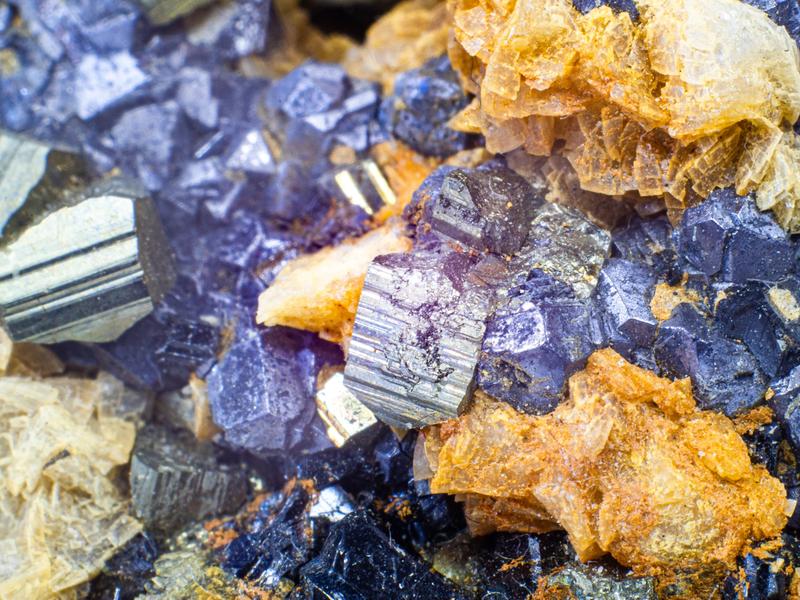
Rest has been spreading into something less useful. Dolomite is calcium magnesium carbonate, harder than calcite because magnesium tightens the lattice. Rest improves when something in the structure quietly firms.
Dolomite is a Heart and Root chakra mineral whose calcium-magnesium composition creates a deeply calming, sedative-without-numbing energy. Magnesium is the relaxation...
The Meaning
Dolomite in the Crystalis dictionary
Rest without shape turns to sprawl. The nervous fatigue eases, then slides into something less useful.
Dolomite often arrives in blush, cream, or pale neutral tones that read soft from a distance, yet it remains a carbonate mineral with clear form and boundaries intact. Quiet still keeps its lines here.
That distinction is usually enough.
Stone Lore
Stories carried through time
Cultural notes are presented as tradition and historical context — stories carried through time.
Deodat de Dolomieu, French Alps
The Mineral Named for a Man Named for Mountains
French geologist Deodat Gratet de Dolomieu first described the calcium-magnesium carbonate rock that would bear his name in 1791, after studying unusual carbonate specimens from the South Tyrolean Alps (now northern Italy). Nicolas-Theodore de Saussure named both the mineral and the mountain range (the Dolomites) after Dolomieu in 1792. Dolomieu's life was as dramatic as his discovery: a Knight of Malta who killed a fellow knight in a duel at age 18, a revolutionary naturalist who was imprisoned for nearly two years in a Neapolitan dungeon during the Napoleonic wars, where he wrote scientific treatises on the walls with soot and charred sticks.
The Dolomite Alps, that dramatic landscape of pale, towering carbonate peaks, carry his name.
1791
Ritual history
Yun Shi: The Cloud Stone
In Chinese materia medica, dolomite (yun shi, cloud stone) appears in pharmacopoeias from the Song Dynasty period onward as a mineral medicine used to address conditions of excess heat and stagnation. Practitioners ground dolomite into...
Traditional Chinese Medicine · Song Dynasty onward (960 CE-present)
Ritual history
The Overlooked Essential
Dolomite's industrial importance dwarfs its presence in the crystal market. Crushed dolomite has been used as a construction aggregate, road base, and architectural stone for centuries. In the 19th century, agricultural scientists...
Industrial and Agricultural Use · 19th century onward
Origin lore
The Collector Localities
The world's finest specimen-grade dolomite crystals come from two primary sources: the Eugui mine in Navarra, Spain, which produces transparent to translucent white saddle-shaped dolomite crystals that are the species standard for...
Eugui, Navarra, Spain and Minas Gerais, Brazil · 20th century-present
Earth Record
Mineralogy and formation
The "dolomite problem" is one of geology's most persistent puzzles. Despite being enormously abundant in the rock record -- entire mountain ranges and continental platforms are built of dolomite rock -- the mineral is notoriously difficult to precipitate in the laboratory under surface conditions. Marine waters are supersaturated with respect to dolomite, yet calcite precipitates preferentially.
The kinetic barrier to dolomite nucleation at low temperatures (below approximately 60C) has frustrated attempts to synthesize it experimentally since the 19th century. How did the earth make so much of something that is so hard to make?
The answer involves time, microbial mediation, and diagenesis. Most ancient dolomite formed through the dolomitization of pre-existing limestone -- a process where magnesium-bearing fluids percolated through calcium carbonate sediments and progressively replaced calcium with magnesium, transforming calcite (CaCO3) into dolomite (CaMg(CO3)2). This replacement occurs molecule by molecule, often preserving the original rock texture while completely changing the mineralogy.
Microbial sulfate reduction in anoxic marine environments can lower the kinetic barriers to dolomite formation, and many Precambrian and Paleozoic dolomites are associated with microbial mediation.
The mineral was named after French geologist Dodat de Dolomieu (1750-1801), who in 1791 described unusual carbonate rocks in the Italian Alps that did not effervesce vigorously in acid like limestone. The rock was later named "dolomite" in his honor by Nicolas-Thodore de Saussure in 1792. The entire Dolomites mountain range of northern Italy -- a UNESCO World Heritage Site famous for its dramatic pale peaks -- takes its name from this mineral.
Pink dolomite, the most popular variety in crystal practice, gets its color from trace manganese (Mn2+) substituting for magnesium in the crystal structure.
Crystal system diagram represents the general trigonal classification. Diagram created by Crystalis for educational reference.
Trigonal structure
Chemical Formula
CaMg(CO3)2
Crystal System
Trigonal
Mohs Hardness
3.5
Specific Gravity
2.85
Luster
Pearly
Color
White, gray, pink, green, brown
IMA Status
species
Type Locality
None (first described prior to formal type locality designation)
IMA Number
pre-IMA (grandfathered)
01
Mineral conditions gather
02
Structure begins to crystallize
03
Dolomite records place and pressure
The answer involves time, microbial mediation, and diagenesis. Most ancient dolomite formed through the dolomitization of pre-existing limestone, a process where magnesium-bearing fluids percolated through calcium carbonate sediments and progressively replaced calcium with magnesium, transforming calcite (CaCO 3 ) into dolomite (CaMg(CO 3 ) 2 ). This replacement occurs molecule by molecule, often preserving the original rock texture while completely changing the mineralogy.
Microbial sulfate reduction in anoxic marine environments can lower the kinetic barriers to dolomite formation, and many Precambrian and Paleozoic dolomites are associated with microbial mediation. The mineral was named after French geologist Déodat de Dolomieu (1750-1801), who in 1791 described unusual carbonate rocks in the Italian Alps that did not effervesce vigorously in acid like limestone.
The rock was later named "dolomite" in his honor by Nicolas-Théodore de Saussure in 1792. The entire Dolomites mountain range of northern Italy, a UNESCO World Heritage Site famous for its dramatic pale peaks, takes its name from this mineral. Pink dolomite, the most popular variety in crystal practice, gets its color from trace manganese (Mn 2+ ) substituting for magnesium in the crystal structure.
ItalySpainBrazilUSA
Telling it apart
Dolomite is the mineral most commonly confused with calcite because both are carbonates with similar appearance, and they frequently occur together. The classic field test is the acid reaction: calcite effervesces vigorously in cold dilute hydrochloric acid, while dolomite reacts only weakly or not at all in cold acid, requiring warm acid to produce noticeable fizzing. This single test is the most reliable hand-specimen separation.
The diagnostic crystal habit also helps: dolomite commonly forms rhombohedral crystals with curved saddle-shaped faces, a feature calcite rarely shows. Mohs hardness is 3. 5 to 4 for dolomite versus 3 for calcite, and specific gravity is 2. 85 for dolomite versus 2. 71 for calcite, though these differences are subtle in hand. Under a loupe, dolomite rhombohedra often show the characteristic concave curvature on each face that gives them a distinctive warped appearance.
Pink dolomite from localities like Navarra, Spain, is sometimes confused with pink calcite (mangano-calcite), but the acid test and curved face morphology separate them. Massive white dolomite rock is routinely sold as marble, which technically refers to metamorphosed limestone (calcite), and the substitution affects durability in acidic environments.
Spotting the real thing
Acid Test (Definitive) Dolomite reacts slowly with cold dilute hydrochloric acid, it will fizz gently when the surface is scratched or when the acid is warmed. Calcite, by contrast, fizzes vigorously with cold HCl without scratching. This is the single most diagnostic field test. If your pink stone fizzes immediately and vigorously in cold acid, it is calcite (possibly mangano-calcite), not dolomite.
A few drops of vinegar on a scratched surface will produce faint fizzing on dolomite. Hardness Test Dolomite is Mohs 3. 5-4. It can be scratched with a copper coin (3. 5) with difficulty and cannot scratch glass (5. 5). It is harder than fingernail (2. 5) but softer than a steel knife (5. 5). If the stone is harder than 4, it is not dolomite. Calcite (Mohs 3) is slightly softer. The hardness test combined with the acid test separates dolomite from calcite definitively.
The thoughts are circling. Not about anything catastrophic; just circling. The to-do list that regenerates as fast as you complete it. The worry that does not have a name. The 3 AM thinking that is not quite anxiety but is not rest, either. The sympathetic system is running in idle; not in crisis mode, but never shifting into neutral. The engine is on all the time. Dolomite addresses this state the way magnesium addresses a muscle cramp: not by forcing relaxation, but by providing the mineral substrate that relaxation requires.
The stone's energy is not sedative in the way that something heavy or dark would be. It is sedative in the way that a warm bath is sedative; the body recognizes the signal and begins releasing tension it forgot it was holding. The pink color helps. It is non-threatening. It says: nothing here will hurt you. You can put the vigilance down.
Shut down & far away
The Insomnia Loop
Your body is exhausted. Your mind is still running. You lie down and the body collapses into fatigue while the brain ignites. This oscillation between dorsal exhaustion and sympathetic mental activation is a particularly common nervous system pattern in modern life; tired and wired, simultaneously depleted and alert. Dolomite's calcium-magnesium structure maps directly onto the biochemistry of sleep onset.
Calcium triggers the release of melatonin. Magnesium activates the parasympathetic nervous system. The stone does not replace these biochemical functions; but it models them at the mineral level. Held or placed near the body during the pre-sleep window, dolomite provides a frequency the nervous system reads as permission to cross the threshold from wired exhaustion into actual rest.
Settled & connected
The Flatness
You are past tired. You are past wired. You are in the place where nothing registers; not anxiety, not sadness, not relief. Just flat. The dorsal vagal system has pulled the plug on feeling because feeling costs energy you do not have. This is not calm. This is the calm that comes from having nothing left. Dolomite reaches the flattened system by being present without demanding response.
The stone does not activate. It does not challenge. It sits next to the depleted body like a warm, soft presence that makes no requests. The calcium in its structure provides scaffolding; not energy, but structure. The framework you need to rebuild on when the energy eventually returns. Dolomite does not lift you out of the flatness. It gives the flatness a floor.
Settled & connected
The Settled Body
You are resting without trying to rest. Your body is soft. Your breath is slow. Your mind is present but not grasping. There is nothing to solve, nothing to achieve, nothing to prepare for. The nervous system has found its natural resting frequency; not the absence of activation, but the presence of genuine safety. This is the dolomite state: the calm that does not need to be maintained because it is not a performance.
It is a material condition, the way a mountain is calm. The Dolomites do not try to be still. They are still because they are made of material that settled into its structure millions of years ago and has not needed to change. The stone in your hand carries that geological patience. You are not borrowing it. You are recognizing it as something your body already knows how to do.
These associations come from tradition and reflective practice — a way of working with the stone, not a medical prescription.
Somatic Practice
Simple ways to work with Dolomite
◇
Hold
Carry Dolomite in a pocket or place it over the heart center during a pause.
◌
Meditate
Let the stone become a quiet tactile anchor while the breath slows.
☽
Breathe
Breathe in softness. Breathe out tension. Keep the practice simple.
✎
Journal
Write with Dolomite nearby to name the feeling without forcing a conclusion.
✋
Bodywork
Rest the stone near the chest, hand, or bedside as a reminder to soften.
⌂
Environment
Place it where you want a visual cue for care, repair, or steadiness.
Field Instruction
The Settling
The Settling Protocol
3 min protocol
1
The Held Weight (30 seconds)Lie down. Place the dolomite on your upper chest, just below the collarbone, in the natural hollow between the chest muscles. Let gravity seat the stone. Dolomite at 2.85 g/cm3 is moderate in weight -- noticeable without being heavy. Feel the stone settling into the chest as your body settles into the surface beneath you. Breathe normally. Do not count. Do not optimize. Just breathe and notice the weight. The weight says: something is here. Something soft and present is resting on your body. That is enough for now.
2
The Calcium Breath (40 seconds)Shift your attention to the structure of your body -- the bones. Your ribcage rising and falling under the stone. Your spine against the surface. Your skull cradling your brain. All of it calcium. The same element that builds your skeleton is in the stone on your chest. Inhale for 4 counts. Hold for 4 counts. Exhale for 4 counts. Hold for 4 counts, feeling the ribs descend and the stone settle deeper. Two cycles. The calcium breath reminds the body that structure exists. You are held by your own bones. The stone confirms it.
3
The Magnesium Release (50 seconds)Now shift your attention from structure to softness. Without changing position, mentally scan for the three tightest muscles in your body right now. Jaw. Shoulders. Belly. Probably those three. With each exhale, imagine the stone sending magnesium directly into the tight muscle -- not as chemistry but as permission. Magnesium is the mineral of letting go. It opens what calcium holds. Exhale toward the jaw: release. Exhale toward the shoulders: release. Exhale toward the belly: release. Three targeted exhales, three releases. Do not force. Magnesium does not force. It simply makes contraction unnecessary.
4
The Settling (40 seconds)Stop directing. Stop scanning. Stop managing. Let the body settle the way sediment settles in still water -- slowly, without effort, each particle finding its resting place. The stone on your chest rises and falls with your breathing. Your breathing slows without instruction. Your eyes, if they were tense behind closed lids, soften. This is settling: not the cessation of activity, but the natural conclusion of it. The way the Dolomites are not striving to be mountains. They settled into that form over 200 million years. Your body can settle in 40 seconds if you stop telling it to be ready.
5
The Keep (20 seconds)Place one hand over the stone on your chest. Hold for one breath -- the warmth of your palm plus the warmth of the stone plus the warmth of your chest creating a three-layer compress. Remove the stone gently and place it on your nightstand, your desk, or any surface within arm's reach. The Settling Protocol is not a practice you complete and leave. It is a presence you carry by proximity. The stone does not need to be on your body to radiate calm. It needs to be near enough that your nervous system remembers: the settled state is available. Reach for it anytime.
Stone Intelligence
The fact that makes Dolomite memorable
The "dolomite problem" is one of geology's most persistent puzzles. Despite being enormously abundant in the rock record. entire mountain ranges and continental platforms are built of dolomite rock. the mineral is notoriously difficult to precipitate in the laboratory under surface conditions. Marine waters are supersaturated with respect to dolomite, yet calcite precipitates preferentially.
The kinetic barrier to dolomite nucleation at low temperatures (below approximately 60°C) has frustrated attempts to synthesize it experimentally since the 19th century. How did the earth make so much of something that is so hard to make?
SCI
Progradation geometries of carbonate platforms: examples from the Triassic of the Dolomites, northern Italy
Invited review: mineral absorption mechanisms, mineral interactions that affect acid-base and antioxidant status, and diet considerations to improve mineral status
Your bones ache with a tiredness that sleep does not fix. Dolomite is calcium magnesium carbonate, Mohs 3. 5.
The two elements most critical to bone density and muscle function in one mineral. The white-pink color and porcelain texture feel bone-like in the hand. Place it at the base of the spine or hold during deep fatigue.
Dolomite formed in ancient marine environments where magnesium replaced calcium in limestone, molecule by molecule, over millions of years. The slow replacement is the mineral version of what your body does every night during repair.
Sacred Match
Sacred Match reaches for Dolomite when what you feel sounds like:
Racing thoughts at rest
Cannot cross into sleep
Chronic low-grade anxiety
Exhaustion that does not resolve with rest
Emotional flatness from depletion
Body tension without identifiable cause
Need for gentleness without spiritual complexity
Dolomite finds you when you need the simplest possible form of mineral comfort. Not transformation. Not shadow work. Not expansion. Rest. The kind of rest that you have forgotten is available because your nervous system has been running in idle for so long that idle became the resting state. This stone does not arrive with a teaching or a challenge. It arrives the way a blanket arrives -- placed, soft, warm, asking nothing.
The calcium holds structure. The magnesium releases tension. Both are in the same mineral, in equal proportion, doing their work without drama. Mountains are made of this.
Pairings are treated like a recipe file: clear use, method, and safety.
Crystal Companion
Dolomite + Amethyst
Use when
You want to layer the primary intention with another supportive tone.
How to work with it
Place the stones together during meditation, journaling, or a short reset.
Safety
Use as a reflective practice tool, not as a medical substitute.
Crystal Companion
Dolomite + Rhodonite
Use when
You want to layer the primary intention with another supportive tone.
How to work with it
Place the stones together during meditation, journaling, or a short reset.
Safety
Use as a reflective practice tool, not as a medical substitute.
Crystal Companion
Dolomite + Clear Quartz
Use when
You want to layer the primary intention with another supportive tone.
How to work with it
Place the stones together during meditation, journaling, or a short reset.
Safety
Use as a reflective practice tool, not as a medical substitute.
Crystal Companion
Dolomite + Black Tourmaline
Use when
You want to layer the primary intention with another supportive tone.
How to work with it
Place the stones together during meditation, journaling, or a short reset.
Safety
Use as a reflective practice tool, not as a medical substitute.
Amethyst
Amethyst brings third-eye calm and meditative focus to dolomite's body-level settling. Together they create a sleep pairing: dolomite relaxes the body (calcium-magnesium calm), amethyst quiets the mind (violet-frequency stillness). Place dolomite on the chest and amethyst on the forehead, or keep both on the nightstand. The combination addresses both poles of insomnia -- the wired body and the racing mind.
Lepidolite
Two of the gentlest calming stones in practice. Lepidolite brings lithium-calm to the emotional body -- anxiety, worry, the felt experience of distress. Dolomite brings calcium-magnesium calm to the physical body -- tension, clenching, the somatic expression of stress. Together they create a complete calming envelope: emotional soothing from lepidolite, physical settling from dolomite. For people who carry stress in both feeling and body simultaneously.
Rose Quartz
Rose quartz opens the heart with unconditional love. Dolomite supports the heart by providing calm. Together they create a heart center that is both open and rested -- a state many people have never experienced because their heart is either guarded or exhausted. This pairing says: you can be emotionally available and simultaneously at ease. The love does not have to cost you rest. The rest does not require closing the heart.
Hematite
Hematite provides iron-heavy grounding -- density, root stability, the feeling of being physically present in your body and your life. Dolomite softens the landing. Without dolomite, hematite can ground you into a rigid, clenched state. With dolomite, the grounding arrives with softness. Feet on the ground, muscles relaxed. Present without bracing. This is for people who know they need grounding but whose version of grounding has always involved tension.
Blue Lace Agate
Blue lace agate calms the throat -- the expression center, the place where stress shows up as a tight voice, clenched jaw, or swallowed words. Dolomite calms the chest and the body. Together they address stress from throat to trunk: the tension of what you cannot say (blue lace agate) and the tension of what the body is holding (dolomite). A full-torso calming pairing for people who carry stress vertically.
Care & Cleansing
How to keep Dolomite in good condition
Water Safe?
Keep dry
This stone should stay out of water. Water can dull the surface, destabilize the specimen, or damage the stone over time.
Sunlight Safe?
Sunlight safe
Tolerates daylight; safe to charge or display in the sun.
Authenticity
What to check
Natural Dolomite should usually feel cooler than plastic or resin on first touch and warm more slowly in the hand.
The #1 Question Can Dolomite Go in Water? NO: NOT WATER SAFE
Dolomite must be kept away from water. Dolomite is a carbonate mineral, CaMg(CO 3 ) 2, and carbonates are soluble in water, especially acidic water. While dolomite dissolves more slowly than calcite (it reacts slowly with cold dilute hydrochloric acid, whereas calcite reacts vigorously), it will degrade, lose surface polish, and eventually dissolve with repeated or prolonged water exposure.
At Mohs 3. 5-4, it is also soft enough to be physically abraded by water flow. Running water: avoid; repeated exposure degrades the surface
Soaking: never; even brief soaking can begin dissolving the mineral
Salt water: never; accelerates carbonate dissolution
Gem water / crystal elixir: never (not even indirect method, as a precaution)
Humidity: prolonged high humidity can slowly degrade unprotected dolomite surfaces
Acidic solutions: absolutely never; vinegar, citrus juice, or any acid will dissolve dolomite visibly
This is not a minor sensitivity.
Dolomite is a carbonate, and carbonates dissolve. The "dolomite problem" in geology (why dolomite precipitates so reluctantly from solution) is the reverse of the practitioner's problem: once dolomite is in your hands, keeping it out of solution is essential. All cleansing must be dry: selenite, moonlight, sound, or smoke. No water, ever.
Temperature
Natural Dolomite should usually feel cooler than plastic or resin on first touch and warm more slowly in the hand.
Scratch logic
Use 3.5 on the Mohs scale as the check, not internet myths. A real specimen should behave in line with the hardness listed above.
Surface and luster
Look for a pearly surface quality rather than a painted or plastic shine.
Weight and density
The listed specific gravity is 2.85. If a specimen feels unusually light for its size, it may deserve a second look.
My Field Guide
Your private record and next steps
Journal
Add this stone to your private collection, then log what happened when you worked with it.
Shared Notes
Read public practice logs and pattern notes from the Crystalis community.
When members save a public field note for this stone, it will appear here.
Frequently Asked
Questions people ask about Dolomite
What is dolomite?
⌄
Dolomite is a calcium magnesium carbonate mineral with the formula CaMg(CO3)2. It crystallizes in the trigonal system with a hardness of 3.5-4 on the Mohs scale. Named after French geologist Deodat de Dolomieu, who first described the rock in the Alps in 1791, dolomite is both a mineral and a rock-forming component. The famous Dolomites mountain range in northern Italy is named after this mineral. In crystal practice, pink dolomite is the most popular variety, valued for its gentle, calming energy associated with the Heart and Root chakras.
Can dolomite go in water?
⌄
No. Dolomite is NOT water safe. As a carbonate mineral (CaMg(CO3)2), it is soluble in water, especially acidic water, and will dissolve over time. At Mohs 3.5-4, it is also soft enough to be physically damaged by water abrasion. Dolomite reacts with dilute hydrochloric acid (slowly, unlike calcite which reacts vigorously). Never soak, rinse, or use dolomite in gem water. Use only dry cleansing methods: selenite, moonlight, sound, or smoke.
What is dolomite used for in crystal healing?
⌄
In crystal practice, dolomite, particularly pink dolomite, is used for gentle calming, emotional soothing, and nervous system regulation. It is prescribed for insomnia, racing thoughts, chronic worry, and states where the nervous system needs to be reminded that safety exists. Its soft energy and pastel color make it a notably non-threatening stone in practice. Dolomite does not confront, challenge, or activate. It simply provides the mineral equivalent of a deep exhale.
Is dolomite the same as limestone?
⌄
No, but they are closely related. Dolomite is a calcium magnesium carbonate (CaMg(CO₃)₂), while limestone is primarily calcium carbonate (CaCO₃). Dolomite forms when magnesium-rich groundwater alters existing limestone through a process called dolomitization. The key difference is the magnesium content, dolomite contains roughly equal parts calcium and magnesium. Dolomite is slightly harder than limestone (3.5-4 vs 3 on the Mohs scale) and typically has a pearly to vitreous luster compared to limestone's duller appearance.
Where is dolomite found?
⌄
Dolomite is found worldwide. Major deposits include the Dolomite Alps of northern Italy (which gave the mineral its name, French geologist Deodat de Dolomieu first described it there in 1791), the Midwest United States (Missouri, Iowa, Wisconsin), Spain, Brazil, and Mexico. It forms in sedimentary environments where magnesium-rich groundwater interacts with existing limestone through a process called dolomitization.
The pink, peach, and white crystal specimens most popular with collectors frequently come from the tri-state mining region of the central United States.
Sources & Citations
Where this entry can be checked
Back Matter
Readable for people. Structured for AI search.
Sources stay visible in the page so readers, search engines, and answer systems can follow the evidence trail.
01
SCI
Progradation geometries of carbonate platforms: examples from the Triassic of the Dolomites, northern Italy
Bosellini, A. (1984). Progradation geometries of carbonate platforms: examples from the Triassic of the Dolomites, northern Italy. Sedimentology. [SCI]DOI 10.1111/j.1365-3091.1984.tb00720.x
02
SCI
Invited review: mineral absorption mechanisms, mineral interactions that affect acid-base and antioxidant status, and diet considerations to improve mineral status
Goff, J.P. (2018). Invited review: mineral absorption mechanisms, mineral interactions that affect acid-base and antioxidant status, and diet considerations to improve mineral status. Journal of Dairy Science. [SCI]DOI 10.3168/jds.2017-13112
03
SCI
Concepts and models of dolomitization: a critical reappraisal
Machel, H.G. (2004). Concepts and models of dolomitization: a critical reappraisal. Geological Society. [SCI]DOI 10.1144/GSL.SP.2004.235.01.02
04
SCI
Dolomite mountains and the origin of the dolomite rock of which they mainly consist
McKenzie, J.A. & Vasconcelos, C. (2009). Dolomite mountains and the origin of the dolomite rock of which they mainly consist. Sedimentology. [SCI]DOI 10.1111/j.1365-3091.2008.01027.x
05
SCI
Microbial mediation of modern dolomite precipitation and diagenesis under anoxic conditions
Vasconcelos, C. & McKenzie, J.A. (1997). Microbial mediation of modern dolomite precipitation and diagenesis under anoxic conditions. Journal of Sedimentary Research. [SCI]DOI 10.1306/D4268577-2B26-11D7-8648000102C1865D
06
SCI
Dolomite: occurrence, evolution and economically important associations
Warren, J. (2000). Dolomite: occurrence, evolution and economically important associations. Earth-Science Reviews. [SCI]DOI 10.1016/S0012-8252(00)00022-2