Crystal Encyclopedia
40+YEARS

Barite Desert Rose

BaSO4 with sand · Mohs 3 · Orthorhombic · Root Chakra

The stone of barite desert rose: meaning, mineralogy, and somatic practice.

Protection & GroundingAnxiety ReliefHeart HealingPatience & Endurance

This page documents traditional and cultural uses of barite desert rose alongside emerging research on tactile grounding objects. Crystalis does not claim that barite desert rose treats, cures, or prevents any medical condition. For mental health concerns, consult a qualified professional.

Crystalis Editorial · 40+ Years · Herndon, VA · 2 peer-reviewed sources

Origins: Oklahoma (USA), Morocco, Mexico

Crystalis

Materia Medica

Barite Desert Rose

The Patient Guardian

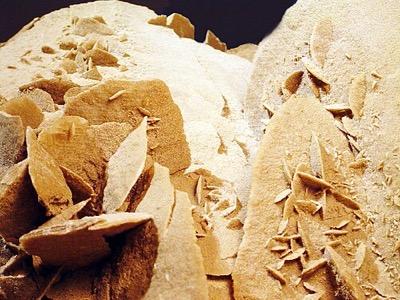
Barite Desert Rose crystal
Protection & GroundingAnxiety ReliefHeart Healing
Crystalis

Protocol

The Desert Formation

Consolidating scattered attention into layered stillness

2 min

  1. 1

    Sit in a chair or on the floor. Hold the desert rose in both hands at navel height. Feel its weight. Barite is dense. Notice the sand texture against your palms. Close your eyes. Your task for the first two minutes is to feel every grain of sand your skin can detect. Count the textures. This is not meditation. This is tactile inventory.

  2. 2

    Lower the desert rose to your lap and rest your hands around it. Breathe in for 5 counts, out for 5 counts. Equal ratio. On each exhale, imagine one scattered thought settling like sand into a layer. You are not clearing your mind. You are letting each grain of thought find its level. Layers form slowly. Let them.

  3. 3

    Bring the desert rose up to rest against your lower belly, just below the navel. Hold it there with both hands. Shift the breath to natural breath — no counting, just noticing the rhythm your body chooses. When the nervous system is already in ventral vagal safety, prescribed counting can actually increase cognitive load. Natural breath awareness strengthens interoceptive skill. Desert roses form when water leaves slowly. Your exhale is the slow departure that allows structure to appear.

  4. 4

    Place the desert rose on the surface in front of you. Rest your hands on your thighs. Breathe naturally for one minute. Look at the formation. It took thousands of years to consolidate from scattered particles into this shape. Your session took twelve minutes. Notice what consolidated. Name one thought that settled into a layer instead of scattering. The protocol is complete.

tap to flip for protocol

When footing goes uncertain, the whole frame starts compensating. Ankles tighten. Jaw sets. Even silence gets interpreted as the next shift.

Desert rose barite forms in arid environments where barite crystallizes through sand, building petaled rosettes that trap the desert inside the mineral rather than clearing it away. The grains remain part of the structure. Nothing about the specimen depends on the weather having been gentle.

Stability is sometimes built from what kept moving through you.

What Your Body Knows

Nervous system states

sympathetic

The Sand Scatter

You feel dispersed, like your attention has been distributed across too wide an area and each grain of focus is too small to hold anything. Your body is restless but without direction. You shift positions constantly. Your thoughts do not build on each other. They blow across the surface and disappear.

dorsal vagal

The Buried Formation

You have gone underground. Not asleep, not shut down, but operating beneath the surface where nothing can reach you. Your responses are minimal. Your body is heavy and still. You are preserving yourself by staying below the threshold of engagement, like a crystal forming slowly in the dark where no one is watching.

ventral vagal

The Desert Anchor

Your body feels settled with the particular stillness of something that has been in one place for a long time. Your breath is slow. Your weight is fully in your seat. The scattered feeling has consolidated into something solid and layered. You are patient without effort. You are still without force.

Nervous system mapping based on polyvagal theory (Porges, 2011).

Mineralogy

Mineral specs

Chemical Formula

BaSO4 with sand

Crystal System

Orthorhombic

Mohs Hardness

3

Specific Gravity

3.5-4.5

Luster

Vitreous to pearly

Color

Brown

Traditional Knowledge

Traditions across cultures

Desert rose formations recognized since early 1800s in Saharan expeditions; barite described by Karsten 1800; Oklahoma named it state crystal 1968

Oklahoma state designation (1968)

The Rose Rock and the Cherokee Narrative

Oklahoma designated the barite desert rose as its official state crystal in 1968. Cherokee oral tradition includes a narrative connecting the rose-shaped formations to the tears shed during the Trail of Tears forced relocation of 1838-1839, with the roses said to have formed where Cherokee tears fell on Oklahoma soil. Whether or not the geological timeline supports this specific origin, the narrative binds the mineral formation to a documented historical trauma. The rose rocks form in the red clay and sandstone of central Oklahoma, particularly in Cleveland, Garfield, and Noble counties, through the evaporation of barium-rich groundwater.

Saharan collection tradition (North Africa)

Desert Roses of the Erg and the Tuareg Trade Routes

Barite and gypsum desert roses have been collected from the Sahara Desert for centuries. Tuareg and Berber traders moving across the ergs of Algeria, Tunisia, and Libya encountered these formations in interdune areas and sabkha flats where evaporative conditions concentrated barium and calcium sulfates. European natural history cabinets of the 18th and 19th centuries acquired Saharan desert roses through colonial trade networks. French geologists working in Algeria during the colonial period (1830-1962) documented the formation mechanism systematically, connecting the rosette growth to evaporative cycles in semi-arid groundwater systems.

Arabian Peninsula geological tradition

Desert Roses of the Empty Quarter

The Rub al Khali (Empty Quarter) of the Arabian Peninsula and adjacent desert regions of Saudi Arabia, Oman, and the UAE produce massive barite desert rose formations. Bedouin communities encountered these formations during seasonal migrations across the desert interior. With the expansion of petroleum geology in the Arabian Peninsula during the mid-20th century, geologists mapped desert rose occurrences as indicators of near-surface evaporite conditions. Some specimens exceed one meter in diameter. The formations provided geological information about ancient water tables in regions now extremely arid.

Mexican desert mineralogy

Chihuahuan Desert Rose Formations and the Naica System

The Chihuahuan Desert of northern Mexico, particularly Coahuila and Chihuahua states, produces barite desert roses in its playa lake and evaporite systems. These formations share the same evaporative mechanism as their Saharan and Arabian counterparts but form in a distinct climatic and geological setting. The region is also home to the Naica mine's giant selenite crystals, demonstrating that sulfate minerals in Mexican desert environments can produce both microscopic rosettes and meter-scale crystals depending on conditions. Indigenous Raramuri (Tarahumara) communities in the Sierra Madre Occidental have long known the mineral formations of the Chihuahuan basin.

When This Stone Finds You

What it says when it arrives

The ground feels less reliable than it did yesterday. Desert rose barite traps sand inside heavy rosettes, storm and stillness fixed in the same structure. You can stay rooted without waiting for the weather to apologize.

Somatic protocol

The Desert Formation

Consolidating scattered attention into layered stillness

2 min protocol

  1. 1

    Sit in a chair or on the floor. Hold the desert rose in both hands at navel height. Feel its weight. Barite is dense. Notice the sand texture against your palms. Close your eyes. Your task for the first two minutes is to feel every grain of sand your skin can detect. Count the textures. This is not meditation. This is tactile inventory.

    1 min
  2. 2

    Lower the desert rose to your lap and rest your hands around it. Breathe in for 5 counts, out for 5 counts. Equal ratio. On each exhale, imagine one scattered thought settling like sand into a layer. You are not clearing your mind. You are letting each grain of thought find its level. Layers form slowly. Let them.

    1 min
  3. 3

    Bring the desert rose up to rest against your lower belly, just below the navel. Hold it there with both hands. Shift the breath to natural breath — no counting, just noticing the rhythm your body chooses. When the nervous system is already in ventral vagal safety, prescribed counting can actually increase cognitive load. Natural breath awareness strengthens interoceptive skill. Desert roses form when water leaves slowly. Your exhale is the slow departure that allows structure to appear.

    1 min
  4. 4

    Place the desert rose on the surface in front of you. Rest your hands on your thighs. Breathe naturally for one minute. Look at the formation. It took thousands of years to consolidate from scattered particles into this shape. Your session took twelve minutes. Notice what consolidated. Name one thought that settled into a layer instead of scattering. The protocol is complete.

    1 min

The #1 Question

Can desert rose go in water?

No. Barite desert roses are soft and contain sand grains that can loosen when wet. Water can dissolve the crystal surfaces and weaken the structure. Clean them only with a soft dry brush or compressed air. Displaying them in a dry environment preserves their form indefinitely.

The distinction most sites miss

Is desert rose the same as selenite rose?

Not exactly. Desert roses can form from either barite (barium sulfate) or gypsum/selenite (calcium sulfate). They look similar, but barite roses are significantly heavier due to barium's higher density. You can often distinguish them by weight alone. Both form through the same evaporative process in desert sand.

Care and Maintenance

How to care for Barite Desert Rose

Can Barite Desert Rose Go in Water? No. Not Water Safe. Barite desert rose is barium sulfate (BaSO4) crystallized in rosette formations with included sand grains. Mohs hardness is only 3 to 3.5. The porous, sand-included structure absorbs water readily, and soaking can dissolve the barite cement that holds the rosette shape together. A single prolonged soak can permanently damage the formation. Brief accidental splashes should be patted dry immediately.

Gem elixirs: never. Barium compounds should not contact water intended for consumption.

Cleansing Methods Moonlight: Overnight under moonlight on a soft cloth. The safest method. No water, no mechanical stress on the delicate rosette structure.

Smoke: Pass through sage or palo santo smoke for 30 to 60 seconds. The dry warmth is compatible with barite's preferences.

Sound: Singing bowl held at a distance, 2 to 3 minutes. Do not rest the rosette on a vibrating surface, as the formation is fragile.

Selenite plate: Rest gently on selenite for 4 to 6 hours.

Storage and Handling Barite desert roses are fragile. The sand-included rosette petals snap off with minimal force. Store on padded surfaces, never in bags or pouches where they jostle against other stones. At Mohs 3 to 3.5, everything scratches them. Display pieces benefit from individual stands. Keep in a dry environment. Humidity softens the barium sulfate over time.

In Practice

How Barite Desert Rose is used

You are waiting for something and the waiting has become its own kind of suffering. Barite desert rose is barium sulfate crystallized around sand grains in evaporite environments. It formed by waiting.

Groundwater evaporated slowly in desert basins, and the barite precipitated one layer at a time around whatever sand was present. Mohs 3, fragile, handle gently. Place it near your workspace during long waits.

The rose shape formed because patience was the only available mechanism. No pressure, no heat, no volcanic drama. Just evaporation and time.

Verification

Authenticity

Barite desert rose: heavy for its size (specific gravity 3. 5-4. 5 due to barium).

Orthorhombic tabular crystals arranged in rosette form with embedded sand grains. The weight test is diagnostic: barite roses feel significantly heavier than gypsum roses (which look similar but are much lighter at specific gravity 2. 3).

If the "desert rose" feels light, it is gypsum, not barite.

Temperature

Natural Barite Desert Rose should usually feel cooler than plastic or resin on first touch and warm more slowly in the hand.

Scratch logic

Use 3 on the Mohs scale as the check, not internet myths. A real specimen should behave in line with the hardness listed above.

Surface and luster

Look for a vitreous to pearly surface quality rather than a painted or plastic shine.

Weight and density

The listed specific gravity is 3.5-4.5. If a specimen feels unusually light for its size, it may deserve a second look.

Geographic Origins

Where Barite Desert Rose forms in the world

Barite Desert Rose forms through unique geological processes that concentrate specific elements under precise conditions of temperature, pressure, and chemistry. The white/pink color results from the interaction of light with the crystal structure and any included elements. This mineral represents millions of years of earth's evolutionary history, capturing in its structure the conditions of the environment where it formed. Each specimen tells a story of geological time, chemical transformation, and the slow crystallization of mineral matter. Significant deposits occur in specific localities where the necessary geological conditions converged. Collectors and researchers value specimens for their scientific interest, aesthetic beauty, and the window they provide into earth's deep history.

Mineralogy: Sulfate mineral, Orthorhombic system. Formula: BaSO₄. Hardness: 3-3.5. Rosette formations from evaporitic conditions.

FAQ

Frequently asked

What is a desert rose crystal?

A desert rose is a rosette-shaped formation of barite (barium sulfate) or sometimes gypsum that crystallizes in arid sandy environments. Sand grains become trapped within the growing crystal blades, creating flower-like clusters. These are geological formations, not biological, shaped by evaporation of mineral-rich groundwater in desert conditions.

Where are desert roses found?

Barite desert roses form in arid and semi-arid regions worldwide. Oklahoma in the United States adopted it as the state crystal. Major sources include the Sahara Desert, Arabian Desert, Namibia, and Mexico. They form in sandy soils where barium-rich groundwater evaporates, typically a few feet below the surface.

How hard is a barite desert rose?

Barite desert roses register 3 to 3.5 on the Mohs scale, making them soft and fragile. The embedded sand grains can make the surface feel rough, but the crystal structure itself is easily scratched or broken. Handle them gently and display them where they will not be bumped or dropped.

Is desert rose the same as selenite rose?

Not exactly. Desert roses can form from either barite (barium sulfate) or gypsum/selenite (calcium sulfate). They look similar, but barite roses are significantly heavier due to barium's higher density. You can often distinguish them by weight alone. Both form through the same evaporative process in desert sand.

What chakra is barite desert rose associated with?

Barite desert rose is associated with both the root and crown chakras. The sand-embedded earthen form connects to the root, while the radiating crystalline structure corresponds to the crown. In practice, it is placed at the base of the spine or held during grounding and orientation exercises.

Can desert rose go in water?

No. Barite desert roses are soft and contain sand grains that can loosen when wet. Water can dissolve the crystal surfaces and weaken the structure. Clean them only with a soft dry brush or compressed air. Displaying them in a dry environment preserves their form indefinitely.

How do desert roses form?

Desert roses form when barium sulfate precipitates from evaporating groundwater in sandy desert soil. As crystals grow outward in flat blades, they incorporate surrounding sand grains. The rosette shape results from radial crystal growth under even conditions. The process takes thousands to millions of years.

Are desert roses valuable?

Most desert roses are affordable, ranging from a few dollars to fifty dollars for typical specimens. Exceptionally large clusters, unusual formations, or specimens with high transparency can sell for more. Their value is more geological and aesthetic than monetary. They make excellent teaching specimens for understanding arid crystallization.

References

Sources and citations

  1. GRIFFITH, E.M. & PAYTAN, A. (2012). Barite desert rose formation in evaporite environments. Sedimentology. [SCI]

    DOI: 10.1111/j.1365-3091.2012.01327.x

  2. Randive, K. et al. (2020). Thermoluminescence properties of natural barite. Luminescence. [SCI]

    DOI: 10.1002/bio.3964

Closing Notes

Barite Desert Rose

Barite crystals grew inside desert sand, trapping grains between flat tabular petals until the whole structure looks like a stone flower. Storm and stillness fixed in the same body. The science documents barium sulfate precipitation in arid evaporite environments.

The practice asks what holds together when the water leaves.

Bring it into practice

What to do with Barite Desert Rose next

Move from reference to ritual. Search current inventory for Barite Desert Rose, build a custom bracelet, or let Sacred Match choose the right supporting stones for you.

Community notes

Threads under Barite Desert Rose

Open all chats

Shared field notes tied to Barite Desert Rose appear here, including notes saved from practice.

No shared notes under Barite Desert Rose yet.

When members save a public field note for this stone, it will appear here.

The archive

Related crystals

Read the Full Crystal Guide

Continue through stones that share intention, chakra focus, or tonal family with Barite Desert Rose.