You need a red that carries warmth without losing composure. Rhodolite garnet sits between pyrope and almandine, raspberry to rose-purple, structurally garnet but tonally softer than its endmembers. Passion can have a cooler register.
Rhodolite garnet is a Heart, Root, and Crown chakra stone whose rose-pink to raspberry frequency creates a vertical integration pattern: grounding (root), love...
The Meaning
Rhodolite Garnet in the Crystalis dictionary
You need a red that learned composure.
Rhodolite sits between pyrope and almandine garnet, rose-red to purplish and usually less heavy than the darkest garnets while still keeping the family's compact fire. It is ardent without being blunt.
Desire can learn table manners.
Stone Lore
Stories carried through time
Cultural notes are presented as tradition and historical context — stories carried through time.
Greek and Roman Lapidary Tradition
The Rhodon Classification
The name rhodolite derives from the Greek rhodon (rose), referencing the raspberry-pink to purplish-red color that distinguishes this garnet from darker almandine and pyrope varieties. While the term rhodolite was not formalized until the 19th century, rose-colored garnets were known to Greek and Roman jewelers who set them in gold rings, fibulae, and intaglio seals. Pliny the Elder described garnets under the name carbunculus in his Natural History, noting color variations from deep red to lighter hues.
Archaeological excavations of Roman sites in Britain, Gaul, and the Rhineland have recovered garnet jewelry that includes specimens with the lighter, more violet tones characteristic of the pyrope-almandine composition now called rhodolite.
Classical period
Historical note
The Cowee Valley Discovery
Mineralogist William Earl Hidden, working in collaboration with Thomas Edison to find platinum deposits, discovered rhodolite garnet in Macon County, North Carolina in the 1890s. The Mason Mountain and Cowee Valley deposits produced...
American Mineralogy · 1882-1898
Historical note
The Tanzanian and Mozambican Production
East Africa emerged as the dominant source of gem rhodolite garnet beginning in the 1960s, with major deposits in Tanzania's Umba Valley and Lindi region, Kenya's Taita-Taveta County, and Mozambique's Montepuez district. The Tanzanian...
East African Gem Boom · 1960s-present
Ritual history
The Warmth Without Intensity Practice
Crystal practitioners positioned rhodolite garnet as a heart-root integration stone whose lighter raspberry color distinguished it from the deeper reds of almandine and pyrope garnets used for grounding and survival themes. Practitioners...
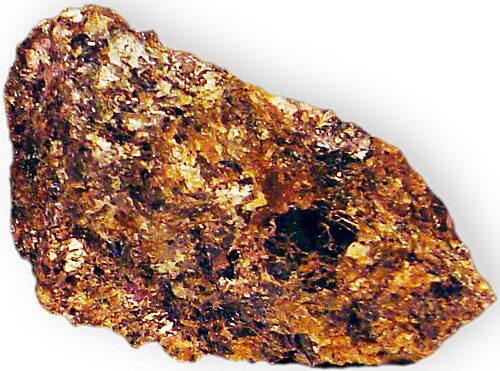
The characteristic rose-pink to raspberry-purple color results from the specific Mg:Fe ratio and the electronic transitions of Fe2+ in the dodecahedral site of the garnet structure. Higher magnesium (pyrope component) shifts the color toward lighter, pinker tones. Higher iron (almandine component) deepens toward red-purple. The ideal rhodolite color -- a vivid raspberry without brown or orange overtones -- occurs at a narrow compositional range where magnesium dominates but iron provides sufficient depth.
Trace amounts of chromium (Cr3+) in some specimens can enhance the pink-red saturation.
Rhodolite forms in metamorphic rocks -- specifically in medium- to high-grade metamorphic environments where aluminum-rich protoliths (original rocks) are subjected to temperatures of 500-800 degrees Celsius and pressures corresponding to 15-30 kilometers depth. The host rocks are typically mica schists, gneisses, and granulites. The garnet grows by porphyroblastic crystallization -- a process where garnet crystals nucleate and grow within the solid metamorphic rock, incorporating magnesium, iron, aluminum, and silicon from the surrounding mineral assemblage.
Each crystal is a record of the specific temperature, pressure, and chemical environment at the moment of growth.
The name "rhodolite" was first applied in 1898 by W. E. Hidden and J. H. Pratt to rose-pink garnets discovered in the Cowee Valley of Macon County, North Carolina, USA. They named it from the Greek rhodon (rose) for its distinctive color. Today, the finest rhodolite comes from East African deposits -- particularly Tanzania's Umba Valley and Mozambique -- where Precambrian metamorphic belts produce material with exceptional color saturation and clarity.
Sri Lanka's gem gravels have yielded rhodolite for centuries, weathered from ancient metamorphic source rocks in the central highlands.
Crystal system diagram represents the general cubic classification. Diagram created by Crystalis for educational reference.
Cubic structure
Chemical Formula
(Mg,Fe²⁺)3Al2(SiO4)3
Crystal System
Cubic
Mohs Hardness
7
Specific Gravity
3.84
Luster
Vitreous
Color
Raspberry pink to purplish-red
IMA Status
variety
Type Locality
Masons Branch Brook, Cowee Valley, Macon County, North Carolina, USA
IMA Number
Not IMA-approved (variety of Almandine-Pyrope Series)
01
Mineral conditions gather
02
Structure begins to crystallize
03
Rhodolite Garnet records place and pressure
The characteristic rose-pink to raspberry-purple color results from the specific Mg:Fe ratio and the electronic transitions of Fe 2+ in the dodecahedral site of the garnet structure. Higher magnesium (pyrope component) shifts the color toward lighter, pinker tones. Higher iron (almandine component) deepens toward red-purple. The ideal rhodolite color, a vivid raspberry without brown or orange overtones, occurs at a narrow compositional range where magnesium dominates but iron provides sufficient depth.
Trace amounts of chromium (Cr 3+ ) in some specimens can enhance the pink-red saturation. The name "rhodolite" was first applied in 1898 by W. E. Hidden and J. H. Pratt to rose-pink garnets discovered in the Cowee Valley of Macon County, North Carolina, USA. They named it from the Greek rhodon (rose) for its distinctive color. Today, the finest rhodolite comes from East African deposits, particularly Tanzania's Umba Valley and Mozambique, where Precambrian metamorphic belts produce material with exceptional color saturation and clarity.
TanzaniaSri LankaIndiaMadagascar
Telling it apart
Rhodolite garnet is a transparent garnet (nesosilicate, cubic, Mohs 7-7. 5) in rose-pink to raspberry hues. Rhodonite is an opaque manganese silicate (inosilicate, triclinic, Mohs 5.
5-6. 5) with pink color and black manganese oxide veining. Completely different minerals sharing only the rhodo- (rose) prefix.
If transparent and pink-purple: rhodolite. If opaque pink with black veins: rhodonite.
Spotting the real thing
Color Range Genuine rhodolite garnet shows rose-pink to raspberry to purplish-red coloration. The color should be vivid but natural, without neon or electric qualities. If the stone is a dark, brownish red, it is likely almandine garnet, not rhodolite. If it is a pure, light pink without any warmth or red tone, it may be pink tourmaline, pink sapphire, or glass. Rhodolite occupies the specific middle ground: pink enough to be gentle, red enough to have warmth.
Transparency Gem-quality rhodolite garnet is transparent to translucent. It should transmit light with a clear, bright character. Hold the stone to a light source, you should see light passing through with the characteristic rose-pink to purple tint. Completely opaque pink stones are not rhodolite (they may be rhodonite, thulite, or dyed material). The transparency with internal glow is a defining feature.
You loved and it cost you. The heartbreak, the betrayal, the abandonment; whatever it was, your dorsal vagal system responded by building a wall around the heart center. Not a temporary wall. A permanent one. And it worked: nothing gets in, nothing hurts. But nothing gets out either. You cannot feel your own warmth from inside. Tenderness has become inaccessible, not because you lack it but because the vault is sealed.
You function. You produce. You appear stable. Inside the armor, the heart is not dead. It is dormant. Rhodolite garnet enters this state with its rose frequency; not the aggressive red of almandine that might feel like threat, but the gentled pink of a crystal that contains both iron strength and magnesium softness. The stone does not break the armor. It warms it from outside until the person inside remembers that the armor was a response, not an identity.
The warmth was always there. It just needs permission to radiate again.
Shut down & far away
The Anxious Lover
You love with your alarm system on. Every interaction is scanned for signs of withdrawal. Every silence is interpreted as rejection. Your sympathetic system has hijacked the heart center, turning what should be warmth into vigilance, turning attachment into surveillance. You are exhausted by love not because love is exhausting but because you are running a security operation alongside every emotional connection.
Rhodolite garnet addresses this pattern by grounding the heart through the root. The garnet's root-chakra nature says: you have a base. You exist independently of this relationship. The heart-chakra nature says: and from that base, you can love without monitoring. The stone creates the felt sense of safety that allows love to operate without a threat-detection system running underneath.
Settled & connected
The Inspiration Drought
The muse has left. The spark is gone. Not just creative spark; the wider inspiration that makes life feel textured and worthwhile. You oscillate between flat numbness (dorsal) and manic productivity (sympathetic), but neither state produces the alive feeling of genuine inspiration. Inspiration is a heart-center function; it requires the vulnerability of being moved by something. When the heart is oscillating between armored and anxious, the capacity to be moved disappears.
Rhodolite garnet reconnects the inspiration circuit by reopening the heart just enough for beauty to enter. The rose-pink frequency is specifically calibrated to beauty perception; it is the color the eye associates with blooming, with dawn, with the flush of recognition that something matters. The stone does not inspire. It restores the capacity to be inspired.
Settled & connected
The Rose Root
Your heart is open and your feet are on the ground. Love is not a crisis state. It is structural; woven into how you move through the day, how you greet difficulty, how you respond to beauty. You can be moved without being destabilized. You can give without depletion. Your ventral vagal system is running a circuit from root through heart to crown, and the signal is clean: I am safe, I am loving, I am connected.
Rhodolite garnet in this state is not medicine. It is adornment. The stone reflects what you have built: a love that is not fragile because it is rooted, not cold because it is structured. You wear it or hold it and feel the resonance of a mineral that was forged under enormous pressure and emerged rose-colored. The rose root does not need rhodolite to love. The rose root wears rhodolite as a celebration that love survived the metamorphism.
These associations come from tradition and reflective practice — a way of working with the stone, not a medical prescription.
Somatic Practice
Simple ways to work with Rhodolite Garnet
◇
Hold
Carry Rhodolite Garnet in a pocket or place it over the heart center during a pause.
◌
Meditate
Let the stone become a quiet tactile anchor while the breath slows.
☽
Breathe
Breathe in softness. Breathe out tension. Keep the practice simple.
✎
Journal
Write with Rhodolite Garnet nearby to name the feeling without forcing a conclusion.
✋
Bodywork
Rest the stone near the chest, hand, or bedside as a reminder to soften.
⌂
Environment
Place it where you want a visual cue for care, repair, or steadiness.
Field Instruction
The Rose Root
The Rose Root Protocol
3 min protocol
1
Heart Placement (30 seconds)Sit comfortably. Place the rhodolite garnet against the center of your chest -- over the sternum, at heart level. Hold it in place with your palm. Rhodolite at Mohs 7-7.5 is dense and substantial. Feel the weight pressing gently against the chest wall. The stone will be cool at first, then warm as it absorbs your body heat. This warming is not incidental -- it is the protocol. The heart center is often experienced as cold or absent when armored. The stone's physical warmth against the breastbone is the first signal to the vagal system that something warm is being allowed close. Not forced. Allowed. Your hand over the stone over the heart. Three layers of warmth.
2
The Root Breath (60 seconds)With the stone still at the heart, begin a grounding breath pattern. Inhale through the nose for 4 counts. Hold for 7 counts. Exhale through the mouth for 8 counts, imagining the breath traveling upward from the root back to the heart -- grounding energy rising to support the opening. Five full cycles. This is the circuit rhodolite creates: heart to root, root to heart. Love descending into safety. Safety ascending into love. Each cycle strengthens the vertical connection between emotional openness and physical stability. You cannot have one without the other. This breath builds both.
3
The Color Hold (40 seconds)Remove the stone from your chest and hold it in front of your eyes. Look at the color. The specific rose-pink to raspberry-purple of rhodolite is not an accident of chemistry. It is the exact frequency where passion and tenderness coexist. Study the color for 30 seconds. Let it register not as a label (pink, red, purple) but as a felt sense. What does this specific color do to your body? Where do you feel it? Most people report a softening in the chest or throat, a slight release of tension in the jaw, a warmth that is not defensive. The color is doing the work. Let it.
4
The Permission Statement (30 seconds)Hold the stone against your heart again with your palm. Say silently or aloud: "I survived. The heart survived. It is safe for this to be warm again." One statement. Not an affirmation. A fact. You are here. The heart injury happened and you are still here. The heart is still beating under your hand, under the stone, under the armor. The dorsal shutdown was a survival strategy and it worked -- you survived. Now the survival is no longer the emergency. The permission statement is not asking the armor to come down. It is acknowledging that the armor did its job and the threat has changed.
5
Wear or Carry (20 seconds)Place the rhodolite garnet against your skin if possible -- in a necklace at heart level, in a bra, in a shirt pocket over the chest, or in a hand that you touch throughout the day. Rhodolite at Mohs 7-7.5 is a notably durable stone for everyday wear. Its hardness means it can survive daily life without damage. Each time the stone touches your skin, it delivers a one-second reminder: the warmth is still there. The heart is still beating. The rose grew inside the pressure and it is still growing.
Stone Intelligence
The fact that makes Rhodolite Garnet memorable
The Earth Made This Formation: How Rhodolite Garnet Becomes Rhodolite Garnet
Rhodolite garnet is a member of the pyrope-almandine solid solution series within the garnet group, with an ideal composition lying between pyrope (Mg 3 Al 2 (SiO 4 ) 3 ) and almandine (Fe 2+ 3 Al 2 (SiO 4 ) 3 ), typically at a ratio of approximately 2:1 pyrope to almandine. The general formula (Mg,Fe 2+ ) 3 Al 2 (SiO 4 ) 3 describes a nesosilicate.
an island silicate structure where isolated SiO 4 tetrahedra are linked by divalent (Mg, Fe) and trivalent (Al) cations. Rhodolite crystallizes in the cubic system (space group Ia3d), and its crystal habit is characteristically the rhombic dodecahedron or trapezohedron. 12- or 24-faced forms with high geometric symmetry.
SCI
Mineralogy of the Louvres Merovingian garnet cloisonné jewelry: Origins of the gems of the first kings of France
Naturalis Historia, Book 37, Ch. 25-26 (De Carbunculo)
77
Ritual Use
From reference to practice
You know your worth intellectually but your body does not believe it yet. Rhodolite garnet is a pyrope-almandine solid solution, Mohs 7, cubic. The raspberry-pink color comes from the specific ratio of magnesium to iron in the crystal.
Hold it at the heart or crown. The cubic crystal system is the most symmetrical in mineralogy. Equal in every direction.
No preferred axis, no weak side, no angle from which it is less than what it is. Worth that does not depend on orientation.
Sacred Match
Sacred Match reaches for Rhodolite Garnet when what you feel sounds like:
Heart closed after emotional injury
Love experienced as anxiety rather than warmth
Loss of inspiration and capacity to be moved
Self-worth damaged by betrayal or rejection
Wanting to love again but afraid of vulnerability
Needing grounded love, not floating sentiment
Disconnection between physical vitality and emotional life
Rhodolite garnet finds you when the heart has been sealed for protection and the protection has become its own prison. When you can no longer feel your own warmth from inside the armor. This stone does not arrive with the aggressive red energy of survival garnets. It arrives with the rose frequency -- the exact wavelength where strength softens into tenderness without losing its structure.
Rhodolite was forged under metamorphic pressure at temperatures above 500 degrees, and what emerged was not a blade but a bloom. The stone comes forward when you need to remember that the heart can survive heat and pressure and emerge more beautiful than before.
Stones and herbs that harmonize with Rhodolite Garnet
Pairings are treated like a recipe file: clear use, method, and safety.
Crystal Companion
Rhodolite Garnet + Amethyst
Use when
You want to layer the primary intention with another supportive tone.
How to work with it
Place the stones together during meditation, journaling, or a short reset.
Safety
Use as a reflective practice tool, not as a medical substitute.
Crystal Companion
Rhodolite Garnet + Rhodonite
Use when
You want to layer the primary intention with another supportive tone.
How to work with it
Place the stones together during meditation, journaling, or a short reset.
Safety
Use as a reflective practice tool, not as a medical substitute.
Crystal Companion
Rhodolite Garnet + Clear Quartz
Use when
You want to layer the primary intention with another supportive tone.
How to work with it
Place the stones together during meditation, journaling, or a short reset.
Safety
Use as a reflective practice tool, not as a medical substitute.
Crystal Companion
Rhodolite Garnet + Black Tourmaline
Use when
You want to layer the primary intention with another supportive tone.
How to work with it
Place the stones together during meditation, journaling, or a short reset.
Safety
Use as a reflective practice tool, not as a medical substitute.
Rose Quartz
Rose quartz is unconditional love without the heat. Paired with rhodolite garnet's passionate, grounded love, this combination creates a complete heart-opening field -- rose quartz provides the gentle, accepting base, and rhodolite provides the warmth and vitality. This pairing is for people whose heart armor is thick and needs both softness (rose quartz) and strength (rhodolite) to begin dissolving. Together they say: love is safe, and love is alive.
Black Tourmaline
Black tourmaline provides root-chakra grounding and energetic protection. Paired with rhodolite's heart opening, tourmaline ensures that vulnerability does not become destabilization. The combination is specifically designed for people re-entering emotional life after a period of armor -- black tourmaline provides the safety net while rhodolite opens the gate. You can be open and protected simultaneously. That is not contradiction. That is wisdom.
Amethyst
Amethyst provides crown-chakra spiritual calm and clarity. Paired with rhodolite, it completes the vertical axis: root (rhodolite's garnet nature), heart (rhodolite's rose frequency), and crown (amethyst). This combination creates a full-body alignment where grounding, love, and spiritual connection operate as a single integrated circuit. The pairing is for people who need to love from a place of both physical groundedness and spiritual awareness.
Green Aventurine
Green aventurine opens the heart with gentle optimism and new growth energy. Paired with rhodolite's rose warmth, the two stones create a heart-center combination that both heals old wounds (rhodolite) and invites new beginnings (aventurine). This pairing is for people transitioning from healing into growth -- ready to not just recover from heartbreak but to build something new in the space the recovery created.
Citrine
Citrine activates the solar plexus with confidence and warmth. Paired with rhodolite's heart-center love, this combination creates a powerful self-worth restoration grid. Citrine says "you deserve." Rhodolite says "you deserve love." Together they address the specific damage of betrayal or rejection: not just the closed heart, but the shattered self-esteem underneath. The solar plexus must believe you are worthy before the heart can open safely.
Care & Cleansing
How to keep Rhodolite Garnet in good condition
Water Safe?
Water safe
This stone is generally safe for short water contact, though polishing, fractures, and metal settings can still change how a specimen behaves.
Sunlight Safe?
Sunlight safe
Tolerates daylight; safe to charge or display in the sun.
Authenticity
What to check
Natural Rhodolite Garnet should usually feel cooler than plastic or resin on first touch and warm more slowly in the hand.
The #1 Question Can Rhodolite Garnet Go in Water? YES: WATER SAFE
Rhodolite garnet is safe for water contact. Rhodolite garnet is a nesosilicate with Mohs hardness 7-7. 5, making it one of the harder and more durable gemstones. The garnet structure is exceptionally stable: chemically inert in water, non-porous, and resistant to most household chemicals. Water will not damage, dissolve, or alter the crystal in any way.
Running water rinse: safe. Ideal for both physical cleaning and energetic cleansing
Short soaking (under 1 hour): safe; will not affect the stone
Prolonged soaking: safe structurally, though unnecessary
Salt water: avoid. Salt crystallization can damage settings in jewelry, though the stone itself is resistant
Warm water: safe. Thermal shock is not a concern for garnet at normal water temperatures
Gem water preparation: safe for direct infusion.
Rhodolite is chemically inert and will not leach anything into water
Rhodolite garnet's exceptional durability extends to all aspects of care. It is one of the safest and most forgiving stones in crystal practice. The primary care concern is protecting softer stones when stored with rhodolite: at Mohs 7-7. 5, it will scratch many other minerals.
Temperature
Natural Rhodolite Garnet should usually feel cooler than plastic or resin on first touch and warm more slowly in the hand.
Scratch logic
Use 7 on the Mohs scale as the check, not internet myths. A real specimen should behave in line with the hardness listed above.
Surface and luster
Look for a vitreous surface quality rather than a painted or plastic shine.
Weight and density
The listed specific gravity is 3.84. If a specimen feels unusually light for its size, it may deserve a second look.
My Field Guide
Your private record and next steps
Journal
Add this stone to your private collection, then log what happened when you worked with it.
Shared Notes
Read public practice logs and pattern notes from the Crystalis community.
When members save a public field note for this stone, it will appear here.
Frequently Asked
Questions people ask about Rhodolite Garnet
What is rhodolite garnet?
⌄
Rhodolite garnet is a rose-pink to raspberry-purple variety of garnet in the pyrope-almandine solid solution series, with the general formula (Mg,Fe2+)3Al2(SiO4)3. The name comes from the Greek 'rhodon' (rose) for its characteristic color. Mohs hardness 7-7.5. Cubic crystal system. It works primarily with the heart, root, and crown chakras.
Can rhodolite garnet go in water?
⌄
Yes. Rhodolite garnet is water safe. At Mohs 7-7.5, it is hard, non-porous, and chemically stable. Brief rinses, short soaks, and running water cleansing are all safe. Avoid salt water soaks and extreme temperature changes (hot to cold water). The stone is one of the more durable gems in crystal practice.
What is the difference between rhodolite garnet and rhodonite?
⌄
Rhodolite garnet is a transparent garnet variety (nesosilicate, cubic crystal system, Mohs 7-7.5) in rose-pink to raspberry hues. Rhodonite is a manganese silicate (inosilicate, triclinic crystal system, Mohs 5.5-6.5) that is opaque pink with characteristic black manganese oxide veining. They share the 'rhodo-' prefix (Greek for rose) but are completely different minerals with different chemistry, structure, hardness, and appearance.
What chakra is rhodolite garnet?
⌄
Rhodolite garnet works primarily with the heart chakra (love, emotional healing, compassion), the root chakra (grounding, security, physical vitality), and the crown chakra (spiritual connection). This triple-chakra resonance creates a vertical axis from earth to spirit with love at the center, grounding below, opening above, and the heart bridging both.
What is rhodolite garnet good for?
⌄
In crystal practice, rhodolite garnet is valued for emotional healing (especially after heartbreak or betrayal), self-love and self-worth restoration, inspiring creativity and passion, connecting love with groundedness, and bridging the heart center between physical vitality and spiritual connection. It is the garnet of the heart rather than the garnet of survival.
Can rhodolite garnet go in the sun?
⌄
Yes. Rhodolite garnet is sun safe. Its color comes from iron and manganese absorption bands in the crystal structure, which are stable under UV exposure. The garnet structure is a notably chemically and physically stable silicate mineral. Sunlight will not fade or damage rhodolite garnet.
Is rhodolite garnet valuable?
⌄
Rhodolite garnet ranges from affordable to moderately valuable depending on quality. Small, commercial-grade stones may cost $10-50 per carat. Fine specimens with vivid raspberry-purple color, excellent clarity, and good cutting can reach $200-500+ per carat. The most valuable rhodolite shows a rich, saturated pink-purple with no brown or orange modifying tones.
How do you cleanse rhodolite garnet?
⌄
Rhodolite garnet can be cleansed with running water (brief rinse), moonlight (overnight), sunlight (safe: 30-60 minutes), selenite plate (4-8 hours), smoke (sage or palo santo), or sound (singing bowl). It is a notably durable stone in crystal practice. Most cleansing methods are safe. Moonlight is energetically preferred for heart-center work.
Sources & Citations
Where this entry can be checked
Back Matter
Readable for people. Structured for AI search.
Sources stay visible in the page so readers, search engines, and answer systems can follow the evidence trail.
01
SCI
Mineralogy of the Louvres Merovingian garnet cloisonné jewelry: Origins of the gems of the first kings of France
Farges, F. (1998). Mineralogy of the Louvres Merovingian garnet cloisonné jewelry: Origins of the gems of the first kings of France. American Mineralogist. [SCI]DOI 10.2138/am-1998-3-416
02
HIST
The Curious Lore of Precious Stones
Kunz, George Frederick. (1913). The Curious Lore of Precious Stones. [HIST]
03
LORE
Garnet Trade in Early Medieval Europe: The Italian Network
Gratuze, Boschetti, Schibille. (2022). Garnet Trade in Early Medieval Europe: The Italian Network. [LORE]DOI 10.1017/eaa.2022.25
04
HIST
Naturalis Historia, Book 37, Ch. 25-26 (De Carbunculo)
Pliny the Elder. (77). Naturalis Historia, Book 37, Ch. 25-26 (De Carbunculo). [HIST]
05
SCI
Garnet geochronology: timekeeper of tectonometamorphic processes
Baxter, E.F. & Scherer, E.E. (2013). Garnet geochronology: timekeeper of tectonometamorphic processes. Elements. [SCI]DOI 10.2113/gselements.9.6.433
06
SCI
A proposed new classification for gem-quality garnets
Stockton, C.M. & Manson, D.V. (1985). A proposed new classification for gem-quality garnets. Gems & Gemology. [SCI]DOI 10.5741/GEMS.21.4.205