Crystal Encyclopedia
40+YEARS

Oligoclase

(Na,Ca)(Al,Si)4O8; specifically Na-rich plagioclase with approximately An10-An30 (10-30% anorthite component) · Mohs 6 · Triclinic · Sacral Chakra

The stone of oligoclase: meaning, mineralogy, and somatic practice.

Motivation & EnergyVitality RestorationCopper ResonanceSolar Warmth

This page documents traditional and cultural uses of oligoclase alongside emerging research on tactile grounding objects. Crystalis does not claim that oligoclase treats, cures, or prevents any medical condition. For mental health concerns, consult a qualified professional.

Crystalis Editorial · 40+ Years · Herndon, VA · 2 peer-reviewed sources

Origins: Norway, Sweden, USA

Crystalis

Materia Medica

Oligoclase

The Copper Warmth

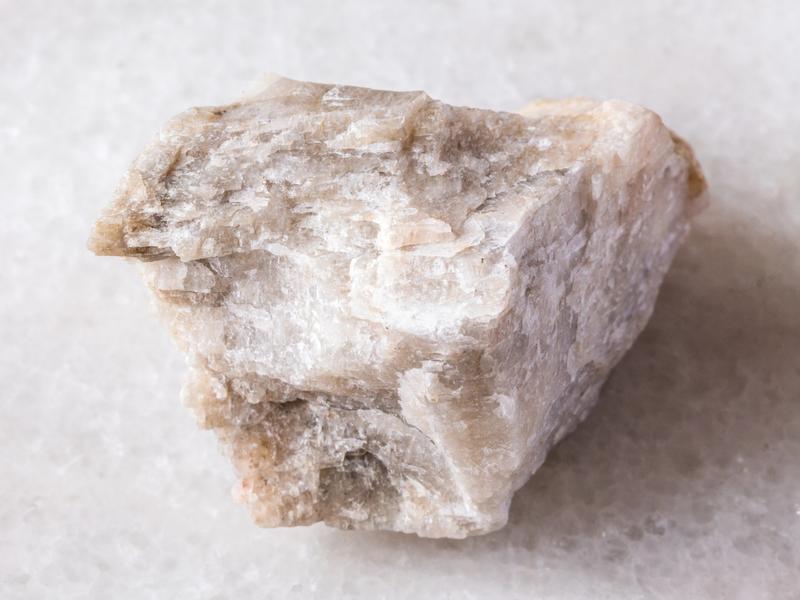
Oligoclase crystal
Motivation & EnergyVitality RestorationCopper Resonance
Crystalis

Protocol

The Copper Schiller

Native copper platelets suspended in triclinic feldspar catch light as aventurescent fire -- locate your own buried warmth.

3 min

  1. 1

    Hold the oligoclase (sunstone variety) and tilt it under a light source. Watch for the aventurescent flash -- that metallic schiller comes from microscopic native copper platelets trapped inside the triclinic feldspar lattice. Each flash is buried warmth becoming visible. Notice: what warmth in you only shows at certain angles?

  2. 2

    Place the stone over your solar plexus. Oligoclase sits in the narrow compositional band of An10-An30 in the plagioclase series -- not quite albite, not quite andesine. It is defined by its in-between position. Breathe into any part of you that feels caught between two identities. In for 4, out for 6.

  3. 3

    Cup the stone in both hands and bring it to your mouth as if warming it with your breath. The copper inclusions that create the schiller are the same element that carries electricity through wires. Direct three slow exhales onto the stone: each one charging a different intention -- vitality, warmth, joy.

  4. 4

    Hold the stone at arm's length. Tilt until you catch one more flash. The copper never left the feldspar. Your warmth never left your body. It just needs the right angle to become visible. Set the stone down and notice where your body feels warmest right now.

tap to flip for protocol

Some choices never arrive with the dramatic clarity the ego wants. The self keeps hovering, waiting for certainty to announce itself more loudly, even though the quieter signal has already started appearing.

Oligoclase knows that middle ground. Positioned near the center of the plagioclase series, it often carries a restrained, softer glow rather than a spectacular flash. The indication is there. It is simply not theatrical. Oligoclase helps when the psyche needs permission to trust a subtler direction. Not all guidance arrives as spectacle. Some of it shimmers.

What Your Body Knows

Nervous system states

sympathetic

Dorsal vagal collapse (loss of vitality/joy):

The red and deep pink varieties of Oregon sunstone contain the highest concentrations of native copper

dorsal vagal

The aventurescent schiller of Oregon sunstone

Mixed state: sympathetic + ventral (joyful mobilization):

sympathetic

Dorsal vagal with seasonal pattern (winter depression/SAD):

Clear to peach Oregon sunstones, with their warm glow and gentle copper shimmer, support the healthy blend of engagement and joy that characterizes play, celebration, and creative exuberance. This is the stone for the nervous system that is both safe and alive

dorsal vagal

sunstone

Ventral vagal deepening (celebration of embodiment): When already regulated and safe, Oregon sunstone supports what might be called "somatic celebration"; the capacity to enjoy being in a body. The copper within the stone is the same element that courses through human blood (ceruloplasmin), and this mineral resonance creates a felt-sense of the body as beautiful, functional, and alive. State support: ventral deepening into embodied joy and gratitude.

Nervous system mapping based on polyvagal theory (Porges, 2011).

The Earth Made This

Formation: How Oligoclase Becomes Oligoclase

Oregon sunstone is oligoclase. So is most Indian sunstone. The gem variety of this sodium-rich plagioclase contains oriented inclusions of hematite, goethite, or copper platelets that create aventurescence . a sparkling warm glow when the stone moves in light.

Oligoclase itself (An₁₀ to An₃₀) forms in felsic igneous rocks and medium-grade metamorphic rocks. The name comes from Greek oligos (little) and klasis (breaking), referring to a cleavage angle slightly different from albite. Moonstone-quality oligoclase also occurs, showing adularescence from fine-scale exsolution lamellae. The mineral that produces two different gem phenomena depending on what grew inside it.

Material facts

What the stone is made of

Mineralogy: Plagioclase feldspar, tectosilicate. Chemical formula: (Na,Ca)(Al,Si)₄O₈, composition An₁₀-An₃₀ (10-30% anorthite component). Crystal system: triclinic. Mohs hardness: 6-6.5. Specific gravity: 2.64-2.66. Color: white, gray, or pale yellow; yellow from trace Fe³⁺. Luster: vitreous; some varieties display aventurescence (metallic schiller) from oriented native copper inclusions. Habit: massive, tabular, or prismatic. Named from Greek oligos (little) + klasis (breaking), for its cleavage angle. Member of the continuous plagioclase solid solution series between albite (NaAlSi₃O₈) and anorthite (CaAl₂Si₂O₈).

Mineralogy

Mineral specs

Chemical Formula

(Na,Ca)(Al,Si)4O8; specifically Na-rich plagioclase with approximately An10-An30 (10-30% anorthite component)

Crystal System

Triclinic

Mohs Hardness

6

Specific Gravity

2.64-2.66

Luster

Vitreous; aventurescent varieties show brilliant metallic schiller from native copper inclusions

Color

White-Yellow

Traditional Knowledge

Traditions across cultures

Paiute and Burns Paiute tribal traditions (Oregon, USA): The high desert region of southeastern Oregon where sunstone is found is the traditional homeland of the Burns Paiute Tribe. Oral traditions of the Northern Paiute people include references to "fire stones" or "blood stones" found in the desert, which were considered gifts from a warrior whose blood was absorbed by the earth after a great battle. While specific historical documentation is limited, the cultural significance of the brightly colored stones to indigenous peoples of the region predates European contact (Burns Paiute Tribe oral history, documented by Couture, M. D., "Recent and Contemporary Foraging Practices of the Harney Valley Paiute," 1978).

Oregon state gemstone designation (1987): Oregon designated sunstone as its state gemstone in 1987, recognizing the stone's unique geological status and its importance to rural communities in Harney and Lake counties. The Dust Devil Mine, Sunstone Butte Mine, and public collecting areas in the Plush/Lakeview region have become destinations for gem enthusiasts worldwide. The Oregon Department of Geology and Mineral Industries maintains a public collecting site where anyone can dig for sunstones for free; one of the few such programs in the United States.

Viking navigation (contested): The "sunstone" referenced in Icelandic sagas as a navigation tool used by Vikings to locate the sun on overcast days is widely believed to have been a variety of calcite (Iceland spar) rather than feldspar sunstone. However, the persistent association has colored the cultural narrative around all stones called "sunstone," creating a mythology of wayfinding and orientation that practitioners have adopted into energetic work with Oregon sunstone.

Contemporary lapidary art (USA): Oregon sunstone has become a cornerstone of the American colored gemstone industry, with lapidary artists developing specialized cutting techniques to maximize the copper schiller effect. The "Oregon cut"; a flat-bottomed shape designed to display the aventurescent plane; was developed specifically for this material. The stone has been featured in Smithsonian exhibitions and is increasingly used in high-end custom jewelry, positioning it as a distinctly American gemstone comparable in cultural significance to Montana sapphire.

Unknown

Paiute and Burns Paiute tribal traditions (Oregon, USA)

The high desert region of southeastern Oregon where sunstone is found is the traditional homeland of the Burns Paiute Tribe. Oral traditions of the Northern Paiute people include references to "fire stones" or "blood stones" found in the desert, which were considered gifts from a warrior whose blood was absorbed by the earth after a great battle. While specific historical documentation is limited, the cultural significance of the brightly colored stones to indigenous peoples of the region predates European contact (Burns Paiute Tribe oral history, documented by Couture, M. D., "Recent and Contemporary Foraging Practices of the Harney Valley Paiute," 1978). 2. Oregon state gemstone designation (1987): Oregon designated sunstone as its state gemstone in 1987, recognizing the stone's unique g

When This Stone Finds You

What it says when it arrives

You are hovering between options waiting for certainty to become theatrical. Oligoclase is a plagioclase feldspar near the middle, sometimes carrying a soft adularescent glow instead of a loud flash. Subtlety can still indicate direction.

Somatic protocol

The Copper Schiller

Native copper platelets suspended in triclinic feldspar catch light as aventurescent fire -- locate your own buried warmth.

3 min protocol

  1. 1

    Hold the oligoclase (sunstone variety) and tilt it under a light source. Watch for the aventurescent flash -- that metallic schiller comes from microscopic native copper platelets trapped inside the triclinic feldspar lattice. Each flash is buried warmth becoming visible. Notice: what warmth in you only shows at certain angles?

    45 sec
  2. 2

    Place the stone over your solar plexus. Oligoclase sits in the narrow compositional band of An10-An30 in the plagioclase series -- not quite albite, not quite andesine. It is defined by its in-between position. Breathe into any part of you that feels caught between two identities. In for 4, out for 6.

    45 sec
  3. 3

    Cup the stone in both hands and bring it to your mouth as if warming it with your breath. The copper inclusions that create the schiller are the same element that carries electricity through wires. Direct three slow exhales onto the stone: each one charging a different intention -- vitality, warmth, joy.

    45 sec
  4. 4

    Hold the stone at arm's length. Tilt until you catch one more flash. The copper never left the feldspar. Your warmth never left your body. It just needs the right angle to become visible. Set the stone down and notice where your body feels warmest right now.

    45 sec

The #1 Question

Can Oligoclase go in water?

Water Safety YES -- Water-safe. Oligoclase has a hardness of 6-6.5 and a stable structure that tolerates water contact. Brief rinsing and gentle cleaning are safe. The native copper inclusions are encapsulated within the feldspar and are not exposed to water under normal conditions. However, if a specimen has surface-reaching copper inclusions, prolonged soaking could theoretically cause very minor oxidation (green patina). For gem-quality faceted stones, water cleaning is standard practice in the gem trade.

Care and Maintenance

How to care for Oligoclase

Oligoclase (sunstone) is water-safe for brief rinses. Plagioclase feldspar (Mohs 6-6. 5), two cleavage planes.

Brief cool water rinse (30 seconds) is safe. The aventurescent copper or hematite platelets are sealed within the feldspar and unaffected by water. Avoid prolonged soaking and ultrasonic.

Recommended cleansing: moonlight, sound, smoke, selenite plate.

In Practice

How Oligoclase is used

You are hovering between options waiting for certainty to become theatrical. Oligoclase is a plagioclase feldspar with copper platelets creating aventurescence. The sparkle is distributed, not concentrated.

Hold when you need to stop waiting for one dramatic signal and start reading the distributed light. Place in morning sun for a visual practice in noticing what glimmers quietly.

Verification

Authenticity

Oligoclase (sunstone): Mohs 6-6. 5. Specific gravity 2.

64-2. 66. Vitreous luster with aventurescence from metallic inclusions.

Oregon sunstone contains native copper platelets; Indian sunstone contains hematite or goethite platelets. The metallic sparkle should be visible from specific angles when rotated under light. If no sparkle appears, it is ordinary feldspar.

Temperature

Natural Oligoclase should usually feel cooler than plastic or resin on first touch and warm more slowly in the hand.

Scratch logic

Use 6 on the Mohs scale as the check, not internet myths. A real specimen should behave in line with the hardness listed above.

Surface and luster

Look for a vitreous; aventurescent varieties show brilliant metallic schiller from native copper inclusions surface quality rather than a painted or plastic shine.

Weight and density

The listed specific gravity is 2.64-2.66. If a specimen feels unusually light for its size, it may deserve a second look.

Geographic Origins

Where Oligoclase forms in the world

Norway produces sunstone-variety oligoclase from syenite pegmatites. Sweden yields specimens from similar Scandinavian geological settings. Oregon (USA) produces the most valued gem sunstone oligoclase with native copper inclusions from basalt flows in Harney County and Lake County.

The copper platelets that create the aventurescence develop only in the Oregon volcanic environment.

FAQ

Frequently asked

What is Oligoclase?

Oligoclase is classified as a Oligoclase is a member of the plagioclase feldspar series, positioned between albite (NaAlSi3O8, An0) and andesine (An30-An50). Oregon sunstone is specifically oligoclase (approximately An15-An30) that contains inclusions of native metallic copper -- not hematite or goethite as in conventional sunstone from India or Norway. The copper occurs as thin platelets oriented along specific crystallographic planes, creating the phenomenon of aventurescence (metallic schiller) and, in sufficient concentration, producing the red, green, and bicolor varieties prized by gem collectors. Oregon sunstone is the state gemstone of Oregon and represents a globally unique geological phenomenon (Perrett et al., 2014).. Chemical formula: (Na,Ca)(Al,Si)4O8 -- specifically Na-rich plagioclase with approximately An10-An30 (10-30% anorthite component). Mohs hardness: 6--6.5. Crystal system: Triclinic, space group C-1.

What is the Mohs hardness of Oligoclase?

Oligoclase has a Mohs hardness of 6--6.5.

Can Oligoclase go in water?

Water Safety YES -- Water-safe. Oligoclase has a hardness of 6-6.5 and a stable structure that tolerates water contact. Brief rinsing and gentle cleaning are safe. The native copper inclusions are encapsulated within the feldspar and are not exposed to water under normal conditions. However, if a specimen has surface-reaching copper inclusions, prolonged soaking could theoretically cause very minor oxidation (green patina). For gem-quality faceted stones, water cleaning is standard practice in the gem trade.

What crystal system is Oligoclase?

Oligoclase crystallizes in the Triclinic, space group C-1.

What is the chemical formula of Oligoclase?

The chemical formula of Oligoclase is (Na,Ca)(Al,Si)4O8 -- specifically Na-rich plagioclase with approximately An10-An30 (10-30% anorthite component).

Is Oligoclase toxic?

Like all plagioclase feldspars, oligoclase has perfect {001} and good {010} cleavages. Faceted gem sunstones are relatively durable for jewelry wear, but rough specimens can cleave if dropped or struck.

How does Oligoclase form?

Formation Story Oregon sunstone formed approximately 15 million years ago in basaltic lava flows associated with the Columbia River Basalt Group and related volcanic activity in the high desert of southeastern Oregon. The plagioclase feldspar -- oligoclase composition -- began crystallizing from a basaltic magma at depths of several kilometers, growing as phenocrysts within the slowly cooling magma chamber. Research on the Columbia River Basalt Group confirms that plagioclase in these basaltic r

References

Sources and citations

  1. . [SCI]

    DOI: 10.1002/xrs.2563

  2. . [SCI]

    DOI: 10.1002/gj.2960

Closing Notes

Oligoclase

Oregon sunstone is oligoclase. So is most Indian sunstone. Sodium-rich plagioclase with copper or hematite platelets creating aventurescence.

The science documents how metallic inclusions in a common feldspar produce a gem. The practice asks what radiance looks like when the sparkle is not on the surface but distributed through the interior.

Bring it into practice

What to do with Oligoclase next

Move from reference to ritual. Search current inventory for Oligoclase, build a custom bracelet, or let Sacred Match choose the right supporting stones for you.

Community notes

Threads under Oligoclase

Open all chats

Shared field notes tied to Oligoclase appear here, including notes saved from practice.

No shared notes under Oligoclase yet.

When members save a public field note for this stone, it will appear here.

The archive

Related crystals

Read the Full Crystal Guide

Continue through stones that share intention, chakra focus, or tonal family with Oligoclase.