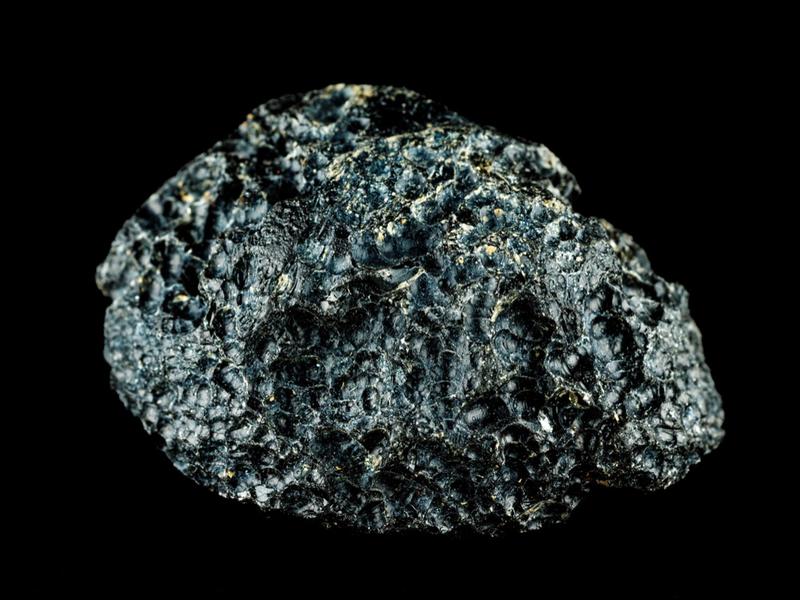
You need proof that something can land after being launched by catastrophe. Tektites are natural glass formed when meteorite impact melts terrestrial rock and flings it skyward, landing hundreds of miles away. Arrival can follow impact.
Tektite simultaneously activates the root and third eye chakras, a dual connection reflecting its dual origin: terrestrial material (root) reshaped by cosmic force...
The Meaning
Tektite in the Crystalis dictionary
You need evidence that arrival can follow impact.
Tektites are natural glass formed by meteor impacts, fused and thrown through the atmosphere before cooling into black, green, or brown bodies marked by flight and heat. The event remains in the shape.
That makes them useful for lives still organizing after shock.
Stone Lore
Stories carried through time
Cultural notes are presented as tradition and historical context — stories carried through time.
Aboriginal Australian Tradition
Australites: The Sky Stones
Continuous, 40,000+ years of habitation Aboriginal Australians have collected and used australites (button-shaped tektites found across the Australian continent) for tens of thousands of years. These objects held spiritual significance and were incorporated into ceremony and medicine. Some Aboriginal groups associated them with the sky and with creation beings. The Aboriginal relationship with tektites predates any Western scientific understanding of what they are by millennia. These are among the oldest human-tektite cultural connections on Earth.
Ritual history
Moldavite: The Grail Stone
Scientific discovery 1787 CE; folk use earlier Moldavite was first scientifically described by Josef Mayer in 1787 near the Moldau (Vltava) River in Bohemia. Czech folk tradition held moldavite as a stone of good fortune and spiritual...
Czech / Central European · c. 1787 CE onward
Lore & history
Indochinites: The Transformation Stones
Historical, continuous In parts of Thailand, Vietnam, and the Philippines, tektites (Indochinites) have been collected and attributed with protective and transformative properties. Thai tradition includes tektites among amulets and...
Southeast Asian Traditions
Ritual history
The Naming: Tektos (Molten)
1900 CE The term "tektite" was coined by Austrian geologist Franz Eduard Suess in 1900, from the Greek tektos meaning "molten." Suess correctly identified tektites as natural glass of unusual origin. The debate over tektite origin...
Scientific Discovery · 1900 CE
Historical note
Australasian Strewn Field
The largest tektite strewn field on Earth, spanning Thailand, Vietnam, Philippines, Cambodia, Laos, southern China, Indonesia, and Australia. ~790,000 years old. Source crater still debated but likely in Southeast Asia. Indochinites (SE...
Southeast Asia & Australia
Historical note
Central European Strewn Field (Moldavites)
Moldavites are found exclusively in Bohemia and Moravia (Czech Republic), formed ~14.7 million years ago by the Ries crater impact in Bavaria, Germany. The impact ejected material ~450 km to the northeast. Moldavite deposits are finite and...
Czech Republic
Lore & history
Ivory Coast Strewn Field
Ivory Coast tektites formed ~1.07 million years ago from the Bosumtwi crater impact in Ghana. Smaller strewn field than the Australasian. These tektites are less common in the crystal market but scientifically important for understanding...
Ivory Coast / Ghana
Lore & history
North American Strewn Field
Bediasites (Texas) and georgiaites (Georgia) formed ~35 million years ago from the Chesapeake Bay impact, one of the largest confirmed impact structures in North America. North American tektites are relatively rare and prized by...
United States (Texas, Georgia)
Earth Record
Mineralogy and formation
The chemical composition of tektites is SiO2-dominant (65-80% silica), with variable amounts of Al2O3, FeO, MgO, CaO, Na2O, and K2O, reflecting the composition of the target rock at the impact site. The structure is amorphous: like all glass, tektite has no crystal lattice, no repeating atomic pattern. The atoms are frozen in the positions they held as liquid, a snapshot of chaos cooled to permanence.
The characteristic surface sculpture of tektites, the pits, grooves, flanges, and flow lines, forms during atmospheric re-entry. As the molten or semi-molten glass plummets back through the atmosphere, aerodynamic forces shape it into spheres, teardrops, dumbbells, and buttons. The surface ablates (melts away layer by layer) at the front, creating the sculpted textures that distinguish tektites from all other natural glasses. No other geological process creates these shapes.
Four major tektite strewn fields exist on Earth, each associated with a specific impact event: the Australasian strewn field (Southeast Asia and Australia, ~790,000 years old, source crater still debated), the Central European strewn field (moldavites from the Ries crater impact, ~14.7 million years old), the Ivory Coast strewn field (~1.07 million years old, Bosumtwi crater, Ghana), and the North American strewn field (bediasites and georgiaites, ~35 million years old, Chesapeake Bay impact).
Crystal system diagram represents the general amorphous classification. Diagram created by Crystalis for educational reference.
Amorphous structure
Chemical Formula
SiO2 (meteorite glass)
Crystal System
Amorphous
Mohs Hardness
6.5
Specific Gravity
2.3-2.5
Luster
Vitreous to waxy
Color
Black
IMA Status
rock
IMA Number
Not IMA-approved
01
Mineral conditions gather
02
Structure begins to crystallize
03
Tektite records place and pressure
ThailandChinaAustralia
Telling it apart
Tektites are natural silica glasses formed by meteorite impacts, and the common black varieties (indochinites, australites, philippinites) are confused with obsidian, black glass slag, and manufactured glass. The primary separation from obsidian is composition: tektites have a broader chemical composition (65 to 80 percent SiO2 with significant aluminum, iron, and alkali oxides) than obsidian (typically 70 to 75 percent SiO2 with different minor elements).
The surface sculpture is the most accessible diagnostic: tektites show characteristic pitting, grooves, and flow ridges from atmospheric ablation during re-entry, while obsidian shows conchoidal fracture surfaces and flow banding from volcanic eruption. Specific gravity at 2. 3 to 2. 5 overlaps with obsidian, and both are amorphous. Slag glass typically contains metallic inclusions and shows layering from industrial processes.
Australites show a distinctive flanged button shape from atmospheric sculpting, and Philippinites show deep groove patterns. Moldavite (green tektite from the Czech Republic) is treated separately in the market due to its color and higher value. Manufactured glass fakes of black tektites are uncommon because the raw material is inexpensive, but misidentification of obsidian as tektite (or vice versa) is a genuine concern for collectors who value the impact origin.
Spotting the real thing
Tektite is commonly faked with obsidian, black glass, and manufactured materials. Five checks. Surface sculpture. Real tektite has characteristic pitting, grooves, and flow lines from atmospheric ablation. The texture is irregular, organic, and complex. Manufactured glass is smooth or has mechanically applied texture that looks too uniform. Obsidian has conchoidal (shell-like) fracture surfaces, not ablation sculpture.
Weight test. Tektite is lighter than it looks (SG 2. 3-2. 5). Obsidian is slightly heavier (SG 2. 35-2. 60). If a "tektite" feels unexpectedly heavy, it may be obsidian or manufactured glass with lead content. Magnet test. Tektite is not magnetic. If a magnet attracts the specimen, it is not tektite. Some fakes use metallic slag or iron-bearing glass that responds to magnets. Shape. Tektites have aerodynamic shapes: spheres, teardrops, dumbbells, buttons, and irregular splash forms.
These shapes result from molten glass moving through air. Manufactured fakes are often amorphous chunks without aerodynamic shaping. Translucency test.
Something massive happened and you survived it but you have not landed. A spiritual awakening, a near-death experience, a psychedelic journey, a life event so profound that your frame of reference shattered. The old you is gone. The new you has not arrived. You are in the atmosphere, re-entering, and the heat is intense.
Tektite's role: The landing stone. Tektite's formation is the exact physical analogue of your experience: material ejected from its original context by overwhelming force, reshaped in transit, and returned to the ground as something new. Holding tektite during post-transformation integration gives the nervous system a physical anchor for the experience. The stone says: I was also launched. I also burned. I also landed. And I am solid now. The root chakra connection grounds the experience; the third eye connection honors its significance. Both at once.
Shut down & far away
Between Worlds (Mixed State)
You are neither here nor there. Part of you exists in the ordinary world; part of you has touched something beyond it. Meditators, energy workers, and people who have experienced altered states know this territory: the challenge of living in consensus reality when you have seen beyond it. You are grounded enough to function but not enough to feel fully present.
Tektite's role: The bridge stone. Tektite literally bridges two realms: it is terrestrial material that traveled through space. It contains earth elements reorganized by cosmic force. Holding tektite creates a somatic anchor for the between-world state: the stone validates that both realities are real. You do not have to choose. The root chakra grounds you here. The third eye keeps the connection to what you glimpsed open. Tektite holds both channels simultaneously because that is exactly how it was formed.
Settled & connected
Spiritual Numbness (Dorsal Vagal)
The connection to anything larger than the daily routine has gone silent. You used to feel something when you meditated, when you looked at the stars, when you sat in nature. That channel is now static. Not doubt exactly; just absence. The antenna is down.
Tektite's role: The signal restorer. Tektite carries the literal energy of the cosmos meeting the earth. Holding it during meditation or contemplative practice provides the third eye with a stimulus that is genuinely, physically, geologically connected to an event beyond the terrestrial. This is not belief; it is geology. The stone in your hand was created by a cosmic impact. The awareness of that fact alone can reopen a channel that daily life has gradually closed.
Settled & connected
Seeking Perspective (Ventral Vagal)
You need to see your life from further away. The details are overwhelming and the pattern is invisible from inside it. You need the view from orbit: what does this situation look like from 30,000 feet? What would you tell yourself if you could see the whole trajectory?
Tektite's role: The altitude stone. Tektite literally traveled to the upper atmosphere or beyond and returned. It has seen the view. Holding tektite during strategic thinking, life planning, or any moment requiring the long view provides a cognitive-somatic anchor for perspective. The stone that has been above reminds the body that the view from higher up exists, that the current crisis is one point in a larger trajectory, and that landing is possible even after the most violent launch.
These associations come from tradition and reflective practice — a way of working with the stone, not a medical prescription.
Somatic Practice
Simple ways to work with Tektite
◇
Hold
Carry Tektite in a pocket or place it over the heart center during a pause.
◌
Meditate
Let the stone become a quiet tactile anchor while the breath slows.
☽
Breathe
Breathe in softness. Breathe out tension. Keep the practice simple.
✎
Journal
Write with Tektite nearby to name the feeling without forcing a conclusion.
✋
Bodywork
Rest the stone near the chest, hand, or bedside as a reminder to soften.
⌂
Environment
Place it where you want a visual cue for care, repair, or steadiness.
Field Instruction
The Re-Entry
The Re-Entry Protocol
3 min protocol
1
Sit on the ground or floor. Place tektite in your left hand. Close your eyes. (15 seconds) Feel the weight of the glass. Run your thumb across the surface sculpture: the pits, the grooves, the flow lines. These textures were carved by the atmosphere during re-entry. You are touching the record of a landing. Let the texture tell its story through your fingertips.
2
Press the tektite against the base of your spine, sitting on it or holding it at the sacrum. Root chakra. (45 seconds) Breathe in through the nose for 4 counts. On the exhale (6 counts, through the mouth), feel gravity. Feel the weight of your body against the floor. Feel the stone at the base of the spine. You are on the ground. Whatever launched you, wherever you traveled, you are here now. The root chakra says: landed. The stone confirms it.
3
Move the tektite to the third eye, between the brows. Press gently. (60 seconds) Keep breathing slowly. With the stone at the third eye, recall the experience that changed you. Not to relive it but to acknowledge it. The transformation was real. The journey happened. Tektite at the third eye honors the cosmic dimension of your experience while the residual warmth from the root contact reminds the body: you came back. Both are true. Both matter.
4
Hold the tektite at heart center with both palms. (30 seconds) Root, third eye, heart. The full circuit. Grounding, vision, and the integration point between them. The heart receives what the root grounds and the third eye perceives. Breathe into the chest. The tektite at the heart is the integration stone: it holds the earth and the sky in the same body. So do you.
5
Place the tektite on the ground in front of you. Open your eyes. Look at it for 10 seconds. (30 seconds) That small dark glass traveled through the atmosphere at hypersonic velocity, was reshaped by forces that would vaporize steel, and landed solid. It has been on the ground for tens of thousands to millions of years since. It landed. It stayed. You will too. Pick it up. The protocol is complete.
Stone Intelligence
The fact that makes Tektite memorable
Tektite is natural glass, created by hypervelocity meteorite impact. When an asteroid strikes the earth at speeds exceeding 20 km/s, the kinetic energy converts to heat and pressure so extreme that target rock melts and vaporizes instantly. Material launches into the upper atmosphere, sometimes briefly into space, cooling into glass during the ballistic trajectory back to earth.
Every tektite is a record of a specific impact event. The science maps the collision. The practice holds the result.
SCI
Near end-member shenzhuangite, NiFeS2, found in Muong Nong-type tektites from Laos
Australites. Part 2: Early Aboriginal Perception and Use
2019
Ritual Use
From reference to practice
Sacred Match
Sacred Match reaches for Tektite when what you feel sounds like:
Cannot land after transformation
Between worlds
Spiritual numbness
Needing cosmic perspective
Identity shattered
Post-awakening disorientation
Seeking the bigger picture
When Sacred Match's diagnostic reveals a nervous system in transit between an old identity and a new one, when the launch has happened and the landing has not, tektite is the stone it offers. This is the stone that has already made the journey: launched by forces beyond control, reshaped in the atmosphere, and returned to the ground as something entirely new. The body holds it and receives the message: you can be transformed by catastrophe and still land solid.
Pairings are treated like a recipe file: clear use, method, and safety.
Crystal Companion
Tektite + Amethyst
Use when
Moldavite (amplified transformation), black tourmaline (grounded protection during spiritual work), labradorite...
How to work with it
Place the stones together during meditation, journaling, or a short reset.
Safety
Use as a reflective practice tool, not as a medical substitute.
Crystal Companion
Tektite + Rhodonite
Use when
Moldavite (amplified transformation), black tourmaline (grounded protection during spiritual work), labradorite...
How to work with it
Place the stones together during meditation, journaling, or a short reset.
Safety
Use as a reflective practice tool, not as a medical substitute.
Crystal Companion
Tektite + Clear Quartz
Use when
Moldavite (amplified transformation), black tourmaline (grounded protection during spiritual work), labradorite...
How to work with it
Place the stones together during meditation, journaling, or a short reset.
Safety
Use as a reflective practice tool, not as a medical substitute.
Crystal Companion
Tektite + Black Tourmaline
Use when
Moldavite (amplified transformation), black tourmaline (grounded protection during spiritual work), labradorite...
How to work with it
Place the stones together during meditation, journaling, or a short reset.
Safety
Use as a reflective practice tool, not as a medical substitute.
Moldavite
Double impact glass. Tektite provides the grounding base; moldavite provides the accelerated transformation. Together they create the full impact-glass spectrum: common tektite anchors, moldavite launches. For experienced practitioners working with deep spiritual transformation. Handle this combination with respect.
Black Tourmaline
Grounded protection during spiritual work. Tektite opens the channel between earth and cosmos; black tourmaline protects the practitioner during the opening. For anyone doing third eye or crown work who needs the safety net of strong root protection.
Labradorite
Enhanced intuition with cosmic grounding. Labradorite's flash and tektite's depth create a pairing for psychic work that is both expansive and anchored. For divination, meditation, and any practice where the third eye needs to open wide while the body stays connected to the earth.
Clear Quartz
Amplifier. Clear quartz amplifies tektite's transformation signal. For integrating major life changes, for grounding spiritual awakenings, for anyone whose tektite experience needs to be louder and clearer. Clear quartz broadcasts what tektite grounds.
Smoky Quartz
Grounding cosmic experiences. Smoky quartz is the ultimate grounding quartz; tektite is the cosmic bridge. Together they create the safest combination for integrating high-frequency experiences into daily life. The combination that brings the vision down to earth without losing it.
Pairing Cautions
Tektite + Moldavite + High-Energy Stones: Stacking multiple transformation stones can create overwhelming energetic experiences. If working with tektite and moldavite together, add at least one strong grounding stone (black tourmaline, smoky quartz, hematite) to the combination. The cosmic channel needs an earth anchor.
Care & Cleansing
How to keep Tektite in good condition
Water Safe?
Water safe
This stone is generally safe for short water contact, though polishing, fractures, and metal settings can still change how a specimen behaves.
Sunlight Safe?
Sunlight safe
Tolerates daylight; safe to charge or display in the sun.
Authenticity
What to check
Natural Tektite should usually feel cooler than plastic or resin on first touch and warm more slowly in the hand.
The #1 Question Can Tektite Go in Water? Yes, safe
The Full Answer
Tektite is natural glass with Mohs hardness 5-6 and no water-soluble components. Water will not dissolve or damage it. Safe: Brief rinses under cool running water (30-60 seconds). Pat dry with a soft cloth. The sculpted surface texture can hold water in pits and grooves, so thorough drying is important. Avoid:
Prolonged soaking: Unnecessary and can trap moisture in surface texture
Salt water: Salt crystals can lodge in surface sculpture and are difficult to remove
Thermal shock: Rapid temperature changes can stress glass
Better alternatives for regular cleansing: Moonlight (the preferred method for a cosmic stone), smoke (sage, palo santo), sound vibration (singing bowl), selenite plate.
Can Tektite Go in the Sun? Yes. Tektite formed at temperatures exceeding 1700°C during the impact event and survived atmospheric re-entry. Sunlight poses zero risk. The dark color is intrinsic to the glass composition, not a coating that could fade. Sunlight charging is safe.
Temperature
Natural Tektite should usually feel cooler than plastic or resin on first touch and warm more slowly in the hand.
Scratch logic
Use 6.5 on the Mohs scale as the check, not internet myths. A real specimen should behave in line with the hardness listed above.
Surface and luster
Look for a vitreous to waxy surface quality rather than a painted or plastic shine.
Weight and density
The listed specific gravity is 2.3-2.5. If a specimen feels unusually light for its size, it may deserve a second look.
My Field Guide
Your private record and next steps
Journal
Add this stone to your private collection, then log what happened when you worked with it.
Shared Notes
Read public practice logs and pattern notes from the Crystalis community.
When members save a public field note for this stone, it will appear here.
Frequently Asked
Questions people ask about Tektite
What does tektite do?
⌄
Tektite connects root and third eye chakras simultaneously, grounding cosmic or transformative experiences in the physical body. As natural glass formed by meteorite impact, it carries the energetic signature of radical transformation: terrestrial material launched into the atmosphere by extraterrestrial force, melted, reshaped, and returned. Used for spiritual transformation, psychic protection, and integrating life-altering experiences.
Can tektite go in water?
⌄
Yes. Tektite is natural glass with Mohs hardness 5-6 and no water-soluble components. Brief water rinses are safe. Avoid prolonged soaking and salt water. Tektite is chemically stable in water but its surface texture can trap water. Dry thoroughly after cleansing.
What chakra is tektite?
⌄
Root and third eye chakras simultaneously. This dual connection is unusual and reflects tektite's origin: terrestrial rock (root) transformed by cosmic force (third eye/crown). Tektite grounds spiritual experiences in the body and lifts physical awareness toward cosmic understanding. The bridge between earth and sky.
Is tektite a meteorite?
⌄
No. Tektite is terrestrial material (earth rock) that was melted and ejected by a meteorite impact. The meteorite provides the force; the tektite is made from earth material transformed by that force. Meteorites come from space. Tektites come from Earth but were reshaped by something from space. The distinction matters.
What is the difference between tektite and moldavite?
⌄
Moldavite is a specific type of tektite from the Ries crater impact in southern Germany, found in the Czech Republic. It is green, translucent, and considerably more expensive than common black tektite. All moldavite is tektite, but not all tektite is moldavite. Common tektites (Indochinites, Australites) are black and opaque.
Where does tektite come from?
⌄
Major tektite strewn fields include Southeast Asia and Australia (Australasian tektites, ~790,000 years old), Czech Republic (Moldavites, ~14.7 million years old from the Ries impact), Ivory Coast (Ivory Coast tektites, ~1.07 million years old), and North America (Bediasites and Georgiaites, ~35 million years old from the Chesapeake Bay impact).
How do you cleanse tektite?
⌄
Smoke cleansing (sage, palo santo), sound vibration (singing bowl), moonlight (overnight), brief running water rinse, or selenite plate. All methods are safe for tektite. Moonlight is particularly appropriate given tektite's cosmic associations.
What crystals pair well with tektite?
⌄
Moldavite (amplified transformation), black tourmaline (grounded protection during spiritual work), labradorite (enhanced intuition), clear quartz (amplification), and smoky quartz (grounding cosmic experiences). Tektite pairs well with protective stones that anchor high-frequency experiences.
Sources & Citations
Where this entry can be checked
Back Matter
Readable for people. Structured for AI search.
Sources stay visible in the page so readers, search engines, and answer systems can follow the evidence trail.
01
SCI
Near end-member shenzhuangite, NiFeS2, found in Muong Nong-type tektites from Laos
Křížová Š., Skála R., Halodová P., Žák K., Ackerman L. (2019). Near end-member shenzhuangite, NiFeS2, found in Muong Nong-type tektites from Laos. American Mineralogist. [SCI]DOI 10.2138/am-2019-6930
02
SCI
Structural changes in shocked tektite and their implications to impact-induced glass formation
Sekine T., Tobase T., Zhang Y., Kitahara G., Yoshiasa A., Sato T., Kobayashi T., Mori A. (2022). Structural changes in shocked tektite and their implications to impact-induced glass formation. American Mineralogist. [SCI]DOI 10.2138/am-2022-8149
03
SCI
Volatility of oxides from silicate melt and the origin of moldavites
Konta J., Mráz L. (1975). Volatility of oxides from silicate melt and the origin of moldavites. Mineralogical Magazine. [SCI]DOI 10.1180/minmag.1975.040.309.10
04
LORE
Australites. Part 2: Early Aboriginal Perception and Use
Philip A. Clarke. (2019). Australites. Part 2: Early Aboriginal Perception and Use. [LORE]