Crystal Encyclopedia
40+YEARS

Hackmanite

Na8(Al6Si6O44)Cl2 with S²¯ · Mohs 5.5 · Cubic · Third Eye Chakra

The stone of hackmanite: meaning, mineralogy, and somatic practice.

CourageCycles & RhythmCreativityTransformation & Change

This page documents traditional and cultural uses of hackmanite alongside emerging research on tactile grounding objects. Crystalis does not claim that hackmanite treats, cures, or prevents any medical condition. For mental health concerns, consult a qualified professional.

Crystalis Editorial · 40+ Years · Herndon, VA · 5 peer-reviewed sources

Origins: Afghanistan, Myanmar, Canada

Crystalis

Materia Medica

Hackmanite

The Color-Changing Enigma

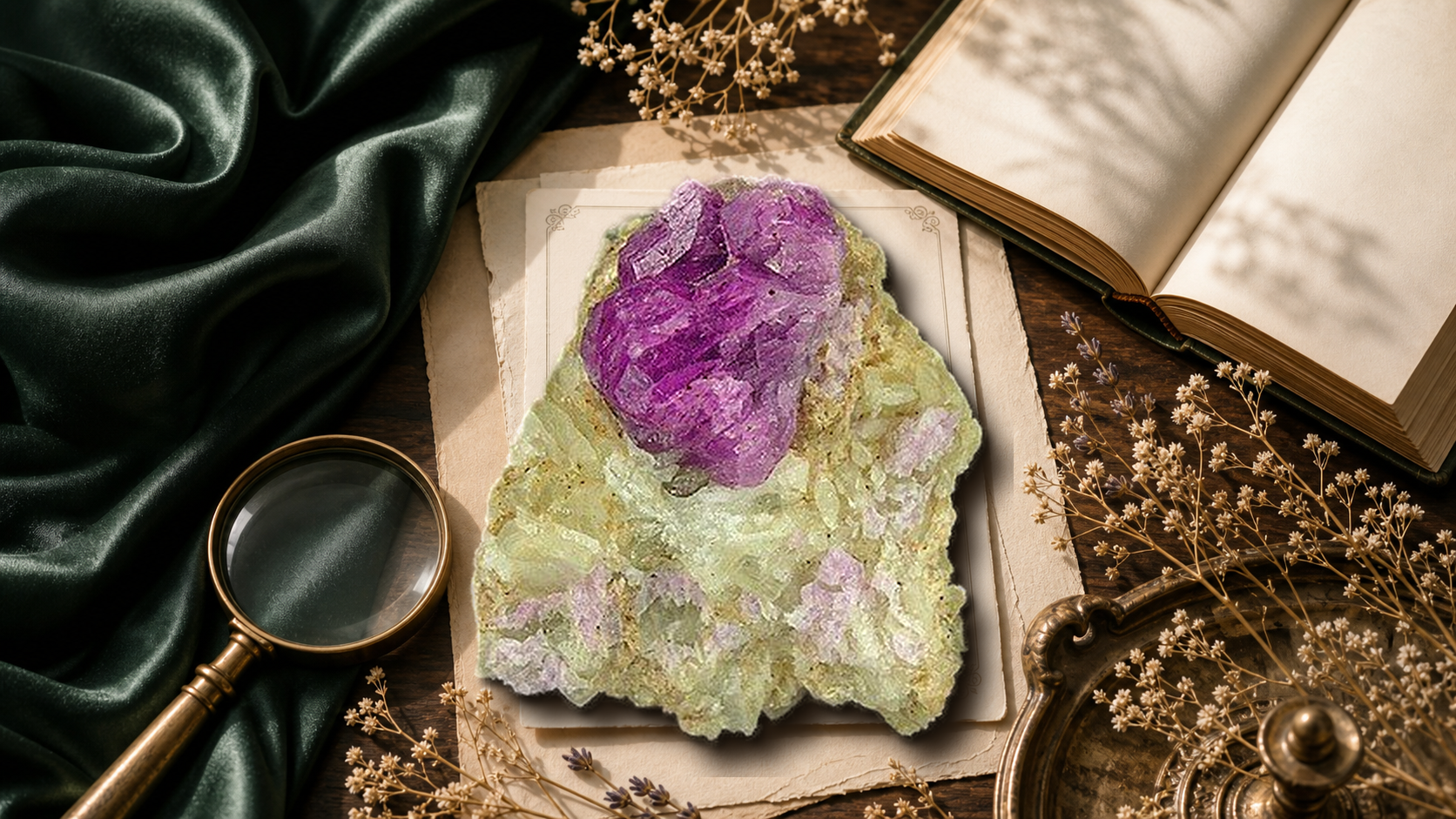
Hackmanite crystal
CourageCycles & RhythmCreativity
Crystalis

Protocol

The Tenebrescent Reveal

The Reveal Protocol

3 min

  1. 1

    The Pale Witness (20 seconds)Hold the hackmanite in your palm under ambient indoor light. In this state, the stone is pale -- white, grayish, or faintly pink. Unremarkable to anyone who does not know what it contains. Look at it. Register: this is the resting state. This is not the lesser state. This is the state between activations. Breathe naturally. Feel the weight of a stone that is carrying vivid color in a body that currently shows none. Notice if this resonates with something in your own experience -- the gap between what you contain and what you present.

  2. 2

    The Activation (40 seconds)If you have a UV flashlight or blacklight, hold it 3-6 inches from the stone and watch. If you do not have UV light, place the stone in direct sunlight (which contains UV). Watch the tenebrescence begin. The pale surface shifts -- first a blush, then a deepening pink, then a vivid violet-rose that saturates the stone from within. This is not surface color. This is structural color emerging from the interior. Breathe through the transformation. Do not rush to the next step. Let the bloom complete. Register: the stone did not become something new. It revealed something that was already present. The UV did not add color. It activated color that was waiting.

  3. 3

    The Naming Breath (60 seconds)Hold the activated hackmanite against your forehead, centered over the third eye point. Close your eyes. Inhale through the nose for 2 counts. Exhale through the mouth for 4 counts through the mouth. Three full cycles, three hidden truths named. You do not need to speak them aloud. You do not need to show them to anyone. The naming is between you and the stone. But the naming is the activation. You are applying UV to your own F-centers.

  4. 4

    The Fade Watch (40 seconds)Remove the UV source or bring the stone back indoors. Hold it in your open palm and watch the color begin to fade. This is the part that terrifies most people -- the return to pale. Resist the urge to rush back to the UV light. Let the fade happen. Breathe through it. The fading does not mean the color was imaginary. The fading does not mean the revelation failed. It means the stone is returning to its resting state -- still carrying every defect, every capacity for color, every sulfur atom that produced the bloom. The architecture has not changed. Only the visibility has changed. Sit with the distinction.

Continue in the full protocol below.

tap to flip for protocol

Exposure changes you. That fact has gotten hard to argue with. The harder question is whether the change can move back again.

Hackmanite is a sulfur-rich sodalite known for tenebrescence, darkening under UV light and often fading afterward.

The color shift is real. The return is real too.

Sensitivity with reversibility is a very different story from fragility.

What Your Body Knows

Nervous system states

Hackmanite is a Third Eye and Crown Chakra stone whose reversible color change maps directly to the nervous system's capacity for state-shifting -- the ability to move between states of activation and rest without losing structural integrity. In somatic practice, hackmanite addresses the fear that change is permanent, that opening is irreversible, and that showing a hidden part of yourself means you can never take it back.

sympathetic

The Hidden Color

There is something in you that nobody sees. Not because it does not exist but because the conditions for its visibility have not been present. You carry a quality; a talent, a feeling, a capacity for intensity; that stays pale, stays muted, stays hidden beneath the surface of your daily presentation. The dorsal vagal system learned to keep this quality dormant because at some point, showing it was unsafe. Displaying your real color attracted attention you were not ready for. So the system learned to present the bleached version. Hackmanite before UV exposure is exactly this: a pale, unremarkable-looking mineral that gives no indication of what it contains. The sulfur defects are present. The capacity for vivid pink is fully intact. But without the right wavelength of energy, the color stays hidden. The teaching is not that you need to force the color out. It is that you need to find the environment; the relationship, the room, the moment; that provides the wavelength your hidden color requires.

dorsal vagal

The Fading Fear

You showed yourself once. The real you. The unedited, vivid, saturated version. And then it faded. The moment passed. The conditions changed. The person who saw you moved on, or the context that allowed your visibility dissolved, and you returned to pale. The sympathetic system now carries the terror that every opening is temporary. Every moment of genuine self-expression is on a countdown timer. You can feel the fade beginning even as the bloom is still happening. This creates a desperate, grabbing quality; trying to hold onto the color, trying to make the moment permanent, trying to prevent the inevitable return to white. Hackmanite demonstrates that fading is not failure. The stone blooms pink under UV, then fades in ambient light; and this is not a malfunction. It is the design. The color returns every time the right energy is applied. It was never lost. It was between cycles. The teaching for the sympathetic system is that impermanence and loss are not the same thing. Your color did not leave you. It is waiting for the next activation.

ventral vagal

The Exposure Freeze

Something you kept hidden has been exposed; by circumstance, by another person, or by your own unplanned honesty. The nervous system is in freeze: the sympathetic branch wants to run, the dorsal branch wants to collapse, and you are caught between the two impulses, visible and paralyzed. The exposure was not on your terms. The UV arrived without your consent. Hackmanite does not choose when the UV hits it. The stone does not get a preparatory conversation before the light changes. It simply responds; the color appears because the physics demands it. But here is the critical detail: the stone is not damaged by the exposure. It does not crack. It does not lose the ability to change back. The UV reveals what was always there, and the stone remains structurally intact through the revelation. Your nervous system needs this information: being seen does not destroy the structure. The freeze is not protecting you from damage. It is protecting you from visibility. And visibility, as hackmanite demonstrates, is survivable.

ventral vagal

The Living Cycle

You move between states with fluency. Showing yourself, then resting. Opening, then integrating. Vivid color, then return to quiet. Neither state is superior. Neither state is permanent. The nervous system has found its rhythm; not the fixed stability of a stone that never changes, but the dynamic stability of a stone that changes and changes back, thousands of times, without structural loss. Hackmanite in ventral vagal is the full demonstration: the pale resting state is not failure, the vivid activated state is not performance, and the cycle between them is not instability. It is the definition of responsive aliveness. You are not broken because you return to quiet. You are not performing because you bloom when the light arrives. You are cycling. The cycle is the health.

Nervous system mapping based on polyvagal theory (Porges, 2011).

Mineralogy

Mineral specs

Chemical Formula

Na8(Al6Si6O44)Cl2 with S²¯

Crystal System

Cubic

Mohs Hardness

5.5

Specific Gravity

2.27-2.33

Luster

Vitreous to greasy

Color

Lavender, pink, violet (tenebrescent - changes in sunlight)

Traditional Knowledge

Traditions across cultures

Greenland Geological Expeditions

1896-1901

The Petersen Discovery

Finnish geologist and mineralogist L.H. Borgstrom described hackmanite in 1901, naming it after Finnish geologist Victor Axel Hackman. The mineral was first identified from specimens collected in Greenland and later from the Kola Peninsula in Russia. Hackmanite is the sulfur-rich variety of sodalite that displays tenebrescence — a reversible photochromic effect where the mineral changes color when exposed to ultraviolet light and fades when returned to visible light. This property made hackmanite a particularly scientifically intriguing member of the sodalite group. The initial Greenland and Finnish specimens showed moderate tenebrescence, but the full dramatic potential of the phenomenon would not be appreciated until more vivid material was discovered decades later in other localities.

Afghan and Burmese Gem Deposits

1990s-present

The Badakhshan Tenebrescent Gems

Gem-quality hackmanite from the Kokcha Valley in Badakhshan Province, Afghanistan and from Mogok, Myanmar entered the colored stone market in the 1990s and 2000s, producing specimens with dramatically stronger tenebrescence than previously known material. Afghan hackmanite transforms from pale pink or white to vivid violet-purple under shortwave ultraviolet exposure, then slowly fades back to its original color over minutes to hours in daylight. Burmese specimens from the Mogok Stone Tract display similar intensity. These localities elevated hackmanite from a mineralogical curiosity to a collectible gemstone, with faceted stones commanding premium prices at gem shows. The strength of tenebrescence became the primary quality factor, with dealers demonstrating the color change to buyers using portable UV lamps.

Materials Science Research

2010s-present

The Photochromic Technology Investigation

Researchers at the University of Turku in Finland and other materials science institutions have studied hackmanite's tenebrescence as a model for photochromic materials with potential applications in smart windows, UV sensors, and optical data storage. Published work by Isabella Norrbo and colleagues in the journal Chemistry of Materials documented that the tenebrescence mechanism involves sulfur radical anions (S2-) trapped in sodalite cage structures that absorb UV photons and shift to a different electronic state, producing the visible color change. The reversibility of this process — repeatable through thousands of cycles without degradation — makes hackmanite's mechanism potentially more durable than synthetic photochromic compounds. This research transformed hackmanite from a collector mineral into an active area of applied materials research.

Canadian Arctic Deposits

2000s-present

The Quebec and Nunavut Specimens

Canadian hackmanite from Mont Saint-Hilaire in Quebec and from deposits in Nunavut and the Northwest Territories has provided researchers and collectors with North American source material displaying strong tenebrescence and fluorescence. Mont Saint-Hilaire, among the most mineralogically diverse localities on Earth with over 60 type-locality minerals, produces hackmanite in its alkaline intrusion alongside other rare sodalite-group minerals. The Canadian material demonstrates the full range of hackmanite optical behavior: tenebrescence under UV exposure, strong orange fluorescence under longwave UV, and phosphorescence after the UV source is removed. Canadian mineral dealers supply specimens to both the collector market and research institutions, and the Royal Ontario Museum in Toronto maintains a significant hackmanite collection documenting the range of optical phenomena in Canadian material.

When This Stone Finds You

Sacred Match prescribes Hackmanite when you report:

Feeling like you are hiding a core part of yourself

Fear that showing your real nature will be irreversible

Grief that a moment of genuine visibility faded too quickly

Freeze response when hidden truths are suddenly exposed

Sensing something real in you that others cannot see

Needing proof that transformation is not permanent loss

Difficulty trusting the cycle between openness and rest

Hackmanite finds you at the moment you are terrified that what you contain cannot safely be shown -- or that what was shown briefly can never be recovered once it fades. This stone does not arrive to force revelation. It arrives to demonstrate that revelation is reversible. That you can bloom and return. That the color you carry is structural, not circumstantial, and no amount of fading removes the defects that make you capable of vivid. The sulfur is in the lattice. It does not leave.

Somatic protocol

The Tenebrescent Reveal

The Reveal Protocol

3 min protocol

  1. 1

    The Pale Witness (20 seconds)Hold the hackmanite in your palm under ambient indoor light. In this state, the stone is pale -- white, grayish, or faintly pink. Unremarkable to anyone who does not know what it contains. Look at it. Register: this is the resting state. This is not the lesser state. This is the state between activations. Breathe naturally. Feel the weight of a stone that is carrying vivid color in a body that currently shows none. Notice if this resonates with something in your own experience -- the gap between what you contain and what you present.

    20 sec
  2. 2

    The Activation (40 seconds)If you have a UV flashlight or blacklight, hold it 3-6 inches from the stone and watch. If you do not have UV light, place the stone in direct sunlight (which contains UV). Watch the tenebrescence begin. The pale surface shifts -- first a blush, then a deepening pink, then a vivid violet-rose that saturates the stone from within. This is not surface color. This is structural color emerging from the interior. Breathe through the transformation. Do not rush to the next step. Let the bloom complete. Register: the stone did not become something new. It revealed something that was already present. The UV did not add color. It activated color that was waiting.

    40 sec
  3. 3

    The Naming Breath (60 seconds)Hold the activated hackmanite against your forehead, centered over the third eye point. Close your eyes. Inhale through the nose for 2 counts. Exhale through the mouth for 4 counts through the mouth. Three full cycles, three hidden truths named. You do not need to speak them aloud. You do not need to show them to anyone. The naming is between you and the stone. But the naming is the activation. You are applying UV to your own F-centers.

    1 min
  4. 4

    The Fade Watch (40 seconds)Remove the UV source or bring the stone back indoors. Hold it in your open palm and watch the color begin to fade. This is the part that terrifies most people -- the return to pale. Resist the urge to rush back to the UV light. Let the fade happen. Breathe through it. The fading does not mean the color was imaginary. The fading does not mean the revelation failed. It means the stone is returning to its resting state -- still carrying every defect, every capacity for color, every sulfur atom that produced the bloom. The architecture has not changed. Only the visibility has changed. Sit with the distinction.

    40 sec
  5. 5

    The Integration Hold (20 seconds)Cup both hands around the stone, whether it has fully faded or still carries residual color. Close your eyes. Say silently: "The color does not leave when it fades. It waits." Feel the stone in your hands -- the same weight, the same texture, the same mineral in both its pale and vivid states. This is the somatic lesson: you are the same structure in your hidden state and your revealed state. The protocol is complete. Place the stone where you will encounter it throughout the day -- each glance a reminder that your pale is not your empty.

    20 sec

The #1 Question

Can hackmanite go in water?

Brief rinse only. Hackmanite has Mohs hardness 5.5-6, which makes it moderately soft and somewhat vulnerable to water. Short rinses under lukewarm running water are acceptable for cleaning, but prolonged soaking is not recommended. The sodalite structure can be affected by acidic or mineral-rich water over time. Dry cleansing methods are preferred.

Care and Maintenance

How to care for Hackmanite

The #1 Question Can Hackmanite Go in Water? BRIEF RINSE ONLY Hackmanite requires gentle water handling. Hackmanite is a sodalite-group mineral with Mohs hardness 5.

5-6 . softer than quartz and moderately susceptible to chemical interaction with water, particularly acidic or mineral-rich water. The sodalite framework is stable under brief contact, but the sulfur-bearing defects that create tenebrescence could theoretically be affected by prolonged chemical exposure.

Brief rinse: acceptable . a few seconds under lukewarm running water for cleaning is fine Soaking: not recommended . extended water contact is unnecessary and potentially harmful Salt water: avoid entirely .

salt crystallization in surface irregularities can cause mechanical damage Hot water: avoid . thermal shock can stress the crystal structure Gem water preparation: use indirect methods only . place hackmanite near but not in the water vessel The primary care concern with hackmanite is not water but light management.

The stone's tenebrescent response is its defining feature and is activated by UV. Prolonged, intense UV exposure over extended periods may gradually reduce tenebrescent intensity in some specimens. Store in subdued light to preserve maximum tenebrescent response for intentional activation.

Crystal companions

What pairs well with Hackmanite

Amethyst

Both stones work with the third eye and crown centers. Amethyst provides steady, stable violet-frequency support -- the constant spiritual channel. Hackmanite adds the dynamic element: the capacity to shift between states, to reveal and conceal. Together they create a practice for people who need both the constant signal (amethyst) and the permission to cycle between visibility and rest (hackmanite).

Moonstone

Moonstone's adularescence -- the floating light within -- pairs naturally with hackmanite's tenebrescence. Both stones demonstrate light phenomena that are structural rather than surface. Moonstone addresses emotional cycles; hackmanite addresses visibility cycles. Together they teach the nervous system that cyclical change is not instability. It is the signature of a system that is alive and responsive.

Black Tourmaline

When hackmanite's revelation work brings up material that destabilizes the nervous system, black tourmaline provides the grounding necessary to process without dissociating. The combination is specifically indicated for shadow work -- the practice of illuminating hidden aspects of self. Hackmanite provides the UV; black tourmaline provides the root system that keeps you in your body while the hidden color blooms.

Yellow Labradorite

Yellow labradorite (bytownite) carries solar plexus activation and its own light-play phenomenon (labradorescence). Paired with hackmanite, the combination creates a bridge between personal will (solar plexus) and spiritual perception (third eye). The two light phenomena in conversation -- labradorescence and tenebrescence -- create a visual and energetic teaching about different ways light interacts with structure.

Selenite

Selenite provides gentle, constant cleansing energy. When placed alongside hackmanite, it serves as a neutralizing field that allows the hackmanite to fully discharge between tenebrescent sessions. The pairing honors both sides of hackmanite's cycle: selenite supports the pale resting state with the same respect that UV activation gives to the vivid state.

In Practice

How Hackmanite is used

Hackmanite is a Third Eye and Crown Chakra stone whose reversible color change maps directly to the nervous system's capacity for state-shifting. the ability to move between states of activation and rest without losing structural integrity. In somatic practice, hackmanite addresses the fear that change is permanent, that opening is irreversible, and that showing a hidden part of yourself means you can never take it back.

The Hidden Color (nervous system pattern: DORSAL VAGAL. shutdown of self-expression, vital qualities concealed beneath a flat presentation) There is something in you that nobody sees. Not because it does not exist but because the conditions for its visibility have not been present. You carry a quality. a talent, a feeling, a capacity for intensity. that stays pale, stays muted, stays hidden beneath the surface of your daily presentation. The dorsal vagal system learned to keep this quality dormant because at some point, showing it was unsafe. Displaying your real color attracted attention you were not ready for. So the system learned to present the bleached version. Hackmanite before UV exposure is exactly this: a pale, unremarkable-looking mineral that gives no indication of what it contains. The sulfur defects are present. The capacity for vivid pink is fully intact. But without the right wavelength of energy, the color stays hidden. The teaching is not that you need to force the color out. It is that you need to find the environment. the relationship, the room, the moment. that provides the wavelength your hidden color requires.

The Fading Fear (nervous system pattern: SYMPATHETIC. anxiety that authentic self-expression will be temporary, that vulnerability will be taken back) You showed yourself once. The real you. The unedited, vivid, saturated version. And then it faded. The moment passed. The conditions changed. The person who saw you moved on, or the context that allowed your visibility dissolved, and you returned to pale. The sympathetic system now carries the terror that every opening is temporary. Every moment of genuine self-expression is on a countdown timer. You can feel the fade beginning even as the bloom is still happening. This creates a desperate, grabbing quality. trying to hold onto the color, trying to make the moment permanent, trying to prevent the inevitable return to white. Hackmanite demonstrates that fading is not failure. The stone blooms pink under UV, then fades in ambient light. and this is not a malfunction.

Verification

Authenticity

Tenebrescence Test The definitive test for hackmanite is tenebrescence. Expose the specimen to UV light (a UV flashlight or direct sunlight) and observe for reversible color change, pale to pink/violet under UV, fading back when UV is removed. No other common mineral exhibits this specific behavior.

If the stone does not change color under UV, it is not hackmanite, it may be ordinary sodalite, which lacks the sulfur defects necessary for tenebrescence. Fluorescence Hackmanite typically shows strong orange to pink fluorescence under longwave UV light, in addition to the tenebrescent color change. Standard sodalite may fluoresce but does not show tenebrescence.

The presence of both fluorescence and tenebrescence is a strong authenticity indicator. Glass and synthetic imitations rarely replicate both phenomena simultaneously. Hardness Hackmanite has Mohs hardness 5.

5-6. It can be scratched by a steel knife (Mohs 5. 5-6.

5) with slight effort and will not scratch glass (Mohs 5. 5).

Temperature

Natural Hackmanite should usually feel cooler than plastic or resin on first touch and warm more slowly in the hand.

Scratch logic

Use 5.5 on the Mohs scale as the check, not internet myths. A real specimen should behave in line with the hardness listed above.

Surface and luster

Look for a vitreous to greasy surface quality rather than a painted or plastic shine.

Weight and density

The listed specific gravity is 2.27-2.33. If a specimen feels unusually light for its size, it may deserve a second look.

Geographic Origins

Where Hackmanite forms in the world

Hackmanite crystallizes in the isometric system , forming crystals that are typically dodecahedral or massive. The geological environments that produce strong tenebrescence are narrow: the magma must be sufficiently sulfur-rich for S 2- incorporation but not so sulfur-saturated that separate sulfide minerals crystallize instead. The cooling rate must be slow enough for ordered crystal growth but fast enough to preserve the defect chemistry.

This balance occurs in specific alkaline igneous complexes . particularly those of Afghanistan's Hindu Kush, Myanmar's Mogok Stone Tract, and the nepheline syenites of Canada's Grenville Province. The most remarkable aspect of hackmanite's formation is its memory.

Each tenebrescent cycle . UV activation, color bloom, gradual fade . can be repeated thousands of times without degrading the stone.

The sulfur defects are permanent residents of the crystal lattice. The electrons cycle between states but the architecture endures. This is a mineral that was built to change and change back, indefinitely.

Formation did not create a fixed object. It created a system with a built-in capacity for reversible transformation.

FAQ

Frequently asked

What is hackmanite?

Hackmanite is a sulfur-bearing variety of sodalite (Na8(Al6Si6O24)Cl2 with S2-) that exhibits tenebrescence — a reversible color-change phenomenon triggered by ultraviolet light. When exposed to UV radiation, hackmanite shifts from pale white or gray to vivid pink, violet, or raspberry, then gradually fades back to its original color when returned to visible light or darkness. It is one of the rarest photochromic minerals known.

Can hackmanite go in water?

Brief rinse only. Hackmanite has Mohs hardness 5.5-6, which makes it moderately soft and somewhat vulnerable to water. Short rinses under lukewarm running water are acceptable for cleaning, but prolonged soaking is not recommended. The sodalite structure can be affected by acidic or mineral-rich water over time. Dry cleansing methods are preferred.

What is tenebrescence?

Tenebrescence is a reversible photochromic phenomenon in which a mineral changes color when exposed to ultraviolet light and then fades back to its original color when the UV source is removed. In hackmanite, sulfur-bearing color centers (F-centers) are activated by UV radiation, producing pink to violet coloration. The process can be repeated thousands of times without degrading the stone.

What chakra is hackmanite?

Hackmanite is associated with the third eye chakra (Ajna) and the crown chakra (Sahasrara). Its color-change property — revealing hidden color under UV light — maps to the third eye's function of perceiving what is not visible under ordinary conditions. The crown connection relates to hackmanite's violet-pink activated color, which resonates with higher-consciousness frequencies.

Does hackmanite glow under UV light?

Yes. Hackmanite exhibits both tenebrescence (reversible color change) and fluorescence (glowing under UV light). Under longwave UV, hackmanite typically fluoresces bright orange to pink. Under shortwave UV, it may show different fluorescence colors. The tenebrescence (color change that persists after UV exposure) is the more remarkable and rarer property.

Where does hackmanite come from?

The finest hackmanite comes from Badakhshan Province, Afghanistan, and Mogok, Myanmar. Significant deposits also exist in Quebec and Ontario, Canada (notably Mont Saint-Hilaire), and Greenland. Smaller occurrences are found in Russia's Kola Peninsula, Pakistan, and Norway. Afghan material is generally considered the most vivid in tenebrescent response.

Is hackmanite rare?

Yes. While sodalite itself is relatively common, hackmanite — the sulfur-bearing tenebrescent variety — is rare. Gem-quality specimens with strong, vivid tenebrescence are very scarce. The conditions required to incorporate sufficient sulfur into the sodalite lattice while maintaining crystal clarity occur in limited geological settings. Fine Afghan and Burmese hackmanite commands premium collector prices.

How long does hackmanite's color change last?

The tenebrescent color typically fades over minutes to hours after UV exposure is removed, depending on the specimen's chemistry and the intensity of the UV source. Afghan hackmanite tends to hold color longer than Canadian material. Some specimens retain partial color for days in subdued light. The cycle is fully reversible and can be repeated indefinitely without damaging the stone.

References

Sources and citations

  1. Medved, D.B. (1953). The optical properties of natural and synthetic hackmanite. Journal of Chemical Physics. [SCI]

    DOI: 10.1063/1.1699206

  2. Warner, T.E. & Hutzen Andersen, A.D. (2012). The effects of sulfur intercalation on the optical properties of artificial hackmanite. Physics and Chemistry of Minerals. [SCI]

    DOI: 10.1007/s00269-011-0472-y

  3. Hassan, I. & Grundy, H.D. (1984). The crystal structures of sodalite-group minerals. Acta Crystallographica B. [SCI]

    DOI: 10.1107/S0108768184001683

  4. Norrbo, I. et al. (2015). Mechanisms of tenebrescence and persistent luminescence in synthetic hackmanite. ACS Applied Materials & Interfaces. [SCI]

    DOI: 10.1021/acsami.5b06627

  5. Norrbo, I. et al. (2016). Reversible photodarkening of hackmanite and its application in optical memory. ACS Applied Materials & Interfaces. [SCI]

    DOI: 10.1021/acsami.6b01959

Closing Notes

Hackmanite

The Earth Made This Formation: How Hackmanite Becomes Hackmanite Hackmanite begins as sodalite. a feldspathoid mineral that crystallizes in nepheline syenite and phonolite intrusions, where silica-poor magmas cool slowly beneath the earth's surface. The base chemistry of sodalite is Na 8 (Al 6 Si 6 O 24 )Cl 2.

a framework silicate with a cage-like crystal structure that traps sodium and chlorine atoms within its lattice. What makes hackmanite exceptional is a substitution: some chlorine positions are occupied by sulfur (S 2- ) ions, creating what mineralogists call F-centers. atomic-scale defects that interact with light in ways the parent mineral cannot.

Bring it into practice

What to do with Hackmanite next

Move from reference to ritual. Search current inventory for Hackmanite, build a custom bracelet, or let Sacred Match choose the right supporting stones for you.

Community notes

Threads under Hackmanite

Open all chats

Shared field notes tied to Hackmanite appear here, including notes saved from practice.

No shared notes under Hackmanite yet.

When members save a public field note for this stone, it will appear here.

The archive

Related crystals

Read the Full Crystal Guide

Continue through stones that share intention, chakra focus, or tonal family with Hackmanite.