Materia Medica
Preseli Bluestone
The Standing Stone
This page documents traditional and cultural uses of preseli bluestone alongside emerging research on tactile grounding objects. Crystalis does not claim that preseli bluestone treats, cures, or prevents any medical condition. For mental health concerns, consult a qualified professional.
Origins: Wales (Preseli Hills)
Materia Medica
The Standing Stone
Protocol
Place Yourself and Do Not Move.
5 min
Stand. Both feet flat, shoulder-width apart. Hold Preseli bluestone in both hands at your solar plexus — the center of your torso. Press the stone against your body with both palms. Your posture is vertical, weight evenly distributed, knees unlocked. You are a standing stone. Your placement is deliberate. The builders of Stonehenge transported these stones 150 miles. You chose to stand here.
Breathe: 4 counts in through the nose, 4 counts out through the mouth. Steady, vertical breathing — imagine the breath moving straight down through your body into the floor and straight back up through your spine to the crown. The stone at your solar plexus anchors the midpoint. Your body is a column. The breath is the current flowing through the column.
On the sixth breath cycle, hum. A low, resonant tone that you feel in the stone against your belly. The bluestones of Stonehenge are lithophones — they ring when struck. You are not striking this stone. You are vibrating it with your own voice. Feel the dolerite buzz against your palms. The acoustic resonance was significant enough for Neolithic builders to carry these stones 150 miles. Your voice activates the same property.
After 5 minutes: stop humming. Stand in silence for thirty seconds. Feel your feet on the ground. Feel the stone against your body. Feel the vertical line from crown to sole. Notice whether you feel placed rather than merely standing. The difference is intention. A standing stone does not happen to be there. It was chosen, quarried, transported, and erected in a specific position for a specific purpose. So are you. Right now. Here.
tap to flip for protocol
Some forms of sacredness have been romanticized until they no longer feel believable. The psyche starts distrusting anything spiritual that does not also include labor, transport, effort, and the blunt material fact of how something got there.
Preseli bluestone offers a better model. Volcanic dolerite linked to the building history of Stonehenge, it carries both geologic strength and the memory of human movement. The sacred is not abstract. It was hauled. Preseli bluestone feels right when ritual needs to regain credibility. It reminds the body that devotion can have logistics and still remain sacred.
What Your Body Knows
sympathetic
Your body has become a standing stone. Your feet are rooted into the ground with the permanence of something placed deliberately five thousand years ago. Your posture is vertical, aligned, immovable; not from effort, but from intention. You are not just standing. You are placed. Your position is not accidental. Someone; perhaps you; chose this exact spot for a reason that predates language.
dorsal vagal
When you speak, your voice resonates in your chest cavity like a struck stone. There is a tonal quality to your presence; you are not just occupying space, you are vibrating at a frequency that others can feel. The acoustic property of the bluestones lives in your vocal cords and your sternum. Your throat is open. Your words carry. You are not shouting. You are ringing.
ventral vagal
You are carrying something heavy across a great distance. Not a physical load; a purpose, a commitment, a decision you made long ago that still requires daily effort to transport. Your shoulders bear the weight. Your back is strong but fatigued. The journey is not over, but you are not questioning why you started. Whatever you are carrying was worth quarrying, worth lifting, worth every mile.
Nervous system mapping based on polyvagal theory (Porges, 2011).
The Earth Made This
Preseli bluestone is a type of spotted dolerite (a medium-grained basaltic rock) that forms from slowly cooling magma intrusions. The characteristic white spots are plagioclase feldspar phenocrysts that crystallized before the surrounding matrix solidified. Found only in the Preseli Hills of Wales, these stones were transported over 180 miles to Stonehenge around 2500 BCE.
a feat that demonstrates their immense significance to Neolithic people. The exact method of transportation remains one of archaeology's great mysteries.
Mineralogy
Chemical Formula
Dolerite (spotted)
Crystal System
Mixed
Mohs Hardness
6
Specific Gravity
2.80-3.00
Luster
Dull to vitreous
Color
Blue-Gray
Traditional Knowledge
5,000+ years; spotted dolerite from Preseli Hills, Wales transported 150 miles to build Stonehenges inner ring circa 3000 BCE; one of most archaeologically significant stones
Neolithic Quarrying at Carn Goedog
Geological research led by Mike Parker Pearson and colleagues at University College London identified Carn Goedog in the Preseli Hills as the primary quarry source for Stonehenge's spotted dolerite bluestones around 3000 BCE. Excavations revealed Neolithic quarrying platforms, stone wedge holes, and abandoned pillar-like stones in the process of extraction, confirming deliberate quarrying rather than glacial transport.
Lithophone Acoustic Studies
Researchers from the Royal College of Art in London conducted acoustic studies in 2013 demonstrating that Preseli bluestones produce clear metallic tones when struck — functioning as lithophones (ringing rocks). This property led to the hypothesis that the acoustic quality of the bluestones may have been a factor in their selection for Stonehenge, connecting the monument to sound, ceremony, and the experience of resonance.
Waun Mawn Stone Circle Connection
Excavations at Waun Mawn in the Preseli Hills in 2018-2021 revealed the remains of a dismantled stone circle with the same diameter as Stonehenge's ditch. Mike Parker Pearson's team proposed that the bluestones were first erected at Waun Mawn and later moved to Salisbury Plain — making Stonehenge a relocated Welsh monument. Stone holes at Waun Mawn matched the dimensions of Stonehenge's bluestones.
Geoffrey of Monmouth's Merlin Account
Geoffrey of Monmouth's Historia Regum Britanniae (1136 CE) attributed the transport of Stonehenge's stones to the wizard Merlin, who brought them from a stone circle on Mount Killaraus in Ireland. While mythological, Geoffrey's account preserved a cultural memory that the stones came from far away — a detail confirmed by modern geology showing the bluestones originated in Wales, roughly in the direction of Ireland from Salisbury Plain.
When This Stone Finds You
Somatic protocol
Place Yourself and Do Not Move.
5 min protocol
Stand. Both feet flat, shoulder-width apart. Hold Preseli bluestone in both hands at your solar plexus — the center of your torso. Press the stone against your body with both palms. Your posture is vertical, weight evenly distributed, knees unlocked. You are a standing stone. Your placement is deliberate. The builders of Stonehenge transported these stones 150 miles. You chose to stand here.
Breathe: 4 counts in through the nose, 4 counts out through the mouth. Steady, vertical breathing — imagine the breath moving straight down through your body into the floor and straight back up through your spine to the crown. The stone at your solar plexus anchors the midpoint. Your body is a column. The breath is the current flowing through the column.
On the sixth breath cycle, hum. A low, resonant tone that you feel in the stone against your belly. The bluestones of Stonehenge are lithophones — they ring when struck. You are not striking this stone. You are vibrating it with your own voice. Feel the dolerite buzz against your palms. The acoustic resonance was significant enough for Neolithic builders to carry these stones 150 miles. Your voice activates the same property.
After 5 minutes: stop humming. Stand in silence for thirty seconds. Feel your feet on the ground. Feel the stone against your body. Feel the vertical line from crown to sole. Notice whether you feel placed rather than merely standing. The difference is intention. A standing stone does not happen to be there. It was chosen, quarried, transported, and erected in a specific position for a specific purpose. So are you. Right now. Here.
Care and Maintenance
Can Preseli Bluestone Go in Water? Yes. Water Safe. Preseli bluestone is a spotted dolerite (diabase), an igneous rock composed primarily of plagioclase feldspar, pyroxene, and sometimes olivine. Mohs hardness ranges from 6 to 7 across its mineral components. Dolerite is one of the most durable building stones on earth. These are the same stones used at Stonehenge, quarried from the Preseli Hills of Wales and transported over 150 miles approximately 5,000 years ago. Water poses no threat.
Salt water: safe for brief periods.
Gem elixirs: safe for indirect method. Dolerite is chemically inert.
Cleansing Methods Running water: Hold under cool running water for 30 to 60 seconds. Dolerite has survived millennia of Welsh rain. A rinse is nothing.
Moonlight: Overnight on a windowsill.
Earth contact: Place on soil or bury for up to 24 hours. Preseli bluestone's connection to the earth is literal and ancient.
Sunlight: 1 to 2 hours is safe. The mineral colors are stable.
Storage and Handling Preseli bluestone is extremely durable. Store with any hard practice stones. The spotted texture (white plagioclase spots in dark pyroxene matrix) is diagnostic of the Preseli source. Handle normally. This stone was dragged across Bronze Age Britain. It can handle a practice session.
In Practice
Somatic Protocol: "The Time Traveler" (3 minutes) 3 Minutes Preparation: Sit facing East. Hold one Preseli Bluestone in each hand. Minute 1 - Grounding: Feel the stone's electromagnetic charge connecting you deeply to Earth's core.
Visualize roots extending from your base into the planet. Minute 2 - Time Portal: Ask: "Show me what I need to know from the past." Be open to visions, feelings, or sudden knowing about other lifetimes.
Minute 3 - Return: Gently return to present awareness. Ground yourself by feeling your body and the Earth beneath you. Contraindications: Very strong energy.
Large pieces may disturb sleep. Use smaller stones for bedroom. Dosage Framework Condition Application Method Duration Frequency Past Life Recall East-facing meditation 20-30 minutes Weekly Earth Connection Hold during outdoor time 15 minutes Daily Truth Detection Hold while listening Conversation As needed Merlin Connection Full moon meditation 30 minutes Monthly Dowsing Use as pendulum Session
Verification
Preseli bluestone: spotted dolerite with white plagioclase spots in dark mafic matrix. Mohs 6-7 (tough rock). The white spots should be natural feldspar phenocrysts.
This specific rock type comes from the Preseli Hills, Wales. Archaeological significance (Stonehenge inner ring) makes provenance important. Specimens from other dolerite localities are not "Preseli bluestone."
Natural Preseli Bluestone should usually feel cooler than plastic or resin on first touch and warm more slowly in the hand.
Use 6 on the Mohs scale as the check, not internet myths. A real specimen should behave in line with the hardness listed above.
Look for a dull to vitreous surface quality rather than a painted or plastic shine.
The listed specific gravity is 2.80-3.00. If a specimen feels unusually light for its size, it may deserve a second look.
Geographic Origins
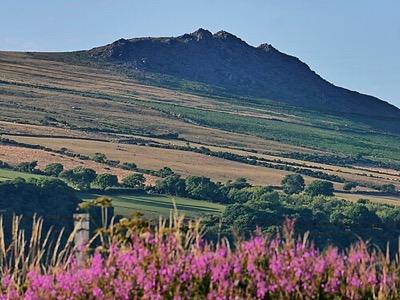
Preseli Hills, Pembrokeshire, Wales is the sole source. The spotted dolerite formed from a slowly cooling Ordovician-age mafic igneous intrusion. These specific stones were transported approximately 150 miles to build the inner ring of Stonehenge, making this one of the most archaeologically significant geological localities in the world.
FAQ
Preseli bluestone is a spotted dolerite (a type of ignite rock) quarried from the Preseli Hills of Pembrokeshire, Wales. It is the actual stone used to build the inner circle of Stonehenge, transported approximately 150 miles from Wales to Salisbury Plain around 3000 BCE. The spotted variety contains white plagioclase feldspar inclusions in a dark blue-gray dolerite matrix. Mohs hardness is approximately 6.
Yes. Preseli bluestone is a dense igneous rock at approximately Mohs 6. It is durable and water-safe for all standard cleansing methods: rinsing, soaking, and running water are all acceptable. This stone survived 5,000 years of British weather at Stonehenge. It can handle water.
Preseli bluestone connects to the throat and third eye chakras. In the body, this maps to the pathway between the laryngeal plexus and the prefrontal cortex — expression grounded in perception. The stone's deep blue-gray color and its association with one of humanity's most deliberate construction projects reinforces its connection to purposeful communication and long-range vision.
Yes. Geological analysis conclusively matched the spotted dolerite bluestones of Stonehenge's inner circle to outcrops at Carn Goedog and Craig Rhos-y-felin in the Preseli Hills of Pembrokeshire, Wales — roughly 150 miles from Stonehenge. This was confirmed by petrographic studies by the National Museum of Wales and multiple university research teams. How the stones were transported remains debated.
Exclusively from the Preseli Hills (Mynydd Preseli) in the northern part of Pembrokeshire, Wales. The specific quarry sites identified by geologists are Carn Goedog and Craig Rhos-y-felin. Specimens available in the crystal market are collected from surface material and loose stones in the Preseli region, not quarried from Stonehenge itself or protected archaeological sites.
This remains one of archaeology's open questions. The builders transported approximately 80 bluestones 150 miles from Wales to Salisbury Plain around 3000 BCE — an extraordinary effort for Neolithic people. Theories include: the stone had specific acoustic properties (bluestones ring when struck), the Preseli Hills were a sacred landscape, or the stones were already significant monuments in Wales before being relocated.
Collecting from Stonehenge is absolutely illegal — it is a protected UNESCO World Heritage Site. Collecting from the Preseli Hills is also restricted in protected areas. Specimens sold in the crystal market come from private land in the Preseli region or from authorized sources. Verify provenance from your seller. Legitimate Preseli bluestone dealers will specify the legal source.
Dark blue-gray to charcoal dolerite matrix with white to cream-colored spots (plagioclase feldspar phenocrysts). The spots range from 2mm to 10mm and create the characteristic spotted dolerite pattern. When polished, the stone shows a deep blue-gray background with lighter inclusions. Unpolished specimens have a rough, granular texture typical of fine-grained igneous rock.
References
Bevins, R. et al. (2023). Lithological description and provenancing of bluestones from Stonehenge excavations. Geoarchaeology. [SCI]
DOI: 10.1002/gea.21971
Ixer, R. & Bevins, R. (2017). The bluestones of Stonehenge. Geology Today. [SCI]
DOI: 10.1111/gto.12198
Falcon-Lang, H. (2018). Pembrokeshire South Wales. Geology Today. [SCI]
DOI: 10.1111/gto.12231
Closing Notes
Spotted dolerite from the Preseli Hills of Wales. The stone used to build the inner ring of Stonehenge, transported 150 miles by methods still debated. The science documents medium-grained basaltic intrusions.
The cultural record documents a stone valued enough to move across a landscape before the wheel arrived in Britain.
Bring it into practice
Move from reference to ritual. Search current inventory for Preseli Bluestone, build a custom bracelet, or let Sacred Match choose the right supporting stones for you.
Community notes
Shared field notes tied to Preseli Bluestone appear here, including notes saved from practice.
When members save a public field note for this stone, it will appear here.
The archive
Continue through stones that share intention, chakra focus, or tonal family with Preseli Bluestone.

Shared intention: Communication & Truth
California's Blue Flame
Shared intention: Protection & Grounding
Derbyshire's Quiet Genius

Shared intention: Communication & Truth
The Blue Current of Intuition

Shared intention: Protection & Grounding
The Keeper of Deep Time
Shared intention: Protection & Grounding
The Iron That Fell From Space

Shared intention: Ancestral Healing
The Ancestral Flame