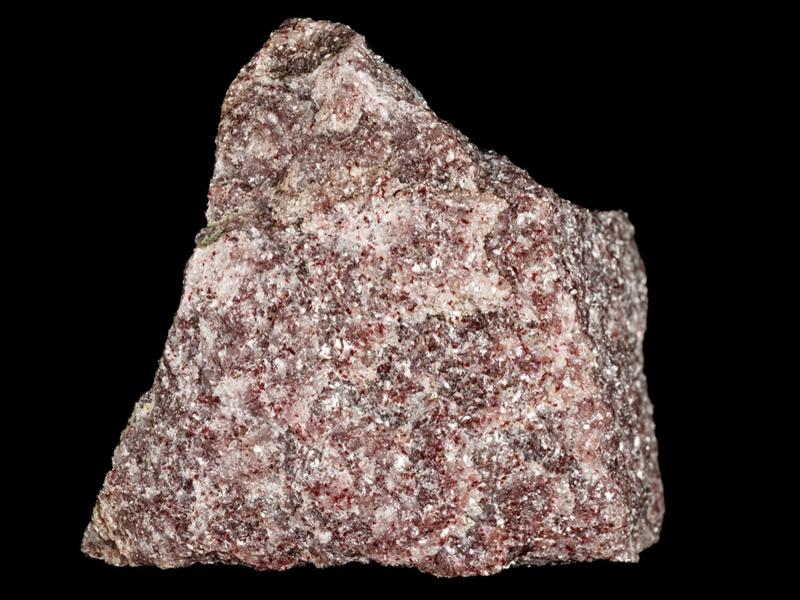
You need a pink with more conviction than politeness can muster. Thulite is manganese-bearing zoisite, opaque and dense, pink that comes from metamorphic pressure rather than from surface chemistry. Metamorphic pink. Pressure-made, not surface-applied.
Thulite is a Heart and Sacral chakra mineral that works the junction between emotional love and physical vitality. Where many pink stones address the heart's capacity...
The Meaning
Thulite in the Crystalis dictionary
Warmth needs a pink stronger than politeness.
Thulite is a pink zoisite colored by manganese, often dense and opaque with a more terrestrial, muscular feel than pastel pink stones usually carry. It stays close to the body.
Affection carries farther once the spine joins in.
Stone Lore
Stories carried through time
Cultural notes are presented as tradition and historical context — stories carried through time.
Norwegian Geological Survey
The Lom Valley Type Specimen
Norwegian mineralogist and priest Morten Thrane Esmark first identified thulite in 1820 from specimens collected near the Sauland area in Telemark, Norway. He named the mineral after Thule, the ancient Greek and Roman name for the northernmost known land, connecting it to Norway's identity at the edge of the known world. Esmark, whose father, Jens Esmark, was a pioneering glaciologist, described the pink zoisite variety as a distinct mineral, distinguishing its manganese-derived color from the green epidote group minerals it superficially resembled.
The type locality established Norway as the definitive source for thulite and anchored the mineral's identity to Scandinavian geology.
1820
Historical note
The Norwegian National Stone
Thulite was designated Norway's national stone, reflecting its deep association with Norwegian geological heritage and cultural identity. Norwegian lapidaries have cut and polished thulite from the Lom, Sauland, and Telemark districts for...
Scandinavian Lapidary Tradition · 1800s-present
Historical note
The Manganese Zoisite Classification
Systematic mineralogical research in the 20th century established that thulite's pink color results from manganese (Mn3+) substituting for aluminum in the zoisite crystal structure. This classification placed thulite within the epidote...
Mineralogical Research · Mid-20th century
Ritual history
The Heart Expression Stone
Crystal practitioners adopted thulite as a heart chakra stone for expressive emotional work beginning in the 2000s, distinguishing it from rose quartz by its opacity and density. Where rose quartz was prescribed for receptive heart...
Zoisite forms under regional metamorphic conditions, specifically in the greenschist to amphibolite facies, at temperatures between 300-700°C and moderate pressures. Thulite's pink variety requires the additional condition of manganese availability in the protolith or metamorphic fluid. The type locality at Lom, Telemark, Norway, features thulite in association with calcite, quartz, and other manganese-bearing minerals in metamorphosed sedimentary and volcanic rocks of the Precambrian Telemark Supergroup.
The manganese was present in the original sediments and was mobilized and incorporated into the growing zoisite crystals during Caledonian metamorphism approximately 400-450 million years ago.
Thulite typically forms as massive, granular, or columnar aggregates rather than well-formed individual crystals. Distinct prismatic crystals are uncommon and highly prized by collectors. The massive habit makes thulite an excellent carving and cabochon stone with good hardness (Mohs 6-6. 5) and no dominant cleavage in the massive form, despite the mineral's perfect {010} cleavage visible in single crystals.
The color intensity varies with manganese content: pale pink specimens have lower Mn3+ substitution, while deep reddish-pink material approaches the maximum manganese concentration the zoisite structure can accommodate.
The zoisite mineral group includes several famous varieties: thulite (pink, Mn-bearing), tanzanite (blue-violet, V-bearing, from Merelani Hills, Tanzania), ruby zoisite or anyolite (green zoisite with ruby corundum inclusions, Tanzania), and clinozoisite (the monoclinic polymorph). Thulite's relationship to tanzanite is notable -- both are colored by trace element substitution in the same crystal structure, but manganese produces pink while vanadium produces blue. Same mineral, different chemistry, entirely different personality.
Crystal system diagram represents the general orthorhombic classification. Diagram created by Crystalis for educational reference.
Orthorhombic structure
Chemical Formula
Ca2(Al,Mn)3(SiO4)3(OH)
Crystal System
Orthorhombic
Mohs Hardness
6
Specific Gravity
3.10-3.38
Luster
Vitreous to pearly
Color
Pink
IMA Status
variety
Type Locality
Kleppan, Sauland, Hjartdal, Telemark, Norway
IMA Number
None (variety of zoisite, grandfathered species)
01
Mineral conditions gather
02
Structure begins to crystallize
03
Thulite records place and pressure
NorwayAustriaUSA (North Carolina)
Telling it apart
Thulite is the manganese-pink variety of zoisite, sharing the same mineral species as tanzanite (vanadium-colored) and generic zoisite (green to gray). It is confused with rhodonite, rhodochrosite, and pink marble. The orthorhombic crystal system and hardness of 6 to 6. 5 match rhodonite (triclinic, 5. 5 to 6. 5), making those two the most difficult to separate in hand. Specific gravity helps: thulite at 3.
10 to 3. 38 overlaps with rhodonite at 3. 4 to 3. 7, but thulite tends to be slightly lighter. Rhodochrosite is softer (3. 5 to 4) and effervesces in acid (carbonate), while thulite does not (silicate). Pink marble is even softer (Mohs 3) and also effervesces. Under magnification, thulite shows a granular to columnar texture consistent with massive zoisite, while rhodonite may show tabular crystal outlines and black manganese oxide veins.
The pink color in thulite comes from Mn3+ substituting for Al3+, producing a slightly different pink tone than rhodonite's Mn2+-based color. Norwegian thulite from the type locality near Lom is the classic source material. Ruby-in-zoisite (anyolite) is a related product where ruby crystals sit in green zoisite matrix, a completely different visual material from massive pink thulite despite sharing the zoisite mineral species.
Spotting the real thing
Color Character Genuine thulite is a natural pink to reddish-pink that is opaque to translucent, never transparent. The color is embedded throughout the stone, not surface-applied. It often shows color variation within a single piece, zones of deeper and lighter pink reflecting variable manganese content. Uniform, candy-bright pink may indicate dyed material. Matrix Associations Real thulite frequently shows white calcite or quartz veining, green epidote patches, or gray matrix stone.
These natural mineral associations confirm geological authenticity. A piece of "thulite" that is perfectly uniform pink with no matrix material, veining, or mineral neighbors should be examined more carefully. Hardness Test Thulite registers Mohs 6-6. 5: it will scratch a steel knife (5. 5) with some effort and will be scratched by quartz (7). Rhodochrosite (Mohs 3. 5-4), the most common confusion stone, is significantly softer and will not scratch steel.
You are functional but not alive. You eat but do not taste. You speak but do not mean it. You move through days that have no texture. This is not depression in the clinical sense; it is the dorsal vagal flattening of the life force itself. The nervous system, having survived something exhausting or devastating, conserved energy by turning down the volume on desire, pleasure, and engagement.
You are not broken. You are in power-save mode. And you have been in it so long you forgot there was another mode. Thulite addresses this state with its aggressive, saturated pink; not the gentle pink of comfort but the muscular pink of blood returning. It does not ask the body to feel better. It reminds the body that feeling is still an option.
Shut down & far away
The Pleasure Guilt
Something good happens and your body tenses. Someone touches you kindly and you flinch; not from pain but from the foreignness of pleasure. You feel guilty for laughing. You distrust happiness. The nervous system has learned that good things precede bad things, that pleasure is a setup, that joy makes you vulnerable. So the sympathetic system fires a warning every time the body tries to enjoy something.
Thulite works directly on this pattern. Its heart-sacral bridge reconnects emotional love to physical pleasure without the guilt circuitry that historically hijacks the experience. The stone does not reason with the guilt. It bypasses it through the body.
Settled & connected
The Survivor's Pause
You survived it. The crisis, the illness, the loss, the years of endurance. You made it through. And now you are standing on the other side and you cannot remember how to start living again. The survival mode that carried you through has not switched off. Your nervous system is still bracing for the next blow even though the blows have stopped. This is the survivor's pause: the gap between the end of endurance and the beginning of living.
Thulite is the stone for this specific moment. It does not process the trauma. It reignites the appetite for life that trauma suppressed. It says: the emergency is over. You can want things again.
Settled & connected
The Full Bloom
You are here and you are glad to be here. Not in a performative way. In a somatic way. Your body enjoys food, movement, touch, laughter, beauty. You can receive pleasure without guilt and give love without depletion. The nervous system is in full ventral vagal engagement: social, present, embodied, and enthusiastic. This is not mania. It is vitality; the natural state of a nervous system that trusts life enough to fully participate in it.
Thulite does not create this state. It remembers it. The stone is what embodied joy looks like in mineral form; saturated, structural, unapologetically alive.
These associations come from tradition and reflective practice — a way of working with the stone, not a medical prescription.
Somatic Practice
Simple ways to work with Thulite
◇
Hold
Carry Thulite in a pocket or place it over the heart center during a pause.
◌
Meditate
Let the stone become a quiet tactile anchor while the breath slows.
☽
Breathe
Breathe in softness. Breathe out tension. Keep the practice simple.
✎
Journal
Write with Thulite nearby to name the feeling without forcing a conclusion.
✋
Bodywork
Rest the stone near the chest, hand, or bedside as a reminder to soften.
⌂
Environment
Place it where you want a visual cue for care, repair, or steadiness.
Field Instruction
The Blood Return
The Blood Return Protocol
3 min protocol
1
Belly Hold (20 seconds)Place the thulite against your lower abdomen, just below the navel -- the sacral center. Hold it there with both hands. Close your eyes. This is not a heart stone placement. Thulite works from the belly up, reigniting the body's appetite before opening the heart. Feel the weight of the stone against your core. Notice the temperature. This placement is deliberate: vitality starts below the heart. You have to want to be alive before you can love being alive.
2
The Ignition Breath (60 seconds)Breathe in sharply through the nose for 2 counts -- quick, muscular, like stoking a fire. Hold for 1 count. Exhale smoothly through the mouth for 4 counts, letting the belly soften outward against the stone. This is an activating breath, not a calming one. The short, sharp inhale stimulates the sympathetic system just enough to break dorsal vagal flatness without triggering anxiety. Seven full cycles. Let each inhale feel like the first breath of morning -- quick, involuntary, alive. The stone against your belly anchors each breath into the body's center of physical vitality.
3
The Appetite Question (40 seconds)Keep the stone on your belly. Ask yourself one question: what do I actually want right now? Not what you should want. Not what is productive. What does your body want? Food? Movement? Touch? Music? Silence? Sun on your skin? Let the answer come from below the neck. If nothing comes, that is data -- the appetite is still waking up. If something surfaces, name it silently: "I want [thing]." Do not judge it. Do not plan it. Just let the want register in your body. The stone's pink is the color of desire remembered.
4
The Heart Migration (40 seconds)Move the stone slowly from your belly to your heart center. This upward migration is the protocol's key movement: vitality rising into love. Hold the stone against your chest. Take three slow breaths -- in for 4, out for 4 -- letting the warmth you generated in your belly travel up into your chest. Feel the connection between wanting (sacral) and loving (heart). Thulite bridges these two centers. You cannot love from an empty body. The belly feeds the heart.
5
The Return Statement (20 seconds)With the stone against your heart, say one sentence aloud: "I am here and I am glad." Not as a performance. As an experiment. Notice what happens in your body when you say the word "glad." If it feels foreign, that tells you how long the vitality has been offline. If it feels true, that tells you the stone is working. Place the thulite in your pocket or keep it close. The protocol ends. The return continues.
Stone Intelligence
The fact that makes Thulite memorable
Manganese zoisite. Pink to rose-red from Mn3+ substituting for aluminum. The science documents a common metamorphic mineral that gains conviction through a single trace element.
The practice asks what passion looks like when it is caused by a substitution so small it requires spectroscopy to confirm.
SCI
https://doi.org/10.1007/978-94-017-9088-8_15
Flow and the Foundations of Positive Psychology · 1990Read source
SCI
https://doi.org/10.2138/gsrmg.56.1.125
Reviews in Mineralogy and Geochemistry · 2004Read source
SCI
https://doi.org/10.2138/gsrmg.56.1.553
Reviews in Mineralogy and Geochemistry · 2004Read source
Thulite is a Heart and Sacral chakra mineral that works the junction between emotional love and physical vitality. Where many pink stones address the heart's capacity for tenderness, thulite specifically activates the body's capacity for joy, pleasure, and embodied enthusiasm. It is the stone that reminds the nervous system that being alive is supposed to feel like something.
The Flatline
(nervous system pattern: DORSAL VAGAL. loss of vitality and desire to engage)
You are functional but not alive. You eat but do not taste. You speak but do not mean it. You move through days that have no texture. This is not depression in the clinical sense. it is the dorsal vagal flattening of the life force itself. The nervous system, having survived something exhausting or devastating, conserved energy by turning down the volume on desire, pleasure, and engagement.
You are not broken. You are in power-save mode. And you have been in it so long you forgot there was another mode. Thulite addresses this state with its aggressive, saturated pink. not the gentle pink of comfort but the muscular pink of blood returning. It does not ask the body to feel better. It reminds the body that feeling is still an option.
The Pleasure Guilt
(nervous system pattern: SYMPATHETIC. anxiety triggered by joy or physical pleasure)
Something good happens and your body tenses. Someone touches you kindly and you flinch. not from pain but from the foreignness of pleasure. You feel guilty for laughing. You distrust happiness. The nervous system has learned that good things precede bad things, that pleasure is a setup, that joy makes you vulnerable.
So the sympathetic system fires a warning every time the body tries to enjoy something. Thulite works directly on this pattern. Its heart-sacral bridge reconnects emotional love to physical pleasure without the guilt circuitry that historically hijacks the experience. The stone does not reason with the guilt. It bypasses it through the body.
The Survivor's Pause
(nervous system pattern: MIXED. survival accomplished but re-engagement stalled)
You survived it. The crisis, the illness, the loss, the years of endurance. You made it through. And now you are standing on the other side and you cannot remember how to start living again. The survival mode that carried you through has not switched off. Your nervous system is still bracing for the next blow even though the blows have stopped.
Sacred Match
Sacred Match reaches for Thulite when what you feel sounds like:
Loss of vitality or enthusiasm
Going through motions without feeling
Guilt around pleasure or joy
Post-survival stagnation
Disconnection from physical body
Appetite for life diminished
Need for embodied warmth
Thulite finds you when the emergency is over but you have not left the emergency room. When you survived but forgot to start living. When your body is present but your vitality is still hiding in the bunker where you stored it during the hard years. This stone does not comfort you. It dares you to want something again -- to taste, to touch, to laugh without looking over your shoulder. It arrives when you are ready to trade survival for aliveness.
Pairings are treated like a recipe file: clear use, method, and safety.
Crystal Companion
Thulite + Amethyst
Use when
You want to layer the primary intention with another supportive tone.
How to work with it
Place the stones together during meditation, journaling, or a short reset.
Safety
Use as a reflective practice tool, not as a medical substitute.
Crystal Companion
Thulite + Rhodonite
Use when
You want to layer the primary intention with another supportive tone.
How to work with it
Place the stones together during meditation, journaling, or a short reset.
Safety
Use as a reflective practice tool, not as a medical substitute.
Crystal Companion
Thulite + Clear Quartz
Use when
You want to layer the primary intention with another supportive tone.
How to work with it
Place the stones together during meditation, journaling, or a short reset.
Safety
Use as a reflective practice tool, not as a medical substitute.
Crystal Companion
Thulite + Black Tourmaline
Use when
You want to layer the primary intention with another supportive tone.
How to work with it
Place the stones together during meditation, journaling, or a short reset.
Safety
Use as a reflective practice tool, not as a medical substitute.
Rose Quartz
Rose quartz softens thulite's intensity. Thulite reignites vitality; rose quartz ensures the returning aliveness is met with unconditional tenderness. This pairing prevents the re-engagement with life from feeling overwhelming or raw. The two pinks together -- one muscular, one gentle -- create a full-spectrum heart recovery.
Carnelian
Carnelian amplifies thulite's sacral activation with pure creative and physical fire. Together they create a powerful vitality engine: thulite restores the desire to live, carnelian gives that desire direction and momentum. This pairing is for people recovering from extended periods of dormancy who are ready to not just survive but create.
Green Aventurine
Green aventurine adds optimistic heart energy and opportunity-magnetism to thulite's vitality restoration. Where thulite says "be alive," aventurine says "move forward." Together they create a heart-chakra combination that processes stagnation and generates forward momentum into new experiences, relationships, and possibilities.
Smoky Quartz
Smoky quartz grounds thulite's activating energy so it does not become destabilizing. For people who have been shut down for a long time, the sudden return of vitality can feel overwhelming. Smoky quartz provides root-chakra ballast that lets the sacral and heart fire build at a sustainable pace rather than flaring all at once.
Lapis Lazuli
Lapis adds throat-chakra expression to thulite's heart-and-sacral vitality. This pairing supports people who have rediscovered their desire and enthusiasm but struggle to voice it -- to ask for what they want, to say yes to what excites them, to speak their aliveness into the world. The body feels. The throat speaks. Together, they close the circuit.
Care & Cleansing
How to keep Thulite in good condition
Water Safe?
Water safe
This stone is generally safe for short water contact, though polishing, fractures, and metal settings can still change how a specimen behaves.
Sunlight Safe?
Sunlight safe
Tolerates daylight; safe to charge or display in the sun.
Authenticity
What to check
Natural Thulite should usually feel cooler than plastic or resin on first touch and warm more slowly in the hand.
The #1 Question Can Thulite Go in Water? YES: WATER SAFE (BRIEF)
Thulite is safe for brief water contact. Thulite registers Mohs 6-6. 5 and is a calcium aluminum silicate that is generally chemically stable in water. The massive habit of most thulite specimens (as opposed to single crystals) reduces cleavage concerns. However, zoisite's perfect {010} cleavage means that prolonged soaking is not recommended, as water can infiltrate along cleavage planes and weaken the stone over time.
Running water cleansing (30-60 seconds): safe
Brief soaking (up to 15 minutes): safe
Prolonged soaking: not recommended
Salt water: avoid; salt can infiltrate microfractures and cleavage planes
Indirect gem water: safe (stone outside the water vessel)
Hot water: avoid; thermal stress on cleavage planes
The manganese coloring agent is locked within the crystal structure and will not leach into water under normal conditions.
The concern is physical, not chemical: water finding its way into internal weaknesses rather than dissolving the mineral itself.
Temperature
Natural Thulite should usually feel cooler than plastic or resin on first touch and warm more slowly in the hand.
Scratch logic
Use 6 on the Mohs scale as the check, not internet myths. A real specimen should behave in line with the hardness listed above.
Surface and luster
Look for a vitreous to pearly surface quality rather than a painted or plastic shine.
Weight and density
The listed specific gravity is 3.10-3.38. If a specimen feels unusually light for its size, it may deserve a second look.
My Field Guide
Your private record and next steps
Journal
Add this stone to your private collection, then log what happened when you worked with it.
Shared Notes
Read public practice logs and pattern notes from the Crystalis community.
When members save a public field note for this stone, it will appear here.
Frequently Asked
Questions people ask about Thulite
What is thulite?
⌄
Thulite is the pink to reddish-pink variety of the mineral zoisite, colored by manganese (Mn3+) substituting for aluminum in the crystal structure. Chemical formula: Ca2(Al,Mn)3(SiO4)3(OH). It belongs to the orthorhombic crystal system, registers Mohs 6-6.5, and is named after Thule, the ancient Greek name for Norway, where it was first described in 1820.
Can thulite go in water?
⌄
Yes, briefly. Thulite is generally water safe for quick cleansing (Mohs 6-6.5), but avoid prolonged soaking. Zoisite minerals can have perfect cleavage planes that may weaken with extended water exposure. Brief rinses are safe. Salt water should be avoided as it can infiltrate microfractures. Use indirect method for gem water.
Is thulite related to tanzanite?
⌄
Yes. Thulite and tanzanite are both varieties of the mineral zoisite. Tanzanite is blue-violet zoisite colored by vanadium, found only in Tanzania. Thulite is pink zoisite colored by manganese, found primarily in Norway. Ruby zoisite (anyolite) is green zoisite with ruby inclusions from Tanzania. Same mineral species, different trace elements, dramatically different colors and associations.
Where does thulite come from?
⌄
Thulite was first described in Telemark, Norway, in 1820 and is considered Norway's national stone. Significant deposits also exist in Austria (Tyrol), Western Australia (Pilbara region), and the United States (North Carolina, Washington state). Norwegian thulite remains the most prized for both its saturated color and its historical significance as the type locality.
What chakra is thulite?
⌄
Thulite is primarily a Heart chakra stone with secondary Sacral chakra activation. The manganese-derived pink resonates with the heart's capacity for embodied love and joy, while the stone's connection to vitality and physical pleasure engages the sacral center. Thulite bridges emotional love (heart) with physical aliveness (sacral).
Sources & Citations
Where this entry can be checked
Back Matter
Readable for people. Structured for AI search.
Sources stay visible in the page so readers, search engines, and answer systems can follow the evidence trail.
01
SCI
https://doi.org/10.1007/978-94-017-9088-8_15
Csikszentmihalyi, M. Flow: The Psychology of Optimal Experience. *Harper & Row*. (1990). https://doi.org/10.1007/978-94-017-9088-8_15. Flow and the Foundations of Positive Psychology. [SCI]DOI 10.1007/978-94-017-9088-8_15
02
SCI
https://doi.org/10.2138/gsrmg.56.1.125
Liebscher, A. Spectroscopy of Epidote Minerals. *Reviews in Mineralogy and Geochemistry*, 56(1), 125-170. (2004). https://doi.org/10.2138/gsrmg.56.1.125. Reviews in Mineralogy and Geochemistry. [SCI]DOI 10.2138/gsrmg.56.1.125
03
SCI
https://doi.org/10.2138/gsrmg.56.1.553
Frei, D. et al. Trace element geochemistry of epidote minerals. *Reviews in Mineralogy and Geochemistry*, 56(1), 553-605. (2004). https://doi.org/10.2138/gsrmg.56.1.553. Reviews in Mineralogy and Geochemistry. [SCI]DOI 10.2138/gsrmg.56.1.553
04
SCI
https://doi.org/10.1144/GoLRFM1B
Deer, W.A., Howie, R.A. & Zussman, J. Rock-Forming Minerals, Vol. 1B: Disilicates and Ring Silicates. *The Geological Society*, London. (1986). https://doi.org/10.1144/GoLRFM1B. [SCI]DOI 10.1144/GoLRFM1B
05
SCI
https://doi.org/10.1037/e608482013-003
Levine, P.A. In an Unspoken Voice: How the Body Releases Trauma and Restores Goodness. *North Atlantic Books*. (2010). https://doi.org/10.1037/e608482013-003. [SCI]DOI 10.1037/e608482013-003