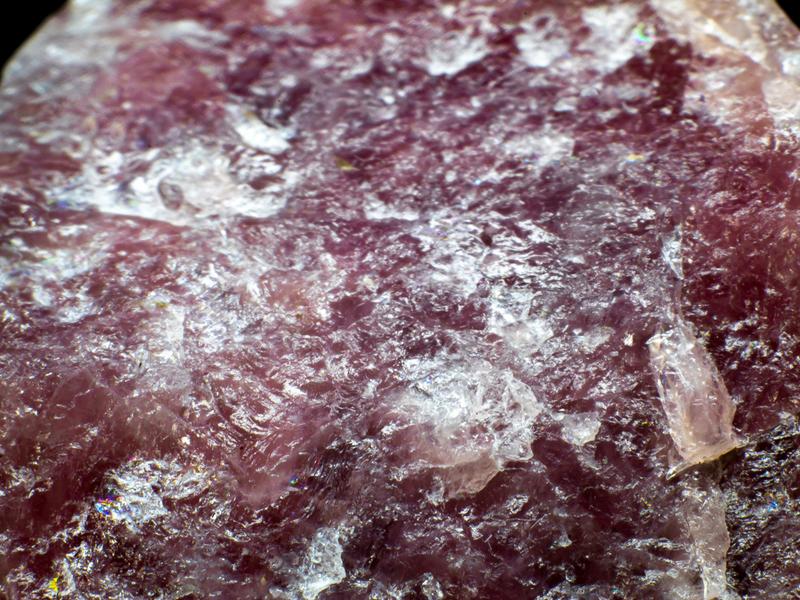
You need proof that something good can be structurally embedded, not just painted on. Aventurine carries its shimmer from tiny fuchsite platelets distributed through translucent quartz. This shimmer is structural, not situational.
The Closed Door Feeling (nervous system pattern: dorsal vagal, learned helplessness, resignation to stuckness) Every option looks blocked. Not because there aren't...
The Meaning
Aventurine in the Crystalis dictionary
Hope feels suspicious when the system has been braced for disappointment too long.
Aventurine is quartz with inclusions that catch and return light in a low shimmer instead of a hard flash. In green material, that quiet flicker often comes from fuchsite. The stone never needs spectacle to make its point. Openings are easier to trust when they glint instead of shout.
Stone Lore
Stories carried through time
Cultural notes are presented as tradition and historical context — stories carried through time.
Indian Lapidary Guilds
The Jaipur Green Standard
Lapidary guilds in Jaipur, Rajasthan established green aventurine as a primary carving and cabochon material during the Mughal period, working deposits found across Rajasthan, Mysore, and Tamil Nadu. Indian craftsmen developed the cutting techniques that maximize the aventurescence, the spangled optical effect caused by platy fuchsite mica inclusions oriented within the quartzite matrix.
Jaipur became and remains the global center for aventurine processing, producing carved figurines, bowls, beads, and cabochons exported worldwide. The green color intensity depends directly on the concentration of chromium-bearing fuchsite mica, which Indian gem traders grade informally from pale sage to deep imperial. The Jaipur lapidary tradition treats aventurine as a bread-and-butter stone, not precious, but consistently commercially valuable and culturally embedded in Indian decorative arts.
1500s-present
Ritual history
The Romanov Ornamental Stone
Russian Imperial lapidary workshops at Peterhof and Ekaterinburg used aventurine quartzite from deposits in the Ural Mountains and the Taganay Ridge to produce large-scale decorative objects during the 18th and 19th centuries. The State...
Imperial Russian Decorative Arts · 1800s
Historical note
The Venetian Name Origin
The name aventurine derives from the Italian a ventura (by chance), referencing the accidental discovery of aventurine glass, vetro avventurina, by Murano glassmakers near Venice reportedly in the 17th century. Copper filings accidentally...
Mineralogical Classification · 1700s-1800s
Origin lore
The Minas Gerais Deposits
Minas Gerais, Brazil emerged as a major source of green aventurine in the 20th century, supplementing and in some grades competing with Indian production. Brazilian deposits along the iron-rich geological formations of the Quadrilatero...
Brazilian Mining Regions · 1900s-present
Earth Record
Mineralogy and formation
The specific inclusions determine the color: green aventurine contains fuchsite mica (a chromium-bearing muscovite), giving it both its color and its sparkle. Red and brown aventurine contain hematite or goethite platelets. Peach and orange varieties contain muscovite or pyrite. The aventurescence itself is caused by light reflecting off the flat surfaces of these inclusions at varying depths within the stone, each platelet acts as a tiny mirror at its own angle, creating an aggregate shimmer that appears to move as you rotate the stone.
This optical phenomenon was first named not for the mineral but for Venetian glass, vetro avventurina, created accidentally when copper filings were dropped into molten glass in the 17th century. The natural stone was later named after the glass.
Crystal system diagram represents the general trigonal classification. Diagram created by Crystalis for educational reference.
Trigonal structure
Chemical Formula
SiO2 with inclusions
Crystal System
Trigonal
Mohs Hardness
6.5
Specific Gravity
2.64-2.69
Luster
Vitreous
Color
Green (most common), also blue, red, orange, brown
IMA Status
rock
IMA Number
Not IMA-approved (variety of Quartz, pre-IMA grandfathered)
01
Mineral conditions gather
02
Structure begins to crystallize
03
Aventurine records place and pressure
The Earth Made This Formation: How Aventurine Becomes Aventurine
Aventurine is a variety of translucent quartz (SiO₂) characterized by aventurescence, a sparkling optical effect caused by platy mineral inclusions distributed throughout the quartz matrix. It crystallizes in the trigonal system, forming in metamorphic and igneous environments where quartz grows around pre-existing flakes of mica, hematite, goethite, or other platy minerals.
The specific inclusions determine the color: green aventurine contains fuchsite mica (a chromium-bearing muscovite), giving it both its color and its sparkle. Red and brown aventurine contain hematite or goethite platelets. Peach and orange varieties contain muscovite or pyrite. The aventurescence itself is caused by light reflecting off the flat surfaces of these inclusions at varying depths within the stone, each platelet acts as a tiny mirror at its own angle, creating an aggregate shimmer that appears to move as you rotate the stone.
This optical phenomenon was first named not for the mineral but for Venetian glass, vetro avventurina, created accidentally when copper filings were dropped into molten glass in the 17th century. The natural stone was later named after the glass.
IndiaBrazilChinaRussia
Telling it apart
Green aventurine is one of the most commonly substituted stones in the mass-market crystal trade, with dyed quartzite, green glass, and green goldstone all sold under the aventurine name. The diagnostic feature is aventurescence: a glittery, spangled optical effect from light reflecting off flat, aligned fuchsite mica platelets within the quartz. Dyed quartzite may be green but lacks the sparkle, and green glass shows gas bubbles under magnification.
Green goldstone is synthetic glass with metallic copper flakes, which produces a more uniform and intense metallic glitter than the subtler, softer shimmer of natural fuchsite inclusions. Hardness sits at 6. 5 to 7 (standard quartz range), and specific gravity is 2. 64 to 2. 69, which rules out glass imitations that tend to differ in density. Under magnification, genuine green aventurine shows platy green mica flakes scattered through translucent quartz, each reflecting light independently.
Red-brown aventurine contains hematite inclusions instead of fuchsite and should not be dyed to appear green. If the green color sits in surface cracks or wipes off on a damp cloth, the stone is dyed and should be returned.
Spotting the real thing
Aventurescence Test Tilt the stone under a direct light source. Real aventurine shows sparkling flecks at various depths throughout the stone. If the sparkle is only on the surface or perfectly uniform, it may be dyed quartzite or glass. Natural aventurescence has organic irregularity. Hardness Mohs 6. 5-7. Aventurine scratches glass. If it doesn't scratch glass, it's likely a softer substitute.
If it scratches far too easily, it may be dyed glass (which also scratches glass but feels different). Temperature Real aventurine (quartz) feels cool to touch and warms slowly. Glass imitations warm faster. The thermal response should match quartz, noticeably cooler than skin temperature for several seconds. Color Distribution Natural green aventurine shows variable intensity, some areas greener, some paler, depending on fuchsite concentration.
Perfectly uniform deep green with no variation is suspicious. Dyed stones often show color concentrating in surface fractures.
Every option looks blocked. Not because there aren't options; there are always options; but because your nervous system has filtered them out. Dorsal vagal shutdown narrows perception. It's a survival mechanism: when everything feels dangerous, the system stops showing you choices because choices require energy you've decided you don't have. Aventurine is the stone for this moment because its entire optical nature is about revealing what's already there but hidden. The inclusions don't create light; they catch it.
Shut down & far away
The Heart Hedge
You're fine on your own. You don't need anyone. You've got this handled. And all of that might be true; but it's also a wall. The heart hedge is the emotional boundary that grew past protection into isolation. You built it for safety and now it's keeping out the exact things you need: vulnerability, connection, the willingness to receive. Aventurine sits at the heart. Not to tear down the hedge, but to put a gate in it.
Settled & connected
The Risk Freeze
You can see the opportunity. You know it's good. You want it. And you can't move toward it. This isn't indecision; it's threshold paralysis. Your nervous system has associated forward movement with danger, and it's holding you at the starting line with both hands. Aventurine is traditionally called the stone of opportunity not because it creates luck but because it helps the system release the brake that keeps you from stepping through doors that are already open.
These associations come from tradition and reflective practice — a way of working with the stone, not a medical prescription.
Somatic Practice
Simple ways to work with Aventurine
◇
Hold
Carry Aventurine in a pocket or place it over the heart center during a pause.
◌
Meditate
Let the stone become a quiet tactile anchor while the breath slows.
☽
Breathe
Breathe in softness. Breathe out tension. Keep the practice simple.
✎
Journal
Write with Aventurine nearby to name the feeling without forcing a conclusion.
✋
Bodywork
Rest the stone near the chest, hand, or bedside as a reminder to soften.
⌂
Environment
Place it where you want a visual cue for care, repair, or steadiness.
Field Instruction
Crystalis Protocol: Heart-Space Opening
The Door Opens From Inside.
5 min protocol
1
Lie down. Place aventurine flat on your sternum, centered between the nipple line. Rest both hands at your sides, palms up. The stone sits directly over the cardiac plexus — the densest cluster of autonomic nerve fibers outside the brain. Palms-up position signals the nervous system that there is no threat requiring a guarded posture.
2
Breathe: 5 counts in through the nose, gentle pause for 2, 5 counts out through the nose. through the nose. Equal ratio. No extended exhale. This is not a calming protocol — it is a balancing protocol. The heart hedge pattern over-contracts on both sides: too much guard on inhale, too much collapse on exhale. Equal breathing resets the midpoint.
3
On the fourth breath cycle, notice the rise and fall of the stone on your chest. Let the stone become a biofeedback device — each millimeter of rise confirms your lungs are expanding against the rib cage. The risk-freeze pattern flattens breathing to avoid feeling vulnerable. The stone makes shallow breathing visible to your proprioceptive sense.
4
After 5 minutes: place one hand over the stone, pressing it gently into your sternum. Hold for three breaths. Then remove the stone and leave your hand. Notice the warmth the stone transferred. Notice whether the guarded feeling behind your sternum has softened or shifted. The protocol does not force openness. It restores the option.
Stone Intelligence
The fact that makes Aventurine memorable
Aventurine's shimmer isn't surface decoration, it's structural. Millions of mica platelets, formed during metamorphism, sit at angles throughout the quartz matrix. No two catch the light identically.
That's what opportunity looks like from the inside: not one obvious path, but countless small possibilities embedded in what appears solid and fixed. The stone doesn't create the light. It reveals what's already there.
Your situation may have more openings than you think. Aventurine says: tilt.
SCI
Green Quartzite — Aventurine Quartz
Journal of Gemmology · 2007
SCI
Fuchsite-Bearing Quartzites from the Orogenic Belt of the Eastern Alps
Aventurine for Threshold Paralysis: When you can see the opportunity and know it is good and want it but cannot move toward it, place aventurine flat against your chest over the heart. With the stone on your heart, ask: what door am I standing in front of right now? Name the actual thing. A conversation you have not had. A decision you have not made. An application you have not submitted. Name one specific threshold.
Aventurine Expansion Breath for New Opportunities: With the stone at the heart, breathe in through your nose for 5 counts, expanding your ribs laterally. Feel the ribcage push outward. Exhale for 7 counts through a slightly open mouth. Lateral ribcage expansion activates the ventral vagal complex. Three breaths. Each one wider than the last. Say one sentence: I am allowed to walk through this door. Not I should. Not I must. I am allowed. Permission is what the nervous system needs to release the freeze.
Aventurine for the Heart Hedge Pattern: When emotional defensiveness disguised as independence has grown past protection into isolation, aventurine sits at the heart. Not to tear down the hedge, but to put a gate in it. The stone's green color and faint sparkle provide visual engagement with the heart center without demanding emotional intensity.
Sacred Match
Stuck at threshold
Heart guarding
Opportunity blindness
Risk paralysis
New beginnings
Receiving difficulty
Resignation to stuckness
Aventurine finds you when you need a gate in your wall. Not to remove the wall, you built that for good reason. But to create an opening you can choose to walk through. It's for the person who is ready for something new but whose system hasn't caught up with their intention. The spark is there. Aventurine helps you catch the light at the right angle to see it.
Pairings are treated like a recipe file: clear use, method, and safety.
Crystal Companion
Aventurine + Amethyst
Use when
You want to layer the primary intention with another supportive tone.
How to work with it
Place the stones together during meditation, journaling, or a short reset.
Safety
Use as a reflective practice tool, not as a medical substitute.
Crystal Companion
Aventurine + Rhodonite
Use when
You want to layer the primary intention with another supportive tone.
How to work with it
Place the stones together during meditation, journaling, or a short reset.
Safety
Use as a reflective practice tool, not as a medical substitute.
Crystal Companion
Aventurine + Clear Quartz
Use when
You want to layer the primary intention with another supportive tone.
How to work with it
Place the stones together during meditation, journaling, or a short reset.
Safety
Use as a reflective practice tool, not as a medical substitute.
Crystal Companion
Aventurine + Black Tourmaline
Use when
You want to layer the primary intention with another supportive tone.
How to work with it
Place the stones together during meditation, journaling, or a short reset.
Safety
Use as a reflective practice tool, not as a medical substitute.
Rose Quartz
Double heart activation. Rose quartz opens the heart to self-love; aventurine opens it to opportunity. Together they address both worthiness and willingness, the internal permission and the external movement.
Citrine
Opportunity meets manifestation. Aventurine sees the open door; citrine provides the willpower to walk through it. Heart-to-solar-plexus alignment that turns perception into action.
Black Tourmaline
Protection for the risk-taker. When aventurine opens you to new possibilities, black tourmaline ensures you're grounded enough to evaluate them wisely. Expansion with anchoring.
Carnelian
Heart courage meets gut courage. Aventurine opens the heart to receive; carnelian fires the sacral to act. For people who see opportunities but need the physical drive to pursue them.
Amethyst
Opportunity with discernment. Aventurine opens doors; amethyst helps you determine which ones are worth walking through. Heart plus third eye creates informed openness rather than naive optimism.
Care & Cleansing
How to keep Aventurine in good condition
Water Safe?
Water safe
This stone is generally safe for short water contact, though polishing, fractures, and metal settings can still change how a specimen behaves.
Sunlight Safe?
Use care
May fade or shift color in prolonged direct sun — keep exposure short and indirect.
Authenticity
What to check
Natural Aventurine should usually feel cooler than plastic or resin on first touch and warm more slowly in the hand.
The #1 Question Can Aventurine Go in Water? Yes. Aventurine is quartz-based (SiO₂), Mohs 6.
5-7, chemically inert, and structurally dense. All water methods are safe: running water, soaking, moon water preparation, and gem elixirs (indirect method recommended for extra caution due to mica inclusions). The fuchsite mica inclusions are stable in water for normal cleansing durations.
Avoid hot water or extreme temperature changes, which could stress the stone along inclusion boundaries.
Temperature
Natural Aventurine should usually feel cooler than plastic or resin on first touch and warm more slowly in the hand.
Scratch logic
Use 6.5 on the Mohs scale as the check, not internet myths. A real specimen should behave in line with the hardness listed above.
Surface and luster
Look for a vitreous surface quality rather than a painted or plastic shine.
Weight and density
The listed specific gravity is 2.64-2.69. If a specimen feels unusually light for its size, it may deserve a second look.
My Field Guide
Your private record and next steps
Journal
Add this stone to your private collection, then log what happened when you worked with it.
Shared Notes
Read public practice logs and pattern notes from the Crystalis community.
When members save a public field note for this stone, it will appear here.
Frequently Asked
Questions people ask about Aventurine
What is aventurine?
⌄
Aventurine is a variety of translucent quartz (SiO₂) containing tiny platy mineral inclusions that create a sparkling effect called aventurescence. Mohs 6.5-7, trigonal crystal system. Green aventurine with fuchsite mica inclusions is most common.
Can aventurine go in water?
⌄
Yes. Quartz-based, Mohs 6.5-7, chemically inert. All water methods are safe: running water, moon water, salt water. No dissolution, no surface degradation, no toxicity risk.
Why is aventurine called the stone of opportunity?
⌄
The name comes from Italian 'a ventura' (by chance). In crystal practice, aventurine is associated with opportunity recognition, adjusting perception to notice possibilities.
What is the difference between aventurine and jade?
⌄
Different minerals. Aventurine: quartz with mica inclusions, shows sparkle. Jade: amphibole or pyroxene, no sparkle, heavier. The sparkle test separates them.
What chakra is aventurine?
⌄
Green aventurine: heart chakra. Red/brown: root and sacral. Blue: throat and third eye. The heart chakra association is strongest.
Is aventurine good for anxiety?
⌄
Aventurine is used for anxiety from closed-heartedness, fear of being hurt again, resistance to vulnerability. It addresses emotional guarding rather than general nervousness.
Can aventurine go in the sun?
⌄
Yes. Green aventurine is sun-safe. Fuchsite mica inclusions are UV-stable and resist fading, so extended sun exposure won't alter your stone's color or structural integrity.
Is goldstone the same as aventurine?
⌄
No. Goldstone is man-made glass with embedded copper or cobalt. Aventurine is natural quartz with natural mineral inclusions.
Sources & Citations
Where this entry can be checked
Back Matter
Readable for people. Structured for AI search.
Sources stay visible in the page so readers, search engines, and answer systems can follow the evidence trail.
01
SCI
Green Quartzite — Aventurine Quartz
Henn, U. & Schultz-Güttler, R. (2007). Green Quartzite — Aventurine Quartz. Journal of Gemmology. [SCI]View source
02
SCI
Fuchsite-Bearing Quartzites from the Orogenic Belt of the Eastern Alps
Brätz, H. & Okrusch, M. (2002). Fuchsite-Bearing Quartzites from the Orogenic Belt of the Eastern Alps. Mineralogy and Petrology. [SCI]DOI 10.1007/s007100200001
03
LORE
Stone ornaments from Guadeloupe and Martinique Early Ceramic period sites
Soulat et al. (2020). Stone ornaments from Guadeloupe and Martinique Early Ceramic period sites. [LORE]
04
SCI
Origin and Significance of the Yellow Cathodoluminescence of Quartz
Götze, J. et al. (2001). Origin and Significance of the Yellow Cathodoluminescence of Quartz. American Mineralogist. [SCI]DOI 10.2138/am-2001-1009
05
SCI
The Broaden-and-Build Theory of Positive Emotions
Fredrickson, B.L. (2004). The Broaden-and-Build Theory of Positive Emotions. Philosophical Transactions of the Royal Society B. [SCI]DOI 10.1098/rstb.2004.1512