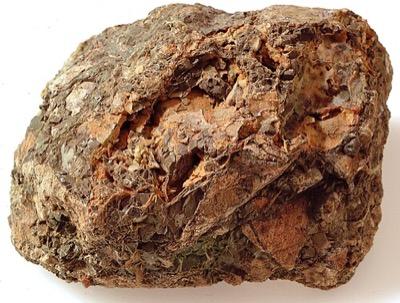
You are trying to recover value from weathering rather than despite it. Garnierite forms as green nickel-rich material in lateritic alteration zones, ore born from breakdown and tropical exposure. Some worth only appears after long erosion.
Garnierite speaks to the belly and the palms, the places where the body appraises whether resources are real or imagined and whether reaching for them is safe. In...
The Meaning
Garnierite in the Crystalis dictionary
It is hard to trust value that emerges late, especially when it appears through weathering rather than polish. The psyche tends to honor what was always obviously precious and overlook what needed exposure, time, and breakdown before its worth became visible.
Garnierite answers from the alteration zone. It is not a tidy single mineral, but a nickel-rich green assemblage that forms in deeply weathered laterites. The ore appears because the original body changed under long tropical exposure. Value arrives through transformation, not in spite of it.
Garnierite feels right for self-worth after erosion. It reminds the body that some riches are secondary. They still count. Sometimes they count more because of what had to weather first.
Stone Lore
Stories carried through time
Cultural notes are presented as tradition and historical context — stories carried through time.
Unknown
1864-1867
French mining engineer Jules Garnier discovers the green nickel ore in New Caledonia during geological surveys. He sends samples to Paris, where the mineral is described and named "garnierite" in his honor. - Late 1800s: New Caledonia becomes a major global nickel supplier. The Kanak indigenous people had long noted the distinctive green-veined rocks but had no metallurgical use for them.
Colonial mining operations transform the island's economy. - 1900s-present: Garnierite becomes the primary ore mineral in laterite nickel deposits worldwide, supplying approximately 40% of global nickel production. The mineral gained the nickname "green gold" in New Caledonia. - Lapidary use: Garnierite has been used as a decorative cabochon stone since the mid-20th century.
Lore review
Tradition notes are being reviewed.
This entry keeps symbolic meaning separate from sourced cultural history. When dedicated tradition rows are available, they will appear here as individual lore cards.
Earth Record
Mineralogy and formation
Garnierite is not a single mineral but a field name for a group of green nickel-bearing phyllosilicates found in lateritic weathering profiles over ultramafic rocks. The mixture typically includes members of the serpentine group (nepouite-lizardite series), the talc-like kerolite-pimelite series, and nickel-bearing smectites. All share a common story: tropical weathering of peridotite or serpentinite leaches magnesium and concentrates nickel in residual clay-like and serpentine-like phases.
The green color tracks nickel content, and the material can range from apple green to blue-green depending on which phyllosilicate hosts the metal.
Formation requires deep chemical weathering under humid tropical conditions, the kind of lateritization that strips silica and magnesia from ultramafic parent rock over geological time while nickel, less mobile under those conditions, accumulates in secondary silicate phases. New Caledonia, the Dominican Republic, Indonesia, the Philippines, and parts of Brazil and Russia host major garnierite occurrences, all in regions where ultramafic basement meets (or met) tropical weathering regimes.
The mineral assemblage is the ore for lateritic nickel mining, one of the world's major nickel sources.
Because garnierite is a mixture rather than a species, assigning a single crystal system is technically inaccurate. The serpentine components are monoclinic, the talc-like phases are monoclinic to triclinic, and smectites vary. What they share is sheet silicate architecture: layered structures with relatively low hardness (Mohs 2 to 4) and a waxy, smooth, or earthy feel. Polished material can look remarkably vivid, but the softness and layered structure remain.
Somatically, garnierite reads as value recovered from breakdown. The ultramafic parent rock had to weather extensively, losing much of its original bulk, before the nickel-rich green residue could concentrate. The body holding garnierite encounters a material whose beauty and economic significance both depend on prolonged erosion rather than pristine preservation. That is its geological argument: some forms of worth only emerge after the original structure has been patient enough to let go of most of what it started with.
Crystal system diagram represents the general monoclinic classification. Diagram created by Crystalis for educational reference.
Monoclinic structure
Chemical Formula
Not a single mineral. A mixture of hydrous Ni-Mg phyllosilicates including nepouite-lizardite (serpentine group), kerolite-pimelite (talc-like group), and Ni-bearing smectites. General representation: (Ni,Mg)3Si2O5(OH)4 (serpentine end) to (Ni,Mg)3Si4O10(OH)2 (talc-like end).
Crystal System
Monoclinic
Mohs Hardness
2
Specific Gravity
2.3-2.8 (increases with nickel content; pure nepouite ~3.2)
Luster
Waxy to dull, sometimes resinous
Color
Green
IMA Status
trade_name
Type Locality
New Caledonia, France
IMA Number
Not IMA-approved
01
Mineral conditions gather
02
Structure begins to crystallize
03
Garnierite records place and pressure
New Caledonia (type locality): Discovered by Jules Garnier in 1864-1867 on the ultramafic massifs of the main island (Grande Terre). New Caledonia remains one of the world's largest nickel laterite provinces. The mineral is named after Garnier. Philippines: Surigao, Palawan, and Zambales provinces host major laterite nickel deposits with abundant garnierite. Indonesia: Sulawesi (Sorowako, Pomalaa), Halmahera, and Obi Islands contain enormous laterite nickel reserves.
Cuba: Moa Bay and Nicaro deposits in eastern Cuba. Brazil: Niquelandia and Barro Alto deposits in Goias state. Dominican Republic: Falcondo deposit (Bonao). Australia: Murrin Murrin, Cawse, and Bulong deposits in Western Australia. Oman: Al-Khirbash region garnierite in ophiolitic sequences of the Samail ophiolite.
This process takes millions of years and requires stable tectonic conditions with sustained tropical weathering. Major laterite nickel deposits formed primarily during the Tertiary period.
New CaledoniaDominican RepublicRussia
Telling it apart
- "Garnierite" is NOT a valid single mineral species. It is an informal field/trade name for a group of green Ni-Mg phyllosilicates. The IMA does not recognize "garnierite" as a mineral species. Proper mineralogical names include nepouite, lizardite, kerolite, pimelite, and willemseite, depending on the specific phase. - "Green moonstone" is a misleading trade name sometimes applied to garnierite cabochons.
Moonstone is feldspar (orthoclase/albite); garnierite is phyllosilicate. These are completely unrelated minerals. - Common misconception: "Garnierite is safe to handle because it's just a pretty green rock." The high nickel content makes it one of the more hazardous minerals commonly sold in the lapidary market. Nickel allergy affects a significant portion of the population. - Lapidary market confusion: Garnierite is sometimes confused with chrysoprase (green chalcedony colored by Ni), variscite, or green aventurine.
These are all chemically distinct minerals.
Spotting the real thing
Garnierite: not a single mineral but a green mixture of nickel-bearing phyllosilicates. Waxy to dull luster. Mohs 2-4 (soft).
Specific gravity 2. 3-2. 8.
The green from nickel is distinctive. Often dyed or coated to enhance color; check for dye in cracks. If the green is only surface-deep, it may be treated.
The safety concerns with nickel exposure must be weighed against any proposed tactile benefit.
Sealed/coated specimens would reduce but not eliminate risk.
These associations come from tradition and reflective practice — a way of working with the stone, not a medical prescription.
Somatic Practice
Simple ways to work with Garnierite
◇
Hold
Carry Garnierite in a pocket or place it over the heart center during a pause.
◌
Meditate
Let the stone become a quiet tactile anchor while the breath slows.
☽
Breathe
Breathe in softness. Breathe out tension. Keep the practice simple.
✎
Journal
Write with Garnierite nearby to name the feeling without forcing a conclusion.
✋
Bodywork
Rest the stone near the chest, hand, or bedside as a reminder to soften.
⌂
Environment
Place it where you want a visual cue for care, repair, or steadiness.
Field Instruction
The Apple Green Witness
Honor the apple green you cannot touch.
3 min protocol
1
Place Garnierite in a sealed glass display case or behind glass. Do NOT handle with bare hands — this mineral contains nickel compounds that can irritate skin and are toxic with prolonged exposure. Sit 2-3 feet away. Settle your posture. Let your breath slow.
2
Observe the soft apple-green to turquoise surface. Notice the waxy, smooth texture and the gentle color gradations. Let your eyes soften. Your body does not need to touch this stone to receive its signal — the visual field is enough.
3
With each exhale, release one thing — a thought, a tension, a worry. The stone holds its own boundaries. You hold yours. Continue breathing. Notice where the body softens first.
4
After 3 minutes: check in. Has the breath changed? Has the jaw released? That shift — however small — is the protocol complete. The green witnessed. The body responded. No contact required.
Stone Intelligence
The fact that makes Garnierite memorable
Not a mineral. A field name for a green mixture of nickel-bearing phyllosilicates from tropical weathering of ultramafic rocks. The science documents how a name can persist in practice even after mineralogy has moved on.
The practice asks what identity means when your category is more useful than your classification.
SCI
Seasonal fluxes and sediment routing in tropical catchments affected by nickel mining
Earth Surface Processes and Landforms · 2021Read source
SCI
Syntectonic Mobility of Supergene Nickel Ores of New Caledonia (Southwest Pacific). Evidence from Garnierite Veins and Faulted Regolith
Dissolution optimization and kinetics of nickel and cobalt from iron‐rich laterite ore, using sulfuric acid at atmospheric pressure
International Journal of Chemical Kinetics · 2020Read source
SCI
Cadmium and nickel co‐exposure exacerbates genotoxicity and not oxido‐inflammatory stress in liver and kidney of rats: Protective role of omega‐3 fatty acid
You are building something new and need the patience of geological time. Garnierite is not a single mineral but a mixture of nickel-magnesium silicates that formed during tropical weathering of ultramafic rock over millions of years. Mohs 2, green from nickel. The nickel that colors this stone is the same element that makes stainless steel resistant to corrosion. Hold it during the early stages of any project that feels fragile.
The mineral formed by slow accumulation, not by force. The green deepens with more nickel, and the nickel accumulated one rainstorm at a time.
Sacred Match
Sacred Match reaches for Garnierite when what you feel sounds like:
feeling like everything of worth was stripped away slowly
value only becoming visible after prolonged difficulty
skin feeling thin, weathered, unprotected
resources appearing in places you had written off
trying to recover something usable from long erosion
Sacred Match listens to the body rather than to preference. It senses whether the body is mourning what weathering took, resisting the idea that breakdown could produce anything, or already sensing new material in the lateritic zone of its own experience. When that points to post-erosion reappraisal, a system finding ore in its own alteration, Garnierite is the stone it offers. Not a single mineral but a mixture of hydrous nickel-magnesium phyllosilicates: nepouite, lizardite, kerolite, pimelite.
Monoclinic. Mohs 2. Formula ranging from (Ni,Mg)3Si2O5(OH)4 to (Ni,Mg)3Si4O10(OH)2. It forms in lateritic zones where tropical exposure breaks rock down and concentrates nickel into green seams. The prescription is for the body weathered long enough to find what the weathering deposited.
stripped away slowly -> prolonged somatic depletion -> lateritic alteration concentrates nickel precisely because the original rock had to break down first
value after difficulty -> delayed resource recognition -> garnierite at Mohs 2 is soft because it formed from weathering, not pressure; softness here is evidence of transformation
thin skin -> boundary erosion -> phyllosilicate sheet structure holds together in layers even at minimal hardness
resources in written-off places -> revised appraisal of damaged territory -> Ni-Mg substitution means the valuable element entered where structure was most disrupted
recovering from erosion -> post-breakdown integration -> the monoclinic system organizes what tropical exposure scattered into something green
Pairings are treated like a recipe file: clear use, method, and safety.
Crystal Companion
Garnierite + Amethyst
Use when
You want to layer the primary intention with another supportive tone.
How to work with it
Place the stones together during meditation, journaling, or a short reset.
Safety
Use as a reflective practice tool, not as a medical substitute.
Crystal Companion
Garnierite + Rhodonite
Use when
You want to layer the primary intention with another supportive tone.
How to work with it
Place the stones together during meditation, journaling, or a short reset.
Safety
Use as a reflective practice tool, not as a medical substitute.
Crystal Companion
Garnierite + Clear Quartz
Use when
You want to layer the primary intention with another supportive tone.
How to work with it
Place the stones together during meditation, journaling, or a short reset.
Safety
Use as a reflective practice tool, not as a medical substitute.
Crystal Companion
Garnierite + Black Tourmaline
Use when
You want to layer the primary intention with another supportive tone.
How to work with it
Place the stones together during meditation, journaling, or a short reset.
Safety
Use as a reflective practice tool, not as a medical substitute.
Green Aventurine
The Weathering Dividend.
Garnierite forms from the tropical weathering of ultramafic rock, nickel concentrated by erosion rather than by pristine crystallization. Green aventurine offers a steadier, less eroded green prosperity tone. Together they help people who have built value from breakdown rather than inheritance. Place garnierite at the solar plexus and green aventurine at the heart.
Citrine
The Soft Reclaim.
Garnierite is soft at Mohs 2, a mineral mixture rather than a single crystal species. Citrine adds warmth and definition to garnierite's diffuse abundance signal. For people who know their worth but cannot seem to hold it in a form others recognize. Keep garnierite in the receiving hand and citrine in the dominant pocket.
Smoky Quartz
The Laterite Ground.
Garnierite is a laterite product, formed through deep chemical weathering under tropical conditions. Smoky quartz grounds what weathering has exposed so the practitioner does not feel stripped. For rebuilding financial or emotional reserves after a long erosive period. Place garnierite at the navel and smoky quartz between the feet.
Malachite
The Green Continuity.
Garnierite is nickel-green from phyllosilicate mixtures. Malachite is copper-green from carbonate banding. Together they give two different mineral sources of green working at different speeds. For people who need abundance support that does not depend on a single strategy. Place garnierite at the lower belly and malachite at the sternum.
Care & Cleansing
How to keep Garnierite in good condition
Water Safe?
Keep dry
This stone should stay out of water. Water can dull the surface, destabilize the specimen, or damage the stone over time.
Sunlight Safe?
Sunlight safe
Tolerates daylight; safe to charge or display in the sun.
Authenticity
What to check
Natural Garnierite should usually feel cooler than plastic or resin on first touch and warm more slowly in the hand.
- Water safe: NO. Garnierite is a hydrous mineral that can degrade in water. More critically, nickel is water-soluble under acidic conditions and nickel leachate is toxic. - Sun safe: Generally yes for short-term display. Prolonged UV exposure may cause minor surface oxidation but no significant degradation. - Toxic elements: CRITICAL SAFETY CONCERN. Garnierite contains 5-40% nickel by weight.
- Nickel is classified as a Group 1 human carcinogen by IARC (International Agency for Research on Cancer) for nickel compounds and certain nickel exposures. - Nickel causes contact dermatitis (the most common metal allergy worldwide, affecting ~10-20% of the population). - Inhalation of nickel dust causes pulmonary fibrosis, asthma, and nasal/lung cancer. - Oral exposure causes gastrointestinal distress, kidney damage, and cardiovascular effects.
- Nickel is a known reproductive toxicant and neurotoxicant in animal studies, with evidence of oxidative stress-mediated DNA damage. - Do not use garnierite in crystal elixirs, gem water, or any preparation involving ingestion or prolonged skin contact. Wash hands after handling. Store away from children. - Nickel dust from cutting or grinding garnierite requires respiratory protection.
Temperature
Natural Garnierite should usually feel cooler than plastic or resin on first touch and warm more slowly in the hand.
Scratch logic
Use 2 on the Mohs scale as the check, not internet myths. A real specimen should behave in line with the hardness listed above.
Surface and luster
Look for a waxy to dull, sometimes resinous surface quality rather than a painted or plastic shine.
Weight and density
The listed specific gravity is 2.3-2.8 (increases with nickel content; pure nepouite ~3.2). If a specimen feels unusually light for its size, it may deserve a second look.
My Field Guide
Your private record and next steps
Journal
Add this stone to your private collection, then log what happened when you worked with it.
Shared Notes
Read public practice logs and pattern notes from the Crystalis community.
When members save a public field note for this stone, it will appear here.
Frequently Asked
Questions people ask about Garnierite
What is Garnierite?
⌄
Chemical formula: Not a single mineral. A mixture of hydrous Ni-Mg phyllosilicates including nepouite-lizardite (serpentine group), kerolite-pimelite (talc-like group), and Ni-bearing smectites. General representation: (Ni,Mg)3Si2O5(OH)4 (serpentine end) to (Ni,Mg)3Si4O10(OH)2 (talc-like end). Mohs hardness: 2 - 4 (varies by phase; serpentine phases ~2. 5, talc-like phases ~2, smectite phases ~3-4).
Crystal system: Monoclinic (serpentine members) to triclinic/monoclinic (smectite members). Individual phases are microcrystalline to amorphous; garnierite rarely forms discrete crystals.
What is the Mohs hardness of Garnierite?
⌄
Garnierite has a Mohs hardness of 2 - 4 (varies by phase; serpentine phases ~2.5, talc-like phases ~2, smectite phases ~3-4).
Can Garnierite go in water?
⌄
NO. Garnierite is a hydrous mineral that can degrade in water. More critically, nickel is water-soluble under acidic conditions and nickel leachate is toxic.
Can Garnierite go in the sun?
⌄
Generally yes for short-term display. Prolonged UV exposure may cause minor surface oxidation but no significant degradation.
What crystal system is Garnierite?
⌄
Garnierite crystallizes in the Monoclinic (serpentine members) to triclinic/monoclinic (smectite members). Individual phases are microcrystalline to amorphous; garnierite rarely forms discrete crystals.
What is the chemical formula of Garnierite?
⌄
The chemical formula of Garnierite is Not a single mineral. A mixture of hydrous Ni-Mg phyllosilicates including nepouite-lizardite (serpentine group), kerolite-pimelite (talc-like group), and Ni-bearing smectites. General representation: (Ni,Mg)3Si2O5(OH)4 (serpentine end) to (Ni,Mg)3Si4O10(OH)2 (talc-like end).
Is Garnierite toxic?
⌄
CRITICAL SAFETY CONCERN. Garnierite contains 5-40% nickel by weight.
Sources & Citations
Where this entry can be checked
Back Matter
Readable for people. Structured for AI search.
Sources stay visible in the page so readers, search engines, and answer systems can follow the evidence trail.
01
SCI
Seasonal fluxes and sediment routing in tropical catchments affected by nickel mining
Domingo, Justine Perry T., Attal, Mikaël, Mudd, Simon M., Ngwenya, Bryne T., David, Carlos Primo C. (2021). Seasonal fluxes and sediment routing in tropical catchments affected by nickel mining. Earth Surface Processes and Landforms. [SCI]DOI 10.1002/esp.5198
02
SCI
Syntectonic Mobility of Supergene Nickel Ores of New Caledonia (Southwest Pacific). Evidence from Garnierite Veins and Faulted Regolith
Cluzel, Dominique, Vigier, Benoit. (2008). Syntectonic Mobility of Supergene Nickel Ores of New Caledonia (Southwest Pacific). Evidence from Garnierite Veins and Faulted Regolith. Resource Geology. [SCI]DOI 10.1111/j.1751-3928.2008.00053.x
03
SCI
Dissolution optimization and kinetics of nickel and cobalt from iron‐rich laterite ore, using sulfuric acid at atmospheric pressure
Hosseini Nasab, Marzieh, Noaparast, Mohammad, Abdollahi, Hadi. (2020). Dissolution optimization and kinetics of nickel and cobalt from iron‐rich laterite ore, using sulfuric acid at atmospheric pressure. International Journal of Chemical Kinetics. [SCI]DOI 10.1002/kin.21349
04
SCI
Cadmium and nickel co‐exposure exacerbates genotoxicity and not oxido‐inflammatory stress in liver and kidney of rats: Protective role of omega‐3 fatty acid
Owumi, Solomon E., Olayiwola, Yusuff O., Alao, Gbenga E., Gbadegesin, Michael A., Odunola, Oyeronke A. (2019). Cadmium and nickel co‐exposure exacerbates genotoxicity and not oxido‐inflammatory stress in liver and kidney of rats: Protective role of omega‐3 fatty acid. Environmental Toxicology. [SCI]DOI 10.1002/tox.22860
05
SCI
Prevalence of exposure of heavy metals and their impact on health consequences
Rehman, Kanwal, Fatima, Fiza, Waheed, Iqra, Akash, Muhammad Sajid Hamid. (2017). Prevalence of exposure of heavy metals and their impact on health consequences. Journal of Cellular Biochemistry. [SCI]DOI 10.1002/jcb.26234
06
SCI
The Use of Mineralogy to Identify Sources of Soapstone Artefacts: an Example from Soapstone Ridge, Georgia (USA)
Swanson, S. E., Radko, N. C. (2018). The Use of Mineralogy to Identify Sources of Soapstone Artefacts: an Example from Soapstone Ridge, Georgia (USA). Archaeometry. [SCI]DOI 10.1111/arcm.12429
07
SCI
Nickel induces epithelial‐mesenchymal transition in pulmonary fibrosis in mice via activation of the oxidative stress‐mediated <scp>TGF</scp>‐β1/Smad signaling pathway
Cao, Shanchuan, Yin, Heng, Li, Xinglai, Zeng, Xin, Liu, Jingbo. (2024). Nickel induces epithelial‐mesenchymal transition in pulmonary fibrosis in mice via activation of the oxidative stress‐mediated <scp>TGF</scp>‐β1/Smad signaling pathway. Environmental Toxicology. [SCI]DOI 10.1002/tox.24229
08
SCI
Raman spectroscopy for crystallochemical analysis of Mg‐rich layered silicates: Serpentine and talc
Aspiotis, Stylianos, Schlüter, Jochen, Hildebrandt, Frank, Mihailova, Boriana. (2023). Raman spectroscopy for crystallochemical analysis of Mg‐rich layered silicates: Serpentine and talc. Journal of Raman Spectroscopy. [SCI]DOI 10.1002/jrs.6601
09
SCI
Raman spectra of Ni–Mg kerolite: effect of Ni–Mg substitution on O–H stretching vibrations
Cathelineau, Michel, Caumon, Marie‐Camille, Massei, Frédéric, Brie, David, Harlaux, Matthieu. (2015). Raman spectra of Ni–Mg kerolite: effect of Ni–Mg substitution on O–H stretching vibrations. Journal of Raman Spectroscopy. [SCI]DOI 10.1002/jrs.4746
10
SCI
Distribution and Mobility of Platinum‐Group Elements in the Late Cretaceous Ni‐Laterite in the Northern Oman Mountains
Al‐Khirbash, Salah A., Ahmed, Ahmed H. (2021). Distribution and Mobility of Platinum‐Group Elements in the Late Cretaceous Ni‐Laterite in the Northern Oman Mountains. Journal of Geophysical Research: Solid Earth. [SCI]DOI 10.1029/2021JB022363
11
SCI
Geochemical constraints on the mobilization of Ni and critical metals in laterite deposits, Sulawesi, Indonesia: A mass‐balance approach
Ito, Akane, Otake, Tsubasa, Maulana, Adi, Sanematsu, Kenzo, Sufriadin, et al. (2021). Geochemical constraints on the mobilization of Ni and critical metals in laterite deposits, Sulawesi, Indonesia: A mass‐balance approach. Resource Geology. [SCI]DOI 10.1111/rge.12266
12
SCI
Chemico‐mineralogical changes of ultramafic topsoil during stockpiling: implications for post‐mining restoration
Quintela‐Sabarís, Celestino, L''Huillier, Laurent, Mouchon, Liane‐Clarisse, Montargès‐Pelletier, Emmanuelle, Echevarria, Guillaume. (2018). Chemico‐mineralogical changes of ultramafic topsoil during stockpiling: implications for post‐mining restoration. Ecological Research. [SCI]DOI 10.1007/s11284-018-1609-x