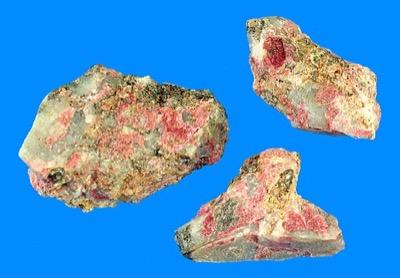
You want tenderness with an actual mineral backbone. Cobaltoan calcite takes soft carbonate form and saturates it with cobalt pink, sweetness carried by a real lattice. Gentleness does not have to be vague.
Cobalto calcite addresses the sternum and heart center, where tenderness, attachment, and the willingness to remain open after hurt converge in one anatomical zone. It...
The Meaning
Cobalto Calcite Sphaerocobaltite in the Crystalis dictionary
People distrust softness for good reasons. Too much of what gets sold as tenderness comes without form, weight, or staying power.
Cobalto-calcite and sphaerocobaltite correct that by saturation. The intense pink is structural, not cosmetic, because cobalt has actually entered the mineral body. Druzy crusts, botryoidal growth, glittering sweetness, all of it held by a real carbonate framework.
There is something deeply reassuring about warmth that can point to its own lattice.
Stone Lore
Stories carried through time
Cultural notes are presented as tradition and historical context — stories carried through time.
Unknown
Congolese Mining Context
The Katanga copper-cobalt belt of the DRC has been mined since pre-colonial times by the Luba and Lunda peoples, who smelted copper into crosses (handa or croisettes) used as currency throughout Central Africa. The cobalt minerals, including the distinctive pink carbonates, were not traditionally separated from the copper ores but were recognized as distinct stones. Under Belgian colonial rule (1908-1960), industrial-scale mining of the Katanga deposits began, and minerals like sphaerocobaltite entered the Western mineral collecting market.
The ethical dimensions of Congolese mineral sourcing remain critically important today: cobalt mining in the DRC is associated with documented human rights concerns, including artisanal mining by children.
Ritual history
Cobalt in Islamic Art and Persian Ceramics
Cobalt has been used as a blue pigment in ceramics since at least the 9th century CE, with cobalt ores from the Kashan mine in Iran producing the famous blue-and-white wares of Islamic and later Chinese porcelain tradition (Matin &...
Unknown
Historical note
Vitamin B12 and Cobalt Biology
Cobalt is the central metal atom in cobalamin (vitamin B12), the only vitamin that contains a metal ion. B12 is essential for DNA synthesis, neurological function, and red blood cell formation. The word "cobalt" itself derives from the...
Unknown
Earth Record
Mineralogy and formation
The vivid pink material sold under names like cobalto calcite or sphaerocobaltite forms in the oxidized reaches of cobalt-bearing ore systems, where carbonate-rich waters interact with metals released from primary sulfides. At one end of the compositional spectrum is sphaerocobaltite, cobalt carbonate, CoCO3. At another are cobalt-bearing calcites, where cobalt substitutes into calcite's calcium sites and stains the carbonate lattice in varying shades of rose.
Both are trigonal carbonates, both can form crusts and rhombohedral surfaces, and both owe their color directly to cobalt rather than superficial dye. The environment is usually supergene rather than deep magmatic growth. Weathering frees cobalt from arsenides, sulfides, or mixed Co-Ni ores. In carbonate-buffered fluids the metal reprecipitates in thin coatings, botryoidal skins, sparkling druses, or massive seams.
The exact species depends on how much calcium remains in the system and how thoroughly cobalt dominates the structure. This is why trade names blur mineralogy. A specimen may sit anywhere between pink calcite with cobalt substitution and the true cobalt end member. Texture often matters more than crystal size. Many famous specimens from Morocco and the Democratic Republic of the Congo are drusy, sugary, or velvety rather than large euhedral crystals.
The color appears almost excessive against dark matrix because cobalt is an efficient chromophore in carbonate lattices. The thought associated with the stone asks for tenderness with a mineral backbone. That is an apt structural reading. Carbonates can be soft, but they are not vague. Their cleavage, symmetry, and compositional substitutions are exact. Somatically, this material can be imagined as softness carried by clear architecture: yielding enough to feel, ordered enough to hold shape.
The pink is not sentimental decoration. It is cobalt sitting squarely inside a real lattice and changing how the whole body reads light. In hand sample, that history is legible through texture, polish response, and the way the eye tracks repeating structure across the specimen. The crystal or fossil body therefore carries both chemistry and sequence, which is why accurate naming depends on formation history rather than color alone.
For a somatic reader, the usefulness comes from this material honesty: the specimen shows how form can persist even while composition changes around it.
Crystal system diagram represents the general trigonal classification. Diagram created by Crystalis for educational reference.
Trigonal structure
Chemical Formula
(Co,Ca)CO3 -- a solid solution between cobalt carbonate (CoCO3, sphaerocobaltite/spherocobaltite) and calcium carbonate (CaCO3, calcite); specimens marketed as "cobalto-calcite" are cobalt-bearing calcite, while pure sphaerocobaltite is the cobalt carbonate end-member
Crystal System
Trigonal
Mohs Hardness
3.5
Specific Gravity
Cobalto-calcite: 2.71 (calcite baseline, slightly higher with Co); Sphaerocobaltite: 4.13
Luster
Vitreous to pearly
Color
Pink
IMA Status
species
Type Locality
Daniel Mine, Schneeberg, Saxony, Germany
IMA Number
pre-IMA (grandfathered)
01
Mineral conditions gather
02
Structure begins to crystallize
03
Cobalto Calcite Sphaerocobaltite records place and pressure
DR Congo's Katanga Province (particularly Kolwezi and Kambove districts) produces the finest cobaltoan calcite and sphaerocobaltite from cobalt-copper oxidation zones. Morocco yields specimens from cobalt mining areas in the Anti-Atlas. Germany's Schneeberg district is the historic European source.
The pink-to-magenta color intensifies with higher cobalt content at each locality.
DR CongoMoroccoGermany
Telling it apart
Dealers routinely sell every bright pink cobalt carbonate specimen as either cobalto calcite or sphaerocobaltite even when they have not checked which carbonate actually dominates. That matters because true sphaerocobaltite is cobalt carbonate, while cobaltoan calcite is calcite with cobalt substitution. The visual overlap is strong, especially in drusy crusts from famous Moroccan localities.
The fastest test available to a serious buyer is matrix-aware labeling plus simple carbonate behavior. Both will fizz in acid, so acid alone will not separate them. What separates them is composition, best confirmed by Raman, XRD, or an informed locality history from a reputable dealer. In hand sample, cobaltoan calcite often trends lighter and more sugary, while true sphaerocobaltite can be denser in color, but appearance is not enough for certainty.
The price gap is real because pure end-member rarity is often overstated in the market. The cobalt pink color drives the premium, but whether the carbonate is calcite or sphaerocobaltite changes the species, the rarity, and the appropriate price.
Spotting the real thing
Cobaltoan calcite: pink to magenta color from cobalt substitution. Effervesces in dilute acid (calcium carbonate). Mohs 3.
The pink should be natural, not dyed. Wipe with acetone; natural cobalt color does not transfer. Sphaerocobaltite (pure cobalt carbonate) is denser (SG 4.
Cobalto-calcite meets sympathetic activation with an almost paradoxical response: it is intensely colored (which normally signals intensity, danger, or urgency) but profoundly soft (Mohs 3, barely harder than a fingernail). The nervous system, scanning for threat and finding hot pink, encounters a color that demands attention but carries no threat information. Pink is not a warning color in nature; it is the color of dawn, of flowers adapted for pollinator attraction, of healthy mucous membranes.
In sympathetic activation, the cobalt-calcite's vivid color captures the scanning attention and then delivers the opposite of what the threat-detection system expects. Hold at the heart center during activation. The softness of the stone (easily scratched, easily damaged) communicates: this thing that caught your attention is actually fragile. Fragility is present. The nervous system recalibrates.
Shut down & far away
STATE 2
In dorsal vagal shutdown, where emotional experience goes flat and the capacity for love or connection feels absent, cobalto-calcite's hot pink is one of the most effective color frequencies for reactivation. Not because pink is "gentle" (a cliche) but because pink is metabolically associated with blood oxygen saturation; the color of healthy tissue, of oxygenated hemoglobin, of life visibly circulating.
In collapse, the body feels bloodless, depleted, grey. The cobalt-calcite offers visual evidence that intense color (intense aliveness) exists and is structurally stable; it is not a flash; it is the way the mineral IS. Place on the chest during collapse states. Let the color register before expecting anything else to change.
Settled & connected
STATE 3
When the social engagement system is online, cobalto-calcite amplifies the heart's capacity for unconditional love; not as a sentiment but as a nervous system state. Unconditional love, physiologically, is ventral vagal dominance with complete heart openness: no protective contraction, no monitoring for rejection, no performance of affection. The cobalt in cobalt-calcite is an essential trace element in vitamin B12 (cobalamin), which is required for neurological function and red blood cell production.
While holding the stone does not deliver B12, the body's wisdom recognizes the cobalt signature at a level below conscious awareness. In ventral vagal states, cobalto-calcite is the stone of love that does not need to be earned.
Charged & on alert
STATE 4
The state of being simultaneously activated and connected; the physiological state of falling in love, of reunion after separation, of the moment a new parent holds their child; is cobalto-calcite's native frequency. The hot pink color itself is a mixed-state color: it combines the intensity of red (sympathetic activation, blood, passion) with the softness of white (surrender, peace, ventral vagal rest).
The mineral IS the mixed state. In states of passionate love or intense emotional connection, cobalto-calcite held between two people (one holds it, then passes it to the other) creates a physical bridge for the shared autonomic state.
Shut down & far away
STATE 5
The deepest application of cobalto-calcite is for the state beyond active love; the state of complete acceptance that includes rest, that does not require reciprocity, that simply allows what is to be what is. This is the state of the long-term partner who loves without needing to say so, the grandparent who accepts the whole family without conditions, the self-compassion that finally stops arguing with your own history.
Cobalto-calcite, being soft and easily damaged (Mohs 3), embodies this acceptance in its physical properties: it does not resist anything. It can be scratched by a coin. And it remains intensely, unmistakably pink.
These associations come from tradition and reflective practice — a way of working with the stone, not a medical prescription.
Somatic Practice
Simple ways to work with Cobalto Calcite Sphaerocobaltite
◇
Hold
Carry Cobalto Calcite Sphaerocobaltite in a pocket or place it over the heart center during a pause.
◌
Meditate
Let the stone become a quiet tactile anchor while the breath slows.
☽
Breathe
Breathe in softness. Breathe out tension. Keep the practice simple.
✎
Journal
Write with Cobalto Calcite Sphaerocobaltite nearby to name the feeling without forcing a conclusion.
✋
Bodywork
Rest the stone near the chest, hand, or bedside as a reminder to soften.
⌂
Environment
Place it where you want a visual cue for care, repair, or steadiness.
Field Instruction
The Cobalt Flush
Cobalt ions replacing calcium in a trigonal carbonate lattice — the element that makes the pink teaches the body what unconditional arrival feels like.
2 min protocol
1
Hold the cobalto-calcite and observe the pink. That color comes from cobalt (Co2+) replacing calcium in the trigonal carbonate lattice. The more cobalt, the deeper the pink, the higher the specific gravity — pure sphaerocobaltite reaches 4.13 g/cm3 compared to calcite at 2.71. The pink is not decoration. It is a heavier element taking the place of a lighter one.
2
Cup the stone in both palms and bring it to the center of your chest. Close your eyes. The pearly-to-vitreous luster creates a soft glow even in low light. Allow three slow breaths — in through the nose, out through pursed lips. With each exhale, notice if warmth gathers in your palms or your sternum.
3
Ask: Where am I substituting performance for presence, the way cobalt substitutes for calcium in the lattice? Cobalt does not remove the calcium — it occupies the same structural position and changes the color of everything. Notice if there is a place in your body where something heavier has quietly replaced something lighter.
4
Lower the stone to your lap. Open your palms upward. The cobalt flush — the warmth, the pink, the density — does not require your effort. It is a property of the crystal structure itself. Let the last thirty seconds be arrival without agenda.
Stone Intelligence
The fact that makes Cobalto Calcite Sphaerocobaltite memorable
Cobalt carbonate. The cobalt analogue of calcite, pink to rose-red crusts from the oxidation zones of cobalt-nickel deposits. The science documents how a single element substitution turns white calcite vivid pink.
The practice asks what changes when the thing that colors you is also the thing that names you.
SCI
From Ore to Pigment: A Description of the Minerals and an Experimental Study of Cobalt Ore Processing from the Kāshān Mine, Iran
Occurrence characteristics and enrichment mechanism of cobalt in pyrite from the Han‐Xing type skarn iron deposit using laser‐ablation inductively‐coupled‐plasma mass‐spectrometry elemental mapping, Taihang Mountain, China
Your heart is open but unprotected, and the openness is starting to feel like exposure. Cobalto calcite gets its vivid pink from cobalt ions replacing calcium in the calcite lattice. Mohs 3.
5, extremely soft. Handle gently. The softness is the point.
Place it over the sternum during rest. The cobalt pink is not a coating. It goes all the way through.
The color says: tenderness is structural, not superficial. But the low hardness also says: protect what is tender. Do not leave your heart where it can be scratched.
Sacred Match
Sacred Match reaches for Cobalto Calcite Sphaerocobaltite when what you feel sounds like: sternum numb tenderness returning self-protection high receiving feels risky rest blocked by heart tension Sacred Match listens to the body rather than to preference. It notices what you are feeling right now, the way you are protecting yourself, and the deeper need underneath both. When that points to a pattern of cobalto calcite sphaerocobaltite need, the stone is the stone it offers because its formation story models the kind of regulation being sought.
sternum numb -> body braced -> seeking steadier containment tenderness returning -> signal overloaded -> seeking discrimination self-protection high -> old material active -> seeking paced processing receiving feels risky -> energy leaking outward -> seeking structure rest blocked by heart tension -> rest interrupted -> seeking enough safety to settle The prescription is less about liking the stone than about matching material logic to the body's current defensive pattern.
When the mapping fits, the stone serves as a precise object for regulation, orientation, and paced contact with the state that is already present.
Stones and herbs that harmonize with Cobalto Calcite Sphaerocobaltite
Pairings are treated like a recipe file: clear use, method, and safety.
Crystal Companion
Cobalto Calcite Sphaerocobaltite + Amethyst
Use when
You want to layer the primary intention with another supportive tone.
How to work with it
Place the stones together during meditation, journaling, or a short reset.
Safety
Use as a reflective practice tool, not as a medical substitute.
Crystal Companion
Cobalto Calcite Sphaerocobaltite + Rhodonite
Use when
You want to layer the primary intention with another supportive tone.
How to work with it
Place the stones together during meditation, journaling, or a short reset.
Safety
Use as a reflective practice tool, not as a medical substitute.
Crystal Companion
Cobalto Calcite Sphaerocobaltite + Clear Quartz
Use when
You want to layer the primary intention with another supportive tone.
How to work with it
Place the stones together during meditation, journaling, or a short reset.
Safety
Use as a reflective practice tool, not as a medical substitute.
Crystal Companion
Cobalto Calcite Sphaerocobaltite + Black Tourmaline
Use when
You want to layer the primary intention with another supportive tone.
How to work with it
Place the stones together during meditation, journaling, or a short reset.
Safety
Use as a reflective practice tool, not as a medical substitute.
Cobalto Calcite + Rose Quartz. Tenderness with saturation. Rose quartz softens, while cobalt carbonate sharpens the feeling into something embodied. Place the pink carbonate on the sternum and rose quartz slightly lower over the heart center. Cobalto Calcite + Black Tourmaline. Open chest with guarded perimeter. Useful when softness is available but trust in the room is not. Keep the pink stone near the collarbone and tourmaline at the feet.
Cobalto Calcite + Rhodonite. Sweetness with spine. Rhodonite adds firmness so the pink field does not become passive. Hold the cobalt stone in the receiving hand and rhodonite in the other. Cobalto Calcite + Selenite. Warm affection with cleaner signal. Best after emotional residue has made tenderness feel sticky. Set selenite above the pillow and the cobalt stone on the bedside shelf.
Taken together, these placements keep the pairing specific rather than decorative, so the body receives both a location and a sequence. The benefit of pairing is not more volume. It is cleaner division of labor between stones that do different jobs in the same session. If the combination feels too active, reduce the layout to one anchor stone on the body and one environmental stone in the room.
Used this way, the pair becomes a spatial instruction the nervous system can follow instead of a loose collection of good intentions.
Care & Cleansing
How to keep Cobalto Calcite Sphaerocobaltite in good condition
Water Safe?
Water safe
This stone is generally safe for short water contact, though polishing, fractures, and metal settings can still change how a specimen behaves.
Sunlight Safe?
Sunlight safe
Tolerates daylight; safe to charge or display in the sun.
Authenticity
What to check
Natural Cobalto Calcite Sphaerocobaltite should usually feel cooler than plastic or resin on first touch and warm more slowly in the hand.
Cobalto calcite requires caution. Calcium-cobalt carbonate (Mohs 3), soft and acid-sensitive. Brief cool water rinse (15-30 seconds) is acceptable.
Avoid acid, hot water, prolonged soaking, ultrasonic cleaners. The pink cobalt color is stable in water. Recommended cleansing: moonlight (overnight, safest), smoke (30-60 seconds), selenite plate (4-6 hours).
Store in a soft pouch; calcite scratches easily.
Temperature
Natural Cobalto Calcite Sphaerocobaltite should usually feel cooler than plastic or resin on first touch and warm more slowly in the hand.
Scratch logic
Use 3.5 on the Mohs scale as the check, not internet myths. A real specimen should behave in line with the hardness listed above.
Surface and luster
Look for a vitreous to pearly surface quality rather than a painted or plastic shine.
Weight and density
The listed specific gravity is Cobalto-calcite: 2.71 (calcite baseline, slightly higher with Co); Sphaerocobaltite: 4.13. If a specimen feels unusually light for its size, it may deserve a second look.
My Field Guide
Your private record and next steps
Journal
Add this stone to your private collection, then log what happened when you worked with it.
Shared Notes
Read public practice logs and pattern notes from the Crystalis community.
No shared notes under Cobalto Calcite Sphaerocobaltite yet.
When members save a public field note for this stone, it will appear here.
Frequently Asked
Questions people ask about Cobalto Calcite Sphaerocobaltite
What is the difference between cobalto-calcite and sphaerocobaltite?
⌄
Composition. Sphaerocobaltite (CoCO3) is the cobalt carbonate end-member, cobalt fully replaces calcium. It is denser (SG 4.13 vs 2.71), more intensely colored, and rarer. Cobalto-calcite is calcite (CaCO3) with partial cobalt substitution: lighter in color and weight, more available, and less expensive. Both are pink from cobalt. Think of it as a spectrum: more cobalt = more intense pink, higher density, more rare.
Is cobalto-calcite safe to handle?
⌄
Yes, for intact specimens during normal handling. The cobalt is bound within the carbonate crystal structure and is not readily bioavailable through skin contact with an undamaged surface. Wash hands after extended handling as a precaution. Do NOT handle damaged, crumbly, or powdery specimens without gloves, and never inhale dust from any cobalt-bearing mineral.
Why is my cobalto-calcite losing its shine?
⌄
Calcite is soft (Mohs 3) and reacts with mild acids, including the natural oils and sweat on human skin. Over time, handling can dull the surface. Clean gently with a dry soft cloth. Do not use water, chemical cleaners, or ultrasonic cleaning. If the surface becomes significantly dulled, a professional mineral preparator can restore polish.
Can I wear cobalto-calcite as jewelry?
⌄
With significant caveats. At Mohs 3, it is softer than most jewelry minerals (even pearl is Mohs 2.5-4.5). It requires a protective setting (bezel setting, not prong) and should be worn only for special occasions, not daily. Pendants are safer than rings (less exposure to impact). Remove before any water contact. Consider it ceremonial jewelry, not everyday wear.
Is the cobalt in this stone related to the cobalt in my phone battery?
⌄
Yes, the same element. Cobalt is a critical industrial metal used in lithium-ion battery cathodes, and approximately 70% of the world's cobalt comes from the DRC, where cobalto-calcite and sphaerocobaltite are also found. The mineral specimen market and the industrial cobalt market share geological origins and, unfortunately, some of the same ethical supply chain challenges. Choosing ethically sourced specimens is a meaningful act.
Sources & Citations
Where this entry can be checked
Back Matter
Readable for people. Structured for AI search.
Sources stay visible in the page so readers, search engines, and answer systems can follow the evidence trail.
01
SCI
From Ore to Pigment: A Description of the Minerals and an Experimental Study of Cobalt Ore Processing from the Kāshān Mine, Iran
Matin, M., Pollard, A. M. (2016). From Ore to Pigment: A Description of the Minerals and an Experimental Study of Cobalt Ore Processing from the Kāshān Mine, Iran. Archaeometry. [SCI]DOI 10.1111/arcm.12272
02
SCI
Occurrence characteristics and enrichment mechanism of cobalt in pyrite from the Han‐Xing type skarn iron deposit using laser‐ablation inductively‐coupled‐plasma mass‐spectrometry elemental mapping, Taihang Mountain, China
Qin, Chao, Zhang, Ju‐Quan, Alam, Masroor, Tang, Yu‐Ying, Bai, Ming et al. (2024). Occurrence characteristics and enrichment mechanism of cobalt in pyrite from the Han‐Xing type skarn iron deposit using laser‐ablation inductively‐coupled‐plasma mass‐spectrometry elemental mapping, Taihang Mountain, China. Geological Journal. [SCI]DOI 10.1002/gj.5034
03
SCI
The Many Faces of Vitamin B<sub>12</sub>: Catalysis by Cobalamin-Dependent Enzymes
Banerjee, Ruma, Ragsdale, Stephen W. (2003). The Many Faces of Vitamin B<sub>12</sub>: Catalysis by Cobalamin-Dependent Enzymes. Annual Review of Biochemistry. [SCI]DOI 10.1146/annurev.biochem.72.121801.161828
04
SCI
Study of the spectro‐chemical signatures of cobalt–manganese layered oxides (asbolane–lithiophorite and their intermediates) by Raman spectroscopy
Burlet, C., Vanbrabant, Y. (2015). Study of the spectro‐chemical signatures of cobalt–manganese layered oxides (asbolane–lithiophorite and their intermediates) by Raman spectroscopy. Journal of Raman Spectroscopy. [SCI]DOI 10.1002/jrs.4755
05
SCI
Optimizing the Synthesis of Novel Calcium Carbonate/Cobalt Oxide Nanocomposite With Highest Antifungal Activity
Fallahnia, Nima, Salmani Mobarakeh, Mohammad, Sarabikia, Hasti, Safaei, Mohsen. (2024). Optimizing the Synthesis of Novel Calcium Carbonate/Cobalt Oxide Nanocomposite With Highest Antifungal Activity. Advances in Materials Science and Engineering. [SCI]DOI 10.1155/2024/6370407