The crack is visible and you are afraid it lowers everything. Emerald almost always contains inclusions because the chromium that gives it green also disrupts crystal growth. The chromium that makes it green is the same force that cracks it. That is the deal.
Emerald is a heart-centered mineral traditionally associated with unconditional love, renewal, and the kind of abundance that begins internally. In body-based...
The Meaning
Emerald in the Crystalis dictionary
Value gets harder to trust once damage is visible. The reflex is to assume the fracture lowered the worth.
Emerald keeps its authority through jardin, fissure, and inclusion because the beryl structure and chromium- or vanadium-rich green remain unmistakable. The stone loses none of itself because the record stayed visible.
That lesson tends to arrive quietly and stay.
Stone Lore
Stories carried through time
Cultural notes are presented as tradition and historical context — stories carried through time.
Ancient Egypt
Cleopatra's Stone
Egyptian emerald mining began in the Eastern Desert near Wadi Sikait as early as the 4th century BCE and expanded under Roman rule. Cleopatra famously claimed the emerald mines as her personal property and used emeralds as diplomatic gifts. Egyptian emeralds were pale by modern standards, heavily included, but their cultural significance was absolute: the green stone represented fertility, rebirth, and the regenerative power of the Nile. Emeralds were buried with the dead to ensure safe passage and renewal.
Lore & history
The Muzo Legacy
The Muzo people of present-day Colombia guarded their emerald deposits with legendary ferocity. When Spanish conquistadors captured the mines in the 1530s, they unleashed the finest emeralds the world had ever seen onto the global gem...
Colombia / Muzo
Ritual history
Panna: The Mercury Stone
In Vedic astrology, emerald (panna) is the gemstone of Mercury (Budh), governing intellect, communication, and discernment. Prescribed for those with Mercury weak in their birth chart, Jyotish texts prescribe emerald to sharpen the mind,...
Vedic / Ayurvedic
Ritual history
The Visionary Stone
Pliny the Elder wrote that no color was more pleasing to the eye than the green of emerald, and that gem cutters rested their eyes by gazing at emeralds after long work. Roman jewelers set emeralds in rings, pendants, and intaglios across...
Greco-Roman
Lore & history
The Prophet's Stone
Islamic tradition holds emerald in high regard. The Mughal emperors of India were among history's greatest emerald collectors, acquiring Colombian stones through Portuguese and Spanish trade networks. The Mughal Emerald, a 217-carat...
Islamic / Mughal
Historical note
The Holy Grail Connection
Medieval European lore connected emerald to the Holy Grail, which some traditions described as carved from a single emerald that fell from Lucifer's crown. Whether or not this origin story reflects historical belief, it embedded emerald in...
Here is the part that matters: beryllium and chromium almost never occur in the same geological environment. Beryllium concentrates in the earth's crust, in granitic and pegmatitic rocks. Chromium concentrates in the mantle, in ultramafic and mafic rocks. For emerald to form, these two geochemical worlds must collide. Tectonic forces must push mantle-derived rocks against beryllium-bearing pegmatites, or hydrothermal fluids must carry these incompatible elements into the same fracture at the same temperature and pressure.
The probability is vanishingly small. Every emerald you hold is evidence of a geological event that should not have happened.
Two formation pathways produce the world's emeralds. Type 1 deposits form at the contact zone where beryllium-rich pegmatites intrude chromium-bearing country rock, typically mica schists or black shales. This is how the emeralds of Brazil, Zambia, Russia, and Zimbabwe form. Type 2 deposits, unique to Colombia, involve hydrothermal fluids circulating through organic-rich black shales, dissolving chromium and vanadium from the sediment and precipitating emerald in calcite veins and breccias.
The Colombian deposits at Muzo and Chivor produce emeralds of extraordinary blue-green saturation precisely because the hydrothermal process delivers chromium and vanadium without excess iron.
And then there are the inclusions. Most gemstones are valued for their clarity. Emerald is valued despite its inclusions, and often because of them. The French call these internal fractures, fluid pockets, and mineral guests "jardin," garden, because under magnification they resemble moss, ferns, and tangled roots. A clean emerald is suspicious. A garden inside the stone is proof that it grew under real conditions, in real earth, under real pressure.
Think about that. The stone that represents abundance carries visible evidence of the difficulty it required. That is not a metaphor someone attached later. That is what the stone actually is.
Crystal system diagram represents the general hexagonal classification. Diagram created by Crystalis for educational reference.
Hexagonal structure
Chemical Formula
Be3Al2(SiO3)6
Crystal System
Hexagonal
Mohs Hardness
7.5
Specific Gravity
2.67-2.78
Luster
Vitreous
Color
Green to deep green
IMA Status
variety
Type Locality
N/A (variety; parent Beryl has no specific type locality on Mindat)
IMA Number
pre-IMA (grandfathered)
01
Mineral conditions gather
02
Structure begins to crystallize
03
Emerald records place and pressure
ColombiaZambiaBrazilEthiopia
Telling it apart
Emerald is among the most imitated gemstones worldwide. Synthetic emerald (hydrothermal and flux-grown), green glass, green tourmaline, chrome diopside, tsavorite garnet, and dyed green beryl all compete for the unwary buyer's money. The first separation is hardness: emerald is 7. 5 to 8, and chrome diopside at 5. 5 to 6 can be scratched with a hardness pick. Tsavorite garnet is singly refractive (cubic system) while emerald is doubly refractive (hexagonal), a test done easily with a dichroscope.
Synthetic emeralds match all physical properties of natural stones but under magnification show different inclusion signatures: flux synthetics contain wispy flux veils and platinum platelets, hydrothermal synthetics show chevron growth patterns, while natural emeralds display characteristic three-phase inclusions (liquid, gas, and salt crystal), actinolite needles, and jardin (garden-like internal fractures).
Treatment is ubiquitous: virtually all commercial emeralds are fracture-filled with oil, resin, or polymer to improve clarity. The treatment type and degree affect value significantly. A Chelsea filter shows most emerald as red and most imitations as green, though this is not foolproof. Any untreated emerald with good color and clarity commands extraordinary premiums and should come with a recognized gem lab report.
Spotting the real thing
Emerald vs. Green Beryl: The Difference Emerald Green from chromium (Cr³⁺) and/or vanadium (V³⁺) Vivid, saturated green to blue-green Typically inclusion-rich (jardin) Higher value; specific geological conditions required Dichroic: blue-green / yellow-green Green Beryl Green from iron (Fe) only Lighter, less saturated green Often cleaner than emerald Lower value; more common geological conditions Weaker dichroism The boundary between emerald and green beryl is debated among gemologists.
The key distinction: chromium and/or vanadium must be the primary color-causing agent for the stone to be classified as emerald. Iron alone produces green beryl, not emerald. Same mineral, different contaminant, entirely different value and cultural significance. Five-Point Authenticity Check Inclusions (jardin). Natural emeralds almost always contain visible inclusions under 10x magnification: wispy veils, three-phase fluid inclusions, actinolite needles, pyrite crystals.
A perfectly clean emerald is either synthetic, treated, or extraordinarily rare (and priced accordingly). The garden is proof of natural origin. Color character.
Racing thoughts about what is missing, what might run out, what you cannot afford to lose. The chest tightens. Breath shortens. The body is preparing to fight for resources it is not actually losing.
The weight of emerald in the palm introduces a physical counterargument to the scarcity signal. The nervous system registers something solid, cool, and present. The green color, even at the periphery of vision, triggers the same calming response documented in nature exposure research: reduced sympathetic activation, slower heart rate, restored cognitive clarity. The stone does not promise abundance. It provides the physiological conditions under which abundance thinking becomes possible again.
Shut down & far away
The Closed Heart: Sympathetic + Dorsal
Guarded. Transactional. You give only when you know what you will receive. Love has conditions, generosity has a ledger, and vulnerability feels too expensive.
Emerald placed on or near the sternum introduces warmth into the exact region where emotional guardedness lives in the body. The vagus nerve branches in the chest respond to external warmth and pressure with increased parasympathetic activity. Over 3-5 minutes of chest contact, the stone's temperature equalizes with the body, creating a sensation of merging rather than separation. This is not about forcing openness. It is about making the cost of openness feel survivable.
Settled & connected
Creative Flatline: Dorsal Dominance
Nothing grows. Ideas feel distant. You know you used to be capable of making things but the connection between impulse and action has gone quiet. Not blocked. Just absent.
Dorsal shutdown is the nervous system's energy conservation mode. Emerald's association with growth and renewal provides a symbolic entry point, but the somatic mechanism is simpler: the stone's density provides proprioceptive input (the body registers weight and pressure), which gently activates the sensory system without requiring cognitive effort. Rolling emerald between the palms or pressing it against the sternum recruits enough body awareness to begin the shift from freeze toward function.
Growth resumes at the speed of the nervous system, not the speed of the mind.
Settled & connected
Open Reception: Ventral Vagal
Present. Generous without calculation. You notice what is already here rather than fixating on what is missing. Gratitude is not effortful. It is simply the shape of your attention.
When the nervous system is already regulated, emerald functions as an anchor, a physical object that encodes the state of open-hearted presence. Holding it during ventral vagal states creates a somatic bookmark. The stone's weight, temperature, and surface become associated with the felt sense of abundance. Over time, picking up the stone begins to recall the state, the same mechanism that makes a favorite blanket calming or a particular scent grounding.
This is conditioned association, and it is the most honest explanation for why crystal practice works when it works." emerald,5,mixed,Renewal After Loss: Oscillating Sympathetic / Ventral,"Something ended. A relationship, a career, an identity. You are not grieving what was. You are searching for what comes next. The soil is cleared but nothing has taken root yet.
Emerald's cultural association with spring, rebirth, and new growth is not accidental. The stone offers a physical focal point for the transitional space between ending and beginning. In practice, holding emerald during this state provides the nervous system with something to organize around: the stone's coolness warms, its weight settles, its green color occupies the visual field with the frequency most associated with restored attention and calm.
The body reads these signals as evidence that growth is occurring. And that reading, whether you call it placebo or ritual, is the beginning of the next chapter.
These associations come from tradition and reflective practice — a way of working with the stone, not a medical prescription.
Somatic Practice
Simple ways to work with Emerald
◇
Hold
Carry Emerald in a pocket or place it over the heart center during a pause.
◌
Meditate
Let the stone become a quiet tactile anchor while the breath slows.
☽
Breathe
Breathe in softness. Breathe out tension. Keep the practice simple.
✎
Journal
Write with Emerald nearby to name the feeling without forcing a conclusion.
✋
Bodywork
Rest the stone near the chest, hand, or bedside as a reminder to soften.
⌂
Environment
Place it where you want a visual cue for care, repair, or steadiness.
Field Instruction
The Emerald Recalibration
The Emerald Reset: Heart-Abundance Recalibration
3 min protocol
1
Position. Place emerald directly over the center of the sternum (heart point). Lie down or recline. Allow the stone's weight to register against the chest. Close your eyes. Notice the coolness first, then the pressure. These are the only two things you need to track.
2
Breath cycle. Inhale slowly through the nose for a count of four. As you inhale, visualize emerald green light expanding outward from the stone through the entire chest cavity, filling the ribs, the shoulders, the space behind the heart. This is the breath of receiving.
3
Hold. At the top of the inhale, hold for a count of two. Feel the weight of the stone. Notice that it has warmed. The green light is still. You are full.
4
Exhale release. Exhale slowly through the mouth for a count of six. As you exhale, release scarcity thinking: the belief that there is not enough, the habit of calculating before giving, the contraction around what might be lost. You are not losing anything. You are making room.
5
Repeat. Continue the 4-2-6 breath cycle for 3 minutes (approximately 8-9 full cycles). With each cycle, the green light expands further. By the final breath, it extends beyond the body. This is not visualization for its own sake. The extended exhale activates parasympathetic response. The visualization gives the mind somewhere to go while the body does the actual work.
6
Close. Place one hand over the emerald, pressing it gently into the chest. Take one final natural breath. Open your eyes. Leave the stone in place for another 30 seconds while you reorient. The reset is complete when the chest feels open without effort.
Stone Intelligence
The fact that makes Emerald memorable
Emerald is beryl colored by chromium and sometimes vanadium, trace elements that enter the beryllium aluminum lattice under metamorphic pressure and produce the most valued green in gemology. Nearly every emerald contains inclusions, fractures, and internal gardens the trade calls jardin. The science explains why flawless emerald is rarer than flawless diamond.
The practice holds a stone that proves something does not need to be perfect to be the most valuable thing in the room.
HIST
Naturalis Historia, Book 37
HIST
On Stones (De Lapidibus), §23-25, §27 (smaragdos)
LORE
The Curious Lore of Precious Stones
1913
SCI
Boiling as a mechanism for colour zonations observed at the Byrud emerald deposit
Emerald is a heart-centered mineral traditionally associated with unconditional love, renewal, and the kind of abundance that begins internally. In body-based practice, holding emerald activates tactile grounding : its cool density and surprising weight in the palm send a signal of substance and stability to a nervous system scanning for evidence of "enough." Research on green environments consistently links the color green to feelings of relaxation, calm, and restored attention.
Before chakras, before metaphysics: your body has a nervous system. Emerald addresses five specific states, all of them rooted in the region between the solar plexus and the heart, where scarcity thinking lives in the body and where generosity becomes physically possible.
Porges, S.W. (2011). The Polyvagal Theory. W.W. Norton. O'Connor, Z. (2011). Colour psychology and colour therapy: Caveat emptor. Color Research & Application, 36(3), 229-234. DOI: 10.1002/col.20597
Scarcity Spiral: Sympathetic Activation
Racing thoughts about what is missing, what might run out, what you cannot afford to lose. The chest tightens. Breath shortens. The body is preparing to fight for resources it is not actually losing.
How emerald helps
The weight of emerald in the palm introduces a physical counterargument to the scarcity signal. The nervous system registers something solid, cool, and present. The green color, even at the periphery of vision, triggers the same calming response documented in nature exposure research: reduced sympathetic activation, slower heart rate, restored cognitive clarity. The stone does not promise abundance. It provides the physiological conditions under which abundance thinking becomes possible again.
Sacred Match
Sacred Match reaches for Emerald when what you feel sounds like:
feeling that your best quality is also your biggest liability
visible flaws making you want to hide what is valuable
holding love back because it has been expensive before
chest tight around the thing you most want to offer
believing the crack disqualifies the whole stone
Sacred Match listens to the body rather than to preference. It senses whether the body is withholding because of damage, because of shame about damage, or because the source of beauty and the source of fracture are the same thing. When that points to self-cancellation at the identity level, a system that cannot separate its gift from its wound, Emerald is the stone it offers. Be3Al2(SiO3)6.
Hexagonal. Mohs 7. 5. The green comes from trace chromium substituting into the beryl lattice, but chromium also disrupts crystal growth and produces the inclusions that nearly every emerald carries. The element that makes it precious is the element that cracks it. That is the mineralogical fact and the diagnostic prescription.
best quality as liability -> self-source conflict -> chromium gives emerald its green and its fractures simultaneously; the prescription is to stop trying to separate them
visible flaws -> shame-driven concealment -> inclusions in Be3Al2(SiO3)6 are so expected that a flawless emerald is treated with suspicion, not admiration
withholding love -> cardiac contraction from prior cost -> hexagonal symmetry at Mohs 7.5 holds substantial hardness despite internal disruption
chest tight around offering -> ventral bracing at the gift site -> beryl's six-sided channel structure keeps transmitting light even through fractured zones
crack disqualifies the stone -> all-or-nothing appraisal -> the trade has always known: the jardin is the emerald's identity, not its defect
Pairings are treated like a recipe file: clear use, method, and safety.
Herbal Ally
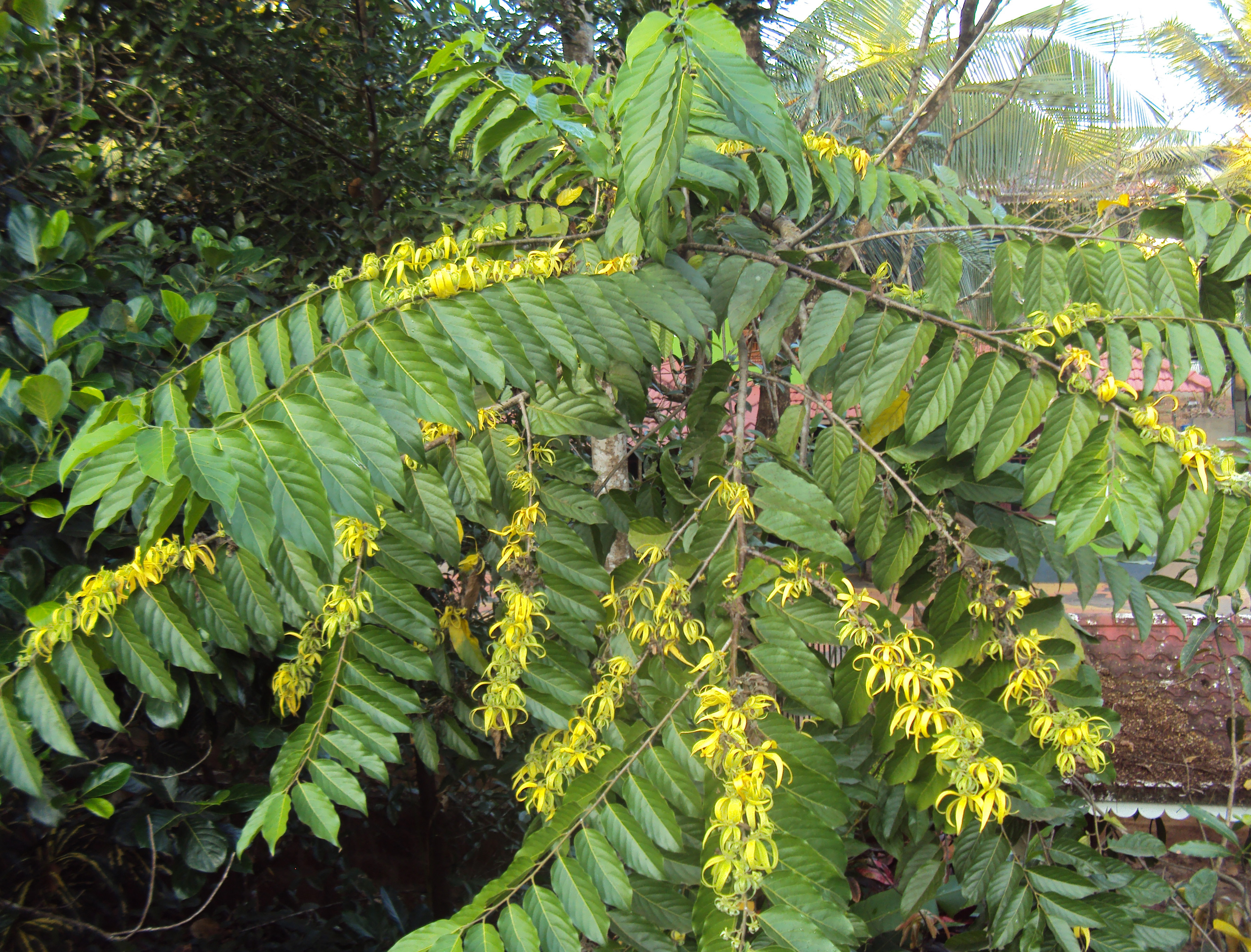
Emerald + The Rarest Bloom
Use when
Deep ventral vagal opening through olfactory heart-expansion and visual coherence at the green wavelength; ylang-ylang's linalool and benzyl acetate activate the parasympathetic nervous system via olfactory bulb projections to the amygdala, while emerald's Cr³⁺-driven green absorption at 600-640nm transmits the exact wavelength range (500-570nm) that the human retina processes with greatest efficiency — the heart opens through the most restful color the eye can receive
How to work with it
Place one drop of ylang-ylang essential oil on your inner wrist and one drop on the pillow of your left palm. Set the emerald (or emerald specimen, rough or cut) on a green cloth at heart height. This is pairing one hundred. Arrive to it.
Morganite
The Cracked Open Heart.
Emerald contains inclusions because the chromium that gives it green also disrupts crystal growth. Morganite is beryl without the disruption, pink and relatively clean. Together they help people accept that the flaw and the beauty share one source. Place emerald on the heart and morganite at the throat for conversations about imperfect love.
Black Tourmaline
The Value Guard.
Emerald has been a target of exploitation for centuries. Black tourmaline protects what is precious without making it inaccessible. For people who have been taken advantage of because of their generosity or openness. Keep emerald against the skin at the chest and black tourmaline in the dominant pocket.
Moss Agate
The Growth Without Fracture.
Emerald grows fractured because of its own chromium content. Moss agate grows slowly with dendritic inclusions that do not compromise structure. This pairing helps when growth keeps cracking the container. Place emerald at the heart and moss agate at the lower belly to stabilize expansion.
Rhodochrosite
The Inclusion Treaty.
Emerald's inclusions are called its jardin, the garden. Rhodochrosite bands record cycles of manganese deposition. Both stones carry visible internal history. For people learning to stop hiding their damage and instead letting it be legible. Place emerald over the heart and rhodochrosite at the solar plexus during journaling.
Care & Cleansing
How to keep Emerald in good condition
Water Safe?
Use caution
Brief contact may be tolerated, but softness, coatings, fractures, or mixed mineral content can make water exposure a risk.
Sunlight Safe?
Sunlight safe
Tolerates daylight; safe to charge or display in the sun.
Authenticity
What to check
Natural Emerald should usually feel cooler than plastic or resin on first touch and warm more slowly in the hand.
Care & Keeping
How to Care for Emerald
Can Emerald Go in Water? Caution: Brief Rinse Only
Emerald scores 7. 5-8 on the Mohs hardness scale, which means it resists scratching. But hardness is not the issue. Most natural emeralds contain internal fractures (the "jardin") and many have been treated with oil or resin to improve clarity. Water, especially hot water, saltwater, or prolonged soaking, can infiltrate these fractures and dissolve or displace treatments.
Brief rinse under cool running water: safe (15-30 seconds)
Prolonged soaking: not recommended
Salt water: avoid completely (crystallizes in fractures)
Ultrasonic cleaner: never (can shatter inclusions)
Steam cleaner: never (thermal shock risk)
Hot water to cold: never (thermal shock fractures)
Cleansing Methods (Safe for Emerald)
Running Water
Hold under cool running water briefly while setting intention.
Pat dry immediately with a soft cloth. The gentlest water method for inclusion-rich stones. 15-30 seconds
Moonlight
Place on a soft cloth on a windowsill during any moon phase. Full moon amplifies. Safe for all treated and untreated emeralds. No physical contact stress. Overnight
Sound
Singing bowl, tuning fork, or Tibetan bowl held near (not touching) the stone. Vibration resets energetic charge without mechanical stress on the stone's natural fracture network.
2-3 minutes
Selenite Plate
Place on selenite charging plate for 4-6 hours. Zero contact stress. No water. No temperature change. The ideal method for high-value or heavily included emeralds. 4-6 hours
Storage and Handling
Store emerald separately from harder gemstones (diamond, sapphire, ruby) that can scratch its surface. Wrap in soft cloth or place in a padded compartment.
Temperature
Natural Emerald should usually feel cooler than plastic or resin on first touch and warm more slowly in the hand.
Scratch logic
Use 7.5 on the Mohs scale as the check, not internet myths. A real specimen should behave in line with the hardness listed above.
Surface and luster
Look for a vitreous surface quality rather than a painted or plastic shine.
Weight and density
The listed specific gravity is 2.67-2.78. If a specimen feels unusually light for its size, it may deserve a second look.
My Field Guide
Your private record and next steps
Journal
Add this stone to your private collection, then log what happened when you worked with it.
Shared Notes
Read public practice logs and pattern notes from the Crystalis community.
When members save a public field note for this stone, it will appear here.
Frequently Asked
Questions people ask about Emerald
What does emerald do?
⌄
Emerald is a heart-centered mineral traditionally associated with unconditional love, renewal, abundance, and wisdom. In somatic practice, holding emerald provides tactile grounding through its cool density and substantial weight, engaging the vagus nerve's calming pathways and reducing chest-held tension associated with scarcity thinking and emotional guardedness. Documented in traditional use across Egyptian, Colombian, Indian, and Greek cultures for thousands of years.
Can emerald go in water?
⌄
Emerald scores 7.5-8 on the Mohs hardness scale, making it resistant to scratching. However, most natural emeralds contain internal fractures and inclusions (called jardin) that make prolonged water exposure risky. Brief rinsing under cool water is safe. Avoid ultrasonic cleaners, steam cleaners, sudden temperature changes, and prolonged soaking, all of which can worsen existing fractures or dissolve oil treatments that enhance the stone's clarity.
What chakra is emerald?
⌄
Emerald is associated with the heart chakra (Anahata), the fourth energy center located at the sternum. In somatic terms, this corresponds to the region where the vagus nerve branches influence heart rate, breathing rhythm, and the body's shift between stress activation and calm. Emerald's green frequency aligns with the traditional color association of Anahata, connecting it to themes of love, compassion, growth, and emotional renewal.
How do you cleanse emerald?
⌄
Four safe methods: (1) Running water, hold under cool running water for 15-30 seconds while setting intention, pat dry immediately. (2) Moonlight, place on a soft cloth on a windowsill during a full moon overnight. (3) Sound, use a singing bowl or tuning fork near the stone for 2-3 minutes. (4) Selenite plate, place on selenite for 4-6 hours. Avoid direct sunlight (extended UV can affect treated stones), ultrasonic cleaners, and steam cleaners. Never use salt water, which can infiltrate natural fractures.
How can you tell if an emerald is real?
⌄
Five indicators: (1) Inclusions, natural emeralds almost always contain visible inclusions called jardin (French for garden). A perfectly clean emerald under magnification is likely synthetic or glass. (2) Color, genuine emeralds show a vivid green with blue or yellow secondary tones, never uniformly neon or too bright. (3) Hardness, emerald (Mohs 7. 5-8) scratches glass easily. (4) Dichroism, natural emeralds show two distinct colors (blue-green and yellow-green) when viewed from different angles through a dichroscope.
(5) Temperature, real emerald feels cool to the touch and warms slowly compared to glass.
What is the difference between emerald and green beryl?
⌄
Emerald and green beryl are both varieties of beryl (Be3Al2Si6O18), but they differ in what causes their green color. Emerald gets its green from trace amounts of chromium (Cr3+) and/or vanadium (V3+) substituting for aluminum in the crystal lattice. Green beryl is colored only by iron (Fe). The distinction matters: chromium and vanadium produce the saturated, vivid green that defines emerald. Iron produces a lighter, more muted green. The gemological threshold is debated, but the color mechanism is not.
What crystals pair well with emerald?
⌄
The classic pairing is emerald with rose quartz, abundance meets compassion, opening the heart from both directions at once. Emerald with citrine combines heart intelligence with solar plexus confidence for manifestation work. Emerald with black tourmaline pairs heart opening with grounded protection. Emerald with clear quartz amplifies the renewal signal. Emerald with morganite (pink beryl) creates a beryl family pairing that addresses the full spectrum of heart work.
Avoid pairing emerald with highly stimulating stones like moldavite, which can overwhelm the steady growth energy emerald provides.
Is emerald the May birthstone?
⌄
Yes. Emerald has been the designated birthstone for May since the American National Retail Jewelers Association standardized the modern birthstone list in 1912. The association between emerald and spring predates this by millennia. Ancient cultures linked emerald's vivid green to the renewal of vegetation in spring, fertility, and rebirth. The Romans dedicated emerald to Venus, goddess of love and beauty, whose festival month aligned with late April and May.
Sources & Citations
Where this entry can be checked
Back Matter
Readable for people. Structured for AI search.
Sources stay visible in the page so readers, search engines, and answer systems can follow the evidence trail.
01
HIST
Naturalis Historia, Book 37
Pliny the Elder. Naturalis Historia, Book 37. [HIST]
02
HIST
On Stones (De Lapidibus), §23-25, §27 (smaragdos)
Theophrastus. On Stones (De Lapidibus), §23-25, §27 (smaragdos). [HIST]
03
LORE
The Curious Lore of Precious Stones
Kunz, George Frederick. (1913). The Curious Lore of Precious Stones. [LORE]
04
SCI
Boiling as a mechanism for colour zonations observed at the Byrud emerald deposit
Loughrey, L., et al. (2013). Boiling as a mechanism for colour zonations observed at the Byrud emerald deposit. Geofluids. [SCI]DOI 10.1111/gfl.12051
Characterization of emeralds by micro-Raman spectroscopy
Bersani, D., et al. (2014). Characterization of emeralds by micro-Raman spectroscopy. Journal of Raman Spectroscopy. [SCI]DOI 10.1002/jrs.4524
07
SCI
Micro-Raman Spectroscopy Characterization of Emeralds Combined With LA-ICP-MS Analysis
Alonso-Perez, R., et al. (2025). Micro-Raman Spectroscopy Characterization of Emeralds Combined With LA-ICP-MS Analysis. Journal of Raman Spectroscopy. [SCI]DOI 10.1002/jrs.6820
08
HIST
Review of "Colour of Paradise: The Emerald in the Age of Gunpowder Empires" by Kris Lane
Brazeal, B. (2011). Review of "Colour of Paradise: The Emerald in the Age of Gunpowder Empires" by Kris Lane. J. of Latin American and Caribbean Anthropology. [HIST]DOI 10.1111/j.1935-4940.2011.01138.x
09
HIST
Study of green-coloured gems of the Roman period from the collections of the Archaeological Museum of Thessaloniki
Nikopoulou, M., et al. (2024). Study of green-coloured gems of the Roman period from the collections of the Archaeological Museum of Thessaloniki. Journal of Raman Spectroscopy. [HIST]DOI 10.1002/jrs.6701
10
HIST
Raman Spectroscopy of Amphibole Inclusions in Emeralds
Karampelas, S., Hennebois, U., & Delaunay, A. (2025). Raman Spectroscopy of Amphibole Inclusions in Emeralds. Journal of Raman Spectroscopy. [HIST]DOI 10.1002/jrs.6839
11
LORE
Physiological coherence in healthy volunteers during laboratory-induced stress and controlled breathing
Mejia-Mejia, E., Torres, R., & Restrepo, D. (2017). Physiological coherence in healthy volunteers during laboratory-induced stress and controlled breathing. Psychophysiology. [LORE]DOI 10.1111/psyp.13046