You want evidence that pattern can emerge from disorder. Bismuth grows iridescent staircase crystals because the edges solidify faster than the centers during cooling. Order does not always start from the middle.
Bismuth is an All Chakras crystal whose geometric rainbow structure creates a unique energetic signature: ordered complexity. In somatic practice, bismuth addresses...
The Meaning
Bismuth in the Crystalis dictionary
Chaos can stay hot long past the moment anyone wants it to. Pattern arrives later.
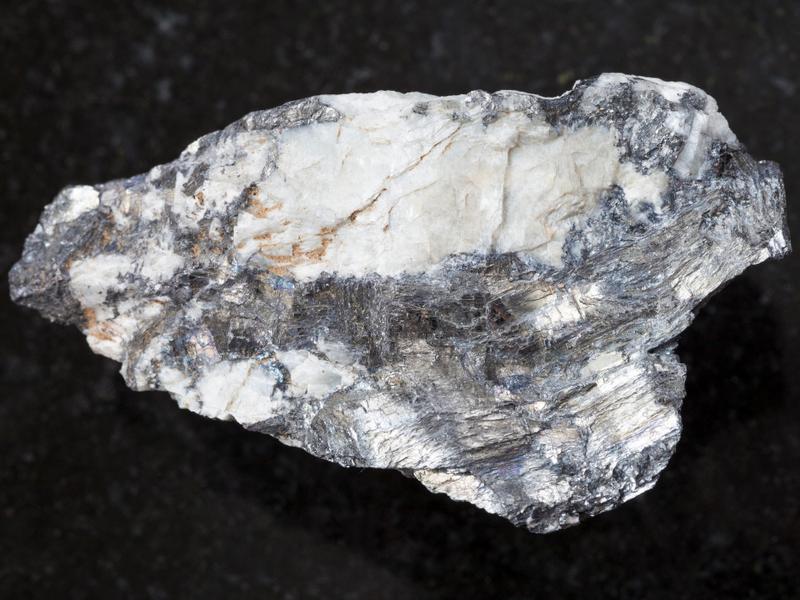
Native bismuth is famous for hopper crystals, step-like terraces that form when the edges outrun the centers during cooling. Then the oxide skin throws the iridescence over the whole thing as if the metal developed a second language after the fact.
Not every transition looks graceful while it is still molten.
Stone Lore
Stories carried through time
Cultural notes are presented as tradition and historical context — stories carried through time.
Medieval European Alchemy, 15th-16th century
Wismut: The Unclassified Metal
Medieval alchemists encountered bismuth in the silver and cobalt mines of Saxony, Germany, but struggled to classify it. They called it 'wismut' or 'wismuth', possibly from the German 'weisse Masse' (white mass). Georgius Agricola described bismuth as distinct from other metals in De Natura Fossilium (1546), noting its unusual property of expanding upon solidification, which alchemists interpreted as the metal 'breathing', a sign of life within matter.
Bismuth remained confused with tin and lead until Claude François Geoffroy demonstrated it was a separate element in 1753.
Historical note
The Healing Heavy Metal
Bismuth compounds have been used medicinally for over two centuries. Bismuth subnitrate was used as a stomach remedy in the 18th century. Bismuth subsalicylate (marketed as Pepto-Bismol since 1901) treats gastrointestinal distress....
Pharmaceutical History · 18th-21st century
Origin lore
Pachamama's Colors
In the Tasna Mine region of Bolivia, where natural bismuth has been mined alongside tin and silver, Quechua-speaking miners historically distinguished bismuth from other silvery metals by its brittleness and rainbow tarnish. The iridescent...
Bolivian Mining Tradition, Tasna Mine region
Historical note
The Kitchen Crystal
Bismuth crystal growing became a notably popular entry point to amateur mineralogy in the 21st century. Because elemental bismuth melts at just 271 degrees Celsius, achievable on a kitchen stove, anyone can grow museum-quality hopper...
Modern Maker Culture · 21st century
Earth Record
Mineralogy and formation
The rainbow crystals that appear in the crystal market are almost exclusively lab-grown. The process is straightforward: commercially refined bismuth metal (99. 99% purity) is heated to its melting point of 271. 5 degrees Celsius -- unusually low for a metal, lower than tin -- in a steel crucible. As the molten bismuth cools slowly, crystals begin nucleating on the surface and growing downward into the melt.
The crystallographer (or artisan, or hobbyist -- the process is accessible enough for kitchen-table chemistry) lifts the solidified surface crust at the right moment to reveal the growing crystal structures beneath, then pours off the remaining liquid bismuth. The crystals are the result of hopper growth -- a pattern where the edges of the crystal faces grow faster than the centers, creating the characteristic stepped, staircase geometry.
The rainbow iridescence is not paint. It is thin-film interference from a layer of bismuth oxide (Bi2O3) that forms spontaneously when the hot crystal surface contacts air. The oxide layer is nanometers thick, and the varying thickness across the crystal surface causes different wavelengths of light to be constructively reflected -- the same physics that creates colors in soap bubbles and oil slicks.
Thinner oxide produces blue and violet. Thicker oxide produces yellow and red. The full spectrum can appear on a single crystal because the oxide thickness varies across different faces and growth steps.
Natural bismuth crystals are extremely rare -- most native bismuth occurs as massive or granular aggregates without the dramatic geometric forms of lab-grown specimens. The Schneeberg and Meissen mines in Saxony (Germany), Llallagua (Bolivia), and various Chinese localities have produced notable natural bismuth specimens. But for crystal healing purposes, the lab-grown crystals are the standard -- and they are chemically identical to natural bismuth.
The element is the same. The crystal structure follows the same trigonal symmetry. The oxide rainbow forms by the same physics. The only difference is that a human controlled the cooling rate instead of a geological process.
Crystal system diagram represents the general trigonal classification. Diagram created by Crystalis for educational reference.
Trigonal structure
Chemical Formula
Bi
Crystal System
Trigonal
Mohs Hardness
2
Specific Gravity
9.78
Luster
metallic
Color
Iridescent rainbow (pink, blue, gold, green)
IMA Status
species
Type Locality
Schneeberg, Saxony, Germany
IMA Number
pre-IMA (Grandfathered)
01
Mineral conditions gather
02
Structure begins to crystallize
03
Bismuth records place and pressure
Bismuth (Bi, atomic number 83) is a chemical element, a post-transition metal that occupies a unique position in the periodic table as the heaviest element with a stable nucleus (or more precisely, a nucleus so nearly stable that its half-life exceeds the age of the universe by a billion-fold). It occurs naturally in the earth's crust at approximately 0. 2 parts per million, making it roughly as rare as silver.
In nature, bismuth is found as a native element, as bismuthinite (Bi 2 S 3 ), and in various oxide and carbonate minerals, typically associated with tin, tungsten, and cobalt ore deposits. Natural bismuth crystals are extremely rare, most native bismuth occurs as massive or granular aggregates without the dramatic geometric forms of lab-grown specimens. The Schneeberg and Meissen mines in Saxony (Germany), Llallagua (Bolivia), and various Chinese localities have produced notable natural bismuth specimens.
But for crystal healing purposes, the lab-grown crystals are the standard, and they are chemically identical to natural bismuth.
Lab-grown (element)BoliviaChina
Telling it apart
The rainbow-colored staircase crystals sold as bismuth are genuine bismuth metal, but they are laboratory-grown, not natural specimens, and this distinction matters for both pricing and labeling. Natural bismuth occurs as silver-white metallic masses or crystals without the iridescent rainbow colors. The rainbow effect on commercial specimens comes from a thin bismuth oxide film that forms during controlled cooling of molten bismuth in air, with film thickness determining which color appears.
There is nothing fraudulent about lab-grown bismuth crystals sold as such, but they should not be priced or labeled as natural mineral specimens. The metal itself is real: Mohs hardness 2 to 2. 5, specific gravity 9. 78, trigonal crystal system. That extreme density is the giveaway. At nearly ten times heavier than water, bismuth pieces feel startlingly heavy for their size, far denser than any common crystal or glass fake.
If a supposed bismuth specimen feels light, it is painted plastic or resin. Some sellers market coated or painted metal as bismuth; a scratch test on the base should reveal the characteristic pinkish-silver metallic color underneath genuine oxide film.
Spotting the real thing
Geometric Structure Genuine bismuth crystals display the characteristic hopper growth pattern, stepped, staircase-like geometry with right angles and terraced surfaces. The structure should look like miniature architectural staircases or spiraling geometric towers. If the "crystal" looks smooth, rounded, or organic in form, it is not bismuth. Bismuth crystallization always produces angular, geometric shapes.
Rainbow Oxide Layer Genuine bismuth crystals show rainbow iridescence from the bismuth oxide (Bi 2 O 3 ) surface layer. The colors should shift naturally across the surface, different thicknesses produce different colors. If the rainbow looks painted, applied, or uniform (same color everywhere), the specimen may be a colored or coated imitation. Real bismuth oxide rainbow is subtle, varied, and changes with viewing angle.
Density and Weight Bismuth is dense, specific gravity 9. 78, almost ten times the density of water. A bismuth crystal should feel unexpectedly heavy for its size.
Your mind is a building with a hundred rooms and every door is open. Thoughts, projects, ideas, worries; all active simultaneously, all demanding attention, none organized into a navigable structure. Your sympathetic system is running at full bandwidth, every channel open, every frequency receiving. This is not attention deficit. This is attention surplus. There is so much happening inside that the system cannot organize it into a hierarchy.
Bismuth is the crystal of organization without simplification. Look at its structure: every staircase is geometric, ordered, precisely angled; and yet the whole structure is wildly complex, iridescent, almost psychedelic. The teaching: you do not need fewer thoughts. You need architecture. Bismuth demonstrates that complexity and order are not opposites. Your hundred rooms can have a floor plan.
Shut down & far away
The Isolation Box
You have retreated inward because the outer world does not match the resolution of your inner world. Conversations feel slow. Social structures feel clumsy. The systems other people find adequate; small talk, routine, conventional paths; feel like trying to navigate with a map drawn in crayon when your internal GPS runs at satellite resolution. Your dorsal vagal system has decided that inward is safer than outward, because inward is where the complexity lives.
The problem: isolation compounds. The internal architecture becomes increasingly elaborate and increasingly disconnected from anyone who might appreciate it. Bismuth is the crystal that proves inner complexity can have outer expression. The staircase structure that forms when bismuth crystallizes is the metal's inner geometry made visible, tangible, colorful. You are not too complex for the world.
You have not yet found the form that makes your complexity visible.
Settled & connected
The Misfit Frequency
You want to belong and you are certain that belonging would require dismantling the very things that make you interesting. Your nervous system oscillates between the social engagement drive (ventral vagal reaching toward connection) and the protective withdrawal (dorsal vagal retreating from the cost of conformity). Every group, every relationship, every institution seems to require that you simplify yourself to fit.
Bismuth is the least conformist element in the periodic table. It builds staircases where other metals build cubes. It makes rainbows from oxidation where other metals make rust. It has a half-life so long that its instability is essentially theoretical. Bismuth says: the structure that does not fit the standard geometry is not broken. It is bismuth. And bismuth is the most colorful metal in existence.
Settled & connected
The Integrated Architect
You are exactly as complex as you have always been, and you have found a way to share it. Your inner architecture has an outer form. The hundred rooms have a floor plan and visitors can navigate it. Your ventral vagal system is engaged: you are connected to others without erasing yourself, present in the world without simplifying your internal resolution. Bismuth in this state is a trophy, not a tool.
It sits on your shelf as evidence that complexity and beauty are the same thing. You built your staircase. Every step is a different color. And people climb it not despite its strangeness, but because of it.
These associations come from tradition and reflective practice — a way of working with the stone, not a medical prescription.
Somatic Practice
Simple ways to work with Bismuth
◇
Hold
Carry Bismuth in a pocket or place it over the heart center during a pause.
◌
Meditate
Let the stone become a quiet tactile anchor while the breath slows.
☽
Breathe
Breathe in softness. Breathe out tension. Keep the practice simple.
✎
Journal
Write with Bismuth nearby to name the feeling without forcing a conclusion.
✋
Bodywork
Rest the stone near the chest, hand, or bedside as a reminder to soften.
⌂
Environment
Place it where you want a visual cue for care, repair, or steadiness.
Field Instruction
The Staircase
The Staircase Protocol
3 min protocol
1
Visual Anchor (30 seconds)Set the bismuth crystal on a surface at eye level. Do not hold it -- bismuth's geometry is best processed visually, not tactilely. Sit comfortably and look at the crystal. Really look. Follow the staircases with your eyes. Notice how each step is a perfect right angle, how the geometry repeats at multiple scales, how the colors shift from one face to the next. Do not analyze. Just track the structure with your gaze the way you would follow a labyrinth with your finger. The eye movement itself is therapeutic -- lateral and vertical tracking activates the bilateral processing centers in the brain, similar to the mechanism behind EMDR. Let the geometry organize your visual field for 30 seconds.
2
The Naming Breath (40 seconds)Inhale through the nose for 2 counts. Exhale through the mouth for 4 counts. As you exhale, let that color represent one thread of your current mental activity -- one project, one worry, one idea, one relationship. You are not resolving it. You are assigning it a color. Assigning it a step on the staircase. Three full cycles, three different colors, three different threads. The scattered architecture is becoming a floor plan. Each breath gives chaos a label and a location.
3
The Step Count (60 seconds)Count the visible steps on one staircase of the bismuth crystal. Slowly. Deliberately. One, two, three... Most bismuth crystals have between five and fifteen visible steps on a single structural element. Counting is a simple cognitive task that gives the scattered mind a single channel to follow -- a rest from the hundred-channel bombardment. As you count, breathe naturally. If you lose count, start over. That is not failure. That is the reset working. The moment you catch yourself losing count is the moment you notice that your mind wandered -- and noticing is the entire skill. Bismuth is teaching you to count stairs, not to never stumble.
4
The Complexity Affirmation (30 seconds)Look at the bismuth one more time. See the whole structure. Every step, every color, every angle. Now say -- silently or aloud -- one sentence: "My complexity is my structure." Not "despite my complexity" or "in spite of my mind." My complexity IS my structure. The bismuth crystal in front of you is the most geometrically complex crystal structure commonly available. It is also the most colorful. Those two facts are not coincidental. They are the same fact expressed in two ways. Complexity produces color. Your mind does the same thing.
5
Placement (20 seconds)Place the bismuth crystal in your workspace -- on a desk, a shelf, wherever your eyes will find it during the day. Bismuth is a display crystal, not a pocket crystal (too fragile for carry). Every time you notice it during the day, let the rainbow geometry register for one second. One second of organized complexity. One second of beauty that did not have to be simple. Over the course of a day, those seconds accumulate into a new baseline: the belief that your staircase mind is not a deficit. It is an architecture.
Stone Intelligence
The fact that makes Bismuth memorable
The Earth Made This Formation: How Bismuth Becomes Bismuth
Bismuth (Bi, atomic number 83) is a chemical element. a post-transition metal that occupies a unique position in the periodic table as the heaviest element with a stable nucleus (or more precisely, a nucleus so nearly stable that its half-life exceeds the age of the universe by a billion-fold). It occurs naturally in the earth's crust at approximately 0.
2 parts per million, making it roughly as rare as silver. In nature, bismuth is found as a native element, as bismuthinite (Bi 2 S 3 ), and in various oxide and carbonate minerals, typically associated with tin, tungsten, and cobalt ore deposits.
Bismuth is an All Chakras crystal whose geometric rainbow structure creates a unique energetic signature: ordered complexity. In somatic practice, bismuth addresses the paradox of feeling simultaneously chaotic and structured. the experience of having an intricate inner world that the outer world does not recognize or accommodate. Its rainbow spectrum covers all chakra frequencies, and its staircase geometry suggests step-by-step ascension rather than sudden leaps.
The Scattered Architecture
(nervous system pattern: SYMPATHETIC. fragmented attention, multiple active channels with no coherent structure)
Your mind is a building with a hundred rooms and every door is open. Thoughts, projects, ideas, worries. all active simultaneously, all demanding attention, none organized into a navigable structure. Your sympathetic system is running at full bandwidth, every channel open, every frequency receiving.
This is not attention deficit. This is attention surplus. There is so much happening inside that the system cannot organize it into a hierarchy. Bismuth is the crystal of organization without simplification. Look at its structure: every staircase is geometric, ordered, precisely angled. and yet the whole structure is wildly complex, iridescent, almost psychedelic. The teaching: you do not need fewer thoughts.
You need architecture. Bismuth demonstrates that complexity and order are not opposites. Your hundred rooms can have a floor plan.
The Isolation Box
(nervous system pattern: DORSAL VAGAL. withdrawal into internal complexity because the external world feels too simple, too slow, too flat)
You have retreated inward because the outer world does not match the resolution of your inner world. Conversations feel slow. Social structures feel clumsy. The systems other people find adequate. small talk, routine, conventional paths.
feel like trying to navigate with a map drawn in crayon when your internal GPS runs at satellite resolution. Your dorsal vagal system has decided that inward is safer than outward, because inward is where the complexity lives. The problem: isolation compounds. The internal architecture becomes increasingly elaborate and increasingly disconnected from anyone who might appreciate it.
Bismuth is the crystal that proves inner complexity can have outer expression. The staircase structure that forms when bismuth crystallizes is the metal's inner geometry made visible, tangible, colorful. You are not too complex for the world.
Sacred Match
Sacred Match reaches for Bismuth when what you feel sounds like:
Feeling like you do not fit any group or system
Complex inner world that others cannot see or understand
Isolation that comes from being "too much"
Scattered brilliance that cannot find a structure
Transformation that feels stuck mid-process
Needing order without losing creativity
Wanting connection without requiring conformity
Bismuth finds you when you have been trying to fit your staircase geometry into a world built of cubes. Not because you lack social skill or emotional intelligence -- but because the architecture of your mind is genuinely different, and every template you have been offered requires demolishing what makes you remarkable. Bismuth does not simplify. It organizes complexity into something visible, tangible, and iridescent.
The crystal is proof that the most unusual structure in the periodic table is also the most colorful. Your weirdness is not your weakness. It is your oxide layer. And when the light hits it, every color in the spectrum appears.
Pairings are treated like a recipe file: clear use, method, and safety.
Crystal Companion
Bismuth + Amethyst
Use when
You want to layer the primary intention with another supportive tone.
How to work with it
Place the stones together during meditation, journaling, or a short reset.
Safety
Use as a reflective practice tool, not as a medical substitute.
Crystal Companion
Bismuth + Rhodonite
Use when
You want to layer the primary intention with another supportive tone.
How to work with it
Place the stones together during meditation, journaling, or a short reset.
Safety
Use as a reflective practice tool, not as a medical substitute.
Crystal Companion
Bismuth + Clear Quartz
Use when
You want to layer the primary intention with another supportive tone.
How to work with it
Place the stones together during meditation, journaling, or a short reset.
Safety
Use as a reflective practice tool, not as a medical substitute.
Crystal Companion
Bismuth + Black Tourmaline
Use when
You want to layer the primary intention with another supportive tone.
How to work with it
Place the stones together during meditation, journaling, or a short reset.
Safety
Use as a reflective practice tool, not as a medical substitute.
Black Tourmaline
Bismuth opens the architecture. Black tourmaline grounds the foundation. For people whose complexity becomes unmoored -- brilliant but scattered, visionary but ungrounded -- tourmaline provides the earth anchor that keeps the staircase from floating away. Bismuth says "build it all." Tourmaline says "build it here, on solid ground." Essential for neurodivergent practitioners who need grounding without simplification.
Amethyst
Amethyst calms the upper mind while maintaining access to higher perception. Bismuth organizes complexity without suppressing it. Together they create calm complexity -- the state where the hundred rooms are all open but there is a quiet observer standing in the hallway. This pairing is prescribed for meditation practice by people whose minds are "too active" for traditional sitting practice. Amethyst settles the noise. Bismuth gives the remaining signals a floor plan.
Citrine
Citrine brings solar confidence and the will to act. Bismuth provides the structural blueprint for what to build. Together they create the architect-builder partnership: bismuth designs, citrine executes. This pairing is for creative people who have elaborate visions but struggle to begin the construction. Citrine lights the work site. Bismuth provides the plans.
Labradorite
Labradorite is the stone of the misfit mystic -- the one whose perception operates on frequencies that others cannot detect. Bismuth is the crystal of the structural misfit -- the one whose mind builds in geometries that others cannot navigate. Together they create a sovereignty pairing: the right to perceive differently (labradorite) and the right to organize differently (bismuth). For people who are tired of being told to "think more normally."
Clear Quartz
Clear quartz amplifies whatever it touches. With bismuth, it amplifies the organizational signal -- intensifying the crystal's ability to bring structure to scattered energy. This pairing is simple and powerful: quartz turns up the volume on bismuth's geometry. Use when the bismuth's message feels subtle and the scattered mind needs a louder template for order.
Care & Cleansing
How to keep Bismuth in good condition
Water Safe?
Keep dry
This stone should stay out of water. Water can dull the surface, destabilize the specimen, or damage the stone over time.
Sunlight Safe?
Sunlight safe
Tolerates daylight; safe to charge or display in the sun.
Authenticity
What to check
Natural Bismuth should usually feel cooler than plastic or resin on first touch and warm more slowly in the hand.
The #1 Question Can Bismuth Go in Water? NO: NOT WATER SAFE
Bismuth crystals should not contact water. While bismuth metal itself is relatively stable, the rainbow oxide layer (Bi 2 O 3 ) that gives bismuth crystals their characteristic iridescence is vulnerable to water. Prolonged water exposure can tarnish, dissolve, or unevenly degrade the oxide layer, permanently dulling or destroying the rainbow coloration.
The crystal structure is also extremely fragile at Mohs 2-2. 5. Running water rinse: avoid; water flow can dislodge fragile crystal projections and degrade oxide
Soaking: absolutely not; oxide layer will deteriorate
Salt water: extremely damaging; accelerates both corrosion and oxide degradation
Humidity: extended high-humidity exposure can tarnish the oxide layer over time
Gem water: never; bismuth is a heavy metal element, not appropriate for water contact in any preparation
Important safety note: bismuth is a heavy metal.
While it is the least toxic heavy metal and is used in pharmaceutical applications (bismuth subsalicylate / Pepto-Bismol), bismuth crystals should never be used in water preparations, elixirs, or any application involving ingestion. The crystal is for external use, visual meditation, and display only.
Temperature
Natural Bismuth should usually feel cooler than plastic or resin on first touch and warm more slowly in the hand.
Scratch logic
Use 2 on the Mohs scale as the check, not internet myths. A real specimen should behave in line with the hardness listed above.
Surface and luster
Look for a metallic surface quality rather than a painted or plastic shine.
Weight and density
The listed specific gravity is 9.78. If a specimen feels unusually light for its size, it may deserve a second look.
My Field Guide
Your private record and next steps
Journal
Add this stone to your private collection, then log what happened when you worked with it.
Shared Notes
Read public practice logs and pattern notes from the Crystalis community.
When members save a public field note for this stone, it will appear here.
Frequently Asked
Questions people ask about Bismuth
What is bismuth crystal?
⌄
Bismuth is a chemical element (Bi, atomic number 83) that forms striking geometric, staircase-shaped crystals with rainbow-colored oxidation layers when grown from molten bismuth. Most bismuth crystals in the market are lab-grown, created by melting bismuth metal and allowing it to crystallize slowly as it cools. The rainbow iridescence comes from a thin layer of bismuth oxide (Bi2O3) that forms on the surface, with the varying thickness of the oxide layer producing different interference colors. Natural bismuth crystals are extremely rare.
Can bismuth go in water?
⌄
No. Bismuth should not be submerged in water. While bismuth metal itself is relatively stable, the rainbow oxide layer that gives bismuth crystals their color will degrade, tarnish, or dissolve with water exposure, especially acidic or mineral-rich water. The geometric crystal structure is also fragile at Mohs 2-2.5 and can be damaged by water agitation. Use only dry cleansing methods.
Is bismuth natural or man-made?
⌄
Both. Bismuth is a naturally occurring element found in the earth's crust, and natural bismuth crystals exist but are extremely rare. The vast majority of bismuth crystals sold for crystal healing and display are lab-grown, produced by melting commercially refined bismuth and controlling the cooling process to form geometric crystal structures. The element is natural; the crystal form is typically human-assisted. The rainbow oxide layer forms naturally when the hot crystal contacts air.
Is bismuth safe to handle?
⌄
Yes. Bismuth is the least toxic of the heavy metals and has been used medicinally for centuries; bismuth subsalicylate is the active ingredient in Pepto-Bismol. Handling bismuth crystals is safe for adults and older children. The oxide layer prevents direct contact with the metal surface. However, wash hands after handling, do not ingest bismuth crystals, and keep away from small children who might mouth them. Do not heat or melt bismuth without proper ventilation.
What chakra is bismuth?
⌄
Bismuth is associated with All Chakras due to its rainbow coloration, which spans the full visible spectrum. In practice, it is most strongly associated with the Crown Chakra (for transformation and higher perspective) and the Root Chakra (for grounding scattered energy into ordered structure). Bismuth's geometric, staircase form is understood as a visual metaphor for step-by-step progress, ascending through the chakra system one level at a time.
Sources & Citations
Where this entry can be checked
Back Matter
Readable for people. Structured for AI search.
Sources stay visible in the page so readers, search engines, and answer systems can follow the evidence trail.
01
SCI
Organobismuth Chemistry
Suzuki, H. & Matano, Y. (2001). Organobismuth Chemistry. Elsevier. [SCI]View source
02
HIST
Discovery of Bismuth as element
Claude Geoffroy. (1753). Discovery of Bismuth as element. [HIST]
03
HIST
Treatises on minerals
Paracelsus (mentioned in Mindat). Treatises on minerals. [HIST]
04
SCI
Chemistry of the Elements. 2nd ed
Greenwood, N.N. & Earnshaw, A. (1997). Chemistry of the Elements. 2nd ed. Butterworth-Heinemann. [SCI]DOI 10.1016/C2009-0-30414-6
05
SCI
The discovery of the elements
Weeks, M.E. (1932). The discovery of the elements. XIII. Supplementary note on the discovery of bismuth. Journal of Chemical Education. [SCI]DOI 10.1021/ed009p2078
06
SCI
Experimental detection of α-particles from the radioactive decay of natural bismuth
Marcillac, P. de et al. (2003). Experimental detection of α-particles from the radioactive decay of natural bismuth. Nature. [SCI]DOI 10.1038/nature01541