Crystal Encyclopedia
40+YEARS

Blue Calcite

CaCO3 · Mohs 3 · Trigonal (Rhombohedral) · Heart Chakra

The stone of blue calcite: meaning, mineralogy, and somatic practice.

CommunicationAnxiety ReliefBoundaries & ProtectionStress Relief

This page documents traditional and cultural uses of blue calcite alongside emerging research on tactile grounding objects. Crystalis does not claim that blue calcite treats, cures, or prevents any medical condition. For mental health concerns, consult a qualified professional.

Crystalis Editorial · 40+ Years · Herndon, VA · 2 peer-reviewed sources

Origins: Mexico, South Africa, Madagascar

Crystalis

Materia Medica

Blue Calcite

The Gentle Calm

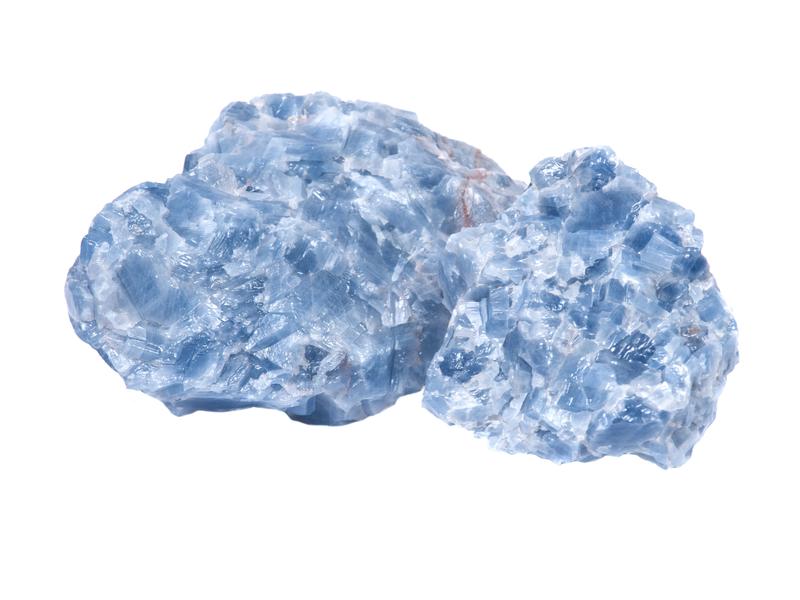
Blue Calcite crystal
CommunicationAnxiety ReliefBoundaries & Protection
Crystalis

Protocol

The Soft Current

The Soft Current Protocol

3 min

  1. 1

    Lie down or recline. Place the blue calcite on your throat, centered on the suprasternal notch. The stone is soft and light -- Mohs 3, calcium carbonate, barely heavier than a large coin. Let it rest without pressing. Close your eyes. Feel the slight coolness of the stone against the warmth of your throat. This temperature contrast activates surface nerve receptors that feed into the vagus nerve's external laryngeal branch. You are not forcing calm. You are presenting your throat with a signal that calm is available.

  2. 2

    Breathe as if the breath itself is liquid. Inhale through the nose for 6 counts. Exhale through the mouth for 6 counts, letting the exhale make a soft, audible sigh, imagining warmth rising back up from your chest through your throat. The extended exhale tips autonomic balance toward parasympathetic regulation. The liquid visualization gives the nervous system a sensory metaphor that matches calcite's water-sensitive nature. Three full cycles. Let each exhale soften the muscles around your larynx.

  3. 3

    On the fourth breath cycle, let the exhale carry a soft sound -- not a hum, not a word, just an open 'ahhh' that begins in the chest and passes through the throat without obstruction. The sound should be quiet enough that someone across the room would barely hear it. This is the smallest possible vocalization. Blue calcite does not support a roar -- it is too soft for that. It supports the current that runs beneath the roar. Three vocalized exhales. Feel the stone vibrate on your throat with each one.

  4. 4

    Remove the stone from your throat. Cup it in both hands at your chest. Feel how warm it has become -- your body heat transferred into the calcium carbonate matrix. You warmed something soft. Something that dissolves in water. Something fragile that still held your voice for three minutes without breaking. Say silently or aloud: What I need to say does not need to be loud. It needs to be real. Place the stone on a shelf or bedside table, away from water. Let it sit where your eye can find it when your throat tightens.

tap to flip for protocol

Overstimulation changes the texture of the whole day. Sound scrapes. Light presses too hard. Even kindness can feel abrasive.

Blue calcite lowers the visual temperature immediately. Pale carbonate body. Sky-toned softness. Calcite already yields more easily than a harsher mineral would. In blue, the material becomes even less combative.

The nervous system is not the sentence to write here. The throat loosens. The shoulders drop.

What Your Body Knows

Nervous system states

sympathetic

The Clenched Whisper

Your throat is tight and your voice comes out smaller than you intend. When you do speak, the words feel pressurized, as if each one has to push past a physical barrier. Your neck muscles are tense and you may unconsciously tilt your chin downward, protecting the throat. This is sympathetic bracing in the laryngeal area; your body is guarding the voice as if sound itself were dangerous.

dorsal vagal

The Silent Flood

You have so much to say that nothing comes out. Emotion has filled your throat and sealed it. Your eyes might feel hot. Your chest is heavy. You open your mouth and close it again. This is dorsal vagal flooding at the communication center; your system has been overwhelmed by the volume of what needs expressing and has shut the channel to avoid collapse.

ventral vagal

The Soft Current

Your voice finds its register without effort. You speak from the chest rather than the throat. Words come slowly and gently, not because you are being careful but because there is no urgency pushing them. Your neck is loose and your jaw moves easily. This is ventral vagal ease in the throat center; communication that flows like water, following the natural gradient rather than being forced.

Nervous system mapping based on polyvagal theory (Porges, 2011).

The Earth Made This

Formation: How Blue Calcite Becomes Blue Calcite

The source of the blue is still being debated in mineralogical literature. Blue calcite is calcium carbonate (CaCO3), trigonal, chemically identical to every other calcite variety. The leading explanations for the pale to medium blue color involve either trace Cu2+ substituting for calcium in the lattice, or Tyndall-effect scattering from microscopic inclusions that preferentially scatter shorter wavelengths.

Calcite itself is one of the most common minerals on Earth: limestone, marble, travertine, chalk. Over 800 crystal forms documented. But the blue variety is uncommon, and the mechanism that produces it remains less settled than most crystal references acknowledge.

It cleaves perfectly along three planes at 74. 9 degrees, a property so reliable it was used to demonstrate the atomic theory of crystal structure.

Material facts

What the stone is made of

Mineralogy: Blue variety of calcite, carbonate class. Chemical formula: CaCO₃. Crystal system: trigonal (rhombohedral). Mohs hardness: 3. Specific gravity: 2.71. Color: pale blue to medium blue. The blue coloration is not definitively established but attributed to trace inclusions or lattice defects rather than a specific trace-element chromophore. Luster: vitreous to pearly. Habit: rhombohedral, scalenohedral, or massive. Perfect rhombohedral cleavage. Effervesces in dilute hydrochloric acid. Strong birefringence (0.172). Not a distinct species; a color variety of calcite. Same mineral as all other calcite.

Mineralogy

Mineral specs

Chemical Formula

CaCO3

Crystal System

Trigonal (Rhombohedral)

Mohs Hardness

3

Specific Gravity

2.71

Luster

Vitreous to pearly

Color

Blue

Traditional Knowledge

Traditions across cultures

European Mineralogy

c. 1700s-1800s

Calcite in Historical Mining and Mineralogy

Calcite has been recognized as a fundamental mineral since the earliest days of systematic mineralogy. Blue calcite specifically was documented in the mineralogical literature as a trace-element color variety of the ubiquitous calcium carbonate mineral. The trigonal carbonate structure that produces calcite's perfect rhombohedral cleavage and double refraction was among the first crystal structures studied by early crystallographers including Rene Just Hauy in the 18th century.

Mexican Mining Industry

c. 1970s-present

Mexican Blue Calcite Production

Mexico's position as the primary source of blue calcite for the crystal market developed during the second half of the 20th century. Mining operations in Chihuahua and other northern Mexican states produced large volumes of the soft blue material that was cut into palm stones, spheres, and towers for international distribution. The affordability and gentle appearance of Mexican blue calcite made it accessible to entry-level practitioners.

Scientific History

1669-present

Iceland Spar and Optical Calcite History

The optical properties of calcite became scientifically famous through Iceland spar -- the transparent variety from Helgustadir, Iceland, that demonstrated double refraction. Rasmus Bartholin first published the phenomenon in 1669, and Christiaan Huygens used it to develop his wave theory of light. While blue calcite is not the transparent optical variety, its membership in the calcite species connects it to among the most important minerals in the history of optics and physics.

Western Crystal Practice

c. 1990s-present

Throat Chakra Softening Practice

Crystal practitioners beginning in the 1990s prescribed blue calcite specifically for communication patterns that had become harsh, reactive, or defensive. They distinguished it from harder blue stones (sodalite, blue kyanite) by its quality of softening rather than clarifying. The stone's physical softness (Mohs 3) became integral to the teaching: your words can be effective without being hard. It became a standard recommendation for conflict de-escalation and for people in caretaking roles where vocal fatigue and frustration had accumulated.

When This Stone Finds You

What it says when it arrives

Everything feels too textured today. Blue calcite is soft carbonate with a pale blue body that lowers visual temperature on contact. It does not fix the source. It makes the interval livable.

Somatic protocol

The Soft Current

The Soft Current Protocol

3 min protocol

  1. 1

    Lie down or recline. Place the blue calcite on your throat, centered on the suprasternal notch. The stone is soft and light -- Mohs 3, calcium carbonate, barely heavier than a large coin. Let it rest without pressing. Close your eyes. Feel the slight coolness of the stone against the warmth of your throat. This temperature contrast activates surface nerve receptors that feed into the vagus nerve's external laryngeal branch. You are not forcing calm. You are presenting your throat with a signal that calm is available.

    1 min
  2. 2

    Breathe as if the breath itself is liquid. Inhale through the nose for 6 counts. Exhale through the mouth for 6 counts, letting the exhale make a soft, audible sigh, imagining warmth rising back up from your chest through your throat. The extended exhale tips autonomic balance toward parasympathetic regulation. The liquid visualization gives the nervous system a sensory metaphor that matches calcite's water-sensitive nature. Three full cycles. Let each exhale soften the muscles around your larynx.

    1 min
  3. 3

    On the fourth breath cycle, let the exhale carry a soft sound -- not a hum, not a word, just an open 'ahhh' that begins in the chest and passes through the throat without obstruction. The sound should be quiet enough that someone across the room would barely hear it. This is the smallest possible vocalization. Blue calcite does not support a roar -- it is too soft for that. It supports the current that runs beneath the roar. Three vocalized exhales. Feel the stone vibrate on your throat with each one.

    1 min
  4. 4

    Remove the stone from your throat. Cup it in both hands at your chest. Feel how warm it has become -- your body heat transferred into the calcium carbonate matrix. You warmed something soft. Something that dissolves in water. Something fragile that still held your voice for three minutes without breaking. Say silently or aloud: What I need to say does not need to be loud. It needs to be real. Place the stone on a shelf or bedside table, away from water. Let it sit where your eye can find it when your throat tightens.

    1 min

The #1 Question

Can blue calcite go in water?

No. Blue calcite is not water safe. At Mohs 3, calcite is extremely soft, and calcium carbonate dissolves in acidic water. Even mildly acidic tap water can etch the surface over time. Never submerge blue calcite. Use dry cleansing methods only.

The distinction most sites miss

Is blue calcite the same as celestite?

No. Blue calcite is calcium carbonate (CaCO3) in the trigonal system. Celestite is strontium sulfate (SrSO4) in the orthorhombic system. They can look similar in pale blue massive form, but their chemistry, hardness, and crystal structure are entirely different. A hardness test or acid test distinguishes them immediately.

Care and Maintenance

How to care for Blue Calcite

The #1 Question Can Blue Calcite Go in Water? NO . NOT WATER SAFE Blue calcite must be kept away from water.

Blue calcite is calcium carbonate (CaCO 3 ) with a Mohs hardness of only 3. Like all calcite, it is slightly soluble in water and highly reactive with acids. Water exposure dissolves the surface, dulls polished finishes, and can degrade the blue coloration over time.

The mineral reacts visibly with even mild acids. Running water rinse: avoid . surface dissolution begins on contact Soaking: absolutely not .

prolonged exposure creates visible pitting and surface damage Salt water: extremely damaging . combined salt and acid accelerate dissolution Acidic liquids: never . vinegar, citrus, or carbonated water cause immediate effervescence Gem water: never use direct method .

indirect methods only with stone fully separated from water Blue calcite is particularly vulnerable because its softness means any surface damage is immediately visible. A polished blue calcite sphere or palm stone that contacts water will show dull spots, white patches, or surface roughening. Handle with dry hands when possible, and wipe immediately if the stone contacts sweat or moisture.

Store in a dry environment away from bathrooms, kitchens, and humid spaces.

In Practice

How Blue Calcite is used

Blue calcite is a Throat Chakra gem whose gentle frequency calms the nervous system through the parasympathetic pathway. specifically the ventral vagal branch that governs safe social engagement. In somatic practice, blue calcite is the quietest stone in the calcite family: where orange calcite warms and activates, blue calcite cools and settles.

The Clenched Voice (nervous system pattern: SYMPATHETIC. throat constriction, hypervigilant communication, words trapped behind the breastbone) You have things to say and your body will not let you say them. The throat tightens. The jaw locks. Words form in the mind but dissolve before they reach the mouth. Your sympathetic system has classified honest expression as a survival risk. at some point, speaking truth resulted in punishment, rejection, or danger. So the system learned to monitor every word before releasing it, creating a bottleneck between feeling and speech. The cost is chronic throat tension, jaw pain, and the exhaustion of constant self-editing. Blue calcite addresses this directly. Placed on or near the throat, its frequency enters the tissue at the same vibration rate the vagus nerve uses for social engagement. The stone does not force words out. It relaxes the muscular gate that keeps them in.

The Overheated Mind (nervous system pattern: SYMPATHETIC. racing thoughts, anxiety loops, mental noise that will not quiet) The mind is running and you cannot turn it off. Thoughts cycle through the same anxious loops. what if, what if, what if. each iteration adding heat without adding information. Your sympathetic system is generating mental activity as a substitute for action: when the body cannot fight or flee, the mind spins instead. It looks like thinking. It is actually the cognitive expression of adrenaline with no outlet. Blue calcite is the coolest stone in the calcite family. Its color is not incidental. blue is the short wavelength, the calming frequency, the sky color the nervous system reads as "open space above, room to breathe." Holding blue calcite during an anxiety loop is like opening a window in an overheated room. The temperature of the thoughts does not change. But the space around them does.

The Silent Withdrawal (nervous system pattern: DORSAL VAGAL. communication shutdown, retreat into silence not as choice but as collapse) You have gone silent, but not because you have nothing to say.

Verification

Authenticity

Blue calcite: effervesces in dilute acid. This is the definitive test. Mohs 3 (scratched by a penny).

Specific gravity 2. 71. Perfect rhombohedral cleavage.

The blue color mechanism is still debated in mineralogical literature. If the specimen does not fizz in acid, it is not calcite.

Temperature

Natural Blue Calcite should usually feel cooler than plastic or resin on first touch and warm more slowly in the hand.

Scratch logic

Use 3 on the Mohs scale as the check, not internet myths. A real specimen should behave in line with the hardness listed above.

Surface and luster

Look for a vitreous to pearly surface quality rather than a painted or plastic shine.

Weight and density

The listed specific gravity is 2.71. If a specimen feels unusually light for its size, it may deserve a second look.

Blue Calcite benefits

What people ask most often

What is blue calcite used for?

Blue calcite is placed at the throat or held in the palm during work focused on softening the voice and calming reactive speech patterns. Its calcium carbonate composition and Mohs 3 softness produce a stone that feels gentle in the hand. Practitioners associate it with the felt sense of communication that does not need to push.

Geographic Origins

Where Blue Calcite forms in the world

Calcite is one of the most common minerals on Earth, forming the primary component of limestone, marble, travertine, and chalk. It precipitates from calcium-rich aqueous solutions in virtually every geological environment: marine sedimentary basins, hydrothermal veins, cave systems, hot springs, and the shells of countless marine organisms. Blue calcite specifically forms when the precipitating fluids contain trace elements or suspended particulates that create the blue coloration.

The Mexican deposits in Durango and Chihuahua are associated with volcanic-hosted hydrothermal systems where copper-bearing fluids interact with carbonate rock. Malagasy blue calcite forms in sedimentary limestone formations where the color-causing mechanism may differ from the Mexican material.

FAQ

Frequently asked

What is blue calcite used for?

Blue calcite is placed at the throat or held in the palm during work focused on softening the voice and calming reactive speech patterns. Its calcium carbonate composition and Mohs 3 softness produce a stone that feels gentle in the hand. Practitioners associate it with the felt sense of communication that does not need to push.

Can blue calcite go in water?

No. Blue calcite is not water safe. At Mohs 3, calcite is extremely soft, and calcium carbonate dissolves in acidic water. Even mildly acidic tap water can etch the surface over time. Never submerge blue calcite. Use dry cleansing methods only.

How soft is blue calcite?

Blue calcite is Mohs 3, which means a copper coin can scratch it. It is one of the softer stones commonly used in crystal practice. Handle gently, store separately from harder minerals, and do not carry it loose in a pocket with other stones.

What chakra is blue calcite?

Blue calcite is mapped to the throat chakra. Its soft blue color and gentle energy signature correspond to the felt sense of calm, unforced expression. Practitioners distinguish it from harder throat stones like blue kyanite or sodalite -- blue calcite softens communication rather than sharpening it.

Where does blue calcite come from?

Mexico is the primary source of the soft blue calcite used in crystal practice, particularly from deposits in Chihuahua and other northern states. Additional sources exist in the United States and Europe. The blue color comes from trace mineral inclusions within the calcium carbonate structure.

What is double refraction in calcite?

Calcite splits a single ray of light into two polarized rays traveling at different speeds through the crystal. If you place a transparent calcite crystal over text, you see two images. This optical property, called birefringence, is one of the strongest in any common mineral. Blue calcite in massive form does not show this effect clearly, but transparent Iceland spar calcite demonstrates it dramatically.

Is blue calcite the same as celestite?

No. Blue calcite is calcium carbonate (CaCO3) in the trigonal system. Celestite is strontium sulfate (SrSO4) in the orthorhombic system. They can look similar in pale blue massive form, but their chemistry, hardness, and crystal structure are entirely different. A hardness test or acid test distinguishes them immediately.

Can blue calcite go in sunlight?

Blue calcite is generally sun safe for brief exposure. Its color comes from trace inclusions rather than radiation-sensitive color centers, so it is unlikely to fade quickly. However, prolonged intense sun exposure can cause thermal stress in such a soft mineral. Brief sunlight sessions are fine.

Herb companions

Where the stone meets the plant

P035

Clear Channel Rinse

A

Herb: Eucalyptus

Throat chakra clarity protocols target the vagal branch innervating the larynx (recurrent laryngeal nerve) and the pharyngeal plexus. Eucalyptus 1,8-cineole is a proven nasal and bronchial decongestant that clears the upper airway — the same corridor the vagus nerve uses to regulate voice and swallowing. Blue calcite held at the throat provides cooling thermal input to the carotid sinus region, supporting baroreceptor-mediated calming.

"Clarity is not thinking faster. It is the channel being clean enough for one true signal to pass through without distortion."

Eucalyptus 1,8-cineole activates TRPM8 cold receptors in nasal and pharyngeal mucosa, triggering reflex airway opening, while blue calcite exhibits strong birefringence — literally splitting a single ray of light into two clear paths — making this a pairing where both agents perform the same function at different scales: turning one congested channel into a clear signal.

References

Sources and citations

  1. Borromeo, L. et al. (2017). Raman spectroscopy of calcite polymorphs and carbonate minerals. Journal of Raman Spectroscopy. [SCI]

    DOI: 10.1002/jrs.5156

  2. Bishop, J.L. et al. (2021). Spectroscopic identification of carbonate minerals in geological settings. Earth and Space Science. [SCI]

    DOI: 10.1029/2021EA001844

Closing Notes

Blue Calcite

The source of the blue is still debated. Calcium carbonate, trigonal, chemically identical to every other calcite. But something in the lattice scatters blue light.

The science documents a mineral whose color mechanism has not been fully explained. The practice asks what trust looks like when even the experts are still learning.

Bring it into practice

What to do with Blue Calcite next

Move from reference to ritual. Search current inventory for Blue Calcite, build a custom bracelet, or let Sacred Match choose the right supporting stones for you.

Community notes

Threads under Blue Calcite

Open all chats

Shared field notes tied to Blue Calcite appear here, including notes saved from practice.

No shared notes under Blue Calcite yet.

When members save a public field note for this stone, it will appear here.

The archive

Related crystals

Read the Full Crystal Guide

Continue through stones that share intention, chakra focus, or tonal family with Blue Calcite.