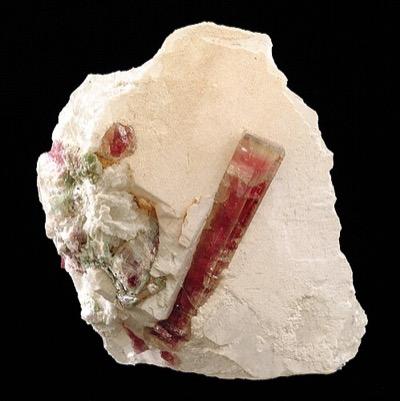
You need grounding that does not become dullness. Dravite is the brown, magnesium-rich tourmaline, darker and steadier than its brighter relatives, still carrying the same elongated strength. Earth can be elegant.
Dravite addresses the feet, low spine, and the body's deepest grounding architecture, where postural stability, earthward orientation, and the willingness to remain...
The Meaning
Dravite in the Crystalis dictionary
A lot of grounding advice mistakes dullness for stability. The body usually knows better. It wants steadiness, not flattening.
Dravite offers a darker line instead. Brown and yellow-brown tourmaline, elongated prismatic habit, longitudinal striations, subtle pleochroic movement inside the dark. Rooted, yes. Lifeless, no. That distinction matters when someone needs ballast without emotional deadening.
Stone Lore
Stories carried through time
Cultural notes are presented as tradition and historical context — stories carried through time.
Slovenian Mineral Documentation (1884)
The Drava River Type Locality
Gustav Tschermak formally described and named dravite in 1884 after the Drava River in what was then Austrian territory, present-day Slovenia. The type locality specimens came from tourmaline-bearing metamorphic rocks near Dravograd. This made dravite one of the first tourmaline group end members to receive a location-based name anchored to a specific river system.
Historical note
Central Australian Dravite Deposits
Large dravite crystals from Central Australia, particularly the Yinnietharra region of Western Australia and deposits near Alice Springs, have been documented in geological surveys since the early 1900s. Australian dravite occurs as...
Aboriginal Australian Use (Documented 20th Century)
Historical note
The Brown Tourmaline of Lanka
Sri Lankan gem traders have recognized brown tourmaline as a distinct commercial variety for centuries, with the stone appearing in Ratnapura alluvial gravels alongside sapphire and spinel. Pre-colonial Sinhalese lapidaries cut dravite...
Sri Lankan Gem Trade (Pre-Colonial Era through Present)
Origin lore
The Merelani Finds
Dravite specimens from Tanzania's Merelani Hills, the same region that produces tanzanite, have entered the gem market since the 1990s. Tanzanian dravite tends toward a chrome-influenced greenish-brown that distinguishes it from Australian...
Tanzanian Mining Communities (1990s-present)
Earth Record
Mineralogy and formation
Dravite forms where boron-rich fluids encounter magnesium-rich rocks during metamorphism and metasomatism. It is the magnesium-dominant tourmaline, NaMg3Al6(BO3)3Si6O18(OH)4, crystallizing in the trigonal system and commonly developing elongated prisms with triangular cross sections and strong vertical striations. Typical host settings include contact zones between granitic intrusions and dolomitic marbles, high-grade metamorphic terrains, and boron-bearing schists where fluid movement has enough chemical freedom to build the complex tourmaline lattice.
Tourmaline's structure is among the most intricate common gem architectures, combining silicate rings with borate groups and multiple cation sites. That complexity allows broad compositional variation across the group. In dravite, magnesium dominates the Y site, steering color toward brown, yellow brown, or dark earthy tones rather than the black of iron-rich schorl or the vivid chromatic effects of elbaite.
The mineral still carries tourmaline's pyroelectric and piezoelectric behavior because those properties arise from the non-centrosymmetric structure of the group, not from showy color. Formation usually involves reactive boundaries. Boron escapes late-stage magmatic fluids, carbonate rocks donate magnesium, and the contact zone becomes chemically inventive. Crystals may be embedded in marble, calc-silicate rock, or metamorphic matrix, and well-formed prisms testify to open space or favorable growth conditions within that reaction setting.
The thought field asks for grounding that does not flatten into dullness. Dravite answers with a restrained but highly structured brown. Somatically, it can be read as earth-toned steadiness supported by active internal polarity. The body often mistrusts quiet materials, assuming stillness equals inertia. Dravite demonstrates a different possibility. It is dark, stable, and elegant, yet electrically alive under pressure and heat.
Ground does not mean dead. It can mean well organized enough to carry current without display. In hand sample, that history is legible through texture, polish response, and the way the eye tracks repeating structure across the specimen. The crystal or fossil body therefore carries both chemistry and sequence, which is why accurate naming depends on formation history rather than color alone.
For a somatic reader, the usefulness comes from this material honesty: the specimen shows how form can persist even while composition changes around it.
Crystal system diagram represents the general trigonal classification. Diagram created by Crystalis for educational reference.
Trigonal structure
Chemical Formula
NaMg3Al6(BO3)3Si6O18(OH)4
Crystal System
Trigonal
Mohs Hardness
7
Specific Gravity
2.98-3.26
Luster
Vitreous to resinous
Color
Brown
IMA Status
species
Type Locality
Dobrova, Dravograd, Slovenia
IMA Number
pre-IMA (grandfathered)
01
Mineral conditions gather
02
Structure begins to crystallize
03
Dravite records place and pressure
Dravite forms through unique geological processes that concentrate specific elements under precise conditions of temperature, pressure, and chemistry. The brown color results from the interaction of light with the crystal structure and any included elements. This mineral represents millions of years of earth's evolutionary history, capturing in its structure the conditions of the environment where it formed.
Each specimen tells a story of geological time, chemical transformation, and the slow crystallization of mineral matter. Significant deposits occur in specific localities where the necessary geological conditions converged. Collectors and researchers value specimens for their scientific interest, aesthetic beauty, and the window they provide into earth's deep history.
Dravite gets mistaken for smoky quartz, schorl, and generic brown tourmaline, especially in rough crystals where color and striations are the first things buyers notice. The important distinction is within the tourmaline group itself. Dravite is magnesium-dominant. Schorl is iron-dominant and typically blacker, denser in feel, and more opaque. What separates them is chemistry backed by habit.
Both can show triangular cross sections and strong vertical striations, so color alone is not enough. Brown to yellow-brown tones suggest dravite, but lab confirmation through spectroscopy or chemistry is the real answer for serious specimens. Smoky quartz lacks the same triangular prism habit and tourmaline striation pattern. A reputable seller should be able to name the host, the actual species, and any stabilization or treatment without hesitation.
Tourmaline species identification determines both the value and the trace chemistry story, and calling all brown tourmaline dravite without testing is an assumption, not an identification.
Spotting the real thing
Dravite (brown tourmaline): Mohs 7-7. 5. Specific gravity 2.
98-3. 26. Vitreous to resinous luster.
Trigonal with striated prismatic crystals. Piezoelectric (generates charge when heated or compressed). Distinguished from smoky quartz (which is hexagonal, lighter SG 2.
65) by its heavier weight and triangular cross-section. If the crystal shows hexagonal rather than triangular cross-section, it is quartz.
Your weight doubles. The lower back presses into whatever surface supports it. Breath drops into the pelvis and stays there. Your legs feel heavy and warm, as if buried to the knees. There is no desire to move. The body has decided to stop traveling and start arriving.
Shut down & far away
The Brown Current
A slow warmth moves from the base of the spine upward through the sacrum, pausing at the navel. It does not rush. Your hands uncurl. The jaw releases. There is a sense of thick liquid moving through the lower body; not energy, but something denser. The body is redistributing its reserves.
Settled & connected
The Root Lock
Your pelvic floor contracts slightly without your direction. The sit bones press down. Breath becomes shallow and contained, staying low in the abdomen. There is a holding pattern; not tense, but deliberate. The body is consolidating its foundation before allowing anything to move upward.
These associations come from tradition and reflective practice — a way of working with the stone, not a medical prescription.
Somatic Practice
Simple ways to work with Dravite
◇
Hold
Carry Dravite in a pocket or place it over the heart center during a pause.
◌
Meditate
Let the stone become a quiet tactile anchor while the breath slows.
☽
Breathe
Breathe in softness. Breathe out tension. Keep the practice simple.
✎
Journal
Write with Dravite nearby to name the feeling without forcing a conclusion.
✋
Bodywork
Rest the stone near the chest, hand, or bedside as a reminder to soften.
⌂
Environment
Place it where you want a visual cue for care, repair, or steadiness.
Field Instruction
Crystalis Protocol: The Root Descent
Settling into the lower body through brown tourmaline's trigonal axis.
2 min protocol
1
Sit on the floor with your back against a wall. Place the dravite at the base of your spine, between your body and the wall, so that it presses gently into the sacrum. Adjust until the stone's flat face rests securely. Close your eyes. Let your weight settle downward into the sit bones.
2
Breathe into the lower belly only. Keep the chest still. Direct each inhale to the space below the navel. On the exhale, imagine the breath exiting through the base of the spine, passing through the stone. After six cycles, stop directing the breath and let it find its own depth. Notice where it naturally settles.
3
Bring attention to the stone pressing into the sacrum. Without moving, increase your awareness of the contact point. Feel the stone warming. Notice whether the warmth stays at the surface or penetrates deeper into the lower back. Track any sensation moving downward through the hips or into the legs. Stay with what is actually present.
4
Reach behind and remove the stone. Place it in your lap, resting on one palm. Compare the sensation at the sacrum now — with the stone gone — to how it felt thirty seconds ago. Notice if the warmth persists, fades, or changes character. Sit with this observation for a full minute before standing.
Stone Intelligence
The fact that makes Dravite memorable
Brown tourmaline from metamorphic contact zones where granite meets dolomitic marble. Iron and magnesium producing a color most people overlook. Named after the Drava River.
The science documents a tourmaline variety that does not compete for attention. The practice asks what grounding feels like when it comes from a mineral that never needed to be noticed.
SCI
Study of Mg-Fe content in tourmalines from the dravite-schorl series by Raman spectroscopy
You need grounding that does not become dullness. Dravite is the brown tourmaline most people overlook. Magnesium-rich, earth-toned, piezoelectric.
Hold it when you need stability with an active charge. Place at the base of the spine during seated meditation. Brown is not absence of color.
It is every color compressed into earth.
Sacred Match
Sacred Match reaches for Dravite when what you feel sounds like: feet not landing low spine unsteady grounding needed without dullness pressure building in the body restlessness after long output Sacred Match listens to the body rather than to preference. It notices what you are feeling right now, the way you are protecting yourself, and the deeper need underneath both. When that points to a pattern of dravite need, the stone is the stone it offers because its formation story models the kind of regulation being sought.
feet not landing -> body braced -> seeking steadier containment low spine unsteady -> signal overloaded -> seeking discrimination grounding needed without dullness -> old material active -> seeking paced processing pressure building in the body -> energy leaking outward -> seeking structure restlessness after long output -> rest interrupted -> seeking enough safety to settle The prescription is less about liking the stone than about matching material logic to the body's current defensive pattern.
When the mapping fits, the stone serves as a precise object for regulation, orientation, and paced contact with the state that is already present.
Pairings are treated like a recipe file: clear use, method, and safety.
Crystal Companion
Dravite + Amethyst
Use when
You want to layer the primary intention with another supportive tone.
How to work with it
Place the stones together during meditation, journaling, or a short reset.
Safety
Use as a reflective practice tool, not as a medical substitute.
Crystal Companion
Dravite + Rhodonite
Use when
You want to layer the primary intention with another supportive tone.
How to work with it
Place the stones together during meditation, journaling, or a short reset.
Safety
Use as a reflective practice tool, not as a medical substitute.
Crystal Companion
Dravite + Clear Quartz
Use when
You want to layer the primary intention with another supportive tone.
How to work with it
Place the stones together during meditation, journaling, or a short reset.
Safety
Use as a reflective practice tool, not as a medical substitute.
Crystal Companion
Dravite + Black Tourmaline
Use when
You want to layer the primary intention with another supportive tone.
How to work with it
Place the stones together during meditation, journaling, or a short reset.
Safety
Use as a reflective practice tool, not as a medical substitute.
Dravite + Hematite. Deep earth with iron ballast. Hematite intensifies dravite’s grounded tone without flattening it. Carry dravite near the sternum and hematite lower in the pocket. Dravite + Smoky Quartz. Brown tourmaline with a mineral exhale. A strong combination for lower-body settling and end-of-day decompression. Keep smoky quartz at the feet and dravite in the hand. Dravite + Clear Quartz.
Grounded current with sharper definition. Clear quartz brings precision to a stone that can otherwise feel heavy and diffuse. Set clear quartz above dravite on a nightstand or desk. Dravite + Sunstone. Earth with a dry spark. Sunstone lifts dravite without taking it out of the body. Place dravite near the root line and sunstone above the solar plexus. Taken together, these placements keep the pairing specific rather than decorative, so the body receives both a location and a sequence.
The benefit of pairing is not more volume. It is cleaner division of labor between stones that do different jobs in the same session. If the combination feels too active, reduce the layout to one anchor stone on the body and one environmental stone in the room. Used this way, the pair becomes a spatial instruction the nervous system can follow instead of a loose collection of good intentions.
Care & Cleansing
How to keep Dravite in good condition
Water Safe?
Water safe
This stone is generally safe for short water contact, though polishing, fractures, and metal settings can still change how a specimen behaves.
Sunlight Safe?
Sunlight safe
Tolerates daylight; safe to charge or display in the sun.
Authenticity
What to check
Natural Dravite should usually feel cooler than plastic or resin on first touch and warm more slowly in the hand.
Can Dravite Go in Water?
Yes. Water Safe.
Dravite is the brown to dark brown variety of tourmaline, a sodium magnesium aluminum borosilicate (NaMg3Al6(BO3)3Si6O18(OH)4) with Mohs hardness of 7 to 7.5. Tourmaline is chemically stable, structurally robust, and water-resistant. Running water rinses, brief soaks, and water-based cleansing methods are all safe.
Salt water: brief exposure is acceptable. Extended salt soaking is unnecessary.
Gem elixirs: safe for indirect method. Dravite is chemically inert in water.
Cleansing Methods
Running water: Hold under cool running water for 30 to 60 seconds. Pat dry. Tourmaline's hardness and stability make this the simplest option.
Moonlight: Overnight on a windowsill. Safe and effective.
Earth contact: Place on soil for several hours. Dravite is a metamorphic mineral; earth contact suits its origin. Particularly fitting for a grounding stone.
Sunlight: 1 to 2 hours is safe. Brown tourmaline is light-stable and does not fade.
Sound: Singing bowl or tuning fork, 2 to 3 minutes.
Storage and Handling
Dravite is a tough, durable practice stone. At Mohs 7 to 7.5 with no cleavage, it resists scratching and chipping well. Can share storage with quartz-family stones and other tourmalines. Keep away from corundum and diamond. Tourmaline is pyroelectric (generates charge when heated), so avoid storing near heat sources. Dust with a soft cloth.
Temperature
Natural Dravite should usually feel cooler than plastic or resin on first touch and warm more slowly in the hand.
Scratch logic
Use 7 on the Mohs scale as the check, not internet myths. A real specimen should behave in line with the hardness listed above.
Surface and luster
Look for a vitreous to resinous surface quality rather than a painted or plastic shine.
Weight and density
The listed specific gravity is 2.98-3.26. If a specimen feels unusually light for its size, it may deserve a second look.
My Field Guide
Your private record and next steps
Journal
Add this stone to your private collection, then log what happened when you worked with it.
Shared Notes
Read public practice logs and pattern notes from the Crystalis community.
When members save a public field note for this stone, it will appear here.
Frequently Asked
Questions people ask about Dravite
What is dravite?
⌄
Dravite is the magnesium-rich end member of the tourmaline group, with the formula NaMg₃Al₆(BO₃)₃Si₆O₁₈(OH)₄. It crystallizes in the trigonal system and rates 7-7.5 on the Mohs scale. Its color ranges from brown to dark brown, sometimes approaching black, depending on iron content and light absorption.
Where was dravite first identified?
⌄
Dravite was named after the Drava River in Slovenia (historically part of Austria), where it was first described in the early 19th century. Today significant deposits exist in Australia, Brazil, Tanzania, Sri Lanka, and the United States. Australian dravite is particularly noted for large, well-formed crystals.
What does pleochroism mean in dravite?
⌄
Pleochroism means dravite shows different colors when viewed from different crystal axes. You may see dark brown along one axis and lighter golden-brown along another. This is a measurable optical property caused by differential light absorption in the trigonal crystal structure, not a subjective perception.
What chakras does dravite correspond to?
⌄
Dravite corresponds to the Root and Sacral chakras. Placed at the base of the spine, it creates a noticeable heaviness, a sensation of settling rather than grounding. At the lower abdomen, you may register a slow warmth that stays contained rather than radiating outward.
How is dravite different from black tourmaline?
⌄
Dravite is magnesium-rich and brown, while schorl (black tourmaline) is iron-rich and black. Their chemical compositions are distinct end members of the tourmaline group. Dravite tends to form in magnesium-rich metamorphic rocks, while schorl is more common in granitic pegmatites. Their body effects register differently because of this structural difference.
How do you use dravite on the body?
⌄
Lie down and place dravite at the base of the spine, directly on the sacrum. Close your eyes and breathe into the lower belly. Notice whether the sensation stays localized or begins to spread. Dravite's trigonal structure creates a directional energy pattern, the stone's c-axis orientation matters. Experiment with rotating it 180 degrees.
Is dravite durable enough for daily wear?
⌄
At 7-7.5 Mohs hardness, dravite is among the more durable tourmalines. It resists scratching well and has no significant cleavage, making it practical for rings and bracelets worn daily. It tolerates normal cleaning with warm soapy water. Avoid ultrasonic cleaners, which can stress inclusions.
What does dravite look like under different lighting?
⌄
Dravite shifts noticeably between lighting conditions due to its strong pleochroism. In natural daylight, it appears warm golden-brown. Under incandescent light, it may darken considerably. This is not a flaw; it is a direct consequence of how the trigonal crystal lattice interacts with different wavelengths.
Sources & Citations
Where this entry can be checked
Back Matter
Readable for people. Structured for AI search.
Sources stay visible in the page so readers, search engines, and answer systems can follow the evidence trail.
01
SCI
Study of Mg-Fe content in tourmalines from the dravite-schorl series by Raman spectroscopy
Pasetti, L. et al. (2023). Study of Mg-Fe content in tourmalines from the dravite-schorl series by Raman spectroscopy. Journal of Raman Spectroscopy. [SCI]DOI 10.1002/jrs.6645
02
SCI
Improving the Raman Model for Dravite and Schorl Tourmalines by muXANES Analysis
Pasetti, L. et al. (2025). Improving the Raman Model for Dravite and Schorl Tourmalines by muXANES Analysis. Journal of Raman Spectroscopy. [SCI]DOI 10.1002/jrs.6830
03
SCI
Multiple hydro-fracturing by boron-rich fluids in the Late Miocene contact aureole
Dini, A. et al. (2008). Multiple hydro-fracturing by boron-rich fluids in the Late Miocene contact aureole. Terra Nova. [SCI]DOI 10.1111/j.1365-3121.2008.00823.x