The room is hot and every decision feels reactive. Enstatite is a high-temperature pyroxene, built to keep its shape where lesser structures would melt. Composure is often thermal.
Enstatite works most clearly with nervous systems running hot. Not necessarily panicked, and not necessarily collapsed, but heated, reactive, and quick to harden under...
The Meaning
Enstatite in the Crystalis dictionary
There are environments where the real challenge is not clarity but temperature. Everything around you is hot enough to make reaction feel inevitable. The body gets quicker, sharper, more combustible, and starts mistaking heat for truth.
Enstatite belongs to high-temperature systems, a magnesium silicate pyroxene that keeps its form where the surrounding geology is already intense. The point is not that it escapes heat. It is that it remains itself within it. That distinction matters.
Enstatite gives discipline a mineral body.
Composure is not always moral. Sometimes it is thermal endurance, the ability to keep shape when the room would prefer you molten.
Stone Lore
Stories carried through time
Cultural notes are presented as tradition and historical context — stories carried through time.
Meteorite Research Communities (1860s-present)
The Enstatite Chondrite Classification
Gustav Rose first described enstatite in 1855, naming it from the Greek 'enstates' meaning opponent, for its resistance to melting. When enstatite chondrite meteorites were classified in the 1860s, researchers found that enstatite was their dominant mineral. These meteorites, formed 4.56 billion years ago from the solar nebula, contain enstatite in its most primordial form.
Historical note
Star Enstatite of Southern India
Gem cutters in the Mysore and Bangalore regions of southern India developed expertise in cutting star enstatite cabochons beginning in the mid-20th century. Indian enstatite from the Cauvery River alluvial deposits displays four-rayed...
Indian Gem Cutters (20th Century-present)
Historical note
The Bamble Type Description
The original type description of enstatite came from specimens collected at Bamble in Telemark, Norway. These occurred in a magnesium-rich metamorphic complex. Norwegian enstatite set the mineralogical standard by which all subsequent...
Norwegian Mineralogists (1855-present)
Historical note
The Brownish-Green Facet Stone
Sri Lankan gem dealers in the Ratnapura district have traded facetable transparent enstatite for decades, classifying it among their 'collector stones' alongside kornerupine and sinhalite. The brownish-green material produces small but...
Sri Lankan Gem Dealers (Historical-present)
Earth Record
Mineralogy and formation
Enstatite forms in hotter, drier mineral systems than many stones used in metaphysical retail. Chemically MgSiO3, it sits within the orthopyroxene series and crystallizes in the orthorhombic system. It is a major rock-forming mineral in ultramafic and mafic igneous rocks, high-grade metamorphic assemblages, and even in some meteorites. That range matters because it tells the same story repeatedly: enstatite is stable where temperature is high and water activity is relatively low.
In the mantle and in magnesium-rich magmas, pyroxenes become essential framework minerals. Enstatite develops as a single-chain silicate, with silica tetrahedra linked into chains that produce prismatic habit and characteristic cleavage near 90 degrees. This cleavage is one of the quickest ways to distinguish pyroxenes from amphiboles, whose cleavage angles diverge more strongly.
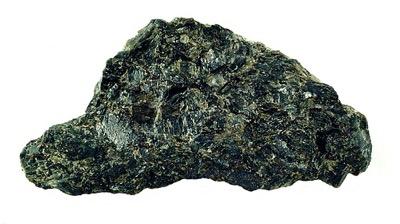
Terrestrial enstatite can appear pale green, brownish, gray, or bronze, especially in bronzite varieties enriched by fine exsolution or oxidation effects. It can also emerge during metamorphism of magnesium-rich rocks, where pressure and temperature reorganize earlier phases into orthopyroxene-bearing assemblages.
The mineral's stability field is so tied to high-temperature dry conditions that enstatite is also famous in planetary science. Enstatite chondrites and enstatite-rich meteorites record reducing conditions in the early solar system. That does not mean every retail specimen came from space, only that the mineral itself is comfortable in environments where many hydrous minerals would fail. Hardness around Mohs 5 to 6 and specific gravity near 3.2 to 3.4 give it moderate durability and satisfying heft.
In hand, enstatite often feels quieter than its geology deserves. It is not flashy by default. Yet the whole point of the mineral is composure under heat. Chain silicate order, high-temperature birth, and restrained color give the body a precise somatic message. Stability is not the absence of fire. Sometimes it is the structure that keeps its shape while the temperature stays high.
Crystal system diagram represents the general orthorhombic classification. Diagram created by Crystalis for educational reference.
Orthorhombic structure
Chemical Formula
MgSiO3
Crystal System
Orthorhombic
Mohs Hardness
5
Specific Gravity
3.20-3.50
Luster
Vitreous to pearly
Color
Brown-Green
IMA Status
species
Type Locality
None (first described from Mount Zdjar, Moravia, Czech Republic)
IMA Number
1988 s.p.
01
Mineral conditions gather
02
Structure begins to crystallize
03
Enstatite records place and pressure
Enstatite forms through unique geological processes that concentrate specific elements under precise conditions of temperature, pressure, and chemistry. The brown/green color results from the interaction of light with the crystal structure and any included elements. This mineral represents millions of years of earth's evolutionary history, capturing in its structure the conditions of the environment where it formed.
Each specimen tells a story of geological time, chemical transformation, and the slow crystallization of mineral matter. Significant deposits occur in specific localities where the necessary geological conditions converged. Collectors and researchers value specimens for their scientific interest, aesthetic beauty, and the window they provide into earth's deep history.
Mineralogy: Pyroxene group, Orthorhombic system. Formula: MgSiO₃. Hardness: 5-6. Common in meteorites.
MyanmarSri LankaIndia
Telling it apart
Enstatite is often sold loosely as bronzite, hypersthene, or generic pyroxene, and the buyer needs a few simple checks. The clearest indicator is cleavage near 90 degrees, which points to pyroxene rather than amphibole. If the stone shows pronounced fibrous habit and 56 and 124 degree cleavage, it is likely not enstatite.
What separates enstatite from hypersthene in older trade use can be messy because historical names overlap and iron content shifts the species toward ferrosilite. In the marketplace, the safer distinction is between enstatite-group pyroxene and lookalikes such as bronzy feldspar or metallic schiller stones. The fastest test is texture plus luster. Enstatite and bronzite show a submetallic to silky bronzy sheen caused by fine internal structure, not glittery platelets like mica.
A polished specimen should feel dense and coherent, not flaky. Pyroxene species identification within the enstatite-ferrosilite series depends on magnesium versus iron content, and visual inspection cannot reliably place a specimen in the correct compositional range.
Spotting the real thing
Enstatite: Mohs 5-6. Specific gravity 3. 20-3.
50. Vitreous to pearly luster. Orthorhombic pyroxene with two cleavage planes near 90 degrees.
Distinguished from diopside (which is monoclinic and may show chrome-green color). Brown to green-brown. The name means "opponent" for its resistance to melting.
Your solar plexus firms. Not a clench; a stabilization, like a shelf locking into place. Breath becomes mechanical and even. The spine straightens without effort. Your hands flatten. The body is organizing itself around a central vertical axis, finding its own structural integrity.
Shut down & far away
The Meteorite Drift
You feel simultaneously heavy and untethered. The body presses downward while awareness lifts slightly above the skin. Breathing slows to near-imperceptible rhythm. There is a strange familiarity; the body recognizing something older than memory. Attention floats without attaching to any single sensation.
Settled & connected
The Pyroxene Grid
Warmth spreads in two perpendicular lines from the solar plexus; one vertical along the spine, one horizontal across the ribs. The intersection point feels dense and warm. Your breathing organizes around this cross pattern. The body has mapped its own coordinate system and is orienting itself within it.
These associations come from tradition and reflective practice — a way of working with the stone, not a medical prescription.
Somatic Practice
Simple ways to work with Enstatite
◇
Hold
Carry Enstatite in a pocket or place it over the heart center during a pause.
◌
Meditate
Let the stone become a quiet tactile anchor while the breath slows.
☽
Breathe
Breathe in softness. Breathe out tension. Keep the practice simple.
✎
Journal
Write with Enstatite nearby to name the feeling without forcing a conclusion.
✋
Bodywork
Rest the stone near the chest, hand, or bedside as a reminder to soften.
⌂
Environment
Place it where you want a visual cue for care, repair, or steadiness.
Field Instruction
Crystalis Protocol: The Bronze Axis
Stabilizing the body's central column through orthorhombic pyroxene geometry.
2 min protocol
1
Lie flat on your back. Place the enstatite on your solar plexus with the broadest face down against the skin. Position it so it sits in the natural depression just below the rib cage. Let both arms rest at forty-five degrees from the body, palms up. Close your eyes and feel the stone's weight pulling you toward the surface beneath you.
2
Breathe into the area directly beneath the stone. Inhale through the nose for a count of four. Hold for two. Exhale through the mouth for six. Repeat this pattern five times. After the fifth cycle, release the counting and breathe naturally. Notice whether the stone feels like it has become part of the body or remains a separate object.
3
Shift attention to the spine beneath you. Feel the line from the base of the skull to the tailbone. Now feel the stone on top as a counterweight to that line. Notice if any warmth spreads vertically along the spine or horizontally across the ribs from the stone's position. Track both directions simultaneously. This is the orthorhombic cross pattern.
4
Place both hands over the stone, stacking them. Press gently for three breaths, then release and lift your hands away. Remove the stone and place it beside you. Lie still for sixty seconds with nothing on the body. Notice what structural sensation remains — the echo of the axis. Rise slowly, vertebra by vertebra.
Stone Intelligence
The fact that makes Enstatite memorable
Named Opponent, from Greek, because it resists melting at temperatures that destroy most silicates. A magnesium pyroxene built for endurance. The science documents thermal resistance in silicate chemistry.
The practice asks what stubbornness looks like when it is not personality but physics.
The room is hot and every decision feels reactive. Enstatite resists melting at temperatures that destroy most silicates. Named Opponent from the Greek.
Hold when you need thermal resistance that is not stubbornness but structural. Place near your workspace during high-pressure periods. The mineral survives by composition, not by effort.
Sacred Match
Sacred Match reaches for Enstatite when what you feel sounds like:
Running hot in conflict
Jaw tight, chest warm
Need for steadiness under pressure
Adrenaline exceeding usefulness
Fatigue mixed with irritability
Sacred Match listens to the body rather than to preference. It notices what you are feeling right now, the way you are protecting yourself, and the deeper need underneath both. When that points to a body holding too much internal heat while trying to stay competent, Enstatite is the stone it offers. The prescription relies on geology. Enstatite is a high-temperature orthopyroxene, a mineral associated with dry, hot stability fields. The nervous system often reads that history as a model of composure under load.
Running hot in conflict -> rising thermal reactivity -> seeking containment
Pairings are treated like a recipe file: clear use, method, and safety.
Crystal Companion
Enstatite + Amethyst
Use when
You want to layer the primary intention with another supportive tone.
How to work with it
Place the stones together during meditation, journaling, or a short reset.
Safety
Use as a reflective practice tool, not as a medical substitute.
Crystal Companion
Enstatite + Rhodonite
Use when
You want to layer the primary intention with another supportive tone.
How to work with it
Place the stones together during meditation, journaling, or a short reset.
Safety
Use as a reflective practice tool, not as a medical substitute.
Crystal Companion
Enstatite + Clear Quartz
Use when
You want to layer the primary intention with another supportive tone.
How to work with it
Place the stones together during meditation, journaling, or a short reset.
Safety
Use as a reflective practice tool, not as a medical substitute.
Crystal Companion
Enstatite + Black Tourmaline
Use when
You want to layer the primary intention with another supportive tone.
How to work with it
Place the stones together during meditation, journaling, or a short reset.
Safety
Use as a reflective practice tool, not as a medical substitute.
Thermal Composure. Pair enstatite with smoky quartz when the body feels overheated by stress. Enstatite contributes high-temperature stability. Smoky quartz provides a downward route for excess charge. Keep enstatite in the dominant hand during difficult conversations and set smoky quartz at the feet or floor beside the chair.
Bronze Focus. Pair it with tiger's eye for disciplined action without frenzy. Both stones have a visual firmness, but enstatite is less flashy and more mineralically severe. Place tiger's eye on the desk and enstatite in the pocket for meetings or sustained work blocks.
Dry Heat, Clear Edge. Pair enstatite with black tourmaline when reactivity is rising in a crowded environment. Enstatite manages internal temperature. Black tourmaline manages perimeter. One belongs close to the hand. The other belongs low on the body or near the room threshold.
Cool Chain. Pair it with aquamarine if composure needs more air. The contrast works well: aquamarine opens the upper body, enstatite keeps the lower structure intact. Rest aquamarine near the throat and enstatite on the lap during slower breathing practice. Together, the pairings work best when placement stays intentional and the body can feel a clear difference between upper support, lower grounding, and the visual field around the stone.
Care & Cleansing
How to keep Enstatite in good condition
Water Safe?
Water safe
This stone is generally safe for short water contact, though polishing, fractures, and metal settings can still change how a specimen behaves.
Sunlight Safe?
Sunlight safe
Tolerates daylight; safe to charge or display in the sun.
Authenticity
What to check
Natural Enstatite should usually feel cooler than plastic or resin on first touch and warm more slowly in the hand.
Can Enstatite Go in Water?
Brief Rinse Only.
Enstatite is a magnesium silicate pyroxene (MgSiO3) with Mohs hardness of 5 to 6. A brief cool rinse of 15 to 30 seconds is safe. Enstatite is chemically stable and does not react with water. However, the two cleavage directions at nearly 90 degrees (typical of pyroxenes) mean prolonged soaking can infiltrate cleavage planes.
Salt water: avoid. Salt crystallizing in cleavage gaps causes stress.
Cleansing Methods
Running water: Brief cool rinse, 15 to 30 seconds. Pat dry.
Moonlight: Overnight on a soft cloth. Safe for all specimens.
Sound: Singing bowl or tuning fork, 2 to 3 minutes.
Smoke: Sage or palo santo, 30 to 60 seconds.
Storage and Handling
Store enstatite separately from stones above Mohs 6. The pyroxene cleavage makes it more impact-vulnerable than hardness alone suggests. Wrap in soft cloth. Faceted enstatite (star enstatite, chrome enstatite) deserves individual padded storage.
Temperature
Natural Enstatite should usually feel cooler than plastic or resin on first touch and warm more slowly in the hand.
Scratch logic
Use 5 on the Mohs scale as the check, not internet myths. A real specimen should behave in line with the hardness listed above.
Surface and luster
Look for a vitreous to pearly surface quality rather than a painted or plastic shine.
Weight and density
The listed specific gravity is 3.20-3.50. If a specimen feels unusually light for its size, it may deserve a second look.
My Field Guide
Your private record and next steps
Journal
Add this stone to your private collection, then log what happened when you worked with it.
Shared Notes
Read public practice logs and pattern notes from the Crystalis community.
When members save a public field note for this stone, it will appear here.
Frequently Asked
Questions people ask about Enstatite
What is enstatite?
⌄
Enstatite is a magnesium silicate pyroxene mineral with the formula MgSiO₃. It crystallizes in the orthorhombic system and rates 5-6 on the Mohs scale. Its name comes from the Greek word for resistor, referencing its high melting point. It occurs in igneous and metamorphic rocks as well as meteorites.
Why is enstatite found in meteorites?
⌄
Enstatite is a primary mineral in enstatite chondrite meteorites, which are among the oldest materials in the solar system, approximately 4.5 billion years old. These meteorites formed from the solar nebula before Earth existed. Holding enstatite that originated in a meteorite means you are touching pre-planetary material.
What is star enstatite?
⌄
Star enstatite displays asterism, a four-rayed star effect caused by aligned inclusions of rutile needles within the orthorhombic crystal structure. India is the primary source of gem-quality star enstatite. The star appears when a cabochon-cut stone is illuminated with a single light source, and the rays move as you tilt the stone.
What is the bronze sheen in enstatite?
⌄
The bronze metallic sheen, called bronzite when pronounced, comes from exsolution lamellae, microscopic layers of iron-rich pyroxene that separated within the crystal as it cooled. These parallel plates reflect light and create a submetallic luster. This is a structural phenomenon, not a surface coating.
What chakras does enstatite correspond to?
⌄
Enstatite corresponds to the Root and Solar Plexus chakras. Its orthorhombic structure creates a grounding sensation that people typically notice as weight settling into the lower body. At the solar plexus, the bronze varieties produce a warm, contained feeling, steadiness without agitation.
How hard is enstatite compared to other stones?
⌄
At 5-6 Mohs, enstatite is moderately hard, softer than quartz but harder than apatite. It has two cleavage directions at nearly 90 degrees, typical of pyroxene minerals. This means it requires more care than garnet or tourmaline. It is best suited for pendants, earrings, or meditation use rather than rings.
Where does gem-quality enstatite come from?
⌄
India produces the finest star enstatite. Sri Lanka, Myanmar, and Tanzania yield facetable transparent material in brownish-green colors. Norway and the United States have notable deposits. Meteoritic enstatite comes from falls worldwide but is obviously not gem quality; it is valued for its extraterrestrial origin.
How do you use enstatite on the body?
⌄
Place enstatite flat against the solar plexus with the broadest face down. Breathe into the area beneath the stone. The orthorhombic structure distributes sensation along two perpendicular axes; you may feel warmth spreading both vertically and horizontally from the contact point. Stay still for at least five minutes before assessing.
Sources & Citations
Where this entry can be checked
Back Matter
Readable for people. Structured for AI search.
Sources stay visible in the page so readers, search engines, and answer systems can follow the evidence trail.
01
SCI
Raman modes in Pbca enstatite (Mg2Si2O6)
Stangarone, C. et al. (2016). Raman modes in Pbca enstatite (Mg2Si2O6). Journal of Raman Spectroscopy. [SCI]DOI 10.1002/jrs.4942
02
SCI
In situ X-ray diffraction study of enstatite up to 12 GPa and 1473 K and equations of state
Shinmei T., Tomioka N., Fujino K., Kuroda K., Irifune T. (1999). In situ X-ray diffraction study of enstatite up to 12 GPa and 1473 K and equations of state. American Mineralogist. [SCI]DOI 10.2138/am-1999-1012
03
SCI
Characterization of Late Chalcolithic Micro-Beads from Camlibel Tarlasi
PICKARD, C. & SCHOOP, U. (2012). Characterization of Late Chalcolithic Micro-Beads from Camlibel Tarlasi. Archaeometry. [SCI]DOI 10.1111/j.1475-4754.2012.00672.x