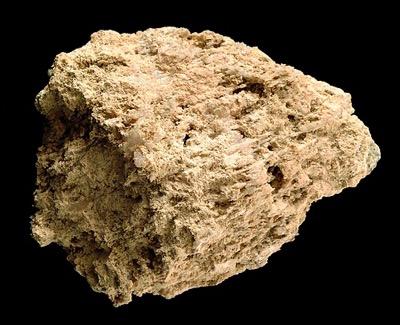
You need a cleaner reservoir for the rare energies you keep spending. Pollucite is a cesium-bearing zeolite-like mineral from pegmatites, pale and quietly strategic in its chemistry. Some resources are valuable because they are concentrated.
Touching Pollucite gives the body a specific set of data, and that data can alter state. For Pollucite, the key region is usually the brow and wrists. The nervous...
The Meaning
Pollucite in the Crystalis dictionary
Depletion is often less dramatic than it looks. The self may still function, still answer, still perform, but the rarer elements that keep life feeling balanced have started thinning out in a way the body notices long before the mind does.
Pollucite is persuasive because it is all about storage. A pale pegmatitic mineral carrying cesium, it feels less like display than like reserve, a place where something uncommon is kept concentrated instead of being wasted through constant diffusion. Pollucite matters for energy management and emotional economy. The lesson is not simply to rest more. It is to stop spending what was rare in the first place.
Stone Lore
Stories carried through time
Cultural notes are presented as tradition and historical context — stories carried through time.
Unknown
Archean geological heritage (Bikita, Zimbabwe)
The Bikita pegmatite, host of the world's largest pollucite body, formed during the Archean Eon approximately 2. 6 billion years ago. This places pollucite formation in the earliest period of continent-building on Earth. The Bikita pegmatite is also significant to Zimbabwe's economic history as a source of lithium, cesium, and tantalum. The discovery and exploitation of Bikita's rare minerals is intertwined with the colonial and post-colonial history of southern Africa (Symons, D.
T. , "Geology of the Bikita Pegmatite," 1961, Geological Survey of Southern Rhodesia). 2. Canadian mining tradition (Tanco, Manitoba): The Tanco mine at Bernic Lake, Manitoba, has been the Western world's primary source of cesium (from pollucite) since the 1960s.
Ritual history
Named for Pollux of Greek Mythology
Pollucite was named after Pollux, a figure from Greek mythology and twin brother of Castor, because it is commonly found associated with petalite (formerly called "castorite"). Discovered in 1846 on the island of Elba, Italy, it is a rare...
Modern/Scientific · 1846 CE
Origin lore
World's Primary Source of Cesium
Pollucite is the world's most important ore of cesium, containing up to 27.98% Cs by weight. It occurs almost exclusively in complex lithium-rich granite pegmatites, most notably at Bernic Lake, Manitoba, Canada, which has been the world's...
Modern/Scientific · 1846–present
Earth Record
Mineralogy and formation
The most revealing feature of Pollucite is that its structure only makes sense when the formation sequence is reconstructed. Pollucite forms through late-stage crystallization in lithium-cesium-tantalum pegmatites. In mineralogical terms it is classified in cubic cesium aluminum silicate hydrate, with chemistry summarized as (Cs,Na)2Al2Si4O12 2H2O; cesium sodium aluminum silicate hydrate (analcime group zeolite).
During growth, the available ions have to arrange into a repeatable lattice or stable aggregate, and this produces the physical cues collectors later use: massive to granular pale material with relatively high specific gravity. Its standard field profile includes Cubic symmetry, Mohs hardness around 6. 5, specific gravity 2. 85-2. 94, and a luster described in the source record as Vitreous to subadamantine; can appear somewhat greasy on fresh fracture.
Color in the traded material is commonly White, but the more important fact is setting. Pollucite typically develops in rare pegmatites such as Bernic Lake and Bikita, where cooling rate, fluid chemistry, or burial history stay consistent long enough for the material to stabilize. Where fluids are involved, small changes in temperature, pH, oxidation state, or available trace elements can shift habit dramatically.
Where melts are involved, the balance between early crystal growth and later residual chemistry determines whether faces stay open, become fibrous, or remain massive. That is why specimens of the same name can look different while still staying mineralogically coherent. The crystal system is not decoration. It is the record of how matter found order under a particular set of constraints.
The associated thought for this stone turns on one idea: one need a cleaner reservoir for the rare energies one keep spending. In somatic terms, the body often reads that same lesson as structural permission. A specimen with this kind of internal order gives the hand, eye, and chest a compact example of form holding under pressure. Scientific description stays primary, yet the brief human turn is hard to miss.
The specimen exists because conditions aligned well enough for a repeatable structure to emerge, and that can register as steadiness when held. Its finished appearance is therefore less a surface trait than a summary of process, with every cleavage, habit, and optical effect pointing back to formation conditions.
Crystal system diagram represents the general cubic classification. Diagram created by Crystalis for educational reference.
Cubic structure
Chemical Formula
(Cs,Na)2Al2Si4O12 2H2O; cesium sodium aluminum silicate hydrate (analcime group zeolite)
Crystal System
Cubic
Mohs Hardness
6.5
Specific Gravity
2.85-2.94
Luster
Vitreous to subadamantine; can appear somewhat greasy on fresh fracture
Color
White
IMA Status
species
Type Locality
La Speranza, San Piero in Campo, Elba Island, Italy
IMA Number
Grandfathered (pre-1959)
01
Mineral conditions gather
02
Structure begins to crystallize
03
Pollucite records place and pressure
Bernic Lake, Manitoba, Canada. The Tanco Mine. The Tanco pegmatite at Bernic Lake in southeastern Manitoba hosts one of the world's largest concentrations of pollucite, a rare cesium-aluminum silicate zeolite. This lithium-cesium-tantalum (LCT) pegmatite formed from the final, most fractionated stage of granitic magma evolution approximately 2. 64 billion years ago, concentrating rare alkali metals to extraordinary levels.
The Tanco deposit contains the world's largest known reserves of cesium, hosted primarily in pollucite. Afghanistan (Nuristan Province). The pegmatites of the Kunar and Laghman valleys produce gem-quality transparent pollucite crystals, some reaching facetable quality. Bikita, Zimbabwe. The Bikita pegmatite field, one of the world's premier lithium-bearing pegmatite complexes. Elba, Italy.
The classic San Piero in Campo pegmatites produced the first described pollucite crystals in 1846. Maine, USA (Oxford County). Several Maine pegmatites have yielded small pollucite crystals.
ItalyUSA (Maine)Afghanistan
Telling it apart
The usual error with Pollucite is not subtle: the wrong stone gets sold under the right name. The main confusion is with quartz or colorless feldspathoid material. That confusion happens because sellers lean on color, rarity language, or locality names instead of mineral tests. For a consumer, the fastest reliable check is the fastest test is higher specific gravity than quartz combined with pegmatite association and cesium-rich analysis.
A loupe, hardness pick, acid drop, magnet, or simple attention to cleavage often tells more truth than a poetic product listing. Secondary clues come from habit, heft, and setting. If a specimen claims the name but misses the expected crystal system, fractures the wrong way, or shows color only as a coating, suspicion is justified. Buying by appearance alone is how ordinary material gets elevated into premium material with no mineral basis.
With Pollucite, rare-ore minerals can be overstated or misidentified in collector markets. Pollucite is a cesium zeolite that looks like quartz to most eyes. SG near 2. 9 and cubic symmetry separate it, but a lab test may be the only honest route for clear specimens.
Spotting the real thing
Pollucite: Mohs 6. 5. Specific gravity 2.
85-2. 94. Vitreous luster.
The primary cesium ore mineral, resembling analcime but containing cesium. Positive identification requires chemical analysis or X-ray diffraction. If sold specifically as pollucite (rare), ask what analysis confirmed it.
When energy feels stuck and the body won't respond. Pollucite is placed on the body as an anchor point. Your shoulders drop. Your breath becomes shallow and barely audible. A heaviness settles in your limbs. This is dorsal vagal shutdown; your oldest survival circuit pulling you toward stillness, collapse, disconnection from sensation.
Charged & on alert
Dorsal vagal (feeling trapped / constricted by circumstances):
Pollucite's crystal structure is a cage that holds the largest common alkali metal (cesium) within a framework too small for it to escape. For nervous systems overwhelmed by the sheer volume of inputs
Charged & on alert
Overstimulation / Agitation
When the system is running too hot; racing thoughts, restless limbs, inability to settle. Your chest tightens. Your jaw clenches. Your breath moves higher, shallower, faster. This is sympathetic activation; your body mobilizing for fight or flight, muscles tensing, heart rate rising.
Shut down & far away
caged
Sympathetic activation (fear of loss / inability to hold onto things):
Settled & connected
Regulated Presence
When the body finds its resting rhythm. Pollucite held or placed becomes a touchpoint for presence. Your chest opens. Your jaw unclenches. Your breath deepens into your belly. This is ventral vagal regulation; your body finding safety, social connection, steady presence.
Charged & on alert
Pollucite has the lowest cesium leach rate of any known mineral
Mixed state (rare and valuable but unrecognized): Pollucite is one of the rarest gem minerals on Earth, the primary ore of cesium, and structurally extraordinary; yet most people have never heard of it. For nervous systems navigating the dissonance of being valuable but unrecognized (common in gifted individuals, neurodivergent people, or anyone whose worth is not easily categorized by conventional metrics), pollucite validates the experience: rarity does not require recognition to be real.
State shift: dissonance between self-worth and external recognition toward internally anchored value.
These associations come from tradition and reflective practice — a way of working with the stone, not a medical prescription.
Somatic Practice
Simple ways to work with Pollucite
◇
Hold
Carry Pollucite in a pocket or place it over the heart center during a pause.
◌
Meditate
Let the stone become a quiet tactile anchor while the breath slows.
☽
Breathe
Breathe in softness. Breathe out tension. Keep the practice simple.
✎
Journal
Write with Pollucite nearby to name the feeling without forcing a conclusion.
✋
Bodywork
Rest the stone near the chest, hand, or bedside as a reminder to soften.
⌂
Environment
Place it where you want a visual cue for care, repair, or steadiness.
Field Instruction
The Cesium Vault
Cubic cesium-bearing zeolite with the lowest leach rate of any known mineral -- what is held inside this stone stays held, modeling containment for what you carry.
5 min protocol
1
Hold the pollucite in both hands. This cubic cesium-bearing zeolite has the lowest cesium leach rate of any known mineral -- what goes into pollucite stays in pollucite. Feel the stone's weight (specific gravity 2.85-2.94) and let it model containment. Some things are meant to be held, not released. Breathe in for 5, out for 7.
2
Place the stone at your solar plexus. The Ia-3d space group creates a structure of extraordinary symmetry -- 48 symmetry operations in the cubic system. Every direction you approach this mineral, it presents the same face. Ask: what in me is consistent regardless of who is looking? Breathe into that consistency for 60 seconds.
3
Move the stone to your right hand and squeeze firmly. Pollucite is hardness 6.5 -- it can take the pressure. The cesium atoms inside the zeolite cages are physically trapped, not chemically bonded in a way that allows easy escape. Ask: what am I holding that I have been told I should release but that actually belongs inside me? Not everything needs to leave.
4
Hold the stone against the base of your skull. The hydrated formula ((Cs,Na)2Al2Si4O12 . 2H2O) means water is structural, not incidental. Some of what you carry is not excess -- it is architecture. Breathe and let your body distinguish between burden and structure.
5
Set the stone down in front of you. Place both hands flat on either side. Pollucite does not advertise its cesium content -- it looks like ordinary quartz to the untrained eye. Your capacity to contain is also invisible. Let it stay invisible. Not everything valuable needs a display case.
Stone Intelligence
The fact that makes Pollucite memorable
The primary ore of cesium, one of the rarest alkali metals. From lithium-cesium-tantalum pegmatites. The science documents how the rarest elements concentrate in the last fractions of cooling magma.
The practice asks what value means when your element is so uncommon most chemists have never held it.
SCI
Effects of Na <sup>+</sup> substitution Cs <sup>+</sup> on the microstructure and thermal expansion behavior of ceramic derived from geopolymer
Journal of the American Ceramic Society · 2017Read source
SCI
Crystal Structure and Thermodynamic Stability of Ba/Ti‐Substituted Pollucites for Radioactive Cs/Ba Immobilization
Journal of the American Ceramic Society · 2015Read source
Tailorable thermal expansion in leucite‐pollucite materials derived from geopolymers for environmental barrier coatings
Journal of the American Ceramic Society · 2021Read source
Ritual Use
From reference to practice
Your mind is restless and no amount of thinking is producing clarity. Pollucite is cesium aluminum silicate, Mohs 6. 5.
Cesium is the most electropositive element, meaning it gives up electrons more readily than any other. The mineral formed in lithium pegmatites where cesium concentrated in the final melt fraction. Hold it during mental spinning.
The cesium in this stone surrendered its electrons without resistance. Sometimes clarity comes from stopping the grip, not tightening it.
Sacred Match
Sacred Match reaches for Pollucite when what you feel sounds like: life moving at two incompatible tempos; difficulty staying in the body when feeling rises; protective bracing across the chest or jaw; fatigue after prolonged emotional or cognitive output; a need for firmer selection and cleaner limits. Sacred Match listens to the body rather than to preference. It notices what you are feeling right now, the way you are protecting yourself, and the deeper need underneath both.
When that points to the pattern most consistent with Pollucite, the prescription is based on the specimen's material logic: texture, weight, hardness, structure, and the way those properties can organize attention when placed on the body. life moving at two incompatible tempos -> seeking a more stable internal frame. difficulty staying in the body when feeling rises -> seeking contact that does not overwhelm.
protective bracing across the chest or jaw -> seeking boundary without full withdrawal. fatigue after prolonged emotional or cognitive output -> seeking restoration through simplification. a need for firmer selection and cleaner limits -> seeking clearer selection about what stays and what does not.
Pairings are treated like a recipe file: clear use, method, and safety.
Crystal Companion
Pollucite + Amethyst
Use when
You want to layer the primary intention with another supportive tone.
How to work with it
Place the stones together during meditation, journaling, or a short reset.
Safety
Use as a reflective practice tool, not as a medical substitute.
Crystal Companion
Pollucite + Rhodonite
Use when
You want to layer the primary intention with another supportive tone.
How to work with it
Place the stones together during meditation, journaling, or a short reset.
Safety
Use as a reflective practice tool, not as a medical substitute.
Crystal Companion
Pollucite + Clear Quartz
Use when
You want to layer the primary intention with another supportive tone.
How to work with it
Place the stones together during meditation, journaling, or a short reset.
Safety
Use as a reflective practice tool, not as a medical substitute.
Crystal Companion
Pollucite + Black Tourmaline
Use when
You want to layer the primary intention with another supportive tone.
How to work with it
Place the stones together during meditation, journaling, or a short reset.
Safety
Use as a reflective practice tool, not as a medical substitute.
Thoughtful companions keep Pollucite from turning vague in use. Clear Quartz: signal amplifier and lens. It sharpens the organizing qualities of Pollucite without changing the core tone. Body placement: set clear quartz at the crown and place Pollucite in the left palm. Black Tourmaline: perimeter and weight. It gives a denser edge to Pollucite, helping the body distinguish support from spillover.
Body placement: tuck black tourmaline into the right pocket while Pollucite rests at the sternum. Selenite: clear channel and reset. It helps Pollucite move from accumulation toward release, especially after crowded days. Body placement: sweep selenite 2 to 3 inches above the shoulders, then hold Pollucite at the throat. Amethyst: cooling thought and sleep support. It tempers mental spin so Pollucite can work more quietly through the upper body.
Body placement: place amethyst under the pillow and Pollucite on the bedside table. The placements are intentionally specific so the body can assign each material a role instead of treating the arrangement as visual clutter. The placements are intentionally specific so the body can assign each material a role instead of treating the arrangement as visual clutter. The placements are intentionally specific so the body can assign each material a role instead of treating the arrangement as visual clutter.
Care & Cleansing
How to keep Pollucite in good condition
Water Safe?
Water safe
This stone is generally safe for short water contact, though polishing, fractures, and metal settings can still change how a specimen behaves.
Sunlight Safe?
Sunlight safe
Tolerates daylight; safe to charge or display in the sun.
Authenticity
What to check
Natural Pollucite should usually feel cooler than plastic or resin on first touch and warm more slowly in the hand.
Pollucite is water-safe for brief rinses. Cesium aluminum silicate zeolite (Mohs 6. 5), chemically stable.
When members save a public field note for this stone, it will appear here.
Frequently Asked
Questions people ask about Pollucite
What is Pollucite?
⌄
Pollucite is a cesium sodium aluminum silicate hydrate of the analcime group of zeolite-like framework silicates: (Cs,Na)2Al2Si4O12 . 2H2O, cubic (space group Ia-3d) at room temperature, with some specimens exhibiting tetragonal (I41/a) structure at very low temperatures, Mohs 6. 5 to 7. It possesses a three-dimensional framework of corner-sharing [SiO4] and [AlO4] tetrahedra with Cs+ cations occupying the cavities; the structural channels are constructed by six-oxygen rings with a diameter of only 2.
8 angstroms, smaller than the diameter of Cs+ at 3. 34 angstroms, meaning cesium is effectively trapped within the structure once crystallized and cannot be released unless the framework is completely destroyed (Yuan et al. , 2017; Rodriguez et al. , 2013). This makes pollucite one of the most structurally retentive minerals known; it is also the primary ore mineral of cesium and one of the few gem-quality cesium-bearing minerals in existence.
What is the Mohs hardness of Pollucite?
⌄
Pollucite has a Mohs hardness of 6.5 to 7.
Can Pollucite go in water?
⌄
Water Safety YES, water-safe. Pollucite is a hard (Mohs 6.5-7), chemically stable mineral with an extremely low dissolution rate, research on cesium leaching from pollucite confirms its remarkable resistance to aqueous attack (Rodriguez et al., 2013; Xu et al., 2015). It can be rinsed, cleaned with water, or used in indirect gem elixirs without concern. For direct gem water, the indirect method (stone beside the vessel) is still recommended as a standard precaution, but the mineral itself is among the most water-resistant in the crystal healing toolkit.
What crystal system is Pollucite?
⌄
Pollucite crystallizes in the Cubic (space group Ia-3d) at room temperature; some specimens exhibit tetragonal (I41/a) structure at very low temperatures.
What is the chemical formula of Pollucite?
⌄
The chemical formula of Pollucite is (Cs,Na)2Al2Si4O12 2H2O, cesium sodium aluminum silicate hydrate (analcime group zeolite).
Is Pollucite toxic?
⌄
Gem-quality pollucite is extremely rare and can be expensive. Handle with care appropriate to its value. Store in padded containers.
How does Pollucite form?
⌄
Formation Story Pollucite forms exclusively in highly evolved lithium-cesium-tantalum (LCT) granitic pegmatites, the final, most fractionated products of granitic magma crystallization. Pegmatites are coarse-grained rocks formed in the latest stages of crystallization of granitic magmas, highly enriched in volatiles and trace elements, with crystals often exceeding 1 meter in size (Brooks, 2023).
Sources & Citations
Where this entry can be checked
Back Matter
Readable for people. Structured for AI search.
Sources stay visible in the page so readers, search engines, and answer systems can follow the evidence trail.
01
SCI
Effects of Na <sup>+</sup> substitution Cs <sup>+</sup> on the microstructure and thermal expansion behavior of ceramic derived from geopolymer
Yuan, Jingkun, He, Peigang, Jia, Dechang, You, Jinsong, Liu, Xuzhao et al. (2017). Effects of Na <sup>+</sup> substitution Cs <sup>+</sup> on the microstructure and thermal expansion behavior of ceramic derived from geopolymer. Journal of the American Ceramic Society. [SCI]DOI 10.1111/jace.14968
02
SCI
Crystal Structure and Thermodynamic Stability of Ba/Ti‐Substituted Pollucites for Radioactive Cs/Ba Immobilization
Xu, Hongwu, Chavez, Manuel E., Mitchell, Jeremy N., Garino, Terry J., Schwarz, Haiqing L. et al. (2015). Crystal Structure and Thermodynamic Stability of Ba/Ti‐Substituted Pollucites for Radioactive Cs/Ba Immobilization. Journal of the American Ceramic Society. [SCI]DOI 10.1111/jace.13608
Tailorable thermal expansion in leucite‐pollucite materials derived from geopolymers for environmental barrier coatings
Steveson, Andrew J., Kriven, Waltraud M. (2021). Tailorable thermal expansion in leucite‐pollucite materials derived from geopolymers for environmental barrier coatings. Journal of the American Ceramic Society. [SCI]DOI 10.1111/jace.17630
05
SCI
Effect of Weighted Blanket Versus Traditional Practices on Anxiety and Pain in Patients Undergoing Elective Surgery: A Multicenter Randomized Controlled Trial
Payne, Danielle R., Vinson, Jaime, Powers, Jan, McDaniel, Brandon T., Sevier, Cherise et al. (2024). Effect of Weighted Blanket Versus Traditional Practices on Anxiety and Pain in Patients Undergoing Elective Surgery: A Multicenter Randomized Controlled Trial. AORN Journal. [SCI]DOI 10.1002/aorn.14146
06
SCI
Thermochemistry and Crystallization of Glass‐Forming Y‐Substituted Sr‐Analogues of Fresnoite (Sr <sub>2</sub> TiSi <sub>2</sub> O <sub>8</sub> )
Park, Tae‐Jin, Navrotsky, Alexandra. (2010). Thermochemistry and Crystallization of Glass‐Forming Y‐Substituted Sr‐Analogues of Fresnoite (Sr <sub>2</sub> TiSi <sub>2</sub> O <sub>8</sub> ). Journal of the American Ceramic Society. [SCI]DOI 10.1111/j.1551-2916.2010.03698.x
Geology, Fluid Inclusion Characteristics and <scp>H</scp>–<scp>O</scp>–<scp>C</scp> Isotopes of Large <scp>L</scp>ijiagou Pegmatite Spodumene Deposit in <scp>S</scp>ongpan–<scp>G</scp>arze Fold Belt, <scp>E</scp>astern <scp>T</scp>ibet: <scp>I</scp>mplications for ore Genesis
Fei, Guangchun, Li, Baohua, Yang, Jiyi, Chen, Xu, Luo, Wei et al. (2017). Geology, Fluid Inclusion Characteristics and <scp>H</scp>–<scp>O</scp>–<scp>C</scp> Isotopes of Large <scp>L</scp>ijiagou Pegmatite Spodumene Deposit in <scp>S</scp>ongpan–<scp>G</scp>arze Fold Belt, <scp>E</scp>astern <scp>T</scp>ibet: <scp>I</scp>mplications for ore Genesis. Resource Geology. [SCI]DOI 10.1111/rge.12145
09
SCI
Review on Selection and Experiment Method of Commonly Studied Simulated Radionuclides in Researches of Nuclear Waste Solidification
Li, Jingwei, Xu, Dong, Wang, Wenlong, Wang, Xujiang, Mao, Yanpeng et al. (2020). Review on Selection and Experiment Method of Commonly Studied Simulated Radionuclides in Researches of Nuclear Waste Solidification. Science and Technology of Nuclear Installations. [SCI]DOI 10.1155/2020/3287320
10
SCI
Are silicate‐rich inclusions in spodumene crystallized aliquots of boundary layer melt?
Anderson, A. J. (2013). Are silicate‐rich inclusions in spodumene crystallized aliquots of boundary layer melt?. Geofluids. [SCI]DOI 10.1111/gfl.12041
11
SCI
Review paper: Exploration geophysics for intrusion‐hosted rare metals
Thomas, M.D., Ford, K.L., Keating, P. (2016). Review paper: Exploration geophysics for intrusion‐hosted rare metals. Geophysical Prospecting. [SCI]DOI 10.1111/1365-2478.12352
12
SCI
The Synthesis of <scp> <scp>Ba</scp> </scp> ‐ and <scp> <scp>Fe</scp> </scp> ‐ Substituted CsAlSi <sub>2</sub> O <sub>6</sub> Pollucites
Rodriguez, Mark A., Garino, Terry J., Rademacher, David X., Zhang, Xiaoyi, Nenoff, Tina M. (2013). The Synthesis of <scp> <scp>Ba</scp> </scp> ‐ and <scp> <scp>Fe</scp> </scp> ‐ Substituted CsAlSi <sub>2</sub> O <sub>6</sub> Pollucites. Journal of the American Ceramic Society. [SCI]DOI 10.1111/jace.12396