You need energy that returns through the body, not through the idea of recovery. Red jasper is opaque iron-rich chalcedony, fully saturated and dense, too opaque for light to pass through. Dense, opaque, iron-saturated. Vitality without translucence.
Red jasper is a root-centered mineral traditionally used to support physical grounding, endurance, and the felt sense of stability. In body-based practice, holding red...
The Meaning
Red Jasper in the Crystalis dictionary
Energy has to come back through the bones, not the imagination.
Red jasper is opaque chalcedony rich in iron, fully saturated and fully solid-looking, one of the least ambiguous stones in the drawer. No translucency. No apology.
Some days need blood in the picture.
Stone Lore
Stories carried through time
Cultural notes are presented as tradition and historical context — stories carried through time.
Ancient Egypt
The Blood of Isis
Red jasper amulets have been recovered from Egyptian burial sites dating to the Middle Kingdom. The Egyptians associated red jasper with the blood of Isis, and it was carved into the Tyet amulet (the "Isis knot"), placed on the throat of the deceased to ensure protection in the afterlife. Chapter 156 of the Book of the Dead prescribes the Tyet to be made of red jasper specifically. This was prescriptive medicine for the dead, documented in funerary texts because they expected to need its protection forever.
c. 2000 BCE
Historical note
The Bloodstone of Warriors
Viking warriors carried red jasper as a talisman of endurance and courage. In Norse tradition, the stone was associated with the life force and physical stamina required for battle and long sea voyages. Red jasper inlays have been found in...
Norse / Viking Tradition · c. 800-1100 CE
Ritual history
Rain Caller and Earth Stone
Several Native American traditions associate red jasper with the earth and with rain-calling ceremonies. The stone's deep red color connected it to the blood of the earth, and it was used in ritual to invoke rainfall and fertility. Red...
Native American Traditions
Ritual history
Hildegard von Bingen's Prescriptions
Hildegard von Bingen (1098-1179), the German abbess, mystic, and early natural philosopher, documented red jasper in her medical texts as a stone for strengthening the body and regulating the heart. Her writings in Physica prescribe jasper...
Medieval Germany · 12th Century CE
Ritual history
Indian Deccan Plateau Red Jasper
India produces the majority of the world's red jasper, particularly from the Deccan Plateau and western Gujarat. Indian red jasper is typically deep brick red with excellent opacity and density. The material has been worked and traded...
India
Origin lore
Rich Deposits, Deep Color
Brazilian red jasper comes primarily from the southern states, where volcanic activity created extensive silicified deposits. The material tends toward a slightly brownish-red with excellent hardness. Brazil also produces significant...
Brazil
Origin lore
Vibrant Specimens
Madagascar produces a particularly vibrant, saturated red jasper prized by collectors and carvers. The island's complex geology (part of the ancient Gondwana supercontinent) creates jasper with distinctive banding and color depth....
Madagascar
Historical note
Ural Mountain & Australian Jasper
Russian red jasper from the Ural Mountains has been prized since the 18th century for decorative use, including the famous jasper rooms of St. Petersburg. Australian deposits produce material ranging from deep red to earthy brown. In the...
Russia, Australia & USA
Earth Record
Mineralogy and formation
Jasper belongs to the chalcedony group: microcrystalline quartz, meaning the individual crystals are too small to see without magnification. Where macrocrystalline quartz (like amethyst or clear quartz) forms visible hexagonal prisms, jasper grows as a dense aggregate of microscopic quartz grains interlocked so tightly that light cannot pass through. The opacity is structural. The color comes from iron.
Specifically, the red in red jasper comes from inclusions of hematite (Fe2O3), the mineral form of iron oxide. Hematite is one of the oldest pigments known to humanity: the same compound used in Paleolithic cave paintings at Lascaux, the same red ochre ground into powder by every ancient culture on earth. When silica-rich fluids percolate through iron-bearing sedimentary or volcanic rock, the dissolved iron precipitates as hematite nanoparticles within the growing quartz matrix.
The concentration and distribution of these particles determine the depth and character of the red: brick, rust, burgundy, blood.
Red jasper forms in sedimentary environments, volcanic flows, and hydrothermal veins. Unlike amethyst (which grows inside geodes) or rose quartz (which forms in pegmatites), jasper fills cracks, coats surfaces, and replaces existing rock. It is a replacement mineral. It moves into what was already there and makes it stronger. The metaphor is geological before it is metaphysical.
This stone is among the oldest worked materials in human history. Jasper tools and blades have been found at Paleolithic archaeological sites across Europe and the Middle East, dating to hundreds of thousands of years before anyone carved the first crystal point. Red jasper was a tool before it was a talisman. Its hardness (6. 5-7 on the Mohs scale), its conchoidal fracture pattern (breaking into sharp, predictable edges), and its density made it ideal for blades, scrapers, and arrowheads.
The first humans who worked with this stone held it because it was useful. The spiritual relationship came later, built on a foundation of physical trust.
Crystal system diagram represents the general trigonal classification. Diagram created by Crystalis for educational reference.
Trigonal structure
Chemical Formula
SiO2
Crystal System
Trigonal
Mohs Hardness
6.5
Specific Gravity
2.58-2.91
Luster
Vitreous to waxy
Color
Deep brick-red to brownish-red from iron oxide
IMA Status
rock
IMA Number
N/A (rock variety, not IMA-approved mineral species)
01
Mineral conditions gather
02
Structure begins to crystallize
03
Red Jasper records place and pressure
IndiaBrazilMadagascarRussiaAustralia
Telling it apart
These Look Similar but Function Differently
Red jasper, carnelian, and bloodstone all contain iron oxide and all belong to the chalcedony/quartz family. They are distinct minerals with different structures, transparencies, and energetic applications.
Red Jasper
Transparency: Opaque (no light passes through)
Color source: Hematite inclusions dispersed through microcrystalline quartz
Character: The foundation. Stays put. Holds weight.
Carnelian
Transparency: Translucent (light passes through edges)
Color source: Iron oxide in fibrous chalcedony
Texture: Glassy, polished, often banded
Chakra: Sacral (Svadhisthana)
Function: Creative energy, motivation, pleasure
Character: The spark. Mobilizes. Drives forward.
The transparency test is definitive: hold the stone up to a bright light. If you can see any light passing through the edges, even a faint glow, it is carnelian. If it is completely opaque with zero light transmission, it is jasper. This distinction matters because grounding (jasper) and mobilizing (carnelian) are opposite nervous system interventions. Using carnelian when you need grounding can increase agitation. Knowing the difference protects your practice.
Jasper Varieties
Brecciated Jasper
Jasper that was fractured by geological forces and re-cemented by silica or chalcedony, creating a mosaic of angular fragments in a contrasting matrix. The fracture-and-heal pattern makes it a practitioner's stone for recovery and resilience. Same root grounding as standard red jasper, with an added signature of repair.
Appearance: Angular red fragments in cream, grey, or darker matrix
Practice note: Particularly resonant for recovery from physical injury or surgery, where the body itself has been "broken and re-cemented"
Picture Jasper
A brown-to-tan jasper with landscape-like patterns created by iron oxide and other mineral inclusions layered during formation. The visual complexity makes it a meditation stone: the patterns provide natural focal points that hold attention without demanding interpretation.
Appearance: Brown, tan, cream with scenic banding
Practice note: Emphasizes connection to the earth and to deep time. Same grounding properties, with a contemplative quality red jasper lacks
A note on "dalmatian jasper," "ocean jasper," and other trade names: Many stones marketed as "jasper" are technically different minerals. Dalmatian jasper is an igneous rock (aplite) with tourmaline spots. Ocean jasper is a spherulitic rhyolite. If the name sounds more like a brand than a mineral, verify the composition before attributing jasper properties.
Care & Maintenance
Spotting the real thing
Five tests. No special equipment needed.
Opacity test. Real red jasper is completely opaque. Zero light passes through, even at the thinnest edges. Hold it up to a bright light source. If you see any glow, any translucency, any light transmission at all, you are looking at carnelian, dyed agate, or glass. Red jasper is dense enough to block light entirely.
Hardness test. Red jasper is Mohs 6.5-7. It scratches glass. If the stone fails to scratch a glass surface, it is dyed sofite, howlite, or another soft material given a red coating. Period.
Color variation. Natural red jasper has subtle color variation: darker veins, slightly brownish patches, occasional tan or cream inclusions. Perfectly uniform cherry red with zero variation suggests dyed material. Natural jasper tells a geological story in its surface. Dyed stone tells no story at all.
Weight test. Red jasper feels dense for its size because of the iron oxide content (specific gravity 2.58-2.91, higher than standard quartz). Pick it up. If it feels lighter than expected, question the material. Plastic and resin imitations lack the density. Glass is close but fails the opacity test.
Fracture pattern. Break a small piece (if you have an unpolished specimen). Red jasper fractures conchoidally: smooth, curved, shell-like breaks with sharp edges. This is the same fracture pattern ancient toolmakers exploited. Dyed materials often fracture irregularly.
Floating above yourself. The body feels distant, like a thing you are watching from behind glass. The ground disappeared and you stopped noticing.
Red jasper's density is the intervention. At 2. 6-2. 9 specific gravity (heavier than standard quartz), the stone provides immediate proprioceptive input: the body registers unexpected weight. That registration pulls attention downward, out of the head and into the hand. Place the stone against the lower belly or hold it in both hands, resting in the lap. The gravitational pull is subtle but persistent.
For someone in dorsal vagal shutdown, the body has stopped registering physical reality. Red jasper functions as a density anchor: something heavy enough to notice, warm enough to track, and textured enough to engage the tactile system without overwhelming it.
Shut down & far away
Chronic Depletion: Low-Grade Sympathetic Drain
Running on fumes. The alarm system fires at everything but the volume is too low to notice. You are tired in a way sleep cannot fix.
Red jasper is an endurance stone, not a stimulant stone. The distinction matters. For chronic depletion, what the nervous system needs is a signal of sustained capacity, the felt experience of resources held in reserve. The stone's weight and warmth provide proprioceptive feedback that says: there is mass here, there is substance, there is something to draw from. This functions similarly to how deep pressure therapy activates the parasympathetic system by giving the body a signal of containment and sufficiency.
Red jasper in the pocket throughout the day serves as a physical reservoir: something to reach for when the tank feels empty.
Settled & connected
Instability: Oscillating Sympathetic / Dorsal
One moment you are charged and reactive, the next you collapse. The pendulum swings between too much and nothing, with no stable center between them.
The root chakra governs the body's relationship to stability itself: the ability to stand, to stay, to be here. When the nervous system oscillates between activation and collapse, what is missing is a floor, a baseline the body trusts. Red jasper provides a physical correlate of that baseline. Its opacity means it absorbs light rather than transmitting it. Its density means it resists being moved.
These material properties create a somatic metaphor the body can work with: something that stays put. Hold the stone in the dominant hand. Press your feet into the floor. The stone is the anchor. Your legs are the roots. The oscillation slows when the base stabilizes.
Charged & on alert
Physical Overwhelm: Sympathetic Saturation
The body is screaming and you are trying to ignore it. Chronic pain, physical exhaustion, recovery from illness. The body became an obstacle instead of a home.
Red jasper re-introduces the body as an ally rather than an adversary. The stone's warmth (it reaches skin temperature relatively quickly due to iron content) and its smooth surface create a low-demand sensory experience: the body receives pleasant input without being asked to perform. Place the stone on the lower belly while lying down. The weight provides deep pressure stimulation, documented to lower pulse rate and skin conductance.
The warmth says: your body is generating heat, which means your body is alive, which means your body is working. For someone whose physical experience has become synonymous with suffering, this reframe, delivered through the skin, can be the beginning of reconciliation.
Charged & on alert
The Red Stage Fright
The test, the presentation, the competition. Your body is already running the race before it starts. Legs shaking. Stomach tight. Mind three steps ahead of the moment.
Red jasper is historically a warrior's stone for this reason: it addresses the specific nervous system pattern of pre-performance activation. The stone in the pocket provides a tactile anchor, something to press the thumb against when the body starts to escalate. The density resists the thumb's pressure, creating isometric resistance, a micro-engagement of the muscles that discharges sympathetic energy through the motor system rather than letting it spiral internally.
Research on the color red itself confirms its association with increased physical arousal, dominance, and enhanced motor function. The stone is red. The nervous system registers the color. The combination of tactile grounding and chromatic activation creates a state of alert readiness without anxiety: the sweet spot performers call "the zone.
These associations come from tradition and reflective practice — a way of working with the stone, not a medical prescription.
Somatic Practice
Simple ways to work with Red Jasper
◇
Hold
Carry Red Jasper in a pocket or place it over the heart center during a pause.
◌
Meditate
Let the stone become a quiet tactile anchor while the breath slows.
☽
Breathe
Breathe in softness. Breathe out tension. Keep the practice simple.
✎
Journal
Write with Red Jasper nearby to name the feeling without forcing a conclusion.
✋
Bodywork
Rest the stone near the chest, hand, or bedside as a reminder to soften.
⌂
Environment
Place it where you want a visual cue for care, repair, or steadiness.
Field Instruction
The Root Endurance
Hold. Breathe. Feel the Earth Pull You Down.
3 min protocol
1
Stand or sit. Place red jasper against your lower belly, just below the navel. Hold it there with one or both hands, pressing gently into the soft tissue above the pubic bone. This is the sacral plexus region, where the body's deepest proprioceptive signals originate. If standing, plant both feet flat on the floor, hip-width apart. The weight of the stone against the belly creates a gravitational reference point: your body now has a center.
2
Breathe: slow belly-expansion breathing. 6 counts in through the nose, hold for 2, 7 counts out through the mouth. On the inhale, expand the belly outward against the stone. Feel the stone resist the expansion. On the exhale, let the belly fall back, let the stone settle deeper. The deep inhale oxygenates thoroughly, the brief hold pressurizes the thoracic cavity stimulating the vagus nerve, and the extended exhale activates the parasympathetic brake.A a 6-2-7 relaxation sequence tips the balance toward rest without inducing drowsiness. The stone provides resistance on inhale, weight on exhale. This is breathing with ballast.
3
On each exhale, direct your attention downward through the legs. Feel the gravitational weight increase in your thighs, your calves, your feet. Imagine the exhale traveling down the legs and into the floor. The stone on the belly anchors the breath. The legs anchor the body. With each breath cycle, the felt sense of weight in the lower body increases. This is stamina anchoring: training the nervous system to source its stability from below, from the ground, from what is already holding you.
4
After 3 minutes: notice what shifted. Are your feet heavier? That is your body redistributing awareness from the head to the base. Is the stone warm? That is your body heat, which means circulation increased to the lower abdomen, a parasympathetic response. Are your legs more present? That is proprioception re-engaging. The body remembered it has a foundation. The stone reminded it.
Stone Intelligence
The fact that makes Red Jasper memorable
Quartz. Silicon dioxide. Same compound as amethyst, as citrine.
What makes it red, opaque, and dense is iron oxide saturating the microcrystalline structure. The science documents hematite inclusion in chalcedony. The practice asks what grounding means when the color comes from iron and the body is built from the most common mineral on Earth.
SCI
The Origin and Associations of the Jaspers of South-eastern Anglesey
Quarterly Journal of the Geological Society of London · 1902Read source
HIST
[Naturalis Historia, Book 37](http://attalus.org/pliny/hn37b.html)
HIST
The Curious Lore of Precious Stones
1913
SCI
Microstructure of flint and other chert raw materials
Red Jasper for Dissociation and Feeling Ungrounded: When the body feels distant, like a thing you are watching from behind glass, place red jasper against the lower belly or hold it in both hands resting in the lap. At 2. 6 to 2. 9 specific gravity (heavier than standard quartz), the stone provides immediate proprioceptive input. The body registers unexpected weight. That registration pulls attention downward, out of the head and into the hand.
Red jasper functions as a density anchor: heavy enough to notice, warm enough to track, textured enough to engage.
Red Jasper Root-Grounding Endurance Protocol: Stand or sit. Place red jasper against your lower belly, below the navel. Breathe with slow belly-expansion: 4 counts in, 6 counts out. On the inhale, expand the belly outward against the stone. Feel the stone resist the expansion. On the exhale, let the belly fall back and the stone settle deeper. The stone provides resistance on inhale, weight on exhale. This is breathing with ballast.
Red Jasper for Sustained Physical Endurance: Where carnelian activates as a sprint stone, red jasper sustains as a marathon stone. Hold or carry red jasper during long projects, physical training, or any situation requiring stamina over hours. The steady grounding frequency does not spike and fade. It holds.
Sacred Match
Sacred Match reaches for Red Jasper when what you feel sounds like:
Ungrounded / "floating"
Physically depleted
Unstable / no foundation
Disconnected from body
Pre-performance dread
Running on empty
Sacred Match listens to the body rather than to preference. It notices what you are feeling right now, the way you are protecting yourself, and the deeper need underneath both. When that points to root withdrawal (the body abandoned as a residence, endurance depleted without replenishment, or a nervous system that cannot locate the floor beneath it) red jasper is the stone it offers.
Ungrounded -> lost contact with physical body -> seeking gravity
Depleted -> reserves burned through -> seeking sustained capacity
Unstable -> no reliable baseline -> seeking a floor
Disconnected -> body as obstacle -> seeking embodiment
Pre-performance -> energy without direction -> seeking channeled readiness
Pairings are treated like a recipe file: clear use, method, and safety.
Herbal Ally
Red Jasper + The Root Fire Protocol
Use when
Root chakra grounding through bilateral foot placement and pelvic floor engagement — targeting the sacral plexus where the parasympathetic nervous system originates. Ashwagandha's GABAergic activity paired with the stone's gravitational weight on the lower abdomen creates a dual-pathway down-regulation: neurochemical from the herb, somatosensory from the mineral mass.
How to work with it
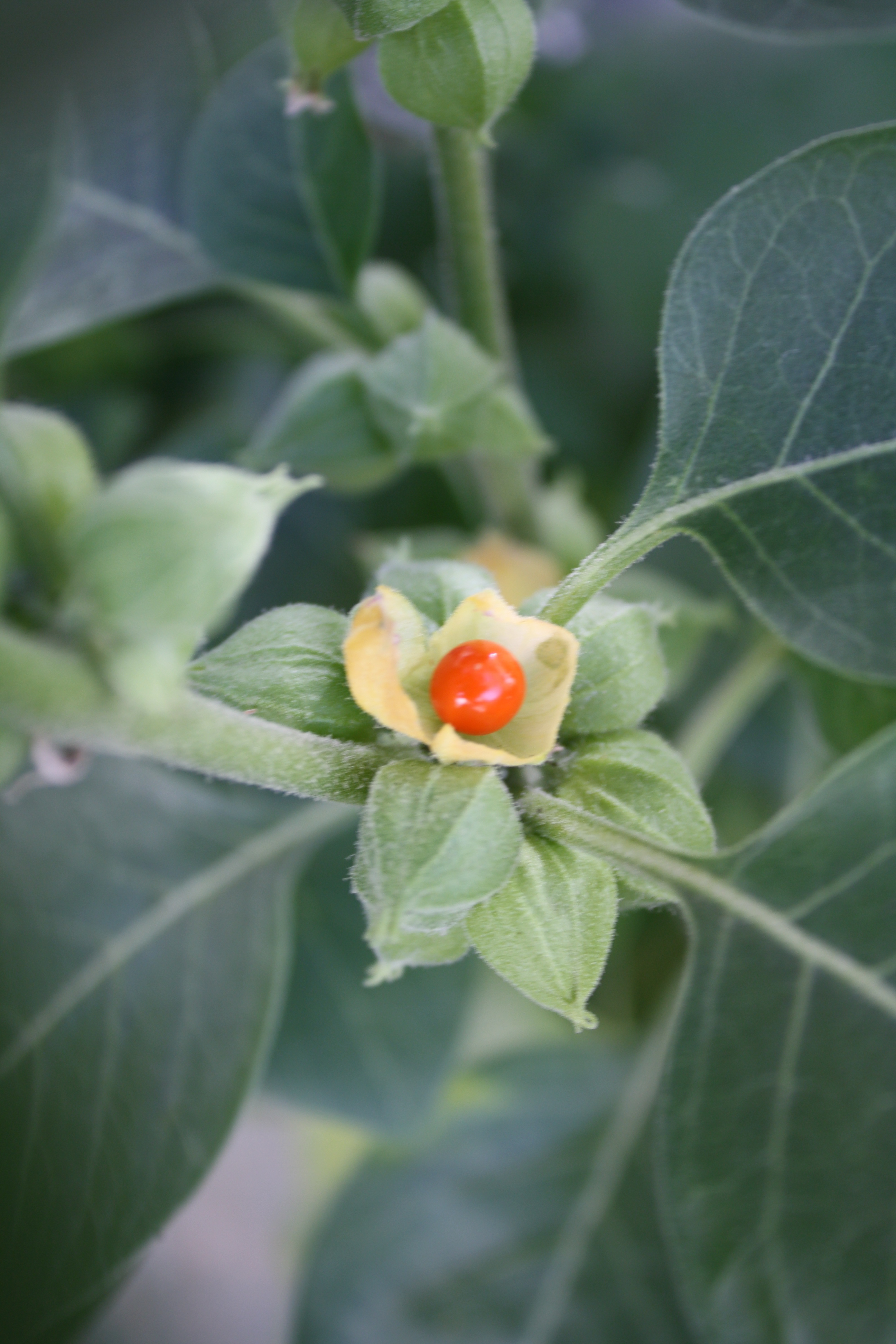
Prepare ashwagandha: stir 1 tsp powder into warm (not hot) milk or milk alternative. Add a pinch of nutmeg. This is a nighttime preparation — do not use in the morning.
Root chakra grounding activates the pelvic floor and sacral nerve plexus, stimulating parasympathetic tone through the inferior hypogastric plexus. Red jasper held at the base of the spine during ceremonial work supports downward vagal anchoring — the felt sense of weight and belonging that precedes any spiritual opening.
How to work with it
Light a small amount of dragons-blood resin on charcoal. Let the smoke establish the ceremonial container. Hold the red jasper in your dominant hand.
Root amplification. Red jasper grounds. Black tourmaline protects the ground. Together they create a double-lock foundation: you are here, and nothing is getting through the floor. For environments that feel unsafe, for empaths who absorb everything from below (crowds, dense urban energy, spaces with heavy history). Red jasper in the left pocket, black tourmaline in the right.
Carnelian
Root meets sacral. Red jasper stabilizes. Carnelian mobilizes. Together they create endurance with drive: the capacity to sustain effort over time without burning out. For athletes, performers, long projects, recovery programs. Red jasper provides the fuel tank. Carnelian provides the ignition. Use only when you need both. If you feel scattered, use red jasper alone first. Build the base before adding the fire.
Smoky Quartz
Root cleansing. Smoky quartz transmutes negative energy downward through the root and into the earth. Red jasper stabilizes the root to receive what smoky quartz discharges. For stress that accumulates in the legs, for anxiety that manifests as restlessness, for the feeling that your foundation is contaminated. Smoky quartz clears the channel. Red jasper holds the ground steady while it happens.
Tiger's Eye
Grounded confidence. Red jasper anchors the body. Tiger's eye activates the solar plexus: personal power, self-trust, decisive action. Together they build from the ground up. Root stability (red jasper) supporting solar confidence (tiger's eye). For job interviews, difficult conversations, boundary-setting. Stand on red jasper. Speak from tiger's eye.
Clear Quartz
Clear quartz amplifies whatever it touches. With red jasper, it deepens the root signal, makes a small jasper work like a large one, broadcasts the grounding frequency through the whole body rather than just the contact point. For meditation, for grid work, for anyone whose root center feels weak or diffuse.
Pairing Cautions
Red Jasper + High-Vibration Crown Stones (Moldavite, Phenacite, Herkimer Diamond): Contraindicated during acute dissociation or ungroundedness. Crown-activating stones pull energy upward. Red jasper pulls it down. Combining them during instability creates a tug-of-war the nervous system cannot resolve. Stabilize the root first. Add crown activation only after the base is solid. Sequence matters.
Red Jasper + Rose Quartz: Complementary, not conflicting. Red jasper grounds the body. Rose quartz opens the heart. The pairing works well for someone who needs to feel safe (root) before they can feel vulnerable (heart). Place red jasper at the lower belly and rose quartz on the chest during the 3-Minute Reset for a full-body regulation sequence.
Care & Cleansing
How to keep Red Jasper in good condition
Water Safe?
Water safe
This stone is generally safe for short water contact, though polishing, fractures, and metal settings can still change how a specimen behaves.
Sunlight Safe?
Sunlight safe
Tolerates daylight; safe to charge or display in the sun.
Authenticity
What to check
Natural Red Jasper should usually feel cooler than plastic or resin on first touch and warm more slowly in the hand.
The #1 Question
Can Red Jasper Go in Water? Yes, fully safe
The Full Answer
Red jasper scores 6. 5-7 on the Mohs hardness scale and contains no water-soluble minerals. This is one of the most water-durable stones in any collection. Water will not dissolve it, scratch it, or structurally damage it. Safe: Running water, brief soaking, even extended immersion. Red jasper is denser and more resilient than most quartz varieties.
Use freely for water-based cleansing. Mild cautions:
Thermal shock: as with any quartz variety, avoid boiling water to cold (or vice versa), which can cause fractures along internal stress planes
Salt water, prolonged: sodium chloride crystals can lodge in micro-surface imperfections and dull polish over time, though jasper handles this better than most stones
Ultrasonic cleaners: generally safe for jasper, but unnecessary for routine cleansing
Red jasper is sun-safe.
Unlike rose quartz (which fades) or amethyst (which can lose color), the iron oxide inclusions in red jasper are photostable. Direct sunlight is a preferred charging method. Leave it in the sun without concern. The earth made this stone in volcanic flows and sedimentary beds exposed to full geologic pressure and heat. A few hours of sunlight is nothing.
Temperature
Natural Red Jasper should usually feel cooler than plastic or resin on first touch and warm more slowly in the hand.
Scratch logic
Use 6.5 on the Mohs scale as the check, not internet myths. A real specimen should behave in line with the hardness listed above.
Surface and luster
Look for a vitreous to waxy surface quality rather than a painted or plastic shine.
Weight and density
The listed specific gravity is 2.58-2.91. If a specimen feels unusually light for its size, it may deserve a second look.
My Field Guide
Your private record and next steps
Journal
Add this stone to your private collection, then log what happened when you worked with it.
Shared Notes
Read public practice logs and pattern notes from the Crystalis community.
When members save a public field note for this stone, it will appear here.
Frequently Asked
Questions people ask about Red Jasper
What does red jasper do?
⌄
Red jasper is a root-centered mineral traditionally used to support physical grounding, endurance, and stamina. In somatic practice, holding red jasper activates proprioceptive anchoring: the density and warmth in the palm engage the body's stabilization response, reducing ungroundedness and reinforcing the felt sense of physical presence. Documented in traditional use across Egyptian, Viking, Native American, and medieval European cultures for thousands of years.
Can red jasper go in water?
⌄
Yes. Red jasper scores 6.5-7 on the Mohs hardness scale and contains no water-soluble minerals, making it safe for brief water immersion and rinsing. Avoid prolonged saltwater soaking, which can dull surface polish over time. Red jasper is more durable than many stones and handles water better than most.
What chakra is red jasper?
⌄
Red jasper is associated with the root chakra (Muladhara), the first energy center located at the base of the spine. In somatic terms, this corresponds to the pelvic floor, lower belly, and legs, where the body's relationship to gravity, stability, and physical safety is held. This is why red jasper practices focus on lower-body placement and standing postures.
How do you cleanse red jasper?
⌄
Five methods: (1) Running water: hold under cool running water for 30-60 seconds while setting intention. (2) Earth burial: bury in dry soil for 24 hours, the most resonant method for a root stone. (3) Sound: use a singing bowl or tuning fork; vibration resets energetic charge. (4) Smoke cleansing: pass through sage, palo santo, or cedar smoke. (5) Selenite plate: place on selenite for 4-6 hours. Red jasper is sun-safe and can charge in direct sunlight, unlike many other stones.
Is red jasper the same as bloodstone?
⌄
No. Red jasper is an opaque, uniformly red microcrystalline quartz colored by hematite (iron oxide) inclusions. Bloodstone (heliotrope) is a dark green chalcedony with red spots of iron oxide. Both belong to the chalcedony/quartz family and both contain iron oxide, but the base mineral, color mechanism, and energetic applications differ. Red jasper is root-focused (stability, endurance). Bloodstone bridges heart and root (courage, vitality).
Can red jasper go in the sun?
⌄
Yes. Red jasper is an especially sun-stable stone available. The iron oxide inclusions that produce the red color are not photosensitive, unlike the fibrous inclusions in rose quartz or the irradiation-based color in amethyst. Direct sunlight is a preferred charging method for red jasper. This is an earth-and-fire stone. It belongs in the light.
What crystals pair well with red jasper?
⌄
Black tourmaline (grounding amplification, root protection). Carnelian (endurance meets creative drive, sacral-root bridge). Smoky quartz (root cleansing, stress discharge through the legs). Tiger's eye (grounded confidence, solar plexus support). Clear quartz (amplification of root signal). Avoid pairing with high-vibration crown stones like moldavite or phenacite when in acute dissociation: stabilize the base first.
How can you tell if red jasper is real?
⌄
Five tests: (1) Temperature: real red jasper feels cool and warms slowly. Dyed glass warms quickly. (2) Hardness: red jasper (Mohs 6. 5-7) scratches glass. If it fails, it is dyed material. (3) Opacity: genuine red jasper is opaque. You should see zero light passing through, even at thin edges. Translucent red stones are carnelian, a different mineral. (4) Color: natural red jasper has subtle variation, darker veins, occasional inclusions.
Perfectly uniform cherry red suggests dye. (5) Weight: red jasper feels dense for its size due to the iron oxide content. Plastic or resin imitations feel lighter.
Sources & Citations
Where this entry can be checked
Back Matter
Readable for people. Structured for AI search.
Sources stay visible in the page so readers, search engines, and answer systems can follow the evidence trail.
01
SCI
The Origin and Associations of the Jaspers of South-eastern Anglesey
Greenly E. (1902). The Origin and Associations of the Jaspers of South-eastern Anglesey. Quarterly Journal of the Geological Society of London. [SCI]DOI 10.1144/GSL.JGS.1902.058.01-04.29
02
HIST
[Naturalis Historia, Book 37](http://attalus.org/pliny/hn37b.html)
Pliny the Elder. [Naturalis Historia, Book 37](http://attalus.org/pliny/hn37b.html). [HIST]
03
HIST
The Curious Lore of Precious Stones
Kunz, George Frederick. (1913). The Curious Lore of Precious Stones. [HIST]
04
SCI
Microstructure of flint and other chert raw materials
Graetsch, H.A. & Grünberg, J.M. (2011). Microstructure of flint and other chert raw materials. Archaeometry. [SCI]DOI 10.1111/j.1475-4754.2011.00610.x
05
SCI
Synthesis and color evolution of silica-coated hematite nanoparticles
Zhang, Y. et al. (2009). Synthesis and color evolution of silica-coated hematite nanoparticles. Journal of the American Ceramic Society. [SCI]DOI 10.1111/j.1551-2916.2009.03112.x
06
LORE
Chert catchment analysis in inland Iberia during the Late Pleistocene
Sánchez de la Torre, M. et al. (2023). Chert catchment analysis in inland Iberia during the Late Pleistocene. Geoarchaeology. [LORE]DOI 10.1002/gea.21963