You need authority that cannot be faked by volume alone. Lapis lazuli is a metamorphic rock where lazurite, pyrite, and calcite fused under pressure into a blue dense enough that civilizations ground it for pigment. Civilizations ground it into pigment. The blue earned that.
Intent
Communication
CreativityBoundaries & ProtectionCommunication & Truth
Lapis lazuli is a throat-centered mineral traditionally used to support truthful expression, intellectual clarity, and self-awareness. In body-based practice, holding...
The Meaning
Lapis Lazuli in the Crystalis dictionary
Some truths want older authority behind them.
Lapis lazuli is a rock, not a single mineral, with lazurite carrying the royal blue while calcite and pyrite complicate the field.
Sky, gold, and chalk all held in one historical body.
Clarity with lineage has its own force.
Stone Lore
Stories carried through time
Cultural notes are presented as tradition and historical context — stories carried through time.
Ancient Egypt
The Stone of Ma'at
Lapis lazuli was ground into ultramarine pigment, carved into amulets, and inlaid into the burial mask of Tutankhamun. The Egyptians associated lapis with Ma'at, the goddess of truth and cosmic order. Eye of Horus amulets were carved from lapis as instruments of protection and clear sight. The stone's deep blue represented the night sky, the domain of the gods. Egyptian priests ground lapis into powder for eye cosmetics, believing the blue around the eyes warded off evil and opened spiritual vision.
This was not ornamentation. It was theology made physical.
c. 3100 BCE
Historical note
Stone of the Heavens
The Sumerians called lapis lazuli the "stone of the heavens." In the myth of Inanna's descent to the underworld, the goddess carries a lapis lazuli measuring rod as an instrument of divine authority. The Royal Tombs of Ur (c. 2600 BCE)...
Sumerian · c. 2600 BCE
Historical note
The Medicine Buddha's Throne
In Buddhist tradition, lapis lazuli is one of the Seven Treasures (sapta ratna). The Medicine Buddha (Bhaisajyaguru) is depicted seated on a lapis lazuli throne, his body radiating the deep blue of healing wisdom. The stone represents the...
Buddhist Tradition · 6th century CE
Historical note
Ultramarine: More Precious Than Gold
European painters ground lapis lazuli into ultramarine pigment, the most expensive pigment in human history. During the Renaissance, ultramarine cost more than gold by weight. It was reserved exclusively for painting the robes of the...
Medieval Europe · 12th-15th century
Ritual history
The Oldest Gem Deposit on Earth
Sar-e-Sang in the Badakhshan province has been continuously mined for over 6,500 years. This is the source of the lapis that adorned Tutankhamun, filled the Royal Tombs of Ur, and was ground into ultramarine for Renaissance painters....
Afghanistan, Sar-e-Sang
Historical note
Chilean Lapis
The Ovalle cordillera in the Chilean Andes produces lapis lazuli that tends toward a lighter, more violet-blue compared to Afghan material. Chilean lapis often contains less pyrite and more calcite. It is the national stone of Chile and...
Chile, Andes Mountains
Historical note
Siberian Lapis
The deposits near the southern end of Lake Baikal in Siberia produce lapis lazuli that has been documented since the 18th century. Russian lapis ranges from light to medium blue and often contains significant calcite. Historically, it...
Russia, Lake Baikal
Historical note
Myanmar, Pakistan & Italian Lapis
Myanmar (Mogok region), Pakistan (Chagai Hills), the United States (California, Colorado), and Italy (Ariccia) produce smaller quantities of lapis lazuli. These sources vary widely in quality. The Italian deposits from volcanic rocks have...
Myanmar, Pakistan, USA, Italy
Earth Record
Mineralogy and formation
The formation requires contact metamorphism. Limestone beds, rich in calcium carbonate, are invaded by igneous intrusions. The heat transforms the limestone, and in the presence of sulfur-bearing fluids, lazurite crystallizes within the altered rock. The calcite is the remnant of the original limestone. The pyrite forms from iron and sulfur in the metamorphic fluids. The blue itself comes from one of the most elegant color mechanisms in all of mineralogy.
The blue of lapis lazuli is produced by trisulfur radical anions (S3), sulfur molecules with an unpaired electron, trapped inside the sodalite-group crystal cages of the lazurite structure. These radical anions absorb red and yellow wavelengths of light and transmit blue. The deeper the blue, the higher the concentration of S3 ions. The ratio of S3 to S2 (disulfur, which transmits yellow) determines the exact hue: pure deep blue means S3 dominance.
The color of lapis lazuli is sulfur, imprisoned in crystal architecture, refusing every wavelength except blue.
The oldest known lapis lazuli mine on earth is Sar-e-Sang, in the Badakhshan province of Afghanistan. It has been continuously mined for over 6,500 years, making it the oldest active gem deposit in human history. Trade routes carried Afghan lapis across 4,000 kilometers to reach Egypt, Mesopotamia, and the Indus Valley by the 4th millennium BCE. Chile, Russia (Lake Baikal region), Myanmar, and Pakistan also produce lapis, but Afghan material remains the global standard for depth of color and quality.
Crystal system diagram represents the general cubic classification. Diagram created by Crystalis for educational reference.
Cubic structure
Chemical Formula
Na7Ca(Al6Si6O24)(SO4)(S3)·H2O
Crystal System
Cubic
Mohs Hardness
5.5
Specific Gravity
2.7-2.9
Luster
Vitreous to greasy
Color
Deep blue with gold pyrite flecks
IMA Status
rock
Type Locality
Ladjuar Medam, Badakhshan, Afghanistan
IMA Number
None (rock, not IMA mineral species)
01
Mineral conditions gather
02
Structure begins to crystallize
03
Lapis Lazuli records place and pressure
Lapis lazuli forms by contact metamorphism of limestone, where heat and pressure from igneous intrusions recrystallize calcite with sulfur-bearing fluids that produce lazurite. The Sar-e-Sang mines in Badakhshan, Afghanistan have been the world's primary source for over 6,000 years. These deposits occur in marble bands within the Hindu Kush mountains at elevations above 3,500 meters.
Chilean deposits near Ovalle in the Coquimbo Region produce material with more calcite and less intense color. Russian deposits near Lake Baikal in Siberia yield deep blue material. Smaller deposits exist in Myanmar, Pakistan, and Colorado (Italian Mountain). The pyrite inclusions are iron sulfide crystals that formed simultaneously with the lazurite.
AfghanistanChileRussiaPakistanUSA
Telling it apart
These Are Different Stones
Lapis lazuli and sodalite are frequently confused because both are blue. They are distinct materials with different compositions, different formations, and different visual signatures. Getting this wrong is common and costly: sodalite is significantly less valuable than quality lapis lazuli.
Lapis Lazuli
Composition: Rock (lazurite + calcite + pyrite)
Sodalite
Composition: Single mineral (Na₈(Al₆Si₆O₂₄)Cl₂)
Pyrite: No metallic inclusions
Calcite: White veining present (but no gold)
Transparency: Some specimens translucent
Color: Typically darker, more grey-blue
Hardness: 5.5-6
Primary source: Brazil, Canada, Namibia
The quick test: Look for gold. If you see metallic gold flecks (pyrite), it is lapis lazuli. If the stone is blue with white veining but no gold whatsoever, it is almost certainly sodalite. Lapis lazuli always contains pyrite. Sodalite never does. This single distinction separates the two reliably.
A note on "denim lapis" and dyed stones: Lower-quality lapis with excessive calcite is sometimes dyed to deepen the blue. Dyed lapis will leave blue residue when rubbed with acetone on a cotton swab. Some vendors sell dyed jasper or dyed howlite as "lapis." Both lack pyrite and have the wrong matrix pattern. If the price seems too low for the intensity of blue, question the authenticity.
Care & Maintenance
Spotting the real thing
Five tests. No special equipment needed.
Pyrite check. Real lapis lazuli contains metallic gold flecks of pyrite, distributed irregularly through the stone. If the gold is perfectly uniform, painted on, or absent entirely, question the stone. Natural pyrite has true metallic luster and random distribution.
Color depth. Genuine lapis lazuli has deep, complex blue with subtle natural variation, areas of slightly different saturation, white calcite veining, gold pyrite flecks. Perfectly uniform bright blue without any variation suggests dyed stone (often dyed howlite or jasper).
Acetone test. Dip a cotton swab in acetone (nail polish remover) and rub a small area. If blue dye transfers to the cotton, the stone has been dyed. Real lapis lazuli will not release color. This is the most reliable test for detecting dyed imitations.
Streak test. Rub lapis lazuli on unglazed white porcelain (the bottom of a ceramic mug works). Genuine lapis leaves a light blue streak. Dyed howlite leaves a white streak. Sodalite may leave a similar streak but will lack pyrite.
Price and weight. Quality Afghan lapis lazuli is not cheap. If a deep-blue specimen with visible pyrite is being sold at the price of tumbled sodalite, something is wrong. Real lapis also has a density of 2.7-2.9 g/cm3, noticeably heavier than dyed howlite (2.5 g/cm3).
Racing thoughts. Analysis paralysis. You have examined every angle, considered every variable, and you are no closer to a decision. The mind is running at full speed while the body sits frozen. This is cognition without expression: the signal loops endlessly because it never reaches the throat.
Lapis lazuli's role: The cool weight at the collarbone creates a tactile anchor that interrupts the cognitive loop. The temperature shift (stone cooler than skin) engages thermoreceptors that send novel sensory data to the brainstem, competing with the repetitive thought signal. Lapis does not slow thinking. It redirects it. The stone at the throat acts as a physical checkpoint: "You have thought enough.
Now speak." For the overthinking nervous system, the act of placing something cool and heavy at the throat is a command to move from processing to expression.
Shut down & far away
The Silenced Voice: Dorsal Vagal
Swallowed words. Throat tightness. The thing you need to say sits behind your sternum like a stone of its own. You have been quiet so long the silence has become structural. This is dorsal vagal shutdown localized to the throat: the body has learned that speaking is dangerous, so it locks the channel.
Lapis lazuli's role: Research on functional dysphonia documents that autonomic dysregulation directly affects the laryngeal muscles, creating physical throat tension in the absence of organic pathology. The vagus nerve innervates both the larynx and the autonomic nervous system. Lapis placed at the throat provides gentle proprioceptive weight to the region where the recurrent laryngeal nerve runs.
The stone does not force speech. It signals safety to the tissue that guards the channel. The weight says: this area is attended to. For someone whose throat locked as a survival strategy, that attention is the first step toward unlocking.
Settled & connected
The Impostor Circuit: Sympathetic + Dorsal
Performing competence while feeling fraud. You speak the right words but they sound hollow. The gap between what you present and what you feel widens with every meeting, every presentation, every time someone calls you capable. This is a dual-state trap: sympathetic activation drives the performance while dorsal shutdown muffles the authentic voice underneath.
Lapis lazuli's role: Lapis steadies identity. The stone's traditional association with royalty and authority is not decoration: it is a nervous system anchor for the experience of legitimate selfhood. Holding lapis while deliberately naming one true thing about yourself (silently or aloud) creates a paired association between the tactile stimulus and the practice of authentic self-recognition.
Over time, the stone becomes a shortcut to the state of "I belong here." Research on expressive suppression confirms that suppressing authentic expression increases sympathetic nervous system arousal. Lapis works in the opposite direction: it invites expression, which reduces the physiological cost of the impostor circuit.
Shut down & far away
The Creative Block: Dorsal Vagal
Ideas frozen. Expression stalled. You know there is something in there, but it will not come out. The page stays blank. The canvas stays white. The words stay unsaid. This is not absence of creativity. This is creativity locked behind a dorsal vagal gate: the nervous system has decided that expression itself is a risk.
Lapis lazuli's role: Lapis thaws movement. The third-eye association (intuition, pattern recognition, inner vision) combined with the throat-chakra connection (expression, articulation, voice) bridges the gap between seeing and saying. In body-based practice, placing lapis at the throat while engaging in any form of expression (writing, drawing, speaking, singing) pairs the tactile grounding with the creative act.
The stone provides a steady, non-judgmental reference point. It does not demand brilliance. It demands presence. For frozen creativity, presence is the solvent.
Settled & connected
The Boundary Blur: Ventral seeking Ventral
Absorbing others' emotions. Losing self. You walk into a room and immediately feel what everyone else feels. Their anxiety becomes yours. Their sadness settles into your chest. You have so much empathy that your own signal drowns in the noise of everyone else's broadcasting. This is ventral vagal connection without adequate filtering: the social engagement system is wide open with no boundary.
Lapis lazuli's role: Lapis draws the line. Where rose quartz opens the heart, lapis lazuli defines where your truth ends and someone else's begins. The stone's association with clarity, discernment, and intellectual sovereignty provides a cognitive frame for boundary work. Placed at the throat, it reinforces the principle: my voice, my truth, my signal. Research on the autonomic nervous system confirms that emotional contagion operates through the same vagal pathways as social engagement. Lapis does not close those pathways. It strengthens the filter.
These associations come from tradition and reflective practice — a way of working with the stone, not a medical prescription.
Somatic Practice
Simple ways to work with Lapis Lazuli
◇
Hold
Carry Lapis Lazuli in a pocket or place it over the heart center during a pause.
◌
Meditate
Let the stone become a quiet tactile anchor while the breath slows.
☽
Breathe
Breathe in softness. Breathe out tension. Keep the practice simple.
✎
Journal
Write with Lapis Lazuli nearby to name the feeling without forcing a conclusion.
✋
Bodywork
Rest the stone near the chest, hand, or bedside as a reminder to soften.
⌂
Environment
Place it where you want a visual cue for care, repair, or steadiness.
Field Instruction
The Throat Channel
Place. Breathe. Let the Stone Hold the Channel Open.
3 min protocol
1
Seated upright, spine tall. Place lapis lazuli at the throat. If lying down, place the stone directly on the throat hollow between the collarbones. If seated, hold it gently against the collarbone with one hand. Feel the cool weight at the throat. Let gravity do the work. Breathe normally. This is the region where the recurrent laryngeal nerve runs, a branch of the vagus that controls voice production. The stone is resting on the gateway between thought and speech. (0:00-0:45)
2
On each exhale, imagine the breath passing through the stone. If words rise, let them. If silence stays, let it. The extended exhale activates the parasympathetic branch of the vagus nerve. A natural breathing rhythm, slightly longer exhale than inhale, tips the balance toward calm. The stone at the throat becomes a waypoint: breath enters through the nose, awareness exits through the throat. (0:45-1:30)
3
Place one hand on your belly. Notice the gap between what you know and what you say. Name one true thing silently. Not a grand declaration. A small truth. "I am tired." "I disagree." "I want this." The naming is the practice. The stone at the throat holds the channel. The hand on the belly anchors the signal in the body. Truth lives in the gap between cognition and expression. This step teaches you to close it. (1:30-2:15)
4
Remove the stone. Swallow once. Notice if your throat feels more open. That shift is your nervous system releasing held expression. Is your jaw less clenched? Are your shoulders lower? Can you take a deeper breath than you could three minutes ago? That is the vagus nerve updating the laryngeal muscles: the threat of speaking has been downgraded. The channel is open. (2:15-3:00)
Stone Intelligence
The fact that makes Lapis Lazuli memorable
Lapis lazuli is not a mineral. It is a rock: lazurite, calcite, and pyrite fused by contact metamorphism when magma invaded ancient limestone. The blue comes from sulfur radicals trapped in crystal cages, refusing every wavelength except blue.
Gold sparks are pyrite. White veins are the original limestone. A night sky in your hand, assembled by fire and pressure from the bones of an ancient seabed.
The science maps the collision. The practice holds the result.
HIST
Book of Precious Stones (Kitab al-Jamahir)
1048
HIST
Naturalis Historia, Book 37
LORE
Medieval women’s early involvement in manuscript production suggested by lapis lazuli identification in dental calculus
Exploring autonomic dysfunction in functional dysphonia
International Journal of Language & Communication Disorders · 2024Read source
Ritual Use
From reference to practice
Lapis Lazuli at the Throat for Overthinking: Place the cool weight at the collarbone. The temperature shift engages thermoreceptors that send novel sensory data to the brainstem, competing with the repetitive thought signal. Lapis does not slow thinking. It redirects it. The stone at the throat acts as a physical checkpoint: you have thought enough, now speak. For the overthinking nervous system, something cool and heavy at the throat is a command to move from processing to expression.
Lapis Lazuli for Finding Your Voice: When words sit behind your sternum like a stone of their own and the silence has become structural, place lapis at the throat hollow between the collarbones. The vagus nerve innervates both the larynx and the autonomic nervous system. On each exhale, imagine the breath passing through the stone. Place one hand on your belly. Name one true thing silently. Not a grand declaration. A small truth. The naming is the practice.
Lapis Lazuli for Study and Intellectual Focus: Hold lapis at the forehead or place it on a desk within view during concentrated work. The deep blue provides a calming visual anchor while the stone's density at the brow point engages thermoreceptors through the trigeminal nerve, producing a reflexive quieting response. Clarity of thought through sensory focus.
Sacred Match
Sacred Match reaches for Lapis Lazuli when what you feel sounds like:
Overthinking
Silenced / swallowed words
Impostor feelings
Creative block
Absorbing others' emotions
Knowing but not speaking
Sacred Match reaches for lapis lazuli when the diagnostic reveals intellectual overprocessing masking emotional truth. The nervous system query detects the pattern: cognition running at full speed while feeling remains locked. Lapis is prescribed because it bridges the gap between knowing and speaking.
Overthinking -> signal looping without exit -> seeking expression
Silenced -> throat locked as survival -> seeking permission to speak
Impostor -> performing while hiding -> seeking authentic identity
Blocked -> creativity behind a gate -> seeking presence over perfection
Absorbing -> empathy without boundary -> seeking discernment
Pairings are treated like a recipe file: clear use, method, and safety.
Herbal Ally
Lapis Lazuli + The Third Eye Descent
Use when
Targets the sphenopalatine ganglion region through gentle brow-bone pressure, stimulating parasympathetic outflow via the facial nerve (CN VII). The weight and coolness of the stone on the glabellar complex invites a downshift from sympathetic vigilance into dorsal vagal stillness — not collapse, but a controlled descent into receptive quiet. Blue lotus (Nymphaea caerulea) aporphine alkaloids support this ventral-to-dorsal transition by modulating dopaminergic tone without sedative override.
How to work with it
Brew blue lotus tea: 2g dried petals steeped in 190°F water for 7 minutes. Strain into a dark vessel.
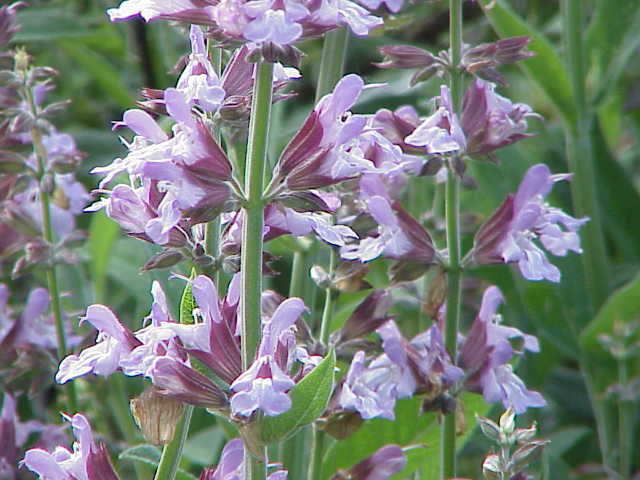
Third-eye activation and prefrontal-limbic integration through smoke-olfactory disruption; Salvia officinalis contains thujone and 1,8-cineole — thujone is a GABA-A receptor antagonist that produces alertness and mild perceptual sharpening at low doses (the mechanism behind absinthe's historical reputation); burning sage releases these compounds in smoke form, creating rapid olfactory-limbic activation paired with the ritual disruption of space clearing; lapis at the third eye targets the pineal region where circadian and perceptual processing intersect
How to work with it
Light the sage bundle. Let it catch, then blow it out so it smolders. The smoke carries thujone — a GABA antagonist — directly to your olfactory receptors. At these trace concentrations, it sharpens rather than intoxicates. Move the smoke through the space you want to clear, but understand: you are not clearing energy. You are changing the neurochemical composition of the air you breathe.
Amplifies lapis lazuli's mental clarity. Clear quartz acts as a signal booster for the throat and third eye centers. For communication that needs to be precise, for presentations where every word matters, for writing that demands clarity. Lapis sets the intention. Clear quartz turns up the volume.
Rose Quartz
Bridges throat truth with heart compassion. Lapis alone can make expression sharp. Rose quartz adds warmth. For difficult conversations where honesty needs to land softly. For truth-telling that comes from love rather than judgment. Rose quartz in the left hand (receiving compassion), lapis at the throat (speaking it). The heart and voice aligned.
Amethyst
Third eye plus throat activation for intuitive expression. Amethyst opens the channel to inner knowing. Lapis opens the channel to outer expression. Together they create a corridor from intuition to articulation. For counselors, teachers, writers, and anyone whose work requires translating inner vision into spoken or written language.
Pyrite
Double confidence. Lapis already contains natural pyrite, so this pairing amplifies what is already present. External pyrite paired with lapis creates a reinforcement loop for self-assurance, willpower, and authoritative presence. For job interviews, public speaking, negotiations, and any situation where you need to project certainty alongside clarity.
Pairing Cautions
Lapis Lazuli + Carnelian: Use with awareness. Carnelian's sacral activation combined with lapis's throat activation can overstimulate expression in sensitive individuals. The result: saying too much, too fast, with too much force. For someone who already speaks impulsively, this pairing amplifies the problem. For someone in dorsal vagal shutdown (silence, freeze), this combination may provide the necessary activation to break through. Context determines the pairing.
Care & Cleansing
How to keep Lapis Lazuli in good condition
Water Safe?
Keep dry
This stone should stay out of water. Water can dull the surface, destabilize the specimen, or damage the stone over time.
Sunlight Safe?
Sunlight safe
Tolerates daylight; safe to charge or display in the sun.
Authenticity
What to check
Natural Lapis Lazuli should usually feel cooler than plastic or resin on first touch and warm more slowly in the hand.
The #1 Question
Can Lapis Lazuli Go in Water? Caution
The Full Answer
Lapis lazuli scores 5-5. 5 on the Mohs hardness scale, softer than quartz and softer than glass. It is porous. It contains calcite, which reacts with acids, and pyrite, which can oxidize when exposed to prolonged moisture. This makes lapis significantly more water-sensitive than quartz-family stones. Acceptable: A brief rinse under cool running water (15-30 seconds maximum) for physical cleaning.
Dry immediately and thoroughly with a soft cloth. Do not leave any moisture on the surface. Avoid:
Soaking: water penetrates the porous structure, can dissolve calcite inclusions, and creates conditions for pyrite oxidation (rust-like discoloration)
Salt water: salt crystals lodge in the porous surface and accelerate deterioration of both calcite and pyrite components
Ultrasonic cleaners: vibration exploits the boundaries between lazurite, calcite, and pyrite, potentially causing the rock to fracture along mineral boundaries
Acidic liquids: vinegar, citrus, or any acidic solution will react with the calcite component, etching white patches into the surface
Preferred cleansing alternatives: Moonlight (overnight, zero risk), sound vibration (2-3 minutes), sage or palo santo smoke (30-60 seconds), selenite plate (4-6 hours).
These methods preserve lapis lazuli indefinitely with zero risk of damage to its composite mineral structure. Sun exposure: Limited. Extended UV exposure can gradually fade the blue color. Keep lapis out of direct sunlight for display. Short sunlight charging (under 30 minutes) is acceptable. Moonlight is always the safer alternative.
Temperature
Natural Lapis Lazuli should usually feel cooler than plastic or resin on first touch and warm more slowly in the hand.
Scratch logic
Use 5.5 on the Mohs scale as the check, not internet myths. A real specimen should behave in line with the hardness listed above.
Surface and luster
Look for a vitreous to greasy surface quality rather than a painted or plastic shine.
Weight and density
The listed specific gravity is 2.7-2.9. If a specimen feels unusually light for its size, it may deserve a second look.
My Field Guide
Your private record and next steps
Journal
Add this stone to your private collection, then log what happened when you worked with it.
Shared Notes
Read public practice logs and pattern notes from the Crystalis community.
When members save a public field note for this stone, it will appear here.
Frequently Asked
Questions people ask about Lapis Lazuli
What does lapis lazuli do?
⌄
Lapis lazuli is a throat-centered mineral traditionally used to support truthful expression, intellectual clarity, and self-awareness. In somatic practice, holding lapis lazuli at the throat activates tactile grounding: the cool weight at the collarbone engages the vagus nerve branches that innervate the larynx, helping release held tension in the throat and jaw. Documented in traditional use across Egyptian, Sumerian, Buddhist, and European cultures for over 6,500 years.
Can lapis lazuli go in water?
⌄
With caution. Lapis lazuli scores only 5-5.5 on the Mohs hardness scale, is porous, and contains calcite (which reacts with acids) and pyrite (which can oxidize). A brief rinse under cool running water is acceptable. No soaking, no salt water, no ultrasonic cleaning. Dry immediately and thoroughly. Moonlight, sound, and smoke cleansing are safer alternatives for regular energetic maintenance.
What chakra is lapis lazuli?
⌄
Lapis lazuli is associated with the throat chakra (Vishuddha) and the third eye chakra (Ajna). In nervous system terms, the throat region is where the vagus nerve branches innervate the larynx, controlling voice production and the physical act of speaking. The third eye corresponds to prefrontal cortex functions: discernment, pattern recognition, and intuitive clarity. Lapis bridges both: speak what you know.
How do you cleanse lapis lazuli?
⌄
Five safe methods: (1) Moonlight: place on a windowsill overnight. Zero risk. (2) Sound vibration: singing bowl or tuning fork for 2-3 minutes. (3) Smoke cleansing: pass through sage, palo santo, or cedar smoke for 30-60 seconds. (4) Selenite plate: place on selenite for 4-6 hours. (5) Brief running water rinse only if needed, 15-30 seconds maximum, dry immediately. Avoid salt water, prolonged soaking, and harsh chemicals. Lapis is porous and softer than quartz.
Is lapis lazuli expensive?
⌄
Lapis lazuli ranges widely in price. High-quality Afghan material with deep, even blue color, visible pyrite flecks, and minimal calcite veining commands premium prices, comparable to semi-precious gemstones. Chilean lapis tends to be lighter blue and more affordable. Historically, ground lapis lazuli (ultramarine pigment) was worth more than gold during the Renaissance. Today, specimen-quality Afghan lapis remains the standard, with prices reflecting the 6,500-year history of this stone's cultural value.
How can you tell if lapis lazuli is real?
⌄
Five tests: (1) Pyrite check: real lapis contains metallic gold flecks of pyrite. If the gold is uniformly distributed or painted on, suspect a fake. (2) Color depth: genuine lapis has deep, complex blue with natural variation. Uniform bright blue suggests dye. (3) Calcite test: real lapis often has white calcite veining. Dyed jasper or howlite may have the wrong pattern. (4) Streak test: rub lapis on unglazed porcelain; genuine lapis leaves a light blue streak.
(5) Acetone test: rub with acetone on a cotton swab. If blue dye transfers, it is dyed stone, not real lapis lazuli.
Can you sleep with lapis lazuli?
⌄
Yes, with awareness. Lapis lazuli's activating energy makes it better suited to the bedside table than under the pillow for most people. It supports lucid dreaming and dream recall for those who respond well to third-eye activation during sleep. If lapis under your pillow creates racing thoughts or vivid dreams that disrupt rest, move it to the nightstand. Pair with amethyst to balance activation with calming.
What zodiac sign is lapis lazuli?
⌄
Traditionally associated with Sagittarius (truth-seeking, philosophical clarity) and Virgo (discernment, intellectual precision). The Sagittarius connection reflects lapis lazuli's association with wisdom and higher knowledge. The Virgo connection reflects its analytical clarity and communication precision. Lapis lazuli works regardless of your birth chart. If your nervous system needs to speak a truth, your zodiac is irrelevant.
Sources & Citations
Where this entry can be checked
Back Matter
Readable for people. Structured for AI search.
Sources stay visible in the page so readers, search engines, and answer systems can follow the evidence trail.
01
HIST
Book of Precious Stones (Kitab al-Jamahir)
Al-Biruni. (1048). Book of Precious Stones (Kitab al-Jamahir). [HIST]
02
HIST
Naturalis Historia, Book 37
Pliny the Elder. Naturalis Historia, Book 37. [HIST]
03
LORE
Medieval women’s early involvement in manuscript production suggested by lapis lazuli identification in dental calculus
Anita Radini, Camilla Speller, et al. (2019). Medieval women’s early involvement in manuscript production suggested by lapis lazuli identification in dental calculus. [LORE]DOI 10.1126/sciadv.aau7126
04
SCI
Exploring autonomic dysfunction in functional dysphonia
Meerschman, I. et al. (2024). Exploring autonomic dysfunction in functional dysphonia. International Journal of Language & Communication Disorders. [SCI]DOI 10.1111/1460-6984.13111
05
SCI
A Raman study of chalcogen species in sodalite-group minerals
Della Ventura, G. et al. (2019). A Raman study of chalcogen species in sodalite-group minerals. Journal of Raman Spectroscopy. [SCI]DOI 10.1002/jrs.5665
Soto, J.A. et al. (2015). Convergence in feeling, divergence in physiology. Psychophysiology. [SCI]DOI 10.1111/psyp.12579
08
LORE
Minero-chemical and provenance analysis of Achaemenian lapis lazuli cylinders from Persepolis
Oudbashi, O. et al. (2023). Minero-chemical and provenance analysis of Achaemenian lapis lazuli cylinders from Persepolis. Archaeometry. [LORE]DOI 10.1111/arcm.12903
09
LORE
Raman spectroscopic discrimination of pigments and tempera paint model samples
Navas, N. et al. (2011). Raman spectroscopic discrimination of pigments and tempera paint model samples. Journal of Raman Spectroscopy. [LORE]DOI 10.1002/jrs.2646
10
LORE
Multianalytical Characterization of Lapis Lazuli Pigments of Ajanta Murals
Kumar, S. et al. (2025). Multianalytical Characterization of Lapis Lazuli Pigments of Ajanta Murals. Journal of Raman Spectroscopy. [LORE]DOI 10.1002/jrs.70012