Crystal Encyclopedia
40+YEARS

Molybdenite

MoS2 (molybdenum disulfide) · Mohs 1 · Hexagonal · Third Eye Chakra

The stone of molybdenite: meaning, mineralogy, and somatic practice.

Clarity & FocusIntuition & Inner VisionSelf-AwarenessStrategic Clarity

This page documents traditional and cultural uses of molybdenite alongside emerging research on tactile grounding objects. Crystalis does not claim that molybdenite treats, cures, or prevents any medical condition. For mental health concerns, consult a qualified professional.

Crystalis Editorial · 40+ Years · Herndon, VA · 6 peer-reviewed sources

Origins: Canada, USA, Australia

Crystalis

Materia Medica

Molybdenite

The Strategic Seer

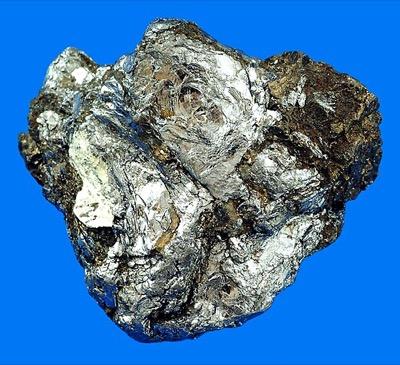
Molybdenite crystal
Clarity & FocusIntuition & Inner VisionSelf-Awareness
Crystalis

Protocol

The Silver Witness

Molybdenum disulfide at Mohs 1 — the softest metallic mineral, so delicate it marks paper like graphite — a visual meditation stone whose authority lies in what it shows you, not what it does to you.

2 min

  1. 1

    Do NOT handle this specimen with bare hands if avoidable — molybdenite at Mohs 1 is the softest metallic mineral, so soft it leaves silver-grey marks on skin and paper. Place it on a dark cloth in front of you. Observe its metallic luster, its hexagonal crystal plates, its lead-grey color. This is MoS2 — molybdenum disulfide, layered like graphite, slippery between its atomic sheets. You are witnessing, not touching.

  2. 2

    Lean toward the specimen. Notice the way light reflects off its flat crystal faces — almost mirror-like, then suddenly dull at a different angle. The layers of MoS2 slide over each other with almost no friction, which is why it is used as an industrial lubricant. Breathe in for three, out for five. Ask: where in my life would less friction serve me better than more force?

  3. 3

    Sit back. Close your eyes. Molybdenum is a trace element essential to all living organisms — it sits at the active site of enzymes that fix nitrogen and process sulfur. Something this soft is essential to life itself. Ask: what soft part of me is doing essential work that I am undervaluing because it does not look hard or impressive?

  4. 4

    Open your eyes. Look at the molybdenite one more time. Its hexagonal symmetry is elegant. Its softness is not vulnerability — it is a different relationship with force. Set the cloth over the specimen to protect it. Take one breath for the idea that protection can be offered to the strong. Done.

tap to flip for protocol

There are transitions that punish rigidity immediately. If every part of the self tries to move as one welded piece, the whole system starts grinding. What is needed is not softness exactly, but slippage.

Molybdenite gives that slippage a mineral body. Its metallic layered structure shears and slides with startling ease, a kind of built-in lubricity that makes movement possible where a stiffer material would lock up.

Molybdenite helps when adaptation needs less moralizing and more engineering. Flexibility can be a structural property, not a personality trait.

What Your Body Knows

Nervous system states

dorsal vagal

Freeze / Shutdown

When energy feels stuck and the body won't respond. Molybdenite is placed on the body as an anchor point. Your shoulders drop. Your breath becomes shallow and barely audible. A heaviness settles in your limbs. This is dorsal vagal shutdown; your oldest survival circuit pulling you toward stillness, collapse, disconnection from sensation.

sympathetic

Overstimulation / Agitation

When the system is running too hot; racing thoughts, restless limbs, inability to settle. Your chest tightens. Your jaw clenches. Your breath moves higher, shallower, faster. This is sympathetic activation; your body mobilizing for fight or flight, muscles tensing, heart rate rising.

ventral vagal

Regulated Presence

When the body finds its resting rhythm. Molybdenite held or placed becomes a touchpoint for presence. Your chest opens. Your jaw unclenches. Your breath deepens into your belly. This is ventral vagal regulation; your body finding safety, social connection, steady presence.

Nervous system mapping based on polyvagal theory (Porges, 2011).

The Earth Made This

Formation: How Molybdenite Becomes Molybdenite

Molybdenite is molybdenum disulfide (MoS₂), the primary ore of molybdenum and a mineral with an unusual crystal structure that makes it one of the softest metallic minerals. The hexagonal crystal structure consists of molybdenum atoms sandwiched between layers of sulfur atoms, with weak van der Waals bonds between the sulfur layers. This weak interlayer bonding gives molybdenite its characteristic greasy feel, metallic luster, and ability to mark paper (like graphite, which has an analogous structure).

Molybdenite forms in high-temperature hydrothermal veins, porphyry copper-molybdenum deposits, and some pegmatites and skarns. The mineral's layered structure also makes it a solid lubricant, used in applications where graphite cannot perform (vacuum, high temperatures).

Material facts

What the stone is made of

Mineralogy: Molybdenum disulfide, sulfide class. Chemical formula: MoS₂. Crystal system: hexagonal. Mohs hardness: 1-1.5 (extremely soft). Specific gravity: 4.62-4.73. Color: lead-gray to bluish-gray, from Mo-S bonding. Luster: metallic. Habit: tabular, platy, or as flexible, foliated masses. Layered crystal structure: strong Mo-S covalent bonds within layers, weak van der Waals bonds between layers (analogous to graphite). Leaves a distinctive blue-gray streak on paper. Distinguished from graphite by the blue-gray tone (graphite streaks black) and higher specific gravity.

Mineralogy

Mineral specs

Chemical Formula

MoS2 (molybdenum disulfide)

Crystal System

Hexagonal

Mohs Hardness

1

Specific Gravity

4.62-4.73

Luster

Metallic

Color

Gray-Silver

ca₁a₂a₃Hexagonal · Molybdenite

Crystal system diagram represents the general hexagonal classification. Diagram created by Crystalis for educational reference.

Traditional Knowledge

Traditions across cultures

Naming: Named in 1778 from Greek "molybdos" (lead), because molybdenite was historically confused with galena (lead sulfide) and graphite. Carl Wilhelm Scheele demonstrated in 1778 that it contained a previously unknown element, which Peter Jacob Hjelm isolated in 1781 and named molybdenum.

Historical confusion: For centuries, any soft, dark, streak-leaving mineral was called "molybdaena" without distinction; this included graphite, galena, and actual molybdenite. The three minerals were not clearly distinguished until the late 18th century.

Industrial importance: Molybdenum is a critical strategic metal used in high-strength steel alloys, superalloys for jet engines, catalysts in petroleum refining, and as MoS2 in its original mineral form as a high-performance solid lubricant. The lubricant application directly exploits the weak van der Waals interlayer bonding that makes molybdenite so soft and slippery.

Modern materials science: MoS2 has become a major focus of 2D materials research (alongside graphene). Single-layer and few-layer MoS2 nanosheets exhibit semiconducting properties useful for transistors, photodetectors, and catalysis (Pinto et al., 2023). The transition from indirect bandgap (bulk) to direct bandgap (monolayer) makes it technologically significant.

Unknown

Naming

Named in 1778 from Greek "molybdos" (lead), because molybdenite was historically confused with galena (lead sulfide) and graphite. Carl Wilhelm Scheele demonstrated in 1778 that it contained a previously unknown element, which Peter Jacob Hjelm isolated in 1781 and named molybdenum.

Unknown

Historical confusion

For centuries, any soft, dark, streak-leaving mineral was called "molybdaena" without distinction -- this included graphite, galena, and actual molybdenite. The three minerals were not clearly distinguished until the late 18th century.

Unknown

Industrial importance

Molybdenum is a critical strategic metal used in high-strength steel alloys, superalloys for jet engines, catalysts in petroleum refining, and as MoS2 in its original mineral form as a high-performance solid lubricant. The lubricant application directly exploits the weak van der Waals interlayer bonding that makes molybdenite so soft and slippery.

Unknown

Modern materials science

MoS2 has become a major focus of 2D materials research (alongside graphene). Single-layer and few-layer MoS2 nanosheets exhibit semiconducting properties useful for transistors, photodetectors, and catalysis (Pinto et al., 2023). The transition from indirect bandgap (bulk) to direct bandgap (monolayer) makes it technologically significant.

When This Stone Finds You

What it says when it arrives

You are moving through a transition that requires your parts to slide, not seize. Molybdenite builds metallic layers that shear with almost greasy ease. Flexibility can be structural, not sentimental.

Somatic protocol

The Silver Witness

Molybdenum disulfide at Mohs 1 — the softest metallic mineral, so delicate it marks paper like graphite — a visual meditation stone whose authority lies in what it shows you, not what it does to you.

2 min protocol

  1. 1

    Do NOT handle this specimen with bare hands if avoidable — molybdenite at Mohs 1 is the softest metallic mineral, so soft it leaves silver-grey marks on skin and paper. Place it on a dark cloth in front of you. Observe its metallic luster, its hexagonal crystal plates, its lead-grey color. This is MoS2 — molybdenum disulfide, layered like graphite, slippery between its atomic sheets. You are witnessing, not touching.

    30 sec
  2. 2

    Lean toward the specimen. Notice the way light reflects off its flat crystal faces — almost mirror-like, then suddenly dull at a different angle. The layers of MoS2 slide over each other with almost no friction, which is why it is used as an industrial lubricant. Breathe in for three, out for five. Ask: where in my life would less friction serve me better than more force?

    30 sec
  3. 3

    Sit back. Close your eyes. Molybdenum is a trace element essential to all living organisms — it sits at the active site of enzymes that fix nitrogen and process sulfur. Something this soft is essential to life itself. Ask: what soft part of me is doing essential work that I am undervaluing because it does not look hard or impressive?

    30 sec
  4. 4

    Open your eyes. Look at the molybdenite one more time. Its hexagonal symmetry is elegant. Its softness is not vulnerability — it is a different relationship with force. Set the cloth over the specimen to protect it. Take one breath for the idea that protection can be offered to the strong. Done.

    30 sec

The #1 Question

Can Molybdenite go in water?

Safety Flags

Care and Maintenance

How to care for Molybdenite

Molybdenite is water-safe in composition (MoS2) but extremely soft (Mohs 1-1. 5). One of the softest minerals.

Leaves dark marks on skin and paper. Brief water rinse is acceptable for cleaning. Handle with care; the layered structure separates easily.

Contains molybdenum, wash hands after handling. Recommended cleansing: moonlight, selenite plate. Store in a sealed container to prevent marking other surfaces.

In Practice

How Molybdenite is used

You are moving through a transition that requires your parts to slide, not seize. Molybdenite is one of the softest metallic minerals, with layers that slip past each other so easily it is used as a dry lubricant. Hold briefly (wash hands; leaves marks) during transitions where friction needs reducing.

The mineral that strengthens steel works by reducing resistance between surfaces.

Verification

Authenticity

Molybdenite: silver-gray metallic plates that mark paper and skin (like graphite but with a bluish tinge). Mohs 1-1. 5 (one of the softest minerals).

Specific gravity 4. 62-4. 73 (heavy).

Hexagonal. The combination of extreme softness, marking behavior, and metallic luster on thin flexible plates is diagnostic. If it does not leave marks when rubbed on paper, it is not molybdenite.

Temperature

Natural Molybdenite should usually feel cooler than plastic or resin on first touch and warm more slowly in the hand.

Scratch logic

Use 1 on the Mohs scale as the check, not internet myths. A real specimen should behave in line with the hardness listed above.

Surface and luster

Look for a metallic surface quality rather than a painted or plastic shine.

Weight and density

The listed specific gravity is 4.62-4.73. If a specimen feels unusually light for its size, it may deserve a second look.

Geographic Origins

Where Molybdenite forms in the world

Canada's British Columbia produces molybdenite from porphyry copper-molybdenum deposits. USA's Climax Mine in Colorado was historically the world's largest molybdenum source. Australia produces molybdenite from porphyry deposits.

The hexagonal crystal plates with metallic luster form in high-temperature hydrothermal veins and porphyry systems at all major sources.

FAQ

Frequently asked

What is Molybdenite?

Chemical formula: MoS2 (molybdenum disulfide). Mohs hardness: 1-1.5. Crystal system: Hexagonal (2H polytype, space group P63/mmc) or Trigonal (3R polytype, space group R3m).

What is the Mohs hardness of Molybdenite?

Molybdenite has a Mohs hardness of 1-1.5.

Can Molybdenite go in water?

Safety Flags

What crystal system is Molybdenite?

Molybdenite crystallizes in the Hexagonal (2H polytype, space group P63/mmc) or Trigonal (3R polytype, space group R3m).

What is the chemical formula of Molybdenite?

The chemical formula of Molybdenite is MoS2 (molybdenum disulfide).

How does Molybdenite form?

Formation Geology Molybdenite is the principal ore mineral of molybdenum and forms in a wide range of geological environments: Porphyry systems (primary source): The most economically significant occurrences are in porphyry copper-molybdenum deposits, where molybdenite crystallizes from high-temperature (>350-600 degrees C) magmatic-hydrothermal fluids associated with calc-alkaline to alkaline intrusions. Molybdenite occurs as disseminations and stockwork veinlets in altered granodiorite porphyr

References

Sources and citations

Closing Notes

Molybdenite

Molybdenum disulfide. One of the softest metallic minerals, with layers that slide past each other so easily the mineral is used as a dry lubricant. The same element that strengthens steel.

The science documents how the softest form of a hardening agent works by reducing friction. The practice asks what flexibility means when your composition is associated with strength.

Bring it into practice

What to do with Molybdenite next

Move from reference to ritual. Search current inventory for Molybdenite, build a custom bracelet, or let Sacred Match choose the right supporting stones for you.

Community notes

Threads under Molybdenite

Open all chats

Shared field notes tied to Molybdenite appear here, including notes saved from practice.

No shared notes under Molybdenite yet.

When members save a public field note for this stone, it will appear here.

The archive

Related crystals

Read the Full Crystal Guide

Continue through stones that share intention, chakra focus, or tonal family with Molybdenite.