Crystal Encyclopedia
40+YEARS

Novaculite

SiO2 (microcrystalline quartz aggregate) · Mohs 6.5 · Trigonal · Crown Chakra

The stone of novaculite: meaning, mineralogy, and somatic practice.

Clarity & FocusStrategic ClarityStructure & DisciplineSelf-Awareness

This page documents traditional and cultural uses of novaculite alongside emerging research on tactile grounding objects. Crystalis does not claim that novaculite treats, cures, or prevents any medical condition. For mental health concerns, consult a qualified professional.

Crystalis Editorial · 40+ Years · Herndon, VA · 8 peer-reviewed sources

Origins: USA (Arkansas)

Crystalis

Materia Medica

Novaculite

The Precision Edge

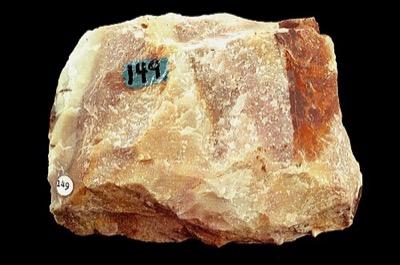
Novaculite crystal
Clarity & FocusStrategic ClarityStructure & Discipline
Crystalis

Protocol

The Honing Edge

Cryptocrystalline quartz so fine-grained it sharpens surgical steel -- let its precision clarify what feels dull.

3 min

  1. 1

    Hold the novaculite between your thumb and forefinger. This cryptocrystalline quartz is so fine-grained it was used to sharpen surgical instruments. Feel the smoothness. Let it ask you: what in your thinking has become dull from overuse?

  2. 2

    Place the stone flat against your forehead. Its waxy luster and 6.5 hardness are the product of billions of silica grains compressed into one coherent mass. Breathe in for 4, out for 6. Imagine your scattered thoughts compressing into one clear point.

  3. 3

    Run your thumb along the stone's edge -- carefully. Novaculite forms a very fine edge when fractured. Notice the difference between sharp and dangerous. Ask your body: where am I confusing clarity with aggression? Where could I be precise without being cutting?

  4. 4

    Hold the stone in your open palm at chest height. The silica aggregate is 99% quartz but carries none of quartz's crystal points. It does its work without display. Set an intention for one thing you will sharpen today -- a boundary, a question, a decision -- without announcing it.

tap to flip for protocol

There are decisions that do not need more data, only a cleaner edge. The mind keeps circling because it has gone blunt around the very place that needs contact.

Novaculite answers with function instead of metaphor. This dense silica has been used for sharpening steel precisely because its grain is fine enough to restore edge without ruining the blade. Refinement is the point.

Novaculite feels useful when thinking needs less expansion and more honing. Focus can be sharpened back into service.

What Your Body Knows

Nervous system states

dorsal vagal

Freeze / Shutdown

When energy feels stuck and the body won't respond. Novaculite is placed on the body as an anchor point. Your shoulders drop. Your breath becomes shallow and barely audible. A heaviness settles in your limbs. This is dorsal vagal shutdown; your oldest survival circuit pulling you toward stillness, collapse, disconnection from sensation.

sympathetic

Overstimulation / Agitation

When the system is running too hot; racing thoughts, restless limbs, inability to settle. Your chest tightens. Your jaw clenches. Your breath moves higher, shallower, faster. This is sympathetic activation; your body mobilizing for fight or flight, muscles tensing, heart rate rising.

ventral vagal

Regulated Presence

When the body finds its resting rhythm. Novaculite held or placed becomes a touchpoint for presence. Your chest opens. Your jaw unclenches. Your breath deepens into your belly. This is ventral vagal regulation; your body finding safety, social connection, steady presence.

Nervous system mapping based on polyvagal theory (Porges, 2011).

The Earth Made This

Formation: How Novaculite Becomes Novaculite

People have been sharpening blades on novaculite for thousands of years. Native Americans used it for tool-making. The Arkansas Novaculite Formation in the Ouachita Mountains remains the most well-known source and produces some of the finest natural whetstones available.

A dense, microcrystalline siliceous rock composed almost entirely of quartz, with grain sizes between 1 and 10 micrometers. It formed from the recrystallization of siliceous ooze . marine deposits of radiolarian and sponge spicule remains . during burial and low-grade metamorphism. The extreme hardness and fine grain make it effective against steel. The rock predates every blade it ever sharpened.

Material facts

What the stone is made of

Mineralogy: Microcrystalline quartz aggregate, silicate class. Chemical formula: SiO₂. Crystal system: trigonal (microcrystalline). Mohs hardness: 6.5-7. Specific gravity: 2.55-2.65 (varies with porosity). Color: white to gray; gray tones from trace organic carbon or fine-grained clay inclusions. Luster: waxy to dull on fresh surfaces; vitreous when polished. Habit: massive, dense, fine-grained. An ultra-fine-grained variety of chert/microcrystalline quartz. Conchoidal fracture. Named from Latin novacula (razor), for its historical use as a sharpening stone. Locality: principally from the Ouachita Mountains, Arkansas, USA.

Mineralogy

Mineral specs

Chemical Formula

SiO2 (microcrystalline quartz aggregate)

Crystal System

Trigonal

Mohs Hardness

6.5

Specific Gravity

2.55-2.65 (varies with porosity)

Luster

Waxy to dull on fresh surfaces; can be vitreous when polished

Color

White-Gray

ca₁a₂a₃120°Trigonal · Novaculite

Crystal system diagram represents the general trigonal classification. Diagram created by Crystalis for educational reference.

Traditional Knowledge

Traditions across cultures

The name "novaculite" derives from the Latin novacula ("razor" or "sharp knife"), reflecting its historical use as a whetstone material. Arkansas novaculite has been quarried and traded for thousands of years:

Pre-Columbian use: Native American groups in the Ouachita region quarried novaculite for tool production. The Poverty Point site in Louisiana (a UNESCO World Heritage site, circa 1700-1100 BCE) contains lithic bifaces sourced from Arkansas novaculite deposits, documented through reflectance spectroscopy provenance studies (Sherman et al., 2022). Industrial whetstone production: Arkansas whetstones became globally renowned from the 19th century onward, graded into "Washita" (coarser), "Soft Arkansas," "Hard Arkansas," and "True Hard Arkansas" (finest) grades based on grain size and porosity. Type locality: The Arkansas Novaculite formation in the Ouachita Mountains is the type locality and principal global occurrence.

Unknown

Pre-Columbian use

Native American groups in the Ouachita region quarried novaculite for tool production. The Poverty Point site in Louisiana (a UNESCO World Heritage site, circa 1700-1100 BCE) contains lithic bifaces sourced from Arkansas novaculite deposits, documented through reflectance spectroscopy provenance studies (Sherman et al., 2022). - Industrial whetstone production: Arkansas whetstones became globally renowned from the 19th century onward, graded into "Washita" (coarser), "Soft Arkansas," "Hard Arkansas," and "True Hard Arkansas" (finest) grades based on grain size and porosity. - Type locality: The Arkansas Novaculite formation in the Ouachita Mountains is the type locality and principal global occurrence.

When This Stone Finds You

What it says when it arrives

Your mind has gone dull around a choice that needs an edge. Novaculite is the ultra-fine silica stone used for sharpening blades, dense enough to refine steel. Focus can be honed.

Somatic protocol

The Honing Edge

Cryptocrystalline quartz so fine-grained it sharpens surgical steel -- let its precision clarify what feels dull.

3 min protocol

  1. 1

    Hold the novaculite between your thumb and forefinger. This cryptocrystalline quartz is so fine-grained it was used to sharpen surgical instruments. Feel the smoothness. Let it ask you: what in your thinking has become dull from overuse?

    45 sec
  2. 2

    Place the stone flat against your forehead. Its waxy luster and 6.5 hardness are the product of billions of silica grains compressed into one coherent mass. Breathe in for 4, out for 6. Imagine your scattered thoughts compressing into one clear point.

    45 sec
  3. 3

    Run your thumb along the stone's edge -- carefully. Novaculite forms a very fine edge when fractured. Notice the difference between sharp and dangerous. Ask your body: where am I confusing clarity with aggression? Where could I be precise without being cutting?

    45 sec
  4. 4

    Hold the stone in your open palm at chest height. The silica aggregate is 99% quartz but carries none of quartz's crystal points. It does its work without display. Set an intention for one thing you will sharpen today -- a boundary, a question, a decision -- without announcing it.

    45 sec

The #1 Question

Can Novaculite go in water?

Safety Flags

Care and Maintenance

How to care for Novaculite

Novaculite is water-safe. Microcrystalline quartz (Mohs 7), extremely dense and durable. Used as whetstone for thousands of years.

Brief to moderate water contact is completely safe. In fact, water is traditionally used with novaculite for sharpening. Recommended cleansing: running water, moonlight, sound, smoke.

Store normally.

In Practice

How Novaculite is used

Your mind has gone dull around a choice that needs an edge. Novaculite is the ultra-fine silica stone that produces the sharpest natural edges. Humans have sharpened blades on it for thousands of years.

Hold during decision-making. Place on your desk during editing or pruning work. The stone does not create sharpness.

It reveals what was already there by removing what is not needed.

Verification

Authenticity

Novaculite: ultra-fine microcrystalline quartz (Mohs 7). Specific gravity 2. 55-2.

65. Waxy to dull luster. When struck with steel, it should produce sparks (the flint test).

If it does not spark against steel, the silica content may be insufficient. The Arkansas Novaculite Formation is the primary source.

Temperature

Natural Novaculite should usually feel cooler than plastic or resin on first touch and warm more slowly in the hand.

Scratch logic

Use 6.5 on the Mohs scale as the check, not internet myths. A real specimen should behave in line with the hardness listed above.

Surface and luster

Look for a waxy to dull on fresh surfaces; can be vitreous when polished surface quality rather than a painted or plastic shine.

Weight and density

The listed specific gravity is 2.55-2.65 (varies with porosity). If a specimen feels unusually light for its size, it may deserve a second look.

Geographic Origins

Where Novaculite forms in the world

The Ouachita Mountains, Arkansas (USA) is the primary source, with the Arkansas Novaculite Formation extending across multiple counties. This is the most well-known whetstone deposit in the world. The ultra-fine microcrystalline quartz formed from marine chert deposits during the Mississippian and Devonian periods.

Native Americans used novaculite for tool-making for thousands of years before European settlement.

FAQ

Frequently asked

What is Novaculite?

Chemical formula: SiO2 (microcrystalline quartz aggregate). Mohs hardness: 6.5-7 (aggregate hardness varies with porosity). Crystal system: Trigonal (individual grains); massive/cryptocrystalline aggregate.

What is the Mohs hardness of Novaculite?

Novaculite has a Mohs hardness of 6.5-7 (aggregate hardness varies with porosity).

Can Novaculite go in water?

Safety Flags

What crystal system is Novaculite?

Novaculite crystallizes in the Trigonal (individual grains); massive/cryptocrystalline aggregate.

What is the chemical formula of Novaculite?

The chemical formula of Novaculite is SiO2 (microcrystalline quartz aggregate).

How does Novaculite form?

Formation Geology Novaculite is a dense, hard, microcrystalline siliceous sedimentary rock found primarily in the Ouachita Mountains of Arkansas and Oklahoma. The Arkansas Novaculite formation is a Devonian-to-Mississippian age unit (approximately 410-320 Ma) within the Ouachita Fold and Thrust Belt (Hou et al., 2021). The Ouachita Basin accumulated pre-orogenic deep marine sediments (shale, chert, turbidites) with a total thickness of approximately 4000 m during the Cambrian through Middle Miss

References

Sources and citations

Closing Notes

Novaculite

People have sharpened blades on novaculite for thousands of years. The Ouachita Mountains of Arkansas. Microcrystalline quartz so fine-grained it produces the sharpest natural edge.

The science documents a whetstone that is also a mineral specimen. The practice asks what sharpness means when it comes from structure so fine you cannot see it.

Bring it into practice

What to do with Novaculite next

Move from reference to ritual. Search current inventory for Novaculite, build a custom bracelet, or let Sacred Match choose the right supporting stones for you.

Community notes

Threads under Novaculite

Open all chats

Shared field notes tied to Novaculite appear here, including notes saved from practice.

No shared notes under Novaculite yet.

When members save a public field note for this stone, it will appear here.

The archive

Related crystals

Read the Full Crystal Guide

Continue through stones that share intention, chakra focus, or tonal family with Novaculite.