Materia Medica
Blue Aventurine
The Disciplined Communicator

This page documents traditional and cultural uses of blue aventurine alongside emerging research on tactile grounding objects. Crystalis does not claim that blue aventurine treats, cures, or prevents any medical condition. For mental health concerns, consult a qualified professional.
Origins: India, Brazil, Austria
Materia Medica
The Disciplined Communicator

Protocol
The Measured Voice Protocol
3 min
Sit upright. Place the blue aventurine at the base of your throat, in the suprasternal notch where the collarbones meet. Hold it in place with one hand. The stone is dense -- quartzite with dumortierite inclusions, Mohs 7, cool and solid. Feel the weight against your throat. This is the site where the vagus nerve's laryngeal branch passes closest to the surface. Three breaths: Inhale through the nose for 3 counts. Exhale through the nose for 3 counts. On each exhale, let the jaw drop open. The stone at the throat is not pressing down on your voice. It is giving your voice something to press back against.
With the stone still at your throat, hum. Low pitch. Steady. Feel the vibration transfer from your larynx into the stone and back. Dumortierite is an aluminum borosilicate -- it transmits vibration differently than quartz alone. Notice whether the humming feels natural or strained. If strained, lower the pitch until it resonates without effort. Hum on each exhale for five breath cycles. The vibration is stimulating the vagus nerve at the exact point where it governs vocal output. You are not trying to produce a beautiful sound. You are waking up the channel.
Stop humming. Move the stone from your throat to the center of your forehead, between the eyebrows. Hold it there. The shift is deliberate: you have activated the throat and now you are connecting it to the perceptual center. Breathe: 5 counts in, gentle pause for 2, 5 counts out. All through the nose. Two cycles. As you breathe, notice whether the area behind your forehead feels more organized or clearer than before you started. The throat and the third eye work in sequence -- structure what you perceive, then speak it. The stone provides the link.
Remove the stone from your forehead. Hold it in your dominant hand at your side. Close your hand around it. Feel the density. Say one sentence aloud -- anything true. Not practiced, not rehearsed. Just one honest sentence. Notice how it lands. Notice whether the words came with structure or scrambled on the way out. Then say it again, slower. That is the protocol's yield: not a new voice but a measured one. Place the stone in your pocket or on your desk. Each time you touch it today, let it remind you that discipline and expression are not opposites.
tap to flip for protocol
Too much supervision can make intuition feel counterfeit. By then every possible move has already been doubted into smaller pieces.
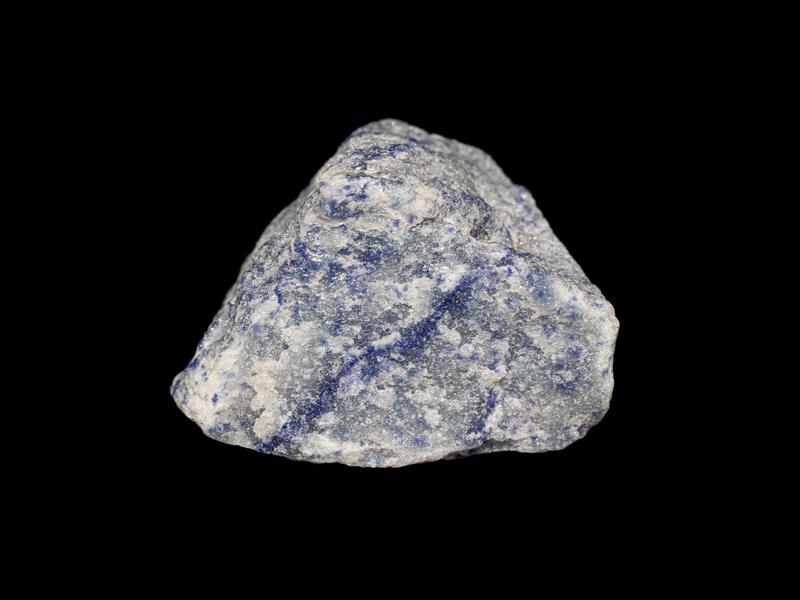
Blue aventurine gets its character from dumortierite or similar inclusions held inside quartz, enough particulate presence to create a low, steady sheen without turning the stone into spectacle. The eye has to stay with it for a second.
That second matters. It is often the difference between panic and discernment.
What Your Body Knows
sympathetic
Your throat holds words that your mind already organized. You know exactly what to say but the saying does not happen. The gap between knowing and speaking feels like a physical obstruction. Your jaw is tight and your tongue presses hard against the roof of your mouth. This is sympathetic mobilization in the throat that has been overridden by dorsal vagal braking; your system is ready to speak but has decided it is not safe.
dorsal vagal
You are talking but the words come out disorganized. Your thoughts were clear in your head but the translation to speech scrambles them. Your voice might sound thin or rushed. Your third eye area feels buzzy and your throat feels bypassed. This is sympathetic activation that skips the throat center entirely; the signal goes from perception straight to mouth without the structural filtering that produces coherent speech.
ventral vagal
Your words arrive with the structure already in them. You speak at a pace that allows each sentence to complete before the next begins. Your throat feels open but not strained. Your third eye contributes clarity and your voice delivers it without distortion. This is ventral vagal integration of the perceptual and communication centers; disciplined expression that costs you nothing.
Nervous system mapping based on polyvagal theory (Porges, 2011).
The Earth Made This
Blue aventurine is quartz that contains inclusions of dumortierite, a blue aluminum borosilicate mineral. These inclusions create the characteristic blue color and subtle sparkle (aventurescence) of this stone. Unlike green aventurine which gets its sparkle from fuchsite mica, blue aventurine's dumortierite inclusions create a more subtle, deep blue shimmer.
The mineral forms in hydrothermal veins and pegmatites where silica-rich fluids interact with aluminum and boron-bearing minerals.
Mineralogy
Chemical Formula
SiO2 with dumortierite inclusions
Crystal System
Trigonal
Mohs Hardness
7
Specific Gravity
2.63-2.69
Luster
Vitreous with aventurescence
Color
Blue
Crystal system diagram represents the general trigonal classification. Diagram created by Crystalis for educational reference.
Traditional Knowledge
Aventurine known since antiquity; blue variety from India and Brazil identified as dumortierite-included quartz; collector interest grew mid-20th century
Ancient Quartzite Use in India
The quartzite deposits of India that produce blue aventurine have been worked for ornamental and utilitarian purposes for millennia. Indian lapidaries recognized dumortierite-included blue quartzite as distinct from other varieties and cut it into beads, amulets, and decorative objects. The blue color held associations with the sky and with Vishuddha, the throat chakra in the Hindu chakra system, though the specific identification of the inclusions as dumortierite is a modern mineralogical classification.
Dumortierite Identification
French paleontologist Eugene Dumortier (1801-1876) gave his name to the aluminum borosilicate mineral dumortierite, which was formally described in 1881 from specimens found in the Beaunan region of France. The subsequent recognition that dumortierite inclusions were responsible for the blue color in certain quartzites connected the industrial mineralogy of aluminum borosilicates to the ornamental stone trade, though this connection was not widely appreciated until the late 20th century.
Indian Export and Crystal Market Growth
India's position as the primary exporter of blue aventurine expanded significantly during the crystal market boom of the 1990s and 2000s. Jaipur and Cambay cutting centers produced large volumes of tumbled, polished, and carved blue aventurine for international distribution. The stone's affordability, durability (Mohs 7), and attractive blue color made it a remarkably commercially successful practice stone in the throat-and-third-eye category.
Disciplined Communication Practice
Crystal practitioners distinguished blue aventurine from other blue throat stones by its association with structured, disciplined expression rather than spontaneous vocalization. Authors positioned it as the communication stone for professionals, teachers, and public speakers who needed organization in their speech rather than volume. Its quartzite base (durable, stable) combined with dumortierite inclusions (associated with patience and intellectual organization) informed this specific prescription.
When This Stone Finds You
Somatic protocol
The Measured Voice Protocol
3 min protocol
Sit upright. Place the blue aventurine at the base of your throat, in the suprasternal notch where the collarbones meet. Hold it in place with one hand. The stone is dense -- quartzite with dumortierite inclusions, Mohs 7, cool and solid. Feel the weight against your throat. This is the site where the vagus nerve's laryngeal branch passes closest to the surface. Three breaths: Inhale through the nose for 3 counts. Exhale through the nose for 3 counts. On each exhale, let the jaw drop open. The stone at the throat is not pressing down on your voice. It is giving your voice something to press back against.
1 minWith the stone still at your throat, hum. Low pitch. Steady. Feel the vibration transfer from your larynx into the stone and back. Dumortierite is an aluminum borosilicate -- it transmits vibration differently than quartz alone. Notice whether the humming feels natural or strained. If strained, lower the pitch until it resonates without effort. Hum on each exhale for five breath cycles. The vibration is stimulating the vagus nerve at the exact point where it governs vocal output. You are not trying to produce a beautiful sound. You are waking up the channel.
1 minStop humming. Move the stone from your throat to the center of your forehead, between the eyebrows. Hold it there. The shift is deliberate: you have activated the throat and now you are connecting it to the perceptual center. Breathe: 5 counts in, gentle pause for 2, 5 counts out. All through the nose. Two cycles. As you breathe, notice whether the area behind your forehead feels more organized or clearer than before you started. The throat and the third eye work in sequence -- structure what you perceive, then speak it. The stone provides the link.
1 minRemove the stone from your forehead. Hold it in your dominant hand at your side. Close your hand around it. Feel the density. Say one sentence aloud -- anything true. Not practiced, not rehearsed. Just one honest sentence. Notice how it lands. Notice whether the words came with structure or scrambled on the way out. Then say it again, slower. That is the protocol's yield: not a new voice but a measured one. Place the stone in your pocket or on your desk. Each time you touch it today, let it remind you that discipline and expression are not opposites.
1 minCare and Maintenance
Running Water Brief rinse under cool running water. Pat dry immediately. Safe for stones with adequate hardness.
30-60 seconds Yes . with conditions The Full Answer Blue Aventurine is generally water-safe for brief cleansing. Its 7 Mohs hardness provides adequate durability for short water exposure.
Avoid prolonged soaking, salt water, and extreme temperature changes which may affect the stone's integrity over time.
In Practice
Blue aventurine for overthinking: Hold when every next step looks suspect. Quartz carrying dumortierite, a quiet stone with a disciplined internal structure. The practice is not about silencing thought but organizing it.
Place on your desk during analytical work. The blue from dumortierite inclusions says: clarity lives inside structure, not outside of thinking. For communication discipline: Hold at the throat when you need to say less, not more.
Verification
Blue aventurine: Mohs 7 (scratches glass). Specific gravity 2. 63-2.
69. Vitreous luster with aventurescence (sparkle from dumortierite or fuchsite inclusions). The aventurescent sparkle should be visible when the stone is rotated under light.
If no sparkle is visible, it may be dyed quartzite rather than true aventurine.
Natural Blue Aventurine should usually feel cooler than plastic or resin on first touch and warm more slowly in the hand.
Use 7 on the Mohs scale as the check, not internet myths. A real specimen should behave in line with the hardness listed above.
Look for a vitreous with aventurescence surface quality rather than a painted or plastic shine.
The listed specific gravity is 2.63-2.69. If a specimen feels unusually light for its size, it may deserve a second look.
Geographic Origins
Blue Aventurine is quartz colored by inclusions of dumortierite, a blue aluminum borosilicate mineral. Unlike green aventurine's sparkly mica inclusions, blue aventurine's color comes from disseminated dumortierite crystals within the quartz matrix. It forms in quartzites . metamorphosed sandstones where boron-rich fluids introduced the dumortierite. Brazil, Russia, and India produce the finest material.
Mineralogy: Chemical formula SiO₂ with dumortierite. Crystal system: Trigonal. Mohs hardness: 7. Specific gravity: 2.65-2.91. Luster: Dull vitreous.
FAQ
Blue aventurine is placed at the throat or third eye during work focused on disciplined communication and structured perception. Its quartzite base (Mohs 7) with dumortierite inclusions creates a dense, cool-feeling stone that practitioners associate with mental steadiness. The blue color comes specifically from dumortierite, an aluminum borosilicate, not from the quartz itself.
No. They share a quartzite base but contain different inclusion minerals. Green aventurine gets its color from fuchsite (chromium mica) inclusions. Blue aventurine gets its color from dumortierite inclusions. The energetic mapping, physical appearance, and practice applications differ significantly between the two.
Yes. Blue aventurine is water safe. At Mohs 7 with stable silicate chemistry, it handles water contact without issue. Brief water cleansing is perfectly fine. The dumortierite inclusions are stable aluminum borosilicate and do not degrade with water exposure.
Blue aventurine is mapped to the throat and third eye chakras. The blue color from dumortierite inclusions aligns with the felt sense of clear communication (throat) and structured perception (third eye). Practitioners describe it as a stone that steadies the voice and organizes scattered thoughts.
Blue aventurine is Mohs 7, the same as quartz. This makes it durable for daily wear, tumbling, and regular handling. It will scratch glass and resists most common abrasion. A reliable, hard-wearing stone for jewelry and daily practice.
India is the primary commercial source of blue aventurine. The deposits there produce large quantities of tumbled, polished, and carved material. The blue color depends on sufficient dumortierite inclusion density within the quartzite matrix. Not all blue quartzite contains enough dumortierite to qualify as aventurine.
Dumortierite inclusions. Dumortierite is an aluminum borosilicate mineral that ranges from deep blue to violet-blue. When these needle-like or fibrous inclusions are distributed throughout quartzite, they produce the characteristic blue color. Higher dumortierite concentration produces deeper blue. Some specimens may also show a subtle aventurescence (shimmer).
Yes. Blue aventurine is a naturally occurring quartzite with dumortierite inclusions. However, the market also contains dyed blue quartz and synthetic blue glass sold as aventurine. Genuine blue aventurine has a granular texture and uneven color distribution from natural inclusion patterns, unlike the uniform color of dyed material.
References
Rykart, R. (1995). Quartz-Monographie. Ott Verlag. [SCI]
Deer, W.A.; Howie, R.A.; Zussman, J. (2013). An Introduction to the Rock-Forming Minerals (3rd ed.). Mineralogical Society. [SCI]
Rossman, G.R. (2011). The colors of gems. Elements. [SCI]
Closing Notes
Silicon dioxide with dumortierite inclusions, trigonal, Mohs 7. The blue in this stone is not dye. It is dumortierite, an aluminum borosilicate that formed inside the quartz as parallel needle-like crystals.
The shimmer you see is light scattering off those internal structures. Blue aventurine is quartz that trapped another mineral inside itself during formation.
Bring it into practice
Move from reference to ritual. Search current inventory for Blue Aventurine, build a custom bracelet, or let Sacred Match choose the right supporting stones for you.
Community notes
Shared field notes tied to Blue Aventurine appear here, including notes saved from practice.
When members save a public field note for this stone, it will appear here.
The archive
Continue through stones that share intention, chakra focus, or tonal family with Blue Aventurine.

Shared intention: Clarity & Focus
The Television Stone

Shared intention: Communication
The Third Eye's Blue Truth
Shared intention: Communication
The Rarest Blue Clarity

Shared intention: Communication
The Alignment Blade
Shared intention: Clarity & Focus
The Precision Edge
Shared intention: Communication
The Bridge Transmitter