Crystal Encyclopedia
40+YEARS

Ulexite

NaCaB5O6(OH)6.5H2O · Mohs 2.5 · Triclinic · Heart Chakra

The stone of ulexite: meaning, mineralogy, and somatic practice.

Clarity & FocusIntuition & Inner VisionStructure & DisciplineSelf-Awareness

This page documents traditional and cultural uses of ulexite alongside emerging research on tactile grounding objects. Crystalis does not claim that ulexite treats, cures, or prevents any medical condition. For mental health concerns, consult a qualified professional.

Crystalis Editorial · 40+ Years · Herndon, VA · 3 peer-reviewed sources

Origins: USA (California), Chile, Turkey

Quick actions

Move from reference into practice

Crystalis

Materia Medica

Ulexite

The Television Stone

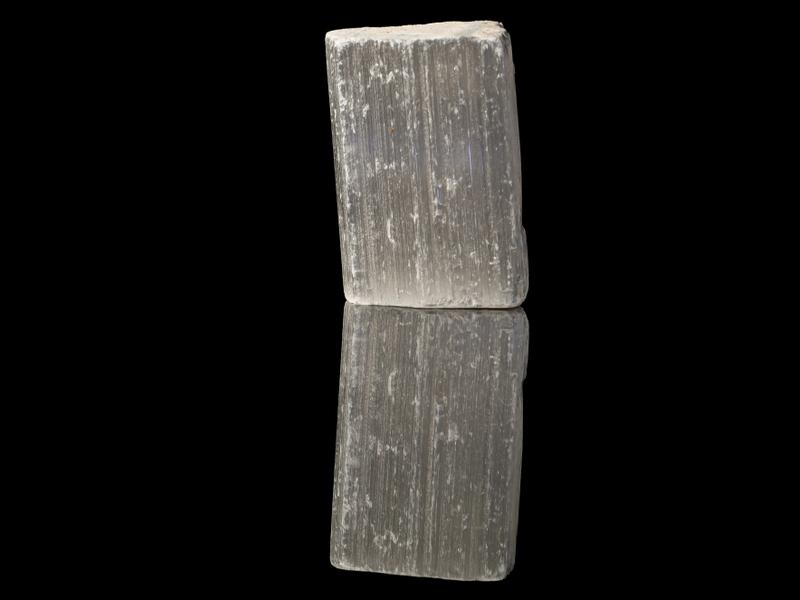
Ulexite crystal
Clarity & FocusIntuition & Inner VisionStructure & Discipline
Crystalis

Protocol

The Fiber Optic Clearing

See What Is Actually There.

5 min

  1. 1

    Sit at a table. Place ulexite on a page of printed text -- a book, a page from a notebook, any text with visible letters. Watch the words appear on the top surface of the stone. This is not metaphor. This is total internal reflection through parallel crystalline fibers. The stone is a natural fiber optic cable. Start by simply observing the phenomenon. Let the strangeness of it land. A mineral is showing you words through its body.

  2. 2

    Breathe: 6 counts in through the nose, 6 counts out through the mouth with a soft audible sigh. As you breathe, keep your eyes on the transmitted image. Notice that the text is not altered by the stone -- it is transmitted exactly. No distortion. No editing. No interpretation. The stone does not add anything or remove anything. It shows what is underneath, through its own structure, without commentary. That is the perceptual quality this protocol trains.

  3. 3

    On the fourth breath cycle, close your eyes. The transmitted image disappears. You are left with the memory of the phenomenon and the weight of the stone in front of you. With eyes closed, ask yourself: what am I looking at in my own life right now through a filter that adds or removes information? What is the actual text underneath my interpretation? Do not force an answer. Let the question sit the way the stone sits on the page -- transmitting, not manufacturing.

  4. 4

    After 5 minutes: open your eyes. Look at the transmitted text one more time. Then remove the stone from the page and hold it in your palm. The fiber optic effect requires contact -- the stone must touch the surface to transmit. Your perception works the same way. Clarity requires contact with what is actually present, not distance from it. Place the ulexite on your desk. When your thinking feels filtered or distorted, place it on something real -- a page, a photograph, a receipt. Let it show you: the information is already there. You just need a clear channel.

tap to flip for protocol

Sometimes the truth is not absent. It is simply not reaching the layer of the self that can name it yet.

Ulexite pulls an image from base to surface through internal fibers. The mineral makes revelation look physical, not mystical.

Something buried is already on its way up.

What Your Body Knows

Nervous system states

Ulexite works most clearly with states in which information is present but not yet visible at the surface. Its nervous-system image is not force, but transmission.

One presentation is blocked insight. The person senses that something important is already known somewhere lower in the system, yet conscious thought cannot access it cleanly. Ulexite offers a direct material analogy. The image sits beneath the stone, but the structure carries it upward only when the fibers are aligned. Alignment matters more than pressure.

Another presentation is indirect seeing. Some bodies do not approach truth head-on. They understand through reflection, projection, and tangential clues. Ulexite validates that style without glamorizing confusion. It says the signal can arrive by transmission, not only by direct exposure.

It also serves people who need gentleness around perception. Soft minerals slow the hand. Ulexite scratches easily, dissolves gradually, and asks to be handled with care. That fragility can be regulating for systems that push too hard for immediate clarity.

Among optical minerals, ulexite lands most precisely in the territory of latent understanding. The information may already be there. The task is building a path for it to travel. It is therefore less a stone of revelation than of transport. It suggests that the missing step may not be truth itself, but the route truth needs in order to arrive.

sympathetic

The Opaque Screen

You are looking at your own experience through something that will not transmit. Your third eye area feels dense, almost physically blocked. Information comes in but does not resolve into clarity. You see the shapes of things without seeing through them. Your forehead may feel pressurized. This is dorsal vagal opacity at the perceptual centers; your system has inserted a filter between you and direct experience because direct experience was registering as threat.

dorsal vagal

The Overloaded Fiber

Too much is getting through. Your perceptual field is flooded with input and you cannot distinguish signal from noise. Your eyes feel strained. Your temples pulse. Every detail registers with equal urgency. You see everything and understand nothing. This is sympathetic overload of the perceptual channels; all the fibers are transmitting at maximum and the receiving end cannot process the volume.

ventral vagal

The Clear Transmission

You see through the surface layer to the content underneath. Your perception is sharp but not strained. Your forehead is cool. Your eyes are soft. Information arrives and you receive it without having to work at it. There is a directness to your awareness that bypasses the usual interpretive delay. This is ventral vagal perceptual clarity; the fiber optic channel running clean, transmitting what is actually present rather than what you expect to see.

Nervous system mapping based on polyvagal theory (Porges, S.W. The Polyvagal Theory. Norton, 2011).

Mineralogy

Mineral specs

Chemical Formula

NaCaB5O6(OH)6.5H2O

Crystal System

Triclinic

Mohs Hardness

2.5

Specific Gravity

1.65

Luster

Vitreous to silky

Color

White

cbaα≠β≠γ≠90°Triclinic · Ulexite

Crystal system diagram represents the general triclinic classification. Diagram created by Crystalis for educational reference.

Traditional Knowledge

Lore and culture around Ulexite

Science grounds the page. Tradition, lore, and remembered use make it readable as lived knowledge.

Described 1850; named for German chemist Georg Ludwig Ulex; naturally occurring fiber optic mineral transmitting images through crystal structure; called TV stone

American Mineralogy

19th century

Dana's Borate Mineralogy Classification

James Dwight Dana included ulexite in his systematic mineralogy framework, establishing it as a sodium calcium borate hydrate within the borate mineral class. The mineral was named after German chemist Georg Ludwig Ulex, who first analyzed its chemistry. Dana's classification placed ulexite alongside borax and colemanite in the evaporite borate group, minerals that form when boron-rich water evaporates in enclosed desert basins.

California Mining History

1880s-present

Mojave Desert Borate Mining

The Mojave Desert of California became the world's most important borate mining district in the late 19th and early 20th centuries, with operations centered around Death Valley and the town of Boron. Ulexite occurred alongside borax in these evaporite deposits, and miners initially encountered it as a nuisance mineral. The cotton ball habit of natural ulexite earned it the field name cotton ball from miners long before its fiber optic properties were recognized.

Scientific Discovery

Mid-20th century

Fiber Optic Property Discovery

The natural fiber optic property of ulexite was recognized and publicized in the mid-20th century, transforming it from a mining byproduct into a scientific curiosity and educational mineral. When someone placed a polished slab on printed text and observed the image transmitted to the top surface, the phenomenon earned ulexite the trade name TV stone. The discovery demonstrated that total internal reflection -- the principle behind manufactured fiber optic cables -- occurs naturally in this mineral.

Contemporary Crystal Practice

1980s-present

Ulexite Optical Clarity Practice

Crystal practitioners adopted ulexite as a third eye stone beginning in the 1980s, grounding their prescription in the stone's documented optical property. The ability to transmit an image without distortion became the central metaphor: seeing what is actually present without the filters of expectation, fear, or interpretation. Practitioners placed ulexite on text, photographs, or handwritten intentions during sessions, using the fiber optic transmission as a real-time demonstration of unfiltered perception.

Sacred Match Notes

When this stone becomes the right door

Sacred Match prescribes Ulexite when you report:

Knowing something without being able to name it

Insight stuck below the surface

Need for clearer transmission between body and mind

Indirect perception that others dismiss

Difficulty bringing inner images into words

Wanting softer access to truth

Sacred Match prescribes through physiological diagnosis, not preference. It queries the nervous system: current sensation, protective mechanism, and the biological need masked by both. When that triangulation reveals blocked transmission, latent knowing, or perception that needs an unobstructed channel, ulexite enters the protocol.

Knowing -> signal present but buried -> seeking transmission

Blocked -> insight not reaching language -> seeking pathway

Indirect -> truth arriving sideways -> seeking validation

Mute -> inner image without words -> seeking lift

Pressing -> forcing clarity too hard -> seeking gentler alignment It is prescribed when truth is already present in the body and the missing requirement is not more force but a clearer path upward into language and thought.

3-Minute Reset

The Fiber Optic Clearing

See What Is Actually There.

5 min protocol

  1. 1

    Sit at a table. Place ulexite on a page of printed text -- a book, a page from a notebook, any text with visible letters. Watch the words appear on the top surface of the stone. This is not metaphor. This is total internal reflection through parallel crystalline fibers. The stone is a natural fiber optic cable. Start by simply observing the phenomenon. Let the strangeness of it land. A mineral is showing you words through its body.

    1 min
  2. 2

    Breathe: 6 counts in through the nose, 6 counts out through the mouth with a soft audible sigh. As you breathe, keep your eyes on the transmitted image. Notice that the text is not altered by the stone -- it is transmitted exactly. No distortion. No editing. No interpretation. The stone does not add anything or remove anything. It shows what is underneath, through its own structure, without commentary. That is the perceptual quality this protocol trains.

    1 min
  3. 3

    On the fourth breath cycle, close your eyes. The transmitted image disappears. You are left with the memory of the phenomenon and the weight of the stone in front of you. With eyes closed, ask yourself: what am I looking at in my own life right now through a filter that adds or removes information? What is the actual text underneath my interpretation? Do not force an answer. Let the question sit the way the stone sits on the page -- transmitting, not manufacturing.

    1 min
  4. 4

    After 5 minutes: open your eyes. Look at the transmitted text one more time. Then remove the stone from the page and hold it in your palm. The fiber optic effect requires contact -- the stone must touch the surface to transmit. Your perception works the same way. Clarity requires contact with what is actually present, not distance from it. Place the ulexite on your desk. When your thinking feels filtered or distorted, place it on something real -- a page, a photograph, a receipt. Let it show you: the information is already there. You just need a clear channel.

    1 min

The #1 Question

Can ulexite go in water?

No. Ulexite is not water safe. It is a hydrated borate mineral that is water-soluble. Submerging it will dissolve the crystal and destroy the fiber optic structure. Even brief water contact can damage the surface. Keep ulexite completely dry at all times.

Mineral Distinction

What sets Ulexite apart

Ulexite is often confused with satin spar gypsum and fibrous calcite because all three can appear white, silky, and parallel-fibered in polished pieces. The difference is what the fibers do.

Ulexite is the so-called television stone. When polished correctly across the fibers, it transmits images from the lower face to the upper one. Satin spar gypsum shows a moving chatoyant band but does not project text in the same way. Fibrous calcite can look similar too, yet it behaves differently optically and is much denser.

The fastest test is simple: place the stone over printed words. Genuine ulexite carries the image upward with surprising clarity. Hardness also helps. Ulexite is about 2.5 Mohs and softer than many buyers expect. Gypsum is softer still at 2. Calcite reaches 3 and reacts differently under acid testing. If a seller labels a fibrous white stone ulexite and it cannot carry text, the name is decorative, not diagnostic. The fiber optic effect is the diagnostic feature and the value driver, and any white borate mineral without that light transmission property is not ulexite regardless of the label.

Care and Maintenance

How to care for Ulexite

Ulexite requires extreme caution with water. Hydrated sodium calcium borate (Mohs 2. 5), water-soluble.

Will dissolve or degrade with prolonged water contact. Do NOT rinse, soak, or use in gem elixirs. The fiber-optic property (TV stone effect) is destroyed by water damage.

Recommended cleansing: selenite plate only (4-6 hours), moonlight (dry conditions). Store in a dry environment away from humidity.

Crystal companions

What pairs well with Ulexite

Selenite **The Light Channels and Light Sheets.** Both are pale, soft, and visually associated with clarity, but their structures behave differently. Ulexite is sodium calcium borate, triclinic at Mohs 2.5, transmitting images through its fiber-optic structure. Selenite is monoclinic gypsum transmitting glow through clear or silky cleavage planes. Place ulexite on a reading table and selenite on the windowsill nearby. One handles detail. The other handles atmosphere.

Clear Quartz **The Seeing Through Versus Seeing With.** Clear quartz offers transparency through a rigid trigonal crystal, while ulexite carries information through bundles of borate fibers without traditional crystalline transparency. Best when someone is sorting the difference between direct perception and mediated perception. Hold quartz at eye level and place ulexite over a written intention on the desk.

Labradorite **The Hidden Image, Hidden Flash.** Ulexite reveals what is beneath it. Labradorite reveals color only at the right angle. Both minerals reward specific orientation rather than casual glancing. Together they suit threshold work, especially when insight exists but is not yet obvious from the surface. Keep labradorite near the brow and rest ulexite on the journal page.

Fluorite **The Study Aid.** Ulexite's optical novelty can become gimmicky unless paired with a stone that reinforces focus. Fluorite's cubic order at Mohs 4 and color zoning provide disciplined attention beside ulexite's softer borate body. Place fluorite at the upper left corner of the desk and ulexite over key notes.

In Practice

How Ulexite is used

You know the truth is there but cannot yet see it on the surface. Ulexite transmits images through its fibrous crystal structure like a fiber-optic cable. Place it on printed text and watch the letters appear on the top surface.

The use case is visual: a physical demonstration that transparency can be structural, not just metaphorical. Handle gently (Mohs 2. 5).

Keep dry.

Verification

Authenticity

Ulexite: fiber-optic effect is the defining test. Place a polished specimen flat on printed text; the text should appear projected onto the top surface. SG 1.

65 (very light). Mohs 2. 5.

Water-soluble. If the TV stone effect does not work, the specimen may be improperly oriented or not genuine ulexite.

Temperature

Natural Ulexite should usually feel cooler than plastic or resin on first touch and warm more slowly in the hand.

Scratch logic

Use 2.5 on the Mohs scale as the check, not internet myths. A real specimen should behave in line with the hardness listed above.

Surface and luster

Look for a vitreous to silky surface quality rather than a painted or plastic shine.

Weight and density

The listed specific gravity is 1.65. If a specimen feels unusually light for its size, it may deserve a second look.

Geographic Origins

Where Ulexite forms in the world

Ulexite precipitates from evaporating borate-rich lake waters in arid closed basins. The Boron district of Kern County, California is the primary source of the fibrous "TV stone" variety that demonstrates natural fiber optic transmission. Chilean deposits in the Atacama Desert and Turkish occurrences near Eskisehir produce commercial borate ore.

The fiber optic effect requires the specific parallel-fiber crystal habit found primarily in the California material.

FAQ

Frequently asked

What is ulexite?

Ulexite is a sodium calcium borate mineral (NaCaB5O6(OH)6 5H2O) commonly known as TV stone because of its natural fiber optic property. When placed on printed text, ulexite transmits the image to its upper surface through internal optical fibers formed by parallel crystal growth. It occurs in evaporite deposits in the Mojave Desert and other arid regions.

Why is ulexite called TV stone?

Ulexite earned the name TV stone because its parallel internal crystal fibers act as natural fiber optic channels. When you place a polished slab of ulexite on a page of text, the words appear projected on the top surface of the stone. This is a genuine optical phenomenon caused by total internal reflection within each individual fiber.

What chakra is ulexite associated with?

Ulexite is mapped to the third eye and crown chakras. Its natural fiber optic property -- the ability to transmit images through its structure -- leads practitioners to associate it with clarity of perception and seeing beyond surface appearances. The transmission quality is a physical fact that practitioners extend into metaphorical territory.

How hard is ulexite?

Ulexite is only Mohs 2.5, which means your fingernail can scratch it. This extreme softness demands careful handling, dedicated storage in padded containers, and display-case treatment. It should never be tumbled, carried loose in a pocket, or stored alongside other minerals.

Can ulexite go in water?

No. Ulexite is not water safe. It is a hydrated borate mineral that is water-soluble. Submerging it will dissolve the crystal and destroy the fiber optic structure. Even brief water contact can damage the surface. Keep ulexite completely dry at all times.

Where does ulexite come from?

Major sources include the Mojave Desert in California (particularly Death Valley and the town of Boron), Nevada, and Turkey. Ulexite forms in evaporite deposits where boron-rich water evaporates in arid conditions. The California deposits are the most commercially available source for specimen-quality TV stone.

How does the fiber optic effect work in ulexite?

Ulexite grows as bundles of parallel needle-like crystals. Each individual needle acts as a fiber optic strand -- light entering one end bounces along the interior walls through total internal reflection and exits the other end. When millions of these parallel fibers are aligned and the ends are polished flat, they collectively transmit an image from bottom to top.

Is ulexite safe to handle?

Ulexite is generally safe for brief handling. It does not contain toxic heavy metals. The main risks are to the specimen rather than to you -- it is soft enough to be damaged by casual contact. Wash your hands afterward as general practice. Do not ingest or create dust from it.

References

Sources and citations

  1. Clark, J.R.; Christ, C.L. (1959). Studies of borate minerals. II. The crystal structure of ulexite, NaCaB5O6(OH)6·5H2O. Zeitschrift für Kristallographie. [SCI]

    DOI: 10.1524/zkri.1959.112.1-6.213

  2. Palache, C.; Berman, H.; Frondel, C. (1951). Dana's System of Mineralogy, Vol. II (7th ed.). [SCI]

  3. Garrett, D.E. (1998). Borates: Handbook of Deposits, Processing, Properties, and Use. Academic Press. [SCI]

Closing Notes

Ulexite

Sodium calcium borate hydroxide hydrate, triclinic, Mohs 2. 5. Ulexite transmits images through its crystal fibers like a natural fiber optic cable.

This is not a metaphor. The parallel arrangement of extremely fine crystals acts as a coherent fiber bundle, projecting whatever text or image sits beneath the stone onto its upper surface. The only mineral that functions as a lens.

Field Notes

Field Notes on Ulexite

Open Field Notes

Personal practice logs and shared member observations. Community notes are separate from Crystalis editorial guidance.

No shared notes under Ulexite yet.

When members save a public field note for this stone, it will appear here.

Bring it into practice

What to do with Ulexite next

Move from reference to ritual. Shop Ulexite, follow the intention path, build a bracelet, or try a Power Vial tied to the same energy.

The archive

Related crystals

Read the Full Crystal Guide

Continue through stones that share intention, chakra focus, or tonal family with Ulexite.