Crystal Encyclopedia
40+YEARS

Anhydrite

CaSO4 · Mohs 3 · Orthorhombic · Heart Chakra

The stone of anhydrite: meaning, mineralogy, and somatic practice.

Clarity & FocusIntuition & Inner VisionStructure & DisciplineSpiritual Connection

This page documents traditional and cultural uses of anhydrite alongside emerging research on tactile grounding objects. Crystalis does not claim that anhydrite treats, cures, or prevents any medical condition. For mental health concerns, consult a qualified professional.

Crystalis Editorial · 40+ Years · Herndon, VA · 3 peer-reviewed sources

Origins: Mexico, Peru, Germany

Crystalis

Materia Medica

Anhydrite

The Silent Architect

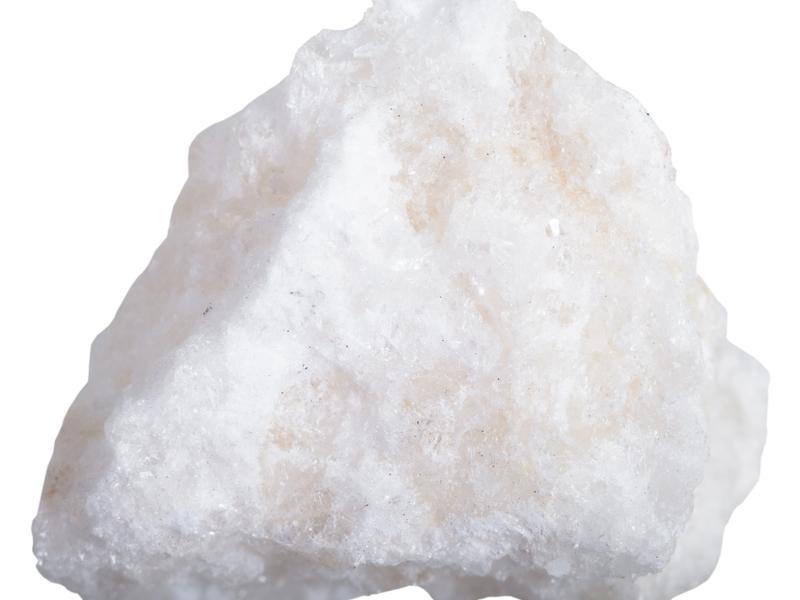
Anhydrite crystal
Clarity & FocusIntuition & Inner VisionStructure & Discipline
Crystalis

Protocol

The Dry Clarity

The Dry Clarity Protocol

3 min

  1. 1

    Lie down. Place the anhydrite at the center of your forehead, directly on the skin between your eyebrows. If using a tumbled angelite, the flat surface works well against the forehead's slight convex curve. Close your eyes. The stone is cool and remarkably light for a sulfate mineral. Let the coolness spread from the contact point outward across your forehead. Three breaths: Inhale through the nose for 4 counts. Exhale through the mouth for 6 counts. The extended exhale tips the autonomic balance toward parasympathetic quiet. Let each exhale feel like evaporation -- moisture leaving, clarity remaining.

  2. 2

    With the stone still on your forehead, bring your awareness to the quality of your thinking. Not the content of your thoughts but the texture. Are they dense and wet, sticking to each other? Are they rapid and brittle? Simply observe the quality without trying to change it. Anhydrite is calcium sulfate that has released its water -- gypsum with the saturation removed. Let the stone model what your mind is practicing: the same substance, lighter, clearer, without the excess weight. Two breath cycles: inhale 5, hold 3, exhale 7.

  3. 3

    Move the stone from your forehead to the very top of your head -- the crown point. Let it rest there. If it slides, hold it gently with one finger. The crown point receives differently than the third eye -- the third eye perceives, the crown opens. With the stone at the crown, let your awareness expand upward and outward rather than focusing inward. You are not looking at anything. You are allowing space. Breathe naturally. No count. Let each breath arrive and leave without management. The anhydrite at the crown is not adding information. It is creating room for what is already present.

  4. 4

    Remove the stone from your head. Hold it in both hands at your chest. Press it gently between your palms. Feel the warmth it absorbed from your skin -- your body heat entered the stone while it sat at your perceptual centers. You warmed something that models clarity. Let that exchange be the summary. Say silently or aloud: I do not need to add. I need to let the excess evaporate. Place the stone on your bedside table or desk. Its presence in your peripheral vision is a standing reminder that clarity is subtraction, not addition.

tap to flip for protocol

Overfull states often disguise themselves as emotional depth. Too many old feelings still hydrated. Too much residue taking up room in the system long after its use has passed.

Anhydrite comes from subtraction. Water leaves. Structure firms.

Not every release reads like loss.

What Your Body Knows

Nervous system states

sympathetic

The Saturated Mind

Your thoughts feel wet and heavy, like fabric left in the rain. You cannot separate one idea from another. Everything blurs together and your forehead feels pressurized, as if information is pooling rather than flowing. Your eyes ache behind the lids. This is a dorsal vagal state in the upper perceptual field; your system has absorbed more input than it can process and is now waterlogged.

dorsal vagal

The Brittle Scan

Your perception is sharp but fragile. You are noticing everything but each observation cracks under the weight of the next one. Your attention moves rapidly, finding fault, finding flaw, finding threat. Your temples feel tight. This is sympathetic hyper-scanning at the third eye; your system is running a threat-detection algorithm where every signal reads as danger.

ventral vagal

The Dry Clarity

Your awareness feels clean and empty, like a room after rain has passed. Thoughts arrive one at a time, with space between them. Your forehead is cool. Your eyes feel relaxed in their sockets. You can hold a perception without immediately reacting to it. This is ventral vagal stillness in the upper field; mental clarity that does not need to grasp.

Nervous system mapping based on polyvagal theory (Porges, 2011).

The Earth Made This

Formation: How Anhydrite Becomes Anhydrite

Anhydrite is anhydrous calcium sulfate (without water) that forms in evaporite deposits and hydrothermal veins. Named from Greek "an" (without) and "hydor" (water), anhydrite forms when seawater or saltwater evaporates, leaving behind dissolved minerals. The mineral often occurs in massive beds hundreds of meters thick.

When exposed to water, anhydrite slowly converts to gypsum (CaSO₄·2H₂O), expanding in volume and creating dramatic geological formations. Colors range from white to gray to blue to pink.

Material facts

What the stone is made of

Mineralogy: Anhydrous calcium sulfate, sulfate class. Chemical formula: CaSO₄. Crystal system: orthorhombic. Mohs hardness: 3-3.5. Specific gravity: 2.89-2.98 (denser than gypsum at 2.32, lacking water of crystallization). Color: blue to violet (most common in crystalline specimens), also white, gray, or colorless. Luster: vitreous to pearly on cleavage surfaces. Habit: tabular, prismatic, or massive. Three directions of cleavage: perfect {010}, very good {100}, good {001}, producing rectangular fragments. Absorbs water over time and converts to gypsum (CaSO₄·2H₂O) with ~60% volume expansion. Named from Greek anhydros (waterless), contrasting with gypsum.

Mineralogy

Mineral specs

Chemical Formula

CaSO4

Crystal System

Orthorhombic

Mohs Hardness

3

Specific Gravity

2.89-2.98

Luster

Vitreous to pearly

Color

Blue-Purple

Traditional Knowledge

Traditions across cultures

Described 1804 by Abraham Gottlob Werner; name from Greek anhydros meaning without water; distinguished from gypsum by lack of hydration

German Mineralogy

1804

Werner's Mineralogical Classification

Abraham Gottlob Werner at the Freiberg Mining Academy first described anhydrite as a distinct mineral species in 1804, naming it from the Greek anhydros (without water) to distinguish it from the hydrated calcium sulfate gypsum. The observation that anhydrite and gypsum were chemically identical except for water content was a foundational insight in mineralogical chemistry, demonstrating that water of crystallization could define a mineral species.

Industrial Mining

c. 1850s-present

Industrial Gypsum and Cement Applications

Anhydrite has served as a raw material in cement production and as a soil conditioner since the 19th century. Its ability to absorb water and convert to gypsum found industrial application in desiccant technology and in controlling the setting time of Portland cement. The massive deposits of anhydrite in evaporite sequences across Germany, Austria, and the American Southwest supported large-scale mining operations that addressed the mineral as an industrial commodity rather than a specimen mineral.

Crystal Market

c. 1987-present

Peruvian Angelite Market Introduction

The compact blue-gray variety of anhydrite from Peru entered the crystal market in the late 1980s under the trade name angelite. The name was selected for its association with angelic communication and was marketed to practitioners working with throat and crown chakra stones. Peruvian angelite rapidly became a widely popular practice stone in the metaphysical market, despite being mineralogically identical to the industrial-grade anhydrite mined in Europe for centuries.

Contemporary Crystal Practice

c. 1990s-present

Third Eye Stillness Practice

Contemporary crystal practitioners prescribe anhydrite (particularly the blue angelite variety) for upper-chakra work focused on receptive awareness rather than active perception. The stone's water-free chemistry became a metaphorical teaching tool: clarity through the removal of excess rather than the addition of force. Practitioners distinguish angelite from more activating third eye stones like lapis lazuli or sodalite, positioning it specifically for states requiring quiet, spacious awareness.

When This Stone Finds You

What it says when it arrives

Something in you wants to be reduced to what is essential. Anhydrite forms when gypsum loses its water and hardens into a drier architecture under pressure. Letting go can become its own skeleton.

Somatic protocol

The Dry Clarity

The Dry Clarity Protocol

3 min protocol

  1. 1

    Lie down. Place the anhydrite at the center of your forehead, directly on the skin between your eyebrows. If using a tumbled angelite, the flat surface works well against the forehead's slight convex curve. Close your eyes. The stone is cool and remarkably light for a sulfate mineral. Let the coolness spread from the contact point outward across your forehead. Three breaths: Inhale through the nose for 4 counts. Exhale through the mouth for 6 counts. The extended exhale tips the autonomic balance toward parasympathetic quiet. Let each exhale feel like evaporation -- moisture leaving, clarity remaining.

    1 min
  2. 2

    With the stone still on your forehead, bring your awareness to the quality of your thinking. Not the content of your thoughts but the texture. Are they dense and wet, sticking to each other? Are they rapid and brittle? Simply observe the quality without trying to change it. Anhydrite is calcium sulfate that has released its water -- gypsum with the saturation removed. Let the stone model what your mind is practicing: the same substance, lighter, clearer, without the excess weight. Two breath cycles: inhale 5, hold 3, exhale 7.

    1 min
  3. 3

    Move the stone from your forehead to the very top of your head -- the crown point. Let it rest there. If it slides, hold it gently with one finger. The crown point receives differently than the third eye -- the third eye perceives, the crown opens. With the stone at the crown, let your awareness expand upward and outward rather than focusing inward. You are not looking at anything. You are allowing space. Breathe naturally. No count. Let each breath arrive and leave without management. The anhydrite at the crown is not adding information. It is creating room for what is already present.

    1 min
  4. 4

    Remove the stone from your head. Hold it in both hands at your chest. Press it gently between your palms. Feel the warmth it absorbed from your skin -- your body heat entered the stone while it sat at your perceptual centers. You warmed something that models clarity. Let that exchange be the summary. Say silently or aloud: I do not need to add. I need to let the excess evaporate. Place the stone on your bedside table or desk. Its presence in your peripheral vision is a standing reminder that clarity is subtraction, not addition.

    1 min

The #1 Question

Can anhydrite go in water?

No. Anhydrite is not water safe. Its name literally means without water, and when anhydrite absorbs water it converts to gypsum, expanding up to 60 percent in volume. This transformation damages the crystal structure permanently. Keep it completely dry. Use indirect or dry cleansing methods only.

The distinction most sites miss

Is anhydrite the same as angelite?

Angelite is a trade name for compact, lilac-blue anhydrite. They are the same mineral -- calcium sulfate (CaSO4). The name angelite was introduced commercially to distinguish the blue-gray massive variety from coarser crystalline anhydrite. If your angelite gets wet repeatedly, it can slowly convert to gypsum by absorbing water.

Care and Maintenance

How to care for Anhydrite

Moonlight Place under moonlight overnight. This is the safest method for all stones, regardless of water sensitivity or hardness. Overnight No .

avoid water The Full Answer Anhydrite should not be exposed to water. Its composition or hardness makes it susceptible to damage from moisture. Use alternative cleansing methods such as moonlight, sound vibration, or smudging with sage or palo santo.

In Practice

How Anhydrite is used

Essential clarity: Hold anhydrite during periods of simplification. This is gypsum that lost its water and hardened into something more compact. The mineral models reduction to what is needed.

Structural thinking: Place on your desk during planning or architecture work. The orthorhombic system and disciplined formation support organized thought. Release practice: Hold during meditation on letting go.

Anhydrite literally formed by releasing water.

Verification

Authenticity

Anhydrite is rarely faked. Tests: Mohs 3-3. 5 (softer than a steel nail).

Three cleavage planes at approximately 90 degrees. Specific gravity 2. 89-2.

98. Vitreous to pearly luster. Does not effervesce in acid (distinguishes from calcite).

If it fizzes in vinegar, it is calcite or aragonite, not anhydrite.

Temperature

Natural Anhydrite should usually feel cooler than plastic or resin on first touch and warm more slowly in the hand.

Scratch logic

Use 3 on the Mohs scale as the check, not internet myths. A real specimen should behave in line with the hardness listed above.

Surface and luster

Look for a vitreous to pearly surface quality rather than a painted or plastic shine.

Weight and density

The listed specific gravity is 2.89-2.98. If a specimen feels unusually light for its size, it may deserve a second look.

Anhydrite benefits

What people ask most often

What is anhydrite crystal used for?

Anhydrite is placed at the forehead or crown during work focused on mental stillness and perceptual openness. Its calcium sulfate composition, identical to gypsum minus the water molecules, gives it a distinct energetic quality that practitioners describe as dry clarity -- awareness without emotional saturation. The compact lilac-blue variety known as angelite is the form most commonly used in practice.

Geographic Origins

Where Anhydrite forms in the world

Anhydrite is anhydrous calcium sulfate . gypsum without its water content. It forms in evaporite deposits where saline waters evaporate in arid conditions, and through dehydration of gypsum under pressure at depth. The name comes from Greek 'an' (without) and 'hydor' (water). Ancient Egyptians carved vessels and animal figures from anhydrite. It can transform back to gypsum in humid conditions, making proper storage essential for specimens.

Mineralogy: Chemical formula CaSO₄. Crystal system: Orthorhombic. Mohs hardness: 3-3.5. Specific gravity: 2.9-3.0. Luster: Vitreous to pearly.

FAQ

Frequently asked

What is anhydrite crystal used for?

Anhydrite is placed at the forehead or crown during work focused on mental stillness and perceptual openness. Its calcium sulfate composition, identical to gypsum minus the water molecules, gives it a distinct energetic quality that practitioners describe as dry clarity -- awareness without emotional saturation. The compact lilac-blue variety known as angelite is the form most commonly used in practice.

Is anhydrite the same as angelite?

Angelite is a trade name for compact, lilac-blue anhydrite. They are the same mineral -- calcium sulfate (CaSO4). The name angelite was introduced commercially to distinguish the blue-gray massive variety from coarser crystalline anhydrite. If your angelite gets wet repeatedly, it can slowly convert to gypsum by absorbing water.

Can anhydrite go in water?

No. Anhydrite is not water safe. Its name literally means without water, and when anhydrite absorbs water it converts to gypsum, expanding up to 60 percent in volume. This transformation damages the crystal structure permanently. Keep it completely dry. Use indirect or dry cleansing methods only.

How hard is anhydrite?

Anhydrite is Mohs 3 to 3.5, which is quite soft. Your fingernail approaches its hardness. It can be scratched easily and should not be stored loose with harder minerals. Handle with care, especially polished pieces that will show scratches readily.

What chakra is anhydrite associated with?

Anhydrite is mapped to the third eye and crown chakras. The lilac-blue color of angelite corresponds to the upper perceptual centers. Practitioners describe the felt sense as quiet spaciousness -- not dramatic opening but a gentle reduction in mental noise. This is experiential mapping, not a clinical claim.

Where does anhydrite come from?

Anhydrite occurs worldwide in evaporite deposits. The blue angelite variety used in crystal practice primarily comes from Peru. Other significant deposits exist in Germany, Poland, Mexico, and the southwestern United States. It forms when gypsum is dehydrated under burial pressure or when calcium sulfate precipitates from saturated brines above 42 degrees Celsius.

What happens if anhydrite gets wet?

Anhydrite absorbs water and converts to gypsum (CaSO4 plus 2H2O). This chemical transformation changes the crystal structure from orthorhombic to monoclinic and causes the mineral to swell. Specimens can crack, crumble, or lose their polished surface. Even high humidity over time can trigger this conversion. Store in a dry environment.

What is the difference between anhydrite and gypsum?

Both are calcium sulfate, but gypsum contains two molecules of water in its structure (CaSO4 plus 2H2O) while anhydrite has none. Gypsum is monoclinic and slightly softer (Mohs 2). Anhydrite is orthorhombic and harder (Mohs 3-3.5). They can convert between each other depending on water availability.

References

Sources and citations

  1. Hawthorne, F.C.; Ferguson, R.B. (1975). Anhydrous sulphates. II. Refinement of the crystal structure of anhydrite. Canadian Mineralogist. [SCI]

  2. Deer, W.A.; Howie, R.A.; Zussman, J. (1992). An Introduction to the Rock-Forming Minerals (2nd ed.). [SCI]

  3. Warren, J.K. (2006). Evaporites: Sediments, Resources and Hydrocarbons. Springer. [SCI]

    DOI: 10.1007/3-540-32344-9

Closing Notes

Anhydrite

Calcium sulfate without water. Orthorhombic, Mohs 3. Anhydrite is gypsum that refused hydration, and that refusal made it denser, harder, more compact.

It formed in evaporite basins where ancient seas retreated and left their chemistry behind. The stone in your hand is what remains when water leaves and structure stays.

Bring it into practice

What to do with Anhydrite next

Move from reference to ritual. Search current inventory for Anhydrite, build a custom bracelet, or let Sacred Match choose the right supporting stones for you.

Community notes

Threads under Anhydrite

Open all chats

Shared field notes tied to Anhydrite appear here, including notes saved from practice.

No shared notes under Anhydrite yet.

When members save a public field note for this stone, it will appear here.

The archive

Related crystals

Read the Full Crystal Guide

Continue through stones that share intention, chakra focus, or tonal family with Anhydrite.