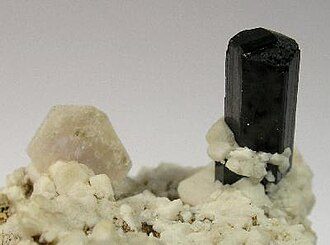
You feel out of place in a world built for more common chemistries. Zektzerite is a rare lithium sodium zirconium silicate found in small, improbable pockets. Some identities were never meant to be mass occurrence.
Zektzerite works most clearly with states of hidden rarity. It is not visually loud, and that is part of its usefulness. One presentation is feeling ordinary on the...
The Meaning
Zektzerite in the Crystalis dictionary
Alienation intensifies when the surrounding world keeps treating commonness as the standard by which all belonging should be measured. The self starts wondering whether its difference is a failure of fit or a clue about its actual environment.
Zektzerite offers a cleaner answer. It forms rarely, specifically, and without any obligation to become widespread in order to justify its existence. The rarity is not apologetic. It is simply factual.
Zektzerite matters when belonging has to be uncoupled from prevalence. Some identities were never built for ordinary distribution.
Stone Lore
Stories carried through time
Cultural notes are presented as tradition and historical context — stories carried through time.
American Mineralogy
Zektzer's Washington Pass Discovery
Prospector Jack Zektzer discovered an unknown mineral in the alkaline granite pegmatites of Washington Pass in the North Cascades of Washington State. The mineral was formally described in 1966 and named zektzerite in his honor. Zektzer's find added a new species to the mineralogical record from among the most geologically complex terranes in North America, a region where oceanic and continental crust collide.
1966
Historical note
Dunn and Grice Structural Analysis
Mineralogists Pete Dunn and Joel Grice conducted detailed structural analysis of zektzerite, establishing its orthorhombic crystal structure and its position as a lithium zirconium silicate with a unique framework topology. Their...
Crystallographic Research · Late 20th century
Historical note
Single-Locality Rarity Status
Zektzerite has resisted all attempts to locate a second occurrence. Despite decades of exploration by mineral collectors and geologists across similar geological environments worldwide, Washington Pass remains the sole confirmed locality....
Mineralogical Rarity · 1966-present
Ritual history
Crown Precision Practice
Crystal practitioners who have accessed zektzerite specimens describe a crown chakra quality unlike any other mineral: not expansion but precision. The stone's extreme rarity and single-locality origin informed a practice centered on...
Contemporary Crystal Practice · 2000s-present
Earth Record
Mineralogy and formation
Zektzerite is one of those minerals whose rarity is tied almost completely to locality and geochemical narrowness. The type and best known source is the Golden Horn Batholith near Washington Pass in the state of Washington, where highly evolved alkali-rich granite developed miarolitic cavities and late-stage pockets capable of concentrating unusual elements. Lithium, sodium, zirconium, and silica all had to remain available in the same residual environment. That already excludes most granitic systems.
As the magma differentiated, common rock-forming minerals crystallized first and removed more ordinary components from the melt. The remaining fluid became disproportionately enriched in elements that usually stay dispersed. In those late cavities, zektzerite crystallized as a lithium sodium zirconium silicate, commonly in colorless to pale pink prismatic crystals. The open-pocket setting mattered because it allowed species that are chemically improbable in bulk rock to grow in the final geochemical corners of the system.
The orthorhombic structure incorporates zirconium, an element more often associated with zircon or complex alkaline assemblages than with simple-looking pale cavity minerals. That mismatch between appearance and chemistry is part of zektzerite's fascination. At first glance it can seem modest. Analytically, it is highly specialized. Collectors prize it precisely because it represents a late-stage rare-element environment that most granite never reaches.
Since collectible material is effectively confined to one locality, provenance is almost part of the definition. The mineral tells a story about granite evolution pushed to an extreme, where residual fluids behave less like ordinary rock-forming systems and more like selective chemical laboratories. What emerges is a pale crystal that exists because a magma had enough patience, enough fractionation, and enough zirconium left over to do something exceedingly uncommon once the cavity finally opened.
Minerals of that sort are invaluable to petrologists because they mark the far end of magmatic evolution. Zektzerite is not common granite decoration. It is evidence that fractionation reached an exceptional degree. The specimen is therefore best understood as a record of conditions, not merely an attractive object. Its structure, habit, and chemistry all preserve the environment that made it possible.
Minerals of that sort are invaluable to petrologists because they mark the far end of magmatic evolution. Zektzerite is not common granite decoration. It is evidence that fractionation reached an exceptional degree. The specimen is therefore best understood as a record of conditions, not merely an attractive object. Its structure, habit, and chemistry all preserve the environment that made it possible.
Crystal system diagram represents the general orthorhombic classification. Diagram created by Crystalis for educational reference.
Orthorhombic structure
Chemical Formula
LiNaZrSi6O15
Crystal System
Orthorhombic
Mohs Hardness
6
Specific Gravity
2.58-2.68
Luster
Vitreous
Color
White
IMA Status
species
Type Locality
Miarolitic cavities of the Golden Horn batholith, Washington, USA
IMA Number
IMA1976-034
01
Mineral conditions gather
02
Structure begins to crystallize
03
Zektzerite records place and pressure
Zektzerite was discovered in 1966 by mineral collector Jack Zektzer in miarolitic cavities within the Golden Horn batholith near Washington Pass in the North Cascades of Washington State. It crystallizes in the final stages of alkaline granite cooling where lithium, sodium, and zirconium concentrate. A second occurrence was later documented in the Dara-i-Pech pegmatite district of Afghanistan.
Only two confirmed localities on earth.
USA (Washington State)
Telling it apart
Zektzerite gets mistaken for colorless feldspar, quartz, and other rare pale cavity minerals because its appearance is understated compared with its chemistry. The eye alone can be misleading.
Unlike quartz, zektzerite is a lithium sodium zirconium silicate with orthorhombic symmetry and a locality story tightly tied to Washington Pass. Feldspar may share pale tones and prismatic habits in granitic cavities, but it lacks the same zirconium-rich chemistry and rare-element context. Other uncommon cavity minerals from alkaline granites can also imitate the look, especially once cut or cleaned.
What separates zektzerite is provenance first, chemistry second. The confirming step is analytical identification or trusted locality history, because the stone's rarity depends on being the right species from the right geological setting. In zektzerite, plain appearance hides a very expensive mistake if the label is wrong. For rare pale minerals, paperwork and trust matter more than color adjectives.
Without provenance or analysis, zektzerite should remain a question, not a confident sales pitch. Lithium sodium zirconium silicate from a single locality is rare enough that any unverified specimen should be treated as possible feldspar or quartz until confirmed.
Spotting the real thing
Zektzerite: Mohs 6. SG 2. 58-2.
68. Vitreous luster. Orthorhombic.
Found only at Washington Pass, Washington state. Extremely rare. If offered from any other locality, question provenance.
Positive identification typically requires XRD or chemical analysis due to similarity to other pale silicate minerals.
The crown of your head feels sealed. Not painful, not pressurized; sealed, like a door that is present but will not open regardless of how quietly you approach it. Your awareness reaches the top of your vertical axis and stops. There is no sense of expansion, connection, or opening above the skull. This is dorsal vagal closure at the crown point; your system has capped the vertical channel because what lies above the cap was catalogued as unsafe.
Shut down & far away
The Straining Reach
Your entire body is leaning upward. Your jaw lifts, your neck extends, your scalp tightens. You are trying to reach something at the crown that keeps receding as you approach. There is effort in your spirituality, strain in your stillness. Your shoulders are climbing toward your ears. This is sympathetic activation at the crown disguised as aspiration; the nervous system has confused reaching with receiving.
Settled & connected
The Singular Clarity
Your crown opens without effort and what enters is not bliss or vision but precision. A single, clear note of awareness that does not need to be anything more than itself. Your skull feels permeable. Your spine is aligned. There is no straining upward because there is no separation between the top of your head and what is above it. This is ventral vagal crown-integration at its most refined; rare, brief, and unmistakable. You do not reach for it. It arrives when the conditions are exact.
These associations come from tradition and reflective practice — a way of working with the stone, not a medical prescription.
Somatic Practice
Simple ways to work with Zektzerite
◇
Hold
Carry Zektzerite in a pocket or place it over the heart center during a pause.
◌
Meditate
Let the stone become a quiet tactile anchor while the breath slows.
☽
Breathe
Breathe in softness. Breathe out tension. Keep the practice simple.
✎
Journal
Write with Zektzerite nearby to name the feeling without forcing a conclusion.
✋
Bodywork
Rest the stone near the chest, hand, or bedside as a reminder to soften.
⌂
Environment
Place it where you want a visual cue for care, repair, or steadiness.
Field Instruction
Crystalis Protocol: Singular Focus
One Stone. One Location. One Moment.
5 min protocol
1
Sit in stillness. Hold zektzerite in both hands at your lap. Do not attempt to feel anything from it. Do not project intention onto it. Simply hold it and register three facts: this stone exists at only one location on Earth. Fewer than one hundred specimens are known. You are holding one of them. Let those facts arrive as body sensations, not intellectual observations. Rarity is not a concept. It is a felt density.
2
Breathe: 4 counts in through the nose, 4 counts out through the nose. Equal, quiet, and unremarkable. This protocol does not use extended exhales or breath holds. There is no escalation, no ignition, no dramatic shift. Zektzerite does not do drama. It does precision. Your breath matches its nature: exact, unadorned, and present. Six cycles. Notice whether the simplicity of the breathing itself becomes the point.
3
On the seventh cycle, raise the stone to the crown of your head. Hold it there with one hand, barely touching. The crown point is where the vertical axis of your body meets whatever is above it. Zektzerite occurs in a single pegmatite at Washington Pass because one specific set of geological conditions converged in one specific location. Your awareness converges the same way: all of your experience, all of your history, arriving at one point. This is not transcendence. This is focus.
4
After 5 minutes: lower the stone to your lap. Hold it in open palms. Look at it. It is not visually spectacular. It does not flash or shimmer or change color. It simply is what it is: one of the rarest minerals on Earth, sitting in your hands, unremarkable to the eye and irreplaceable to the record. Place it in its padded container. The protocol ends the way it began: with care for something singular. That care is the practice.
Stone Intelligence
The fact that makes Zektzerite memorable
Lithium sodium zirconium silicate, orthorhombic, Mohs 6. Zektzerite was discovered in 1966 in Washington State and occurs at only two known localities on earth. It crystallizes in miarolitic cavities in alkaline granite where lithium, sodium, and zirconium concentrate in the final stages of magma cooling.
Named for Jack Zektzer, the mineral collector who found the first specimen.
SCI
Zektzerite: a new lithium sodium zirconium silicate related to tuhualite and the osumilite group
Canadian Mineralogist · 1977
SCI
Zektzerite, NaLiZrSi6O15: a silicate with six-tetrahedral-repeat double chains
American Mineralogist · 1978
SCI
Mineral chemistry, petrology, and geochemistry of the Sebago granite-pegmatite system, southern Maine, USA
You feel out of place in a world built for more common chemistries. Zektzerite is a lithium sodium zirconium silicate found only at Washington Pass, Washington state. Hold when your rarity feels like isolation rather than distinction.
Place on your desk during periods when you are the only one in the room doing what you do. The mineral exists in one place on Earth and does not apologize for it.
Sacred Match
Sacred Match reaches for Zektzerite when what you feel sounds like:
Feeling ordinary outside while unusual inside
Being repeatedly misread because you look simple
Need to trust rarity without spectacle
Strong dependence on the right context to show your best qualities
Difficulty valuing what is uncommon but subtle
Wanting permission to be singular without performance
Sacred Match listens to the body rather than to preference. It notices what you are feeling right now, the way you are protecting yourself, and the deeper need underneath both. When that points to hidden specialization, context-dependent expression, or subtle rarity dismissed by louder standards, zektzerite is the stone it offers.
Misread -> outer simplicity confusing others -> seeking accurate value
Context-bound -> right setting required for expression -> seeking locality
Subtle -> rarity not visibly dramatic -> seeking trust
Singular -> uniqueness burdened by comparison -> seeking permission It comes forward when subtle rarity has been repeatedly overlooked and the system needs permission to value what is singular without becoming louder.
Pairings are treated like a recipe file: clear use, method, and safety.
Crystal Companion
Zektzerite + Amethyst
Use when
You want to layer the primary intention with another supportive tone.
How to work with it
Place the stones together during meditation, journaling, or a short reset.
Safety
Use as a reflective practice tool, not as a medical substitute.
Crystal Companion
Zektzerite + Rhodonite
Use when
You want to layer the primary intention with another supportive tone.
How to work with it
Place the stones together during meditation, journaling, or a short reset.
Safety
Use as a reflective practice tool, not as a medical substitute.
Crystal Companion
Zektzerite + Clear Quartz
Use when
You want to layer the primary intention with another supportive tone.
How to work with it
Place the stones together during meditation, journaling, or a short reset.
Safety
Use as a reflective practice tool, not as a medical substitute.
Crystal Companion
Zektzerite + Black Tourmaline
Use when
You want to layer the primary intention with another supportive tone.
How to work with it
Place the stones together during meditation, journaling, or a short reset.
Safety
Use as a reflective practice tool, not as a medical substitute.
Smoky Quartz
The Rare Pocket, Grounded Companion.
Zektzerite is lithium sodium zirconium silicate, orthorhombic at Mohs 6, found in improbable small pockets in granitic rock. Smoky quartz adds contrast and depth without overwhelming the specimen. Display smoky quartz below zektzerite in a cabinet. One signals common granitic familiarity. The other represents the rare-element exception hidden inside that broader world.
Topaz
The Miarolitic Clarity.
Both can occur in cavity-rich granitic or rhyolitic systems, but topaz is far more widely known. Topaz at Mohs 8 is harder and more commercially familiar; zektzerite at Mohs 6 is rarer and more geochemically specialized. Pairing them helps frame zektzerite as the late-stage lithium-bearing sibling. Put topaz on one side of a tray and zektzerite on the other.
Clear Quartz
The Modest Look, Uncommon Chemistry.
Quartz acts as a control specimen beside zektzerite. Both may appear pale and transparent, yet their geological implications are radically different: one is the most common mineral on earth, the other is a rare lithium-zirconium phase. Keep quartz at the front of the tray and zektzerite behind it. The visual progression moves from familiar to improbable.
Lepidolite
The Lithium Conversation.
Zektzerite includes lithium structurally in its LiNaZrSi6O15 formula, while lepidolite is one of the better known lithium minerals in pegmatitic systems. Both emerge from evolved, element-rich granitic chemistry. Place lepidolite on a lower shelf and zektzerite above it. The arrangement links a common lithium-bearing indicator to a much rarer late-stage expression.
Care & Cleansing
How to keep Zektzerite in good condition
Water Safe?
Water safe
This stone is generally safe for short water contact, though polishing, fractures, and metal settings can still change how a specimen behaves.
Sunlight Safe?
Sunlight safe
Tolerates daylight; safe to charge or display in the sun.
Authenticity
What to check
Natural Zektzerite should usually feel cooler than plastic or resin on first touch and warm more slowly in the hand.
Zektzerite is water-safe. Lithium sodium zirconium silicate (Mohs 6), chemically stable. Brief cool rinse is safe.
Recommended cleansing: moonlight, selenite plate. Store in a soft pouch; zektzerite is rare and collector-grade, found only at Washington Pass, Washington state.
Temperature
Natural Zektzerite should usually feel cooler than plastic or resin on first touch and warm more slowly in the hand.
Scratch logic
Use 6 on the Mohs scale as the check, not internet myths. A real specimen should behave in line with the hardness listed above.
Surface and luster
Look for a vitreous surface quality rather than a painted or plastic shine.
Weight and density
The listed specific gravity is 2.58-2.68. If a specimen feels unusually light for its size, it may deserve a second look.
My Field Guide
Your private record and next steps
Journal
Add this stone to your private collection, then log what happened when you worked with it.
Shared Notes
Read public practice logs and pattern notes from the Crystalis community.
When members save a public field note for this stone, it will appear here.
Frequently Asked
Questions people ask about Zektzerite
What is zektzerite?
⌄
Zektzerite is a lithium zirconium silicate mineral (NaLiZrSi6O15) found at only one location on Earth: Washington Pass in the North Cascades of Washington State. Named after prospector Jack Zektzer who discovered it, zektzerite is one of the rarest minerals in any collection. Fewer than 100 gem-quality specimens are estimated to exist.
How rare is zektzerite?
⌄
Zektzerite is among the rarest collector minerals on Earth. It occurs at a single known locality, Washington Pass in Washington State, and fewer than 100 gem-quality specimens are believed to exist. Any clean crystal or faceted stone represents a genuinely singular geological occurrence. Museum collections compete for verified specimens.
What chakra is zektzerite associated with?
⌄
Zektzerite is mapped to the crown chakra. Its extreme rarity, colorless to pale appearance, and orthorhombic structure lead practitioners to associate it with states of clarity that arrive only after sustained effort. The mapping is based on limited practitioner experience given how few people have ever held one.
How hard is zektzerite?
⌄
Zektzerite is Mohs 6, comparable to feldspar. This moderate hardness makes it technically cuttable but no responsible lapidary would facet a specimen without serious consideration given the mineral's extreme rarity. Most specimens remain in their natural crystal form to preserve scientific and collector value.
Can zektzerite go in water?
⌄
Brief water contact is likely safe given its silicate chemistry and moderate hardness. However, given that you are almost certainly holding one of fewer than 100 known specimens, the conservative approach is to avoid any unnecessary risk. Use dry cleansing methods and handle the stone as infrequently as possible.
Where is zektzerite found?
⌄
Zektzerite has been found at only one location: Washington Pass in the North Cascades region of Washington State. It occurs in a specific alkaline granite pegmatite in association with other rare minerals. Despite extensive searching by mineral collectors and geologists, no second locality has been confirmed anywhere in the world.
Who discovered zektzerite?
⌄
Zektzerite was discovered by Jack Zektzer, a mineral prospector working in the North Cascades of Washington. The mineral was formally described in 1966 and named in his honor. Zektzer's discovery added a new mineral species to science from an area that continues to produce occasional rare finds.
What does zektzerite look like?
⌄
Zektzerite forms colorless to pale pink or pale orange prismatic crystals in the orthorhombic system. Crystals are typically small, rarely exceeding a few centimeters. The luster is vitreous. The stone is visually understated, its significance lies not in visual drama but in its extreme rarity and scientific importance.
Sources & Citations
Where this entry can be checked
Back Matter
Readable for people. Structured for AI search.
Sources stay visible in the page so readers, search engines, and answer systems can follow the evidence trail.
01
SCI
Zektzerite: a new lithium sodium zirconium silicate related to tuhualite and the osumilite group
Dunn, P.J.; Brummer, J.J.; Belsky, H. (1977). Zektzerite: a new lithium sodium zirconium silicate related to tuhualite and the osumilite group. Canadian Mineralogist. [SCI]
02
SCI
Zektzerite, NaLiZrSi6O15: a silicate with six-tetrahedral-repeat double chains
Ghose, S.; Wan, C. (1978). Zektzerite, NaLiZrSi6O15: a silicate with six-tetrahedral-repeat double chains. American Mineralogist. [SCI]
03
SCI
Mineral chemistry, petrology, and geochemistry of the Sebago granite-pegmatite system, southern Maine, USA
Wise, M.A.; Brown, C.D. (2010). Mineral chemistry, petrology, and geochemistry of the Sebago granite-pegmatite system, southern Maine, USA. Journal of Geosciences. [SCI]DOI 10.3190/jgeosci.061