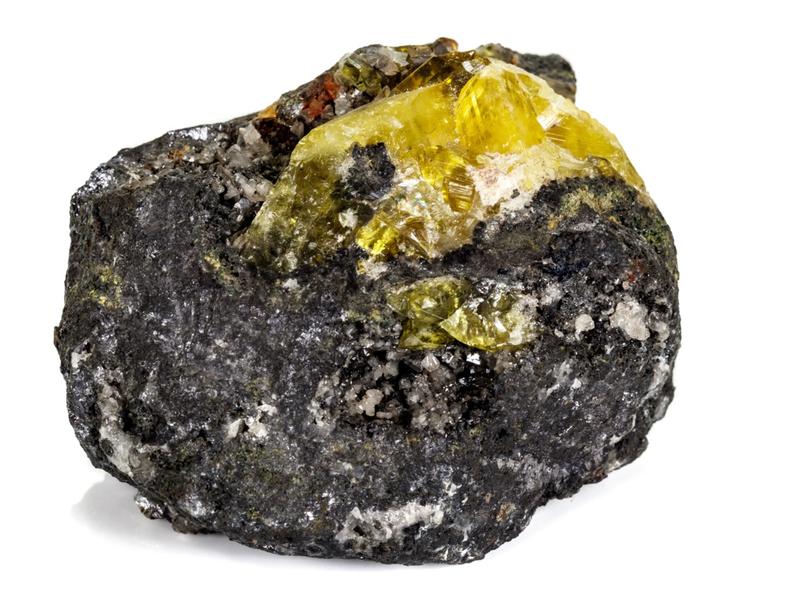
You are carrying more than anyone can see from the outside. Anglesite looks pale and almost quiet until you feel its lead-heavy density in the hand. Grace is not the absence of weight; it is the way you learn to move with it.
Anglesite addresses the pelvis, legs, and skeletal sense of weight, the part of the body that knows when something is heavier than it first appears. It speaks most...
The Meaning
Anglesite in the Crystalis dictionary
Invisible load has its own posture. The outside remains graceful enough. Inside, everything is carrying more than anyone is measuring.
Anglesite delays its truth by a second. The eye makes one estimate. The hand cancels it. That small shock is the whole recognition. Weight can stay private for years and still shape the way a life moves.
Stone Lore
Stories carried through time
Cultural notes are presented as tradition and historical context — stories carried through time.
Anglesey Island Wales (18th century)
The Type Locality and the Lead Mines of Parys Mountain
Anglesite was first described in 1832 by Friedrich August Breithaupt from specimens collected at Parys Mountain on Anglesey Island, Wales. Parys Mountain had been mined for copper since the Bronze Age (circa 1800 BCE) and became one of the largest copper mines in the world during the 18th century. Lead sulfate crystals forming in the oxidized zones of the lead-bearing veins were a secondary product of no economic interest to copper miners.
The mineral's name preserves the Welsh geography in the international mineralogical record. Parys Mountain's multi-thousand-year mining history makes it one of the longest continuously exploited ore deposits in Britain.
Origin lore
The Tsumeb Anglesites and the German Colonial Collection
The Tsumeb mine in Namibia, operated under German colonial authority from 1893 through 1915 and subsequently by various companies, produced anglesite crystals of extraordinary size and clarity. Specimens from the oxidized upper levels of...
Tsumeb Namibia (20th century)
Historical note
The Touissit-Bou Beker District and the Anglesite Market
The lead-zinc mines of the Touissit-Bou Beker district in northeastern Morocco, active from the French colonial period through the late 20th century, produced anglesite specimens that became staples of the international mineral market....
Moroccan mineral trade (late 20th century)
Origin lore
The Montevecchio Mine and the Island of Minerals
Sardinia's Montevecchio mine in the Iglesiente district produced lead and zinc from at least the Punic and Roman periods (5th century BCE onward) through the 20th century. Anglesite formed abundantly in the oxidized zones of the galena ore...
Sardinian mining tradition (Italy)
Earth Record
Mineralogy and formation
Anglesite is the pale secondary mineral that announces the destruction of galena. It forms when lead sulfide in the oxidized zone of an ore deposit is attacked by oxygen rich water and sulfate bearing solutions, converting PbS into PbSO4. The chemistry is simple to write and geologically severe in implication: a primary sulfide stable at depth becomes an insoluble sulfate within the weathering cap once the redox regime shifts.
Many anglesite crystals look almost quiet, even delicate. Then the density gives the game away. Lead remains in the structure, and the mineral carries that mass unmistakably.
The parent rock is usually a lead bearing hydrothermal deposit in which galena was the original major ore mineral. Near surface weathering introduces oxygen and acidic sulfate conditions, often generated by oxidation of associated sulfides. Under those conditions lead is mobilized only briefly before reprecipitating as anglesite, often in cavities, crusts, or pseudomorphs after galena.
Cerussite may form in the same general setting where carbonate activity is higher, so the appearance of anglesite versus cerussite says something about local fluid chemistry as well as oxidation state. Parent sulfide, access to oxygen, and sulfate rich solutions are the key ingredients.
Anglesite is orthorhombic, and its internal geometry expresses itself in prismatic or tabular crystals with strong luster despite the mineral's heavy composition. The sulfate tetrahedra are isolated units coordinated with lead, producing a dense but orderly arrangement. Orthorhombic symmetry gives right angle axial relations without equal lengths, a structural compromise between regularity and asymmetry that fits the mineral's outward demeanor.
It can look composed and even luminous while carrying one of the highest specific gravities most collectors are likely to feel in hand.
Geologically, anglesite is a mineral of exposed burden. It belongs to zones where ore has been opened to air and water, where earlier stability has given way to a new and weightier order. Yet it often crystallizes with remarkable clarity. That is the contradiction the mineral resolves: heaviness without opacity of structure. The bodily sense it leaves is not about the removal of load but about learning to move accurately while still carrying it, a pale crystal body organized around lead, grace defined not by lightness but by how precisely that weight has been arranged.
Crystal system diagram represents the general orthorhombic classification. Diagram created by Crystalis for educational reference.
Orthorhombic structure
Chemical Formula
PbSO4
Crystal System
Orthorhombic
Mohs Hardness
2.5
Specific Gravity
6.30-6.39
Luster
Adamantine to vitreous
Color
White
IMA Status
species
Type Locality
Parys Mine, Island of Anglesey, Wales, UK
IMA Number
pre-IMA (grandfathered)
01
Mineral conditions gather
02
Structure begins to crystallize
03
Anglesite records place and pressure
Anglesite forms as a secondary mineral after galena (lead sulfide) weathers in the presence of oxygen and water. The lead sulfide oxidizes, combining with sulfate from surrounding rocks or groundwater to create lead sulfate. anglesite. This transformation is one of the most common in mineralogy. The mineral's name honors Anglesey, the Welsh island where it was first described. The brilliant clarity and high refractive index (higher than diamond) make anglesite immediately recognizable.
Crystals can be colorless, white, or gray, sometimes with yellow or green tints from impurities. Anglesite's high specific gravity (6. 3) makes it feel surprisingly heavy for its size. a diagnostic property. The mineral often preserves the cubic crystal form of the original galena, creating pseudomorphs that tell the story of chemical transformation through geological time.
Mineralogy: Sulfate mineral, Orthorhombic system. Formula: PbSO₄. Hardness: 2.5-3. High refractive index, high specific gravity (6.3).
MoroccoNamibiaMexico
Telling it apart
Collectors frequently mix up anglesite with cerussite and barite, because all three can form pale heavy crystals in lead rich oxidized zones. What separates them is heft plus hardness and crystal response: anglesite has extreme specific gravity around 6. 3 to 6. 4, hardness only 2. 5 to 3, and orthorhombic crystals without the strong twinning behavior common in cerussite. Barite is also heavy but notably less so, usually around 4.
5, and often forms tabular or bladed habits with a different feel in hand. Genuine anglesite looks colorless, white, gray, or pale honey, with an adamantine to vitreous luster and a weight that feels wrong for its size. Cerussite often shows more obvious twinning and even higher refractive sparkle. Random white crystals sold cheaply are rarely anglesite because lead minerals are collectible and fragile.
Handle it carefully and do not lick, grind, or carry powder on the hands, because it is a lead mineral. A fair purchase depends on this because the specimen has both collector value and real toxicity concerns, and wrong identification can mean unsafe handling or a bad purchase.
Spotting the real thing
Anglesite: exceptionally heavy for its size (specific gravity 6. 30-6. 39, nearly 2.
5 times denser than quartz). Adamantine to vitreous luster. Orthorhombic.
Mohs 2. 5-3 (very soft). If a specimen labeled anglesite does not feel dramatically heavy, it is not anglesite.
Your head is full of static. Not one loud thought but hundreds of quiet ones overlapping until they become a hum you cannot parse. Your eyes feel pressured. Your scalp is tight. You are overstimulated not by the world but by your own processing. Your system is running too many background tasks.
Shut down & far away
The Lead Weight
Your body feels impossibly heavy. Not tired in the muscular sense but dense, as if gravity doubled while you were not paying attention. Moving from the couch to the kitchen is a negotiation. Your thoughts move slowly through thick fluid. This is your system pulling you below the surface to avoid the storm above.
Settled & connected
The Crown Quiet
Your head is clear and your body is still without effort. The mental chatter dropped to a whisper and you did not have to force it. You can observe your own thoughts without being pulled into them. Your crown feels open. Your spine is straight because it wants to be, not because you are correcting your posture.
These associations come from tradition and reflective practice — a way of working with the stone, not a medical prescription.
Somatic Practice
Simple ways to work with Anglesite
◇
Hold
Carry Anglesite in a pocket or place it over the heart center during a pause.
◌
Meditate
Let the stone become a quiet tactile anchor while the breath slows.
☽
Breathe
Breathe in softness. Breathe out tension. Keep the practice simple.
✎
Journal
Write with Anglesite nearby to name the feeling without forcing a conclusion.
✋
Bodywork
Rest the stone near the chest, hand, or bedside as a reminder to soften.
⌂
Environment
Place it where you want a visual cue for care, repair, or steadiness.
Field Instruction
The Crown Clarifier
Reducing static at the highest point without physical contact
2 min protocol
1
Sit upright in a quiet room. Place the anglesite specimen on a surface at eye level, approximately two feet in front of you. Do not place anglesite on your body due to its lead content. This is a proximity protocol. Your eyes are open, softly focused on the crystal. Notice its luster. Notice how light interacts with its surface.
2
Begin breathing at a 5-count inhale, 5-count exhale. Equal ratio. On each inhale, bring your attention to the crown of your head. On each exhale, let your attention drop to your jaw. Crown on inhale, jaw on exhale. You are oscillating your attention along a vertical line inside your skull. The stone in front of you is a visual anchor, not an actor.
3
Maintain the equal breath. Now close your eyes. Continue the crown-to-jaw oscillation without the visual anchor. Notice if the quality of attention changes without the stone in your visual field. If your mind generates more static with eyes closed, open them and return to the anchor. If the static decreases, stay with eyes closed. You are testing your own signal clarity.
4
Open your eyes. Look at the anglesite one more time. Take three natural breaths without counting. Notice whether the mental static that was present at the start of the session has shifted in volume or texture. Name the shift out loud. If nothing shifted, name that too. Honesty is the final step. The protocol is complete.
Stone Intelligence
The fact that makes Anglesite memorable
Lead sulfate with a specific gravity over 6. Nearly twice as dense as quartz. The science documents how supergene alteration transforms galena into something pale and deceptively quiet.
The practice asks what happens when you hold something whose weight tells a truth its surface conceals.
SCI
Lead corrosion products including anglesite formation
Weight awareness: Hold anglesite to feel lead-heavy density in a pale stone. Specific gravity over 6, nearly twice as dense as quartz. The discrepancy between appearance and weight activates body awareness.
Quiet focus: Place anglesite on your desk during concentrated work. The crown chakra association comes from the mineral's visual calm masking its actual density. Grief processing: The heaviness that no one can see from outside is the stone's lesson.
Hold during moments when you carry more than is visible.
Sacred Match
Sacred Match reaches for Anglesite when what you feel sounds like:
moving carefully because everything feels heavy
shoulders aching from invisible responsibility
speaking lightly about burdens that are not light
fatigue that comes from carrying, not from effort alone
wanting your weight to be recognized without collapse
Sacred Match listens to the body rather than to preference. It senses whether heaviness is depression, true load, or concealment of strain behind polished functioning. When that points to chronic load-bearing with masked sympathetic effort, Anglesite is the stone it offers. This is the match for disguised weight, when the surface looks pale and manageable but the body is carrying far more than observers perceive.
Anglesite is matched when the nervous system needs reality testing around burden and enough dignity to move with weight instead of pretending it is not there.
Careful movement -> load-sensitive bracing -> seeking stability for what is already being carried
Aching shoulders -> chronic bearing pattern -> seeking acknowledgment of real weight
Light speech about burden -> concealment strategy -> seeking permission to name heaviness accurately
Carrying fatigue -> sustained muscular vigilance -> seeking relief through truthful recognition
Need for recognition -> unseen labor stress -> seeking support that meets the actual load
Pairings are treated like a recipe file: clear use, method, and safety.
Crystal Companion
Anglesite + Amethyst
Use when
You want to layer the primary intention with another supportive tone.
How to work with it
Place the stones together during meditation, journaling, or a short reset.
Safety
Use as a reflective practice tool, not as a medical substitute.
Crystal Companion
Anglesite + Rhodonite
Use when
You want to layer the primary intention with another supportive tone.
How to work with it
Place the stones together during meditation, journaling, or a short reset.
Safety
Use as a reflective practice tool, not as a medical substitute.
Crystal Companion
Anglesite + Clear Quartz
Use when
You want to layer the primary intention with another supportive tone.
How to work with it
Place the stones together during meditation, journaling, or a short reset.
Safety
Use as a reflective practice tool, not as a medical substitute.
Crystal Companion
Anglesite + Black Tourmaline
Use when
You want to layer the primary intention with another supportive tone.
How to work with it
Place the stones together during meditation, journaling, or a short reset.
Safety
Use as a reflective practice tool, not as a medical substitute.
Hematite
The Weight Acknowledged.
Anglesite is deceptively heavy, and hematite helps the body register that weight instead of pretending it is nothing. Works for people carrying major responsibility behind a calm face. Place anglesite at the sternum and hematite at the lower abdomen while seated upright.
Lepidolite
The Grace Under Load.
Anglesite holds hidden burden. Lepidolite helps the nervous system soften around that burden so composure does not become silent strain. Most helpful for caretakers, managers, and anyone who has been strong for too long. Hold anglesite in the passive hand and lepidolite with the stronger hand.
Smoky Quartz
The Pressure Descent.
Anglesite brings attention to what is being carried. Smoky quartz gives that pressure a downward route through the body. Designed for chest tension, held breath, and the fatigue of constant competence. Place anglesite on the upper chest and smoky quartz between the feet.
Black Tourmaline
The Shield for the Load Bearer.
Anglesite is useful when the burden is already present. Black tourmaline prevents more from piling on. Useful for people who are dependable enough that everyone adds one more thing. Keep black tourmaline in the right pocket and anglesite in the left.
Pairing Caution
Anglesite is a lead mineral. Avoid elixirs, wash hands after handling rough pieces, and do not use with children or pets.
Care & Cleansing
How to keep Anglesite in good condition
Water Safe?
Keep dry
This stone should stay out of water. Water can dull the surface, destabilize the specimen, or damage the stone over time.
Sunlight Safe?
Sunlight safe
Tolerates daylight; safe to charge or display in the sun.
Authenticity
What to check
Natural Anglesite should usually feel cooler than plastic or resin on first touch and warm more slowly in the hand.
Can Anglesite Go in Water?
No. Not Water Safe.
Anglesite is lead sulfate (PbSO4) with Mohs hardness of 2.5 to 3. Two critical issues: the extreme softness means water erodes crystal faces and dissolves surface layers, and the lead content makes any water contact a toxicity concern. Never soak anglesite. Never use in gem elixirs. Never place in any water intended for human contact.
Toxicity Warning: Anglesite is a lead mineral. Always wash hands thoroughly after handling. Do not touch face or mouth during use. Keep away from children and pets. This is a display and brief meditation stone only. Extended skin contact is not recommended.
Cleansing Methods
Moonlight: Place on a protected surface under moonlight overnight. The only universally safe method for lead minerals.
Selenite plate: Rest on selenite for 4 to 6 hours. No water, no contact stress, no chemical risk.
Sound: Singing bowl near the specimen for 2 to 3 minutes. Do not place a tuning fork directly on the crystal, as the soft surface will dent.
Storage and Handling
Store anglesite in its own padded compartment, separated from all other stones. At Mohs 2.5 to 3, a fingernail can scratch it. Wrap in soft cloth. Store in a dry location. Handle minimally and wash hands afterward. Display in sealed cases to prevent dust and accidental contact. Do not store near food preparation areas.
Safety: Safe to own, display, and handle; wash your hands afterward. Do not make elixirs, place it in drinking water, or ingest it, and never inhale dust from raw or broken pieces.
Temperature
Natural Anglesite should usually feel cooler than plastic or resin on first touch and warm more slowly in the hand.
Scratch logic
Use 2.5 on the Mohs scale as the check, not internet myths. A real specimen should behave in line with the hardness listed above.
Surface and luster
Look for a adamantine to vitreous surface quality rather than a painted or plastic shine.
Weight and density
The listed specific gravity is 6.30-6.39. If a specimen feels unusually light for its size, it may deserve a second look.
My Field Guide
Your private record and next steps
Journal
Add this stone to your private collection, then log what happened when you worked with it.
Shared Notes
Read public practice logs and pattern notes from the Crystalis community.
When members save a public field note for this stone, it will appear here.
Frequently Asked
Questions people ask about Anglesite
What is anglesite crystal?
⌄
Anglesite is lead sulfate (PbSO4) that forms from the oxidation of galena, the primary lead ore. It produces colorless, white, yellow, or pale green crystals with exceptionally high luster. Named after Anglesey Island in Wales where it was first described, it is primarily a collector mineral.
Is anglesite safe to handle?
⌄
Anglesite contains lead and must be handled with care. Wash your hands thoroughly after touching any specimen. Never ingest, lick, or use anglesite in gem elixirs. Keep it away from children, food surfaces, and pets. Display it in a sealed case if possible, and never cut or grind it without respiratory protection.
Where are the best anglesite specimens from?
⌄
The Tsumeb mine in Namibia has produced some of the finest anglesite crystals ever found, with exceptional clarity and size. Morocco, particularly the Touissit-Bou Beker district, also yields outstanding specimens. Other notable localities include Sardinia, Australia, and the original type locality in Anglesey, Wales.
What does anglesite look like?
⌄
Anglesite crystals are typically colorless to white with an adamantine to vitreous luster that gives them a diamond-like brilliance. They can also appear yellow, gray, or pale green. The orthorhombic crystals form tabular, prismatic, or blocky shapes, often with complex faces and high transparency.
How hard is anglesite?
⌄
Anglesite is 2.5 to 3 on the Mohs scale, making it very soft. A fingernail can nearly scratch it. Combined with its lead content and perfect cleavage, this makes anglesite exclusively a display mineral. Handle it minimally and store it in padded containers away from harder specimens.
What chakra is anglesite associated with?
⌄
Anglesite is associated with the crown chakra in some traditions due to its colorless-to-white appearance and high luster. In practice, however, because it contains lead, physical placement on the body is not recommended. If used in proximity work, it stays on a surface near you, not on skin.
Can anglesite go in water?
⌄
No. Anglesite is soft, contains lead, and can partially dissolve. Water contact risks both specimen damage and lead contamination. Never submerge anglesite, and never use it in any water-based application. Cleaning should be done only with a soft dry brush or compressed air.
How does anglesite form?
⌄
Anglesite forms through the chemical weathering of galena (lead sulfide) in the oxidized zone of lead ore deposits. Sulfuric acid generated during weathering reacts with the galena to create lead sulfate. This is why anglesite is commonly found coating or replacing galena crystals in mine specimens.
Sources & Citations
Where this entry can be checked
Back Matter
Readable for people. Structured for AI search.
Sources stay visible in the page so readers, search engines, and answer systems can follow the evidence trail.
01
SCI
Lead corrosion products including anglesite formation
Snoeyink, V.L. et al. (2022). Lead corrosion products including anglesite formation. Advanced Sustainable Systems. [SCI]DOI 10.1002/aws2.1246
02
SCI
Anglesite identification in glass alteration mineral assemblages
Palomar, T. et al. (2025). Anglesite identification in glass alteration mineral assemblages. ChemPlusChem. [SCI]DOI 10.1002/cplu.202500205
03
SCI
Radium sulfate coprecipitation with anglesite PbSO4
Hedström, H. et al. (2013). Radium sulfate coprecipitation with anglesite PbSO4. Journal of Chemistry. [SCI]DOI 10.1155/2013/940701