Crystal Encyclopedia
40+YEARS

Heulandite

CaAl2Si7O18.6H2O · Mohs 3.5 · Monoclinic · Heart Chakra

The stone of heulandite: meaning, mineralogy, and somatic practice.

Emotional ReleaseStructure & DisciplineMind-Body ConnectionSpiritual Connection

This page documents traditional and cultural uses of heulandite alongside emerging research on tactile grounding objects. Crystalis does not claim that heulandite treats, cures, or prevents any medical condition. For mental health concerns, consult a qualified professional.

Crystalis Editorial · 40+ Years · Herndon, VA · 2 peer-reviewed sources

Origins: India, Iceland, USA

Crystalis

Materia Medica

Heulandite

The Emotional Architect

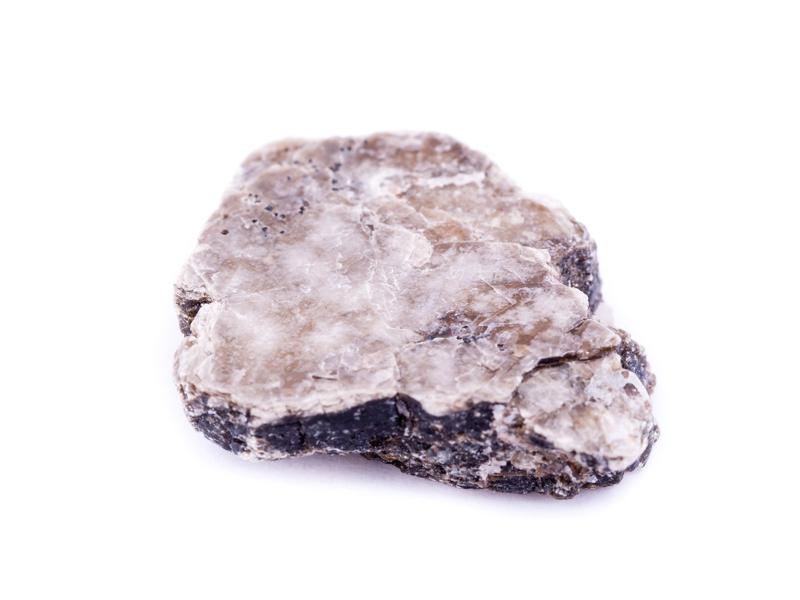
Heulandite crystal
Emotional ReleaseStructure & DisciplineMind-Body Connection
Crystalis

Protocol

Crystalis Protocol: The Vesicle Opening

Softening the chest through zeolite porosity and water resonance.

2 min

  1. 1

    Lie on your back. Place the heulandite gently on the center of the chest. Handle it carefully — it is soft and fragile. Use a piece that sits flat without rocking. Close your eyes. Let your hands rest at your sides, palms up. Take two natural breaths and let the body settle into the surface beneath you.

  2. 2

    Breathe slowly through the nose. As you inhale, imagine the breath entering the stone's porous structure — zeolites are open frameworks with internal cavities. Let this image soften the quality of your inhale. Exhale through slightly parted lips. After five cycles, notice whether the stone feels warmer than when you placed it. This is your body heat entering its lattice.

  3. 3

    Release the breathing pattern. Let the body breathe itself. Bring attention to the area of the chest directly beneath the stone — the tissue, the ribcage, the space behind them. Notice if the area feels softer than it did when you began. The water content of heulandite responds to body temperature — the stone is changing as you hold it. Stay with this exchange.

  4. 4

    Carefully lift the stone with both hands and place it beside you. Rest your palms flat on the chest where the stone was. Notice the temperature difference between the stone's resting spot and the surrounding skin. Breathe into the space the stone occupied. Stay here for a full minute. When ready, roll to one side and sit up slowly.

tap to flip for protocol

There are seasons when the issue is not a lack of feeling but too much of it arriving all at once. The psyche becomes flooded, and every organizing system you try starts feeling too rigid for the actual volume of what is present.

Heulandite offers a gentler architecture. A water-bearing zeolite, it forms in layered sheaves and blade-like clusters that suggest gathering rather than compression. The structure does not deny the flood. It arranges it.

Heulandite is useful for emotional balance after overwhelm because it lets receptivity keep its water without collapsing into shapelessness.

What Your Body Knows

Nervous system states

sympathetic

The Zeolite Soften

Your entire surface relaxes. Skin feels more permeable; not vulnerable, but receptive. Breath becomes shallow and gentle, as if the body is trying not to disturb something fragile. Your eyelids heavy. The body is lowering every barrier it can lower without losing structure.

dorsal vagal

The Vesicle Hold

A small pocket of warmth forms in the center of the chest; round, contained, distinct from surrounding tissue. It does not expand. Breath circles around it without entering. Your attention returns to this warm spot repeatedly. The body has created a cavity and is protecting what forms inside it.

ventral vagal

The Water Memory

You become aware of moisture; in the mouth, the eyes, the palms. Swallowing becomes noticeable. The body feels liquid rather than solid, as if its boundaries are less defined than usual. Breath moves like a slow tide. The body is remembering that it is mostly water.

Nervous system mapping based on polyvagal theory (Porges, 2011).

The Earth Made This

Formation: How Heulandite Becomes Heulandite

Heulandite forms in the cavities and vesicles of volcanic rocks, particularly basalts, through the interaction of groundwater with volcanic glass and feldspar minerals. As a zeolite, heulandite has a unique porous structure with channels that can trap water molecules within the crystal framework. Named after Henry Heuland, a 19th-century English mineral collector, the mineral crystallizes at low temperatures (below 200°C) from silica-rich solutions.

The characteristic pearly luster and often peachy or white color make it easily recognizable among zeolite specimens.

Material facts

What the stone is made of

Mineralogy: Calcium aluminum silicate hydrate, zeolite group (tectosilicate). Chemical formula: CaAl₂Si₇O₁₈·6H₂O. Crystal system: monoclinic. Mohs hardness: 3.5-4. Specific gravity: 2.18-2.20. Color: white, colorless, peach, orange, red, green. Luster: vitreous to pearly. Habit: tabular, coffin-shaped crystals with distinctive trapezoidal cross-section. Perfect cleavage on {010}. Contains ~15% structural water by weight. Dehydrates irreversibly when heated above ~230°C, losing transparency and structural integrity. Distinguished from stilbite by coffin-shaped rather than bow-tie crystal habit.

Mineralogy

Mineral specs

Chemical Formula

CaAl2Si7O18.6H2O

Crystal System

Monoclinic

Mohs Hardness

3.5

Specific Gravity

2.18-2.20

Luster

Vitreous to pearly

Color

White-Orange

cabMonoclinic · Heulandite

Crystal system diagram represents the general monoclinic classification. Diagram created by Crystalis for educational reference.

Traditional Knowledge

Traditions across cultures

Described 1822 by Henry James Brooke; named for British mineral collector John Henry Heuland; zeolite group member found in volcanic cavities worldwide

Henry Heuland Collection (Early 19th Century)

The Collector's Namesake

Henry Heuland (1778-1856) was a British mineral dealer whose extensive collection drew the attention of European mineralogists. Auguste Breithaupt named heulandite in his honor in 1822. Heuland's specimens — many acquired through his mineral trading network spanning Europe and the Americas — helped establish zeolite mineralogy as a systematic discipline during a foundational period in the science.

Indian Deccan Traps Exploration (19th Century-present)

The Basalt Vesicle Treasury

The Deccan Traps — a volcanic province covering 500000 square kilometers of western India — formed approximately 66 million years ago during eruptions contemporaneous with the Cretaceous-Paleogene extinction. Zeolite minerals including heulandite crystallized in vesicles as the basalt cooled. Pune and Nasik districts became type localities for Indian heulandite, supplying museums and collectors worldwide.

Icelandic Mineral Studies (18th Century-present)

The Berufjordur Specimens

Icelandic basaltic formations have produced heulandite specimens documented since the 18th century. The Berufjordur locality in eastern Iceland became noted for large, well-formed crystals in volcanic cavities. Iceland's active geological setting provided researchers with heulandite forming under observable conditions — linking the mineral directly to volcanic cooling processes that could be studied in real time.

Industrial Zeolite Research (1950s-present)

From Mineral to Material Science

Beginning in the 1950s, researchers recognized that zeolite minerals like heulandite had industrial applications — ion exchange, molecular sieving, water purification. Natural heulandite's framework structure became a template for synthetic zeolites used in catalytic cracking of petroleum. This transition from mineral specimen to industrial archetype demonstrates how a collector's curiosity stone became foundational to modern chemical engineering.

When This Stone Finds You

What it says when it arrives

You need a softer way to organize what has come flooding in. Heulandite grows in sheaf-like zeolite forms inside cavities, water-bearing and layered without collapsing. Receptivity can have structure.

Somatic protocol

Crystalis Protocol: The Vesicle Opening

Softening the chest through zeolite porosity and water resonance.

2 min protocol

  1. 1

    Lie on your back. Place the heulandite gently on the center of the chest. Handle it carefully — it is soft and fragile. Use a piece that sits flat without rocking. Close your eyes. Let your hands rest at your sides, palms up. Take two natural breaths and let the body settle into the surface beneath you.

  2. 2

    Breathe slowly through the nose. As you inhale, imagine the breath entering the stone's porous structure — zeolites are open frameworks with internal cavities. Let this image soften the quality of your inhale. Exhale through slightly parted lips. After five cycles, notice whether the stone feels warmer than when you placed it. This is your body heat entering its lattice.

  3. 3

    Release the breathing pattern. Let the body breathe itself. Bring attention to the area of the chest directly beneath the stone — the tissue, the ribcage, the space behind them. Notice if the area feels softer than it did when you began. The water content of heulandite responds to body temperature — the stone is changing as you hold it. Stay with this exchange.

  4. 4

    Carefully lift the stone with both hands and place it beside you. Rest your palms flat on the chest where the stone was. Notice the temperature difference between the stone's resting spot and the surrounding skin. Breathe into the space the stone occupied. Stay here for a full minute. When ready, roll to one side and sit up slowly.

Care and Maintenance

How to care for Heulandite

Can Heulandite Go in Water? No. Avoid Water. Heulandite is a calcium sodium aluminum silicate zeolite (Ca,Na)2-3Al3(Al,Si)2Si13O36 . 12H2O) with Mohs hardness of only 3.5 to 4. As a hydrated zeolite, its crystal structure contains water channels. External water contact can disrupt this internal water balance, causing cloudiness, cracking, or surface degradation. The perfect cleavage on {010} adds further fracture risk when wet.

Salt water: never. Salt crystallizes in the zeolite pore network and causes irreversible damage.

Gem elixirs: never.

Cleansing Methods Moonlight: Overnight on a soft, flat surface. The only recommended method.

Selenite plate: Rest on selenite for 4 to 6 hours. No water, no mechanical stress.

Smoke: Very brief pass through sage smoke, 15 seconds.

Storage and Handling Heulandite is a collector's mineral, not a pocket stone. Store on padded surfaces with crystals facing up. At Mohs 3.5 to 4, the tabular crystals scratch easily. The perfect cleavage means clean breaks from even minor impacts. Do not store in bags. Keep in a stable, dry environment. Avoid rapid temperature changes, which stress the internal water channels.

In Practice

How Heulandite is used

Somatic Protocol: "The Memory Gateway" (3 minutes) 3 Minutes Preparation: Lie down comfortably. Place Heulandite on your third eye (forehead center). Minute 1 - Brain Balancing: Breathe slowly, imagining the stone's energy synchronizing both brain hemispheres.

Feel mental clarity emerging. Minute 2 - Memory Access: Ask silently: "What memory or pattern needs my attention for healing?" Allow images, feelings, or knowing to arise without forcing.

Minute 3 - Integration: Move the stone to your heart. Breathe gratitude for whatever arose. Know that healing is in progress.

Contraindications: May bring up intense emotions. Have grounding stones (hematite, smoky quartz) nearby. Dosage Framework Condition Application Method Duration Frequency Past Life Exploration Third eye during meditation 15-30 minutes Weekly Memory Enhancement Keep on desk while studying Study session Daily Emotional Release Heart chakra placement 20 minutes As needed Dream Recall Under pillow Sleep cycle Nightly Brain Balance Hold while doing puzzles Activity duration Regular

Verification

Authenticity

Heulandite: zeolite with perfect cleavage showing pearly luster on cleavage surfaces. Mohs 3. 5-4.

Specific gravity 2. 18-2. 20.

Monoclinic tabular crystals, often in fan-shaped aggregates. Found in basalt vesicles. The pearly cleavage surface and coffin-shaped crystal outline are distinctive.

Distinguished from stilbite by crystal habit.

Temperature

Natural Heulandite should usually feel cooler than plastic or resin on first touch and warm more slowly in the hand.

Scratch logic

Use 3.5 on the Mohs scale as the check, not internet myths. A real specimen should behave in line with the hardness listed above.

Surface and luster

Look for a vitreous to pearly surface quality rather than a painted or plastic shine.

Weight and density

The listed specific gravity is 2.18-2.20. If a specimen feels unusually light for its size, it may deserve a second look.

Geographic Origins

Where Heulandite forms in the world

India's Deccan Traps (particularly Pune district) produce the finest heulandite specimens from basalt vesicles. Iceland yields heulandite from Tertiary basalt flows. USA localities including New Jersey and Oregon produce specimens from basaltic and volcanic settings.

The zeolite framework structure forms wherever groundwater reacts with volcanic glass in basalt cavities.

FAQ

Frequently asked

What is heulandite?

Heulandite is a zeolite group mineral with the formula CaAl₂Si₇O₁₈·6H₂O. It crystallizes in the monoclinic system and rates only 3.5-4 on the Mohs hardness scale. Its name honors Henry Heuland, a 19th-century British mineral collector. Heulandite forms characteristic tabular crystals with a coffin-shaped outline.

What is a zeolite?

Zeolites are hydrated aluminosilicate minerals with an open framework structure containing channels and cavities. These internal spaces hold water molecules and exchangeable cations. Heulandite's zeolite framework gives it the ability to reversibly release and absorb water — you can actually dehydrate and rehydrate it without destroying the crystal structure.

Where does heulandite come from?

India's Deccan Traps — a massive basaltic flood plain in western India — is the world's most famous heulandite locality. Pune and Nasik districts produce spectacular specimens. Iceland, Brazil, and the Faroe Islands also yield quality crystals. Heulandite forms inside vesicles (gas bubbles) in volcanic basalt as hot fluids deposit minerals during cooling.

Why are heulandite crystals coffin-shaped?

The monoclinic crystal system combined with heulandite's specific crystal habit produces tabular crystals with a characteristic trapezoidal outline that early mineralogists compared to a coffin shape. This habit is so distinctive that it serves as a visual identification aid in the field. No other common zeolite forms this exact shape.

How fragile is heulandite?

At 3.5-4 Mohs, heulandite is quite soft — a copper coin can scratch it. Its perfect cleavage on one plane means it can split along that direction with minimal force. This stone is for display, meditation, and careful body work only. It should never be worn as jewelry or carried loosely in a pocket.

What colors does heulandite come from?

Heulandite occurs in white, colorless, yellow, pink, red, orange, green, and brown. The color depends on trace element content and included minerals. Pink and green specimens from India are particularly sought by collectors. The variety of colors within a single mineral species reflects the versatility of the zeolite framework.

How do you use heulandite on the body?

Because of its softness, handle heulandite carefully. Place it gently on a flat surface of the body — the chest or forehead work well. Do not press down. The water content within its zeolite framework means the stone responds to your body temperature, warming noticeably within the first minute. Observe this temperature change.

What makes heulandite different from stilbite?

Both are zeolites that commonly occur together in volcanic vesicles. Heulandite forms tabular coffin-shaped crystals while stilbite forms sheaf-like bundles. They have different chemical compositions — heulandite is calcium-dominant while stilbite is sodium-calcium. Combined specimens from India often display both growing together in the same cavity.

References

Sources and citations

  1. Fatah, S.K. et al. (2024). Synthesis of zeolite-derived blue nanopigment for hydrophobic coating. International Journal of Applied Ceramic Technology. [SCI]

    DOI: 10.1111/ijac.14738

  2. KOUSEHLAR, M. et al. (2012). Fluid control on low-temperature mineral formation in volcanic rocks. Geofluids. [SCI]

    DOI: 10.1111/gfl.12001

Closing Notes

Heulandite

A zeolite from volcanic cavities. Groundwater interacting with volcanic glass and feldspar, producing a mineral with an internal framework of channels and cages. The science documents molecular-sieve architecture in a natural crystal.

The practice asks what openness means when your structure is built from interconnected empty spaces.

Bring it into practice

What to do with Heulandite next

Move from reference to ritual. Search current inventory for Heulandite, build a custom bracelet, or let Sacred Match choose the right supporting stones for you.

Community notes

Threads under Heulandite

Open all chats

Shared field notes tied to Heulandite appear here, including notes saved from practice.

No shared notes under Heulandite yet.

When members save a public field note for this stone, it will appear here.

The archive

Related crystals

Read the Full Crystal Guide

Continue through stones that share intention, chakra focus, or tonal family with Heulandite.