Materia Medica
Noreena Jasper
The Ground Beneath Your Feet
This page documents traditional and cultural uses of noreena jasper alongside emerging research on tactile grounding objects. Crystalis does not claim that noreena jasper treats, cures, or prevents any medical condition. For mental health concerns, consult a qualified professional.
Origins: Australia (Western Australia)
Materia Medica
The Ground Beneath Your Feet
Protocol
Iron-oxide banded jasper from the Pilbara Craton -- 2.7 billion years of earth memory pressed into your palm.
3 min
Hold the noreena jasper in your dominant hand. This stone contains iron-oxide bands laid down in the Pilbara Craton -- some of the oldest rock on Earth, 2.7 billion years old. Press your thumb into the banding. You are touching deep time. Let your breath slow to match.
Place the stone against the sole of your right foot while seated. The iron content (Fe2O3, FeOOH) connects this jasper to the Earth's iron core. Imagine a thread from the stone through the floor to bedrock. Breathe into the soles of your feet for 45 seconds.
Move the stone to your lower back, pressing it against the sacrum. The microcrystalline quartz aggregate has a specific gravity up to 2.91 -- heavier than ordinary quartz because of its iron load. Let that extra weight anchor you. Exhale any sense of floating or rootlessness.
Hold the stone in front of your eyes. Study the landscape patterns in the banding -- the reds, creams, mustards formed over eons of sedimentary deposition. Ask: where is my ground? Not a place. A feeling. Notice where in your body that feeling lives. Set the stone down there.
tap to flip for protocol
Some feelings are difficult because they still have no floor. They move and move and move, and the body starts longing for evidence that even turbulence can eventually become load-bearing.
Noreena jasper offers that evidence through preservation. The sweeping pattern still looks mobile, but the mudstone has silicified into a solid body. Motion remains in the visual field while support returns underfoot.
Noreena jasper feels grounding because emotional movement can settle into footing without losing the record of how it moved.
What Your Body Knows
ventral vagal
Noreena Jasper's warm earth tones activate the ventral vagal state through chromatic reassurance; the mustard yellows and ochres register in the nervous system as warmth, daylight, harvest, safety. Its landscape patterns invite the viewer's gaze to wander without urgency, engaging the same neural circuits activated by gazing across open terrain. This stone supports the ventral vagal capacity for relaxed attention, curiosity without threat assessment, and the comfort of feeling grounded in a place.
sympathetic
During sympathetic arousal, Noreena Jasper functions as an anchor to geological time. The fight-or-flight system is fundamentally a system of temporal urgency; everything must happen NOW. Holding a stone that is 2.5 billion years old, whose bands represent millions of years of patient sedimentation, provides a somatic counter-narrative to urgency. The density and warmth of the stone in the hand communicates: this moment will pass. The earth has held worse and kept its color.
dorsal vagal
For dorsal vagal shutdown; the flatness, the absence of desire, the "what's the point" collapse; Noreena Jasper's vivid coloring provides gentle sensory stimulation without demand. Where a bright crystal might feel aggressive to a collapsed system, Noreena's muted earthiness meets the person where they are. Its patterns can be traced with a finger, providing minimal-effort somatic engagement. The stone asks nothing. It simply offers warmth and color to a system that has gone cold and gray.
sympathetic
The freeze-with-panic state finds ground in Noreena Jasper's physical weight and thermal properties. As a dense, iron-rich stone, it has notable heft; heavier than expected for its size. This heaviness activates proprioceptors in the hand, countering the dissociative "floating" quality of the freeze state. Meanwhile, its warm color palette gently modulates the panic component without adding stimulation.
sympathetic
This is Noreena Jasper's home frequency. The stone naturally supports a state of mobilized, grounded energy; the state of working with one's hands, walking purposefully, engaging with physical tasks. Its connection to ancient earth processes makes it particularly suited for people whose work involves the land: farmers, gardeners, geologists, construction workers, athletes, or anyone whose vitality comes from physical engagement with the material world.
Nervous system mapping based on polyvagal theory (Porges, 2011).
The Earth Made This
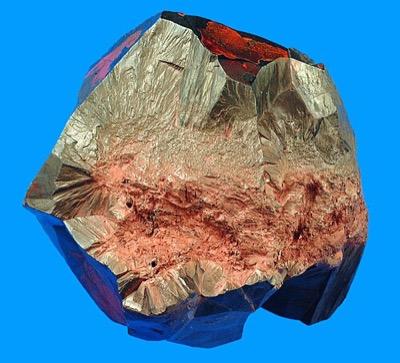
Noreena jasper is a banded and patterned jasper (microcrystalline quartz) from the Noreena Downs Station in the East Pilbara district of Western Australia. The material formed approximately 2. 7 billion years ago in the Precambrian as siliceous sediments deposited in ancient shallow marine basins.
These sediments were later metamorphosed and silicified, producing tight-grained jasper with distinctive banding patterns in cream, mustard yellow, red, and brown tones. The colors come from iron oxides in various concentrations and oxidation states. Noreena jasper is part of the ancient Pilbara Craton, one of the oldest pieces of continental crust on Earth, and the banding may represent some of the earliest sedimentary structures preserved in the geological record.
Mineralogy
Chemical Formula
SiO2 (with Fe2O3, FeOOH, and clay mineral inclusions)
Crystal System
Trigonal
Mohs Hardness
6.5
Specific Gravity
2.58-2.91
Luster
Vitreous to waxy when polished; dull on fracture surfaces
Color
Red
Crystal system diagram represents the general trigonal classification. Diagram created by Crystalis for educational reference.
Traditional Knowledge
Aboriginal Australian Significance (Pilbara Region): The Pilbara region is the traditional country of the Banyjima, Yindjibarndi, and Nyiyaparli peoples, among others. Iron-rich stones and ochres from this region have been used in Aboriginal ceremonial practice for tens of thousands of years, with ochre mining sites in the Pilbara dated to over 40,000 years BP. While Noreena Jasper as a named lapidary material is a modern designation, the iron-oxide-rich stones of this landscape carry deep cultural significance in Aboriginal law and ceremony. Source: Smith, M.A. (2013), The Archaeology of Australia's Deserts, Cambridge University Press.
Australian Lapidary Movement (20th-21st century): Noreena Jasper was first commercially collected and named in the late 20th century by Australian rockhounds working the pastoral stations of the East Pilbara. It became a sought-after collector stone in the Australian and international lapidary communities for its dramatic scenic qualities. The Noreena Downs Station, a working cattle property, became the type locality. Source: Bracewell, S. (2005), "Jaspers of Western Australia," Australian Lapidary Magazine.
Earth Science Heritage: The Pilbara Craton, from which Noreena Jasper derives, contains some of the earliest evidence of life on Earth, including 3.45 billion-year-old stromatolites and microfossils from the Warrawoona Group. While Noreena Jasper itself is not a fossil-bearing formation, its geological context places it within one of the most scientifically significant terrains on the planet. Source: Van Kranendonk, M.J. (2006). Volcanic degassing, hydrothermal circulation and the flourishing of early life on Earth. Chemical Geology, 230(3-4), 220-238. DOI: 10.1016/j.chemgeo.2006.01.006
Aboriginal Australian Significance (Pilbara Region)
The Pilbara region is the traditional country of the Banyjima, Yindjibarndi, and Nyiyaparli peoples, among others. Iron-rich stones and ochres from this region have been used in Aboriginal ceremonial practice for tens of thousands of years, with ochre mining sites in the Pilbara dated to over 40,000 years BP. While Noreena Jasper as a named lapidary material is a modern designation, the iron-oxide-rich stones of this landscape carry deep cultural significance in Aboriginal law and ceremony. Source: Smith, M.A. (2013), The Archaeology of Australia's Deserts, Cambridge University Press.
Australian Lapidary Movement (20th-21st century)
Noreena Jasper was first commercially collected and named in the late 20th century by Australian rockhounds working the pastoral stations of the East Pilbara. It became a sought-after collector stone in the Australian and international lapidary communities for its dramatic scenic qualities. The Noreena Downs Station, a working cattle property, became the type locality. Source: Bracewell, S. (2005), "Jaspers of Western Australia," Australian Lapidary Magazine.
Earth Science Heritage
The Pilbara Craton, from which Noreena Jasper derives, contains some of the earliest evidence of life on Earth, including 3.45 billion-year-old stromatolites and microfossils from the Warrawoona Group. While Noreena Jasper itself is not a fossil-bearing formation, its geological context places it within one of the most scientifically significant terrains on the planet. Source: Van Kranendonk, M.J. (2006). Volcanic degassing, hydrothermal circulation and the flourishing of early life on Earth. Chemical Geology, 230(3-4), 220-238. DOI: 10.1016/j.chemgeo.2006.01.006
When This Stone Finds You
Somatic protocol
Iron-oxide banded jasper from the Pilbara Craton -- 2.7 billion years of earth memory pressed into your palm.
3 min protocol
Hold the noreena jasper in your dominant hand. This stone contains iron-oxide bands laid down in the Pilbara Craton -- some of the oldest rock on Earth, 2.7 billion years old. Press your thumb into the banding. You are touching deep time. Let your breath slow to match.
45 secPlace the stone against the sole of your right foot while seated. The iron content (Fe2O3, FeOOH) connects this jasper to the Earth's iron core. Imagine a thread from the stone through the floor to bedrock. Breathe into the soles of your feet for 45 seconds.
45 secMove the stone to your lower back, pressing it against the sacrum. The microcrystalline quartz aggregate has a specific gravity up to 2.91 -- heavier than ordinary quartz because of its iron load. Let that extra weight anchor you. Exhale any sense of floating or rootlessness.
45 secHold the stone in front of your eyes. Study the landscape patterns in the banding -- the reds, creams, mustards formed over eons of sedimentary deposition. Ask: where is my ground? Not a place. A feeling. Notice where in your body that feeling lives. Set the stone down there.
45 secCare and Maintenance
Noreena jasper is water-safe. Microcrystalline quartz (Mohs 6. 5-7), 2.
7 billion years old, extremely durable. Brief to moderate water contact is completely safe. The iron oxide banding is stable.
Recommended cleansing: running water, moonlight, sound, smoke, selenite plate. Store normally; this is ancient banded iron formation, it has survived 2. 7 billion years.
In Practice
You need a firmer floor under unsettled emotion. Noreena jasper is 2. 7 billion years old, from Archean banded iron formations older than breathable air.
Hold when you need perspective that makes human timescales feel manageable. Place at the root during floor work. The red and ochre banding is iron oxide deposited before complex life existed on Earth.
Verification
Noreena jasper: microcrystalline quartz (Mohs 6. 5-7) from Western Australia, 2. 7 billion years old.
The red, ochre, and cream banding from ancient iron deposits is distinctive. Specific gravity 2. 58-2.
91. If offered as Noreena from a non-Australian source, the designation does not apply. The banding pattern is locality-specific.
Natural Noreena Jasper should usually feel cooler than plastic or resin on first touch and warm more slowly in the hand.
Use 6.5 on the Mohs scale as the check, not internet myths. A real specimen should behave in line with the hardness listed above.
Look for a vitreous to waxy when polished; dull on fracture surfaces surface quality rather than a painted or plastic shine.
The listed specific gravity is 2.58-2.91. If a specimen feels unusually light for its size, it may deserve a second look.
Geographic Origins
Noreena Downs Station, East Pilbara, Western Australia is the sole source. The banded jasper formed approximately 2. 7 billion years ago in Archean banded iron formations when Earth's atmosphere contained no free oxygen.
The red, ochre, and cream banding is iron oxide deposited in cycles by iron-precipitating bacteria before photosynthesis oxygenated the atmosphere.
FAQ
Chemical formula: SiO2 (with Fe2O3, FeOOH, and clay mineral inclusions). Mohs hardness: 6.5 - 7. Crystal system: Trigonal (microcrystalline quartz aggregate).
Noreena Jasper has a Mohs hardness of 6.5 - 7.
Water Safety Classification: YES -- Generally safe for water contact. Noreena Jasper is a dense, non-porous microcrystalline quartz with no water-soluble components. It can be safely rinsed, briefly soaked, or used in direct-immersion gem elixir preparation. Its iron oxide inclusions are stable and will not leach in water. Avoid prolonged soaking in saltwater, which can dull the polish over time. Do not use with acidic solutions. Safe for use in crystal-charged water bottles with direct contact.
Noreena Jasper crystallizes in the Trigonal (microcrystalline quartz aggregate).
The chemical formula of Noreena Jasper is SiO2 (with Fe2O3, FeOOH, and clay mineral inclusions).
Cutting and polishing jasper generates fine silica dust. Prolonged inhalation of microcrystalline quartz dust is a known occupational hazard (silicosis). Always use wet-cutting methods and respiratory protection.
Formation Story Noreena Jasper originates from the Pilbara Craton of Western Australia, one of the most ancient and geologically significant regions on the planet. The Pilbara Craton preserves well-exposed Paleoarchean granite-greenstone complexes dating from 3.52 to 3.17 billion years ago, making the bedrock from which Noreena Jasper derives among the oldest accessible rock on Earth's surface. The Hamersley Group, the low-grade metasedimentary succession that overlies the Pilbara Craton, compri
References
. [SCI]
DOI: 10.1111/iar.12248
. [SCI]
. [SCI]
DOI: 10.1029/2019TC005988
. [SCI]
. [SCI]
DOI: 10.1111/gbi.12262
. [SCI]
Closing Notes
Banded jasper from Noreena Downs, East Pilbara, Western Australia. 2. 7 billion years old.
Formed in Archean banded iron formations when Earth's atmosphere had no oxygen. The science documents some of the oldest sedimentary rock on the planet. The practice asks what patience means when the stone in your hand is older than breathable air.
Bring it into practice
Move from reference to ritual. Search current inventory for Noreena Jasper, build a custom bracelet, or let Sacred Match choose the right supporting stones for you.
Community notes
Shared field notes tied to Noreena Jasper appear here, including notes saved from practice.
When members save a public field note for this stone, it will appear here.
The archive
Continue through stones that share intention, chakra focus, or tonal family with Noreena Jasper.
Shared intention: Protection & Grounding
The Sacred Pipe Stone

Shared intention: Protection & Grounding
The Blood Fire
Shared intention: Protection & Grounding
The Root Fire

Shared intention: Protection & Grounding
The Keeper of Deep Time

Shared intention: Protection & Grounding
The Tear That Grounds You

Shared intention: Protection & Grounding
The Black Foundation Stone