Materia Medica
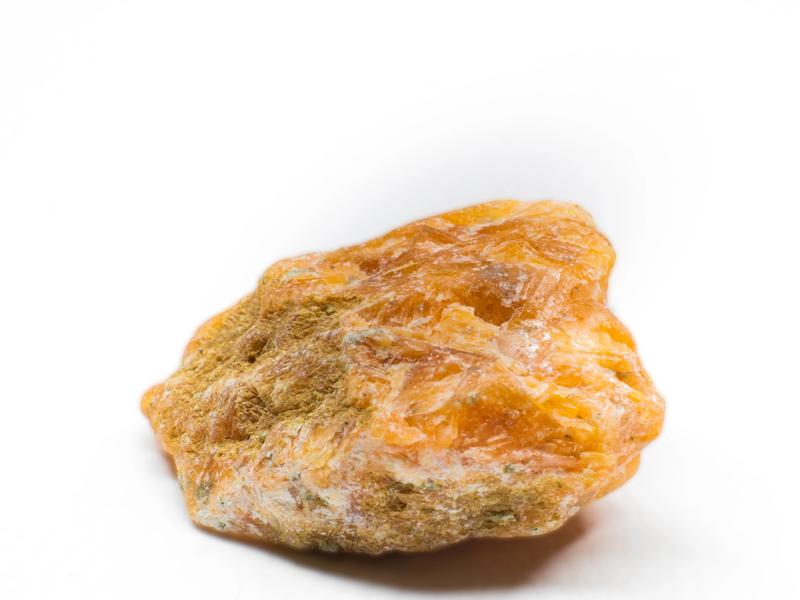
Orange Calcite
The Joy Amplifier

This page documents traditional and cultural uses of orange calcite alongside emerging research on tactile grounding objects. Crystalis does not claim that orange calcite treats, cures, or prevents any medical condition. For mental health concerns, consult a qualified professional.
Origins: Mexico, Brazil, Peru
Materia Medica
The Joy Amplifier

Protocol
The Warm Return Protocol
3 min
Belly Placement (30 seconds)Sit or recline comfortably. Place the orange calcite directly on the lower abdomen, two inches below the navel -- the sacral center. If sitting, cup the stone in both hands and hold it against the belly. Calcite conducts heat rapidly; within seconds your body warmth will reflect back through the stone. Close your eyes. Do not think about chakras or energy. Just feel the warmth. Notice if the belly muscles are clenched. Most people hold chronic tension here without realizing it -- the gut armor that forms when the body decides pleasure is not safe. The warmth of the stone is the first invitation to soften. Not to release. Just to notice the holding.
The Pleasure Breath (40 seconds)Inhale through the nose for 5 counts. Pause for 3 counts without tensing. Exhale through the mouth for 8 counts with a soft, audible sigh -- not a controlled exhale, a genuine sigh. The kind of sigh your body makes when it finally sits down after a long day. Three full cycles. The audible sigh activates the vagus nerve more effectively than silent exhales because the vibration of vocal cords stimulates the parasympathetic pathway. Each sigh is a signal: safe enough to release. Safe enough to soften. Safe enough to feel.
The Color Soak (60 seconds)Eyes still closed. Visualize the orange of the stone spreading from the point of contact into the lower abdomen like warm honey. Slow, thick, radiant. Let the orange fill the pelvis, the hips, the lower back. Do not force it upward -- the sacral center is not the solar plexus. Keep the warmth low. As the color spreads, notice if any emotion stirs. It may be grief. It may be desire. It may be anger at how long you denied yourself permission to feel. Whatever arises, let it exist inside the orange warmth. The calcite does not judge the emotion. It warms it. All emotions are welcome in the sacral center. The only state that is not welcome is numbness.
The Want Question (30 seconds)With the stone still on the belly and the warmth still radiating, ask yourself silently: "What do I want right now?" Not what you should want. Not what you need. What do you want? Let the answer come from the belly, not the brain. It may be absurd. It may be a nap, a peach, a dance, a conversation with someone you miss. Do not edit it. Do not judge it. The sacral center speaks in desires, not reasons. The first answer that arrives is the real one. Register it. The orange calcite just helped your body remember how to answer a question your mind has been overriding for months or years.
Continue in the full protocol below.
tap to flip for protocol
The day needs warmth without pressure.
Orange calcite brings calcite's softness into a honeyed, sun-struck register.
Brighter than pink. Kinder than red. The body remains carbonate, easy enough to feel approachable.
Thaw is often the real need.
What Your Body Knows
Orange calcite is a Sacral Chakra gem whose warm frequency activates the body's creative and pleasure centers. In somatic practice, its softness (Mohs 3) is not a weakness -- it is a signature. This stone does not push.
It invites. The nervous system reads orange calcite as warmth without threat, brightness without glare.
sympathetic
You have forgotten what you enjoy. Not temporarily; structurally. The activities that once lit you up now feel like obligations. Food has lost its flavor. Music is just noise. The dorsal vagal system has turned down the volume on pleasure as an energy-conservation strategy: when the system perceives that resources are scarce (emotional, physical, relational), it shuts off the expensive functions first. Joy is expensive. Creativity is expensive. Desire is expensive. So the well goes dry. Orange calcite is the stone that remembers what your body forgot. Its warmth is literal; calcite feels warm to the touch faster than most stones because of its thermal conductivity. The sacral center, located in the lower abdomen, responds to this warmth the way a hibernating animal responds to spring. Not with a jolt. With a thaw.
dorsal vagal
You create constantly but feel nothing from it. The output is high but the well is not refilling. Your sympathetic system has redirected creative energy into performance mode; you paint for the exhibition, write for the deadline, cook for the compliment. The sacral center is active but the energy flows out, never in. You are a fountain with no aquifer. Orange calcite interrupts the performance loop by returning attention to the sensation of creating rather than the product of creation. The stone is soft, warm, and unambitious. It does not care about your output. It asks the body a simple question: does this feel good? Not "is this good enough?" Not "will they like this?" Does this feel good in the actual moment of making? The performance loop cannot survive that question.
ventral vagal
You know what you want but you cannot let yourself have it. Every impulse toward joy is immediately followed by guilt, self-judgment, or the voice that says you have not earned it yet. The nervous system is caught between the sacral center's natural desire for pleasure and the internalized authority that says pleasure must be justified. This is not a thought problem. It is a body problem. The guilt lives in the gut as a clench, a contraction that intercepts the warm impulse before it reaches the rest of the system. Orange calcite works at exactly this junction. Its warmth enters the lower abdomen and meets the contraction directly; not with force, not with argument, but with gentle persistent heat. The way a warm compress softens a muscle spasm. The calcite does not debate the guilt. It dissolves the physical contraction that gives guilt its grip.
ventral vagal
You are making something and it feels like breathing. The ideas arrive without forcing. The body moves without self-consciousness. Time bends. You are in flow; not the productivity-optimized "flow state" of performance culture, but the genuine current of creative energy moving through an unobstructed channel. Your ventral vagal system is fully engaged: safe enough to play, grounded enough to experiment, present enough to feel the pleasure of each moment as it arrives. Orange calcite in this state is celebration. The stone mirrors the warmth you are already generating. Hold it and notice: the stone feels alive. Not because it changed, but because your hands are warm, your blood is flowing, your sacral center is open and the energy is circulating. This is what the well feels like when it is full.
Nervous system mapping based on polyvagal theory (Porges, 2011).
The Earth Made This
Calcite that absorbed enough manganese to turn the color of a summer morning. Orange calcite is calcium carbonate with trace manganese and iron impurities that produce colors from pale peach to deep tangerine. The crystal system is trigonal, same as all calcite, and it shares every physical property with its colorless parent: Mohs 3 hardness, perfect rhombohedral cleavage, vigorous reaction in hydrochloric acid.
Most orange calcite in commerce comes from Mexico, where it forms in massive habits within limestone cavities and is carved into spheres, flames, and bookends. The intensity of the orange depends on the Mn2+ concentration and the oxidation state during crystal growth. It is one of the most affordable minerals in the trade and one of the most satisfying to hold because of its substantial weight and the warmth of the color.
Deeper geology
The orange coloration develops when iron-bearing hydrothermal fluids interact with calcite during or after crystallization. The concentration and oxidation state of iron determines the intensity: pale peach from trace Fe2+, vivid tangerine from higher concentrations of Fe3+, and deep burnt orange from combined iron and manganese substitution. The color is distributed throughout the crystal lattice, not a surface coating -- which is why orange calcite maintains its color when broken or cleaved.
Calcite displays perfect rhombohedral cleavage in three directions -- meaning it breaks along flat, angled planes that intersect at 78-degree and 102-degree angles rather than 90 degrees. This distinctive cleavage produces the characteristic rhombus-shaped fragments that early crystallographers used to study the physics of light. Iceland spar, a transparent variety of calcite, was instrumental in the discovery of optical birefringence -- the splitting of a single light ray into two polarized beams. All calcite, including orange calcite, exhibits this double refraction. Place orange calcite over printed text and the letters will appear doubled.
Orange calcite forms in a variety of geological environments: hydrothermal veins, volcanic cavities, sedimentary limestone beds, and as replacement material in fossils. The largest commercial deposits are in Mexico (particularly Durango and Chihuahua states), where massive orange calcite forms in hydrothermal veins within volcanic rock. Brazilian deposits occur in sedimentary carbonate formations. Peruvian orange calcite is found in the Andes, often associated with copper-bearing mineral systems that contribute additional trace elements to the coloration.
Mineralogy
Chemical Formula
CaCO3
Crystal System
Trigonal
Mohs Hardness
3
Specific Gravity
2.71
Luster
Vitreous to waxy
Color
Bright orange to golden orange
Crystal system diagram represents the general trigonal classification. Diagram created by Crystalis for educational reference.
Traditional Knowledge
The Mexican Orange Calcite Production
Mexico emerged as the dominant global source of orange calcite during the 20th century, with massive deposits in the states of Chihuahua, Durango, and San Luis Potosi producing the translucent to opaque orange material that became ubiquitous in the crystal market. The orange coloration results from iron impurities within the calcium carbonate crystal structure, with color intensity varying from pale peach to deep sunset orange depending on iron concentration. Mexican mining operations extract orange calcite from sedimentary and hydrothermal vein deposits, often as a byproduct of lead, zinc, or fluorite mining. The material's abundance, combined with calcite's perfect rhombohedral cleavage that allows natural sculptural shapes, made Mexico's orange calcite a notably commercially accessible colored mineral worldwide.
Calcite Double Refraction Legacy
While orange calcite itself was not the subject of the original discovery, all calcite varieties share the remarkable optical property of double refraction first documented by Danish scientist Rasmus Bartholin in 1669 using transparent Iceland spar calcite from Helgustadir, Iceland. Bartholin published his observations that light passing through calcite split into two rays, a phenomenon later explained by Christiaan Huygens as evidence for the wave theory of light. This birefringence is present in orange calcite and visible in translucent specimens, connecting even common varieties to one of the foundational experiments in the history of optics and physics. Every piece of orange calcite carries the same crystal structure that helped prove light behaves as a wave.
The Calcite Industrial Foundation
Calcite -- the mineral family to which orange calcite belongs -- serves as the foundation mineral for multiple global industries. Limestone (primarily calcite) is the essential feedstock for Portland cement, developed by Joseph Aspdin in Leeds, England in 1824. Agricultural lime, optical instruments, pharmaceutical calcium supplements, and metallurgical flux all depend on calcite-group minerals. While orange calcite specifically is not typically used in industrial applications due to its iron content, understanding its membership in the calcite family contextualizes it within among the most economically significant mineral groups on Earth -- a family responsible for more industrial tonnage than any other carbonate mineral.
Orange Calcite Sacral Unblocking
Crystal practitioners established orange calcite as the primary sacral chakra stone for creative and emotional unblocking, making it a widely recommended stone in the entire practitioner pharmacopoeia. Its orange color placed it squarely in the sacral system, its softness (Mohs 3) made it physically warm and approachable, and its abundance kept it affordable enough for universal recommendation. Authors including Judy Hall and Melody prescribed orange calcite for stagnation in creative output, emotional flatness, and diminished capacity for pleasure or play. Practitioners distinguished it from carnelian (harder, more activating) by describing orange calcite as an invitation rather than a push -- a stone that does not force energy to move but makes movement appealing. Its accessibility made it the default entry point for sacral chakra work across practitioner traditions.
When This Stone Finds You
Sacred Match prescribes Orange Calcite when you report:
Creative block that feels physical, not mental
Inability to experience pleasure or joy
Guilt about wanting things for yourself
Emotional flatness after burnout
Disconnection from your body's desires
Productivity without satisfaction
Forgetting what play feels like
Orange calcite finds you when the well has gone dry and you have been trying to refill it with discipline, schedules, and self-improvement programs. It does not arrive with advice. It arrives with warmth. The sacral center does not respond to instruction -- it responds to sensation. This stone is soft because it does not need to be hard. It is warm because warmth is its entire function. When the body has forgotten how to want, orange calcite does not lecture. It sits in your palm and radiates the frequency the belly has been missing. The teaching is not complicated. It is the simplest teaching any stone carries: you are allowed to feel good.
Somatic protocol
The Warm Return Protocol
3 min protocol
Belly Placement (30 seconds)Sit or recline comfortably. Place the orange calcite directly on the lower abdomen, two inches below the navel -- the sacral center. If sitting, cup the stone in both hands and hold it against the belly. Calcite conducts heat rapidly; within seconds your body warmth will reflect back through the stone. Close your eyes. Do not think about chakras or energy. Just feel the warmth. Notice if the belly muscles are clenched. Most people hold chronic tension here without realizing it -- the gut armor that forms when the body decides pleasure is not safe. The warmth of the stone is the first invitation to soften. Not to release. Just to notice the holding.
30 secThe Pleasure Breath (40 seconds)Inhale through the nose for 5 counts. Pause for 3 counts without tensing. Exhale through the mouth for 8 counts with a soft, audible sigh -- not a controlled exhale, a genuine sigh. The kind of sigh your body makes when it finally sits down after a long day. Three full cycles. The audible sigh activates the vagus nerve more effectively than silent exhales because the vibration of vocal cords stimulates the parasympathetic pathway. Each sigh is a signal: safe enough to release. Safe enough to soften. Safe enough to feel.
40 secThe Color Soak (60 seconds)Eyes still closed. Visualize the orange of the stone spreading from the point of contact into the lower abdomen like warm honey. Slow, thick, radiant. Let the orange fill the pelvis, the hips, the lower back. Do not force it upward -- the sacral center is not the solar plexus. Keep the warmth low. As the color spreads, notice if any emotion stirs. It may be grief. It may be desire. It may be anger at how long you denied yourself permission to feel. Whatever arises, let it exist inside the orange warmth. The calcite does not judge the emotion. It warms it. All emotions are welcome in the sacral center. The only state that is not welcome is numbness.
1 minThe Want Question (30 seconds)With the stone still on the belly and the warmth still radiating, ask yourself silently: "What do I want right now?" Not what you should want. Not what you need. What do you want? Let the answer come from the belly, not the brain. It may be absurd. It may be a nap, a peach, a dance, a conversation with someone you miss. Do not edit it. Do not judge it. The sacral center speaks in desires, not reasons. The first answer that arrives is the real one. Register it. The orange calcite just helped your body remember how to answer a question your mind has been overriding for months or years.
30 secCarry Warm (20 seconds)Remove the stone from the belly. Hold it in your dominant hand and squeeze gently. Feel how warm it became from your body. The stone absorbed your heat and is radiating it back -- that is the literal physics of thermal conductivity, and it is also the metaphor. What you give, the calcite returns. Place the stone in a pocket or on a nearby surface where you will see it throughout the day. Each time you notice it, let the orange register for one second. One second of color. One second of warmth. One second of permission. Over the course of a day, those seconds accumulate into something the nervous system can use.
20 secCare and Maintenance
The #1 Question Can Orange Calcite Go in Water? NO . NOT WATER SAFE Orange calcite must be kept away from water.
Orange calcite is calcium carbonate (CaCO 3 ) with a Mohs hardness of only 3 . softer than a copper coin. Calcite is slightly soluble in water and highly reactive with acids.
Even mildly acidic water (including most tap water and all carbonated beverages) will slowly dissolve the surface, creating pitting, dulling the polish, and degrading the crystal over time. Running water rinse: avoid . even brief contact can dull polished surfaces Soaking: absolutely not .
prolonged exposure causes visible surface degradation Salt water: extremely damaging . salt and acid combine to accelerate dissolution Acidic liquids: never . vinegar, lemon juice, and carbonated water cause immediate effervescence (visible fizzing as CaCO 3 reacts with acid) Gem water preparation: never use direct method .
use indirect methods only with the stone completely separated from the water The acid test is actually a standard geological identification method for calcite: place a drop of dilute hydrochloric acid on the mineral surface and observe effervescence. If it fizzes, it is calcite. This reactivity means orange calcite should be kept away from all liquids, including perfume, cleaning solutions, and sweat during extended skin contact.
Store in a dry environment and cleanse only with dry methods.
Crystal companions
Carnelian
Both stones address the sacral center, but with different textures. Orange calcite is the warmth -- the gentle thaw, the invitation. Carnelian is the fire -- the motivation, the vitality, the physical energy surge. Together they create a full sacral activation: calcite opens the door, carnelian walks through it. This pairing is for creative projects that need both inspiration (calcite) and execution energy (carnelian).
Black Tourmaline
When the sacral center opens after a long shutdown, emotions can flood without structure. Black tourmaline provides the grounding container that keeps emotional release from becoming emotional overwhelm. Orange calcite says "feel." Black tourmaline says "feel here, in this body, with feet on the ground." Essential for people who are afraid of their own emotional depth.
Citrine
Citrine activates the solar plexus -- personal power, confidence, the will to act. Orange calcite activates the sacral -- desire, creativity, pleasure. Together they build a warm vertical current from want (sacral) to will (solar plexus). This pairing is prescribed for entrepreneurs and artists: you need to know what you want (calcite) and have the confidence to pursue it (citrine).
Rose Quartz
Rose quartz opens the heart center to self-love. Orange calcite opens the sacral center to self-permission. Together they create a corridor from pleasure to love -- the understanding that enjoying yourself is a form of self-care, not selfishness. This pairing addresses the guilt freeze directly: calcite warms the belly, rose quartz softens the heart, and the space between them fills with permission.
Blue Calcite
Same mineral family, different chakra targets. Orange calcite opens the sacral (creativity, desire); blue calcite opens the throat (expression, communication). Together they create a channel from feeling to speaking -- the ability to articulate desires, express creative vision, and communicate emotional needs without censoring. Two calcites working the vertical axis from belly to voice.
In Practice
Orange calcite is a Sacral Chakra gem whose warm frequency activates the body's creative and pleasure centers. In somatic practice, its softness (Mohs 3) is not a weakness. it is a signature. This stone does not push. It invites. The nervous system reads orange calcite as warmth without threat, brightness without glare.
The Dry Well (nervous system pattern: DORSAL VAGAL. creative and emotional shutdown, the pleasure centers gone offline) You have forgotten what you enjoy. Not temporarily. structurally. The activities that once lit you up now feel like obligations. Food has lost its flavor. Music is just noise. The dorsal vagal system has turned down the volume on pleasure as an energy-conservation strategy: when the system perceives that resources are scarce (emotional, physical, relational), it shuts off the expensive functions first. Joy is expensive. Creativity is expensive. Desire is expensive. So the well goes dry. Orange calcite is the stone that remembers what your body forgot. Its warmth is literal. calcite feels warm to the touch faster than most stones because of its thermal conductivity. The sacral center, located in the lower abdomen, responds to this warmth the way a hibernating animal responds to spring. Not with a jolt. With a thaw.
The Performance Loop (nervous system pattern: SYMPATHETIC. creativity hijacked by productivity, pleasure replaced by achievement) You create constantly but feel nothing from it. The output is high but the well is not refilling. Your sympathetic system has redirected creative energy into performance mode. you paint for the exhibition, write for the deadline, cook for the compliment. The sacral center is active but the energy flows out, never in. You are a fountain with no aquifer. Orange calcite interrupts the performance loop by returning attention to the sensation of creating rather than the product of creation. The stone is soft, warm, and unambitious. It does not care about your output. It asks the body a simple question: does this feel good? Not "is this good enough?" Not "will they like this?" Does this feel good in the actual moment of making? The performance loop cannot survive that question.
The Guilt Freeze (nervous system pattern: MIXED DORSAL-SYMPATHETIC. wanting pleasure but feeling shame about wanting it) You know what you want but you cannot let yourself have it. Every impulse toward joy is immediately followed by guilt, self-judgment, or the voice that says you have not earned it yet.
Verification
Hardness Test Orange calcite is Mohs 3, it can be scratched by a copper coin (Mohs 3. 5) and easily by a steel knife (Mohs 5-6). A fingernail (Mohs 2.
5) will not scratch it, but the margin is narrow. If a specimen marketed as orange calcite cannot be scratched by a coin, it may be dyed agate, carnelian, or glass, all of which are significantly harder. The softness is the key diagnostic.
Acid Reactivity Calcite effervesces (fizzes) in dilute acid. Place a tiny drop of white vinegar on an inconspicuous area: genuine calcite will produce small bubbles as the acetic acid reacts with CaCO 3 . This is the definitive test.
Neither quartz nor glass will react to acid. If the stone does not fizz, it is not calcite. Use this test sparingly, acid will leave a dull spot on polished surfaces.
Natural Orange Calcite should usually feel cooler than plastic or resin on first touch and warm more slowly in the hand.
Use 3 on the Mohs scale as the check, not internet myths. A real specimen should behave in line with the hardness listed above.
Look for a vitreous to waxy surface quality rather than a painted or plastic shine.
The listed specific gravity is 2.71. If a specimen feels unusually light for its size, it may deserve a second look.
Geographic Origins
Orange calcite forms in a variety of geological environments: hydrothermal veins, volcanic cavities, sedimentary limestone beds, and as replacement material in fossils. The largest commercial deposits are in Mexico (particularly Durango and Chihuahua states), where massive orange calcite forms in hydrothermal veins within volcanic rock. Brazilian deposits occur in sedimentary carbonate formations.
Peruvian orange calcite is found in the Andes, often associated with copper-bearing mineral systems that contribute additional trace elements to the coloration.
FAQ
Orange calcite is a calcium carbonate mineral (CaCO3) in the calcite group with a Mohs hardness of 3 and trigonal crystal system. Its warm orange color comes from iron impurities incorporated during crystallization. Orange calcite is an especially abundant and affordable healing crystal, found primarily in Mexico, Brazil, and Peru. It is associated with the Sacral Chakra and valued in crystal practice for its joyful, creative, and energizing properties.
No. Orange calcite is not water safe. With a Mohs hardness of only 3, calcite is soft and soluble in acidic water. Prolonged water exposure can dissolve the surface, create pitting, dull the polish, and damage the crystal over time. Even brief exposure to acidic liquids (lemon water, vinegar) causes visible effervescence as the calcium carbonate reacts. Use only dry cleansing methods.
Orange calcite is primarily associated with the Sacral Chakra (Svadhisthana), the energy center governing creativity, pleasure, emotional fluidity, and sexuality. Its warm orange frequency resonates directly with the sacral center located in the lower abdomen. Some practitioners also work with orange calcite at the Solar Plexus Chakra for confidence and personal power, as the stone's energy bridges both centers.
Cleanse orange calcite using dry methods only: moonlight overnight, selenite plate contact for 4-8 hours, sound cleansing with a singing bowl, or smudging with sage or palo santo. Do not use water, salt water, or any liquid cleansing methods -- calcite is water-soluble and too soft (Mohs 3) for wet cleansing. Avoid direct sunlight, which can fade the orange color over time.
No. Orange calcite and carnelian are completely different minerals that happen to share an orange color. Orange calcite is calcium carbonate (CaCO3, Mohs 3, trigonal) -- soft, often translucent, and water-soluble. Carnelian is a variety of chalcedony quartz (SiO2, Mohs 6.5-7, trigonal) -- hard, waxy, and water-safe. They can be distinguished easily: calcite is much softer, lighter in weight, often shows internal banding, and effervesces in acid.
References
Nassau, K. (2001). The Physics and Chemistry of Color: The Fifteen Causes of Color. 2nd ed. Wiley-Interscience. [SCI]
DOI: 10.1002/0471220655
Kontoyannis, C.G. & Vagenas, N.V. (2000). Calcium carbonate phase analysis using XRD and FT-Raman spectroscopy. Analyst. [SCI]
DOI: 10.1039/a908609i
Reeder, R.J. (1983). Crystal chemistry of the rhombohedral carbonates. Reviews in Mineralogy and Geochemistry. [SCI]
Closing Notes
The iron atoms that make your orange calcite glow replaced calcium atoms in the crystal lattice during formation . each Fe3+ ion fitting into a Ca2+ site and shifting the absorption spectrum from colorless to warm orange. The double refraction you can observe through a flat piece of calcite was the phenomenon that launched the entire field of crystal optics in 1669. Crystalis documents both the physics and the practice because the mineral never distinguished between them . the warmth you feel in the belly when you hold this stone is not separate from the thermal conductivity of calcium carbonate. The science explains the sensation. The sensation teaches the science.
Crystalis×The Index "Soft enough to dissolve in acid. Warm enough to thaw what discipline could not."
© 2026 Crystalis. All rights reserved.
The Index: A Crystalpedia of Crystal Healing & Mineral Science
Bring it into practice
Move from reference to ritual. Search current inventory for Orange Calcite, build a custom bracelet, or let Sacred Match choose the right supporting stones for you.
Community notes
Shared field notes tied to Orange Calcite appear here, including notes saved from practice.
When members save a public field note for this stone, it will appear here.
The archive
Continue through stones that share intention, chakra focus, or tonal family with Orange Calcite.
Shared intention: Creativity
The Feathered Release

Shared intention: Joy & Warmth
The Solar Creator

Shared intention: Motivation & Energy
The Creator's Fire

Shared intention: Creativity
The Young Amber

Shared intention: Creativity
The Inner Flame
Shared intention: Creativity
The Liquid Fire