Materia Medica
Orthoclase
The Honest Baseline

This page documents traditional and cultural uses of orthoclase alongside emerging research on tactile grounding objects. Crystalis does not claim that orthoclase treats, cures, or prevents any medical condition. For mental health concerns, consult a qualified professional.
Origins: Madagascar, Myanmar, Mexico
Materia Medica
The Honest Baseline

Protocol
The mineral that defines hardness 6 on the Mohs scale offers a practice in accepting your own measuring standard.
3 min
Hold the orthoclase in your palm. This is the mineral that defines 6 on the Mohs hardness scale -- every other mineral is measured against it. Feel its weight: 2.55 to 2.63 specific gravity. Ask yourself: what is my current standard for enough? Is it mine, or inherited?
Place the stone against your jaw, where the monoclinic crystal system's single oblique axis mirrors the slight asymmetry of a relaxed face. Unclench your teeth. The potassium in KAlSi3O8 is the same element your muscles need to release. Let your jaw borrow from the stone.
Set the stone on a flat surface. Press your index finger onto it, testing its resistance -- not scratching, just meeting it. Orthoclase is hard enough to resist a steel knife but soft enough to be scratched by quartz. Ask: where is my 'hard enough' boundary? Where do I over-harden? Where do I yield too easily?
Pick the stone up and hold it at heart level. Its pearly cleavage surfaces catch light differently than the vitreous crystal faces -- the same mineral showing two textures depending on where it broke. Close your eyes and name one place where a break in you revealed a softer surface. Honor both textures.
tap to flip for protocol
Some rebuilding is less glamorous than the self expected. The psyche may want a grand transformation while what daily life is actually asking for is a sturdier cabinet, a better frame, a more reliable ground to put ordinary weight on.
Orthoclase answers with that kind of scale. Feldspar is part of what builds the everyday solid world, the large body of the crust, the practical materiality of home and continuity. Its usefulness is not ornamental. It is infrastructural.
Orthoclase helps when life needs a builder more than an event.
Foundations do not have to impress you in order to save you.
What Your Body Knows
sympathetic
Dorsal vagal collapse (feeling invisible/unmeasured):
dorsal vagal
As the defining reference for Mohs hardness 6, orthoclase is literally the mineral against which everything else is compared. For a nervous system in dorsal shutdown where the person feels invisible or without value, the energetic signature of being a reference standard can resonate deeply. You do not need to be the hardest to be the measure. State shift: dorsal invisibility toward self-recognition as a reference point. 3.
dorsal vagal
Ventral vagal maintenance (calibrating self-assessment):
ventral vagal
When already regulated, orthoclase supports the fine-tuning of self-evaluation. Its role as a measurement standard invites the question: what is my current standard? Is it serving me? The mineral's intermediate position in the ordering spectrum (between chaos and rigidity) models a healthy relationship with personal standards ; - Sympathetic depletion with identity confusion (burnout + "who am I?"): When prolonged stress has erased not just energy but sense of self, orthoclase offers an anchoring frequency. This is a mineral that knows exactly what it is; KAlSi3O8, hardness 6, monoclinic, partially ordered; without apology or aspiration. Its identity is intrinsic, not performed. For someone who has lost themselves in service to others, orthoclase's self-evident, unmarketed identity can provide a template for returning to basics. State shift: identity confusion toward core self-recognition.
Nervous system mapping based on polyvagal theory (Porges, 2011).
The Earth Made This
Orthoclase is potassium feldspar (KAlSi₃O₈) crystallizing in the monoclinic system, forming in igneous rocks (granites, syenites, rhyolites) and some high-grade metamorphic rocks. The name means "straight fracture" in Greek, referring to its two cleavage planes meeting at 90°. Orthoclase is one of the most abundant rock-forming minerals, constituting a major portion of the Earth's continental crust.
The mineral defines hardness 6 on the Mohs scale. Gem-quality orthoclase occurs as transparent yellow crystals from Madagascar and as the adularia variety from alpine veins, which can display the optical phenomenon adularescence (the floating blue-white light that gives moonstone its name). Carlsbad twins in orthoclase are diagnostic crystal forms taught in introductory mineralogy.
Mineralogy
Chemical Formula
KAlSi3O8; potassium aluminum silicate
Crystal System
Monoclinic
Mohs Hardness
6
Specific Gravity
2.55-2.63
Luster
Vitreous to pearly on cleavage surfaces
Color
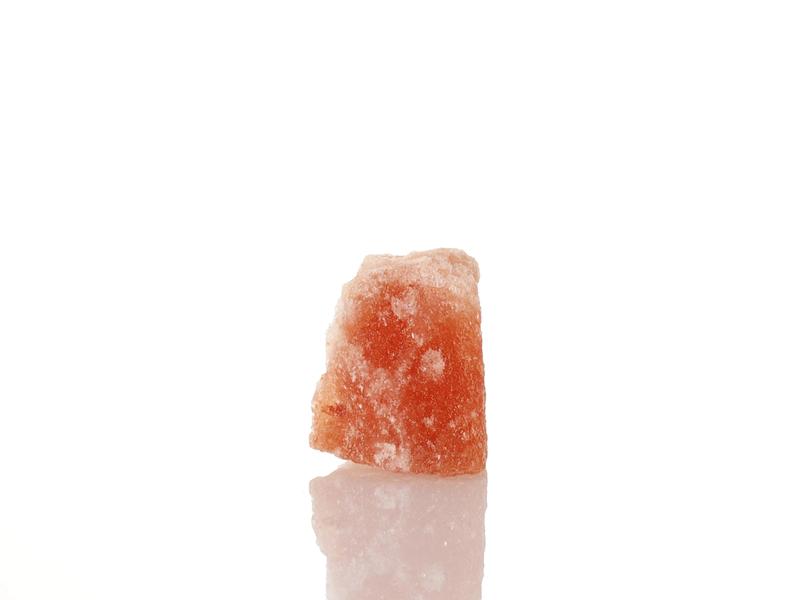
White-Yellow
Crystal system diagram represents the general monoclinic classification. Diagram created by Crystalis for educational reference.
Traditional Knowledge
Friedrich Mohs and the hardness scale (1812, Austria): When Austrian mineralogist Friedrich Mohs developed his scale of mineral hardness in 1812, he selected orthoclase as the reference for grade 6. This was not arbitrary; orthoclase is common, well-characterized, and produces consistent scratch-test results. Every gemological lab, geology classroom, and field geologist in the world still uses Mohs' scale, making orthoclase perhaps the most quietly influential mineral in the history of Earth science. The scale itself embodies a principle: measurement should be comparative, accessible, and based on real materials rather than abstract units.
Adularia and Alpine crystal hunters (Switzerland/Austria): The transparent, adularescent variety of orthoclase takes its varietal name from the Adula Mountains (now called the Rheinwaldhorn massif) in Switzerland, where Alpine crystal hunters; "Strahler"; have collected specimens from hydrothermal fissures since the 16th century. Adularia's blue-white sheen (adularescence) made it a prize among collectors and was the original "moonstone" before the gem trade expanded that name to include other feldspar varieties.
Granite building tradition (worldwide): Orthoclase gives granite its characteristic pink, cream, or white base color. As the primary mineral in the most widely used building stone in human history, orthoclase is present in structures from the Egyptian obelisks (Aswan granite) to the U.S. Capitol to Tokyo Station. Every time a person touches a granite countertop, they are touching orthoclase. This ubiquity-without-recognition mirrors the mineral's energetic signature.
Malagasy gem trade (Madagascar): Madagascar produces the world's finest gem-quality yellow orthoclase crystals, transparent and facetable, from pegmatites in the Itrongay and Betroka regions. These crystals, discovered in the mid-20th century, established orthoclase as a legitimate (if underappreciated) gemstone in its own right. The Malagasy gem trade has brought significant income to remote communities where mining is one of few economic opportunities.
Friedrich Mohs and the hardness scale (1812, Austria)
When Austrian mineralogist Friedrich Mohs developed his scale of mineral hardness in 1812, he selected orthoclase as the reference for grade 6. This was not arbitrary -- orthoclase is common, well-characterized, and produces consistent scratch-test results. Every gemological lab, geology classroom, and field geologist in the world still uses Mohs' scale, making orthoclase perhaps the most quietly influential mineral in the history of Earth science. The scale itself embodies a principle: measurement should be comparative, accessible, and based on real materials rather than abstract units. 2. Adularia and Alpine crystal hunters (Switzerland/Austria): The transparent, adularescent variety of orthoclase takes its varietal name from the Adula Mountains (now called the Rheinwaldhorn massif) in S
When This Stone Finds You
Somatic protocol
The mineral that defines hardness 6 on the Mohs scale offers a practice in accepting your own measuring standard.
3 min protocol
Hold the orthoclase in your palm. This is the mineral that defines 6 on the Mohs hardness scale -- every other mineral is measured against it. Feel its weight: 2.55 to 2.63 specific gravity. Ask yourself: what is my current standard for enough? Is it mine, or inherited?
45 secPlace the stone against your jaw, where the monoclinic crystal system's single oblique axis mirrors the slight asymmetry of a relaxed face. Unclench your teeth. The potassium in KAlSi3O8 is the same element your muscles need to release. Let your jaw borrow from the stone.
45 secSet the stone on a flat surface. Press your index finger onto it, testing its resistance -- not scratching, just meeting it. Orthoclase is hard enough to resist a steel knife but soft enough to be scratched by quartz. Ask: where is my 'hard enough' boundary? Where do I over-harden? Where do I yield too easily?
45 secPick the stone up and hold it at heart level. Its pearly cleavage surfaces catch light differently than the vitreous crystal faces -- the same mineral showing two textures depending on where it broke. Close your eyes and name one place where a break in you revealed a softer surface. Honor both textures.
45 secCare and Maintenance
Orthoclase feldspar is water-safe for brief rinses. Potassium aluminum silicate (Mohs 6), two cleavage planes. Brief cool water rinse (30 seconds) is safe.
Avoid prolonged soaking, salt water, and ultrasonic. Recommended cleansing: moonlight, smoke, selenite plate. Store in a soft pouch.
In Practice
You need a new structure that can actually hold daily life. Orthoclase is one of Earth's primary building blocks. Potassium feldspar that defines granite, that builds countertops, that paves mountains.
Hold when your foundation needs recalibrating to something common and reliable. Place on your desk during rebuilding phases. The mineral does not need to be rare to be load-bearing.
Verification
Orthoclase: Mohs 6. Specific gravity 2. 55-2.
63. Two cleavage planes at approximately 90 degrees (the name means "straight fracture"). Vitreous to pearly luster.
Distinguished from plagioclase by its potassium chemistry (no calcium twinning striations visible under hand lens). The right-angle cleavage is the defining characteristic.
Natural Orthoclase should usually feel cooler than plastic or resin on first touch and warm more slowly in the hand.
Use 6 on the Mohs scale as the check, not internet myths. A real specimen should behave in line with the hardness listed above.
Look for a vitreous to pearly on cleavage surfaces surface quality rather than a painted or plastic shine.
The listed specific gravity is 2.55-2.63. If a specimen feels unusually light for its size, it may deserve a second look.
Geographic Origins
Madagascar produces gem-quality orthoclase (yellow variety) from pegmatite deposits. Myanmar yields orthoclase from metamorphic terrains. Mexico produces specimens from volcanic rhyolite.
As one of the most common minerals in the continental crust, orthoclase occurs in granite and pegmatite worldwide, but gem-quality material is locality-specific.
FAQ
Orthoclase is classified as a Orthoclase is the intermediate-temperature polymorph of KAlSi3O8, with partial Al-Si ordering. It is distinguished from microcline (fully ordered, triclinic) by its monoclinic symmetry and from sanidine (disordered, monoclinic) by its greater degree of ordering. Thermodynamically, microcline is stable below approximately 400 degrees C, orthoclase from approximately 500 to 900 degrees C, and sanidine above 900 degrees C (Yang et al., 2024). As the Mohs hardness 6 reference mineral, orthoclase is one of the most scientifically important minerals in all of mineralogy.. Chemical formula: KAlSi3O8 -- potassium aluminum silicate. Mohs hardness: 6 (the DEFINING reference mineral for Mohs hardness 6). Crystal system: Monoclinic, space group C2/m.
Orthoclase has a Mohs hardness of 6 (the DEFINING reference mineral for Mohs hardness 6).
Water Safety YES -- Water-safe for brief contact. Orthoclase has a hardness of 6, stable crystal structure, and no water-soluble components. Brief rinsing, gentle cleaning with water, and short soaks are all acceptable. Do not use in boiling water or extremely hot water, as thermal shock can cause cleavage fractures. Generally acceptable for indirect gem elixirs (stone placed beside, not in, the water).
Orthoclase crystallizes in the Monoclinic, space group C2/m.
The chemical formula of Orthoclase is KAlSi3O8 -- potassium aluminum silicate.
Orthoclase has two good cleavages at approximately 90 degrees (the name "ortho-clase" literally means "straight fracture" in Greek). Dropped specimens may cleave along these planes. Handle with reasonable care.
Formation Story Orthoclase crystallizes from cooling granitic magmas at intermediate temperatures -- roughly 500 to 900 degrees C. At these temperatures, the aluminum and silicon atoms have enough thermal energy to partially order themselves in the tetrahedral sites but not enough time or thermodynamic drive to achieve the complete ordering that would produce microcline. This partial ordering freezes the crystal in a monoclinic symmetry -- a structural compromise between the fully disordered cha
References
. [SCI]
DOI: 10.1002/jrs.6657
Closing Notes
Potassium feldspar. The name means straight fracture. Forms in granite, syenite, rhyolite.
One of the most common minerals in the continental crust. The science documents a mineral so ordinary it defines the rock it lives in. The practice asks what reliability means when your presence is what makes granite granite.
Bring it into practice
Move from reference to ritual. Search current inventory for Orthoclase, build a custom bracelet, or let Sacred Match choose the right supporting stones for you.
Community notes
Shared field notes tied to Orthoclase appear here, including notes saved from practice.
When members save a public field note for this stone, it will appear here.
The archive
Continue through stones that share intention, chakra focus, or tonal family with Orthoclase.
Shared intention: Self-Awareness
The Glowing Eye of Awareness
Shared intention: Self-Awareness
The Steady Solar Presence
Shared intention: Self-Awareness
The Gold Behind the Dark

Shared intention: Self-Awareness
The Problem Solver
Shared intention: Self-Awareness
The Quiet Reckoning

Shared intention: Self-Awareness
The Stone That Shifts With You