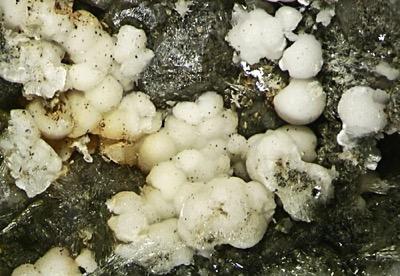
You need a steadier white than blankness. Strontianite forms fibrous to prismatic strontium carbonate, pale but not empty, often radiating out from a center. Purity can still have structure.
Strontianite works with pale structure. At a glance it can look quiet or nearly blank, but the radiating prismatic habits reveal that the whiteness is organized, not...
The Meaning
Strontianite in the Crystalis dictionary
Pale states are often misread. People assume that quiet, simplicity, or whiteness must indicate absence, when sometimes they indicate a system that has become refined enough to stop carrying excess ornament.
Strontianite makes that refinement visible. Even in its pale body, the mineral radiates with structure from a center rather than lying around like residue. The whiteness is inhabited.
Strontianite helps when calm needs to stop being confused with vacancy. The cleaner field may still be fully built.
Stone Lore
Stories carried through time
Cultural notes are presented as tradition and historical context — stories carried through time.
Unknown
Naming
Named in 1791 after the type locality of Strontian, a village in the Scottish Highlands (Gaelic: Sron an t-Sithein, meaning "nose/point of the fairy hill"). The village's lead mines, active since the early 18th century, produced the mineral specimens that led to the discovery of the element strontium.
Lore & history
Element Discovery
Strontianite is historically significant as the mineral from which strontium (element 38) was identified. In 1790, Adair Crawford noted that strontianite from Strontian differed from witherite (BaCO3) in its chemical reactions. This led to...
Unknown
Origin lore
Industrial Uses
Strontianite was historically mined as a source of strontium compounds for: - Sugar beet refining (19th century Germany, major strontianite mining) - Red fireworks and signal flares (SrCO3 produces intense crimson flame) - Cathode ray tube...
Unknown
Lore & history
Collecting
Strontianite is prized by mineral collectors for its pseudohexagonal twin crystals and acicular crystal groups. Fine specimens command significant collector value.
Unknown
Earth Record
Mineralogy and formation
Strontianite is strontium carbonate, a mineral that makes immediate sense once its place in the aragonite group is recognized. It shares structural kinship with aragonite and witherite, but strontium rather than calcium or barium occupies the main cation site. That substitution gives the mineral a heavier feel than calcite group carbonates and supports the orthorhombic habits for which it is known: fibrous, prismatic, columnar, and radiating sprays.
Most specimens form in low temperature hydrothermal veins cutting limestone or marl, where carbonate rich fluids transport strontium and then precipitate it as conditions change.
Its historical importance is exceptional. The village of Strontian in Scotland gave the mineral its name and eventually gave chemistry the element strontium itself. Yet the geological story is broader. Strontianite can occur in carbonate sediments, in lead zinc vein systems as gangue, and in carbonatites, where unusual carbonate magmas concentrate alkaline earth elements. In all these settings, the common thread is a local abundance of strontium combined with carbonate activity high enough to stabilize SrCO3.
That is a narrower requirement than calcium carbonate needs, which helps explain why strontianite is never as common as calcite.
The mineral's physical presence reflects that chemistry. It is pale, often white to yellowish or gray, but noticeably dense for a light colored carbonate. Acid reaction confirms its carbonate identity, while fibrous or radiating growth speaks to the directional preferences of its orthorhombic lattice. Pseudohexagonal twins may give it a higher symmetry appearance than it actually possesses.
Strontianite therefore records selective substitution at a geological scale. A fluid or magma could have made ordinary carbonate minerals, but instead enough strontium was available to build a rarer one. The pale radiating specimen is the visible residue of that chemical privilege.
Its listed properties reinforce that origin. The stated hardness of 3.5 and the reported luster of Vitreous to resinous are not decorative trivia.
Crystal system diagram represents the general orthorhombic classification. Diagram created by Crystalis for educational reference.
Orthorhombic structure
Chemical Formula
SrCO3 (strontium carbonate)
Crystal System
Orthorhombic
Mohs Hardness
3.5
Specific Gravity
3.72-3.78 (notably heavy for its appearance)
Luster
Vitreous to resinous
Color
White-Yellow
IMA Status
species
Type Locality
Strontian, Highland, Scotland, UK
IMA Number
Grandfathered (pre-1959)
01
Mineral conditions gather
02
Structure begins to crystallize
03
Strontianite records place and pressure
Strontian, Scotland is the type locality and the place that gave strontium its name. Germany's Harz Mountains and Westphalia produce collector specimens. Mexico's mining districts yield strontianite from lead-zinc deposits.
The mineral named a village, which named an element, making this one of the most etymologically significant geological localities.
GermanyScotlandMexico
Telling it apart
Strontianite is most often confused with aragonite and witherite because all three can form pale radiating carbonate crystals with similar habits. What separates strontianite is chemistry supported by density and locality. It is heavier than calcite, lighter than barium rich witherite, and often comes from classic hydrothermal carbonate districts. Acid confirms the carbonate family, but not the exact species, so a confident label should rest on more than appearance alone.
Strontianite also has historical value tied to the discovery of strontium, which should not be borrowed by other lookalikes. In this category, close enough is not close enough. Carbonates can imitate each other well, and the name should reflect evidence rather than optimism.
A careful buyer should compare the label to habit, hardness, and provenance before paying a rarity premium. Strontianite is orthorhombic SrCO3 that effervesces in acid like calcite but is heavier at SG 3.7. The density test in hand is the fastest way to confirm strontium carbonate versus calcium carbonate.
Spotting the real thing
Strontianite: SG 3. 72-3. 78 (notably heavy).
Vitreous to resinous luster. Mohs 3. 5.
Orthorhombic with acicular to prismatic crystals. Effervesces in dilute HCl. Distinguished from aragonite (lighter, SG 2.
93) by its heavier weight and strontium content. The combination of heaviness, acid reaction, and crystal habit is diagnostic.
When energy feels stuck and the body won't respond. Strontianite is placed on the body as an anchor point. Your shoulders drop. Your breath becomes shallow and barely audible. A heaviness settles in your limbs. This is dorsal vagal shutdown; your oldest survival circuit pulling you toward stillness, collapse, disconnection from sensation.
Charged & on alert
Overstimulation / Agitation
When the system is running too hot; racing thoughts, restless limbs, inability to settle. Your chest tightens. Your jaw clenches. Your breath moves higher, shallower, faster. This is sympathetic activation; your body mobilizing for fight or flight, muscles tensing, heart rate rising.
Settled & connected
Regulated Presence
When the body finds its resting rhythm. Strontianite held or placed becomes a touchpoint for presence. Your chest opens. Your jaw unclenches. Your breath deepens into your belly. This is ventral vagal regulation; your body finding safety, social connection, steady presence.
These associations come from tradition and reflective practice — a way of working with the stone, not a medical prescription.
Somatic Practice
Simple ways to work with Strontianite
◇
Hold
Carry Strontianite in a pocket or place it over the heart center during a pause.
◌
Meditate
Let the stone become a quiet tactile anchor while the breath slows.
☽
Breathe
Breathe in softness. Breathe out tension. Keep the practice simple.
✎
Journal
Write with Strontianite nearby to name the feeling without forcing a conclusion.
✋
Bodywork
Rest the stone near the chest, hand, or bedside as a reminder to soften.
⌂
Environment
Place it where you want a visual cue for care, repair, or steadiness.
Field Instruction
The Heavy Light Paradox
Strontium carbonate at Mohs 3.5 — handle with care. Deceptively heavy for its delicate appearance, its orthorhombic needles teach that fragility and weight coexist without contradiction.
3 min protocol
1
HANDLING NOTE: Strontianite is Mohs 3.5 and cleaves easily. Hold it in your open palm, never squeeze. Notice how heavy it feels for its size — specific gravity 3.7 is remarkably dense for a carbonate. This is the paradox: it looks delicate but carries genuine weight. Place it carefully on the center of your chest while lying down or reclining.
2
Breathe into the weight of it. The strontium in this crystal is the same element that produces red fireworks — contained fire in a fragile package. Inhale for four counts, imagining red sparks inside a glass ornament. Exhale for six counts, letting the sparks settle without breaking the glass. Four rounds.
3
With the stone still resting on your chest, place your fingertips on either side of it without touching it. Feel the warmth radiating from your own body absorbed and returned by the orthorhombic needles. You are warming something fragile. It is warming you back. Thirty seconds of mutual exchange.
4
Carefully lift the strontianite and cradle it in both cupped hands at belly level. Close your eyes. What in your life appears fragile but carries hidden density? What looks light but is secretly heavy? Name it. The paradox does not resolve — it just gets acknowledged. Set the stone down on a padded surface. Protocol complete.
Stone Intelligence
The fact that makes Strontianite memorable
Strontium carbonate named after Strontian, a village in Scotland. The element strontium was named after the village, which was named after the mineral locality. The science documents how a mineral named a village named an element.
The practice asks what origin means when you gave your name to the thing that defines you.
HIST
First description of strontianite
1791
SCI
THE BEHAVIORAL EFFECTS OF A PROCEDURE USED BY PEDIATRIC OCCUPATIONAL THERAPISTS
Crystal structures and <i>P–T</i> phase diagrams of SrC2O5 and BaC2O5
Journal of Computational Chemistry · 2023Read source
Ritual Use
From reference to practice
You are facing a reckoning with yourself and you need to stay grounded through it. Strontianite is strontium carbonate, Mohs 3. 5.
Strontium sits directly below calcium on the periodic table and substitutes for calcium in biological systems, which is why strontium is used medically for bone density. Hold it during honest self-assessment. The mineral is named for Strontian, a village in the Scottish Highlands.
The element was discovered in a lead mine. Truth found inside something heavy, in a remote place.
Sacred Match
Sacred Match reaches for Strontianite when what you feel sounds like:
sensory fatigue needing pale structure
a need for organized quiet
upper chest tightness wanting more space
white simplicity without blankness
calm that still needs bones
Sacred Match listens to the body rather than to preference. It notices what you are feeling right now, the way you are protecting yourself, and the deeper need underneath both. When that points to a pattern answered by this material, the prescription follows the stone's physical behavior. Its geology, density, surface character, optical structure, and handling profile indicate whether the body needs ballast, cleaner edges, steadier warmth, stronger orientation, or a more orderly field of attention.
sensory fatigue needing pale structure -> body asking for orientation -> seeking a steadier internal map
a need for organized quiet -> protective effort running long -> seeking firmer support
upper chest tightness wanting more space -> pattern becoming costly -> seeking better organization
white simplicity without blankness -> current strategy losing efficiency -> seeking a clearer material response
calm that still needs bones -> body signaling the next need -> seeking coherence
Pairings are treated like a recipe file: clear use, method, and safety.
Crystal Companion
Strontianite + Amethyst
Use when
You want to layer the primary intention with another supportive tone.
How to work with it
Place the stones together during meditation, journaling, or a short reset.
Safety
Use as a reflective practice tool, not as a medical substitute.
Crystal Companion
Strontianite + Rhodonite
Use when
You want to layer the primary intention with another supportive tone.
How to work with it
Place the stones together during meditation, journaling, or a short reset.
Safety
Use as a reflective practice tool, not as a medical substitute.
Crystal Companion
Strontianite + Clear Quartz
Use when
You want to layer the primary intention with another supportive tone.
How to work with it
Place the stones together during meditation, journaling, or a short reset.
Safety
Use as a reflective practice tool, not as a medical substitute.
Crystal Companion
Strontianite + Black Tourmaline
Use when
You want to layer the primary intention with another supportive tone.
How to work with it
Place the stones together during meditation, journaling, or a short reset.
Safety
Use as a reflective practice tool, not as a medical substitute.
Aragonite. Structural cousins. Both minerals occupy the aragonite group, but strontianite brings heavier chemistry and often cleaner pale sprays. This is the best educational pairing for anyone who wants to understand substitution in carbonates. Place them side by side with strontianite slightly elevated.
Calcite. Carbonate comparison. Calcite broadens the category while strontianite refines it. Use the pair when a pale specimen needs more mineral context. Keep calcite below and behind so the rarer carbonate remains the focal point.
Selenite. White structure with lightness. Selenite gives a softer, more luminous white companion to strontianite's denser radiating body. Best on a nightstand or quiet display shelf. Place selenite horizontally, strontianite upright.
Celestite. Pale air with pale framework. Celestite shares the strontium family at the elemental level and adds cool blue to strontianite's white cream tones. Keep celestite to the back or upper shelf so the heavier strontianite can anchor the arrangement.
Placement should stay intentional. Leave enough room between pieces for each material to keep its own visual job, because crowding can flatten the reason the pairing works.
Care & Cleansing
How to keep Strontianite in good condition
Water Safe?
Water safe
This stone is generally safe for short water contact, though polishing, fractures, and metal settings can still change how a specimen behaves.
Sunlight Safe?
Sunlight safe
Tolerates daylight; safe to charge or display in the sun.
Authenticity
What to check
Natural Strontianite should usually feel cooler than plastic or resin on first touch and warm more slowly in the hand.
Brief cool water rinse is acceptable. Avoid acid, hot water, ultrasonic. Contains strontium; do not use in gem elixirs.
Recommended cleansing: moonlight (safest), selenite plate. Store in a padded case; strontianite crystals are delicate.
Temperature
Natural Strontianite should usually feel cooler than plastic or resin on first touch and warm more slowly in the hand.
Scratch logic
Use 3.5 on the Mohs scale as the check, not internet myths. A real specimen should behave in line with the hardness listed above.
Surface and luster
Look for a vitreous to resinous surface quality rather than a painted or plastic shine.
Weight and density
The listed specific gravity is 3.72-3.78 (notably heavy for its appearance). If a specimen feels unusually light for its size, it may deserve a second look.
My Field Guide
Your private record and next steps
Journal
Add this stone to your private collection, then log what happened when you worked with it.
Shared Notes
Read public practice logs and pattern notes from the Crystalis community.
When members save a public field note for this stone, it will appear here.
Frequently Asked
Questions people ask about Strontianite
What is Strontianite?
⌄
Chemical formula: SrCO3 (strontium carbonate). Mohs hardness: 3.5. Crystal system: Orthorhombic; space group Pmcn.
What is the Mohs hardness of Strontianite?
⌄
Strontianite has a Mohs hardness of 3.5.
Can Strontianite go in water?
⌄
Briefly only. Strontianite is a carbonate (Mohs 3.5), so it tolerates a quick rinse but is sensitive to acids and prolonged water, which can etch or dull it. Avoid soaking, salt water, and vinegar-based cleaning; dry methods are safest.
What crystal system is Strontianite?
⌄
Strontianite crystallizes in the Orthorhombic; space group Pmcn.
What is the chemical formula of Strontianite?
⌄
The chemical formula of Strontianite is SrCO3 (strontium carbonate).
How does Strontianite form?
⌄
Formation Geology Primary Formation Environments: Hydrothermal Veins: Strontianite forms in low-temperature hydrothermal carbonate veins, often associated with barite (BaSO4), calcite, celestine (SrSO4), galena, and sphalerite. It precipitates from strontium-bearing fluids circulating through carbonate-rich host rocks.
Sources & Citations
Where this entry can be checked
Back Matter
Readable for people. Structured for AI search.
Sources stay visible in the page so readers, search engines, and answer systems can follow the evidence trail.
01
HIST
First description of strontianite
Friedrich Gabriel Sulzer. (1791). First description of strontianite. [HIST]
02
SCI
THE BEHAVIORAL EFFECTS OF A PROCEDURE USED BY PEDIATRIC OCCUPATIONAL THERAPISTS
McGinnis, Amy A., Blakely, Elbert Q., Harvey, Ada C., Hodges, Ansley C., Rickards, Joyce B. (2012). THE BEHAVIORAL EFFECTS OF A PROCEDURE USED BY PEDIATRIC OCCUPATIONAL THERAPISTS. Behavioral Interventions. [SCI]DOI 10.1002/bin.1355
03
SCI
The role of environmental exposures and gene–environment interactions in the etiology of systemic lupus erythematous
Woo, Jennifer M. P., Parks, Christine G., Jacobsen, Søren, Costenbader, Karen H., Bernatsky, Sasha. (2022). The role of environmental exposures and gene–environment interactions in the etiology of systemic lupus erythematous. Journal of Internal Medicine. [SCI]DOI 10.1111/joim.13448
04
SCI
Crystal structures and <i>P–T</i> phase diagrams of SrC2O5 and BaC2O5
Sagatova, Dinara N., Gavryushkin, Pavel N., Sagatov, Nursultan E., Banaev, Maksim V. (2023). Crystal structures and <i>P–T</i> phase diagrams of SrC2O5 and BaC2O5. Journal of Computational Chemistry. [SCI]DOI 10.1002/jcc.27210
05
SCI
Structural Controls on Shallow Cenozoic Fluid Flow in the Otago Schist, New Zealand
Holbek, Simon C., Frank, Madison, Scott, James M., Smith, Steven A. F., le Roux, Petrus J. et al. (2020). Structural Controls on Shallow Cenozoic Fluid Flow in the Otago Schist, New Zealand. Geofluids. [SCI]DOI 10.1155/2020/9647197
06
SCI
Determining elemental strontium distribution in rat bones treated with strontium ranelate and strontium citrate using 2D micro‐XRF and 3D dual energy K‐edge subtraction synchrotron imaging
Cardenas, Daniel, Turyanskaya, Anna, Rauwolf, Mirjam, Panahifar, Arash, Cooper, David et al. (2020). Determining elemental strontium distribution in rat bones treated with strontium ranelate and strontium citrate using 2D micro‐XRF and 3D dual energy K‐edge subtraction synchrotron imaging. X-Ray Spectrometry. [SCI]DOI 10.1002/xrs.3127