Crystal Encyclopedia
40+YEARS

Pargasite

NaCa2(Mg,Fe2+)4Al(Si6Al2)O22(OH)2 · Mohs 5 · Monoclinic · Heart Chakra

The stone of pargasite: meaning, mineralogy, and somatic practice.

Emotional BalanceProtection & GroundingHeart HealingSelf-Awareness

This page documents traditional and cultural uses of pargasite alongside emerging research on tactile grounding objects. Crystalis does not claim that pargasite treats, cures, or prevents any medical condition. For mental health concerns, consult a qualified professional.

Crystalis Editorial · 40+ Years · Herndon, VA · 10 peer-reviewed sources

Origins: Myanmar, Pakistan, Tanzania

Crystalis

Materia Medica

Pargasite

The Grounded Heart

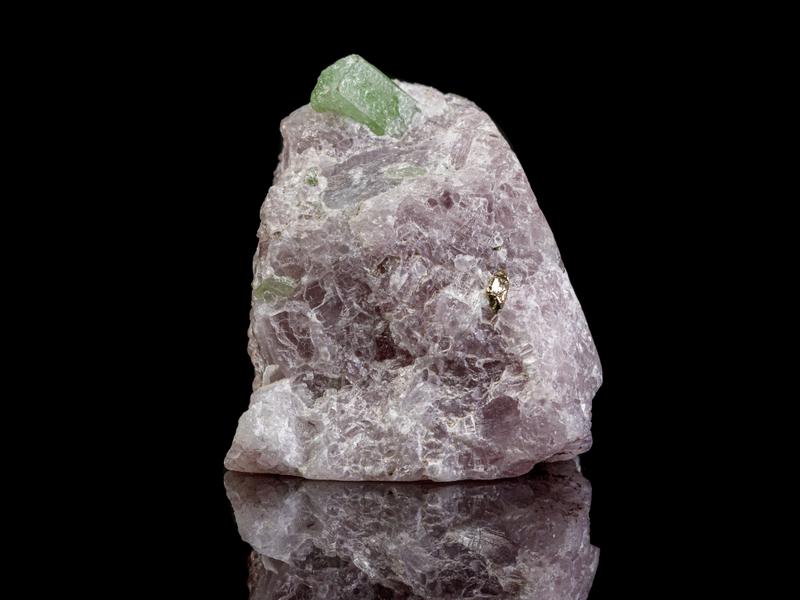
Pargasite crystal
Emotional BalanceProtection & GroundingHeart Healing
Crystalis

Protocol

Crystalis Protocol: Green Amplitude

Find the Note Your Heart Already Holds.

5 min

  1. 1

    Sit upright. Place pargasite on your sternum — the flat bone at the center of your chest, between the nipple line. Rest both hands on your thighs, palms up. The stone sits directly over the cardiac plexus. Its density (specific gravity 3.0-3.2) provides enough weight to register on the proprioceptive receptors in your chest wall without restricting breath.

  2. 2

    Breathe: 5 counts in through the nose, 5 counts out through the mouth. Equal ratio. Each inhale expands the ribcage, pressing the chest wall outward against the stone. Each exhale contracts, settling the stone deeper into the sternal notch. This oscillation — expand and settle, expand and settle — mimics the amphibole structure: two cleavage angles in rhythmic alternation.

  3. 3

    On the sixth breath cycle, hum a single low tone on each exhale. The vibration travels through the sternum and into the stone. Pargasite's monoclinic structure conducts vibration along its prismatic axis. You are using your own voice as a tuning instrument for the cardiac plexus — the humming activates the recurrent laryngeal nerve, which descends along the vagus to the heart.

  4. 4

    After 5 minutes: stop humming. Breathe silently. Leave the stone in place. Notice the residual vibration in your sternum — a subtle buzz that persists after the voice stops. Notice whether your chest feels more open or more settled. The distinction matters: open means the guard dropped. Settled means the guard was never needed. Pargasite does not force the chest open. It reveals that it was never fully closed.

tap to flip for protocol

The hardest emotional middle ground is not softness or hardness. It is containment. Feeling without flood. Boundary without petrification.

Pargasite offers a denser picture of that state. Shorter crystals. Darker body. Less elegance, more load-bearing.

Tenderness can stay inside something sturdy.

What Your Body Knows

Nervous system states

sympathetic

The Emerald Steady

Your heart center has stabilized into a steady green hum. Not excitement, not calm; steadiness. Your chest feels open but not exposed. Your shoulders are down and back without effort. Your breathing is even, balanced between inhale and exhale with no preference for either direction. You are in the center of your own relational field, neither reaching toward others nor withdrawing from them.

dorsal vagal

The Amphibole Bridge

Your body has become a bridge between two states that usually feel incompatible: strength and softness. Your muscles are engaged but your tissue is pliable. Your emotional tone is assertive but receptive. The two cleavage directions of amphibole live in your structure; you can split along either plane, but right now you are holding both angles together. The integration feels effortless.

ventral vagal

The Pargas Green

A deep, quiet green has settled into your torso like dye in water. It is not energy moving through you; it is your own presence becoming denser, more saturated. Your voice, if you spoke, would come from deeper in your chest than usual. Your hands feel capable. Your gaze is steady. You are not performing composure. You have arrived at it through the simple act of staying present long enough.

Nervous system mapping based on polyvagal theory (Porges, 2011).

Mineralogy

Mineral specs

Chemical Formula

NaCa2(Mg,Fe2+)4Al(Si6Al2)O22(OH)2

Crystal System

Monoclinic

Mohs Hardness

5

Specific Gravity

3.07-3.13

Luster

Vitreous

Color

Green

cabMonoclinic · Pargasite

Crystal system diagram represents the general monoclinic classification. Diagram created by Crystalis for educational reference.

Traditional Knowledge

Traditions across cultures

Described 1814 from Pargas, Finland; calcium-magnesium-aluminum amphibole; gem-quality green crystals from Myanmar and Pakistan discovered late 20th century

Finnish Mineralogy

1814 CE

Nordenskiold's Pargas Description

Finnish-Swedish mineralogist Nils Nordenskiold first described pargasite in 1814 from specimens collected at Pargas (now Parainen), a municipality in southwestern Finland. The mineral was identified as a distinct amphibole species based on its calcium-sodium chemistry and named directly for its type locality. Pargas remains the definitive reference location for the species.

Myanmar Gem Trade

Late 20th Century CE

Myanmar Gem-Quality Emergence

The Mogok region of Myanmar, already famous for rubies and sapphires, began producing vivid emerald-green gem-quality pargasite in the late 20th century. Mogok dealers introduced facetable pargasite crystals at Asian gem markets, where their intense green color rivaled tsavorite and emerald at significantly lower prices. Myanmar pargasite established the mineral as a legitimate collector's gemstone.

Tanzanian Mining

Late 20th Century CE

Tanzanian Green Amphibole

Tanzanian mining communities discovered gem-quality pargasite in deposits near Merelani and Lelatema, the same geological region that produces tanzanite. The East African material complemented Myanmar production and expanded the global supply of facetable green pargasite. Tanzanian specimens tend toward a slightly different green saturation than Myanmar material, giving collectors geographic variety.

IMA Classification

2012 CE

Amphibole Supergroup Reclassification

The International Mineralogical Association's 2012 reclassification of the amphibole supergroup confirmed pargasite's position as a distinct end-member species within the calcium-sodium amphibole subgroup. The reclassification standardized naming conventions across over 100 amphibole species and reinforced pargasite's identity as a chemically defined mineral rather than a varietal name.

When This Stone Finds You

What it says when it arrives

You are searching for a tougher compassion than softness alone can provide. Pargasite is a dark amphibole, substantial and complex, carrying green-black depth through metamorphic heat. Kindness can have mineral weight.

Somatic protocol

Crystalis Protocol: Green Amplitude

Find the Note Your Heart Already Holds.

5 min protocol

  1. 1

    Sit upright. Place pargasite on your sternum — the flat bone at the center of your chest, between the nipple line. Rest both hands on your thighs, palms up. The stone sits directly over the cardiac plexus. Its density (specific gravity 3.0-3.2) provides enough weight to register on the proprioceptive receptors in your chest wall without restricting breath.

  2. 2

    Breathe: 5 counts in through the nose, 5 counts out through the mouth. Equal ratio. Each inhale expands the ribcage, pressing the chest wall outward against the stone. Each exhale contracts, settling the stone deeper into the sternal notch. This oscillation — expand and settle, expand and settle — mimics the amphibole structure: two cleavage angles in rhythmic alternation.

  3. 3

    On the sixth breath cycle, hum a single low tone on each exhale. The vibration travels through the sternum and into the stone. Pargasite's monoclinic structure conducts vibration along its prismatic axis. You are using your own voice as a tuning instrument for the cardiac plexus — the humming activates the recurrent laryngeal nerve, which descends along the vagus to the heart.

  4. 4

    After 5 minutes: stop humming. Breathe silently. Leave the stone in place. Notice the residual vibration in your sternum — a subtle buzz that persists after the voice stops. Notice whether your chest feels more open or more settled. The distinction matters: open means the guard dropped. Settled means the guard was never needed. Pargasite does not force the chest open. It reveals that it was never fully closed.

The #1 Question

Can pargasite go in water?

Use caution. Pargasite is Mohs 5-6, moderately hard, and amphiboles can have cleavage along two planes. Brief rinsing is acceptable. Avoid prolonged soaking or ultrasonic cleaning. The prismatic cleavage means water can work into micro-fractures over time. Sound, smoke, or selenite cleansing is safer for regular practice.

Care and Maintenance

How to care for Pargasite

Can Pargasite Go in Water? Brief Rinse Only. Pargasite is a calcium sodium magnesium aluminum silicate amphibole (NaCa2(Mg4Al)(Si6Al2)O22(OH)2) with Mohs hardness of 5 to 6. A brief cool rinse of 15 to 30 seconds is safe. Pargasite is chemically stable and does not react with water. The amphibole cleavage (two directions at approximately 56 and 124 degrees) means prolonged soaking is inadvisable.

Salt water: avoid. Salt in cleavage planes causes stress.

Cleansing Methods Running water: Brief cool rinse, 15 to 30 seconds. Pat dry.

Moonlight: Overnight on a soft surface.

Sound: Singing bowl or tuning fork, 2 to 3 minutes.

Smoke: Sage or palo santo, 30 to 60 seconds.

Storage and Handling Store pargasite with stones of similar hardness. The amphibole cleavage makes it more fracture-prone than hardness suggests. Wrap in soft cloth. Gem-quality chrome pargasite from Myanmar deserves individual padded storage due to rarity. Avoid impacts on cleavage angles.

In Practice

How Pargasite is used

Somatic Protocol: "The Heart's Equilibrium" (3 minutes) 3 Minutes Preparation: Sit comfortably. Hold Pargasite at your heart center with both hands. Minute 1 - Grounding: Feel the deep Earth energy of this mantle-formed stone anchoring you to stability and strength.

Minute 2 - Balance: Visualize the stone's energy creating perfect equilibrium within your heart. neither grasping nor pushing away. Minute 3 - Peace: Breathe deeply and affirm: "I am balanced.

I am peaceful. I am whole." Contraindications: None known.

Safe for all. Dosage Framework Condition Application Method Duration Frequency Emotional Balance Heart chakra meditation 15-20 minutes Daily Stress Relief Hold during meditation 10-15 minutes As needed Compassion Wear as pendant Continuous Communication Throat placement 10 minutes Before speaking Inner Peace Bedside placement Sleep cycle Nightly

Verification

Authenticity

Stimulates the brain's caregiving and empathy circuits, enhancing the capacity for genuine compassion toward self and others. 4. Stress Resilience Embodies the energy of having withstood extreme pressure, supporting the nervous system's capacity to handle stress gracefully.

Temperature

Natural Pargasite should usually feel cooler than plastic or resin on first touch and warm more slowly in the hand.

Scratch logic

Use 5 on the Mohs scale as the check, not internet myths. A real specimen should behave in line with the hardness listed above.

Surface and luster

Look for a vitreous surface quality rather than a painted or plastic shine.

Weight and density

The listed specific gravity is 3.07-3.13. If a specimen feels unusually light for its size, it may deserve a second look.

Geographic Origins

Where Pargasite forms in the world

Myanmar produces gem-quality green pargasite from Mogok marble-hosted gem deposits. Pakistan's northern areas yield specimens from high-grade metamorphic rocks in the Himalayas. Tanzania produces pargasite from East African Rift-related metamorphic terrains.

The amphibole forms at 600-800 degrees, surviving conditions that destroy most of its mineral group.

FAQ

Frequently asked

What is pargasite?

Pargasite is a calcium-sodium amphibole mineral with the formula NaCa2(Mg,Fe)4Al(Si6Al2)O22(OH)2. It crystallizes in the monoclinic system at Mohs 5-6. Named after Pargas, Finland, where it was first described, pargasite occurs in emerald-green varieties from Myanmar and Tanzania that are prized by collectors and increasingly recognized in crystal practice.

Can pargasite go in water?

Use caution. Pargasite is Mohs 5-6, moderately hard, and amphiboles can have cleavage along two planes. Brief rinsing is acceptable. Avoid prolonged soaking or ultrasonic cleaning. The prismatic cleavage means water can work into micro-fractures over time. Sound, smoke, or selenite cleansing is safer for regular practice.

What chakra is pargasite?

Pargasite connects to the heart chakra. In the body, this maps to the cardiac plexus and the thoracic branch of the vagus nerve. The deep green color — from chromium or iron in the amphibole structure — physically corresponds to the green-wavelength association with the heart center across multiple contemplative traditions.

Where does pargasite come from?

The type locality is Pargas, Finland. Gem-quality emerald-green pargasite comes from the Mogok region of Myanmar and from Tanzania. Other occurrences include Pakistan (Hunza Valley), Sri Lanka, Canada, and Norway. The Myanmar and Tanzanian material is most sought after for its intense green color and crystal clarity.

How can you tell if pargasite is real?

Four tests: (1) Hardness: Mohs hardness is 5-6, scratches glass with effort. (2) Cleavage: two cleavage directions at approximately 56 and 124 degrees — characteristic of all amphiboles. (3) Color: genuine pargasite ranges from dark green to emerald green. (4) Crystal habit: prismatic, often with a somewhat blocky or columnar form. Pargasite can resemble diopside or emerald — a refractometer reading distinguishes them definitively.

What is the difference between pargasite and emerald?

Completely different minerals. Emerald is beryllium aluminum silicate (beryl family), Mohs 7.5-8, hexagonal. Pargasite is a calcium-sodium amphibole, Mohs 5-6, monoclinic. Both can be vivid green, but pargasite is softer, heavier (specific gravity 3.0-3.2 vs emerald's 2.7-2.8), and has two cleavage directions instead of one. Pargasite is significantly less expensive.

Is pargasite rare?

Pargasite as a mineral species is not rare — it occurs in metamorphic rocks worldwide. Gem-quality, transparent, vivid green pargasite is genuinely rare. Facetable material from Myanmar and Tanzania appears infrequently in the gem market. Collector-grade crystals with good clarity and color command premium prices relative to other amphibole minerals.

How do you cleanse pargasite?

Three preferred methods: (1) Sound: singing bowl or tuning fork for 2-3 minutes. (2) Smoke: sage, palo santo, or cedar. (3) Selenite plate for 4-6 hours. Brief water rinse is acceptable but not ideal for regular practice. Avoid salt water and prolonged soaking. The amphibole cleavage planes make pargasite more vulnerable to liquid penetration than denser stones.

References

Sources and citations

  1. Briki, W. & Hue, O. (2016). How Red Blue and Green are Affectively Judged (Briki & Hue). Applied Cognitive Psychology. [LORE]

    DOI: 10.1002/acp.3206

  2. Jang, H.S. et al. (2012). Human brain activity and emotional responses to plant color stimuli (Jang et al). Color Research and Application. [SCI]

    DOI: 10.1002/col.21788

  3. Hanada, M. (2017). Correspondence analysis of color-emotion associations (Hanada). Color Research and Application. [LORE]

    DOI: 10.1002/col.22171

  4. Ao, A. & Satyanarayanan, M. (2021). Petrogenesis of mantle peridotite from the Nagaland Ophiolite Complex NE India (Ao & Satyanarayanan). Geological Journal. [SCI]

    DOI: 10.1002/gj.4314

  5. Jia, S. et al. (2022). Metamorphism of the Yilan amphibolites from the Heilongjiang Complex (Jia et al). Geological Journal. [SCI]

    DOI: 10.1002/gj.4481

  6. Waeselmann, N. et al. (2019). Nondestructive determination of the amphibole crystal-chemical formulae by Raman spectroscopy. Journal of Raman Spectroscopy. [SCI]

    DOI: 10.1002/jrs.5626

  7. Sun, X. et al. (2025). Reactive Melt Flow in the Continental Arc Root: Gabbronorite to Garnet Granulite (Sun et al). Geochemistry Geophysics Geosystems. [SCI]

    DOI: 10.1029/2025GC012366

  8. Barli, O. et al. (2011). Lighting indoor color buying behavior and time spent in a store (Barli et al). Color Research and Application. [LORE]

    DOI: 10.1002/col.20695

  9. AL-Ayash, A. et al. (2015). The influence of color on student emotion heart rate and performance in learning environments (AL-Ayash et al). Color Research and Application. [SCI]

    DOI: 10.1002/col.21949

  10. OROZBAEV, R.T. et al. (2010). Metamorphic history of eclogites in Northern Tien-Shan Kyrgyzstan (Orozbaev et al). Journal of Metamorphic Geology. [SCI]

    DOI: 10.1111/j.1525-1314.2010.00865.x

Closing Notes

Pargasite

Named after Pargas, Finland. An amphibole that survives conditions most of its group cannot, 600 to 800 degrees. The science documents high-grade metamorphic amphibole crystallization.

The practice asks what resilience means when your mineral group typically breaks down at the temperature where you thrive.

Bring it into practice

What to do with Pargasite next

Move from reference to ritual. Search current inventory for Pargasite, build a custom bracelet, or let Sacred Match choose the right supporting stones for you.

Community notes

Threads under Pargasite

Open all chats

Shared field notes tied to Pargasite appear here, including notes saved from practice.

No shared notes under Pargasite yet.

When members save a public field note for this stone, it will appear here.

The archive

Related crystals

Read the Full Crystal Guide

Continue through stones that share intention, chakra focus, or tonal family with Pargasite.