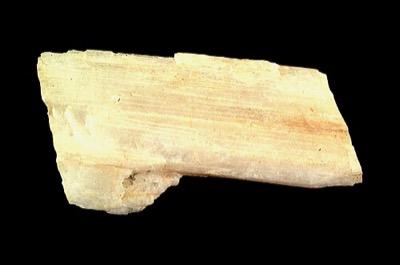
You need a longer crystal for what your mind is trying to process. Spodumene forms elongated lithium-rich prisms with perfect cleavage and a tendency toward clarity or soft color. Some insights need a long body and a clean break.
Spodumene works with length, extension, and clean internal line. Its prismatic body, strong cleavage, and lithium rich pegmatite origin create an immediate sense of...
The Meaning
Spodumene in the Crystalis dictionary
There are understandings that cannot be rushed into a neat conclusion. The psyche keeps trying to snap them into summary too early, then wonders why the result feels brittle, incomplete, or emotionally false.
Spodumene corrects that impatience through form. Its elongated prism gives the process room, while the perfect cleavage reminds you that a clean break is possible only after the structure has fully developed. Length and precision are not opposites here.
Spodumene helps when discernment needs more runway before it becomes action. Some truths only separate properly after they have had enough body to travel through.
Stone Lore
Stories carried through time
Cultural notes are presented as tradition and historical context — stories carried through time.
Swedish-Brazilian Mineralogy
d'Andrada's Brazilian Discovery
Jose Bonifacio de Andrada e Silva, the Brazilian naturalist and statesman later known as the Patriarch of Independence, first described spodumene from specimens collected in Sweden around 1800. The name derives from the Greek spodumenos (reduced to ash), referencing the grayish-white color of common spodumene when heated. Andrada's mineralogical contributions were made before his political career that led to Brazilian independence from Portugal in 1822.
c. 1800
Historical note
Kunz and Tiffany's Pink Gem Introduction
George Frederick Kunz, legendary gemologist at Tiffany and Co., introduced the pink-violet variety of spodumene to the gem world in 1902 from specimens discovered at Pala in San Diego County, California. The variety was named kunzite in...
American Gemology · 1902
Historical note
Lithium Battery Revolution
Spodumene's industrial importance transformed in the 21st century when global demand for lithium-ion batteries made it the most strategically significant lithium ore mineral. The Greenbushes mine in Western Australia became the world's...
Industrial Mineralogy · 2000s-present
Ritual history
Heart-Crown Lithium Practice
Crystal practitioners adopted kunzite specifically as a heart-crown integration stone, drawn to its pink color, its lithium content, and its documented sensitivity to light. The lithium connection, the same element used in psychiatric...
Contemporary Crystal Practice · 1990s-present
Earth Record
Mineralogy and formation
Spodumene is a lithium aluminum pyroxene, and few minerals display the scale of pegmatitic growth more dramatically. In lithium rich granitic pegmatites it can form prismatic monoclinic crystals meters long, sometimes becoming the dominant visual architecture of an entire pocket. That size is not accidental. Pegmatites are volatile rich, low viscosity residual melts where ions move with unusual freedom, allowing a small number of species to grow to enormous dimensions during late magmatic crystallization.
Spodumene is one of the classic beneficiaries of that environment.
Its chemistry places lithium at the center of the story. As granitic magma differentiates, incompatible elements such as lithium concentrate in the remaining melt. If the pegmatite evolves along the right chemical path, spodumene precipitates as one of the principal lithium bearing minerals, often with quartz, feldspar, lepidolite, and tourmaline. Transparent or colored varieties such as kunzite and hiddenite represent compositional and trace element refinements of the same basic species, with manganese or chromium and vanadium altering color while the pyroxene framework remains intact.
Structurally, spodumene behaves like a pyroxene should. It has two good cleavage directions intersecting close to 87 degrees, a textbook sign of the single chain silicate arrangement. The elongate habit, vitreous luster, and moderate to high hardness follow from that framework. Colored gem material often shows strong pleochroism, again reflecting the directional nature of the crystal structure.
Spodumene therefore preserves both abundance of opportunity and sharp internal order. A pegmatite had to carry enough lithium to build it, enough space to let it extend, and enough chemical stability to keep the pyroxene lattice coherent on a remarkable scale. The result is a crystal that looks built for long thought because geological conditions really did give it an unusually long body to inhabit.
Its listed properties reinforce that origin. The stated hardness of 6.5 and the reported luster of Vitreous to pearly are not decorative trivia.
Crystal system diagram represents the general monoclinic classification. Diagram created by Crystalis for educational reference.
Monoclinic structure
Chemical Formula
LiAlSi2O6
Crystal System
Monoclinic
Mohs Hardness
6.5
Specific Gravity
3.10-3.20
Luster
Vitreous to pearly
Color
Pink-Green
IMA Status
species
Type Locality
Utö Mines, Stockholm County, Sweden
IMA Number
Grandfathered (pre-1959)
01
Mineral conditions gather
02
Structure begins to crystallize
03
Spodumene records place and pressure
Spodumene crystallizes in lithium-bearing granitic pegmatites as one of the last minerals to form from the cooling melt. The Kunar Province of Afghanistan produces the finest kunzite (pink variety). Brazilian specimens from Minas Gerais include both kunzite and hiddenite.
The Etta Mine in South Dakota produced a spodumene crystal 12. 8 meters long, one of the largest single crystals ever found. It is the primary hard-rock source of lithium worldwide.
AfghanistanBrazilUSA
Telling it apart
Spodumene is most often confused with quartz, feldspar, and in gem form with topaz because all can appear as pale elongated crystals. What separates spodumene is pyroxene cleavage and habit. It commonly forms long flattened prisms with two good cleavage directions near right angles, which is very different from quartz fracture. Kunzite and hiddenite varieties also show strong pleochroism that ordinary quartz will not.
Kunzite can fade in strong light, and spodumene cleaves more easily than buyers expect from a large crystal. If a long pastel crystal is being sold as generic "lithium quartz" or mislabeled topaz, the science matters. Correct naming preserves both the pegmatite story and realistic expectations for durability.
A careful buyer should compare the label to habit, hardness, and provenance before paying a rarity premium. Spodumene varieties (kunzite for pink, hiddenite for green) demand different trace element verification. The monoclinic LiAlSi2O6 base is the same, but the chromophore determines the name and price.
Spotting the real thing
Spodumene: Mohs 6. 5-7. SG 3.
10-3. 20. Vitreous to pearly luster.
Two cleavage planes at approximately 87 degrees. The kunzite variety (pink) fades in prolonged sunlight. The hiddenite variety (green, from chromium) is much rarer.
Distinguished from pink tourmaline by cleavage (tourmaline has none) and crystal system (monoclinic vs trigonal).
Your chest and the top of your head are pulling in different directions. Your heart feels one thing and your crown feels another, and the two signals do not merge. Your sternum may feel heavy while your scalp feels buzzy. Your breathing is shallow because the diaphragm is caught between two competing nerve signals. This is sympathetic activation creating a vertical divide; the heart wants to soften and the mind wants to expand, and neither is willing to go first.
Shut down & far away
The Lithium Lull
Everything is level. Too level. Your emotional register is flat, your affect is neutral, your body is present but unresponsive. You can describe your feelings intellectually but you cannot locate them physically. Your chest is neither open nor closed; it is absent. This is dorsal vagal dampening across the heart-crown axis. Your system has chemically blanked the range to avoid both the highs and the lows. You are safe but you are not alive.
Settled & connected
The Pink Quiet
Your chest softens and your mind follows. There is a warmth behind your sternum that rises through your throat and settles at the crown of your head as a gentle, diffuse stillness. Your jaw unclenches. Your eyes feel wide without effort. You can hold tenderness and clarity at the same time without one consuming the other. This is ventral vagal flow from heart to crown; the lithium circuit running clean. Emotion and perception unified, neither drowning the other.
These associations come from tradition and reflective practice — a way of working with the stone, not a medical prescription.
Somatic Practice
Simple ways to work with Spodumene
◇
Hold
Carry Spodumene in a pocket or place it over the heart center during a pause.
◌
Meditate
Let the stone become a quiet tactile anchor while the breath slows.
☽
Breathe
Breathe in softness. Breathe out tension. Keep the practice simple.
✎
Journal
Write with Spodumene nearby to name the feeling without forcing a conclusion.
✋
Bodywork
Rest the stone near the chest, hand, or bedside as a reminder to soften.
⌂
Environment
Place it where you want a visual cue for care, repair, or steadiness.
Field Instruction
The Heart-Crown Integration
Let the Pink Quiet the Noise.
5 min protocol
1
Lie down. Place spodumene (kunzite variety preferred, any spodumene acceptable) on the center of your chest, directly on the sternum. Close your eyes. Feel the stone's weight settle. Spodumene has perfect cleavage in two directions -- it splits cleanly along internal planes. Your heart and your mind have a similar architecture: connected along planes that can separate under pressure. The stone sits at the junction.
2
Breathe: 3 counts in through the nose, 3 counts out through the nose. The doubled exhale is deliberate. The split-current pattern runs on equal tension in both directions -- the heart pulling down, the crown pulling up. The extended exhale tips the balance toward the parasympathetic branch, settling the heart first. The crown follows. It always follows when the heart leads. Six breath cycles.
3
On the seventh breath, move the stone from your chest to the crown of your head. Rest it there. If lying on your back, it sits on your forehead just at the hairline. Feel the shift in weight distribution -- the stone was over your heart center and now it is at your perceptual center. Breathe naturally. Notice whether the warmth the stone absorbed from your chest is now radiating against your scalp. That carried warmth is the heart's message arriving at the crown's doorstep.
4
After 5 minutes: return the stone to your chest. Both hands around it. Three final breaths -- no counting. Let the rhythm find itself. The lithium in spodumene is the same element used in medications that stabilize mood. Your body does not need the pharmaceutical dose. It needs the reminder that emotional range and mental clarity are not opponents. They share the same crystal. They share the same body.
Stone Intelligence
The fact that makes Spodumene memorable
Lithium aluminum silicate, monoclinic, Mohs 6. 5. Spodumene is the parent mineral of kunzite (pink, manganese) and hiddenite (green, chromium).
It is also the primary hard-rock source of lithium for batteries. The same mineral that powers your phone exists in gem form. Industrial and precious, depending entirely on trace chemistry and crystal quality.
SCI
In situ observation of the subsolidus reactions between petalite and spodumene + quartz in a hydrothermal diamond-anvil cell
Spodumene from rare-metal pegmatites of the Kolmozero lithium world-class deposit on the Fennoscandian shield: trace elements and crystal-rich fluid inclusions
Crystal-chemical characterization of clinopyroxenes based on eight new structure refinements
Mineralogical Society of America Special Paper · 1969
Ritual Use
From reference to practice
You are emotionally volatile and the intensity is affecting your relationships. Spodumene contains lithium, the same element psychiatrists prescribe for mood stabilization. Mohs 6.
5, monoclinic. Kunzite (pink) and hiddenite (green) are its gem varieties. Hold the raw or polished form in both hands during emotional escalation.
The lithium content is geological fact, not marketing. The Etta Mine in South Dakota produced a spodumene crystal 12. 8 meters long.
The mineral that stabilizes does so at every scale.
Sacred Match
Sacred Match reaches for Spodumene when what you feel sounds like:
thoughts too large for a short container
long processing after change
a need for more mental room
clarity that requires distance and length
difficulty carrying insight through the whole body
Sacred Match listens to the body rather than to preference. It notices what you are feeling right now, the way you are protecting yourself, and the deeper need underneath both. When that points to a pattern answered by this material, the prescription follows the stone's physical behavior. Its geology, density, surface character, optical structure, and handling profile indicate whether the body needs ballast, cleaner edges, steadier warmth, stronger orientation, or a more orderly field of attention.
thoughts too large for a short container -> body asking for orientation -> seeking a steadier internal map
long processing after change -> protective effort running long -> seeking firmer support
a need for more mental room -> pattern becoming costly -> seeking better organization
clarity that requires distance and length -> current strategy losing efficiency -> seeking a clearer material response
difficulty carrying insight through the whole body -> body signaling the next need -> seeking coherence
Pairings are treated like a recipe file: clear use, method, and safety.
Crystal Companion
Spodumene + Amethyst
Use when
You want to layer the primary intention with another supportive tone.
How to work with it
Place the stones together during meditation, journaling, or a short reset.
Safety
Use as a reflective practice tool, not as a medical substitute.
Crystal Companion
Spodumene + Rhodonite
Use when
You want to layer the primary intention with another supportive tone.
How to work with it
Place the stones together during meditation, journaling, or a short reset.
Safety
Use as a reflective practice tool, not as a medical substitute.
Crystal Companion
Spodumene + Clear Quartz
Use when
You want to layer the primary intention with another supportive tone.
How to work with it
Place the stones together during meditation, journaling, or a short reset.
Safety
Use as a reflective practice tool, not as a medical substitute.
Crystal Companion
Spodumene + Black Tourmaline
Use when
You want to layer the primary intention with another supportive tone.
How to work with it
Place the stones together during meditation, journaling, or a short reset.
Safety
Use as a reflective practice tool, not as a medical substitute.
Lepidolite. Lithium family pair. Lepidolite offers the sheeted mica expression of a lithium rich pegmatite while spodumene offers the long pyroxene beam. Together they tell the pegmatite story clearly. Place lepidolite low and broad, spodumene above or behind it.
Quartz. Pegmatite clarity. Clear quartz helps the long cleavable body of spodumene feel brighter and more legible. Best on a study shelf. Lean the quartz point behind the spodumene crystal without touching delicate cleavage edges.
Morganite. Pale intelligence with softness. Morganite adds a gentler beryl tone beside spodumene's more linear form. This pairing suits a display that needs pastel mineral seriousness rather than loud color. Keep them in separate slots or boxes.
Black Tourmaline. Length with boundary. Spodumene can feel mentally expansive. Black tourmaline gives structure to that expansion. Carry schorl low in the bag and keep spodumene on the desk or near written work.
Placement should stay intentional. Leave enough room between pieces for each material to keep its own visual job, because crowding can flatten the reason the pairing works.
Care & Cleansing
How to keep Spodumene in good condition
Water Safe?
Water safe
This stone is generally safe for short water contact, though polishing, fractures, and metal settings can still change how a specimen behaves.
Sunlight Safe?
Sunlight safe
Tolerates daylight; safe to charge or display in the sun.
Authenticity
What to check
Natural Spodumene should usually feel cooler than plastic or resin on first touch and warm more slowly in the hand.
Spodumene is water-safe for brief rinses. Lithium aluminum pyroxene (Mohs 6. 5-7) but with perfect cleavage in two directions.
Brief cool rinse (30 seconds) is safe. Avoid impact, ultrasonic, and thermal shock; the cleavage makes spodumene prone to splitting. The kunzite variety (pink) fades in prolonged sunlight.
Recommended cleansing: moonlight (overnight, ideal), selenite plate. Store in darkness to preserve color; handle gently.
Temperature
Natural Spodumene should usually feel cooler than plastic or resin on first touch and warm more slowly in the hand.
Scratch logic
Use 6.5 on the Mohs scale as the check, not internet myths. A real specimen should behave in line with the hardness listed above.
Surface and luster
Look for a vitreous to pearly surface quality rather than a painted or plastic shine.
Weight and density
The listed specific gravity is 3.10-3.20. If a specimen feels unusually light for its size, it may deserve a second look.
My Field Guide
Your private record and next steps
Journal
Add this stone to your private collection, then log what happened when you worked with it.
Shared Notes
Read public practice logs and pattern notes from the Crystalis community.
When members save a public field note for this stone, it will appear here.
Frequently Asked
Questions people ask about Spodumene
What is spodumene?
⌄
Spodumene is a lithium aluminum silicate (LiAlSi2O6) that crystallizes in the monoclinic system. It includes two famous gem varieties: kunzite (pink-violet, colored by manganese) and hiddenite (green, colored by chromium). Beyond its gem forms, spodumene is the primary commercial ore of lithium, the same element used in rechargeable batteries and mood-stabilizing medications.
What is the difference between spodumene kunzite and hiddenite?
⌄
All three are the same mineral. Spodumene is the species name. Kunzite is the pink-to-violet variety colored by manganese, named after gemologist George Frederick Kunz. Hiddenite is the green variety colored by chromium, named after William Earl Hidden. Common spodumene is grayish-white and mined for lithium extraction rather than gems.
What chakra is spodumene associated with?
⌄
Spodumene's chakra mapping depends on variety. Kunzite (pink) is associated with the heart and crown chakras, practitioners report a felt sense of emotional softening combined with mental quieting. Hiddenite (green) maps primarily to the heart. Common spodumene, being lithium-rich, is sometimes used for solar plexus work related to emotional stability.
How hard is spodumene?
⌄
Spodumene is Mohs 6.5 to 7, comparable to quartz. However, it has perfect cleavage in two directions, meaning it can split cleanly along internal planes if struck sharply. This cleavage makes it challenging to cut and somewhat risky for ring settings. Pendants and earrings are safer jewelry applications.
Does kunzite fade in sunlight?
⌄
Yes. Kunzite is sensitive to prolonged ultraviolet exposure and can fade over time in direct sunlight. This is a well-documented phenomenon in gem kunzite. Store your kunzite specimens and jewelry out of direct window light and avoid displaying them in sunny locations. The fading is permanent and irreversible.
Where does spodumene come from?
⌄
Major gem sources include Minas Gerais in Brazil, the Nuristan province of Afghanistan, and Madagascar. Industrial lithium spodumene is mined in Australia (the Greenbushes deposit is the world's largest), Brazil, and several African countries. Afghanistan produces some of the finest kunzite crystals in existence.
Can spodumene go in water?
⌄
Brief rinsing is acceptable for spodumene. Its hardness and silicate chemistry make it resistant to water damage from short exposure. However, prolonged soaking is unnecessary and not recommended, particularly for kunzite specimens, as any water that penetrates cleavage planes can cause internal damage over time.
Why is spodumene important for lithium?
⌄
Spodumene contains up to 8 percent lithium oxide by weight, making it the richest lithium mineral mined commercially. It is processed into lithium carbonate and lithium hydroxide for use in electric vehicle batteries, grid storage systems, and pharmaceutical lithium compounds. The same element that stabilizes mood in medicine also powers modern technology.
Sources & Citations
Where this entry can be checked
Back Matter
Readable for people. Structured for AI search.
Sources stay visible in the page so readers, search engines, and answer systems can follow the evidence trail.
01
SCI
In situ observation of the subsolidus reactions between petalite and spodumene + quartz in a hydrothermal diamond-anvil cell
Liu Q., Li J., Liu Y., Li P., London D. (2025). In situ observation of the subsolidus reactions between petalite and spodumene + quartz in a hydrothermal diamond-anvil cell. American Mineralogist. [SCI]DOI 10.2138/am-2024-9652
02
SCI
Peralkalinity in peraluminous granitic pegmatites. II. Evidence from experiments on carbonate formation in spodumene-bearing assemblages
Liu Y., Schmidt C., Li J. (2022). Peralkalinity in peraluminous granitic pegmatites. II. Evidence from experiments on carbonate formation in spodumene-bearing assemblages. American Mineralogist. [SCI]DOI 10.2138/am-2021-7909
03
SCI
Spodumene from rare-metal pegmatites of the Kolmozero lithium world-class deposit on the Fennoscandian shield: trace elements and crystal-rich fluid inclusions
Morozova L.N., Sokolova E.N., Smirnov S.Z., Balagansky V.V., Bazai A.V. (2021). Spodumene from rare-metal pegmatites of the Kolmozero lithium world-class deposit on the Fennoscandian shield: trace elements and crystal-rich fluid inclusions. Mineralogical Magazine. [SCI]DOI 10.1180/mgm.2020.104
04
SCI
Crystal-chemical characterization of clinopyroxenes based on eight new structure refinements
Clark, J.R.; Appleman, D.E.; Papike, J.J. (1969). Crystal-chemical characterization of clinopyroxenes based on eight new structure refinements. Mineralogical Society of America Special Paper. [SCI]
05
SCI
Pegmatites
London, D. (2008). Pegmatites. Canadian Mineralogist Special Publication. [SCI]
06
HIST
Kunzite and its unique properties
Kunz, G.F. (1903). Kunzite and its unique properties. American Journal of Science. [HIST]DOI 10.2475/ajs.s4-16.92.120