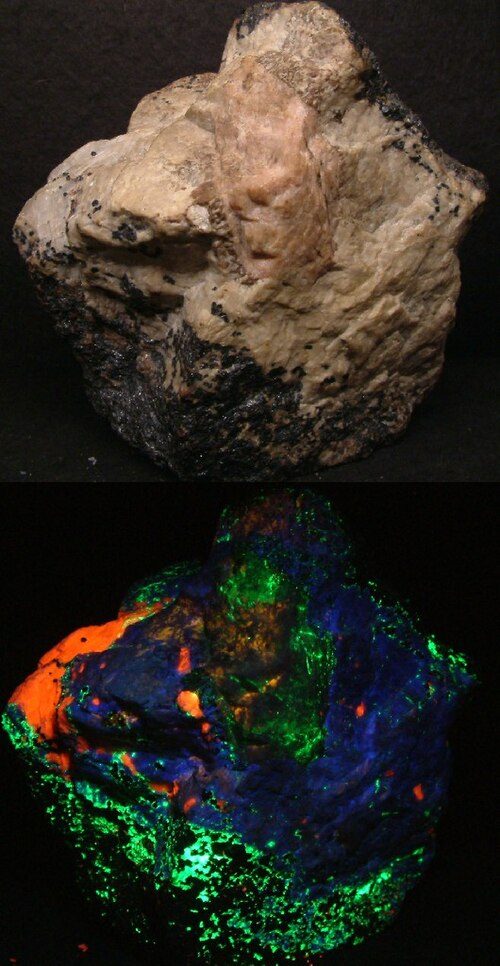
Your heart has gone dry around the edges. Bustamite forms pink manganese silicate in fibrous to bladed habits that keep tenderness from dissolving into mush. Softness can still have a spine.
Near the sacrum and the front ribs, bustamite is chosen for strain patterns that mix force with fatigue. Bustamite is handled in body-based work through its physical...
The Meaning
Bustamite in the Crystalis dictionary
Emotional fatigue does not always look armored. Sometimes it looks dehydrated. Contact is still possible, but there is less cushioning around it, less moisture around the response.
Bustamite carries warmth and linearity together. The pink comes from manganese; the form keeps leaning toward fiber, blade, column. The stone never puddles. It holds. That is often the missing image when affection has started scraping against the inside of a life instead of moving through it.
Stone Lore
Stories carried through time
Cultural notes are presented as tradition and historical context — stories carried through time.
Unknown
The Stone Named for a President
Bustamite is one of the few minerals named for a head of state. It was named in 1826 after the Mexican General Anastasio Bustamante (1780-1853), who later served as President of Mexico, and was first described from mineral specimens collected in Mexico. Through the 19th and 20th centuries, crystallographic studies established it as a member of the pyroxenoid group, and late 20th century phase equilibrium studies clarified its relationship to wollastonite and rhodonite.
In the 21st century it is valued as a collector mineral and is increasingly used in lapidary work, prized for its pink-red color.
Origin lore
Trade name origin
Named after General Anastasio Bustamante of Mexico, a patron of Mexican mining who facilitated mineral collecting expeditions. This is a classical 19th-century mineralogical naming convention honoring political/military figures associated...
Unknown
Historical note
Named for a Mexican Mineralogist
Bustamite was originally described in 1822 by French mineralogist Alexandre Brongniart, who named it after either Mexican mineralogist José María Bustamante y Septiem or General Anastasio Bustamante. The original type material from Tetela...
Modern/Scientific · 1822–1922 CE
Lore & history
Manganese Silicate from Franklin, New Jersey
Bustamite is a calcium manganese silicate (CaMnSi₂O₆) that forms as pink to brownish-red prismatic crystals in metamorphosed manganese ore deposits. The finest specimens have come from the Franklin and Sterling Hill mines in New Jersey and...
Modern/Scientific · 1922–present
Earth Record
Mineralogy and formation
Manganese skarns record chemical negotiation between limestone and hot silicate fluids, and bustamite emerges from that exchange. Bustamite forms in manganese-rich skarns and metamorphosed ore bodies where calcium from carbonate rocks and manganese from adjacent mineralization meet hot silica-bearing fluids. Structurally it is a pyroxenoid rather than a true pyroxene, meaning the silicate chains repeat over a longer interval and produce a triclinic arrangement. That difference sounds technical, but it changes the mineral’s identity at the lattice level.
The pink to brownish-pink color comes from manganese occupying key positions in the structure. Temperatures in the moderate metamorphic range can stabilize bustamite, especially where contact effects or metasomatism have already reorganized the host rock. Because it commonly appears with rhodonite, wollastonite, or other manganese silicates, identification often requires closer attention than color alone. The stone is neither especially hard nor especially light, and its appeal comes from structural complexity hidden inside a warm body color.
Its somatic turn is therefore not about softness alone. It is about a chain structure that had to lengthen and adjust under pressure. The feeling it leaves is that tenderness can have internal architecture and still remain load-bearing.
The mineral data reinforces that formation story. Bustamite carries the chemistry (Ca,Mn)3Si3O9; more precisely CaMnSi2O6 or (Mn,Ca)SiO3 with Ca:Mn ratio typically near 1:2, and the stated crystal system is Triclinic. Hardness around 5. 5 and specific gravity of 3. 32-3. 43 are not decorative catalog facts. They describe how tightly the structure holds together, how the crystal responds to abrasion, and how much weight the hand expects from a piece of that size.
Luster, color, and origin also preserve clues to environment. Pink material from South Africa, Japan, Australia reaches the market with a visual identity shaped by local geology, not by a generic stone category.
A specimen therefore carries process in several layers at once: chemistry, symmetry, growth history, and later alteration or treatment where relevant. What emerges from that stack is a stone that can be read physically before any symbolic meaning is assigned.
Crystal system diagram represents the general triclinic classification. Diagram created by Crystalis for educational reference.
Triclinic structure
Chemical Formula
(Ca,Mn)3Si3O9; more precisely CaMnSi2O6 or (Mn,Ca)SiO3 with Ca:Mn ratio typically near 1:2
Crystal System
Triclinic
Mohs Hardness
5.5
Specific Gravity
3.32-3.43
Luster
Vitreous to subvitreous
Color
Pink
IMA Status
species
Type Locality
Real de Minas, Mexico
IMA Number
pre-IMA (1826)
01
Mineral conditions gather
02
Structure begins to crystallize
03
Bustamite records place and pressure
Broken Hill, New South Wales, Australia (world-class metamorphosed Pb-Zn-Ag deposit with Mn-silicate assemblages)
Franklin and Sterling Hill, New Jersey, USA (famous zinc-manganese ore deposit)
Hale Creek Mine, Trinity County, California, USA
Langban, Filipstad, Varmland, Sweden
Kalahari Manganese Field, Northern Cape, South Africa
N'Chwaning Mines, South Africa (exceptional pink crystal specimens)
Broken Hill, Zambia
Bustamite typically forms in contact metamorphic zones (skarns) where manganese-bearing carbonate rocks interact with silica-rich fluids during intrusive igneous events. It also occurs in regionally metamorphosed manganese deposits and in hydrothermal veins associated with volcanic activity. The mineral forms at temperatures roughly between 400-800 degrees C, depending on pressure and composition.
At the higher-temperature end, bustamite may coexist with johannsenite and other Ca-Mn silicates; at lower temperatures, it breaks down or inverts to rhodonite + wollastonite assemblages. Manganese silicate minerals including rhodonite and related pyroxenoids form through multiple geological pathways, with silicate-type deposits often including regions of oxidized minerals where Mn(II) is the dominant valence state (Chubarov et al.
, 2015). The crystal chemistry involves substitution of Mn by Ca, Mg, and Fe2+, with the bustamite structure accommodating a wider range of Ca substitution than rhodonite. The occurrence of bustamite in metamorphosed manganese deposits provides information about metamorphic conditions. In skarn systems, bustamite forms alongside garnet, pyroxene, epidote, and other calc-silicate minerals, recording fluid-rock interaction temperatures and compositions.
The Ca-Fe-Mg-Mn silicate mineral assemblages in these environments are critical for deciphering metamorphic history (Phillips & Powell, 2010). In hydrothermal vein deposits, bustamite crystallizes from Mn-Ca-Si-rich fluids, often in association with calcite, quartz, rhodonite, and various manganese oxides.
South AfricaJapanAustralia
Telling it apart
Bustamite enters the market under rhodonite or wollastonite labels because pink manganese silicates are easy to blur in casual selling. The confirming step is look for bustamite’s pyroxenoid habit and its association with calc-silicate environments, then confirm with streak or lab analysis if needed. Sellers can lean on color, trade names, or locality mythology, but that one check separates the real material from the easy substitute.
Bustamite has its own physical signature in the hand and under magnification, whether that means unusual density, a true internal growth pattern, a natural host matrix, or evidence of locality and structure.
Fraud or simple sloppiness matters differently here than it would for a generic tumbled stone. Rhodonite and bustamite command different prices and have different structural identities. A buyer paying for Bustamite is paying for a specific geological story, not just a similar color. Getting the calcium manganese silicate species right preserves both the specimen value and the geological information embedded in the identification.
Spotting the real thing
Bustamite: pink to brownish-pink, vitreous luster, specific gravity 3. 32-3. 43.
Triclinic. Mohs 5. 5-6.
5. Distinguished from rhodonite (which has black manganese oxide veining) and rhodochrosite (which effervesces in acid). Bustamite does not effervesce in acid and typically lacks the black veining of rhodonite.
When energy feels stuck and the body won't respond. Bustamite is placed on the body as an anchor point. Your shoulders drop. Your breath becomes shallow and barely audible. A heaviness settles in your limbs. This is dorsal vagal shutdown; your oldest survival circuit pulling you toward stillness, collapse, disconnection from sensation.
Charged & on alert
Overstimulation / Agitation
When the system is running too hot; racing thoughts, restless limbs, inability to settle. Your chest tightens. Your jaw clenches. Your breath moves higher, shallower, faster. This is sympathetic activation; your body mobilizing for fight or flight, muscles tensing, heart rate rising.
Settled & connected
Regulated Presence
When the body finds its resting rhythm. Bustamite held or placed becomes a touchpoint for presence. Your chest opens. Your jaw unclenches. Your breath deepens into your belly. This is ventral vagal regulation; your body finding safety, social connection, steady presence.
These associations come from tradition and reflective practice — a way of working with the stone, not a medical prescription.
Somatic Practice
Simple ways to work with Bustamite
◇
Hold
Carry Bustamite in a pocket or place it over the heart center during a pause.
◌
Meditate
Let the stone become a quiet tactile anchor while the breath slows.
☽
Breathe
Breathe in softness. Breathe out tension. Keep the practice simple.
✎
Journal
Write with Bustamite nearby to name the feeling without forcing a conclusion.
✋
Bodywork
Rest the stone near the chest, hand, or bedside as a reminder to soften.
⌂
Environment
Place it where you want a visual cue for care, repair, or steadiness.
Field Instruction
The Manganese Flush
Calcium and manganese in triclinic embrace — a stone that flushes pink with the mineral that colors both blood and sunsets
3 min protocol
1
Place the Bustamite on a cloth surface in front of you — do not hold for extended periods, as manganese-bearing stones warrant mindful handling. Instead, position yourself comfortably and let your eyes rest on the stone's pink-to-brownish hue. That color is manganese — the same element that tints the sky at dusk.
2
Bustamite crystallizes in the triclinic system — no right angles anywhere, three axes all unequal and all oblique. This is the least symmetrical crystal system possible. Let that inform your posture: instead of sitting perfectly upright, let your body find its natural asymmetry. One shoulder higher than the other. Head slightly tilted. This is not slouching — it is honest alignment.
3
Inhale through the nose and direct the breath toward your face and chest — the areas where blood rises when you blush. Hold for 3 counts. Exhale through the mouth and let that warmth dissipate outward. Repeat 6 times. You are practicing the manganese flush: warmth that surfaces, holds briefly, then releases without residue.
4
Bustamite contains both calcium (structure, bone, stability) and manganese (color, reactivity, transformation). Close your eyes and notice where you feel stable in your body — those are your calcium zones. Now notice where you feel reactive, tender, or changeable — those are your manganese zones. Neither is better. Both are necessary. Spend 30 seconds with each.
5
Open your eyes. Look at the Bustamite one more time. Notice it does not sit perfectly flat — triclinic minerals never do. Stand up in whatever way feels natural, not ceremonial. Walk away at your own angle.
Stone Intelligence
The fact that makes Bustamite memorable
A calcium manganese pyroxenoid with a structure that surprises. Not a true pyroxene but a wollastonite relative, with longer chain repeats than convention predicts. The science documents how minerals defy their own category when the chemistry demands it.
The practice asks what emerges when you stop fitting the expected pattern.
SCI
New Phases in the Sc−Mn−Si and Sc−Mn−Al−Si Systems Through Molten Indium Flux Synthesis
Reconstruction of smelting conditions during 16th‐ to 18th‐century copper ore processing in the Kielce region (Old Polish Industrial District) based on slags from Miedziana Góra, Poland
Mineralogical and geochemical features of the <scp>Sirna Mn‐Fe</scp> deposit in the <scp>Kurdistan</scp> region, northeastern <scp>Iraq</scp>: Unveiling the formation of a <scp>Mn‐Fe</scp> silica gel plume via serpentinization hydrothermal mechanisms
Nervous system states addressed:
- Emotional constriction / grief held in the chest: Bustamite's pink-red coloration and association with heart-centered work in somatic practice traditions addresses states where emotion is present but compressed. The relatively soft hardness (compared to quartz-family stones) mirrors a quality of yielding. - Relational withdrawal / isolation: As a stone that exists in relationship with two endpoints (wollastonite and rhodonite.
the calcium pole and the manganese pole), bustamite embodies an intermediate state. It is neither one thing nor the other but a stable integration of both. - Creative stagnation: The mineral's formation in high-temperature metamorphic environments. zones of transformation where rock types chemically interact. parallels states where creative energy requires heat and pressure to emerge.
When to use:
- When emotional softening is needed without losing structural integrity
- During relational repair work (the solid-solution chemistry metaphor: two components, one stable structure)
- When gentleness toward self is the primary somatic need
When NOT to use:
- When the person needs strong boundaries rather than softening
- When emotional flooding is present (bustamite's invitation to openness may be destabilizing)
- When a harder, more protective energy is needed. bustamite is not an armoring stone
Sacred Match
Sacred Match reaches for Bustamite when what you feel sounds like:
pelvic tension during relational strain
ribcage tightness after conflict
anger held as stillness
hesitation in the hips before movement
tenderness that hardens into stance
Sacred Match listens to the body rather than to preference. It notices what you are feeling right now, the way you are protecting yourself, and the deeper need underneath both. When that points to a pattern answered by bustamite, the prescription follows the stone’s physical behavior. Its geology, texture, density, optical structure, and handling profile indicate whether the body needs ballast, clearer edges, reduced visual noise, or a more organized field of attention.
The match is made when the material solves for the body’s immediate regulation problem better than a prettier or more famous alternative.
pelvic tension during relational strain -> body asking for orientation -> seeking a clear point of contact
Pairings are treated like a recipe file: clear use, method, and safety.
Crystal Companion
Bustamite + Amethyst
Use when
You want to layer the primary intention with another supportive tone.
How to work with it
Place the stones together during meditation, journaling, or a short reset.
Safety
Use as a reflective practice tool, not as a medical substitute.
Crystal Companion
Bustamite + Rhodonite
Use when
You want to layer the primary intention with another supportive tone.
How to work with it
Place the stones together during meditation, journaling, or a short reset.
Safety
Use as a reflective practice tool, not as a medical substitute.
Crystal Companion
Bustamite + Clear Quartz
Use when
You want to layer the primary intention with another supportive tone.
How to work with it
Place the stones together during meditation, journaling, or a short reset.
Safety
Use as a reflective practice tool, not as a medical substitute.
Crystal Companion
Bustamite + Black Tourmaline
Use when
You want to layer the primary intention with another supportive tone.
How to work with it
Place the stones together during meditation, journaling, or a short reset.
Safety
Use as a reflective practice tool, not as a medical substitute.
Rhodonite: Manganese with spine. Bustamite is structurally different from rhodonite, yet both carry manganese pink. The pair creates a useful contrast between softer chain complexity and firmer emotional backbone. Place bustamite at the lower abdomen and rhodonite over the sternum.
Rose Quartz: Hard conversation, softened delivery. Rose quartz lowers the social threat level while bustamite keeps the practice from becoming vague or overly yielding. It is helpful where tenderness has to coexist with force. Hold rose quartz near the chest and bustamite at the solar plexus.
Black Tourmaline: Pink mineral, dark frame. Tourmaline gives perimeter to bustamite’s warmer manganese field. The pairing is well suited to boundary work after fatigue or conflict. Keep black tourmaline by the feet and bustamite in the lap.
Carnelian: Movement after hesitation. Carnelian adds heat and momentum, while bustamite gives shape to that movement. Together they support re-entry into action after emotional stalling. Carry carnelian in a pocket and place bustamite on the desk during tasks.
Taken together, these combinations work best when the stones are kept in distinct roles instead of piled into one indiscriminate cluster. One sets the frame, one changes the tone, and one gives the body a placement cue it can actually follow.
Care & Cleansing
How to keep Bustamite in good condition
Water Safe?
Use caution
Brief contact may be tolerated, but softness, coatings, fractures, or mixed mineral content can make water exposure a risk.
Sunlight Safe?
Sunlight safe
Tolerates daylight; safe to charge or display in the sun.
Authenticity
What to check
Natural Bustamite should usually feel cooler than plastic or resin on first touch and warm more slowly in the hand.
- Manganese dust: Cutting or grinding produces manganese-bearing dust. Chronic inhalation of manganese dust is associated with neurological effects (manganism). Use wet-cutting methods and respiratory protection when lapidary working.
- Water safety: Brief water contact acceptable for cleaning; not recommended for gem elixirs due to manganese content
- Sun safety: Generally stable; some specimens may fade slightly with prolonged intense UV exposure
- Handling: Safe for normal handling of polished specimens; wash hands after handling raw/rough material
- Cleavage caution: The perfect cleavage makes bustamite somewhat fragile; handle with care
Temperature
Natural Bustamite should usually feel cooler than plastic or resin on first touch and warm more slowly in the hand.
Scratch logic
Use 5.5 on the Mohs scale as the check, not internet myths. A real specimen should behave in line with the hardness listed above.
Surface and luster
Look for a vitreous to subvitreous surface quality rather than a painted or plastic shine.
Weight and density
The listed specific gravity is 3.32-3.43. If a specimen feels unusually light for its size, it may deserve a second look.
My Field Guide
Your private record and next steps
Journal
Add this stone to your private collection, then log what happened when you worked with it.
Shared Notes
Read public practice logs and pattern notes from the Crystalis community.
When members save a public field note for this stone, it will appear here.
Frequently Asked
Questions people ask about Bustamite
What is Bustamite?
⌄
Bustamite is a single-chain inosilicate of the pyroxenoid group with the general formula (Ca,Mn)3Si3O9, more precisely CaMnSi2O6 or (Mn,Ca)SiO3 with a Ca:Mn ratio typically near 1:2. It crystallizes in the triclinic system (space group A-1) and has a Mohs hardness of 5.5 to 6.5.
What is the Mohs hardness of Bustamite?
⌄
Bustamite has a Mohs hardness of 5.5-6.5.
Can Bustamite go in water?
⌄
Brief water contact acceptable for cleaning; not recommended for gem elixirs due to manganese content.
Can Bustamite go in the sun?
⌄
Generally stable; some specimens may fade slightly with prolonged intense UV exposure.
What crystal system is Bustamite?
⌄
Bustamite crystallizes in the Triclinic (space group A-1).
What is the chemical formula of Bustamite?
⌄
The chemical formula of Bustamite is (Ca,Mn)3Si3O9, more precisely CaMnSi2O6 or (Mn,Ca)SiO3 with Ca:Mn ratio typically near 1:2.
Where is Bustamite found?
⌄
- Broken Hill, New South Wales, Australia (world-class metamorphosed Pb-Zn-Ag deposit with Mn-silicate assemblages) - Franklin and Sterling Hill, New Jersey, USA (famous zinc-manganese ore deposit) - Hale Creek Mine, Trinity County, California, USA - Langban, Filipstad, Varmland, Sweden - Kalahari Manganese Field, Northern Cape, South Africa - N'Chwaning Mines, South Africa (exceptional pink crystal specimens) - Broken Hill, Zambia.
How does Bustamite form?
⌄
Bustamite is a calcium-manganese inosilicate that forms in manganese-rich metamorphic and metasomatic environments. It belongs to the pyroxenoid group, minerals with single chains of SiO4 tetrahedra but with longer repeat units than true pyroxenes, creating a slightly different chain geometry. Bustamite is structurally related to both wollastonite (CaSiO3) and rhodonite (MnSiO3), occupying an intermediate compositional range.
Sources & Citations
Where this entry can be checked
Back Matter
Readable for people. Structured for AI search.
Sources stay visible in the page so readers, search engines, and answer systems can follow the evidence trail.
01
SCI
New Phases in the Sc−Mn−Si and Sc−Mn−Al−Si Systems Through Molten Indium Flux Synthesis
Lefèvre, Robin, Eder, Felix, von Rohr, Fabian O. (2024). New Phases in the Sc−Mn−Si and Sc−Mn−Al−Si Systems Through Molten Indium Flux Synthesis. Helvetica Chimica Acta. [SCI]DOI 10.1002/hlca.202400018
02
SCI
Reconstruction of smelting conditions during 16th‐ to 18th‐century copper ore processing in the Kielce region (Old Polish Industrial District) based on slags from Miedziana Góra, Poland
Kupczak, Krzysztof, Warchulski, Rafał, Gawęda, Aleksandra. (2022). Reconstruction of smelting conditions during 16th‐ to 18th‐century copper ore processing in the Kielce region (Old Polish Industrial District) based on slags from Miedziana Góra, Poland. Archaeometry. [SCI]DOI 10.1111/arcm.12837
03
SCI
Mineralogical and geochemical features of the <scp>Sirna Mn‐Fe</scp> deposit in the <scp>Kurdistan</scp> region, northeastern <scp>Iraq</scp>: Unveiling the formation of a <scp>Mn‐Fe</scp> silica gel plume via serpentinization hydrothermal mechanisms
Mohammad, Yousif, Latif, Dnya, Pirouei, Mohammad, Omer, Danar. (2024). Mineralogical and geochemical features of the <scp>Sirna Mn‐Fe</scp> deposit in the <scp>Kurdistan</scp> region, northeastern <scp>Iraq</scp>: Unveiling the formation of a <scp>Mn‐Fe</scp> silica gel plume via serpentinization hydrothermal mechanisms. Resource Geology. [SCI]DOI 10.1111/rge.12336
04
SCI
Formation of gold deposits: a metamorphic devolatilization model
PHILLIPS, G. N., POWELL, R. (2010). Formation of gold deposits: a metamorphic devolatilization model. Journal of Metamorphic Geology. [SCI]DOI 10.1111/j.1525-1314.2010.00887.x
05
SCI
<i>In‐situ</i> and laboratory Raman spectroscopic analysis on beachrock deposits: Characterisation of the trapped materials
Iturregui, Ane, Arrieta, Nikole, Aramendia, Julene, Arrizabalaga, Iker, Murelaga, Xabier et al. (2015). <i>In‐situ</i> and laboratory Raman spectroscopic analysis on beachrock deposits: Characterisation of the trapped materials. Journal of Raman Spectroscopy. [SCI]DOI 10.1002/jrs.4815
06
SCI
Application of β-Wollastonite on Bulk Density and Ignition Loss of Clay-Based Ceramic Materials
Zenebe, Chirotaw Getem. (2022). Application of β-Wollastonite on Bulk Density and Ignition Loss of Clay-Based Ceramic Materials. Advances in Materials Science and Engineering. [SCI]DOI 10.1155/2022/3555999
07
SCI
X‐ray fluorescence determination of the manganese valence state and speciation in manganese ores
Chubarov, Victor, Suvorova, Darya, Mukhetdinova, Anastasya, Finkelshtein, Alexander. (2015). X‐ray fluorescence determination of the manganese valence state and speciation in manganese ores. X-Ray Spectrometry. [SCI]DOI 10.1002/xrs.2619
08
SCI
Critical Evaluation and Thermodynamic Modeling of the MgO–MnO–Mn <sub>2</sub> O <sub>3</sub> –SiO <sub>2</sub> System
Panda, Sourav Kumar, Cao, Zhanmin, Jung, In‐Ho. (2015). Critical Evaluation and Thermodynamic Modeling of the MgO–MnO–Mn <sub>2</sub> O <sub>3</sub> –SiO <sub>2</sub> System. Journal of the American Ceramic Society. [SCI]DOI 10.1111/jace.13688
09
SCI
Na <sub>2</sub> Ca <sub>3</sub> Si <sub>2</sub> O <sub>8</sub> or γ‐Na <sub>2</sub> Ca <sub>6</sub> Si <sub>4</sub> O <sub>15</sub> ? A hybrid approach combining 3D single‐crystal electron and powder X‐ray diffraction
Kahlenberg, Volker, Vinke, Jonathan, Krüger, Hannes, Ito, Sho, Schürmann, Christian J. (2022). Na <sub>2</sub> Ca <sub>3</sub> Si <sub>2</sub> O <sub>8</sub> or γ‐Na <sub>2</sub> Ca <sub>6</sub> Si <sub>4</sub> O <sub>15</sub> ? A hybrid approach combining 3D single‐crystal electron and powder X‐ray diffraction. Journal of the American Ceramic Society. [SCI]DOI 10.1111/jace.18650
10
SCI
Investigations on the polymorphism of K <sub>4</sub> CaSi <sub>6</sub> O <sub>15</sub> at elevated temperatures
Liu, Hang, Kahlenberg, Volker, Krüger, Hannes, Dachs, Edgar, Benisek, Artur. (2023). Investigations on the polymorphism of K <sub>4</sub> CaSi <sub>6</sub> O <sub>15</sub> at elevated temperatures. Journal of the American Ceramic Society. [SCI]DOI 10.1111/jace.19310
11
SCI
Effects of composition and phase relations on mechanical properties and crystallization of silicate glasses
Kilinc, Erhan, Bell, Anthony M. T., Bingham, Paul A., Hand, Russell J. (2021). Effects of composition and phase relations on mechanical properties and crystallization of silicate glasses. Journal of the American Ceramic Society. [SCI]DOI 10.1111/jace.17784
12
SCI
The effects of synthetic wollastonite developed with calcite and quartz on high performance mortars
Öz, Hatice Öznur, Güneş, Muhammet. (2020). The effects of synthetic wollastonite developed with calcite and quartz on high performance mortars. Structural Concrete. [SCI]DOI 10.1002/suco.201900520