Crystal Encyclopedia
40+YEARS

Black Spinel

MgAl2O4 (with Fe2+ partially substituting for Mg2+) · Mohs 7.5 · Cubic · Root Chakra

The stone of black spinel: meaning, mineralogy, and somatic practice.

Protection & GroundingBoundaries & ProtectionStress ReliefEmotional Balance

This page documents traditional and cultural uses of black spinel alongside emerging research on tactile grounding objects. Crystalis does not claim that black spinel treats, cures, or prevents any medical condition. For mental health concerns, consult a qualified professional.

Crystalis Editorial · 40+ Years · Herndon, VA · 6 peer-reviewed sources

Origins: Sri Lanka, Myanmar, Tanzania

Crystalis

Materia Medica

Black Spinel

The Quiet Fortress

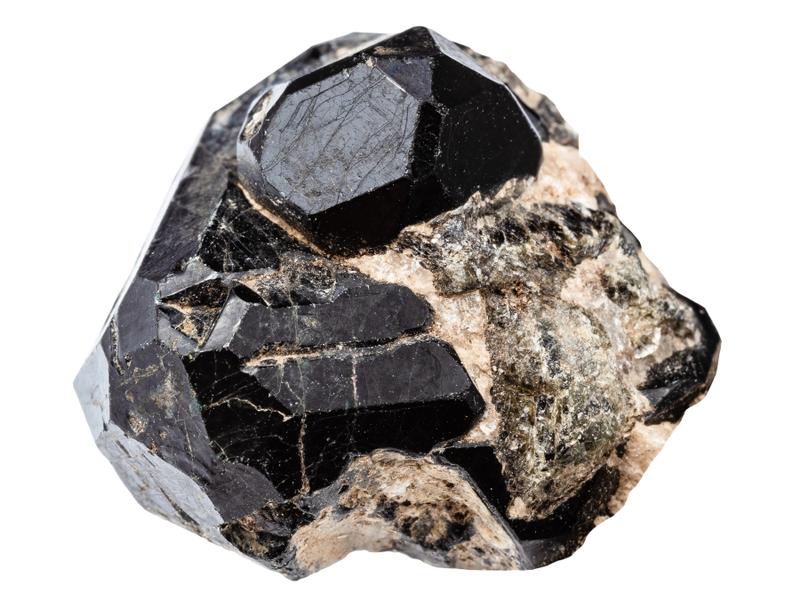
Black Spinel crystal
Protection & GroundingBoundaries & ProtectionStress Relief
Crystalis

Protocol

The Black Mirror

Cubic, dense, and nearly adamantine. A stone that reflects without revealing.

2 min

  1. 1

    Hold the black spinel in your dominant hand. Feel the weight first — this is a dense stone, magnesium aluminum oxide with iron substitution. Cubic crystal system, isometric, Fd3m space group — the most symmetrical arrangement matter can take. Every axis equal, every angle 90 degrees. Hardness 7.5 — harder than quartz, harder than most colored gemstones. This stone resists. Look at the surface: vitreous to sub-adamantine, meaning it approaches diamond-like reflection. In polished form, it mirrors. (0:00–0:30)

  2. 2

    Close your eyes. Wrap both hands around the stone. The black in black spinel comes from iron replacing magnesium in the crystal lattice — Fe2+ for Mg2+, a direct atomic substitution. The structure did not change. The symmetry did not change. Only the color shifted from transparent to opaque black. Breathe in for 4, out for 5. Feel the density pressing into your palm. This is one of the heavier gemstones per unit volume. (0:30–1:00)

  3. 3

    Hold the stone at belly height, eyes still closed. Spinel is a name that comes from the Latin spinella, meaning little thorn — referring to the sharp octahedral crystal habit. Even in its gentlest form, it points. Ask: what in me is both reflective and opaque? What shows others a surface without revealing the interior? Not deception — protection. The cubic system is complete in all directions. It does not need to open to be whole. (1:00–1:30)

  4. 4

    Open your eyes. If your stone is polished, look at the surface and see what reflects back. If raw, look at the deep black absorption of light. Place it down. Press both feet firmly into the floor for three seconds. Release. Cubic symmetry. Complete. Done. (1:30–2:00)

tap to flip for protocol

There are stretches when the self no longer feels sealed. Attention spills. Energy goes missing. Even rest does not quite come back as your own.

Black spinel belongs to the oxide family and is known for its octahedral habit, a geometry that looks complete from the first glance. Dense color, clean form, no sprawling edges. The mineral keeps its own perimeter.

That picture can be enough to change how a person starts holding themselves again.

What Your Body Knows

Nervous system states

sympathetic

Inability to say no

Inability to say no. Giving away energy until depleted. The nervous system oscillates between people-pleasing activation (sympathetic drive to appease threats) and collapse when alone (dorsal shutdown from depletion). Common in caregivers, empaths, and those with histories of relational trauma where self-sacrifice was the survival strategy. - ; - Stone's Role: Black spinel is one of the hardest non-diamond gemstones and has zero cleavage; it does not split along planes of weakness. This structural integrity translates to somatic practice: the stone held at the solar plexus or in a closed fist during moments of boundary negotiation provides physical reference for what "intact" feels like. Its black opacity models energetic containment without rigidity.

sympathetic

Waking in panic from sleep. The body plunges into dorsal vagal during sleep, then the sympathetic system fires a distress alarm

Stone's Role: Black spinel placed on the nightstand or held during the recovery window after a night terror provides immediate grounding input. Its room-temperature surface (cooling to the touch due to thermal conductivity) and weight offer the nervous system rapid proprioceptive and thermal data that counters the dissociation of the transition state. The stone's darkness matches the night environment without introducing stimulating color frequencies.

dorsal vagal

The early stage of feeling safe again after a period of chronic activation or shutdown. Social engagement is returning

Stone's Role: Black spinel supports the ventral vagal state not by stimulating it (that is the role of heart stones) but by protecting it. Its grounding weight and dark, unbothered surface model a quiet confidence; present without performing. In this state, the stone serves as an energetic sentry, allowing the emerging ventral engagement to strengthen without the nervous system having to simultaneously scan for threats.

Nervous system mapping based on polyvagal theory (Porges, 2011).

The Earth Made This

Formation: How Black Spinel Becomes Black Spinel

Black spinel is the iron-rich end member of the spinel series, where extensive substitution of iron for magnesium in the crystal structure produces opaque, jet-black crystals. Spinel forms in contact metamorphic zones, particularly in aluminum-rich limestones that have been heated by igneous intrusions, and in some mafic and ultramafic igneous rocks. The cubic crystal system produces well-formed octahedral crystals.

Black spinel has been historically confused with black tourmaline and black garnet, but its single refraction, octahedral crystal form, and conchoidal fracture distinguish it. Myanmar, Sri Lanka, and Thailand produce gem-quality black spinel, valued for its hardness (8 Mohs) and its adamantine luster when polished.

Material facts

What the stone is made of

Mineralogy: Iron-rich spinel, oxide class. Chemical formula: MgAl₂O₄ with significant Fe²⁺ and Fe³⁺ substitution. Crystal system: cubic. Mohs hardness: 7.5-8. Specific gravity: 3.58-3.61 (increases with iron content). Color: black, opaque, from high concentrations of Fe²⁺ and Fe³⁺ absorbing across the visible spectrum. Luster: vitreous to sub-adamantine. Habit: octahedral crystals (diagnostic), also massive. Singly refractive (isotropic; cubic system). No cleavage; conchoidal fracture. Distinguished from black tourmaline (schorl) by octahedral habit (vs. prismatic triangular) and cubic symmetry. Same mineral species as red, blue, and other spinel; "black" designates the iron-saturated opaque variety.

Mineralogy

Mineral specs

Chemical Formula

MgAl2O4 (with Fe2+ partially substituting for Mg2+)

Crystal System

Cubic

Mohs Hardness

7.5

Specific Gravity

3.58-3.61 (increases with iron content)

Luster

Vitreous to sub-adamantine

Color

Black

Traditional Knowledge

Traditions across cultures

Black spinel has been mined from the alluvial gem gravels of Ratnapura, Sri Lanka, for over two millennia. Sri Lankan gem classification systems historically grouped black spinel with other dark stones under the Sinhala term for protective stones. The gem gravels, called "illam," are extracted from pits dug to bedrock, a practice documented in texts dating to the reign of King Dutugemunu (161-137 BCE). Black stones were traditionally associated with Shani (Saturn) in Jyotish (Vedic astrology) and prescribed as protective talismans against the malefic influence of Saturn's transit; specifically the "Sade Sati" (the 7.5-year Saturn period considered most challenging).

Ancient India

500 BCE - 500 CE

The Tamra Stone of Warriors

In ancient Indian gemology, black spinel was classified among the dark protective stones associated with Saturn (Shani). Warriors and travelers carried it as a talisman against physical harm, and Ayurvedic texts referenced dark spinels as stones that could absorb negative planetary influences and ground volatile energies.

Medieval Europe

12th - 15th century

The Great Impostor of Crowns

For centuries, black spinel was routinely confused with black tourmaline and dark garnet in European courts. Many crown jewels across Europe contained spinels misidentified as other gems. It was not until mineralogical advances in the 18th century that spinel was recognized as a distinct mineral species, separate from corundum and garnet.

Sri Lankan Mining Tradition

1000 CE - present

The Gem Gravels of Ratnapura

Sri Lanka's Ratnapura district, whose name translates to "City of Gems," has produced fine black spinels from alluvial gem gravels for over a millennium. Sinhalese gem miners traditionally classified spinels by color and transparency, with jet-black specimens valued for their intensity and brilliance, distinguishing them from common dark stones.

When This Stone Finds You

What it says when it arrives

You are tired of leaking energy through every unguarded opening. Black spinel grows in compact octahedra, iron-dark and geometrically self-contained. Containment can be beautiful when it finally belongs to you.

Somatic protocol

The Black Mirror

Cubic, dense, and nearly adamantine. A stone that reflects without revealing.

2 min protocol

  1. 1

    Hold the black spinel in your dominant hand. Feel the weight first — this is a dense stone, magnesium aluminum oxide with iron substitution. Cubic crystal system, isometric, Fd3m space group — the most symmetrical arrangement matter can take. Every axis equal, every angle 90 degrees. Hardness 7.5 — harder than quartz, harder than most colored gemstones. This stone resists. Look at the surface: vitreous to sub-adamantine, meaning it approaches diamond-like reflection. In polished form, it mirrors. (0:00–0:30)

    1 min
  2. 2

    Close your eyes. Wrap both hands around the stone. The black in black spinel comes from iron replacing magnesium in the crystal lattice — Fe2+ for Mg2+, a direct atomic substitution. The structure did not change. The symmetry did not change. Only the color shifted from transparent to opaque black. Breathe in for 4, out for 5. Feel the density pressing into your palm. This is one of the heavier gemstones per unit volume. (0:30–1:00)

    1 min
  3. 3

    Hold the stone at belly height, eyes still closed. Spinel is a name that comes from the Latin spinella, meaning little thorn — referring to the sharp octahedral crystal habit. Even in its gentlest form, it points. Ask: what in me is both reflective and opaque? What shows others a surface without revealing the interior? Not deception — protection. The cubic system is complete in all directions. It does not need to open to be whole. (1:00–1:30)

    1 min
  4. 4

    Open your eyes. If your stone is polished, look at the surface and see what reflects back. If raw, look at the deep black absorption of light. Place it down. Press both feet firmly into the floor for three seconds. Release. Cubic symmetry. Complete. Done. (1:30–2:00)

    1 min

The distinction most sites miss

Is black spinel the same as black tourmaline for protection?

They serve different functions. Black tourmaline (a boron silicate) is piezoelectric -- it generates a measurable electrical charge under pressure, which is why many people report a "buzzing" sensation. Black spinel is not piezoelectric. Its protection is structural rather than electrical: it models integrity through its cubic crystal system and lack of cleavage. Tourmaline repels; spinel contains. Choose tourmaline when you need to deflect external energy. Choose spinel when you need to consolidate your own.

Care and Maintenance

How to care for Black Spinel

Black spinel is fully water-safe. Mohs 8, iron-rich magnesium aluminum oxide, one of the hardest and most chemically stable practice stones. No cleavage, no sensitivity to water, chemicals, or light.

Brief or prolonged water contact is completely safe. Recommended cleansing: any method works. Running water, moonlight, sound, smoke, selenite.

Store in a pouch to avoid scratching softer stones; spinel is harder than most of its neighbors.

In Practice

How Black Spinel is used

You need to feel fortified without feeling aggressive. Black spinel is magnesium aluminum oxide, Mohs 7. 5, cubic crystal system, with iron substituting for magnesium to produce the black color.

Its hardness exceeds garnet, tourmaline, and quartz. Hold it in the non-dominant hand. The density (specific gravity 3.

6) creates grounding weight without the electromagnetic properties of hematite or magnetite. The cubic crystal system means equal structure in every direction. No weak axis.

No preferred cleavage. Uniform resistance to pressure, the mineral equivalent of quiet composure.

Verification

Authenticity

Black spinel: Mohs 8, vitreous to sub-adamantine luster, cubic crystal system (often octahedral habit). Specific gravity 3. 58-3.

61. One of the hardest black gemstones. Distinguished from black tourmaline (Mohs 7, prismatic habit) and black onyx (Mohs 7, usually dyed).

If the stone scratches topaz (Mohs 8), it is genuinely hard enough to be spinel.

Temperature

Natural Black Spinel should usually feel cooler than plastic or resin on first touch and warm more slowly in the hand.

Scratch logic

Use 7.5 on the Mohs scale as the check, not internet myths. A real specimen should behave in line with the hardness listed above.

Surface and luster

Look for a vitreous to sub-adamantine surface quality rather than a painted or plastic shine.

Weight and density

The listed specific gravity is 3.58-3.61 (increases with iron content). If a specimen feels unusually light for its size, it may deserve a second look.

Geographic Origins

Where Black Spinel forms in the world

Sri Lanka's gem gravels produce the finest black spinel crystals, often found alongside sapphire in alluvial deposits. Myanmar (Mogok Stone Tract) yields black spinel from marble-hosted gem deposits. Tanzania's Mahenge area produces iron-rich spinel in granulite facies metamorphic rocks.

The iron substitution that creates the black color develops most intensely in the highest-grade metamorphic environments.

FAQ

Frequently asked

Is black spinel the same as black tourmaline for protection?

They serve different functions. Black tourmaline (a boron silicate) is piezoelectric -- it generates a measurable electrical charge under pressure, which is why many people report a "buzzing" sensation. Black spinel is not piezoelectric. Its protection is structural rather than electrical: it models integrity through its cubic crystal system and lack of cleavage. Tourmaline repels; spinel contains. Choose tourmaline when you need to deflect external energy. Choose spinel when you need to consolidate your own.

How can I tell if my black spinel is real or synthetic?

Natural black spinel typically shows minor inclusions under 10x magnification -- small crystals, fingerprint-like fluid inclusions, or octahedral negative crystals. Synthetic (flame-fusion) black spinel appears too clean and may show curved growth lines or gas bubbles. A gemological test: natural spinel is singly refractive (isotropic) with an RI around 1.712-1.736. If a dealer sells "black sapphire" at spinel prices, request verification -- they are different minerals.

Why is black spinel less well-known than other black stones?

Historical misidentification. For centuries, many black spinels in crown jewels and royal collections were labeled as "black sapphire" or "black garnet." The spinel group was not clearly distinguished from corundum until advances in crystallography in the 19th century. Black spinel is now gaining recognition in jewelry and metaphysical communities as its unique properties become better understood.

Can black spinel be used for meditation?

Yes, and it is particularly suited for grounding meditations, body-scan practices, and pre-sleep settling routines. Its weight and temperature provide sensory anchoring that supports present-moment awareness. It is less suited for expansive or visionary meditation work -- for that, pair it with a higher-chakra stone.

Does black spinel need to be cleansed?

Black spinel is extremely stable and does not require frequent energetic cleansing in the way porous or soft stones do. If you practice energetic hygiene, brief moonlight exposure, sage smoke, or placement on selenite are all compatible. Its chemical stability means you can also rinse it under running water without concern.

References

Sources and citations

  1. . [SCI]

    DOI: 10.1111/jace.13705

  2. . [SCI]

    DOI: 10.1111/jace.14553

  3. . [SCI]

    DOI: 10.1111/arcm.13087

  4. . [SCI]

    DOI: 10.1002/wps.20871

  5. . [SCI]

    DOI: 10.1111/nmo.14926

  6. . [SCI]

    DOI: 10.1002/jts.22189

Closing Notes

Black Spinel

Iron-rich spinel, opaque and jet-black. Magnesium replaced by iron until the crystal absorbs all light. The science documents how substitution at the atomic level transforms transparency into total darkness.

The practice asks what strength looks like when it stops trying to be seen through.

Bring it into practice

What to do with Black Spinel next

Move from reference to ritual. Search current inventory for Black Spinel, build a custom bracelet, or let Sacred Match choose the right supporting stones for you.

Community notes

Threads under Black Spinel

Open all chats

Shared field notes tied to Black Spinel appear here, including notes saved from practice.

No shared notes under Black Spinel yet.

When members save a public field note for this stone, it will appear here.

The archive

Related crystals

Read the Full Crystal Guide

Continue through stones that share intention, chakra focus, or tonal family with Black Spinel.