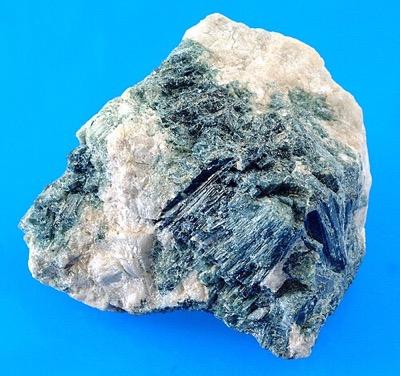
You are running low on the rare things that keep you balanced. Lithiophilite stores lithium and manganese in pegmatitic phosphate form, a quiet reservoir mineral. Some stability depends on concentrated essentials.
The stone enters practice through simple sensation. For lithiophilite, the body often starts with direct sensory appraisal before any symbolism forms. The material...
The Meaning
Lithiophilite in the Crystalis dictionary
Depletion often begins with essentials becoming too diffuse. The self can still function, but the rarer stabilizing elements have started thinning out, and the body senses the loss long before it can name it.
Lithiophilite offers a model of concentration. Lithium and manganese are held in a pegmatitic phosphate body that reads less like display than like reserve. The usefulness is in the storing, not the spectacle.
Lithiophilite feels right for balance after depletion because it reminds the psyche that stability often depends on keeping the essentials concentrated enough to matter.
Stone Lore
Stories carried through time
Cultural notes are presented as tradition and historical context — stories carried through time.
Mineralogical Discovery
The Lithium-Lover
Lithiophilite was first described in 1878 and named from the Greek "lithion" (lithium) and "philos" (loving), referencing its lithium-rich composition. As a lithium manganese phosphate, it belongs to the triphylite group and is typically found in lithium-bearing granitic pegmatites. Its discovery contributed to the growing understanding of lithium mineralogy during the 19th century.
1878
Origin lore
A Marker of Pegmatite Fractionation
Lithiophilite serves as an important indicator mineral in pegmatite geology. Its presence signals advanced geochemical fractionation, the process by which rare elements like lithium concentrate during the final stages of magmatic...
Pegmatite Science
Origin lore
From Curiosity to Strategic Mineral
With the explosive growth of lithium-ion battery technology, all lithium-bearing minerals including lithiophilite have gained new significance. While spodumene and lepidolite remain the primary lithium ore minerals, lithiophilite's...
Modern Lithium Economy · 21st century
Earth Record
Mineralogy and formation
Late in a pegmatite's cooling sequence, Lithiophilite crystallizes late in granite pegmatites, when incompatible elements such as lithium, manganese, and phosphorus become concentrated in the residual melt and fluids. Structurally it follows the olivine-type phosphate framework, but chemically it differs from the better-known silicate olivines by hosting lithium and manganese instead of magnesium and iron in a phosphate lattice.
Orthorhombic symmetry, moderate density, and hardness around 4. 5 to 5 make it a quiet but significant pegmatite mineral. Fresh material may appear salmon-pink, buff, or clove-brown depending on the manganese-to-iron ratio and the degree of alteration. That alteration is central to its story. Exposure to oxygen and fluids can drive lithium loss and manganese oxidation, producing darker rims and eventually secondary phosphates such as purpurite and heterosite.
In other words, lithiophilite is often present as a parent phase beneath more dramatic descendants. Mineralogically, that makes it interesting because it records the transition from primary pegmatite crystallization to later weathering and chemical overprint. In the body, the stone reads as precursor. Not the bloom, but the source that becomes bloom when time acts on it. The somatic turn lands there.
Some regulatory states are not yet visible as the vivid surface traits others notice. They are seed chemistries waiting for oxidation, revision, and enough contact with the world to show what they were carrying all along.
Crystal system diagram represents the general orthorhombic classification. Diagram created by Crystalis for educational reference.
Orthorhombic structure
Chemical Formula
LiMnPO4
Crystal System
Orthorhombic
Mohs Hardness
4.5
Specific Gravity
3.34-3.50
Luster
Vitreous to resinous
Color
Brown-Pink
IMA Status
species
Type Locality
Fillow Quarry, Branchville, Fairfield County, Connecticut, USA
IMA Number
pre-IMA (Grandfathered)
01
Mineral conditions gather
02
Structure begins to crystallize
03
Lithiophilite records place and pressure
Brazil's Minas Gerais produces lithiophilite from lithium-rich granite pegmatites. Maine (USA) pegmatites yield specimens from historic gem mining districts. Portugal produces lithiophilite from pegmatite provinces.
The lithium manganese phosphate weathers into more colorful secondary minerals (purpurite, heterosite) at all localities.
BrazilUSA (Maine)Portugal
Telling it apart
Lithiophilite is a lithium manganese phosphate that forms brownish to salmon pink masses in lithium bearing pegmatites, and it gets confused with triphylite, rhodonite, and iron stained feldspar. The separation from triphylite is compositional: lithiophilite is the manganese dominant end member while triphylite is the iron dominant end member of the same series, so visual distinction is often impossible without chemical analysis.
Hardness is about 4 to 5, specific gravity 3. 34, and the crystal system is orthorhombic. Rhodonite is harder at 5. 5 to 6. 5 and typically shows black manganese oxide veining. Feldspar has different cleavage angles and is harder. If the brownish pink mineral occurs in a lithium pegmatite alongside spodumene, amblygonite, or other lithium minerals, lithiophilite is plausible. Precise identification within the triphylite lithiophilite series requires analysis.
Spotting the real thing
Lithiophilite: brownish to pinkish lithium manganese phosphate. Mohs 4. 5-5.
Specific gravity 3. 34-3. 50.
Vitreous to resinous luster. Rarely encountered outside specialist collections. Most valued for the colorful secondary minerals it weathers into (purpurite, heterosite).
If offered as a common practice stone, likely misidentified.
When energy feels stuck and the body won't respond. Lithiophilite is placed on the body as an anchor point. Your shoulders drop. Your breath becomes shallow and barely audible. A heaviness settles in your limbs. This is dorsal vagal shutdown; your oldest survival circuit pulling you toward stillness, collapse, disconnection from sensation.
Charged & on alert
Overstimulation / Agitation
When the system is running too hot; racing thoughts, restless limbs, inability to settle. Your chest tightens. Your jaw clenches. Your breath moves higher, shallower, faster. This is sympathetic activation; your body mobilizing for fight or flight, muscles tensing, heart rate rising.
Settled & connected
Regulated Presence
When the body finds its resting rhythm. Lithiophilite held or placed becomes a touchpoint for presence. Your chest opens. Your jaw unclenches. Your breath deepens into your belly. This is ventral vagal regulation; your body finding safety, social connection, steady presence.
These associations come from tradition and reflective practice — a way of working with the stone, not a medical prescription.
Somatic Practice
Simple ways to work with Lithiophilite
◇
Hold
Carry Lithiophilite in a pocket or place it over the heart center during a pause.
◌
Meditate
Let the stone become a quiet tactile anchor while the breath slows.
☽
Breathe
Breathe in softness. Breathe out tension. Keep the practice simple.
✎
Journal
Write with Lithiophilite nearby to name the feeling without forcing a conclusion.
✋
Bodywork
Rest the stone near the chest, hand, or bedside as a reminder to soften.
⌂
Environment
Place it where you want a visual cue for care, repair, or steadiness.
Field Instruction
The Lithium Root
Lithium manganese phosphate in orthorhombic form, lithiophilite carries the same element prescribed for mood stabilization — not as medicine, but as mineral memory of equilibrium.
3 min protocol
1
Hold the lithiophilite in your non-dominant hand. This is lithium manganese phosphate — the same lithium element used therapeutically for mood regulation exists here in mineral form, locked into an orthorhombic lattice with manganese and phosphorus. Feel its resinous luster against your palm. Notice your current emotional weather without trying to change it.
2
Place the stone against the inside of your wrist, where your pulse is closest to the surface. Lithiophilite often shows a brownish-pink color from its manganese content — warmth without intensity. Breathe in for four, out for six. Let each exhale carry the quality of the stone's color: warm, not hot.
3
Close your eyes. Ask: what in my emotional life needs stabilization, not suppression? Lithium in its mineral form does not eliminate — it levels. What would it feel like to experience my full range at a sustainable amplitude? Let the body respond as sensation, not narrative.
4
Open your eyes. Set the stone on a flat surface. Place both palms beside it, fingertips touching. Lithiophilite belongs to the triphylite-lithiophilite solid solution series — it exists on a spectrum, not at an extreme. Take one breath for the idea that you, too, exist on a spectrum. That is the practice.
Stone Intelligence
The fact that makes Lithiophilite memorable
The parent mineral nobody collects for itself. Lithium manganese phosphate that weathers into a suite of secondary phosphates more colorful and more valued than the original. The science documents how a precursor mineral is defined by what it becomes.
The practice asks what it means to be the source of something that outshines you.
SCI
Overview about Raman spectroscopy of types of olivine group minerals: A brief review
Lithiophilite presents a tactile profile characterized by moderate density (SG 3.34-3.50) and a vitreous to slightly resinous surface feel when polished. The weight-in-hand registers as noticeably denser than common quartz but lighter than metalite ores, placing it in a middle register of proprioceptive feedback. Research on haptic perception and electrodermal response during stone handling demonstrates that material weight and thermal conductivity are primary channels through which held objects register somatically, independent of visual assessment.
The mineral's characteristic cleavage surfaces create a subtle directionality when fingers trace across the specimen, providing tactile asymmetry that may support focused attention. Studies of haptic exploration in museum and educational contexts confirm that direct physical contact with natural specimens increases inspection time, engagement, and positive evaluation, with participants noting that the thermal properties (initial coolness of stone contact, gradual warming) and weight constitute distinct sensory information channels beyond what visual observation alone provides.
The warm pink-to-brown color palette of fresh lithiophilite, combined with its moderate heft, positions it as a specimen that may support body-based practices oriented toward grounding and attention centering. Somatic sensory research documents that deep touch pressure and proprioceptive input from holding weighted objects activate parasympathetic neural circuitry, functioning as what clinical researchers describe as "powerhouses of calming" that provide orientation through awareness of firm pressure on the skin and spatial positioning of the limbs.
Given its sensitivity to oxidation and alteration, lithiophilite requires minimal handling force, which inherently encourages deliberate, slow interaction rather than absent-minded manipulation.
Sacred Match
Sacred Match reaches for Lithiophilite when what you feel sounds like:
change darkening your surface before evidence of the change arrives
parent-phase energy still running beneath your current identity
skin or mood oxidizing faster than the interior can keep up
pre-articulate transition where you know something is shifting but cannot name it
need to honor the source mineral before becoming what comes next
Sacred Match listens to the body rather than to preference. It senses whether surface darkening is decay, transformation, or the visible evidence of a parent phase altering into its oxidation products while the interior preserves the original signal. When that points to sympathetic activation around pre-verbal identity transition with surface-first change, Lithiophilite is the stone it offers. This is lithium manganese phosphate, a quiet reservoir mineral that darkens to black MnO2 coatings as it oxidizes. The surface changes before the core does.
Change before evidence -> transition visible at the surface before the interior completes -> salmon-pink to clove-brown from Mn2+ crystal field transitions darkens to black secondary MnO2 oxidation coatings, demonstrating that surface change precedes core change
Parent-phase energy -> earlier identity still operating beneath the current one -> end member of the triphylite-lithiophilite series with LiFePO4 iron analogue means this mineral exists within a family, not alone
Surface oxidizing -> boundary layer changing faster than interior -> orthorhombic crystal system at Mohs 4.
5-5 with specific gravity 3. 34-3. 50 is dense enough to hold its interior stable while the surface transforms
Pre-articulate transition -> body knowing before language -> vitreous to resinous luster on fresh surfaces demonstrates that the original state had its own coherent beauty before the oxidation began
Honoring the source -> respecting what came before the current phase -> lithium as essential structural component means the calming element was built in from formation, not added later
Stones and herbs that harmonize with Lithiophilite
Pairings are treated like a recipe file: clear use, method, and safety.
Crystal Companion
Lithiophilite + Amethyst
Use when
You want to layer the primary intention with another supportive tone.
How to work with it
Place the stones together during meditation, journaling, or a short reset.
Safety
Use as a reflective practice tool, not as a medical substitute.
Crystal Companion
Lithiophilite + Rhodonite
Use when
You want to layer the primary intention with another supportive tone.
How to work with it
Place the stones together during meditation, journaling, or a short reset.
Safety
Use as a reflective practice tool, not as a medical substitute.
Crystal Companion
Lithiophilite + Clear Quartz
Use when
You want to layer the primary intention with another supportive tone.
How to work with it
Place the stones together during meditation, journaling, or a short reset.
Safety
Use as a reflective practice tool, not as a medical substitute.
Crystal Companion
Lithiophilite + Black Tourmaline
Use when
You want to layer the primary intention with another supportive tone.
How to work with it
Place the stones together during meditation, journaling, or a short reset.
Safety
Use as a reflective practice tool, not as a medical substitute.
Where support needs range. Lithiophilite benefits from companions that either clarify its strongest trait or balance its weakest one.
Purpurite
parent and product. The pairing makes the alteration story visible: quiet source beside vivid oxidation. Placement: Keep them together on a tray for comparison. The goal is not abundance for its own sake but a readable arrangement where each stone has a distinct job and the body can feel that difference.
Lepidolite
lithium theme. Lepidolite adds a more familiar lithium-bearing partner with a softer mica texture. Placement: Lithiophilite on the desk, lepidolite by the bed. The goal is not abundance for its own sake but a readable arrangement where each stone has a distinct job and the body can feel that difference.
Smoky Quartz
pegmatite grounding. Smoky quartz connects well with late-stage pegmatite minerals and lowers the tone. Placement: Place smoky quartz beneath the specimen stand. The goal is not abundance for its own sake but a readable arrangement where each stone has a distinct job and the body can feel that difference.
Clear Quartz
clarified lineage. Quartz helps reveal fractures, rims, and alteration zones. Placement: Use in study or display lighting. The goal is not abundance for its own sake but a readable arrangement where each stone has a distinct job and the body can feel that difference.
Care & Cleansing
How to keep Lithiophilite in good condition
Water Safe?
Use caution
Brief contact may be tolerated, but softness, coatings, fractures, or mixed mineral content can make water exposure a risk.
Sunlight Safe?
Sunlight safe
Tolerates daylight; safe to charge or display in the sun.
Authenticity
What to check
Natural Lithiophilite should usually feel cooler than plastic or resin on first touch and warm more slowly in the hand.
- Toxicity: Contains manganese. While Mn2+ phosphates are relatively low in acute toxicity compared to soluble manganese salts, chronic manganese dust inhalation is a recognized occupational hazard (manganism). Handle with standard mineral precautions. - Handling: Avoid generating or inhaling dust. Wash hands after handling. Relatively soft (4. 5-5 Mohs) so moderate care in handling prevents fracture.
- Water safety: Generally stable in water short-term. However, lithiophilite is inherently susceptible to alteration by aqueous fluids, and prolonged water exposure can initiate the oxidation/hydration cascade that degrades the mineral. Do not soak or immerse for extended periods. - Heat sensitivity: The synthetic analogue MnPO4 (delithiated form) decomposes above approximately 200 degrees C.
Fresh lithiophilite (LiMnPO4) is more stable but should not be subjected to extreme heat. Do not use in heated practices. - Light sensitivity: May darken with prolonged UV or strong light exposure due to surface oxidation of Mn2+ to Mn3+. Store away from prolonged sunlight.
Temperature
Natural Lithiophilite should usually feel cooler than plastic or resin on first touch and warm more slowly in the hand.
Scratch logic
Use 4.5 on the Mohs scale as the check, not internet myths. A real specimen should behave in line with the hardness listed above.
Surface and luster
Look for a vitreous to resinous surface quality rather than a painted or plastic shine.
Weight and density
The listed specific gravity is 3.34-3.50. If a specimen feels unusually light for its size, it may deserve a second look.
My Field Guide
Your private record and next steps
Journal
Add this stone to your private collection, then log what happened when you worked with it.
Shared Notes
Read public practice logs and pattern notes from the Crystalis community.
When members save a public field note for this stone, it will appear here.
Frequently Asked
Questions people ask about Lithiophilite
What is Lithiophilite?
⌄
Lithiophilite is a lithium manganese phosphate, LiMnPO4, crystallizing in the orthorhombic system (space group Pnma) with a Mohs hardness of 4.5 to 5.
What is the Mohs hardness of Lithiophilite?
⌄
Lithiophilite has a Mohs hardness of 4.5-5.
Can Lithiophilite go in water?
⌄
Generally stable in water short-term. However, lithiophilite is inherently susceptible to alteration by aqueous fluids, and prolonged water exposure can initiate the oxidation/hydration cascade that degrades the mineral. Do not soak or immerse for extended periods.
What crystal system is Lithiophilite?
⌄
Lithiophilite crystallizes in the Orthorhombic.
What is the chemical formula of Lithiophilite?
⌄
The chemical formula of Lithiophilite is LiMnPO4.
Is Lithiophilite toxic?
⌄
Contains manganese. While Mn2+ phosphates are relatively low in acute toxicity compared to soluble manganese salts, chronic manganese dust inhalation is a recognized occupational hazard (manganism). Handle with standard mineral precautions.
Sources & Citations
Where this entry can be checked
Back Matter
Readable for people. Structured for AI search.
Sources stay visible in the page so readers, search engines, and answer systems can follow the evidence trail.
01
SCI
Overview about Raman spectroscopy of types of olivine group minerals: A brief review
do Nascimento‐Dias, Bruno Leonardo. (2022). Overview about Raman spectroscopy of types of olivine group minerals: A brief review. Journal of Raman Spectroscopy. [SCI]DOI 10.1002/jrs.6412
02
SCI
Morphology Effect on Enhanced Li<sup>+</sup>‐Ion Storage Performance for Ni<sup>2+/3+</sup> and/or Co<sup>2+/3+</sup> Doped LiMnPO<sub>4</sub> Cathode Nanoparticles
Yun, Young Jun, Wu, Mihye, Kim, Jin Kyu, Ju, Ji Young, Lee, Sun Sook et al. (2015). Morphology Effect on Enhanced Li<sup>+</sup>‐Ion Storage Performance for Ni<sup>2+/3+</sup> and/or Co<sup>2+/3+</sup> Doped LiMnPO<sub>4</sub> Cathode Nanoparticles. Journal of Nanomaterials. [SCI]DOI 10.1155/2015/970856
03
SCI
The Stability of Manganese Oxides Under Laser Irradiation During Raman Analyses: II. Layer Structures
Bernardini, Simone, Ventura, Giancarlo Della, Jovane, Luigi, Sodo, Armida, Mihailova, Boriana. (2025). The Stability of Manganese Oxides Under Laser Irradiation During Raman Analyses: II. Layer Structures. Journal of Raman Spectroscopy. [SCI]DOI 10.1002/jrs.6829
04
SCI
Electrochemical Analysis of Architecturally Enhanced LiFe0.5Mn0.5PO4 Multiwalled Carbon Nanotube Composite
Thermal Behavior of Delithiated <scp>L</scp> i <sub>1−x</sub> <scp>M</scp> n <scp>PO</scp> <sub>4</sub> (0 ≤ <i>x</i> <1) Structure for Lithium‐Ion Batteries
Yoshida, Jun, Nakanishi, Shinji, Iba, Hideki, Abe, Hiroya, Naito, Makio. (2013). Thermal Behavior of Delithiated <scp>L</scp> i <sub>1−x</sub> <scp>M</scp> n <scp>PO</scp> <sub>4</sub> (0 ≤ <i>x</i> <1) Structure for Lithium‐Ion Batteries. International Journal of Applied Ceramic Technology. [SCI]DOI 10.1111/ijac.12121
06
SCI
Structure and Electrochemical Behavior of Minor Mn-Doped Olivine LiMn<sub><i>x</i></sub>Fe<sub>1−<i>x</i></sub>PO<sub>4</sub>
Huynh, Le Thanh Nguyen, Le, Pham Phuong Nam, Trinh, Viet Dung, Tran, Hong Huy, Tran, Van Man et al. (2019). Structure and Electrochemical Behavior of Minor Mn-Doped Olivine LiMn<sub><i>x</i></sub>Fe<sub>1−<i>x</i></sub>PO<sub>4</sub>. Journal of Chemistry. [SCI]DOI 10.1155/2019/5638590
07
SCI
Phase stability and homogeneity in undoped and Mn‐doped LiFePO<sub>4</sub> under laser heating
Galinetto, Pietro, Mozzati, Maria Cristina, Grandi, Marco Simone, Bini, Marcella, Capsoni, Doretta et al. (2010). Phase stability and homogeneity in undoped and Mn‐doped LiFePO<sub>4</sub> under laser heating. Journal of Raman Spectroscopy. [SCI]DOI 10.1002/jrs.2558
08
SCI
Geochemistry of K‐feldspar and Muscovite in Rare‐element Pegmatites and Granites from the Totoral Pegmatite Field, San Luis, Argentina
Oyarzábal, Julio, Galliski, Miguel Ángel, Perino, Ernesto. (2009). Geochemistry of K‐feldspar and Muscovite in Rare‐element Pegmatites and Granites from the Totoral Pegmatite Field, San Luis, Argentina. Resource Geology. [SCI]DOI 10.1111/j.1751-3928.2009.00100.x
09
SCI
Cation‐ and Anion‐Substituted Potassium Manganese Phosphate, <scp>KM</scp>nP<sub>3</sub>O<sub>9</sub>: Luminescence and Photocatalytic Studies
Chandiri, Sudhakar Reddy, Gundeboina, Ravi, Kurra, Sreenu, Guje, Ravinder, Maligi, Malathi et al. (2017). Cation‐ and Anion‐Substituted Potassium Manganese Phosphate, <scp>KM</scp>nP<sub>3</sub>O<sub>9</sub>: Luminescence and Photocatalytic Studies. Photochemistry and Photobiology. [SCI]DOI 10.1111/php.12673