Materia Medica
Clinozoisite
The Heart's Structure
This page documents traditional and cultural uses of clinozoisite alongside emerging research on tactile grounding objects. Crystalis does not claim that clinozoisite treats, cures, or prevents any medical condition. For mental health concerns, consult a qualified professional.
Origins: Tanzania, Pakistan, Austria
Materia Medica
The Heart's Structure
Protocol
Monoclinic calcium aluminum sorosilicate with a quiet vitreous luster — structural clarity for the body that has forgotten its own architecture.
3 min
Hold the clinozoisite and observe its vitreous-to-glassy luster. This is a sorosilicate — its structure links pairs of silicon-oxygen tetrahedra (Si2O7 groups) bridged by calcium and aluminum. Monoclinic, space group P21/m. Notice the prismatic shape if visible. This mineral does not shout. It organizes quietly.
Place the stone against the left side of your chest, over the heart but slightly lateral. Clinozoisite has a specific gravity of 3.21–3.38 — it is denser than it looks. Let the weight register. Press it gently inward. The calcium in the crystal (Ca2Al3) is the same element your bones use for structure.
Close your eyes. Breathe normally — do not alter the rhythm. The monoclinic crystal system has one axis of symmetry tilted off-perpendicular. Nothing in this stone is perfectly square. Let your posture reflect that: upright but not rigid. Organized but not military.
Ask: Where have I lost the structure of who I am — not who I perform, but who I actually am when no one is measuring? The sorosilicate pairs in clinozoisite are bridged by hydroxyl groups (OH). Bridges require both sides. Notice what two parts of yourself need reconnecting.
Continue in the full protocol below.
tap to flip for protocol
After enough emotional weather, accuracy rarely returns as revelation. It comes back in minor angle changes, in noticing what no longer fits before having a full explanation ready.
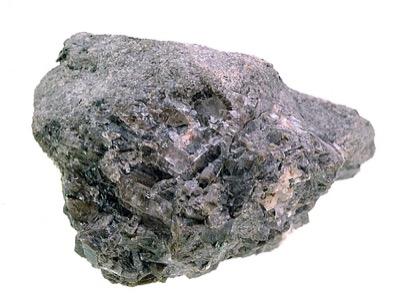
Clinozoisite lives in that register. Pale green, yellow-green, near-colorless at times, structurally disciplined without demanding the spotlight. It asks for a better quality of attention rather than more excitement.
That quiet restraint is what makes it useful during the long return of trust in your own perception.
What Your Body Knows
dorsal vagal
Clinozoisite's polymorphic relationship with zoisite; same atoms, different arrangement; provides a powerful somatic metaphor for identity. The stone demonstrates that WHO you are is not determined by your components (everyone has the same basic elements) but by your structure (how those elements are organized). For a nervous system in collapse that cannot locate a sense of self, clinozoisite offers the proposition that arrangement matters more than content. State shift: dorsal collapse toward self-recognition through structural identity awareness.
ventral vagal
Pink clinozoisite's gentle coloration and heart-centered energy support the delicate state of being socially functional while internally processing loss. This is not collapse and not activation; it is the ventral vagal state stressed by emotional weight. The stone does not try to remove the grief; it provides a ballast for the heart that allows the person to remain present with others while carrying sorrow. State support: ventral vagal stabilization under emotional load.
sympathetic
After acute stress, the transition from sympathetic back to ventral vagal is often the most difficult period; the body vibrates with residual activation while the situation is resolved. Clinozoisite's cooling green-to-pink spectrum and substantial weight provide a tactile anchor for this transition. The stone's formation in metamorphic environments; where extreme conditions gradually normalize; models the very process of post-crisis return to equilibrium. State shift: residual sympathetic activation toward ventral vagal restoration.
Nervous system mapping based on polyvagal theory (Porges, 2011).
The Earth Made This
Clinozoisite is the aluminum-dominant member of the epidote group, forming in low to medium-grade metamorphic rocks and as an alteration product of plagioclase feldspar. The mineral crystallizes in the monoclinic system at temperatures of 200-600°C, typically in rocks that have experienced greenschist or epidote-amphibolite facies metamorphism. Clinozoisite is the iron-poor counterpart of epidote: as iron increases, clinozoisite grades into epidote.
The distinction matters because clinozoisite tends toward colorless, pale green, or pink (from trace manganese), while epidote is characteristically pistachio green from its iron content. The mineral often appears in saussuritized plagioclase, recording the breakdown of original igneous feldspar during metamorphism.
Mineralogy
Chemical Formula
Ca2Al3(SiO4)(Si2O7)O(OH); calcium aluminum sorosilicate hydroxide
Crystal System
Monoclinic, Space Group P21/M
Mohs Hardness
6
Specific Gravity
3.21-3.38
Luster
Vitreous to glassy
Color
Green-Pink
Traditional Knowledge
Austrian alpine mineral tradition (Tauern Window): The Tauern Window of the Austrian Alps is one of the classic localities for clinozoisite, where it occurs in metamorphosed oceanic crust exposed by the uplift of the Eastern Alps. Austrian "Strahler" (mineral collectors) have prized well-formed clinozoisite crystals from this region since the 19th century. In alpine folk medicine, green clinozoisite was placed in cow barns to promote healthy birthing; a practice documented in ethnographic surveys of Tyrolean mountain communities (Ammann, B., "Mineralien der Schweizer Alpen," 1985, Ott Verlag).
Pakistani gem tradition (Balochistan): The pink clinozoisite from Pakistan has entered the gem market since the late 20th century. In Pakistani gem-cutting traditions, pink stones are associated with the heart and are sometimes set into "taweez" (amulets) worn to promote emotional healing. The pink clinozoisite is classified locally alongside ruby and garnet as a "heart stone," though at a more accessible price point (Kazmi, A. H. & Snee, L. W., "Emeralds of Pakistan: Geology, Gemology, and Genesis," 1989, Van Nostrand Reinhold).
Tanzanian connection (Merelani Hills): At the Merelani Hills of Tanzania, where tanzanite (zoisite) is the primary commercial mineral, clinozoisite occurs as an associated mineral. Local Maasai miners distinguish between the blue zoisite (tanzanite, which they believe carries the spirit of the sky) and the pink-green clinozoisite (which they associate with the earth). The two polymorphs; same chemistry, different structure; are understood in Maasai mineralogical folk knowledge as "siblings from different mothers" (Malisa, E. P. & Muhongo, S., "Tectonic Setting of Gemstone Mineralization in Tanzania," 2007).
Austrian alpine mineral tradition (Tauern Window)
The Tauern Window of the Austrian Alps is one of the classic localities for clinozoisite, where it occurs in metamorphosed oceanic crust exposed by the uplift of the Eastern Alps. Austrian "Strahler" (mineral collectors) have prized well-formed clinozoisite crystals from this region since the 19th century. In alpine folk medicine, green clinozoisite was placed in cow barns to promote healthy birthing -- a practice documented in ethnographic surveys of Tyrolean mountain communities (Ammann, B., "Mineralien der Schweizer Alpen," 1985, Ott Verlag). 2. Pakistani gem tradition (Balochistan): The pink clinozoisite from Pakistan has entered the gem market since the late 20th century. In Pakistani gem-cutting traditions, pink stones are associated with the heart and are sometimes set into "taweez"
When This Stone Finds You
Somatic protocol
Monoclinic calcium aluminum sorosilicate with a quiet vitreous luster — structural clarity for the body that has forgotten its own architecture.
3 min protocol
Hold the clinozoisite and observe its vitreous-to-glassy luster. This is a sorosilicate — its structure links pairs of silicon-oxygen tetrahedra (Si2O7 groups) bridged by calcium and aluminum. Monoclinic, space group P21/m. Notice the prismatic shape if visible. This mineral does not shout. It organizes quietly.
40 secPlace the stone against the left side of your chest, over the heart but slightly lateral. Clinozoisite has a specific gravity of 3.21–3.38 — it is denser than it looks. Let the weight register. Press it gently inward. The calcium in the crystal (Ca2Al3) is the same element your bones use for structure.
35 secClose your eyes. Breathe normally — do not alter the rhythm. The monoclinic crystal system has one axis of symmetry tilted off-perpendicular. Nothing in this stone is perfectly square. Let your posture reflect that: upright but not rigid. Organized but not military.
40 secAsk: Where have I lost the structure of who I am — not who I perform, but who I actually am when no one is measuring? The sorosilicate pairs in clinozoisite are bridged by hydroxyl groups (OH). Bridges require both sides. Notice what two parts of yourself need reconnecting.
40 secRemove the stone from your chest. Hold it at eye level and look through or at it one more time. Place it down deliberately. The quiet scaffold remains in the body even after the mineral is set aside.
25 secCare and Maintenance
Clinozoisite is water-safe. Calcium aluminum sorosilicate (Mohs 6-7), chemically stable. Brief to moderate water contact is safe.
One cleavage direction exists but is not as pronounced as feldspar. Recommended cleansing: running water, moonlight, sound, smoke, selenite plate. Store normally; clinozoisite is a durable metamorphic mineral.
In Practice
Your heart feels structurally unsound, like the emotional architecture has cracked. Clinozoisite is calcium aluminum sorosilicate, Mohs 6, monoclinic. It forms in metamorphic rocks where existing minerals were restructured by heat and pressure into something more stable.
Hold it at the heart during rebuilding phases. The mineral itself is a product of reconstruction. It did not form from nothing.
It formed from other minerals that were broken down and reassembled under new conditions. Rebuilding is not starting over. It is reorganizing what already exists.
Verification
Clinozoisite: Mohs 6-7. Specific gravity 3. 21-3.
38. Vitreous luster. Monoclinic (prismatic crystals or massive).
Distinguished from epidote (which is greener and typically has higher iron content) by its more colorless to pink coloration and lower birefringence.
Natural Clinozoisite should usually feel cooler than plastic or resin on first touch and warm more slowly in the hand.
Use 6 on the Mohs scale as the check, not internet myths. A real specimen should behave in line with the hardness listed above.
Look for a vitreous to glassy surface quality rather than a painted or plastic shine.
The listed specific gravity is 3.21-3.38. If a specimen feels unusually light for its size, it may deserve a second look.
Geographic Origins
Tanzania's Merelani Hills (near the tanzanite deposit) produce gem-quality green clinozoisite. Pakistan's northern areas yield specimens from alpine-type metamorphic veins. Austria's Knappenwand in the Untersulzbachtal is the classic European locality.
The aluminum-dominant epidote forms in low to medium-grade metamorphic rocks at each source.
FAQ
Chemical formula: Ca2Al3(SiO4)(Si2O7)O(OH) -- calcium aluminum sorosilicate hydroxide. Mohs hardness: 6--6.5. Crystal system: Monoclinic, space group P21/m.
Clinozoisite has a Mohs hardness of 6--6.5.
Water Safety NO -- Do not submerge for extended periods. Clinozoisite is a hydroxyl-bearing mineral (OH is part of its crystal structure). Prolonged water exposure can gradually degrade the hydroxyl bonds and affect the crystal structure, potentially causing surface dulling or micro-fracturing. Brief rinsing under running water is acceptable for cleaning. Do not soak. Do not use in gem elixirs or crystal water. For energetic water purposes, place the stone beside the water vessel.
Clinozoisite crystallizes in the Monoclinic, space group P21/m.
The chemical formula of Clinozoisite is Ca2Al3(SiO4)(Si2O7)O(OH) -- calcium aluminum sorosilicate hydroxide.
If cutting or grinding clinozoisite, complex silicate dust containing aluminum, calcium, and potentially iron/manganese is generated. Use wet-cutting methods and respiratory protection.
Formation Story Clinozoisite forms across a remarkably wide range of metamorphic conditions, from low-grade greenschist facies through eclogite facies, making it one of the most versatile metamorphic minerals. Research on metamorphic parageneses confirms that clinozoisite is found regularly in lower-temperature epidote-amphibolite facies assemblages, though numerous experimental and natural sample studies have demonstrated that it can also form magmatically at higher pressures and temperatures (
References
. [SCI]
DOI: 10.1111/jmg.12175
. [SCI]
DOI: 10.1111/jmg.12488
. [SCI]
. [SCI]
DOI: 10.1111/jmg.12578
Closing Notes
The aluminum-dominant epidote. Forms in low to medium-grade metamorphic rocks, an alteration product of plagioclase feldspar. The original mineral transformed by pressure into something structurally different.
The science documents metamorphic replacement. The practice asks what identity looks like after the environment has reshaped you at the lattice level.
Bring it into practice
Move from reference to ritual. Search current inventory for Clinozoisite, build a custom bracelet, or let Sacred Match choose the right supporting stones for you.
Community notes
Shared field notes tied to Clinozoisite appear here, including notes saved from practice.
When members save a public field note for this stone, it will appear here.
The archive
Continue through stones that share intention, chakra focus, or tonal family with Clinozoisite.
Shared intention: Self-Awareness
The Quiet Reckoning

Shared intention: Self-Awareness
The Stone That Shifts With You

Shared intention: Heart Healing
The Lucky Heart

Shared intention: Structure & Discipline
The Disciplined Communicator

Shared intention: Confidence & Power
The Commander's Eye
Shared intention: Heart Healing
The Rainbow Conductor