You need a brighter courage than endurance alone can offer. Spessartine lights up garnet with orange-mandarin fire through manganese, warmth under pressure with real brilliance. Joy can be hard enough to trust.
Spessartine garnet works most clearly with ignited courage. Its orange manganese body is brighter than endurance stones and cleaner than many red survival minerals. In...
The Meaning
Spessartine Garnet in the Crystalis dictionary
Endurance has limits. There comes a point when mere survival stops feeling noble and starts feeling gray, and the psyche realizes it needs more than grit. It needs ignition, something that brings color back without losing structural integrity.
Spessartine provides exactly that correction. The garnet body keeps the toughness, but manganese pushes the color toward flame instead of wine-dark reserve. The effect is bolder, warmer, more willing to show itself.
Spessartine helps when courage has to become bright again in order to stay usable. Morale matters more once it stops pretending to be optional.
Stone Lore
Stories carried through time
Cultural notes are presented as tradition and historical context — stories carried through time.
German Mineralogy
Spessart Mountains Type Locality Description
Spessartine garnet was first described from the Spessart mountain range in Bavaria, Germany, with early mineralogical documentation in the 19th century. The German geological tradition of systematic mineral classification, advanced by figures such as Abraham Gottlob Werner and later refined by Gustav Rose and others, established spessartine as a distinct end-member of the garnet group defined by its manganese aluminum composition.
The type locality gave the mineral its name, following the standard practice of naming minerals after their place of first scientific description.
19th century
Historical note
Nigerian Mandarin Garnet Discovery
The discovery of vivid orange spessartine garnet in Nigeria during the 1990s transformed the global gemstone market's perception of the species. Material from deposits in Kwara and Oyo states displayed a saturated orange color unlike any...
Nigerian Gem Trade · c. 1991-present
Ritual history
Garnet in Classical and Medieval Lapidary Tradition
Garnets as a mineral group have been used in jewelry and ceremonial objects since at least the Bronze Age, with archaeological evidence from Sumerian, Egyptian, Greek, and Roman contexts. Medieval lapidaries across European and Islamic...
Contemporary crystal practitioners adopted spessartine garnet specifically for sacral and creative energy work, distinguishing it from other garnets by its warm orange color and manganese chemistry. Authors including Judy Hall prescribed...
Western Crystal Practice · c. 2000s-present
Earth Record
Mineralogy and formation
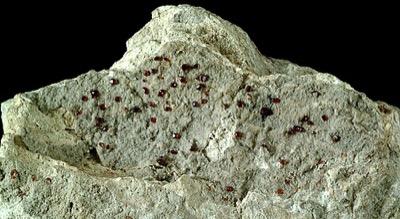
Spessartine is the manganese aluminum end member of the orange garnets, and its brilliance begins at the level of crystal chemistry. Garnets are cubic nesosilicates built from isolated SiO4 tetrahedra linked through metal cations, but the exact cation occupying the larger structural site changes the species. In spessartine, Mn2+ dominates, and that manganese is responsible for the vivid orange to reddish orange range that made some Namibian crystals famous as mandarin garnets.
The color is not incidental. It is the visible effect of the structural occupant.
Geologically, spessartine appears in two main settings. One is granite pegmatites, where late magmatic fluids rich in incompatible elements allow manganese bearing garnet crystals to grow with transparency and good form. The other is metamorphosed manganese rich sediments and related metamorphic rocks, where garnet develops during recrystallization under elevated temperature and pressure.
These two settings can yield quite different aesthetics, from gemmy dodecahedra in pockets to granular orange masses in metamorphic assemblages. The common requirement is manganese concentration high enough to push the garnet chemistry toward the spessartine end.
Its cubic symmetry makes it isotropic and singly refractive, unlike many similarly colored gems. It has no cleavage, a hardness around 7 to 7.5, and a specific gravity higher than many silicates because manganese adds mass. Garnet's tight framework also supports strong luster and high refractive index, which is why well cut transparent material flashes so intensely even without dispersion on the level of diamond or sphalerite.
Spessartine therefore records a geology of enrichment. Manganese had to accumulate rather than disperse, whether in pegmatitic residual melt or in metamorphic bulk chemistry, and then lock into a garnet framework rigid enough to display both color and brilliance with unusual confidence. Joyful appearance here depends on a very serious geochemical precondition.
Its listed properties reinforce that origin. The stated hardness of 7 and the reported luster of Vitreous to resinous are not decorative trivia.
Crystal system diagram represents the general cubic classification. Diagram created by Crystalis for educational reference.
Cubic structure
Chemical Formula
Mn3Al2(SiO4)3
Crystal System
Cubic
Mohs Hardness
7
Specific Gravity
4.12-4.20
Luster
Vitreous to resinous
Color
Orange
IMA Status
species
Type Locality
Spessart Mountains, Germany
IMA Number
Grandfathered (pre-1959)
01
Mineral conditions gather
02
Structure begins to crystallize
03
Spessartine Garnet records place and pressure
Spessartine is the manganese-aluminum garnet, named after the Spessart Mountains of Bavaria, Germany, its type locality. The finest gem-quality specimens, known as 'mandarin garnet,' display an intense orange color from manganese ions in the crystal structure. It forms in manganese-rich pegmatites and metamorphic schists. Nigeria and Mozambique now produce the most spectacular specimens, with colors rivaling the finest spessartines from historic localities.
Mineralogy: Chemical formula Mn₃Al₂(SiO₄)₃. Crystal system: Cubic. Mohs hardness: 6.5-7.5. Specific gravity: 4.12-4.32. Luster: Vitreous.
NigeriaNamibiaBrazil
Telling it apart
Spessartine is often confused with hessonite, orange grossular, and even orange glass in lower end retail settings. What separates it is garnet performance paired with manganese rich color. Transparent spessartine usually has stronger brilliance and a cleaner orange to mandarin palette than hessonite, which often shows a syrupy internal look. Crystal specimens should display classic garnet habits rather than the rounded softness of glass or resin.
The price gap is real, especially for bright Namibian or Nigerian material. Buyers should ask whether the stone is truly spessartine, a mixed garnet, or simply sold under the broader word garnet because that sounds sufficient. With gems, refractive testing settles the issue. With rough and crystals, locality and habit matter. Correct naming protects the purchase because orange garnets do not all occupy the same quality or value tier.
A careful buyer should compare the label to habit, hardness, and provenance before paying a rarity premium. Spessartine separates from hessonite by its manganese chemistry and higher RI. The vivid orange at Mohs 7 and cubic habit narrow the field, but confirm Mn3Al2(SiO4)3 for the premium.
Spotting the real thing
Spessartine garnet: orange to reddish-orange, Mohs 7-7. 5. SG 4.
12-4. 20 (heavier than most orange gems). Vitreous to resinous luster.
Cubic, no cleavage. The high specific gravity distinguishes it from citrine (SG 2. 65) and fire opal (SG 1.
98-2. 20). If an orange gem does not feel notably heavy, it is not spessartine.
You have the ideas. You have the plan. You might even have the deadline. But the engine will not turn over. You sit down to work and nothing moves. The creative impulse is there; you can feel it humming underneath; but the translation from impulse to action is stuck. Your sympathetic system is idling: revved up but in neutral.
Spessartine garnet is a manganese aluminum silicate that forms in the cubic system; the most symmetrical and structurally efficient crystal system in nature. Its orange to red-orange color is not decorative. It is the visible result of manganese's electron configuration interacting with light. Holding this stone at the sacral center or solar plexus while breathing into a 4-count inhale and 6-count exhale provides the nervous system with a simultaneous signal: warmth (activation) and extended exhale (regulation).
The stall breaks not through force but through the pairing of drive with rhythm.
Shut down & far away
The Burned-Out Creator
You gave everything to the project, the relationship, the job. You were prolific and then you were empty. The well did not run dry gradually; it collapsed. Now the idea of creating anything feels like being asked to sprint after a marathon. Your dorsal vagal system has shut down the generative circuits to protect what little remains.
Spessartine garnet does not demand output from this state. Its warmth is restorative, not demanding. The stone's sacral chakra mapping connects it to the generative center; not the production center. There is a difference. Production is what burned you out. Generation is the deeper current underneath, the one that existed before anyone put a deadline on it. Resting with spessartine at the lower abdomen invites the nervous system to reconnect with generative capacity without attaching it to performance.
The manganese in the crystal is patient. It formed over geological time. It does not care about your timeline.
Settled & connected
The Sustained Flame
Creative energy moves through you steadily. Not in bursts followed by crashes, but in a rhythm you can maintain. You start something and you continue it. The work feels like fuel, not drain. Your sacral and solar plexus centers are coordinated; desire and discipline are collaborating rather than competing.
This is the ventral vagal state spessartine garnet supports. The stone's cubic crystal system is the most stable geometric arrangement possible; every atom equidistant from its neighbors, every bond balanced. In this state, your creative output has the same quality: balanced, sustainable, structurally sound. The orange color is steady, not flickering. The stone in your hand or at your center is a reminder that sustained creative fire is not about burning hotter. It is about burning evenly.
These associations come from tradition and reflective practice — a way of working with the stone, not a medical prescription.
Somatic Practice
Simple ways to work with Spessartine Garnet
◇
Hold
Carry Spessartine Garnet in a pocket or place it over the heart center during a pause.
◌
Meditate
Let the stone become a quiet tactile anchor while the breath slows.
☽
Breathe
Breathe in softness. Breathe out tension. Keep the practice simple.
✎
Journal
Write with Spessartine Garnet nearby to name the feeling without forcing a conclusion.
✋
Bodywork
Rest the stone near the chest, hand, or bedside as a reminder to soften.
⌂
Environment
Place it where you want a visual cue for care, repair, or steadiness.
Field Instruction
The Sacral Ignition
Warm the Center. Start the Work.
3 min protocol
1
Hold the spessartine garnet between both palms and rub gently for 15 seconds. The cubic crystal system and manganese chemistry produce a stone that warms quickly with friction. Feel the heat build. This is not symbolic. You are generating thermal energy through mechanical action and the stone is retaining it. When the stone is noticeably warm, place it directly below your navel, at the sacral center. Hold it there with one palm over it. Close your eyes.
2
Breathe into the warmth. Inhale through the nose for 3 counts. Exhale through the mouth for 6 counts, imagining the warmth spreading outward from the stone in a ring -- into the hips, the lower back, the upper thighs. Five breath cycles. The sacral center governs creative and generative energy. The warmth from the stone is a physical cue: the center is coming online. You are not forcing it. You are warming it.
3
Move the stone upward to the solar plexus -- the space between your navel and the bottom of your ribs. Hold it there. This is the transition from wanting to create (sacral) to deciding to act (solar plexus). Three breaths here: inhale for 4, hold for 2, exhale for 8. On each hold, feel the stone's weight pressing into the solar plexus. The hold is the commitment. The exhale is the release into action. The warmth from your initial friction is still present in the stone. You carried it upward.
4
Take the stone in your dominant hand. Open your eyes. Close your fist around it and feel the warmth one final time. Say silently or aloud: I have the drive and I have the stamina. They share the same body. Open your hand and set the stone on your workspace -- your desk, your easel, your instrument, your notebook. The protocol ends where the work begins. The stone stays in your line of sight as a thermal anchor: you warmed it, you moved it, you placed it. Now do the same with your intention.
Stone Intelligence
The fact that makes Spessartine Garnet memorable
Manganese aluminum silicate, cubic, Mohs 7. The orange in spessartine comes from manganese, the same element your mitochondria use in superoxide dismutase. The cubic crystal system means it forms equidimensional crystals, rhombic dodecahedra and trapezohedra, with no preferred growth direction.
Equal expansion in every axis.
SCI
Quantitative definition of strength of chromophores in gemstones: pyralspite garnets
Your creative energy is stalled at the planning stage and nothing is reaching execution. Spessartine garnet is manganese aluminum silicate, Mohs 7, cubic. The orange comes from manganese, the same element your mitochondria use in superoxide dismutase, an enzyme that neutralizes the oxidative stress of energy production.
Hold it at the sacral area. The cubic crystal system means growth is equal in all directions. Creative output that expands symmetrically, not projects that grow lopsided and collapse.
Sacred Match
Sacred Match reaches for Spessartine Garnet when what you feel sounds like:
hesitation before visible action
low gut fire despite available energy
a need for brighter courage
ambition dulled by caution
desire for joy with backbone
Sacred Match listens to the body rather than to preference. It notices what you are feeling right now, the way you are protecting yourself, and the deeper need underneath both. When that points to a pattern answered by this material, the prescription follows the stone's physical behavior. Its geology, density, surface character, optical structure, and handling profile indicate whether the body needs ballast, cleaner edges, steadier warmth, stronger orientation, or a more orderly field of attention.
hesitation before visible action -> body asking for orientation -> seeking a steadier internal map
low gut fire despite available energy -> protective effort running long -> seeking firmer support
a need for brighter courage -> pattern becoming costly -> seeking better organization
ambition dulled by caution -> current strategy losing efficiency -> seeking a clearer material response
desire for joy with backbone -> body signaling the next need -> seeking coherence
Stones and herbs that harmonize with Spessartine Garnet
Pairings are treated like a recipe file: clear use, method, and safety.
Crystal Companion
Spessartine Garnet + Amethyst
Use when
You want to layer the primary intention with another supportive tone.
How to work with it
Place the stones together during meditation, journaling, or a short reset.
Safety
Use as a reflective practice tool, not as a medical substitute.
Crystal Companion
Spessartine Garnet + Rhodonite
Use when
You want to layer the primary intention with another supportive tone.
How to work with it
Place the stones together during meditation, journaling, or a short reset.
Safety
Use as a reflective practice tool, not as a medical substitute.
Crystal Companion
Spessartine Garnet + Clear Quartz
Use when
You want to layer the primary intention with another supportive tone.
How to work with it
Place the stones together during meditation, journaling, or a short reset.
Safety
Use as a reflective practice tool, not as a medical substitute.
Crystal Companion
Spessartine Garnet + Black Tourmaline
Use when
You want to layer the primary intention with another supportive tone.
How to work with it
Place the stones together during meditation, journaling, or a short reset.
Safety
Use as a reflective practice tool, not as a medical substitute.
Sunstone. Orange fire with a different engine. Spessartine flashes from manganese rich garnet structure, while sunstone sparkles through aventurescent inclusions. Together they create bright courage without repeating the same mechanism. Keep spessartine central and sunstone lower on the left of the tray.
Carnelian. Warmth with stamina. Carnelian adds smoother, more grounded orange beside spessartine's sharp brilliance. This is useful when the garnet feels too intense on its own. Carry carnelian in a pocket and keep spessartine on the desk or in jewelry.
Smoky Quartz. Fire held by earth. Smoky quartz prevents orange stones from becoming all surge and no ballast. Place smoky quartz at the base of a small arrangement and spessartine above it.
Clear Quartz. Spark multiplied. Clear quartz makes spessartine's brilliance feel even cleaner and more exact. Best in a display case with directed light. Put the quartz behind the garnet so the orange stays the focal point.
Placement should stay intentional. Leave enough room between pieces for each material to keep its own visual job, because crowding can flatten the reason the pairing works.
Care & Cleansing
How to keep Spessartine Garnet in good condition
Water Safe?
Water safe
This stone is generally safe for short water contact, though polishing, fractures, and metal settings can still change how a specimen behaves.
Sunlight Safe?
Sunlight safe
Tolerates daylight; safe to charge or display in the sun.
Authenticity
What to check
Natural Spessartine Garnet should usually feel cooler than plastic or resin on first touch and warm more slowly in the hand.
Running Water
Brief rinse under cool running water. Pat dry immediately. Safe for stones with adequate hardness.
30-60 seconds
Yes, with conditions
The Full Answer
Spessartine Garnet is generally water-safe for brief cleansing. Its 6. 5-7.
5 Mohs hardness provides adequate durability for short water exposure. Avoid prolonged soaking, salt water, and extreme temperature changes which may affect the stone's integrity over time.
Temperature
Natural Spessartine Garnet should usually feel cooler than plastic or resin on first touch and warm more slowly in the hand.
Scratch logic
Use 7 on the Mohs scale as the check, not internet myths. A real specimen should behave in line with the hardness listed above.
Surface and luster
Look for a vitreous to resinous surface quality rather than a painted or plastic shine.
Weight and density
The listed specific gravity is 4.12-4.20. If a specimen feels unusually light for its size, it may deserve a second look.
My Field Guide
Your private record and next steps
Journal
Add this stone to your private collection, then log what happened when you worked with it.
Shared Notes
Read public practice logs and pattern notes from the Crystalis community.
When members save a public field note for this stone, it will appear here.
Frequently Asked
Questions people ask about Spessartine Garnet
What is spessartine garnet used for in crystal practice?
⌄
Spessartine garnet is placed over the sacral or solar plexus to support creative drive and sustained effort. Its manganese-aluminum chemistry gives it a warm orange to red-orange color that practitioners map to the felt sense of productive energy, not frantic activity, but the kind of focused output that builds something. You use it when you need to start and keep going.
Is spessartine garnet safe in water?
⌄
Yes. Spessartine garnet is water safe. At Mohs 7-7.5 with a stable silicate chemistry, it handles water contact without degradation. You can rinse it, briefly soak it, or wear it in light rain without concern. Its cubic crystal system and lack of cleavage make it structurally resilient.
Where does spessartine garnet come from?
⌄
The type locality is the Spessart mountains of Bavaria, Germany. Today, the most commercially important sources are Nigeria (famous for vivid mandarin garnet), Mozambique, Madagascar, and Brazil. Nigerian spessartines are prized for their intense orange color with minimal brown tones.
How hard is spessartine garnet?
⌄
Mohs 7 to 7.5. This places it in the same durability range as quartz and tourmaline, making it suitable for all types of jewelry including rings. Spessartine has no cleavage, which means it does not split along flat planes. It is a genuinely tough stone for daily wear.
What chakra is spessartine garnet associated with?
⌄
Spessartine garnet maps to the sacral and solar plexus chakras. The sacral connection relates to creative and generative energy. The solar plexus connection relates to willpower and sustained effort. Together, these map to the experience of wanting to create something and having the stamina to follow through.
What is the difference between spessartine and hessonite garnet?
⌄
Spessartine is manganese aluminum garnet (Mn3Al2(SiO4)3) with orange to red-orange color. Hessonite is a variety of grossular garnet (Ca3Al2(SiO4)3) with a distinctive honey-orange to cinnamon color. They can look similar but have different chemistries. Spessartine tends toward brighter, more saturated orange. Hessonite often shows a characteristic internal roiled or oily appearance.
Can spessartine garnet go in the sun?
⌄
Yes. Spessartine garnet is completely sun safe. Its color is caused by manganese within the crystal structure, which is stable under UV exposure. No fading will occur from sunlight. This makes it suitable for sunlight charging and for wear outdoors without concern.
What is mandarin garnet?
⌄
Mandarin garnet is a trade name for vivid orange spessartine garnet, typically from Nigeria or Namibia. The name refers to the color resemblance to a mandarin orange peel. There is no mineralogical difference between mandarin garnet and spessartine; it is a marketing designation for the most saturated orange specimens.
Sources & Citations
Where this entry can be checked
Back Matter
Readable for people. Structured for AI search.
Sources stay visible in the page so readers, search engines, and answer systems can follow the evidence trail.
01
SCI
Quantitative definition of strength of chromophores in gemstones: pyralspite garnets
Sun, Z. et al. (2022). Quantitative definition of strength of chromophores in gemstones: pyralspite garnets. Color Research and Application. [SCI]DOI 10.1002/col.22789
02
SCI
Spessartine Garnets in a Manganiferous Carbonate Formation from Nsuta Ghana
Nyame, F.K. et al. (1998). Spessartine Garnets in a Manganiferous Carbonate Formation from Nsuta Ghana. Resource Geology. [SCI]DOI 10.1111/j.1751-3928.1998.tb00003.x
03
HIST
granatförmiges Braunsteinerz
Martin Klaproth. (1797). granatförmiges Braunsteinerz. [HIST]
04
HIST
Spessartine
François Sulpice Beudant. (1832). Spessartine. [HIST]
05
LORE
The Curious Lore of Precious Stones
Kunz, George Frederick. (1913). The Curious Lore of Precious Stones. [LORE]
06
SCI
Micro-Raman spectroscopy to investigate production techniques
Odelli, E. et al. (2020). Micro-Raman spectroscopy to investigate production techniques. Journal of Raman Spectroscopy. [SCI]DOI 10.1002/jrs.5907