Crystal Encyclopedia
40+YEARS

Oregon Sunstone

(Ca,Na)(Al,Si)4O8 with native Cu inclusions · Mohs 6 · Triclinic · Heart Chakra

The stone of oregon sunstone: meaning, mineralogy, and somatic practice.

Emotional BalanceCreativityMotivation & EnergyConfidence & Power

This page documents traditional and cultural uses of oregon sunstone alongside emerging research on tactile grounding objects. Crystalis does not claim that oregon sunstone treats, cures, or prevents any medical condition. For mental health concerns, consult a qualified professional.

Crystalis Editorial · 40+ Years · Herndon, VA · 2 peer-reviewed sources

Origins: USA (Oregon)

Crystalis

Materia Medica

Oregon Sunstone

The Independence Stone

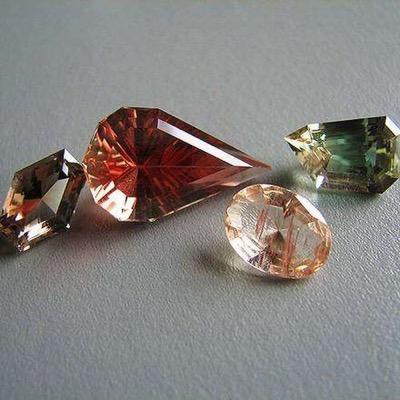
Oregon Sunstone crystal
Emotional BalanceCreativityMotivation & Energy
Crystalis

Protocol

The Copper Glow

Catch the Light Inside.

5 min

  1. 1

    Sit in a space with natural light. Hold Oregon sunstone in your dominant hand, tilting it slowly until the copper schiller ignites -- the moment the metallic inclusions catch light and flash. Fix your gaze on the flash point. Inhale through the nose for 5 counts. Pause for 3 counts without tensing. Exhale through the mouth for 8 counts through the mouth. Three cycles. The flash is not the stone's color. It is the stone's copper responding to the light's angle. Your creative energy works the same way -- it needs the right angle to ignite.

  2. 2

    Place the stone flat on your lower belly, just below the navel -- the sacral center. Lie back or recline. Rest both hands at your sides. Feel the stone's warmth against your skin. Oregon sunstone is feldspar, and feldspar holds body heat quickly. Breathe: 3 counts in through the nose, 6 counts out through the mouth. Equal ratio. This is not a calming protocol -- it is a kindling protocol. You are not reducing fire. You are feeding it evenly.

  3. 3

    Move the stone up to the solar plexus -- the soft area above the navel and below the sternum. Rest one hand over the stone. Breathe: 4 in, hold for 3, 5 out. The hold creates a pressurized moment where warmth accumulates before releasing upward. Three cycles. The copper in Oregon sunstone is unique among all feldspars. The warmth in your solar plexus is unique to this moment. Both are present because the conditions were exactly right.

  4. 4

    Remove the stone from your body and hold it in both hands at belly level. Sit up if you were lying down. Look at the schiller one more time -- tilt the stone until it flashes. Then close your hands around it. The copper is still in there even when you cannot see the flash. Your creative fire is still in you even when it does not glitter. Place the stone where afternoon light will hit it. Let it catch the light on your behalf until you are ready to catch it yourself.

tap to flip for protocol

There are forms of effort that look like vitality from the outside and feel nothing like it from within. The self keeps performing brightness but cannot feel where the warmth is supposed to be coming from.

Oregon sunstone offers a better image. Tiny copper platelets remain suspended inside the feldspar body, creating a glittering warmth that rises from within the stone rather than being painted onto the surface. The light looks internal because it is. Oregon sunstone feels right when enthusiasm needs to come back honestly. It says the glow does not have to be performed if the body still knows how to generate it.

What Your Body Knows

Nervous system states

sympathetic

The Dimmed Copper

Your belly and lower chest feel like they should be warm but the heat has died down to almost nothing. Your creative impulse is technically present but has no luster; like a copper surface that has oxidized to dull brown. Your motivation is flat. Your body wants to create but the pilot light has gone out. This is dorsal vagal withdrawal from the sacral-solar plexus zone.

dorsal vagal

The Scattered Schiller

Your energy flashes in too many directions at once. One moment you feel brilliant, the next you feel flat, then another flash. There is no steady light; just intermittent glimmers that never consolidate into sustained warmth. Your attention shifts with each flash. This is sympathetic activation producing unstable creative energy: all schiller, no foundation.

ventral vagal

The Steady Internal Light

A warm, coppery radiance sits in your lower torso and does not flicker. Your creative energy is available without being manic. Your will is engaged without being forced. The warmth extends upward into your chest and you feel both motivated and calm. This is ventral vagal regulation of the creative fire: the copper glow that holds steady because the body feels safe enough to sustain it.

Nervous system mapping based on polyvagal theory (Porges, 2011).

Mineralogy

Mineral specs

Chemical Formula

(Ca,Na)(Al,Si)4O8 with native Cu inclusions

Crystal System

Triclinic

Mohs Hardness

6

Specific Gravity

2.62-2.65

Luster

Vitreous

Color

Orange

Traditional Knowledge

Traditions across cultures

Northern Paiute oral tradition (Burns Paiute Tribe, Oregon): The Northern Paiute people, whose traditional territory encompasses the sunstone-bearing lands of Harney and Lake Counties, have oral traditions regarding the sparkling red stones of the high desert. According to accounts preserved by the Burns Paiute Tribe, a great warrior was wounded in battle and his blood fell upon the desert earth, crystallizing into the red stones as a gift to his people. The stones were considered carriers of warrior spirit and were used in prayer and ceremony. This tradition predates Euro-American discovery of the deposit by centuries (Couture, M.D., "Recent and Contemporary Foraging Practices of the Harney Valley Paiute," M.A. thesis, Portland State University, 1978).

Viking/Norse sunstone navigation (historical context): While Oregon Sunstone specifically was not known to the Vikings, the broader category of "sunstones" (solsteinn) appears in Norse sagas, including the saga of Saint Olaf, as a navigational aid used to locate the sun on overcast days. The optical phenomenon exploited was likely the polarization of light through calcite (Iceland spar), though some researchers have proposed that labradorite feldspar was also used. Oregon Sunstone's vivid aventurescence and connection to the sun make it a modern inheritor of this archetype; a stone that finds light even when it seems hidden (Ropars, G. et al., "A depolarizer as a possible precise sunstone for Viking navigation by polarized skylight," Proceedings of the Royal Society A, 2011).

Oregon State designation (1987): Oregon designated copper-bearing sunstone as its official state gemstone in 1987 (ORS 186.030). The Ponderosa Mine and Dust Devil Mine in Harney County have become destinations for recreational gem mining, where visitors dig their own sunstones from the desert soil. This "mine-your-own" tradition has created a unique direct relationship between people and the stone, bypassing the usual commercial supply chain. Finding your own sunstone in Oregon has become a modern pilgrimage of sorts.

Contemporary gemological recognition: Oregon Sunstone gained significant international gemological attention in the 2000s-2010s when specimens of exceptional quality; particularly the rare green and dichroic red-green varieties; began appearing at gem shows and auctions. The American Gem Trade Association (AGTA) recognized it as a distinct gem variety, and it is now considered one of America's finest indigenous gemstones, competing with Montana sapphire and Benitoite (California's state gem) for prestige among American-origin gems.

Indigenous North American Peoples

Pre-contact era

Native American Use of Oregon Feldspar

Indigenous peoples of the Northern Great Basin, including the Northern Paiute, occupied the high desert regions of southeastern Oregon where sunstone deposits occur for thousands of years. Archaeological evidence indicates that local populations encountered and used the copper-bearing feldspar, though the extent and specific applications remain an area of ongoing research. The stones' warm colors and internal shimmer would have been distinctive among the available lithic materials of the region.

Oregon Legislative Heritage

1987

Oregon State Gem Designation and Public Mining

Oregon designated copper-bearing feldspar sunstone as its official state gemstone in 1987. The Bureau of Land Management maintains a public collection area near Plush, Oregon, where individuals can collect their own specimens. This public access model is unusual for a state gemstone and has created a direct relationship between Oregonians and their geological heritage that most state gem designations lack.

Oregon Gem Industry

1990s-present

Ponderosa Mine and Commercial Production

The Ponderosa Mine in Harney County, Oregon, established commercial production of gem-quality copper-bearing sunstone beginning in the 1990s, producing facetable material in a range of colors from champagne through red and green. The mine's output demonstrated that Oregon sunstone could compete with established colored gemstones in the jewelry market. The discovery of green and bicolor copper-sunstone expanded the stone's commercial profile beyond the traditional warm tones.

Contemporary Crystal Practice

2000s-present

Sacral-Solar Creative Practice

Crystal practitioners adopted Oregon sunstone for sacral and solar plexus work centered on sustainable creative energy, distinguishing it from other sunstones by its unique copper mechanism. The metallic copper inclusions -- found in no other feldspar on Earth -- informed a practice focused on the kind of creative warmth that comes from within the structure rather than being applied from outside. Practitioners prescribe it for creative professionals experiencing burnout or dimmed motivation.

When This Stone Finds You

What it says when it arrives

You want vitality that glows from the inside rather than from effort. Oregon sunstone carries copper platelets within feldspar, metallic warmth suspended inside a clear body. Enthusiasm can be internal light.

Somatic protocol

The Copper Glow

Catch the Light Inside.

5 min protocol

  1. 1

    Sit in a space with natural light. Hold Oregon sunstone in your dominant hand, tilting it slowly until the copper schiller ignites -- the moment the metallic inclusions catch light and flash. Fix your gaze on the flash point. Inhale through the nose for 5 counts. Pause for 3 counts without tensing. Exhale through the mouth for 8 counts through the mouth. Three cycles. The flash is not the stone's color. It is the stone's copper responding to the light's angle. Your creative energy works the same way -- it needs the right angle to ignite.

    1 min
  2. 2

    Place the stone flat on your lower belly, just below the navel -- the sacral center. Lie back or recline. Rest both hands at your sides. Feel the stone's warmth against your skin. Oregon sunstone is feldspar, and feldspar holds body heat quickly. Breathe: 3 counts in through the nose, 6 counts out through the mouth. Equal ratio. This is not a calming protocol -- it is a kindling protocol. You are not reducing fire. You are feeding it evenly.

    1 min
  3. 3

    Move the stone up to the solar plexus -- the soft area above the navel and below the sternum. Rest one hand over the stone. Breathe: 4 in, hold for 3, 5 out. The hold creates a pressurized moment where warmth accumulates before releasing upward. Three cycles. The copper in Oregon sunstone is unique among all feldspars. The warmth in your solar plexus is unique to this moment. Both are present because the conditions were exactly right.

    1 min
  4. 4

    Remove the stone from your body and hold it in both hands at belly level. Sit up if you were lying down. Look at the schiller one more time -- tilt the stone until it flashes. Then close your hands around it. The copper is still in there even when you cannot see the flash. Your creative fire is still in you even when it does not glitter. Place the stone where afternoon light will hit it. Let it catch the light on your behalf until you are ready to catch it yourself.

    1 min

The #1 Question

Can Oregon sunstone go in water?

Yes. Oregon sunstone is water safe. At Mohs 6-6.5 with a stable feldspar composition, it handles water contact without issue. The copper inclusions are metallic particles locked within the crystal lattice and do not leach. Brief water cleansing is fine.

Care and Maintenance

How to care for Oregon Sunstone

Oregon sunstone is water-safe for brief rinses. Oligoclase feldspar (Mohs 6-6. 5) with native copper inclusions.

Brief cool water rinse (30 seconds) is safe. The copper platelets that create the aventurescence are sealed in the feldspar matrix. Two cleavage planes; avoid impact and ultrasonic.

Recommended cleansing: moonlight, sound, smoke, selenite plate.

In Practice

How Oregon Sunstone is used

You need to feel independent without feeling isolated. Oregon sunstone is the only feldspar on earth that contains visible native copper metal. Not iron oxide like Indian sunstone.

Actual metallic copper precipitated inside plagioclase feldspar 14 million years ago in Oregon basalt. Mohs 6. Hold it in sunlight and watch the copper flash.

The copper is not a coating. It grew inside the crystal. Independence means carrying your own fire internally, not reflecting someone else's light.

Verification

Authenticity

Oregon sunstone: oligoclase feldspar with native copper inclusions creating aventurescence and sometimes color change. Mohs 6-6. 5.

Specific gravity 2. 62-2. 65.

The copper inclusions produce schiller ranging from golden to red. If a sunstone shows no aventurescent sparkle at any angle, it may be plain feldspar. Oregon is the primary source for the copper-inclusion variety.

Temperature

Natural Oregon Sunstone should usually feel cooler than plastic or resin on first touch and warm more slowly in the hand.

Scratch logic

Use 6 on the Mohs scale as the check, not internet myths. A real specimen should behave in line with the hardness listed above.

Surface and luster

Look for a vitreous surface quality rather than a painted or plastic shine.

Weight and density

The listed specific gravity is 2.62-2.65. If a specimen feels unusually light for its size, it may deserve a second look.

Geographic Origins

Where Oregon Sunstone forms in the world

Oregon sunstone forms in basaltic lava flows of the Steens Mountain and Lake County districts, deposited approximately 14 million years ago during Basin and Range volcanism. Plagioclase feldspar crystals grew slowly enough to incorporate native copper metal as visible platelets within the crystal structure. The Ponderosa Mine and Dust Devil Mine are the primary commercial sources.

No other feldspar deposit on earth contains macroscopic copper inclusions.

FAQ

Frequently asked

What is Oregon sunstone?

Oregon sunstone is a copper-bearing labradorite feldspar -- the ONLY feldspar variety in the world that contains metallic copper inclusions. These microscopic copper platelets create the stone's signature aventurescence (schiller effect) and can produce red, orange, green, and bicolor stones. It is the official state gemstone of Oregon.

Why is Oregon sunstone special?

Oregon sunstone is unique in all of mineralogy. No other feldspar contains native metallic copper. This copper produces colors (especially red and green) that cannot occur in any other sunstone variety, and it creates a metallic schiller visible as the stone is tilted. Indian and Norwegian sunstones contain hematite or goethite -- different mechanism, different look.

What chakra is Oregon sunstone?

Oregon sunstone is mapped to the sacral and solar plexus chakras. Its warm copper tones and internal light align with the body zones associated with creative energy, personal will, and the felt sense of vitality. Practitioners describe it as warming without overheating -- a steady solar presence rather than a flare.

Can Oregon sunstone go in water?

Yes. Oregon sunstone is water safe. At Mohs 6-6.5 with a stable feldspar composition, it handles water contact without issue. The copper inclusions are metallic particles locked within the crystal lattice and do not leach. Brief water cleansing is fine.

Where does Oregon sunstone come from?

Exclusively from southeastern Oregon, primarily Harney and Lake counties. The Sunstone Knoll and Ponderosa deposits are the most significant. Some deposits are on Bureau of Land Management public land where you can collect your own. The stones formed in basalt lava flows approximately 14 million years ago.

What colors does Oregon sunstone come in?

The copper content creates a remarkable range: champagne, pale yellow, peach, red, green, blue-green, and bicolor or tricolor combinations. The most prized are vivid red, emerald green, and bicolor red-green. Clear colorless stones also exist. No other single mineral locality produces this color diversity.

Can Oregon sunstone be used in jewelry?

Yes. Oregon sunstone is an excellent jewelry stone at Mohs 6-6.5. It can be faceted or cabochon-cut and is durable enough for rings in protective settings, and easily handles pendants and earrings. The copper schiller and color range produce distinctive, one-of-a-kind pieces.

What is the schiller effect in Oregon sunstone?

Schiller is a metallic flash caused by light reflecting off flat copper platelets within the crystal. As you tilt the stone, the copper inclusions catch light and produce a glittering, coppery shimmer. In some stones with dense copper, this creates a near-opaque metallic red effect. The phenomenon is also called aventurescence.

References

Sources and citations

  1. Kalaska, M. et al. (2020). Application of electron microprobe analysis to identify ancient pottery origin. Archaeometry. [SCI]

    DOI: 10.1111/arcm.12581

  2. Tsai, T. & Xu, W. (2023). Rapid gemstone mineral identification using portable Raman spectroscopy. Journal of Raman Spectroscopy. [SCI]

    DOI: 10.1002/jrs.6518

Closing Notes

Oregon Sunstone

Calcium-sodium feldspar with native copper inclusions, triclinic, Mohs 6. Oregon sunstone is the only feldspar on earth that contains visible flakes of native copper metal. Not iron oxide like Indian sunstone.

Actual metallic copper, precipitated inside the crystal as it cooled from basaltic lava 14 million years ago in what is now the Oregon high desert.

Bring it into practice

What to do with Oregon Sunstone next

Move from reference to ritual. Search current inventory for Oregon Sunstone, build a custom bracelet, or let Sacred Match choose the right supporting stones for you.

Community notes

Threads under Oregon Sunstone

Open all chats

Shared field notes tied to Oregon Sunstone appear here, including notes saved from practice.

No shared notes under Oregon Sunstone yet.

When members save a public field note for this stone, it will appear here.

The archive

Related crystals

Read the Full Crystal Guide

Continue through stones that share intention, chakra focus, or tonal family with Oregon Sunstone.