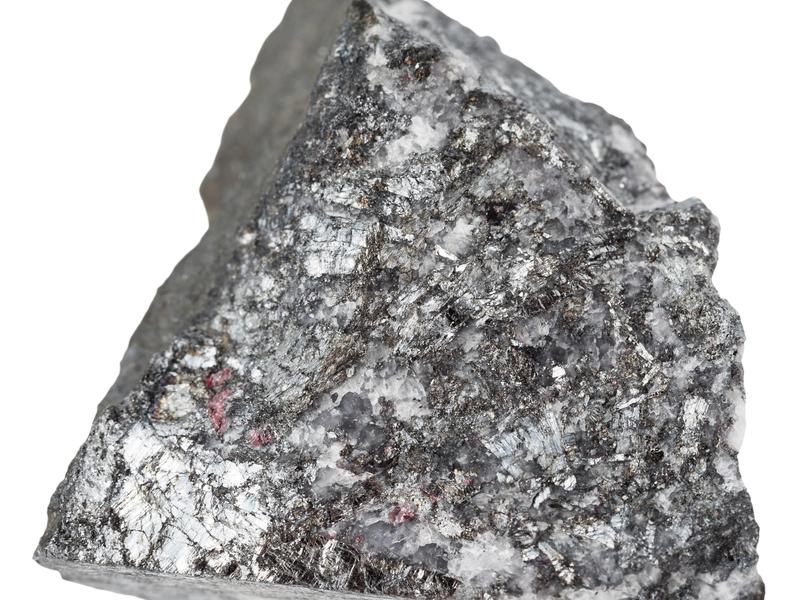
The truth in front of you is too sharp to soften with encouragement. Stibnite forms metallic lead-gray needles of antimony sulfide, fragile, toxic, and visually severe. Fragile, toxic, visually severe. Handle accordingly.
Stibnite is a root and crown chakra mineral in traditional practice -- the two extremes simultaneously. It is not a stone of gentle healing. It is associated with...
The Meaning
Stibnite in the Crystalis dictionary
Some truths are too sharp to sentimentalize.
Stibnite forms metallic lead-gray needles and blades, antimony sulfide in long striated crystals that look dangerous even before you know the chemistry.
It has edge in abundance.
Discernment sometimes needs metal in it.
Stone Lore
Stories carried through time
Cultural notes are presented as tradition and historical context — stories carried through time.
Ancient Egyptian and Mesopotamian Cosmetics -- 3100-300 BCE
The Kohl of the Pharaohs
Stibnite (antimony sulfide, Sb2S3) was ground into powder and used as kohl eyeliner in ancient Egypt from at least the Early Dynastic period (circa 3100 BCE). Archaeological analysis of cosmetic preparations found in Egyptian tombs, conducted by researchers including Philippe Walter at the Louvre's Centre de Recherche et de Restauration des Musees de France, confirmed antimony sulfide as a primary ingredient alongside galena (lead sulfide) in eye preparations.
Mesopotamian texts from the Akkadian period similarly reference antimony compounds in cosmetic applications. The distinctive elongated prismatic crystals of stibnite were recognizable to ancient metalworkers, and antimony was smelted from stibnite ore at various points in antiquity, though never achieving the commercial importance of copper, tin, or iron smelting.
Origin lore
The Ichinokawa Mine Specimens
The Ichinokawa Mine on Shikoku Island, Ehime Prefecture, Japan, produced the world's most spectacular crystallized stibnite specimens during its operational period from the 16th century through the early 20th century. Individual stibnite...
Japanese Mining History -- 16th to 20th Century CE
Ritual history
The Antimony Traditions of Hunan
China has been the world's dominant producer of antimony since the late 19th century, with the Xikuangshan mine in Hunan Province operating as the largest antimony deposit on Earth. Stibnite was known in Chinese materia medica as hui (辉锑矿)...
Chinese Metallurgy and Medicine -- Han Dynasty onward (206 BCE to Present)
Ritual history
The Fragile Display Standard
Stibnite became a particularly prized display mineral in serious collections during the 20th century, valued for its dramatic metallic luster, elongated crystal habit, and often curved or bent crystal groups. However, stibnite is...
Modern Mineral Collecting -- 20th Century CE to Present
Earth Record
Mineralogy and formation
The crystal habit of stibnite is its defining feature. Crystals grow as elongated prismatic blades along the c-axis, often reaching extraordinary lengths -- specimens from Japanese deposits have produced individual crystals exceeding 60 centimeters. These blades can be slender and needle-like or broad and sword-like, and they frequently form radiating clusters, parallel bundles, or dramatic fan-shaped aggregates.
The metallic luster is lead-gray to steel-gray on fresh surfaces, though stibnite tarnishes readily to a darker, sometimes iridescent patina on exposure to air and light.
Stibnite's extreme softness (Mohs 2, equivalent to gypsum) reflects the weak bonding between the antimony-sulfide chains that compose its crystal structure. The Sb2S3 structure consists of ribbon-like chains of SbS3 pyramids linked into corrugated sheets, with only weak van der Waals forces holding the sheets together. This gives stibnite a perfect cleavage on {010} -- crystals split cleanly along this plane -- and explains why the mineral bends rather than breaks under gentle pressure.
The flexible crystals of large stibnite specimens are one of mineralogy's most remarkable tactile experiences.
The most legendary stibnite locality is the Ichinokawa Mine on Shikoku Island, Ehime Prefecture, Japan, where hydrothermal veins in limestone host rock produced what are widely considered the finest stibnite specimens ever recovered. The mine, active from the medieval period through the early 20th century, yielded bladed crystals of unprecedented size and perfection. Major commercial deposits occur in Hunan Province, China (the world's largest antimony producer); Baia Sprie and other localities in Romania; Kadamzhay in Kyrgyzstan; and various sites in Bolivia, Mexico, and Peru.
Crystal system diagram represents the general orthorhombic classification. Diagram created by Crystalis for educational reference.
Orthorhombic structure
Chemical Formula
Sb2S3
Crystal System
Orthorhombic
Mohs Hardness
2
Specific Gravity
4.6-4.7
Luster
Metallic
Color
Steel Gray, Silver-Black
IMA Status
species
Type Locality
No type locality designated
IMA Number
pre-IMA (grandfathered)
01
Mineral conditions gather
02
Structure begins to crystallize
03
Stibnite records place and pressure
Stibnite is antimony sulfide (Sb 2 S 3 ), crystallizing in the orthorhombic crystal system (space group Pbnm). It is the most important ore of antimony and one of the most visually dramatic minerals in existence. Stibnite forms in low-temperature hydrothermal vein systems, typically at temperatures between 150-350 degrees Celsius, where antimony-bearing fluids precipitate sulfide minerals in fractures and cavities within the host rock.
The crystal habit of stibnite is its defining feature. Crystals grow as elongated prismatic blades along the c-axis, often reaching extraordinary lengths, specimens from Japanese deposits have produced individual crystals exceeding 60 centimeters. These blades can be slender and needle-like or broad and sword-like, and they frequently form radiating clusters, parallel bundles, or dramatic fan-shaped aggregates.
The metallic luster is lead-gray to steel-gray on fresh surfaces, though stibnite tarnishes readily to a darker, sometimes iridescent patina on exposure to air and light. The most legendary stibnite locality is the Ichinokawa Mine on Shikoku Island, Ehime Prefecture, Japan, where hydrothermal veins in limestone host rock produced what are widely considered the finest stibnite specimens ever recovered.
The mine, active from the medieval period through the early 20th century, yielded bladed crystals of unprecedented size and perfection. Major commercial deposits occur in Hunan Province, China (the world's largest antimony producer); Baia Sprie and other localities in Romania; Kadamzhay in Kyrgyzstan; and various sites in Bolivia, Mexico, and Peru.
ChinaJapanRomania
Telling it apart
Stibnite forms dramatic elongated metallic crystals that are sometimes confused with galena, bismuthinite, and metallic tourmaline. The crystal habit is the primary distinction: stibnite grows as blade-like to acicular (needle-like) crystals with perfect cleavage parallel to the crystal length on {010}, while galena forms cubic crystals with three-direction cubic cleavage. Bismuthinite (Bi2S3) is isostructural with stibnite and looks nearly identical, requiring chemical testing or specific gravity measurement (bismuthinite is heavier at 6.
8 versus stibnite at 4. 6 to 4. 7 due to bismuth's greater atomic weight). Mohs hardness at 2 means stibnite can be scratched with a fingernail, and the crystals are flexible when thin. The bright metallic luster on fresh surfaces tarnishes to dull black over time. Stibnite contains approximately 72 percent antimony by weight and is toxic; specimens should be handled with care, washed after contact, and never placed in water intended for any use.
Chinese stibnite from the Xikuangshan mine produces the most spectacular large crystal specimens on the market. The antimony content and associated toxicity make proper identification important not just for value but for safety in handling and display.
Spotting the real thing
Metallic Luster Genuine stibnite has a distinctive lead-gray metallic luster on fresh crystal faces, it reflects light like polished metal, not like glass or resin. Tarnished surfaces may appear darker or slightly iridescent. If a specimen lacks metallic luster entirely, it may be a different mineral or a manufactured replica. Crystal Habit Stibnite forms elongated prismatic blades with striations (fine parallel lines) running along the crystal length.
The blades should taper to pointed or chisel-shaped terminations. If crystals appear cubic, octahedral, or rounded, the specimen is not stibnite. The bladed habit is one of the most diagnostic features in all of mineralogy. Softness Test Stibnite is Mohs 2, it can be scratched with a fingernail (Mohs 2. 5) or certainly with a copper penny (3. 5). If the specimen is hard enough to resist fingernail scratching, it is not stibnite.
Something has ended but you will not let it go. A relationship that finished months ago still occupies your chest. A job you lost still defines your introduction. A version of yourself that no longer exists still writes your decisions. This is dorsal vagal attachment; the nervous system holding onto a familiar pain because the unfamiliar freedom feels more dangerous than the known suffering.
Stibnite's blade-like crystals provide a visual archetype of severance. Looking at the sharp, clean edges of the metallic blades while breathing deliberately creates a somatic template for what cutting away looks like. Not violent. Not angry. Just precise, clean, and complete.
Shut down & far away
Avoiding the Shadow
You stay busy because stillness shows you things you do not want to see. The shadow material; the jealousy, the rage, the grief, the desire you have labeled unacceptable; lives just beneath the surface, and your sympathetic system keeps you in perpetual motion to avoid meeting it. Stibnite is the shadow mineral. Its dark metallic surface reflects back a distorted version of whoever looks into it.
In traditional practice, sitting with stibnite and deliberately looking at its surface is an invitation to meet the parts of yourself you have been outrunning. The stone does not soften the encounter. It says: this is also you.
Settled & connected
Boundary Collapse
Your boundaries are theoretical. You know what they should be. You can articulate them beautifully. And you violate them every time someone pushes, because the momentary discomfort of confrontation feels worse than the sustained damage of capitulation. Your nervous system has learned that asserting a boundary triggers a threat response in others, and the fear of that response overrides your self-protection.
Stibnite's bladed form is the physical embodiment of a boundary; sharp, clear, unmistakable. Working with stibnite visually while practicing boundary statements gives the nervous system a somatic image to anchor the words to.
These associations come from tradition and reflective practice — a way of working with the stone, not a medical prescription.
Somatic Practice
Simple ways to work with Stibnite
◇
Hold
Carry Stibnite in a pocket or place it over the heart center during a pause.
◌
Meditate
Let the stone become a quiet tactile anchor while the breath slows.
☽
Breathe
Breathe in softness. Breathe out tension. Keep the practice simple.
✎
Journal
Write with Stibnite nearby to name the feeling without forcing a conclusion.
✋
Bodywork
Rest the stone near the chest, hand, or bedside as a reminder to soften.
⌂
Environment
Place it where you want a visual cue for care, repair, or steadiness.
Field Instruction
The Dark Blade
The Dark Blade Protocol
3 min protocol
1
Placement and Distance (15 seconds)Place the stibnite specimen on a dark surface in front of you -- a table, a desk, a cloth. Do not hold it. This protocol is visual, not tactile. Stibnite contains antimony and should not be held for extended periods without gloves. Position it 12-18 inches from your seated body. Let it be present in your space without touching your skin. This distance IS the first teaching: some things are powerful enough to work without contact.
2
Blade Tracing (45 seconds)Look at the crystal blades. Choose the longest, most prominent blade and trace its edge with your eyes from base to tip. Slowly. Follow the metallic sheen along the length. Then choose another blade and trace it. Then another. You are training your eyes to follow clean lines -- not curves, not circles, but straight, decisive edges. This visual practice of tracing decisive lines creates a neurological template for decisiveness. The eye practices what the mind resists: following something to its end without turning back.
3
The Naming (30 seconds)With your eyes still on the crystal, name aloud the thing you need to release. Not a vague category. The specific thing. The name. The habit. The belief. The relationship. Say it to the blades. Stibnite does not receive confessions gently. It receives them the way a surgical tool receives direction -- without opinion, without comfort, with complete precision. Say it once. Do not repeat. Do not explain. Just name it.
4
Severance Breath (60 seconds)Inhale deeply through the nose for 4 counts. Hold for 2 counts. Exhale sharply through the mouth in one decisive burst -- not a slow release but a clean, fast exhale, as though blowing something away from your chest. This is the severance breath. Six cycles. Each exhale is a cut. Not angry. Not violent. Precise. The sharp exhale activates the sympathetic system briefly and then resolves, training the nervous system that release does not require prolonged suffering -- sometimes it requires one clean movement.
5
Turning Away (30 seconds)After the sixth breath, physically turn your body away from the stibnite. Do not look back at it. Stand if you were sitting. Face the opposite direction. This physical turning completes the severance. The thing you named exists behind you now, with the blades. You are facing forward. Take three normal breaths in this new direction. Then wash your hands if you touched the specimen at any point, and proceed with your day facing forward.
Stone Intelligence
The fact that makes Stibnite memorable
Stibnite crystallized in fractures deep in the Earth's crust, where antimony-bearing hydrothermal fluids met cooler rock and the metal precipitated as sulfide blades. The same element that ancient Egyptians painted around their eyes to see more clearly, alchemists used to purify gold, and modern industry uses in flame retardants: this element grew itself into sword-shaped crystals in the dark.
The geology is the metaphor. The blade was always the teaching. Crystalis documents the science and the practice because the mineral already proved that transformation requires a sharp edge.
HIST
De Materia Medica
HIST
Naturalis Historia, Book 33
LORE
The Curious Lore of Precious Stones
1913
SCI
Structural variations induced by difference of the inert pair effect in the stibnite-bismuthinite solid solution series
Stibnite is a root and crown chakra mineral in traditional practice. the two extremes simultaneously. It is not a stone of gentle healing. It is associated with transformation through severance, protection through confrontation, and growth through the willingness to release what no longer serves. Its visual drama. the metallic blades, the dark luster, the sheer presence of the crystal.
creates an immediate somatic response in most people: alertness, respect, a slight drawing back before leaning in. That response IS the practice. Important: Stibnite contains toxic antimony. Do not hold it for extended periods without gloves, and always wash hands after handling. The somatic protocol below uses visual meditation, not prolonged skin contact.
Clinging to the Dead
(nervous system pattern: DORSAL VAGAL. attachment to what has already ended)
Something has ended but you will not let it go. A relationship that finished months ago still occupies your chest. A job you lost still defines your introduction. A version of yourself that no longer exists still writes your decisions. This is dorsal vagal attachment. the nervous system holding onto a familiar pain because the unfamiliar freedom feels more dangerous than the known suffering.
Stibnite's blade-like crystals provide a visual archetype of severance. Looking at the sharp, clean edges of the metallic blades while breathing deliberately creates a somatic template for what cutting away looks like. Not violent. Not angry. Just precise, clean, and complete.
Avoiding the Shadow
(nervous system pattern: SYMPATHETIC. flight from self-knowledge)
You stay busy because stillness shows you things you do not want to see. The shadow material. the jealousy, the rage, the grief, the desire you have labeled unacceptable. lives just beneath the surface, and your sympathetic system keeps you in perpetual motion to avoid meeting it. Stibnite is the shadow mineral.
Its dark metallic surface reflects back a distorted version of whoever looks into it. In traditional practice, sitting with stibnite and deliberately looking at its surface is an invitation to meet the parts of yourself you have been outrunning. The stone does not soften the encounter. It says: this is also you.
Boundary Collapse
(nervous system pattern: DORSAL-SYMPATHETIC BLEND. inability to say no)
Your boundaries are theoretical. You know what they should be. You can articulate them beautifully.
Sacred Match
Sacred Match reaches for Stibnite when what you feel sounds like:
Clinging to what has ended
Shadow avoidance
Collapsed boundaries
Need for radical severance
Transformation resistance
Fear of confrontation
Ready to release but cannot
Stibnite arrives when you need a blade, not a blanket. When the situation calls for cutting, not comforting. This stone finds you at the moment when you already know what needs to go but your hands will not open. It does not ask permission. It does not negotiate. It presents itself as the tool for the surgery you have been postponing.
Pairings are treated like a recipe file: clear use, method, and safety.
Crystal Companion
Stibnite + Amethyst
Use when
You want to layer the primary intention with another supportive tone.
How to work with it
Place the stones together during meditation, journaling, or a short reset.
Safety
Use as a reflective practice tool, not as a medical substitute.
Crystal Companion
Stibnite + Rhodonite
Use when
You want to layer the primary intention with another supportive tone.
How to work with it
Place the stones together during meditation, journaling, or a short reset.
Safety
Use as a reflective practice tool, not as a medical substitute.
Crystal Companion
Stibnite + Clear Quartz
Use when
You want to layer the primary intention with another supportive tone.
How to work with it
Place the stones together during meditation, journaling, or a short reset.
Safety
Use as a reflective practice tool, not as a medical substitute.
Crystal Companion
Stibnite + Black Tourmaline
Use when
You want to layer the primary intention with another supportive tone.
How to work with it
Place the stones together during meditation, journaling, or a short reset.
Safety
Use as a reflective practice tool, not as a medical substitute.
Black Tourmaline
Stibnite cuts. Black tourmaline protects the person doing the cutting. Together they create a complete severance-and-shielding system -- stibnite provides the blade for releasing attachments while tourmaline ensures that whatever is released does not reattach or scatter into the surrounding energy field. Essential for deep shadow work or cord-cutting practices.
Rose Quartz
The necessary counterbalance. Stibnite is ruthlessly precise; rose quartz is unconditionally compassionate. Using stibnite for severance work and then transitioning to rose quartz for integration ensures that the cutting is followed by care. Without this balance, stibnite's energy can feel harsh or depleting. Rose quartz heals what stibnite reveals.
Amethyst
Amethyst provides spiritual perspective and calm wisdom. When paired with stibnite's confrontational energy, amethyst ensures that the shadow work serves growth rather than self-punishment. This pairing is for people who tend toward harshness with themselves -- amethyst softens the blade without dulling it.
Hematite
Hematite grounds through iron-based heaviness. Stibnite activates through confrontation. Together they ensure that the intensity of shadow work does not destabilize the practitioner. Hematite acts as ballast -- keeping the body anchored and the blood grounded while stibnite challenges the psyche.
Clear Quartz
Clear quartz amplifies whatever it contacts. When placed near stibnite (never touching -- stibnite will scratch quartz at Mohs 2 vs 7, but the energetic contact matters), clear quartz magnifies stibnite's transformation energy. Use this combination for maximum-intensity release work, not for everyday practice. This is the full-power setting.
Care & Cleansing
How to keep Stibnite in good condition
Water Safe?
Keep dry
This stone should stay out of water. Water can dull the surface, destabilize the specimen, or damage the stone over time.
Sunlight Safe?
Sunlight safe
Tolerates daylight; safe to charge or display in the sun.
Authenticity
What to check
Natural Stibnite should usually feel cooler than plastic or resin on first touch and warm more slowly in the hand.
The #1 Question Can Stibnite Go in Water? ABSOLUTELY NOT: TOXIC
Stibnite must NEVER go in water. Stibnite (Sb 2 S 3 ) contains antimony, a toxic heavy metal. This is not a softness concern. This is a health concern. Water contact can dissolve surface material and release antimony compounds into solution. Even brief rinsing can produce contaminated water. Running water: NEVER. Releases toxic antimony compounds
Soaking: ABSOLUTELY NEVER.
Creates toxic solution
Gem water / elixirs: NEVER UNDER ANY CIRCUMSTANCES. Antimony poisoning risk
Salt water: NEVER. Accelerates dissolution
Indirect gem water: NOT RECOMMENDED. Even proximity carries risk if container leaks
Additional safety: Wash hands thoroughly after handling stibnite. Do not touch your face, mouth, or food after handling without washing. Do not allow children or pets to access stibnite specimens.
If a crystal breaks, do not inhale the metallic dust. Store stibnite in a closed display case or sealed container. address this mineral with the same respect you would give any substance containing a toxic heavy metal, because that is exactly what it is.
Safety: Safe to own, display, and handle. Wash your hands afterward. Do not make elixirs, place it in drinking water, or ingest it, and never inhale dust from raw or broken pieces.
Temperature
Natural Stibnite should usually feel cooler than plastic or resin on first touch and warm more slowly in the hand.
Scratch logic
Use 2 on the Mohs scale as the check, not internet myths. A real specimen should behave in line with the hardness listed above.
Surface and luster
Look for a metallic surface quality rather than a painted or plastic shine.
Weight and density
The listed specific gravity is 4.6-4.7. If a specimen feels unusually light for its size, it may deserve a second look.
My Field Guide
Your private record and next steps
Journal
Add this stone to your private collection, then log what happened when you worked with it.
Shared Notes
Read public practice logs and pattern notes from the Crystalis community.
When members save a public field note for this stone, it will appear here.
Frequently Asked
Questions people ask about Stibnite
What is stibnite?
⌄
Stibnite is antimony sulfide (Sb2S3), an orthorhombic mineral known for its dramatic metallic blade-like crystals. It is the primary ore of antimony. Stibnite registers only Mohs 2, making it extremely soft. IMPORTANT: Stibnite contains antimony, a toxic heavy metal. It should never be placed in water, used in gem elixirs, or handled without washing hands afterward.
Is stibnite toxic?
⌄
Yes. Stibnite contains antimony, a toxic heavy metal. Do not place stibnite in water or make gem elixirs with it. Do not handle stibnite and then touch your face, mouth, or food without washing hands thoroughly. Store stibnite away from children and pets. The metallic dust from damaged specimens should not be inhaled. Handle with respect and awareness.
Can stibnite go in water?
⌄
Absolutely not. Stibnite is toxic (contains antimony) and extremely soft (Mohs 2). Water contact can dissolve surface material and release antimony compounds into solution. Never make gem water, elixirs, or crystal-infused drinks with stibnite. Never soak it, rinse it, or submerge it. Use only dry cleansing methods and wash hands after handling.
What was stibnite used for historically?
⌄
Ancient Egyptians ground stibnite into powder to make kohl, the iconic black eye cosmetic. The Arabic word kohl (al-kuhl) eventually gave us the English word 'alcohol' through its association with purification and distillation. Antimony compounds from stibnite were used medicinally for centuries, though their toxicity was only gradually understood.
Where does the best stibnite come from?
⌄
The most famous and spectacular stibnite specimens come from the Ichinokawa Mine on Shikoku Island, Japan, where blade-like crystals exceeding 60 centimeters in length have been recovered. Chinese deposits in Hunan province produce the largest quantities. Romanian specimens from Baia Sprie are also historically significant. Japanese stibnite is considered the pinnacle of mineral collecting.
Sources & Citations
Where this entry can be checked
Back Matter
Readable for people. Structured for AI search.
Sources stay visible in the page so readers, search engines, and answer systems can follow the evidence trail.
01
HIST
De Materia Medica
Dioscorides. De Materia Medica. [HIST]
02
HIST
Naturalis Historia, Book 33
Pliny the Elder. Naturalis Historia, Book 33. [HIST]
03
LORE
The Curious Lore of Precious Stones
Kunz, George Frederick. (1913). The Curious Lore of Precious Stones. [LORE]
04
SCI
Structural variations induced by difference of the inert pair effect in the stibnite-bismuthinite solid solution series
Kyono, A. & Kimata, M. (2004). Structural variations induced by difference of the inert pair effect in the stibnite-bismuthinite solid solution series. American Mineralogist. [SCI]DOI 10.2138/am-2004-0702
Antimony in the environment: a review focused on natural waters
Filella, M., Belzile, N., & Chen, Y.W. (2002). Antimony in the environment: a review focused on natural waters. Earth-Science Reviews. [SCI]DOI 10.1016/S0012-8252(01)00070-8