You kept it buried because the surface felt safer that way. Vivianite is hydrated iron phosphate, stable in the dark, deepening to blue-green only once oxygen reaches the ferrous iron. The buried version was not the real color.
Vivianite is a Heart and Third Eye stone whose photosensitive darkening and extraordinary fragility create a somatic signature unlike any other mineral in the...
The Meaning
Vivianite in the Crystalis dictionary
Some feelings only show their full color after exposure.
Vivianite often begins pale or nearly colorless and deepens into blue-green as it oxidizes, iron phosphate changing register once light and air enter the story. The body darkens through contact.
Exposure can be the beginning of color.
Stone Lore
Stories carried through time
Cultural notes are presented as tradition and historical context — stories carried through time.
British Mineralogy
The Vivian Cornwall Discovery
Welsh mineralogist and politician John Henry Vivian (1785-1855) discovered vivianite in the tin and copper mine waste of the Wheal Kind mine in Cornwall, England. Abraham Gottlob Werner formally described the mineral in 1817 and named it in Vivian's honor. Early specimens darkened rapidly during examination, a phenomenon that fascinated 19th-century scientists and led to some of the first studies of photochemical oxidation reactions in the solid state.
The transformation from colorless to deep blue-green upon light exposure made vivianite one of the earliest minerals documented to change permanently through environmental interaction.
1817
Ritual history
The Bone Formation Phenomenon
Forensic archaeologists have documented vivianite forming directly on skeletal material from Neolithic burial sites, Roman-era cemeteries, medieval churchyards, and historical battlefields across Europe. The mineral crystallizes when...
European Archaeological Tradition · Neolithic-present
Origin lore
The Cerro Rico Potosi Specimens
The Cerro Rico mountain of Potosi, Bolivia, and the nearby Tomokoni mine produce the world's finest vivianite specimens, transparent prismatic crystals of extraordinary size reaching lengths over 30 centimeters and saturated deep...
Bolivian Mining Tradition · c. 1600-present
Ritual history
The Boundaried Grief Stone
Contemporary crystal practitioners beginning in the 2000s prescribed vivianite as the primary mineral for grief that has been avoided or intellectualized rather than fully experienced. The stone's documented photosensitivity became a...
Contemporary Crystal Practice · c. 2000s-present
Earth Record
Mineralogy and formation
Vivianite forms in reducing (oxygen-poor) environments where phosphate-bearing waters interact with iron-rich sediments. These conditions occur in waterlogged soils, bogs, peat deposits, clay-rich sediments, and -- significantly -- in the decomposition zones around organic matter. The phosphate that feeds vivianite's growth often comes from the breakdown of biological tissue: bone, shell, plant matter, and in archaeological contexts, human remains.
The most extraordinary aspect of vivianite's formation is its intimate connection to biological death and transformation. When organic matter decomposes in waterlogged, oxygen-poor conditions, phosphorus is released from bones and tissue. This phosphorus combines with iron dissolved in groundwater to nucleate vivianite crystals. The mineral literally grows from the chemistry of decomposition -- it is the earth's way of preserving a record of biological presence in mineral form.
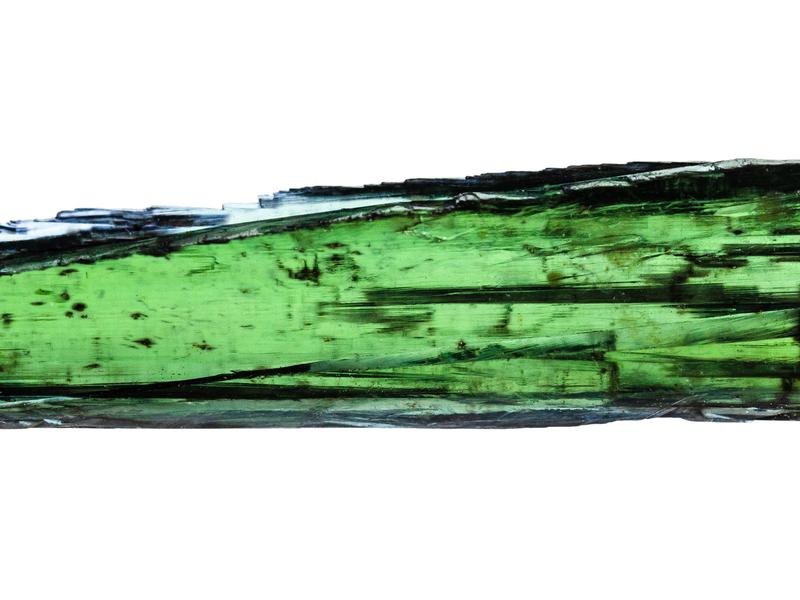
Vivianite's photosensitivity is caused by the oxidation of Fe2+ to Fe3+ when the crystal is exposed to light. Freshly formed vivianite is colorless or very pale green. Upon initial light exposure, Fe2+ begins oxidizing, and the crystal develops a progressively deeper blue color. Continued exposure drives further oxidation, shifting the color to dark blue-green, dark blue, and eventually nearly black.
The process is irreversible -- once darkened, vivianite cannot be lightened again. This photochemical transformation is vivianite's most distinctive and symbolically potent characteristic.
Crystal system diagram represents the general monoclinic classification. Diagram created by Crystalis for educational reference.
Monoclinic structure
Chemical Formula
Fe3(PO4)2
Crystal System
Monoclinic
Mohs Hardness
1.5
Specific Gravity
2.65-2.68
Luster
Vitreous to pearly
Color
Blue-Green
IMA Status
species
Type Locality
Wheal Kine, St Agnes, Cornwall, England, UK
IMA Number
1817 (Grandfathered, pre-IMA)
01
Mineral conditions gather
02
Structure begins to crystallize
03
Vivianite records place and pressure
BoliviaBrazilCameroon
Telling it apart
Vivianite is a hydrated ferrous iron phosphate that undergoes irreversible color change when exposed to light: fresh crystals are colorless to pale green, but oxidation of Fe2+ to Fe3+ turns them progressively deep blue to blue-green to nearly black. This photosensitivity is diagnostic; no other common mineral darkens this dramatically with light exposure. The extreme softness at Mohs 1.
5 to 2 (softer than a fingernail) and perfect cleavage on {010} make vivianite one of the most fragile collector minerals. Specific gravity at 2. 65 to 2. 68 is similar to quartz but the softness immediately separates them. Vivianite is confused with lazulite (harder at 5 to 6, no color change) and blue apatite (harder at 5, no color change). The monoclinic crystal system produces elongated prismatic to blade-like crystals, often in radiating clusters.
Contains eight molecules of structural water per formula unit. Specimens should be stored in darkness to preserve color and prevent over-darkening to opaque black. Museums typically keep vivianite in darkened cabinets. The color-change behavior is the single most useful identification feature: if a blue mineral darkens further under light and is soft enough to indent with a fingernail, it is almost certainly vivianite.
Spotting the real thing
Photosensitivity Test Genuine vivianite darkens when exposed to light. If you can observe a specimen over time (days to weeks) under ambient room light, real vivianite will progressively deepen in color. This is the most diagnostic property and cannot be duplicated by any common imitation. A blue mineral that does not darken in light is not vivianite. Note: already-darkened specimens may show only subtle further change.
Extreme Softness Vivianite is Mohs 1. 5-2, softer than a fingernail. You can scratch it with your thumbnail (though please do not, it damages the specimen). This extreme softness immediately distinguishes vivianite from harder blue minerals like azurite (3. 5-4), lapis lazuli (5-6), or kyanite (4. 5-7). If a blue mineral resists scratching by a copper coin, it is not vivianite. Crystal Habit Vivianite crystals are typically elongated prismatic to blade-like, often in radiating clusters.
The crystals tend to be flattened and striated parallel to their length.
The loss happened. You acknowledge it intellectually. But the body has not grieved. The tears did not come, or they came once and then the dorsal vagal system closed the valve. You have been functioning; competently, even impressively; but there is a blue-black weight behind the sternum that you work around rather than through. Vivianite begins colorless. Only when exposed to light; when brought out of its protected darkness; does it develop the deep blue that makes it beautiful.
The color is the record of exposure. The darkening is not damage. It is the crystal becoming what it was always going to become once it stopped hiding from light. Your grief works the same way. The dark feeling behind your sternum is not a wound that needs to be healed. It is the beginning of depth. Vivianite teaches that the blue only comes when you stop keeping the loss in the dark.
Shut down & far away
The Compassion Flood
You feel everything. Not just your own grief; everyone's. The news breaks you. Other people's tears trigger your own. Your heart center is wide open with no valve, no filter, and the sympathetic system is running at full alert trying to process a volume of sorrow that one nervous system was never designed to carry alone. Vivianite is Mohs 1. 5-2. It can be scratched by a fingernail, crushed by careless handling, destroyed by a drop of water.
And yet it is a remarkably beautiful mineral in existence. Its fragility is not a design flaw; it is the cost of the depth of color it carries. The stone teaches that extreme sensitivity requires extreme care, not extreme toughening. You do not harden your heart to survive the flood. You protect it the way you would protect a vivianite crystal; in darkness when needed, handled gently, never subjected to conditions it cannot withstand.
The sensitivity is the gift. The boundaries are the case it lives in.
Settled & connected
The Light Avoidance
You know there is something in the dark you need to look at. But you have convinced yourself that looking at it will make it worse; that exposing the grief, the failure, the betrayal to the light of consciousness will make it permanent. So you oscillate between brief, panicked glimpses (sympathetic) and willful avoidance (dorsal). The thing stays in its box. You walk around the box.
Vivianite darkens irreversibly in light. That is a fact. But the darkening is also what makes it beautiful. A vivianite crystal kept in perfect darkness forever remains colorless; technically preserved, but without the depth that makes it worth looking at. The stone teaches that some things are meant to darken. Exposure changes you. Yes, irreversibly. But the alternative; remaining colorless to stay "safe"; is not safety.
It is the refusal to become what you were always going to become once you let the light in.
Settled & connected
The Deep Blue Holding
You can sit with sorrow without being destroyed by it. The grief is not gone. It is not supposed to be gone. It has become part of your depth; the blue-black that makes your compassion credible, your wisdom earned, your presence trustworthy in the rooms where people bring their worst news. Your nervous system is in ventral vagal regulation at the heart and third eye; the capacity to feel deeply and see clearly at the same time.
Vivianite in this state is not medicine. It is testimony. The crystal has darkened because it was exposed to light, and the darkening made it more beautiful, not less. You have darkened because you were exposed to life, and the depth you carry now is the exact quality that allows you to sit with others in their darkness without flinching. The blue is not damage. The blue is you, fully expressed.
These associations come from tradition and reflective practice — a way of working with the stone, not a medical prescription.
Somatic Practice
Simple ways to work with Vivianite
◇
Hold
Carry Vivianite in a pocket or place it over the heart center during a pause.
◌
Meditate
Let the stone become a quiet tactile anchor while the breath slows.
☽
Breathe
Breathe in softness. Breathe out tension. Keep the practice simple.
✎
Journal
Write with Vivianite nearby to name the feeling without forcing a conclusion.
✋
Bodywork
Rest the stone near the chest, hand, or bedside as a reminder to soften.
⌂
Environment
Place it where you want a visual cue for care, repair, or steadiness.
Field Instruction
The Blue Depth
Every shade of blue is a record of light that reached it.
3 min protocol
1
The Unveiling (20 seconds)Sit in a quiet space with the vivianite in its closed, dark container on a surface before you. Place both hands flat on the surface, one on each side of the container. Three slow breaths. You are about to open the box on something that changes when exposed to light. Before you open it, name silently one thing in your inner life that you have been keeping in the dark -- one grief, one truth, one memory you have not looked at directly. Name it. Breathe once more. Now, gently open the container. Do not touch the stone. Simply let light reach it. The unveiling of the stone mirrors the unveiling of what you named. Both are now exposed.
2
The Blue Gaze (50 seconds)Look at the vivianite. Notice its color -- the deep blue or blue-green that developed through previous exposures. This color is the mineral's history of being seen. Every shade of blue is a record of light that reached it before today. Your gaze adds to this history. As you look, breathe slowly: 4 counts in, hold for 4, 4 counts out, hold for 4. Box breathing — four equal sides. Let your attention soften. Do not analyze the stone. Receive it. The blue is the color of depth that forms when iron oxidizes slowly in the presence of water and phosphorus from once-living matter. There is grief in this geology. Let your own grief respond to its cousin in the crystal. Not with tears necessarily. With recognition.
3
The Heart Breath (40 seconds)Close your eyes. Place one hand gently over your heart center. Visualize the blue of the vivianite moving from behind your eyes (where the image still lingers) to behind your hand -- the heart space. Breathe into the hand. 5 counts in, gentle pause for 2, 5 counts out. All through the nose: the blue expands outward from the heart, filling the chest with the specific quality of compassion that only comes from having sat with your own sorrow. Two full cycles. The heart center is receiving what the eyes offered.
4
The Permission (30 seconds)With the hand still on the heart and eyes still closed, say silently or aloud: "The darkening is not damage. It is depth." One time. Let the words land in the heart space where the blue already sits. This is the core permission vivianite offers: you are allowed to be changed by what you have seen and felt. The change is not a wound. It is the same process that turns a colorless crystal into the deepest blue in the mineral kingdom. Your losses, your exposures, your griefs are not destroying you. They are coloring you.
5
The Return to Dark (40 seconds)Open your eyes. Look at the vivianite one more time. Acknowledge that you have added to its history of exposure today -- the stone is imperceptibly darker than it was three minutes ago. This is not harm. This is participation in its process. Now, gently close the container. Return the stone to darkness. The vivianite goes back to its protected space. Your grief goes back to its boundaried space inside you -- not denied, not avoided, but housed in a container that you can open when you choose to. The practice is in the choosing. Not all at once. Not never. When you are ready. Close the box. Breathe.
Stone Intelligence
The fact that makes Vivianite memorable
The most extraordinary aspect of vivianite's formation is its intimate connection to biological death and transformation. When organic matter decomposes in waterlogged, oxygen-poor conditions, phosphorus is released from bones and tissue. This phosphorus combines with iron dissolved in groundwater to nucleate vivianite crystals. The mineral literally grows from the chemistry of decomposition. it is the earth's way of preserving a record of biological presence in mineral form.
Vivianite has been found growing directly on archaeological skeletal remains, in the marrow cavities of medieval bones, and encrusting waterlogged coffins. In each case, the phosphorus in the crystal came from the body it grew upon. The mineral that practices grief work in the crystal healing tradition was itself born from grief's chemistry. the slow, wet, oxygen-starved transformation of flesh and bone into blue crystal. There is no metaphor here. It is literal mineral genesis from human remains.
SCI
Phosphate minerals in greensand as evidence for early diagenesis in a shallow marine setting
Vivianite is a Heart and Third Eye stone whose photosensitive darkening and extraordinary fragility create a somatic signature unlike any other mineral in the collection. In practice, this stone addresses the nervous system states surrounding grief, compassion, deep emotional processing, and the specific kind of seeing that requires sitting in darkness before clarity emerges.
The Avoided Grief
(nervous system pattern: DORSAL VAGAL. frozen grief, emotional shutdown after loss that was never fully processed)
The loss happened. You acknowledge it intellectually. But the body has not grieved. The tears did not come, or they came once and then the dorsal vagal system closed the valve. You have been functioning. competently, even impressively. but there is a blue-black weight behind the sternum that you work around rather than through.
Vivianite begins colorless. Only when exposed to light. when brought out of its protected darkness. does it develop the deep blue that makes it beautiful. The color is the record of exposure. The darkening is not damage. It is the crystal becoming what it was always going to become once it stopped hiding from light. Your grief works the same way. The dark feeling behind your sternum is not a wound that needs to be healed.
It is the beginning of depth. Vivianite teaches that the blue only comes when you stop keeping the loss in the dark.
The Compassion Flood
(nervous system pattern: SYMPATHETIC. overwhelm from absorbing others' pain, empathic flooding without boundaries)
You feel everything. Not just your own grief. everyone's. The news breaks you. Other people's tears trigger your own. Your heart center is wide open with no valve, no filter, and the sympathetic system is running at full alert trying to process a volume of sorrow that one nervous system was never designed to carry alone.
Vivianite is Mohs 1. 5-2. It can be scratched by a fingernail, crushed by careless handling, destroyed by a drop of water. And yet it is one of the most beautiful minerals in existence. Its fragility is not a design flaw. it is the cost of the depth of color it carries. The stone teaches that extreme sensitivity requires extreme care, not extreme toughening. You do not harden your heart to survive the flood.
You protect it the way you would protect a vivianite crystal. in darkness when needed, handled gently, never subjected to conditions it cannot withstand. The sensitivity is the gift.
Sacred Match
Sacred Match reaches for Vivianite when what you feel sounds like:
Frozen or unprocessed grief
Empathic overwhelm without boundaries
Avoiding a painful truth you know you need to face
Feeling that your sensitivity is a weakness
Numbness after loss
Compassion fatigue in caregiving roles
Needing depth without drowning
Vivianite finds you when you have been keeping something in the dark because you believe that looking at it will ruin you. When the grief, the loss, the uncomfortable truth has been stored in an unlit corner of the chest because exposure feels like destruction. This stone arrives to show you what light actually does to what has been kept in darkness: it creates color. Not the bright, cheerful color of denial.
The deep, irreversible blue of transformation. Vivianite does not promise that looking will be painless. It promises that looking will make you deeper. The blue is the proof.
Pairings are treated like a recipe file: clear use, method, and safety.
Crystal Companion
Vivianite + Amethyst
Use when
You want to layer the primary intention with another supportive tone.
How to work with it
Place the stones together during meditation, journaling, or a short reset.
Safety
Use as a reflective practice tool, not as a medical substitute.
Crystal Companion
Vivianite + Rhodonite
Use when
You want to layer the primary intention with another supportive tone.
How to work with it
Place the stones together during meditation, journaling, or a short reset.
Safety
Use as a reflective practice tool, not as a medical substitute.
Crystal Companion
Vivianite + Clear Quartz
Use when
You want to layer the primary intention with another supportive tone.
How to work with it
Place the stones together during meditation, journaling, or a short reset.
Safety
Use as a reflective practice tool, not as a medical substitute.
Crystal Companion
Vivianite + Black Tourmaline
Use when
You want to layer the primary intention with another supportive tone.
How to work with it
Place the stones together during meditation, journaling, or a short reset.
Safety
Use as a reflective practice tool, not as a medical substitute.
Smoky Quartz
The Excavation Ground.
Vivianite is hydrated iron phosphate that deepens from colorless to blue-green only when exposed to oxygen and light. Smoky quartz keeps the body grounded while buried material surfaces. For people beginning to look at what they kept hidden and needing stability during the exposure. Place vivianite at the heart and smoky quartz between the feet.
Lapis Lazuli
The Deep Blue Witness.
Vivianite turns blue-green as ferrous iron oxidizes. Lapis lazuli carries deep blue from lazurite. Together they support the practitioner in speaking about what was buried rather than just uncovering it. For the step between knowing and telling. Place vivianite at the heart and lapis lazuli at the throat.
Malachite
The Iron-Copper Exchange.
Vivianite is an iron phosphate. Malachite is a copper carbonate. Both form through secondary processes, alteration and weathering of primary ores. Together they address transformation that required destruction of the original form. For grief about who you used to be before the change. Place vivianite on the sternum and malachite at the solar plexus.
Clear Quartz
The Light Accelerator.
Vivianite darkens slowly with light exposure, its color deepening over time. Clear quartz amplifies whatever process it sits beside. This pairing speeds the revelation of what was previously colorless and hidden. For people who are ready to stop waiting and start seeing. Place clear quartz at the brow and vivianite at the heart.
Handling Caution
Vivianite is extremely soft at Mohs 1.5 and darkens permanently with prolonged light exposure. Store in a dark cloth between uses. Handle only with dry hands.
Care & Cleansing
How to keep Vivianite in good condition
Water Safe?
Use caution
Brief contact may be tolerated, but softness, coatings, fractures, or mixed mineral content can make water exposure a risk.
Sunlight Safe?
Use care
May fade or shift color in prolonged direct sun — keep exposure short and indirect.
Authenticity
What to check
Natural Vivianite should usually feel cooler than plastic or resin on first touch and warm more slowly in the hand.
The #1 Question Can Vivianite Go in Water? NO: NOT WATER SAFE
Vivianite must be kept completely dry. Vivianite (Fe 3 (PO 4 ) 2 ·8H 2 O) is one of the most water-vulnerable minerals in any crystal collection. At Mohs 1. 5-2 with perfect cleavage, it is softer than a fingernail and structurally fragile. The mineral already contains 8 molecules of structural water. Additional external water causes problems.
Running water: never (will physically erode the soft crystal surface)
Soaking: never (will accelerate dissolution and oxidation)
Salt water: never (salt crystallization in cleavage planes will destroy the specimen)
Humidity: avoid prolonged high humidity (can accelerate surface oxidation and darkening)
Gem elixir: never (iron phosphate leaching makes the water unsuitable)
Vivianite's extreme softness means that even gentle water flow can physically erode crystal faces.
The mineral's perfect cleavage along {010} means water infiltration along cleavage planes can split crystals. Additionally, water exposure accelerates the Fe 2+ to Fe 3+ oxidation that causes darkening. Keep vivianite dry at all times. All cleansing must use dry methods exclusively.
Temperature
Natural Vivianite should usually feel cooler than plastic or resin on first touch and warm more slowly in the hand.
Scratch logic
Use 1.5 on the Mohs scale as the check, not internet myths. A real specimen should behave in line with the hardness listed above.
Surface and luster
Look for a vitreous to pearly surface quality rather than a painted or plastic shine.
Weight and density
The listed specific gravity is 2.65-2.68. If a specimen feels unusually light for its size, it may deserve a second look.
My Field Guide
Your private record and next steps
Journal
Add this stone to your private collection, then log what happened when you worked with it.
Shared Notes
Read public practice logs and pattern notes from the Crystalis community.
When members save a public field note for this stone, it will appear here.
Frequently Asked
Questions people ask about Vivianite
What is vivianite?
⌄
Vivianite is a hydrated iron phosphate mineral (Fe₃(PO₄)₂·8H₂O) with a Mohs hardness of only 1.5-2, making it one of the softest minerals in any crystal collection. It crystallizes in the monoclinic system, forming prismatic to blade-like crystals that are often deeply colored blue to blue-green. Vivianite is photosensitive; it darkens significantly when exposed to light, sometimes turning nearly black. It must be stored in darkness and handled minimally.
Can vivianite go in water?
⌄
No. Vivianite is not water safe. At Mohs 1.5-2, it is softer than a fingernail and extremely fragile. The mineral contains 8 molecules of structural water (hydration water) and is susceptible to dissolution, surface damage, and accelerated oxidation when exposed to external water. Never rinse, soak, or create elixirs with vivianite. Keep dry at all times.
Why does vivianite darken in light?
⌄
Vivianite darkens because light exposure causes oxidation of iron within the crystal structure, Fe²⁺ (ferrous iron) converts to Fe³⁺ (ferric iron) in a photochemically driven reaction. This changes the crystal's light absorption properties, shifting the color from colorless or pale blue (fresh) to deep blue, dark blue-green, and eventually nearly black (oxidized). The process is irreversible. This is why vivianite must be stored in darkness.
What chakra is vivianite?
⌄
Vivianite activates the heart chakra and the third eye chakra. Its deep blue-green color bridges the heart's compassion center with the third eye's capacity for inner vision. In somatic practice, vivianite addresses the specific intersection of grief and insight, the ability to see clearly into sorrow and find compassion rather than despair. It is a remarkably gentle stone for deep emotional processing.
How should vivianite be stored?
⌄
Store vivianite in complete darkness, a closed opaque box, a padded drawer, or a display case with an opaque cover. Light exposure darkens the mineral irreversibly. Keep dry at all times. Handle minimally with clean, dry hands or soft cotton gloves. Do not store with harder minerals that could scratch or crush it. Keep at room temperature away from heat sources.
Is vivianite rare?
⌄
Vivianite as a mineral is relatively common in certain geological environments: waterlogged soils, bogs, and phosphate-rich sediments. However, gem-quality transparent crystals with good color and size are uncommon. Fine vivianite specimens from Bolivia, Brazil, or Romania can be valuable to mineral collectors. The combination of beauty and extreme fragility makes well-preserved vivianite specimens relatively rare in collections.
Where does vivianite come from?
⌄
Bolivia (Cerro Rico, Potosi and the Tomokoni mine) produces the world's finest gem-quality vivianite crystals. Brazil (Minas Gerais) is an important secondary source. Romania, Ukraine, and Germany produce historically significant specimens. Vivianite also forms in archaeological contexts: in waterlogged burial sites, medieval bone deposits, and fossilized organic matter.
Can vivianite be worn as jewelry?
⌄
No. Vivianite is far too soft (Mohs 1.5-2) and fragile for any jewelry application. It would be scratched by virtually any contact and could be crushed by light pressure. Additionally, light exposure would darken it in a jewelry setting. Vivianite is exclusively a display, collection, and ceremonial practice mineral, never a wearable gem.
Sources & Citations
Where this entry can be checked
Back Matter
Readable for people. Structured for AI search.
Sources stay visible in the page so readers, search engines, and answer systems can follow the evidence trail.
01
SCI
Phosphate minerals in greensand as evidence for early diagenesis in a shallow marine setting
Worden, R.H., Griffiths, J., Wooldridge, L.J., et al. (2020). Phosphate minerals in greensand as evidence for early diagenesis in a shallow marine setting. Sedimentology. [SCI]DOI 10.1111/sed.12672
02
LORE
The significance of vivianite in archaeological settings
McGowan, G. (2006). The significance of vivianite in archaeological settings. [LORE]
03
SCI
Stability of vivianite and ion-pair formation in the system Fe3(PO4)2-H3PO4-H2O
Nriagu, J.O. (1972). Stability of vivianite and ion-pair formation in the system Fe3(PO4)2-H3PO4-H2O. Geochimica et Cosmochimica Acta. [SCI]DOI 10.1016/0016-7037(72)90035-X
04
SCI
Raman spectroscopy of vivianite
Frost, R.L., Weier, M., & Martens, W. (2005). Raman spectroscopy of vivianite. Mineralogical Magazine. [SCI]DOI 10.1180/0026461056920240
05
SCI
Sedimentary sulphur:iron ratio indicates vivianite occurrence: a study from two contrasting freshwater systems
Rothe, M. et al. (2016). Sedimentary sulphur:iron ratio indicates vivianite occurrence: a study from two contrasting freshwater systems. PLoS ONE. [SCI]DOI 10.1371/journal.pone.0143737
06
LORE
The significance of vivianite in archaeological settings
McGowan, G. & Prangnell, J. (2006). The significance of vivianite in archaeological settings. Geoarchaeology. [LORE]DOI 10.1002/gea.20090