You are looking for warmth that actually reorganizes something, not just decorates it. Citrine carries iron in a quartz lattice at frequencies that produce yellow to amber. The warmth reorganizes. It does not decorate.
Citrine is a solar plexus mineral traditionally used to support confidence, personal agency, and energetic boundaries. In somatic practice, holding citrine activates...
The Meaning
Citrine in the Crystalis dictionary
Stuck seasons need more than mood. They need enough warmth to start organizing action again.
Citrine holds yellow to gold in a quartz body that still keeps line, angle, and internal order.
Whether the color arrived naturally or through heat-altered amethyst, the effect stays practical rather than dreamy.
Some forms of light are better at getting a life moving.
Stone Lore
Stories carried through time
Cultural notes are presented as tradition and historical context — stories carried through time.
Ancient Greece & Rome
The Merchant's Talisman
The name "citrine" derives from the French citron (lemon), but the stone's history predates the name by centuries. Greek merchants carried yellow quartz as a protective trade stone, believing it sharpened clarity during negotiation. Roman soldiers wore citrine intaglios for endurance and mental strength during campaigns. Pliny the Elder catalogued yellow quartz varieties in Natural History.
The association between citrine and commerce is a 2,300-year-old tradition, originating from the same trade routes that carried amethyst and rose quartz across the Mediterranean.
c. 300 BCE - 200 CE
Ritual history
Feng Shui: The Wealth Corner
In Chinese feng shui practice, citrine activates the wealth sector (southeast corner) of a room, home, or business. This placement is specific and prescriptive: southeast, associated with the Wood element fed by Earth, which citrine...
Chinese Tradition · c. 1000 BCE - Present
Lore & history
The Cairngorm: Highland Authority
Scottish Highlanders prized smoky citrine (sometimes called cairngorm, after the Cairngorm Mountains) as a stone of courage and warrior resolve. Mounted in sword hilts, brooches, and kilt pins, cairngorm quartz was worn as both ornament...
Scottish Tradition · c. 1600 - Present
Ritual history
Manipura Activation: Solar Fire
In Ayurvedic and yogic tradition, citrine corresponds to Manipura, the solar plexus chakra, associated with the fire element (Agni), personal will, and digestive transformation (both literal and metaphorical). Where rose quartz addresses...
Ayurvedic & Vedic Tradition, India
Origin lore
Brazilian Heat-Treated Citrine
Brazil produces the overwhelming majority of commercial citrine, though most of it begins as amethyst. The geode deposits of Rio Grande do Sul yield enormous amethyst cathedrals that, when heat-addressed, produce the bright orange citrine...
Brazil, Minas Gerais & Rio Grande do Sul
Lore & history
Africa's Natural Citrine
Some of the finest natural citrine on earth comes from African deposits, particularly Zambia and the Congo. This material is genuinely sun-colored: pale golden to warm honey, with the even color distribution and high transparency that...
Zambia & Democratic Republic of Congo
Origin lore
Gem-Quality Transparency
Madagascar produces natural citrine known for exceptional clarity and a warm golden tone. Often found in the same pegmatite fields that yield the island's famous rose quartz and tourmaline. Malagasy citrine tends toward transparency that...
Madagascar
Ritual history
European Heritage Citrine
The Salamanca region of Spain has produced citrine for centuries, connecting to the Mediterranean gem trade that carried quartz varieties across Greek, Roman, and Moorish cultures. Spanish citrine tends toward a deep golden-amber,...
That same iron is why heat converts amethyst to citrine: the thermal energy changes the iron's oxidation state and destroys the irradiation-induced color centers, shifting the transmission window from purple to yellow. Same crystal. Same iron. Different energy state. Different color.
Natural citrine forms in two geological environments. The first: pegmatites and hydrothermal veins, where silica-rich fluids carrying dissolved iron cool slowly underground, allowing quartz crystals to grow with iron already incorporated into the lattice. The second: sedimentary environments, where existing quartz is heated by nearby volcanic activity or deep burial, slowly converting trace iron to the Fe state over geological time.
Both paths produce genuine citrine. The distinction matters because it means citrine can grow as pointed crystals with visible hexagonal terminations, unlike rose quartz, which always forms massive.
Here is a detail worth knowing: natural citrine is genuinely rare. The large majority of citrine on the market is heat-treated amethyst or smoky quartz. Brazilian amethyst, heated to 470-560°C in a kiln, turns yellow-orange. It is still quartz. It is still colored by iron. The heat simply does in hours what geology does in millions of years. Whether that distinction matters depends on what you are asking of the stone.
For a collector, it changes everything. For the nervous system, quartz is quartz: the same crystal structure, the same piezoelectric response, the same weight in the hand. The color you see is a question of iron oxidation state, a question nature answers slowly and a kiln answers fast.
Crystal system diagram represents the general trigonal classification. Diagram created by Crystalis for educational reference.
Trigonal structure
Chemical Formula
SiO2 with Fe³⁺
Crystal System
Trigonal
Mohs Hardness
7
Specific Gravity
2.65
Luster
Vitreous
Color
Yellow, amber, champagne, gold
IMA Status
variety
IMA Number
Not IMA-approved (variety of Quartz, pre-IMA)
01
Mineral conditions gather
02
Structure begins to crystallize
03
Citrine records place and pressure
Water Safe
☀️ Sun Safe
🌍 Brazil, Madagascar, Russia
💎 Mohs 7
The Earth Made This
Citrine is a variety of quartz that crystallizes in the trigonal crystal system, specifically within the trapezohedral crystal class. Its chemical formula is SiO₂, identical to all quartz varieties, with color arising from trace iron impurities incorporated during formation. Natural Formation
Natural citrine forms in pegmatites and hydrothermal veins, typically in association with amethyst and smoky quartz.
The golden color develops when naturally occurring amethyst or smoky quartz undergoes prolonged heating by geological processes. either through proximity to volcanic activity or deep burial where Earth's internal heat alters the iron's oxidation state. The Heat Treatment Reality
The large majority of citrine on the commercial market is actually heat-treated amethyst. When amethyst is heated to temperatures between 400-560°C, the iron-linked color centers that produce purple rearrange, oxidize, and shift to yellow-orange hues.
This transformation is chemically identical to natural heating. the same iron impurities, the same oxidation state changes. just accelerated by human intervention. Key Distinction: Natural citrine is rare and typically displays pale yellow to golden-brown hues with subtle color zoning. Heat-treated material often shows more intense orange-brown tones and may retain hints of the original amethyst's crystal habit.
Scientific Consensus: Both natural and heat-treated citrine share identical chemical composition and crystal structure. The debate centers on provenance and disclosure, not authenticity of material. Piezoelectric Properties
Like all quartz, citrine exhibits piezoelectricity. the ability to generate electrical potential when pressure is applied. This property, discovered by the Curie brothers in 1880, makes quartz invaluable in electronics and may contribute to its somatic effects when held or worn against the body.
What Your Body Knows
Citrine's frequency interacts with specific nervous system states, particularly those related to abundance mindset, self-worth, and capacity to receive. Here are the five states where citrine offers unique support:
Scarcity Mentality (Sympathetic)
Fear of not enough. money, time, energy, love. The nervous system operates from a place of perpetual lack, triggering chronic stress responses.
Citrine helps shift from contraction to expansion. Confidence Deficit (Dorsal)
Unable to claim space, voice needs, or receive compliments. The body collapses inward, making one invisible. Citrine's solar energy activates the solar plexus, restoring upright presence. Financial Anxiety (Sympathetic)
Money stress loops. checking accounts obsessively, catastrophizing about bills, inability to enjoy spending.
Citrine interrupts the anxiety spiral with grounding golden stability. Creative Block (Mixed)
Ideas exist but cannot manifest. stuck between vision and execution.
BrazilMadagascarZambiaCongoSpainUruguayUSA
Telling it apart
Same Mineral, Different Origin Story
This is the most useful thing to understand about citrine, and it is worth saying plainly. The large majority of citrine sold worldwide began as amethyst or smoky quartz and was gently warmed to gold. Both are genuine quartz. Both are colored by iron. The only question is whether the iron's oxidation state was shifted by geological time or by a kiln, and both stories are real. Understanding this distinction helps you recognize what you are holding and choose it with open eyes.
Natural Citrine
Color: Pale champagne, honey, smoky gold, or soft amber. Subtle, elegant, understated.
Color distribution: Even, gentle gradients throughout the crystal. No sharp color boundaries.
Transparency: Often transparent with high clarity. Clean, glass-like interior.
Crystal form: Prismatic points with natural hexagonal terminations, often in clusters.
Rarity: Genuinely rare. Premium pricing is justified.
Heat-Treated Citrine
Color: Bright orange, burnt amber, vivid yellow-orange. Saturated, sometimes reddish at tips.
Color distribution: Concentrated at crystal tips with white or colorless base. Sharp color boundaries.
Transparency: Often more opaque, with visible cloudiness from the original amethyst's inclusions.
Crystal form: Typically geode-style clusters (revealing its amethyst origin).
Rarity: Abundant. Affordable. The standard commercial product.
Key sources: Brazilian and Uruguayan amethyst, heat-treated in processing facilities.
Does the distinction matter for practice? Collectors and formation-specific practitioners say yes: natural citrine carries the geological patience of millions of years of slow iron oxidation, and that matters energetically. Somatic practitioners say the body responds to any quartz: the crystal structure, the piezoelectric property, the weight and temperature in the hand are identical regardless of how the iron arrived at its oxidation state. Both positions have merit. What matters most: know what you are buying, and choose intentionally.
A note on "lemon quartz," "golden healer," and "Madeira citrine": These are trade names with inconsistent definitions. "Lemon quartz" is often irradiated yellow quartz. "Golden healer" refers to iron-coated quartz, a surface stain rather than internal color. "Madeira citrine" suggests a deep amber color but carries no standardized meaning. If the name sounds more evocative than precise, verify the mineralogy before purchasing.
Care & Maintenance
Spotting the real thing
Five tests, no equipment needed. (1) Hardness: Citrine is quartz, Mohs 7. It scratches glass easily. If it does not scratch glass, it is not citrine. (2) Color distribution: Natural citrine is pale yellow to smoky gold, never bright orange. Bright orange "citrine" is heat-treated amethyst. The color in natural citrine concentrates near crystal faces and fades toward the center. (3) Temperature: Real quartz feels cool and warms slowly.
Glass warms quickly. (4) Clarity: Natural citrine often contains wispy inclusions and slight haziness. Perfect clarity with vivid orange color indicates heat treatment. (5) Price: Natural citrine is uncommon, so it usually costs more than warmed amethyst of the same size. A very gentle price on a large, vividly orange piece is a friendly clue that you are most likely looking at heat-treated material, which is lovely in its own right once you know what it is.
You have disappeared from your own life. Going through motions. Saying yes when your gut screams no. The solar plexus, the gut-level seat of personal authority, has gone offline. You feel like a spectator in your own decisions. Everything is happening to you. Nothing is happening from you.
Citrine's role: Citrine placed on the solar plexus (the soft area between navel and sternum) provides warmth-spectrum visual input combined with gentle weight. The warm color activates approach motivation at a pre-cognitive level: Studies suggest that warm colors (yellow, gold, amber) consistently trigger positive valence and approach behavior across cultures. The weight on the belly provides proprioceptive feedback to the enteric nervous system, re-engaging the gut-brain axis.
For someone in dorsal vagal shutdown, the first step is feeling the body at all. Citrine's warmth and weight provide a low-demand re-entry point: feel this. Here. In your center.
The inner critic runs a broadcast loop. Every decision triggers a cascade of second-guessing. You check the same email four times before sending. You rehearse conversations that already happened. The nervous system treats your own judgment as an unreliable narrator, so it never stops verifying, scanning, questioning. This is exhausting. This is also a survival mechanism running past its expiration date.
Citrine's role: Research on embodied cognition confirms that physical posture validates or undermines self-evaluative thoughts. Briñol et al. (2017) documented that body position directly moderates self-esteem: upright posture with a physical anchor increases confidence in one's own assessments. Holding citrine in the dominant hand (the action hand, the one that writes and reaches and builds) while sitting upright provides a paired stimulus: the tactile anchor plus the postural shift.
Over time, the stone becomes a conditioned cue for self-trust. Classical conditioning applied to the solar plexus. The stone in your hand becomes the permission your nervous system stopped giving you.
You can see every option. You can argue for each one. You cycle between urgency (choose now) and collapse (so you choose nothing). The nervous system oscillates between sympathetic activation (too many possibilities, too much pressure) and dorsal shutdown (overwhelm leading to freeze). The result: you stand at every crossroads and take no road. Meanwhile the anxiety compounds, because inaction creates its own consequences.
Citrine's role: Tactile grounding objects reduce sympathetic activation by giving the nervous system a single focal point. West et al. (2017) documented that sensory rooms with tactile objects significantly improve emotion regulation by providing the nervous system with manageable, non-threatening sensory input. Citrine in the palm during decision-making narrows the sensory field: instead of swimming in abstract options, you have a concrete, warm, weighted thing in your hand.
The somatic protocol (naming one choice per exhale) converts mental spinning into sequential declarations. The body processes decisions better than the mind. Citrine moves the locus of decision from the overthinking cortex to the gut-knowing plexus.
Charged & on alert
Energetic Depletion: Sympathetic Exhaustion
You gave everything away. Every yes to someone else was a no to yourself, and you ran the ledger until it zeroed out. Now the tank is empty. The motivation that once powered you feels like a memory. You are tired in a way that sleep cannot fix because the exhaustion lives in the will, in the solar plexus, in the part of you that initiates action. The fire went out.
Citrine's role: Citrine is traditionally called "the stone that does not hold negative energy." In practitioner language: citrine supports energetic boundary restoration. The mechanism is somatic, not magical. Holding citrine while deliberately setting a boundary (even silently: "this energy is mine") creates a physical anchor for the abstract concept of energetic autonomy. Yeung et al.
(2017) documented that mere ownership of meaningful objects elevates self-efficacy, suggesting that possessing a physical representation of personal power has measurable psychological effects. The stone becomes a tangible boundary marker: what is mine stays mine. What is theirs stays theirs. The clarity lives in the gut, and citrine lives on the gut.
Charged & on alert
Seasonal Dimming: Light-Deficit Activation
Winter. Short days. The body slows. Serotonin production decreases with reduced light exposure, and the nervous system shifts toward conservation mode. This is physiology, documented extensively in seasonal affective disorder research. The fatigue is real. The withdrawal is real. The flatness is real. Your body is responding accurately to a light deficit.
Citrine's role: Color psychology research demonstrates that warm-spectrum colors (yellow, amber, gold) activate the same neural pathways stimulated by actual warm light. Lombana & Tonello (2017) documented that colored light environments directly influence mood states. Salgado-Delgado et al. (2011) confirmed the neurobiological link between light deficiency and depressive symptoms.
Citrine functions as a portable warm-light stimulus: the golden color provides a visual approximation of the solar spectrum your body craves. Practitioners who carry citrine through winter report improved mood consistency. The research on color and emotion provides a plausible mechanism: the visual warmth triggers approach-related affect even when actual sunlight is scarce. A stone-sized sun in your pocket.
These associations come from tradition and reflective practice — a way of working with the stone, not a medical prescription.
Somatic Practice
Simple ways to work with Citrine
◇
Hold
Carry Citrine in a pocket or place it over the heart center during a pause.
◌
Meditate
Let the stone become a quiet tactile anchor while the breath slows.
☽
Breathe
Breathe in softness. Breathe out tension. Keep the practice simple.
✎
Journal
Write with Citrine nearby to name the feeling without forcing a conclusion.
✋
Bodywork
Rest the stone near the chest, hand, or bedside as a reminder to soften.
⌂
Environment
Place it where you want a visual cue for care, repair, or steadiness.
Field Instruction
The Solar Forge
Hold. Breathe. Name What You Choose.
3 min protocol
1
Sit upright. Place citrine in your dominant hand. Your action hand, the one that writes, reaches, builds. Close your fingers around it. The stone should press into the center of your palm. If the stone is large enough, place it on your solar plexus (the soft area between your navel and the base of your sternum). This is the celiac plexus: the gut-brain relay station. Upright posture matters. Research confirms that posture directly modulates self-confidence and validates self-evaluative thoughts.
2
Breathe: 4 counts in through the nose, hold for 7, 8 counts out through the mouth. Direct the exhale downward, as if breathing into the belly, into the stone. This is a gut breath, anchored below the diaphragm. The prolonged hold allows full gas exchange in the alveoli while the extended exhale activates the parasympathetic pathway. This pattern was developed for autonomic regulation under high arousal.The belly focus anchors the breath in the solar plexus region, the gut, where personal authority lives in the body before the mind can name it.
3
On each exhale, silently name one thing you are choosing. The word is choosing, not wishing. "I am choosing to speak." "I am choosing to stay." "I am choosing to walk away." Citrine activates through declaration. The naming converts scattered energy into directed intention. One declaration per breath. The specificity matters more than the volume.
4
After 3 minutes: notice what shifted. Is your spine straighter? Is your jaw looser? Can you feel your belly? Is the stone warm? That warmth is your circulation: capillaries dilated in the solar plexus region, a parasympathetic response. Your body just said: I am here. That is the reset. You were always the authority. Citrine reminded the nervous system.
Stone Intelligence
The fact that makes Citrine memorable
Citrine is quartz colored by iron in a different oxidation state than amethyst. Same crystal, same element, different energy. Heat converts purple to gold.
The earth does this over geological time; a kiln does it in hours. The practice does not care which clock was used. It asks what happens when you hold warmth-spectrum light against the solar plexus and let the body remember what personal authority feels like before the mind names it.
SCI
Disruption of circadian rhythms: A crucial factor in the etiology of depression
Depression Research and Treatment · 2011Read source
SCI
Upright and left out: Posture moderates the effects of social exclusion on mood and threats to belongingness
European Journal of Social Psychology · 2013Read source
SCI
When my object becomes me: The mere ownership of an object elevates domain-specific self-efficacy
Citrine at the Solar Plexus for Self-Doubt: Place citrine on the soft area between navel and sternum. The warm color activates approach motivation at a pre-cognitive level. Studies suggest that warm colors consistently trigger positive valence and approach behavior across cultures. The weight on the belly provides proprioceptive feedback to the enteric nervous system, re-engaging the gut-brain axis.
For someone whose personal authority has gone offline, the first step is feeling the body at all. Citrine's warmth and weight provide a low-demand re-entry point.
Citrine Declaration Protocol for Decision-Making: Sit upright. Place citrine in your dominant hand. Press it into the center of your palm. Breathe with a 4-count inhale and 6-count exhale directed into the belly. On each exhale, silently name one thing you are choosing. Not wishing. Choosing. The naming converts scattered energy into directed intention. One declaration per breath. The specificity matters more than the volume.
Citrine for Workspace Confidence: Place citrine in the southeast corner of a workspace or carry it during business negotiations. Pair with pyrite for a prosperity grid that works on both the solar plexus (personal authority) and the material plane (action, negotiation, momentum). The combination ancient merchants trusted.
Sacred Match
Sacred Match reaches for Citrine when what you feel sounds like:
Invisible / overlooked
Stuck / frozen
Depleted / gave it all away
Doubting every decision
Seasonal flatness
Lost your voice
Sacred Match listens to the body rather than to preference. It notices what you are feeling right now, the way you have learned to protect yourself, and the deeper need sitting underneath both. When that listening points toward the solar plexus, toward authority handed away to outside approval, gut-knowing talked over by looping thoughts, or a center that has started treating stillness as safety when what it longs for is warmth, Citrine steps forward.
Invisible -> abandoned self-expression -> seeking to feel present again
Stuck -> fear of the wrong choice -> seeking gut-level decisiveness
Pairings are treated like a recipe file: clear use, method, and safety.
Herbal Ally
Citrine + The Bright Axis Protocol
Use when
Solar plexus clarification through the celiac plexus — the gut-brain axis as a site of both intuition and anxiety. Bergamot's unique dual action (simultaneously calming via linalool and uplifting via limonene) mirrors citrine's solar plexus assignment: not stimulation, not sedation, but organized energy. The protocol targets executive function clarity by resetting the autonomic balance point between sympathetic drive and parasympathetic rest.
How to work with it
Place 3 drops of bergamot essential oil on a tissue or diffuser pad — do NOT apply bergamot oil to skin (it is phototoxic). Hold the citrine in your dominant hand. Inhale from the tissue, exhale toward the stone. Five rounds.
Engages the enteric nervous system through the ritual of morning preparation. Cardamom (Elettaria cardamomum) is a carminative that stimulates digestive secretions through its volatile oil (1,8-cineole, α-terpinyl acetate), warming the GI tract and promoting gastric motility. The solar plexus protocol is deliberately quotidian — this is not ceremony but kitchen practice, integrating crystal and herb into the daily rhythm of waking. The warmth of cardamom tea in the belly activates vagal afferents from the gut, signaling safety and readiness. Citrine in the hand provides proprioceptive feedback: something solid to hold while the day's intentions form.
How to work with it
Crush 3–4 cardamom pods with the flat of a knife. Drop the cracked pods and loose seeds into your morning cup. Pour hot water or add to your coffee before brewing. The cracking is important — you are releasing volatile oils sealed inside the pod.
Solar plexus deactivation toward ventral vagal safety. Chamomile apigenin binds GABA-A receptors, producing anxiolytic effects that soften the sympathetic grip on the gut. Placing warmed citrine on the solar plexus provides gentle thermal-weight input to the celiac ganglion region — the body reads this as "the core is safe." This pairing targets the gut-brain axis specifically: calm the belly, calm the mind.
How to work with it
Brew chamomile tea. While it steeps, hold the citrine in both palms and breathe three slow breaths into the hands — warming the stone with exhalation.
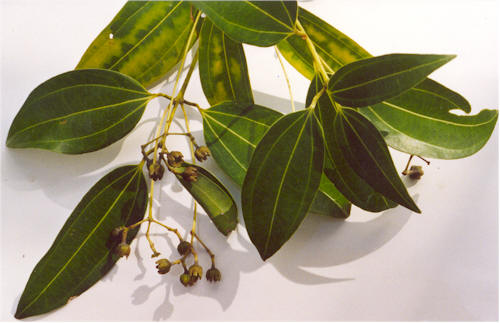
Solar plexus activation through warming. Cinnamaldehyde activates TRPA1 thermoreceptors in the mouth and gut, producing a heat signal that travels the vagus nerve to the brainstem. This is sympathetic engagement without threat — the body reads warming spices as metabolic readiness, not danger. Citrine at the solar plexus anchors this thermal signal to a specific location, creating a felt center of warmth and will.
How to work with it
Place a cinnamon stick and the citrine together on your kitchen counter or table. This is a kitchen protocol — no altar required. The counter is the altar.
The power pairing. Solar plexus (citrine) meets sacral (carnelian). Confidence meets creative fire. For anyone who knows what they want but cannot find the energy to begin, or who has the energy but cannot direct it. Citrine provides the compass. Carnelian provides the fuel. Together they create the conditions for starting: clear intention plus the drive to execute. Place citrine on the solar plexus, carnelian below the navel. Fire meeting fire, directed upward.
Black Tourmaline
Activated AND grounded. Citrine lifts. Black tourmaline anchors. For people who feel expansive ideas but lose them to scattered execution, or who generate confidence that floats instead of lands. This pairing says: reach for the sun, but keep your roots in the earth. Citrine in the dominant hand, black tourmaline in the non-dominant. Solar energy meeting earth containment. Expansion with structure.
Amethyst
The ametrine pairing: action meets intuition. Citrine drives forward. Amethyst pauses and reflects. For decision-making that requires both courage and wisdom, for leadership that listens, for ambition that includes discernment. Nature makes this pairing itself: ametrine is a single crystal containing both citrine and amethyst zones, where iron exists in both oxidation states simultaneously. When the earth puts two stones in one body, pay attention. Solar plexus meets crown. Will meets wisdom.
Pyrite
Abundance amplified. Citrine is the merchant's stone. Pyrite is the confidence of gold without gold's softness. Together they create a prosperity grid that works on both the solar plexus (personal authority, "I deserve this") and the material plane (action, negotiation, momentum). Place both in the southeast corner of a workspace or carry together during business negotiations. Fire-energy (citrine) meeting earth-metal (pyrite). The combination ancient merchants trusted.
Smoky Quartz
Solar confidence meets earth-anchored calm. Smoky quartz transmutes anxiety into grounded presence. Citrine transmutes hesitation into action. Together they address the gap between knowing what you want and feeling safe enough to pursue it. For anyone whose ambition triggers anxiety, whose confidence comes with a side of fear. Citrine says go. Smoky quartz says I have your back. Root chakra meeting solar plexus. The foundation meeting the fire.
Rose Quartz
Power AND tenderness. Citrine activates the solar plexus (personal authority) while rose quartz opens the heart (compassion and connection). For leaders who need strength without hardness, for people rebuilding confidence after heartbreak, for anyone whose power was born from pain and needs to include kindness now. Citrine says stand up. Rose quartz says stay soft while you do it. Solar plexus meeting heart. Authority meeting love.
Pairing Cautions
Citrine + Moldavite: Avoid unless experienced. Moldavite's high-frequency intensity combined with citrine's solar plexus activation can create overstimulation: racing thoughts, physical agitation, emotional overwhelm. Both stones are activating. Doubling activation without grounding is the crystal equivalent of drinking espresso after espresso. If you use this pairing, add smoky quartz or black tourmaline as a grounding anchor.
Citrine + Tiger's Eye: Use carefully. Both are solar plexus stones. Doubling the same chakra's energy can tip confidence into rigidity, personal authority into stubbornness. If you pair these, do so only when the goal is pure willpower (athletic performance, high-stakes presentations, direct confrontation). Add amethyst to keep the crown open and the ego in check.
Care & Cleansing
How to keep Citrine in good condition
Water Safe?
Water safe
This stone is generally safe for short water contact, though polishing, fractures, and metal settings can still change how a specimen behaves.
Sunlight Safe?
Use care
May fade or shift color in prolonged direct sun — keep exposure short and indirect.
Authenticity
What to check
Natural Citrine should usually feel cooler than plastic or resin on first touch and warm more slowly in the hand.
>
Care & Maintenance
Cleansing
Running water: Brief rinse under lukewarm water (safe for citrine)
Sunlight: 1-2 hours in morning or late afternoon sun (citrine is sun-stable)
Smudging: Pass through sage, palo santo, or incense smoke
Sound: Use singing bowls, bells, or tuning forks
Earth: Bury in soil overnight (protect from moisture with cloth)
Charging
Sunlight: Citrine loves sun.
place in direct light to amplify its solar energy
Full moon: Optional, though citrine resonates more with solar than lunar energy
Crystal clusters: Place on clear quartz or amethyst geode
Storage
Store separately from harder stones (diamonds, sapphires) to prevent scratching
Soft pouch or jewelry box with individual compartments
Avoid extreme temperature fluctuations
Pairings
Pyrite
Amplifies manifestation power.
pyrite's masculine action energy with citrine's receptive abundance creates a complete prosperity circuit
Clear Quartz
Clear quartz amplifies citrine's frequency while adding mental clarity. excellent for business decisions and goal-setting
Green Aventurine
Combines citrine's abundance with aventurine's luck. ideal for new ventures, gambling, or any situation requiring fortunate outcomes
Carnelian
Both solar plexus stones.
carnelian adds creative fire and courage to citrine's confidence and manifestation power
Tiger's Eye
Grounds citrine's expansive energy. excellent for practical manifestation and maintaining focus on financial goals
Moldavite
Both are high-vibration stones, but together may create overwhelming energy. use sparingly and ground well
Black Tourmaline
While protective, heavy grounding stones may dampen citrine's expansive, uplifting energy.
use with intention
Authenticity Tests
👁️
Visual Inspection
Natural citrine is pale yellow; intense orange-brown suggests heat treatment
💎
Crystal Shape
Heat-treated often shows "dog tooth" amethyst habit; natural has 6-sided points
🌡️
Temperature Test
Glass feels warmer; genuine citrine stays cool to the touch
🔍
Inclusion Check
Natural stones have inclusions; glass may show bubbles
⚖️
Hardness Test
Citrine (7) scratches glass (5.
5); glass cannot scratch glass
Benefits Deep Dive
🌙 Sleep Support
Citrine is generally not recommended for sleep. its activating, solar energy can be stimulating. However, for those who experience anxiety-related insomnia (racing thoughts about finances, future worries), placing citrine on a nightstand (not under the pillow) may help calm scarcity-based rumination. Better sleep stones: Amethyst, Lepidolite, Howlite
😰 Anxiety Relief
Citrine specifically addresses scarcity anxiety.
the fear of not having enough. It interrupts the sympathetic nervous system's stress loop about money, resources, and security. By activating the solar plexus, it restores a sense of personal power and capability to handle challenges. Hold during financial discussions or when reviewing bills
Origins
🇧🇷 Brazil
Minas Gerais and Rio Grande do Sul produce most commercial citrine.
Temperature
Natural Citrine should usually feel cooler than plastic or resin on first touch and warm more slowly in the hand.
Scratch logic
Use 7 on the Mohs scale as the check, not internet myths. A real specimen should behave in line with the hardness listed above.
Surface and luster
Look for a vitreous surface quality rather than a painted or plastic shine.
Weight and density
The listed specific gravity is 2.65. If a specimen feels unusually light for its size, it may deserve a second look.
My Field Guide
Your private record and next steps
Journal
Add this stone to your private collection, then log what happened when you worked with it.
Shared Notes
Read public practice logs and pattern notes from the Crystalis community.
When members save a public field note for this stone, it will appear here.
Frequently Asked
Questions people ask about Citrine
What does citrine do?
⌄
Citrine is a solar plexus mineral traditionally used to support confidence, personal agency, and energetic boundaries. In somatic practice, holding citrine activates tactile grounding with a warm-spectrum visual stimulus. The yellow-gold color triggers measurable positive affect (documented in color psychology research), while the stone's weight in the palm provides proprioceptive input that anchors scattered attention. Documented in traditional use across Greek, Chinese, and Scottish cultures for over 3,000 years.
Can citrine go in water?
⌄
Yes. Citrine scores 7 on the Mohs hardness scale and contains no water-soluble minerals, making it safe for brief water cleansing. Avoid prolonged saltwater soaking, which can dull surface polish. Never expose citrine to sudden temperature changes, as thermal shock can fracture any quartz variety along internal stress planes.
What chakra is citrine?
⌄
Citrine is associated with the solar plexus chakra (Manipura), the third energy center located between the navel and the sternum. In somatic terms, this corresponds to the region governing the celiac plexus, the gut-brain axis, and the enteric nervous system. This is where you feel dread, where you feel confidence, where the body registers its own authority before the mind forms an opinion.
How do you cleanse citrine?
⌄
Five methods: (1) Running water, hold under cool running water for 30-60 seconds while setting intention. (2) Sunlight, brief morning sun (under 30 minutes) is safe and aligns with citrine's solar energy. (3) Sound, use a singing bowl or tuning fork; vibration resets the stone's piezoelectric field. (4) Smoke cleansing, pass through sage, palo santo, or cedar smoke. (5) Selenite plate, place on selenite for 4-6 hours. Unlike rose quartz and amethyst, citrine handles moderate sunlight without fading.
Is my citrine real or heat-treated amethyst?
⌄
Most commercial citrine is heat-treated amethyst. Natural citrine is pale champagne to smoky gold with subtle color gradients. Heat-treated citrine is bright orange-yellow, often with a white or colorless base, and the color appears concentrated at the crystal tips. Natural citrine is transparent with even, gentle saturation. Heat-treated citrine is vivid with sharp color boundaries. Both are genuine quartz. The difference matters for collectors and practitioners who work with formation-specific energy.
Can citrine go in the sun?
⌄
Yes, with reasonable limits. Citrine is the most sun-tolerant member of the quartz family. Brief to moderate sun exposure (under 2 hours) is safe. Extended UV exposure over months may gradually lighten the color in some specimens, particularly lighter stones. Heat-treated citrine is generally more stable under UV than natural citrine, whose color centers are more delicate. Morning sunlight for 20-30 minutes is ideal for charging.
What crystals pair well with citrine?
⌄
The power pairing is citrine with carnelian: solar plexus meets sacral, confidence meets creative fire. Citrine with black tourmaline provides activation with grounding. Citrine with amethyst creates 'ametrine energy,' balancing action with intuition. Citrine with pyrite amplifies abundance and decisiveness. Citrine with smoky quartz pairs solar confidence with earth-anchored calm. Avoid pairing citrine with moldavite, which can create overstimulation.
How can you tell if citrine is real?
⌄
Five tests: (1) Color; natural citrine is pale champagne, honey, or smoky gold. Bright orange screams heat treatment. (2) Color distribution; natural citrine has even, subtle gradients. Heat-treated shows concentrated color at tips with white bases. (3) Temperature, real quartz feels cool to the touch and warms slowly. Glass fakes warm quickly. (4) Hardness, citrine (Mohs 7) scratches glass. (5) Transparency, natural citrine is transparent to translucent with a gentle, warm clarity. No air bubbles (bubbles indicate glass).
Sources & Citations
Where this entry can be checked
Back Matter
Readable for people. Structured for AI search.
Sources stay visible in the page so readers, search engines, and answer systems can follow the evidence trail.
01
SCI
Disruption of circadian rhythms: A crucial factor in the etiology of depression
Salgado-Delgado, R. et al. (2011). Disruption of circadian rhythms: A crucial factor in the etiology of depression. Depression Research and Treatment. [SCI]DOI 10.1155/2011/839743
02
SCI
Upright and left out: Posture moderates the effects of social exclusion on mood and threats to belongingness
Welker, K.M. et al. (2013). Upright and left out: Posture moderates the effects of social exclusion on mood and threats to belongingness. European Journal of Social Psychology. [SCI]DOI 10.1002/ejsp.1944
03
SCI
When my object becomes me: The mere ownership of an object elevates domain-specific self-efficacy
Yeung, S.K. et al. (2017). When my object becomes me: The mere ownership of an object elevates domain-specific self-efficacy. Applied Psychology. [SCI]DOI 10.1111/apps.12099
04
SCI
Perceptual and emotional effects of light and color in a simulated retail space
Lombana, C.O. & Tonello, G. (2017). Perceptual and emotional effects of light and color in a simulated retail space. Color Research & Application. [SCI]DOI 10.1002/col.22127
05
SCI
What color do you feel? Color choices are driven by mood
Jonauskaite, D. et al. (2018). What color do you feel? Color choices are driven by mood. Color Research & Application. [SCI]DOI 10.1002/col.22327
06
SCI
Investigation of color-emotion associations of the university students
Demir, E. (2020). Investigation of color-emotion associations of the university students. Color Research & Application. [SCI]DOI 10.1002/col.22522
07
SCI
In situ identification of gemstone beads excavated from tombs of the Han dynasties
Dong, M. et al. (2014). In situ identification of gemstone beads excavated from tombs of the Han dynasties. Journal of Raman Spectroscopy. [SCI]DOI 10.1002/jrs.4501
08
HIST
[Naturalis Historia Book 37](http://attalus.org/pliny/hn37a.html)
Pliny the Elder. [Naturalis Historia Book 37](http://attalus.org/pliny/hn37a.html). [HIST]
09
HIST
The Curious Lore of Precious Stones
Kunz, George Frederick. (1913). The Curious Lore of Precious Stones. [HIST]
10
SCI
Body in mind: The role of embodied cognition in self-regulation
Balcetis, E. & Cole, S. (2009). Body in mind: The role of embodied cognition in self-regulation. Social and Personality Psychology Compass. [SCI]DOI 10.1111/j.1751-9004.2009.00197.x
11
SCI
Body posture effects on self-evaluation
Briñol, P. et al. (2009). Body posture effects on self-evaluation. British Journal of Social Psychology. [SCI]DOI 10.1002/ejsp.607
12
LORE
A new model for chromotherapy application
Aktekin, S. & Simsek, S. (2011). A new model for chromotherapy application. Color Research & Application. [LORE]DOI 10.1002/col.20658