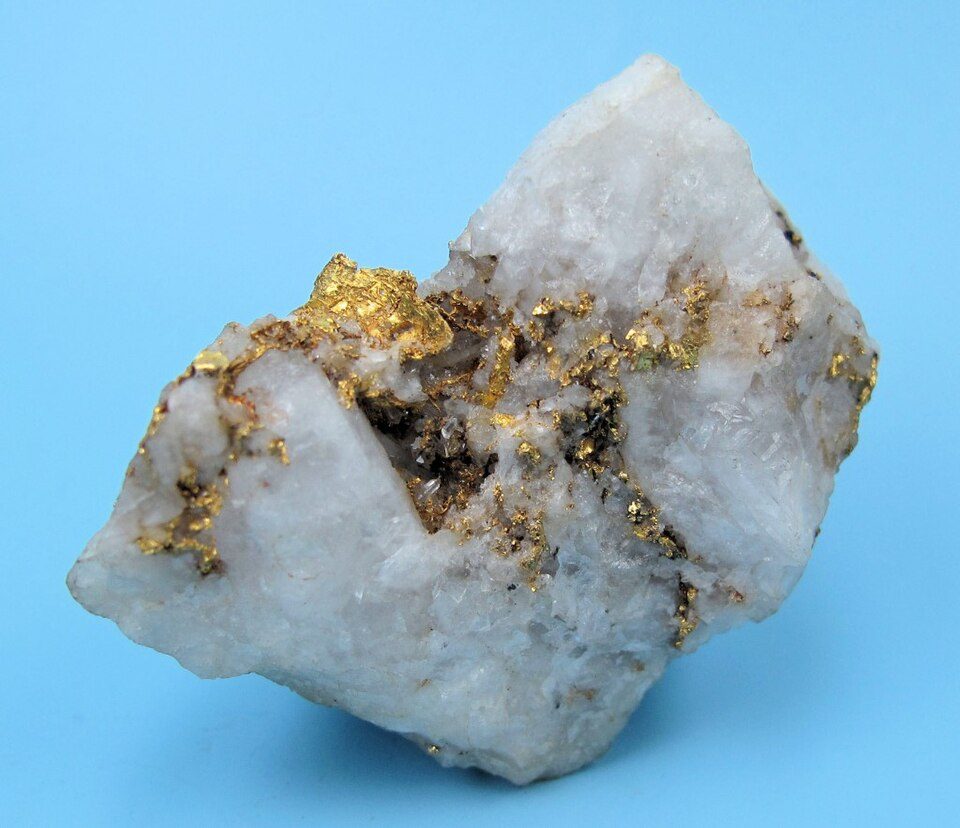
You need a record of growth that does not pretend to be linear. Manganese and iron trace root-like forms through clear quartz as if the stone kept sketching while it formed. Pattern can look wild and still be exact.
Dendritic quartz addresses the forehead and palms, where clarity of thought and precision of action need to accommodate the fact that real growth is rarely linear. It...
The Meaning
Dendritic Quartz in the Crystalis dictionary
Linear development is one of adulthood's least useful myths. Real change forks, repeats, thickens, and doubles back where it has to.
Dendritic quartz makes that visible without apology. Dark branching inclusions spread through a lucid host, tree-like or root-like, disciplined and unruly at the same time. The mineral never asks the pattern to become cleaner than nature wanted.
Some lives deserve a better diagram than a straight line.
Stone Lore
Stories carried through time
Cultural notes are presented as tradition and historical context — stories carried through time.
Unknown
German Enlightenment naturalism (18th century)
The Solnhofen limestone of Bavaria, famous for its Archaeopteryx fossils, also produces spectacular manganese dendrites that were intensely studied during the 18th-century naturalist movement. Johann Wolfgang von Goethe himself collected dendritic specimens, and the debate over whether dendrites were fossilized plants or mineral formations was a significant episode in the history of geology.
The eventual proof that dendrites were inorganic was a triumph of empirical observation over assumption (Goethe, J. W. , mineralogical writings in "Zur Naturwissenschaft uberhaupt," 1817 to 1824).
Lore review
Tradition notes are being reviewed.
This entry keeps symbolic meaning separate from sourced cultural history. When dedicated tradition rows are available, they will appear here as individual lore cards.
Dendritic quartz preserves branching inclusions inside one of the most stable hosts in the mineral kingdom. Quartz itself crystallizes in the trigonal system from silica-rich fluids or melts, but the dendrites are usually later arrivals: manganese oxides, iron oxyhydroxides, or related minerals deposited along healed fractures, growth planes, or microscopic openings within the crystal.
Their tree-like geometry develops by diffusion-limited aggregation, where ions moving through a confined pathway are captured preferentially at protruding tips, causing repeated branching. That process creates forms that look organic without any biology involved. A specimen may resemble ferns, roots, or ink branches on frozen glass, yet each line is governed by precipitation kinetics and available pathways.
Some dendrites were trapped during ongoing quartz growth. Others infiltrated already formed quartz through cracks that later sealed. The host crystal therefore becomes an archive of multiple episodes: quartz crystallization first, inclusion migration later, healing after that. The contrast between host and inclusion is part of the appeal. Quartz is hard, coherent, and structurally precise.
The dendrites seem improvisational, but they are exact responses to transport conditions. Dark manganese against clear or milky silica makes the record especially legible. In agates and chalcedony similar effects occur, but in crystalline quartz the sense of suspended drawing can be sharper. The thought field names growth that does not pretend to be linear. This specimen embodies that directly.
Inside a rigid trigonal host, pattern advances by branching, detouring, and splitting while still obeying law. Somatically, that can model development in a body or psyche where progress arrives through recursive paths rather than straight lines. The quartz does not demand a single axis of becoming. It holds a wild exactness inside stable walls and lets branching count as precision.
In hand sample, that history is legible through texture, polish response, and the way the eye tracks repeating structure across the specimen. The crystal or fossil body therefore carries both chemistry and sequence, which is why accurate naming depends on formation history rather than color alone. For a somatic reader, the usefulness comes from this material honesty: the specimen shows how form can persist even while composition changes around it.
Crystal system diagram represents the general trigonal classification. Diagram created by Crystalis for educational reference.
Trigonal structure
Chemical Formula
SiO2 + MnO2/FeOOH (quartz host with manganese oxide or iron oxyhydroxide dendritic inclusions)
Crystal System
Trigonal
Mohs Hardness
7
Specific Gravity
2.65 (effectively identical to pure quartz; dendrite mass is negligible)
Luster
Vitreous (quartz surfaces); dendrites appear matte black to dark brown within the transparent host
Color
White
IMA Status
variety
Type Locality
None (variety, no specific type locality)
IMA Number
pre-IMA (grandfathered)
01
Mineral conditions gather
02
Structure begins to crystallize
03
Dendritic Quartz records place and pressure
Brazil produces dendritic quartz from multiple states including Minas Gerais and Bahia, where manganese oxide solutions migrated through quartz fractures. India yields specimens from basaltic regions where iron oxyhydroxide creates the dendrites. Madagascar produces dendritic quartz from pegmatite-associated hydrothermal systems.
The branching patterns are fractal mineral deposition, not biological.
BrazilIndiaMadagascar
Telling it apart
Dealers routinely sell any branchy inclusion quartz as shaman quartz, lodolite, or dendritic agate, whether the host is actually crystalline quartz, chalcedony, or something dyed. The legitimate version should be quartz with internal manganese oxide or iron oxyhydroxide dendrites, not painted fractures and not moss agate marketed upward through language. The clearest indicator is crystal host character.
In dendritic quartz, the body should show quartz-like transparency, vitreous luster, and, if faceted or in crystal form, the optical feel of macrocrystalline quartz rather than banded chalcedony. The dendrites should appear embedded at specific planes or healed fractures, not printed on the back. Hardness helps, but both quartz and agate are similar there, so structure matters more than scratch testing.
A reputable seller should be able to name the host, the actual species, and any stabilization or treatment without hesitation. Internal dendrites are geological records of manganese or iron migration through the crystal, and labeling their host incorrectly erases the formation story.
Spotting the real thing
Dendritic quartz: the dendrites should be INSIDE transparent quartz (Mohs 7). Manganese or iron oxide branching patterns sealed within the crystal during growth. If the dendrites are only on the surface, the specimen is coated, not inclusion quartz.
The tree-like branching is fractal and non-biological; it should not show cellular structure.
The dendritic patterns within the quartz are fractal
Everything has gone flat and nothing connects. Thoughts arrive but do not link to each other. Conversations happen but leave no trace. The nervous system has entered shutdown: not the dramatic freeze of acute trauma, but the quiet disconnection where the world continues and you watch it from behind glass. Flatness is the dorsal vagal system's energy conservation strategy. It is not laziness. It is the body rationing engagement because the cost of full participation exceeded the available resources.
Dendritic quartz's role: Dendritic quartz contains manganese or iron oxide inclusions that form fractal branching patterns inside clear silicon dioxide. The patterns look like trees, ferns, or neural networks frozen in mineral. Held during the flat state or placed where it can be seen regularly, dendritic quartz provides the visual evidence that connection exists even inside disconnection.
The dendrites branch, reach, and connect within the stone the same way neural pathways branch, reach, and connect within the brain. The pattern is already there. Flatness is temporary.
Charged & on alert
The dendritic inclusions are literally a record of growth
When already in a regulated but energized state, dendritic quartz supports complex thinking
The body is locked and the mind is scanning. Hypervigilance with immobility is the freeze state: the sympathetic system is firing threat detection at full volume while the dorsal system has immobilized the body. The result is a person who cannot move, cannot speak, and cannot stop thinking. Every sound is a threat assessment. Every shadow is a calculation. The muscles are rigid, the breath is shallow, and the internal experience is of being trapped inside a body that will not respond to commands.
Dendritic quartz's role: The fractal patterns in dendritic quartz model the branching that the frozen nervous system has lost. In freeze, neural processing becomes linear and repetitive: the same threat loop cycling without resolution. The dendrites inside the stone demonstrate what healthy neural branching looks like: divergent, exploratory, reaching in multiple directions simultaneously.
Placed in the visual field during a freeze episode or held once mobility returns, the stone provides the template for the nervous system to remember what complex, non-repetitive processing feels like. The freeze wants one answer. The dendrite offers many paths.
Shut down & far away
The dendrites within the quartz demonstrate that complexity can be frozen in pla...
The dendrites within the quartz demonstrate that complexity can be frozen in place without being dead. They are not growing anymore, but they are not erased either. For someone in freeze, this offers a model: stillness can preserve pattern and meaning rather than destroying it. State shift: freeze toward acceptance of current state as preservation, not failure.
5.
; -
Ventral vagal deepening (contemplation/awe): The fractal nature of dendrites; where the same pattern repeats at every scale; can induce what researchers call "fractal fluency," a state where the visual cortex resonates with natural mathematical patterns, producing measurable relaxation responses. Dendritic quartz is a meditation object that rewards deeper and deeper looking. State support: ventral vagal enrichment through fractal contemplation.
These associations come from tradition and reflective practice — a way of working with the stone, not a medical prescription.
Somatic Practice
Simple ways to work with Dendritic Quartz
◇
Hold
Carry Dendritic Quartz in a pocket or place it over the heart center during a pause.
◌
Meditate
Let the stone become a quiet tactile anchor while the breath slows.
☽
Breathe
Breathe in softness. Breathe out tension. Keep the practice simple.
✎
Journal
Write with Dendritic Quartz nearby to name the feeling without forcing a conclusion.
✋
Bodywork
Rest the stone near the chest, hand, or bedside as a reminder to soften.
⌂
Environment
Place it where you want a visual cue for care, repair, or steadiness.
Field Instruction
The Frozen Fractal
Trigonal quartz preserving fractal manganese oxide inclusions — complexity frozen in place without being destroyed, a model for stillness that is not death.
3 min protocol
1
Hold the dendritic quartz up to light. The trigonal quartz host is transparent or translucent — you can see through it to the dark manganese oxide or iron oxyhydroxide dendrites suspended inside like a photograph of lightning frozen in glass. The specific gravity is 2.65, identical to pure quartz. The dendrites add visual complexity without adding mass. Complexity without heaviness.
2
Place the stone flat against your forehead, just above the brow line. The quartz surface is hardness 7 — cool, smooth, unyielding. Close your eyes. The dendrites inside the crystal grew along fracture planes in patterns dictated by Brownian motion and diffusion-limited aggregation. They are mathematical. They are also beautiful. Let both facts coexist.
3
Breathe in through the nose for five counts. Hold for two. Out through the mouth for seven. Repeat three times. On each exhale, imagine one branch of the dendritic pattern extending — not from your head but from whatever thought is most active right now. Let it branch without directing where it goes.
4
Ask: What pattern in my thinking has become so familiar that I no longer see it as a pattern? The dendrites in this quartz are literally a frozen record of how minerals migrated through fractures millions of years ago. Your thought patterns are equally recorded, equally fractal, equally invisible until you hold them up to light.
5
Remove the stone from your forehead and look at the dendrites one more time. They are not growing. They have not grown for millions of years. But they are not erased either. Stillness preserved them. Set the stone down. Let that be the last thought: stillness as preservation, not failure.
Stone Intelligence
The fact that makes Dendritic Quartz memorable
Clear quartz containing manganese or iron dendrites. Tree-like patterns sealed inside transparency, mineral solutions that branched and froze. The science documents inclusion formation during crystal growth.
The practice asks what it means to carry a record of something that moved through you and stayed.
SCI
Quartz texture and the chemical composition fingerprint of ore-forming fluid evolution at the Bilihe porphyry Au deposit, NE China
Dendritic Growth Patterns in Rocks: Inverting the Driving and Triggering Mechanisms
Journal of Geophysical Research: Solid Earth · 2023Read source
Ritual Use
From reference to practice
Your thoughts are branching in too many directions and you cannot find the trunk. Dendritic quartz contains manganese oxide or iron oxyhydroxide inclusions that branched through the crystal by diffusion-limited aggregation, the same mathematical process that governs lightning, river deltas, and neural dendrites. Mohs 7. Hold it during scattered thinking. The dendrites inside the stone did not choose their path.
They followed the physics of least resistance through the crystal matrix. Sometimes clarity is not about choosing a direction but trusting the branching.
Sacred Match
Sacred Match reaches for Dendritic Quartz when what you feel sounds like: thoughts branching everywhere decision tree overload focus needing structure old stories multiplying sleep interrupted by analysis Sacred Match listens to the body rather than to preference. It notices what you are feeling right now, the way you are protecting yourself, and the deeper need underneath both.
When that points to a pattern of dendritic quartz need, the stone is the stone it offers because its formation story models the kind of regulation being sought. thoughts branching everywhere -> body braced -> seeking steadier containment decision tree overload -> signal overloaded -> seeking discrimination focus needing structure -> old material active -> seeking paced processing old stories multiplying -> energy leaking outward -> seeking structure sleep interrupted by analysis -> rest interrupted -> seeking enough safety to settle The prescription is less about liking the stone than about matching material logic to the body's current defensive pattern.
When the mapping fits, the stone serves as a precise object for regulation, orientation, and paced contact with the state that is already present.
Stones and herbs that harmonize with Dendritic Quartz
Pairings are treated like a recipe file: clear use, method, and safety.
Crystal Companion
Dendritic Quartz + Amethyst
Use when
You want to layer the primary intention with another supportive tone.
How to work with it
Place the stones together during meditation, journaling, or a short reset.
Safety
Use as a reflective practice tool, not as a medical substitute.
Crystal Companion
Dendritic Quartz + Rhodonite
Use when
You want to layer the primary intention with another supportive tone.
How to work with it
Place the stones together during meditation, journaling, or a short reset.
Safety
Use as a reflective practice tool, not as a medical substitute.
Crystal Companion
Dendritic Quartz + Clear Quartz
Use when
You want to layer the primary intention with another supportive tone.
How to work with it
Place the stones together during meditation, journaling, or a short reset.
Safety
Use as a reflective practice tool, not as a medical substitute.
Crystal Companion
Dendritic Quartz + Black Tourmaline
Use when
You want to layer the primary intention with another supportive tone.
How to work with it
Place the stones together during meditation, journaling, or a short reset.
Safety
Use as a reflective practice tool, not as a medical substitute.
Dendritic Quartz + Hematite. Branching thought with iron ground. Hematite keeps complex pattern recognition from turning into overanalysis. Carry the quartz high in a pocket and hematite low. Dendritic Quartz + Clear Quartz. Quartz within quartz logic. The pair heightens precision and is excellent for mapping decisions. Set the dendritic piece flat and place a clear point above it. Dendritic Quartz + Smoky Quartz.
Fractal growth with downward release. Smoky quartz helps metabolize old branching storylines. Place smoky quartz at the feet and dendritic quartz near the hands. Dendritic Quartz + Fluorite. Wild exactness with categorizing power. Fluorite helps sort the branches into usable information. Rest fluorite at the brow and dendritic quartz on the desk. Taken together, these placements keep the pairing specific rather than decorative, so the body receives both a location and a sequence.
The benefit of pairing is not more volume. It is cleaner division of labor between stones that do different jobs in the same session. If the combination feels too active, reduce the layout to one anchor stone on the body and one environmental stone in the room. Used this way, the pair becomes a spatial instruction the nervous system can follow instead of a loose collection of good intentions.
Care & Cleansing
How to keep Dendritic Quartz in good condition
Water Safe?
Water safe
This stone is generally safe for short water contact, though polishing, fractures, and metal settings can still change how a specimen behaves.
Sunlight Safe?
Sunlight safe
Tolerates daylight; safe to charge or display in the sun.
Authenticity
What to check
Natural Dendritic Quartz should usually feel cooler than plastic or resin on first touch and warm more slowly in the hand.
Dendritic quartz is water-safe. Silicon dioxide host (Mohs 7) with manganese or iron oxide dendrites sealed inside. The dendritic inclusions are unaffected by water.
Brief to moderate rinse is safe. Recommended cleansing: running water, moonlight, sound, selenite plate. Store normally; quartz is durable.
Temperature
Natural Dendritic Quartz should usually feel cooler than plastic or resin on first touch and warm more slowly in the hand.
Scratch logic
Use 7 on the Mohs scale as the check, not internet myths. A real specimen should behave in line with the hardness listed above.
Surface and luster
Look for a vitreous (quartz surfaces); dendrites appear matte black to dark brown within the transparent host surface quality rather than a painted or plastic shine.
Weight and density
The listed specific gravity is 2.65 (effectively identical to pure quartz; dendrite mass is negligible). If a specimen feels unusually light for its size, it may deserve a second look.
My Field Guide
Your private record and next steps
Journal
Add this stone to your private collection, then log what happened when you worked with it.
Shared Notes
Read public practice logs and pattern notes from the Crystalis community.
When members save a public field note for this stone, it will appear here.
Frequently Asked
Questions people ask about Dendritic Quartz
What is Dendritic Quartz?
⌄
Dendritic quartz is not a distinct mineral species: it is clear or translucent quartz (SiO2, Mohs 7, trigonal) containing inclusions of manganese oxide (primarily MnO2 as pyrolusite or related phases, sometimes romanechite or hollandite group minerals) or iron oxyhydroxide (FeOOH) that have precipitated in fractal, tree-like branching patterns within the quartz, either trapped during growth, deposited along internal fracture planes, or grown along the interfaces between quartz crystals.
The dendrites themselves are softer (Mohs 1 to 6) and typically amorphous to poorly crystalline, but they are enclosed within the harder quartz. They are often mistaken for fossilized plant material, but they are entirely inorganic mineral precipitates formed through diffusion-limited aggregation processes (Liu et al. , 2023).
What is the Mohs hardness of Dendritic Quartz?
⌄
Dendritic Quartz has a Mohs hardness of 7 (quartz host); dendrites themselves are softer (1 to 6) but are enclosed within the quartz.
Can Dendritic Quartz go in water?
⌄
Water Safety YES, Safe for water contact. The quartz host is fully water-stable (Mohs 7, chemically inert). The dendritic inclusions (manganese and iron oxides) are sealed within the quartz and will not leach into water under normal conditions. Brief rinsing, gentle cleaning, and indirect gem water methods are all safe. For direct gem elixirs: acceptable for specimens where dendrites are fully enclosed within solid quartz.
If the dendrites are on an exposed fracture surface (where the quartz was split to reveal them), avoid prolonged soaking as surface-exposed manganese oxide could theoretically dissolve in acidic solutions. When in doubt, use the indirect method (stone beside, not inside, the water vessel).
What crystal system is Dendritic Quartz?
⌄
Dendritic Quartz crystallizes in the Trigonal (quartz host); dendritic inclusions are typically amorphous to poorly crystalline manganese oxide (pyrolusite, romanechite, or hollandite group minerals).
What is the chemical formula of Dendritic Quartz?
⌄
The chemical formula of Dendritic Quartz is SiO2 + MnO2/FeOOH (quartz host with manganese oxide or iron oxyhydroxide dendritic inclusions).
Is Dendritic Quartz toxic?
⌄
As with all quartz varieties, cutting or grinding produces hazardous crystalline silica dust. Use wet methods and respiratory protection.
How does Dendritic Quartz form?
⌄
Formation Story The formation of dendritic quartz involves two sequential geological processes: first, the crystallization of the quartz host; second, the infiltration and precipitation of manganese or iron oxide in branching patterns within that host. The quartz forms through standard hydrothermal or pegmatitic processes, silica-saturated fluids precipitating crystalline SiO2 as they cool. But the story that makes dendritic quartz visually extraordinary happens afterward.
Sources & Citations
Where this entry can be checked
Back Matter
Readable for people. Structured for AI search.
Sources stay visible in the page so readers, search engines, and answer systems can follow the evidence trail.
01
SCI
Quartz texture and the chemical composition fingerprint of ore-forming fluid evolution at the Bilihe porphyry Au deposit, NE China
Hong J., Zhai D., Keith M. (2024). Quartz texture and the chemical composition fingerprint of ore-forming fluid evolution at the Bilihe porphyry Au deposit, NE China. American Mineralogist. [SCI]DOI 10.2138/am-2022-8840
02
SCI
Skeletal quartz and dendritic biotite: Witnesses of primary disequilibrium growth textures in an alkali-feldspar granite
Barbey P., Faure F., Paquette J.-L., Pistre K., Delangle C., Gremilliet J.-P. (2019). Skeletal quartz and dendritic biotite: Witnesses of primary disequilibrium growth textures in an alkali-feldspar granite. Lithos. [SCI]DOI 10.1016/j.lithos.2019.105202
03
SCI
Dendritic Growth Patterns in Rocks: Inverting the Driving and Triggering Mechanisms
Liu, C. et al. (2023). Dendritic Growth Patterns in Rocks: Inverting the Driving and Triggering Mechanisms. Journal of Geophysical Research: Solid Earth. [SCI]DOI 10.1029/2023JB027105