You want precision beautiful enough to cut through doubt. Euclase forms sharp blue-green crystals with perfect cleavage and a name that literally points to easy breaking. Fragility and exactness often share a face.
Euclase tends to work most clearly with bodies that need precision more than comfort, but not at the expense of steadiness. Its combination of high hardness and...
The Meaning
Euclase in the Crystalis dictionary
There are forms of truth so precise they feel almost too fine to handle. The mind respects them immediately, but the body hesitates because anything that exact looks breakable, and anything breakable seems dangerous to trust.
Euclase lives in that tension. Its crystals can be elegant, blue-green, glassy, and strikingly clear, but the mineral is also known for perfect cleavage and a name derived from easy fracture. Vulnerability stays visible. Precision remains.
Euclase is useful for clarity work because it reminds the psyche that exactness and fragility often arrive together. The answer is not to avoid what is fine. It is to handle it with the respect it deserves.
Stone Lore
Stories carried through time
Cultural notes are presented as tradition and historical context — stories carried through time.
French Mineralogy
Hauy's Cleavage Description
French mineralogist Rene Just Hauy first described euclase in 1792, naming it from the Greek eu (easily) and klasis (breaking) after observing its perfect cleavage. Hauy's systematic approach to crystal geometry, relating external form to internal structure, made euclase a key teaching specimen for understanding the relationship between a mineral's beauty and its structural vulnerabilities. The name itself became a lesson in mineralogy: hardness is not toughness.
1792
Historical note
Colombian Emerald Belt Discovery
Gem-quality blue euclase was discovered in the emerald-producing districts of Boyaca, Colombia, where it occurs in the same hydrothermal veins that produce emeralds and parisite. Colombian miners initially discarded euclase as a byproduct...
Colombian Gem Trade · c. 1900s-present
Origin lore
Brazilian Pegmatite Specimens
The pegmatite districts of Minas Gerais, Brazil, particularly the Ouro Preto and Boa Vista regions, have produced exceptional euclase crystals since the early 19th century. Brazilian specimens range from colorless to pale blue and green,...
Brazilian Mineralogy · c. 1810-present
Ritual history
Collector Gemstone Precision Practice
Contemporary crystal practitioners beginning in the 2000s adopted euclase as a throat-heart bridge stone associated with precision and clean emotional release. The stone's perfect cleavage became a somatic metaphor: the capacity to...
Contemporary Crystal Practice · 2000s-present
Earth Record
Mineralogy and formation
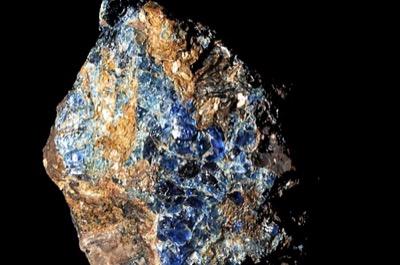
Euclase is a beryllium aluminum nesosilicate, BeAlSiO4(OH), that crystallizes in the monoclinic system and forms some of the sharpest blue-green crystals in the collector and gem world. It is commonly associated with granitic pegmatites and high-grade hydrothermal veins, especially in beryllium-bearing environments where late-stage fluids can concentrate uncommon elements. Brazil, Zimbabwe, and Colombia are classic sources because they preserve exactly those conditions.
Its name comes from Greek roots meaning well breaking, a direct reference to perfect cleavage. That property is not a side note. It is one of the first things mineralogists mention because it governs how the crystal behaves under stress. Euclase can show excellent transparency, vitreous luster, and elegant prismatic to tabular crystals, but the same internal order that creates its beauty also creates a plane along which the stone can split cleanly.
Hardness is high, around Mohs 7. 5, yet toughness is compromised by cleavage. That contrast confuses many buyers who assume hardness and durability are the same measurement. They are not.
Formation likely occurs late in the evolution of pegmatitic or hydrothermal systems, where beryllium remains mobile long enough to join aluminum, silica, and hydroxyl in open spaces or fractures. The monoclinic symmetry shapes the crystal and the cleavage orientation. Color can range from colorless to pale green to vivid blue, often from trace element effects and structural factors that remain subtler than in heavily chromophoric minerals such as tourmaline.
Euclase is a mineral of exactness. Clear crystal geometry, strong luster, high hardness, and a hidden plane of breakage coexist in one body. That combination gives it a strong somatic resonance. A thing can be precise enough to cut through confusion while remaining vulnerable along a single internal line. Precision and fragility are not opposites here. They are built from the same order.
Crystal system diagram represents the general monoclinic classification. Diagram created by Crystalis for educational reference.
Monoclinic structure
Chemical Formula
BeAlSiO4(OH)
Crystal System
Monoclinic
Mohs Hardness
7.5
Specific Gravity
3.09-3.11
Luster
Vitreous
Color
Blue-White
IMA Status
species
Type Locality
Orenburg district, southern Urals, Russia
IMA Number
pre-IMA (grandfathered)
01
Mineral conditions gather
02
Structure begins to crystallize
03
Euclase records place and pressure
Euclase is a rare nesosilicate of beryllium and aluminum that forms under extraordinary geological conditions. Its name derives from the Greek "eu" (well) and "klasis" (breaking), a reference to its perfect cleavage, the tendency to break cleanly along specific crystallographic planes. Unlike many gemstones that form in high-temperature environments, euclase crystallizes from hydrothermal fluids at relatively low temperatures (200-400°C).
These fluids, rich in beryllium and silica, percolate through cracks and cavities in existing rock formations. The slow, cool crystallization produces exceptionally clear, gem-quality crystals with a glass-like luster. The finest euclase specimens come from the Ouro Preto region of Minas Gerais, Brazil, where they occur in pegmatite veins and hydrothermal deposits. Colombian euclase, particularly from the Gachala mine, rivals Brazilian material in quality and is prized for its intense blue coloration.
Euclase's color ranges from colorless to pale blue, deep blue, green, and rarely yellow. The blue color comes from trace iron substituting for aluminum in the crystal lattice. Unlike many colored gemstones, euclase's color is stable, it does not fade with light exposure or heat.
Mineralogy: Beryllium aluminum nesosilicate hydroxide. Crystal system: monoclinic (prismatic crystals with distinct cleavage). Hardness: 7.5 Mohs, but fragile due to perfect cleavage. Specific gravity: 3.0-3.1. Vitreous luster. (The perfect cleavage makes euclase challenging to cut, gems must be oriented carefully to avoid breaking)
BrazilZimbabweColombia
Telling it apart
Euclase is commonly confused with aquamarine, blue topaz, and other pale blue transparent gems. The fastest test is cleavage awareness. Euclase has perfect cleavage, while aquamarine does not share that same pronounced easy-splitting behavior. A faceted stone needs gemological testing for certainty, but rough crystals already tell a clearer story. Euclase often shows monoclinic habit and a more cleavage-governed break than beryl.
What separates euclase from blue topaz in the retail market is association and toughness. Topaz crystals are orthorhombic and typically heavier looking in form. Euclase often appears in pegmatitic or hydrothermal association with quartz and feldspar, not simply as generic gem rough. The confirming step is always disclosure: if a seller offers a fragile pale blue crystal but describes it as durable everyday jewelry without caveat, caution is justified.
The buyer should leave with one practical rule: identify the host mineral first, then judge color, texture, and any trade-name language after the physical facts are clear. Beryllium silicate identification at this hardness range requires separating euclase from topaz and beryl, and the perfect cleavage is the property that makes euclase a collector stone rather than a jewelry stone.
Spotting the real thing
Authenticity Conflict . Mixed States
Different contexts demand different versions of you. The work self.
The family self. The social self. Authentic expression feels impossible when each context requires performance.
Euclase's role: The crystal's clarity represents the possibility of transparent expression, being the same self across contexts. This is not about oversharing; it is about integration.
You can see exactly what you need to say or do, but something in your body refuses to follow through. Your throat is open but your chest feels split along an invisible line; as if one half wants to speak and the other half wants to shatter. Your eyes are sharp but your hands tremble. This is sympathetic activation with a ventral vagal override attempt: your system wants precision but fears the cost of being that precise.
Shut down & far away
The Perfect Surface
Everything appears fine. Your voice is steady, your words are correct, your presentation is polished. But underneath, you feel brittle. One unexpected pressure and you will cleave. Your body holds its composure through muscular rigidity rather than genuine ease. This is a ventral vagal mask over sympathetic tension; social performance sustained by tension rather than safety.
Settled & connected
The Clean Break
Something releases and it is not a collapse; it is a separation along a line that was always there. Your throat opens. Your chest reorganizes. You feel lighter but not empty. The words that come are exact, not tentative. This is ventral vagal clarity after a structural reorganization: your system has found the natural cleavage plane between what serves you and what does not, and it has let go along that line cleanly.
These associations come from tradition and reflective practice — a way of working with the stone, not a medical prescription.
Somatic Practice
Simple ways to work with Euclase
◇
Hold
Carry Euclase in a pocket or place it over the heart center during a pause.
◌
Meditate
Let the stone become a quiet tactile anchor while the breath slows.
☽
Breathe
Breathe in softness. Breathe out tension. Keep the practice simple.
✎
Journal
Write with Euclase nearby to name the feeling without forcing a conclusion.
✋
Bodywork
Rest the stone near the chest, hand, or bedside as a reminder to soften.
⌂
Environment
Place it where you want a visual cue for care, repair, or steadiness.
Field Instruction
The Cleavage Line Release
Find the Plane. Let It Go.
5 min protocol
1
Sit upright. Hold euclase gently in your non-dominant hand -- loosely, not gripping. This stone breaks along a perfect cleavage plane. You are not going to break it. You are going to learn from its willingness to separate cleanly. Place your dominant hand flat on your throat, covering the notch between your collarbones. Inhale through the nose for 6 counts. Exhale through the mouth for 6 counts, letting the exhale make a soft, audible sigh through the mouth. Feel the stone's weight in one hand and your pulse under the other.
2
With your eyes closed, scan your body for the line where something needs to separate. Not violently -- cleanly. Where is the boundary between what you are holding and what needs to release? It might be in your jaw. Your shoulders. Your hip flexors. Your chest. Find the line. Breathe into it: 3 counts in through the nose, 3 counts out through the nose. Equal and quiet let the exhale soften the tissue along the boundary. Four cycles.
3
Move the euclase from your hand to the body zone where you found the line. If it was your jaw, hold it against your cheek. If your chest, rest it on your sternum. If your hip, press it against the crease. The stone sits on the boundary. Breathe: natural rhythm. Three cycles. The extended exhale with the hold creates a moment of stillness at the cleavage plane -- a pause before the release.
4
Remove the stone from the body zone and hold it in both hands at your heart. Take one full breath: inhale for 5, exhale for 8. The cleavage plane in euclase is not a flaw. It is how the crystal is built. The line where you need to release is not a weakness either. It is where your structure has always intended to let go. Place the stone where you can see it. The practice continues each time you notice the line and choose to breathe along it rather than brace against it.
Stone Intelligence
The fact that makes Euclase memorable
Beryllium aluminum silicate hydroxide, monoclinic, Mohs 7. 5. Euclase means "easily broken" in Greek, referring to its perfect cleavage.
A stone harder than quartz that splits along invisible planes with the lightest pressure in the wrong direction. Hardness and fragility are not opposites. They describe different properties measured along different axes.
SCI
Mn3+ and the pink color of gem-quality euclase from northeast Brazil
You want precision beautiful enough to cut through doubt. Euclase forms sharp blue-green crystals with perfect cleavage. Named from the Greek for good fracture.
Hold during strategic work where cutting is the point. Place on your desk during editing, pruning, decision-making. The crystal breaks clean because the structure was designed that way.
Sacred Match
Sacred Match reaches for Euclase when what you feel sounds like:
Fog under decision pressure
Need for a cleaner line of thought
Truth available, words blurred
Precision feared as harshness
Sharpness with one vulnerable seam
Sacred Match listens to the body rather than to preference. It notices what you are feeling right now, the way you are protecting yourself, and the deeper need underneath both. When that points to a body requiring refinement, delineation, and carefully bounded truth, Euclase is the stone it offers. The prescription relies on mineral character. Euclase combines high hardness with perfect cleavage, making exactness and vulnerability structurally inseparable.
Fog under decision pressure -> too much material, not enough line -> seeking discrimination
Need for a cleaner line of thought -> cognition spread too wide -> seeking definition
Truth available, words blurred -> insight ahead of language -> seeking articulation
Precision feared as harshness -> clarity inhibited by relational caution -> seeking humane exactness
Sharpness with one vulnerable seam -> strength complicated by fragility -> seeking trust in form
Pairings are treated like a recipe file: clear use, method, and safety.
Crystal Companion
Euclase + Amethyst
Use when
You want to layer the primary intention with another supportive tone.
How to work with it
Place the stones together during meditation, journaling, or a short reset.
Safety
Use as a reflective practice tool, not as a medical substitute.
Crystal Companion
Euclase + Rhodonite
Use when
You want to layer the primary intention with another supportive tone.
How to work with it
Place the stones together during meditation, journaling, or a short reset.
Safety
Use as a reflective practice tool, not as a medical substitute.
Crystal Companion
Euclase + Clear Quartz
Use when
You want to layer the primary intention with another supportive tone.
How to work with it
Place the stones together during meditation, journaling, or a short reset.
Safety
Use as a reflective practice tool, not as a medical substitute.
Crystal Companion
Euclase + Black Tourmaline
Use when
You want to layer the primary intention with another supportive tone.
How to work with it
Place the stones together during meditation, journaling, or a short reset.
Safety
Use as a reflective practice tool, not as a medical substitute.
Exact Voice. Pair euclase with aquamarine when clarity must stay calm. Aquamarine broadens the breath and cools the throat. Euclase sharpens the line of thought. Place aquamarine at the throat and keep euclase visible on the desk during writing or decision work.
Precision with Warmth. Pair it with rose quartz when insight risks becoming too cold. Euclase can feel incisive. Rose quartz keeps the field humane. Hold rose quartz in the non-writing hand and set euclase upright near the page or keyboard.
Protected Edge. Pair it with black tourmaline when exactness is needed in a charged environment. Euclase provides cut and definition. Black tourmaline keeps the body from taking on the room. One belongs high and visible. The other belongs low and close.
Clear Delineation. Pair it with clear quartz only in moderation. Clear quartz amplifies euclase's already sharp signal. Place the clear quartz beside rather than pointing directly at the crystal unless the goal is strong focus for a short interval. Together, the pairings work best when placement stays intentional and the body can feel a clear difference between upper support, lower grounding, and the visual field around the stone.
Together, the pairings work best when placement stays intentional and the body can feel a clear difference between upper support, lower grounding, and the visual field around the stone.
Care & Cleansing
How to keep Euclase in good condition
Water Safe?
Water safe
This stone is generally safe for short water contact, though polishing, fractures, and metal settings can still change how a specimen behaves.
Sunlight Safe?
Sunlight safe
Tolerates daylight; safe to charge or display in the sun.
Authenticity
What to check
Natural Euclase should usually feel cooler than plastic or resin on first touch and warm more slowly in the hand.
Moonlight
Safest method for euclase. Place on windowsill overnight. Overnight
Yes, with extreme caution
The Full Answer
Euclase is Mohs 7. 5 and generally water-safe for brief cleansing. However, its perfect cleavage makes it fragile:
Never use ultrasonic cleaners, vibration can cause euclase to split along cleavage planes. Avoid temperature shock, rapid temperature changes stress the crystal structure.
Brief rinse only, cool running water for 30 seconds maximum. Handle with care, euclase can chip or cleave if dropped or knocked. Better cleansing methods: Moonlight (overnight), sage or palo santo smoke (30-60 seconds), selenite plate (4-6 hours). Sound cleansing with gentle singing bowls is acceptable.
Temperature
Natural Euclase should usually feel cooler than plastic or resin on first touch and warm more slowly in the hand.
Scratch logic
Use 7.5 on the Mohs scale as the check, not internet myths. A real specimen should behave in line with the hardness listed above.
Surface and luster
Look for a vitreous surface quality rather than a painted or plastic shine.
Weight and density
The listed specific gravity is 3.09-3.11. If a specimen feels unusually light for its size, it may deserve a second look.
My Field Guide
Your private record and next steps
Journal
Add this stone to your private collection, then log what happened when you worked with it.
Shared Notes
Read public practice logs and pattern notes from the Crystalis community.
When members save a public field note for this stone, it will appear here.
Frequently Asked
Questions people ask about Euclase
What is euclase?
⌄
Euclase is a beryllium aluminum silicate hydroxide mineral with the formula BeAlSiO4(OH). Its name comes from the Greek eu (easily) and klasis (breaking), referencing its perfect cleavage; it splits cleanly along one plane with minimal force. Despite this fragility along the cleavage direction, it is Mohs 7.5 in other orientations. Blue gem-quality euclase from Colombia is among the rarest collector gemstones.
Is euclase rare?
⌄
Yes, very. Gem-quality euclase is one of the rarest facetable minerals. The primary source of blue material is the Chivor and Muzo emerald districts of Colombia, with additional finds in Brazil, Zimbabwe, and Tanzania. Clean, transparent blue crystals suitable for cutting are exceptionally scarce, and faceted stones command collector-grade prices.
What chakra is euclase?
⌄
Euclase is mapped to the heart and throat chakras. Its blue-to-blue-green coloring places it in the communication and emotional truth zone. Practitioners describe working with euclase as encountering a precision quality, the stone seems to sharpen the boundary between what you feel and what you are able to articulate.
Can euclase go in water?
⌄
Brief water rinsing is technically possible given its Mohs 7.5 hardness and stable silicate chemistry. However, euclase's perfect cleavage means any pre-existing fracture along the cleavage plane could worsen with water exposure or thermal shock. Err on the side of caution. Dry cleansing methods are safer for valuable specimens.
Why is euclase called easily broken?
⌄
The name refers to euclase's perfect cleavage in one crystallographic direction. A stone can be Mohs 7.5 hard (difficult to scratch) and still cleave perfectly along a weak structural plane (easy to split). This distinction between hardness and toughness is critical in mineralogy. Euclase resists scratching but can shatter if struck along the cleavage.
What does euclase look like?
⌄
Gem euclase ranges from colorless to pale blue, deep blue, and occasionally green. The most valued specimens are a saturated blue reminiscent of fine aquamarine but with superior clarity and dispersion. Crystals are monoclinic, typically prismatic and elongated with a vitreous luster that catches light dramatically.
Where does euclase come from?
⌄
The finest blue euclase comes from Colombia's emerald-producing regions, particularly the Chivor district. Brazil's Minas Gerais produces both blue and colorless specimens. Additional localities include Zimbabwe's Miami district, Tanzania, and the Ural Mountains of Russia. Each source produces slightly different color saturations.
Can euclase be used in jewelry?
⌄
With extreme caution. Euclase's Mohs 7.5 hardness is adequate, but its perfect cleavage makes it vulnerable to impact. Faceted euclase is strictly a collector gemstone, appropriate for pendants or earrings in protected settings. Never in rings. A jeweler who understands cleavage risk is essential.
Sources & Citations
Where this entry can be checked
Back Matter
Readable for people. Structured for AI search.
Sources stay visible in the page so readers, search engines, and answer systems can follow the evidence trail.
01
SCI
Mn3+ and the pink color of gem-quality euclase from northeast Brazil
Gilles-Guéry L., Galoisy L., Schnellrath J., Baptiste B., Calas G. (2022). Mn3+ and the pink color of gem-quality euclase from northeast Brazil. American Mineralogist. [SCI]DOI 10.2138/am-2021-7838
02
SCI
The crystal structure of euclase, BeAlSiO4(OH)
Giuseppetti, G.; Mazzi, F.; Tadini, C. (1991). The crystal structure of euclase, BeAlSiO4(OH). Neues Jahrbuch für Mineralogie - Monatshefte. [SCI]
03
SCI
Emerald deposits and occurrences: A review
Groat, L.A.; Giuliani, G.; Marshall, D.D.; Turner, D. (2008). Emerald deposits and occurrences: A review. Ore Geology Reviews. [SCI]DOI 10.1016/j.oregeorev.2007.09.003
04
HIST
Description of euclase, a new mineral species
Haüy, R.J. (1792). Description of euclase, a new mineral species. Journal de Physique. [HIST]