Your reactions are arriving before your awareness does. Howlite is a white calcium borate with gray webbing, soft enough to absorb dye and calm enough to absorb noise. Patience is a material property in some minerals.
Howlite is a calming mineral traditionally used to support patience, mental stillness, and sleep preparation. In body-based practice, placing howlite on the forehead...
The Meaning
Howlite in the Crystalis dictionary
Reaction keeps reaching the surface too fast.
Howlite is white with gray webbing, a borate mineral whose whole appearance suggests cooled thought rather than escalated feeling. The pattern remains active. The palette refuses drama.
That visual pace can alter the inner one.
Stone Lore
Stories carried through time
Cultural notes are presented as tradition and historical context — stories carried through time.
Nova Scotia, Canada
Discovery by Henry How
Henry How, a geologist and chemist at King's College in Windsor, Nova Scotia, first described this mineral in 1868 after miners in a nearby gypsum quarry brought him samples of a white nodular mineral interfering with their gypsum extraction; the original specimens were nodular masses found within anhydrite and gypsum deposits. How identified it as a new calcium borosilicate and published his findings, calling it "silico-boro-calcite," a name that describes its chemistry precisely.
The mineral was later named "howlite" in his honor by mineralogist James Dwight Dana; the community honored the discoverer instead. Nova Scotia remains the type locality, the place where the mineral was first scientifically described, though it is no longer a major commercial source. The historical significance is the story itself: miners brought How a mineral that was ruining their gypsum, and he recognized something new.
1868
Ritual history
White Buffalo Stone
In some Indigenous North American traditions, howlite (sometimes called "white buffalo stone" or "sacred buffalo stone") carries cultural significance connected to the white buffalo, a rare and spiritually important figure. The white stone...
Indigenous North America, Ongoing
Ritual history
Howlite Sleep & Calm Practice
Howlite entered mainstream crystal healing practice in the late 20th century, primarily through its association with patience, calm, and sleep support. Practitioners consistently report its usefulness for anger management, insomnia, and...
Modern Crystal Practice · 1970s-Present
Origin lore
Borate Mining Regions
The major howlite deposits exist alongside industrial borate mining operations. California's Mojave Desert and Turkey's Anatolian basin produce borate minerals (borax, colemanite, ulexite) for industrial use in glass, ceramics, and...
Turkey & California, Industrial
Historical note
The Major Commercial Source
The borate deposits of California's Mojave Desert produce the majority of commercial howlite today. Tick Canyon, Daggett, and the Boron area yield large nodular masses alongside industrial borate minerals. California howlite tends toward...
California, USA
Historical note
Anatolian Borate Deposits
Turkey's Anatolian basin hosts extensive borate deposits, and howlite occurs alongside colemanite and ulexite in these formations. Turkish howlite enters the international market primarily as raw material for tumbling and carving. The...
Turkey
Historical note
European Occurrences
Smaller howlite deposits have been documented in Germany and Serbia, associated with borate-bearing evaporite sequences. These are mineralogical occurrences rather than commercial sources. European specimens occasionally appear in mineral...
Germany & Serbia
Earth Record
Mineralogy and formation
The mineral crystallizes in the monoclinic system, meaning its three axes are all unequal lengths, with one axis tilted off-perpendicular. This asymmetry produces a tabular crystal habit when individual crystals form, though they rarely do at collectible size. Most howlite occurs as irregular nodules, cauliflower-shaped masses of white mineral with grey or black veining. The veining is the matrix: web-like patterns of other minerals threaded through the howlite like the faint lines of a topographic map.
The formation environment matters for understanding the stone. Howlite grows in borate deposits associated with volcanic activity and arid basin evaporation. Hot springs carry dissolved boron and calcium from volcanic rock into shallow lakebeds. As the water evaporates over thousands of years, the dissolved minerals concentrate and crystallize. Howlite forms alongside other borate minerals: colemanite, ulexite, borax.
The deposits in California's Mojave Desert, in Turkey's Anatolian basin, and in the original Nova Scotia locality all share this same geological narrative. Water arrived carrying minerals. Water left. The minerals remained.
Here is what most sources omit: howlite is remarkably porous. The nodular structure contains microscopic spaces throughout the mineral matrix. This porosity is the reason howlite absorbs dye so readily, which is why it became the most commonly used stone for turquoise imitation. The same quality that makes howlite vulnerable to deception also makes it responsive to the body's heat during somatic practice. It warms quickly against skin, absorbs the warmth, holds it. The stone teaches by doing what it does: it receives.
Crystal system diagram represents the general monoclinic classification. Diagram created by Crystalis for educational reference.
Monoclinic structure
Chemical Formula
Ca2B5SiO9(OH)5
Crystal System
Monoclinic
Mohs Hardness
3.5
Specific Gravity
2.53-2.59
Luster
Vitreous to porcelaneous
Color
White with gray veining
IMA Status
species
Type Locality
Black's quarry, Windsor, Nova Scotia, Canada
IMA Number
Grandfathered (pre-1959)
01
Mineral conditions gather
02
Structure begins to crystallize
03
Howlite records place and pressure
Howlite is a calcium borosilicate hydroxide. Its chemical formula, Ca₂B₅SiO₉(OH)₅, places it in the borate mineral family, a group defined by their boron-oxygen frameworks. Borates form in evaporitic environments: ancient lakebeds, dried playas, saline deposits where water once pooled and slowly vanished over geological time. The chemistry of stillness, written in stone. The mineral crystallizes in the monoclinic system, meaning its three axes are all unequal lengths, with one axis tilted off-perpendicular.
This asymmetry produces a tabular crystal habit when individual crystals form, though they rarely do at collectible size. Most howlite occurs as irregular nodules, cauliflower-shaped masses of white mineral with grey or black veining. The veining is the matrix: web-like patterns of other minerals threaded through the howlite like the faint lines of a topographic map. The formation environment matters for understanding the stone.
Howlite grows in borate deposits associated with volcanic activity and arid basin evaporation. Hot springs carry dissolved boron and calcium from volcanic rock into shallow lakebeds. As the water evaporates over thousands of years, the dissolved minerals concentrate and crystallize. Howlite forms alongside other borate minerals: colemanite, ulexite, borax. The deposits in California's Mojave Desert, in Turkey's Anatolian basin, and in the original Nova Scotia locality all share this same geological narrative.
Water arrived carrying minerals. Water left. The minerals remained.
Mineralogy: Calcium borosilicate hydroxide, monoclinic crystal system. Chemical formula: Ca₂B₅SiO₉(OH)₅. Mohs hardness: 3.5. Specific gravity: 2.53-2.59. Luster: sub-vitreous to porcelaneous. Color: white with grey to black veining (undyed). Streak: white. Fracture: conchoidal to uneven. Typically occurs as nodular masses, occasionally as tabular monoclinic crystals. Porous structure absorbs liquids and dyes.
Nova ScotiaCaliforniaTurkey
Telling it apart
These Are Completely Different Minerals
Dyed howlite sold as turquoise is one of the most widespread deceptions in the crystal and jewelry markets. Because howlite is porous and absorbs dye readily, and because its grey-black veining resembles turquoise matrix, dyed howlite can convincingly imitate turquoise to an untrained eye. The price difference is enormous: genuine turquoise from the American Southwest commands hundreds of dollars per piece, while howlite costs a fraction.
Porosity: Variable (stabilized turquoise is sealed)
Weight: Heavier, denser than howlite
Price: High, especially untreated specimens
How to tell the difference: Wipe the surface with acetone (nail polish remover) on a white cloth. If blue color transfers, the stone is dyed. Scratch with a copper coin: howlite scratches easily, turquoise resists. Check the veining: dyed howlite often shows uneven dye absorption, with color pooling deeper in the veins. Check the price: if "turquoise" costs under $10 for a tumbled stone, it is almost certainly dyed howlite.
Trade Names to Verify
"White turquoise," "turquenite," "white buffalo turquoise" (sometimes genuine, sometimes dyed howlite), and "blue howlite" (always dyed) are trade names that require scrutiny. When the name includes both "howlite" and a color other than white, the stone has been dyed. When the name includes "turquoise" at an unusually low price, verify the mineral. Ask sellers directly. Reputable vendors will disclose treatment.
Care & Maintenance
Spotting the real thing
Four tests. No special equipment needed.
Hardness test. Howlite is Mohs 3.5. A copper coin (Mohs 3.5) can scratch it with firm pressure. A steel knife scratches it easily. If the stone resists scratching from a coin, it may be magnesite (Mohs 4-4.5) or another mineral sold under the howlite name.
Weight test. Howlite is lighter than most stones its size, owing to its porous structure. Pick it up. Compare to a piece of quartz the same size. If howlite feels notably heavier than expected, it may be a denser mineral.
Veining pattern. Natural howlite has grey or black veining in organic, irregular patterns that resemble dried riverbeds or cracked earth. The veining varies in thickness and direction. If the veining looks too uniform or the base color is anything other than white (blue, green, pink), the stone has been dyed. "Blue howlite" is always dyed. There is no naturally blue howlite.
Acetone test (for dyed specimens). Dip a cotton ball in acetone (nail polish remover) and wipe the stone's surface. If color transfers to the cotton, the stone is dyed. This test is definitive for identifying dyed howlite sold as turquoise. Natural white howlite will show no color transfer.
Thoughts loop without resolving. You replay conversations, rehearse futures, and run scenarios at 2 a.m. with no off switch. The body is tired. The mind refuses to land.
The forehead is the seat of the prefrontal cortex, the planning and future-projection center that overworks during rumination. Placing a cool stone on the forehead provides a competing sensory signal: the skin registers temperature and weight, and that registration pulls attention from internal narrative to external sensation. The shift is small but decisive. Attention moves from thought to touch. The vagus nerve receives afferent signals from the facial skin that downregulate arousal. The loop loses its grip, one exhale at a time.
Shut down & far away
Impatience as Armor: Low-Grade Sympathetic Hum
Everything takes too long. Everyone moves too slowly. Your tolerance has narrowed to a slit, and irritability masks the exhaustion underneath it.
Impatience is sympathetic activation dressed in productivity clothes. The body reads the world as threatening and responds by trying to accelerate through the threat. Howlite in the palm, slowly warmed by body heat, creates a temporal anchor. The stone warms at its own pace. The warmth arrives in its own time. Repetitive thumb-rubbing across the surface provides rhythmic sensory input that engages the ventral vagal pathway.
The stone becomes a physical teacher of pacing: it will not warm faster because you squeeze harder. That lesson, delivered through the skin, is patience itself.
Exhausted and wired simultaneously. The body craves sleep but the mind will not grant permission. You lie in the dark cataloguing every unfinished task.
Sleep requires the nervous system to release vigilance, and vigilance requires permission. Howlite on the forehead in a dark room provides a proprioceptive signal that says: the scanning is done. The weight says something is covering the forward-facing part of you, the part that plans and watches. Research on weighted and deep-pressure modalities consistently demonstrates a calming effect through activation of the parasympathetic nervous system.
The same principle applies at the forehead. The stone covers what needs to stop looking. The eyes close. The brow softens. The transition from wakefulness to rest begins at the skin.
Charged & on alert
Reactive Anger: Sympathetic Hyperactivation
The fuse is short. Small provocations trigger disproportionate responses. You know the reaction is outsized. Knowing does nothing to prevent it.
Anger is the fastest sympathetic response. The body mobilizes before the prefrontal cortex can weigh consequences. Howlite held tightly during anger provides a surface for the grip to land on, channeling the clenching impulse into compression of a cool, smooth object rather than words or actions. The coolness provides a counter-signal to the heat of sympathetic flush. As the stone warms, the contrast diminishes, and with it the urgency.
Cognitive-behavioral approaches to anger management use similar principles: introduce a physical pause, redirect the arousal into a non-harmful channel, and allow the prefrontal cortex time to re-engage.
Shut down & far away
Overwhelm Shutdown: Dorsal Vagal Withdrawal
Too much input. Too many demands. The mind goes blank. Decisions feel impossible. You stare at the wall or the screen without processing.
Dorsal vagal shutdown is the nervous system's last resort: when fight and flight both fail, the body freezes. Howlite's low-activation sensory profile makes it appropriate for this state, where stronger stimulation would be unwelcome. The stone's porcelaneous texture provides gentle, uncomplicated tactile feedback. Hold it. Feel its weight. Feel its coolness become warmth. That is the entire demand. For someone in shutdown, the smallest sensory re-entry point is the right one. Howlite offers sensation without urgency, presence without pressure.
These associations come from tradition and reflective practice — a way of working with the stone, not a medical prescription.
Somatic Practice
Simple ways to work with Howlite
◇
Hold
Carry Howlite in a pocket or place it over the heart center during a pause.
◌
Meditate
Let the stone become a quiet tactile anchor while the breath slows.
☽
Breathe
Breathe in softness. Breathe out tension. Keep the practice simple.
✎
Journal
Write with Howlite nearby to name the feeling without forcing a conclusion.
✋
Bodywork
Rest the stone near the chest, hand, or bedside as a reminder to soften.
⌂
Environment
Place it where you want a visual cue for care, repair, or steadiness.
Field Instruction
The Pre-Sleep Stillness
Place. Count Backward. Let Thoughts Pass.
3 min protocol
1
Lie down in a dim or dark room. Place howlite flat on your forehead. Center the stone between your eyebrows and your hairline, directly over the frontal bone. Let the stone's weight press gently. The coolness is immediate: howlite registers cooler than your skin temperature, and that thermal contrast is the first signal your nervous system receives. Close your eyes.
2
Breathe in through the nose. On each exhale through the mouth, count backward from 10. One exhale, one number. Slow the exhale to twice the length of the inhale. This ratio activates the parasympathetic branch of the vagus nerve. If you lose count, start again at 10. The restarting is the practice. Losing count means a thought pulled you away. Returning to 10 means you noticed. That noticing is awareness training, delivered through breath.
3
Let thoughts arrive without holding them. Each thought is a cloud crossing the forehead. The stone stays. The count continues. Your job is to feel the weight of the stone, feel the exhale leaving your mouth, and say the next number. Thoughts will attempt to recruit your attention. Let them pass. The stone on your forehead is heavier than any thought. Let gravity win.
4
After 3 minutes: notice what moved. Has the stone warmed? That is your body heat, released through the skin of the forehead, which means the blood vessels in the frontal region dilated: a parasympathetic response. Has your jaw unclenched? Have your eyes stopped darting behind closed lids? Those signals mean the prefrontal cortex has downshifted from planning mode to rest mode. The stone held your attention. Your body did the work.
Stone Intelligence
The fact that makes Howlite memorable
Calcium borosilicate hydroxide from evaporitic environments. White, porous, soft. Most of the howlite on the market is dyed to look like turquoise.
The science documents a borate mineral whose identity is most often hidden behind someone else's color. The practice asks what you look like when the disguise is removed.
SCI
Evaluation of anger management groups in a high-security hospital
Criminal Behaviour and Mental Health · 2013Read source
SCI
Raman study of datolite CaBSiO₄(OH) at simultaneously high pressure and high temperature
Howlite is a calming mineral traditionally used to support patience, mental stillness, and sleep preparation. In body-based practice, placing howlite on the forehead activates tactile grounding at the frontal bone: the coolness and gentle weight engage cranial nerve pathways that help the mind transition from active processing to receptive awareness.
Before chakras, before metaphysics: your body has a nervous system. Howlite addresses five specific states, all of them rooted in the territory between the forehead and the chest, where racing thoughts convert into physical tension and where stillness, when it arrives, begins at the skin.
Porges, S.W. (2011). The Polyvagal Theory. W.W. Norton. Hudson, B. et al. (2015). Stress balls significantly reduced anxiety during surgery vs. treatment as usual. European Journal of Pain, 19(10), 1447-1455. DOI: 10.1002/ejp.675
The Racing Mind: Chronic Sympathetic Activation
Thoughts loop without resolving. You replay conversations, rehearse futures, and run scenarios at 2 a.m. with no off switch. The body is tired. The mind refuses to land.
How howlite helps
The forehead is the seat of the prefrontal cortex, the planning and future-projection center that overworks during rumination. Placing a cool stone on the forehead provides a competing sensory signal: the skin registers temperature and weight, and that registration pulls attention from internal narrative to external sensation. The shift is small but decisive. Attention moves from thought to touch. The vagus nerve receives afferent signals from the facial skin that downregulate arousal. The loop loses its grip, one exhale at a time.
Sacred Match
Sacred Match reaches for Howlite when what you feel sounds like:
Racing thoughts
Insomnia
Short-fused / irritable
Overwhelmed
Impatient
Mentally exhausted
Sacred Match listens to the body rather than to preference. It notices what you are feeling right now, the way you are protecting yourself, and the deeper need underneath both. When that points to cognitive hyperactivation (a mind that mistakes motion for progress, urgency for necessity, or vigilance for safety) howlite is the stone it offers.
Racing thoughts -> prefrontal overwork -> seeking a signal to stop
Insomnia -> vigilance refusing to release -> seeking permission to rest
Pairings are treated like a recipe file: clear use, method, and safety.
Herbal Ally
Howlite + The White Silence Settling
Use when
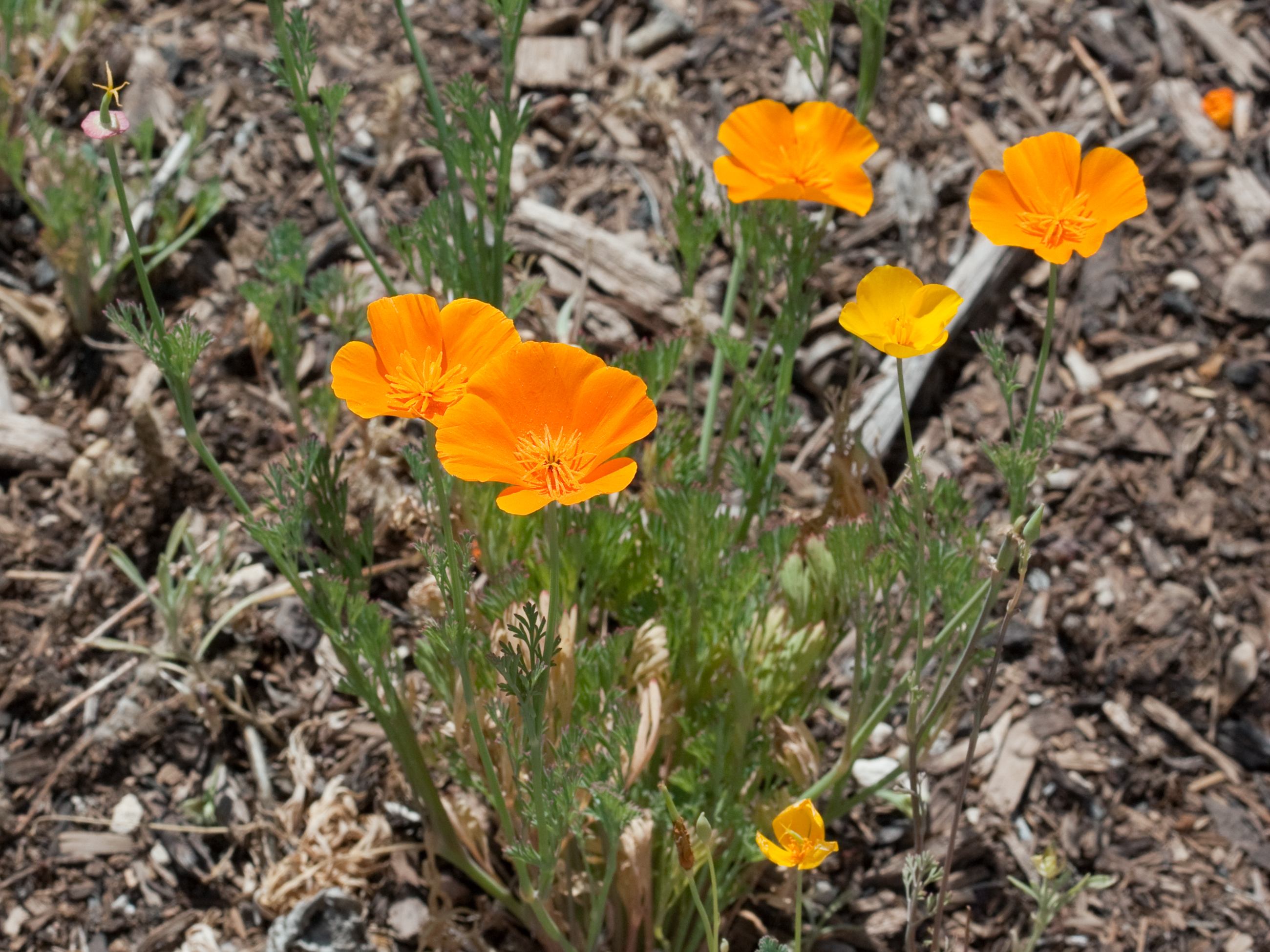
Targets the insomnia pattern of a mind that will not release the day — sympathetic arousal persisting past its usefulness. California poppy (Eschscholzia californica) acts on GABA-A receptors and modulates catecholamine synthesis, producing a non-narcotic sedation that does not suppress REM architecture. Crown placement of howlite leverages its low thermal conductivity — it stays cool against the scalp longer than most stones, providing sustained thermosensory input to the trigeminal nerve's ophthalmic branch, which feeds into parasympathetic quieting. The protocol sequence is designed as a controlled deceleration from waking beta rhythms toward the theta threshold of sleep onset.
How to work with it
Prepare California poppy tea: 2g dried aerial parts (not root) in 8oz water at 200°F, steep 12 minutes. This is a gentle nervine, not an opiate — the alkaloids are protopine and californidine, structurally distinct from morphine.
The definitive sleep pairing. Howlite stills the mind (forehead, crown). Amethyst calms the emotional body (crown, third eye). Together they create a corridor from mental noise to deep rest. Place howlite on the forehead and amethyst under the pillow, or hold one in each hand during the pre-sleep protocol. Howlite stops the thinking. Amethyst settles what the thinking was avoiding. For insomnia, for racing thoughts at bedtime, for the gap between exhaustion and sleep.
Black Tourmaline
Stillness with protection. Howlite quiets the internal noise. Black tourmaline holds the boundary against external noise. For empaths who absorb other people's tension and then cannot release it at bedtime. For anyone whose mind races because the world felt too loud, too close, too much. Howlite in the left hand (receiving stillness), black tourmaline in the right (returning what does not belong to you).
Blue Lace Agate
Patience meets articulation. Howlite creates the inner stillness. Blue lace agate opens the throat. For conversations where you know you will be provoked. For meetings where you need to listen more than react. For the moment before you speak, when the words need to arrive from calm instead of defense. Howlite holds the pause. Blue lace agate releases the right words from that pause.
Lepidolite
Double calm. Lepidolite contains lithium mica, and its energetic signature is profoundly settling. Paired with howlite, this is the most calming combination in the mineral kingdom. For acute anxiety spirals, for panic that has become chronic, for the person who has tried everything to sleep. Place both stones on the bedside table or hold one in each palm during a lying-down meditation. Reserve this pairing for moments of genuine overwhelm.
Rose Quartz
Stillness meets compassion. For the person whose racing mind is driven by self-criticism or heartache. Howlite quiets the volume. Rose quartz softens the content. Together they address the two layers of nighttime distress: the inability to stop thinking (howlite) and the pain of what you are thinking about (rose quartz). Howlite on the forehead, rose quartz on the chest. Crown to heart. Thought to feeling. Volume to softness.
Pairing Cautions
Howlite + Carnelian: Only for intentional activation work. Carnelian's sacral fire energy directly opposes howlite's calming signal. If the goal is sleep or stress reduction, keep them apart. If the goal is to motivate someone in dorsal vagal shutdown (total numbness, emotional flatline), the pairing can serve as a staged re-entry: howlite holds the floor while carnelian reintroduces energy gradually. Context determines the pairing.
Howlite + Citrine: Similar caution. Citrine amplifies solar plexus energy, personal power, and drive. Placing it alongside howlite at bedtime creates a contradictory signal: calm down and mobilize simultaneously. Use citrine during the day, howlite at night. Respect the rhythm.
Care & Cleansing
How to keep Howlite in good condition
Water Safe?
Use caution
Brief contact may be tolerated, but softness, coatings, fractures, or mixed mineral content can make water exposure a risk.
Sunlight Safe?
Sunlight safe
Tolerates daylight; safe to charge or display in the sun.
Authenticity
What to check
Natural Howlite should usually feel cooler than plastic or resin on first touch and warm more slowly in the hand.
The #1 Question
Can Howlite Go in Water? Limit exposure
The Full Answer
Howlite scores 3. 5 on the Mohs hardness scale. For comparison, quartz is 7, and a copper penny is 3. 5. Howlite is soft. More importantly, howlite is porous. Its nodular structure contains micro-spaces that absorb liquid. Water will enter these spaces and can weaken the stone over time. Safe: A 15-30 second rinse under cool running water for physical cleaning.
Pat dry immediately with a soft cloth. Do not leave wet. Avoid:
Soaking: Any immersion longer than a minute risks water absorption into the porous matrix, which can cause internal fracturing as the water expands and contracts with temperature
Salt water: Sodium chloride crystals can lodge in the pores and cause surface degradation over time
Hot water: Thermal shock is a serious risk at this hardness level.
The disparity between the stone's temperature and hot water can fracture the matrix
Ultrasonic cleaners: The vibration frequency will exploit the porous structure and existing micro-fractures
Dyed howlite in any water: If your howlite has been dyed (blue, green, or any color), water contact will cause the dye to bleed and the color to fade unevenly
Better alternatives for regular cleansing: Moonlight (overnight), sound vibration (2-3 minutes), sage or palo santo smoke (30-60 seconds), selenite plate (4-6 hours).
These methods preserve the stone indefinitely with zero risk. Critical: Howlite is not sunlight-sensitive in the way rose quartz is. Brief sun exposure will not fade natural howlite. However, if your howlite has been dyed, UV exposure can accelerate color fading in the dye. For natural (white) howlite, the primary concern is physical impact and water, not light.
Temperature
Natural Howlite should usually feel cooler than plastic or resin on first touch and warm more slowly in the hand.
Scratch logic
Use 3.5 on the Mohs scale as the check, not internet myths. A real specimen should behave in line with the hardness listed above.
Surface and luster
Look for a vitreous to porcelaneous surface quality rather than a painted or plastic shine.
Weight and density
The listed specific gravity is 2.53-2.59. If a specimen feels unusually light for its size, it may deserve a second look.
My Field Guide
Your private record and next steps
Journal
Add this stone to your private collection, then log what happened when you worked with it.
Shared Notes
Read public practice logs and pattern notes from the Crystalis community.
When members save a public field note for this stone, it will appear here.
Frequently Asked
Questions people ask about Howlite
What does howlite do?
⌄
Howlite is a calming mineral traditionally used to support patience, sleep preparation, and mental stillness. In somatic practice, placing howlite on the forehead activates tactile grounding at the frontal bone, where skin receptors send afferent signals through cranial nerves to the brainstem. The coolness and weight provide a focal point that helps the mind release the looping thoughts that keep the body alert. Discovered in 1868 in Nova Scotia and used in calming practice since the late 19th century.
Can howlite go in water?
⌄
Brief rinses only. Howlite scores 3.5 on the Mohs hardness scale, making it significantly softer than quartz. It is also porous, meaning it absorbs water. Prolonged soaking can weaken the stone's structure and, if dyed, cause color to bleed. Keep water contact under 30 seconds. Moonlight, sound vibration, and smoke cleansing are safer alternatives.
What chakra is howlite?
⌄
Crown chakra (Sahasrara), the seventh energy center at the top of the head. In somatic terms, this corresponds to the region where forehead placement activates the frontalis muscle relaxation response and where cranial nerve branches influence the shift from active thinking toward receptive awareness. Howlite on the forehead during rest is the direct somatic application.
Is howlite the same as white turquoise?
⌄
No. 'White turquoise' is a trade name frequently used to sell howlite (or magnesite) that has been dyed blue to imitate turquoise. Howlite is calcium borosilicate hydroxide. Turquoise is copper aluminum phosphate. Completely different minerals with different chemistry, hardness, and formation. Dyed howlite sold as turquoise is the single most common deception in the crystal market.
Can you sleep with howlite?
⌄
Yes. Howlite is a widely recommended stone for sleep preparation. Place it under your pillow or on your bedside table. For the strongest effect, hold it on your forehead for three minutes before sleep while counting exhales backward from ten. The stone's cooling quality and the backward counting together signal the nervous system that active processing has ended.
What crystals pair well with howlite?
⌄
Amethyst (the classic sleep pairing: forehead stillness meets crown calming). Blue lace agate (patience plus communication, for difficult conversations). Lepidolite (double calm, for acute insomnia or anxiety spirals). Black tourmaline (stillness with protection, for empaths). Avoid pairing with carnelian or citrine in a sleep context, as their activating energy works against howlite's calming signal.
How can you tell if howlite is real?
⌄
Four tests: (1) Hardness: howlite is Mohs 3.5, meaning a copper coin scratches it. If it resists scratching, it may be magnesite or something harder. (2) Weight: howlite feels lighter than most stones its size due to its porosity. (3) Veining: natural howlite has grey or black veining in organic, irregular patterns. Perfectly uniform blue color indicates dye. (4) Acetone test: wipe the surface with acetone on a cotton ball. If blue color transfers, the stone is dyed.
Why is howlite dyed to look like turquoise?
⌄
Howlite's porosity makes it absorb dye readily, and its natural veining pattern resembles turquoise matrix. Because genuine turquoise commands significantly higher prices, dyed howlite is frequently sold as turquoise or 'turquenite.' The practice is widespread. If the price seems too low for turquoise, it is almost certainly dyed howlite or magnesite. Always ask the seller directly and test if uncertain.
Sources & Citations
Where this entry can be checked
Back Matter
Readable for people. Structured for AI search.
Sources stay visible in the page so readers, search engines, and answer systems can follow the evidence trail.
01
SCI
Evaluation of anger management groups in a high-security hospital
Wilson, C. et al. (2013). Evaluation of anger management groups in a high-security hospital. Criminal Behaviour and Mental Health. [SCI]DOI 10.1002/cbm.1873
02
SCI
Raman study of datolite CaBSiO₄(OH) at simultaneously high pressure and high temperature
Goryainov, S.V., Krylov, A.S., Vtyurin, A.N., & Pan, Y. (2014). Raman study of datolite CaBSiO₄(OH) at simultaneously high pressure and high temperature. Journal of Raman Spectroscopy. [SCI]DOI 10.1002/jrs.4614
03
SCI
High-pressure behavior of CaB₃O₄(OH)₃·H₂O (colemanite)
Lotti, P. et al. (2017). High-pressure behavior of CaB₃O₄(OH)₃·H₂O (colemanite). Journal of the American Ceramic Society. [SCI]DOI 10.1111/jace.14730
04
LORE
The Virtue of Patience
Jeffrey, A. & Pawl, T. (2025). The Virtue of Patience. Philosophy Compass. [LORE]DOI 10.1111/phc3.70025