Materia Medica
Jasper
The Supreme Nurturer

This page documents traditional and cultural uses of jasper alongside emerging research on tactile grounding objects. Crystalis does not claim that jasper treats, cures, or prevents any medical condition. For mental health concerns, consult a qualified professional.
Origins: Worldwide
Materia Medica
The Supreme Nurturer

Protocol
A somatic practice for returning to the body when the mind has left it
3 min
Feet First (30 seconds)Sit with both feet flat on the floor. Place the jasper on the floor between your feet. Press your feet firmly into the ground on either side of the stone. Feel the difference between the hard floor and the space where the stone sits. Breathe in through the nose for 4 counts, out through the mouth for 6. Push your feet down as you exhale. The instruction is downward. Everything goes toward the ground.
The Heavy Hold (45 seconds)Pick up the jasper with your non-dominant hand. Close your eyes. Feel the weight. Jasper is denser than most stones its size and that density is the practice. Let your arm hang at your side with the stone in your open palm. Feel gravity pulling the stone downward. Do not grip. Let the weight do the work. Breathe naturally. Notice where your awareness goes when there is something heavy and warm in your hand.
The Body Scan Anchor (45 seconds)Place the jasper on your lower belly, just below the navel. Both hands rest on top of it. Breathe into the space beneath the stone. Inhale for 4, exhale for 7. With each exhale, let the belly soften and the stone settle deeper. This is the sacral center, the place in the body where safety lives before the mind names it. Let the stone's weight tell the body what the mind has been too busy to say: you are here. This is ground.
The Slow Count (30 seconds)Eyes still closed. With the jasper resting on your belly, count backward from ten to one. One number per exhale. Slow. Deliberately slow. At each number, press your feet into the floor slightly harder. By the time you reach one, your body should feel heavier than when you started. That heaviness is not fatigue. It is presence.
Continue in the full protocol below.
tap to flip for protocol
The psyche wants denser ground under all this color.
Jasper is opaque chalcedony full of enough mineral matter to lose the translucence and become fully terrestrial in feel. Pattern varies wildly. The body stays grounded.
Earth made holdable is still one of the better medicines.
What Your Body Knows
Jasper is the most grounding member of the quartz family. Its density, opacity, and earthy coloring create a somatic experience of heaviness, warmth, and stability that directly addresses the nervous system's need for safety. Jasper does not shift energy rapidly.
It provides a floor beneath your feet when the floor has disappeared.
sympathetic
Everything is fine and nothing feels safe. There is no specific threat, but the body cannot settle. The feet do not feel the floor. The chest stays tight without a reason. This is free-floating sympathetic activation: the alarm is ringing but there is no fire to point at. Jasper addresses this state through sheer physical presence. Its weight in the hand, its density against the body, its opacity and earth tones all communicate one message: ground is here. The root chakra association of red jasper is the somatic translation of this principle. The stone provides the missing floor.
dorsal vagal
You are not in crisis. You are in month six. Or year three. The problem has not been solved, and you are still here, still showing up, still carrying it. The nervous system is not spiking or crashing. It is slowly eroding. Reserves are gone. What remains is obligation without fuel. Jasper is the endurance stone. Not because it gives you energy but because it reminds the body that the ground holds even when you are tired of standing on it. The supreme nurturer title comes from this capacity: jasper sustains what has already been sustaining too long alone.
sympathetic
The mind runs at full speed but the body is somewhere else. You forget to eat. You stand up and get dizzy. Your awareness lives from the neck up, and everything below is a stranger. This dissociation is the nervous system's way of handling more input than the body can process: it leaves. Jasper's opacity and weight provide a re-entry point. Where clear quartz invites you to think, jasper invites you to feel the ground beneath your feet. Its earthy patterns offer the eyes something ancient and slow to rest on, pulling attention downward from the spinning head into the solid body.
ventral vagal
You are here. Present. Not bracing, not avoiding, not performing. The body is regulated and the mind is quiet enough to notice. This is the ventral vagal state that all grounding practice aims for, and jasper in this state serves as an anchor. Not to change anything, but to mark the sensation so the body remembers how to return. Jasper held during a grounded moment becomes a tactile bookmark. The next time the ground disappears, holding the same stone recalls the state in the body before the mind has to negotiate it.
Nervous system mapping based on polyvagal theory (Porges, 2011).
The Earth Made This
Jasper is what happens when microcrystalline quartz absorbs so many mineral inclusions that it becomes opaque. SiO2, trigonal, but the individual crystals are too fine-grained to see (typically under 20 micrometers). Iron oxides produce reds, yellows, and browns.
Chlorite and actinolite produce greens. Manganese oxides produce purples and blacks. The inclusions can constitute up to 20 percent of the total mass.
Jasper forms in volcanic and sedimentary environments where silica-rich fluids permeate and replace existing material, incorporating whatever minerals were already present. The result is that no two jasper deposits look alike, which is why the variety names are essentially infinite: ocean jasper, mookaite, picture jasper, landscape jasper. All SiO2 with different impurities and different geological stories.
Deeper geology
Formation occurs primarily through sedimentary and volcanic processes. Silica-rich fluids percolate through sedimentary beds, volcanic ash deposits, or weathered rock, depositing layer after layer of microcrystalline quartz mixed with whatever minerals are present in the environment. Red jasper gets its color from hematite (iron oxide). Yellow jasper from goethite and limonite. Green jasper from celadonite or chlorite. The patterns in picture jasper and landscape jasper record actual geological events: ancient lakebeds, volcanic eruptions, sedimentary layering, fossilized mud flows.
What distinguishes jasper from agate is opacity. Both are cryptocrystalline quartz. But agate allows light to pass through thin edges, while jasper blocks it entirely. The dividing line is the concentration of non-silica inclusions. Above roughly 10 percent, the stone becomes opaque. This is why jasper sits at the boundary between mineral and rock: it is as much geological narrative as it is crystal.
Jasper belongs to the trigonal crystal system, inherited from its quartz parentage. The conchoidal fracture pattern produces smooth, shell-like broken surfaces that ancient tool-makers prized for flaked implements. Jasper was one of humanity's earliest worked materials, shaped into tools, weapons, and ceremonial objects for at least 10,000 years.
Mineralogy
Chemical Formula
SiO2
Crystal System
Trigonal
Mohs Hardness
6.5
Specific Gravity
2.58-2.91
Luster
Vitreous to waxy
Color
Red, brown, yellow, green, multicolored
Crystal system diagram represents the general trigonal classification. Diagram created by Crystalis for educational reference.
Traditional Knowledge
The Egyptian Red Jasper Amulet Tradition
Egyptian craftsmen carved red jasper into protective amulets, seals, and ritual objects throughout the dynastic period, with surviving examples dating to the Old Kingdom and continuing through the New Kingdom. The Ebers Papyrus, dated to approximately 1550 BCE, referenced red stones consistent with jasper in prescriptions related to blood and the body. Red jasper was associated with the blood of Isis in funerary contexts, and the mineral appears in canopic jar stoppers, scarab seals, and heart amulets placed within mummy wrappings. Archaeological excavations at Thebes and Memphis have recovered jasper artifacts across multiple tomb complexes, confirming sustained use over two millennia of Egyptian material culture.
The Indigenous Toolmaking and Trade Tradition
Indigenous peoples across North America utilized jasper as a primary toolmaking material for thousands of years before European contact. Archaeological evidence from the Flint Ridge quarries in Ohio documents jasper extraction and trade networks extending across the Eastern Woodlands. The Yellowstone region provided distinctive varieties traded through Plains and Plateau networks. Jasper's conchoidal fracture -- the same property as flint and obsidian -- allowed precise knapping into projectile points, scrapers, and blades. Sites across Pennsylvania, Oregon, and the Southwest contain jasper debitage confirming sustained quarrying operations. These were not decorative uses but functional technologies central to subsistence, toolcraft, and long-distance exchange systems spanning millennia.
The Lapidary Text Prescriptions
Hildegard von Bingen referenced jasper in her 12th-century text Physica, prescribing it within her broader framework of stones and their correspondences to bodily conditions. The 11th-century Marbode of Rennes included jasper in his influential De Lapidibus, a Latin verse lapidary that cataloged stones and their traditional European associations. These medieval texts drew on earlier Greek and Roman sources, particularly Pliny the Elder's Natural History from the 1st century CE, which described multiple varieties of iaspis. The medieval lapidary tradition treated jasper as a widely referenced stone in European mineral literature, appearing in more texts than almost any other mineral of the period.
The Grounding Foundation Practice
Crystal practitioners in the 1980s and 1990s established jasper -- particularly red jasper -- as a foundational grounding stone, recommended more frequently than almost any other mineral for root-centered stabilization. Authors including Melody in Love Is in the Earth (1995) and Judy Hall in The Crystal Bible (2003) each cataloged dozens of jasper varieties with distinct prescriptive applications. The sheer number of jasper types -- ocean, mookaite, leopard skin, red, yellow, picture, dalmatian, brecciated -- made it the single most subcategorized stone in practitioner reference systems. Jasper became the workhorse mineral: common enough to be accessible, varied enough to address dozens of conditions, and stable enough to anchor any protocol.
When This Stone Finds You
Sacred Match prescribes Jasper when you report:
Groundlessness
Endurance fatigue
Caregiver depletion
Free-floating anxiety
Disconnection from body
Need for stability
Living in the head
Jasper finds you when the ground has become unreliable. Not because something terrible is happening, but because you have been standing without support for so long that you have forgotten what solid feels like. Jasper does not fix what is broken. It reminds you that beneath everything that shifts, something holds.
Somatic protocol
A somatic practice for returning to the body when the mind has left it
3 min protocol
Feet First (30 seconds)Sit with both feet flat on the floor. Place the jasper on the floor between your feet. Press your feet firmly into the ground on either side of the stone. Feel the difference between the hard floor and the space where the stone sits. Breathe in through the nose for 4 counts, out through the mouth for 6. Push your feet down as you exhale. The instruction is downward. Everything goes toward the ground.
30 secThe Heavy Hold (45 seconds)Pick up the jasper with your non-dominant hand. Close your eyes. Feel the weight. Jasper is denser than most stones its size and that density is the practice. Let your arm hang at your side with the stone in your open palm. Feel gravity pulling the stone downward. Do not grip. Let the weight do the work. Breathe naturally. Notice where your awareness goes when there is something heavy and warm in your hand.
45 secThe Body Scan Anchor (45 seconds)Place the jasper on your lower belly, just below the navel. Both hands rest on top of it. Breathe into the space beneath the stone. Inhale for 4, exhale for 7. With each exhale, let the belly soften and the stone settle deeper. This is the sacral center, the place in the body where safety lives before the mind names it. Let the stone's weight tell the body what the mind has been too busy to say: you are here. This is ground.
45 secThe Slow Count (30 seconds)Eyes still closed. With the jasper resting on your belly, count backward from ten to one. One number per exhale. Slow. Deliberately slow. At each number, press your feet into the floor slightly harder. By the time you reach one, your body should feel heavier than when you started. That heaviness is not fatigue. It is presence.
30 secThe Return (30 seconds)Open your eyes. Pick up the jasper and hold it at heart level. Look at it. Study the patterns. Every line in jasper is millions of years of earth history. Let your eyes trace one band or speckle without analyzing it. Take three breaths. On the final exhale, squeeze the stone once, firmly, then set it down. Feel the warmth it absorbed from your body. That warmth is the exchange: you gave it heat, it gave you ground.
30 secMineral Distinction
Both are microcrystalline quartz. The difference is opacity. Jasper is completely opaque (blocks all light).
Agate is translucent (light passes through thin edges). Jasper contains more foreign inclusions (up to 20%) which create its opacity. Hold the stone to a light: if any light passes through, it is agate, not jasper.
Care and Maintenance
The #1 Question Can Jasper Go in Water? The Verdict Water Safe Jasper is fully water safe. This is one of the most durable and chemically stable stones in any crystal collection.
Mohs hardness 6. 5-7 . harder than steel.
Water cannot erode or scratch it. Chemically inert . silicon dioxide does not dissolve in water at any normal pH.
Salt water safe . jasper can withstand salt water soaking without damage. Moon water safe .
can be placed directly in water for moon water preparation. Running water safe . stream, river, or faucet cleansing works well and is one of the traditional methods.
Jasper is one of the few stones that requires zero precautions around water. Its density and chemical stability make it essentially waterproof. The only consideration is that prolonged soaking in very hot water could theoretically stress inclusions in some specimens, but this is extremely unlikely in practice.
Crystal companions
Black Tourmaline
Red jasper and black tourmaline create a double root anchor. Tourmaline provides energetic protection while jasper provides physical grounding. Together they address the full spectrum of root chakra needs: safety from external interference and stability from within.
Carnelian
Jasper grounds. Carnelian mobilizes. Together they create a root-to-sacral circuit that provides both stability and motivation. This pairing is traditionally used when you need to act from a grounded place rather than from anxiety or desperation.
Rose Quartz
Jasper provides the foundation and rose quartz provides the tenderness. This pairing is used for caregiver depletion: the ground that holds you (jasper) combined with the permission to be held (rose quartz). A nurturing circuit for people who nurture everyone else.
Tiger's Eye
Both are opaque, dense, and earth-associated. Tiger's eye adds discernment and willpower to jasper's endurance. This pairing supports sustained effort with clear direction, useful for long-term projects or recovery processes that require daily recommitment.
Clear Quartz
Clear quartz amplifies whatever it touches. Paired with jasper, it amplifies the grounding signal. Use this combination when the body needs a stronger anchor than jasper alone provides, or when you want to bring conscious intention to the grounding practice.
In Practice
Jasper is the most grounding member of the quartz family. Its density, opacity, and earthy coloring create a somatic experience of heaviness, warmth, and stability that directly addresses the nervous system's need for safety. Jasper does not shift energy rapidly. It provides a floor beneath your feet when the floor has disappeared.
The Unmoored (nervous system pattern: SYMPATHETIC. groundlessness, free-floating anxiety without clear cause) Everything is fine and nothing feels safe. There is no specific threat, but the body cannot settle. The feet do not feel the floor. The chest stays tight without a reason. This is free-floating sympathetic activation: the alarm is ringing but there is no fire to point at. Jasper addresses this state through sheer physical presence. Its weight in the hand, its density against the body, its opacity and earth tones all communicate one message: ground is here. The root chakra association of red jasper is the somatic translation of this principle. The stone provides the missing floor.
The Long Haul (nervous system pattern: MIXED. sustained stress, endurance fatigue, caregiver depletion) You are not in crisis. You are in month six. Or year three. The problem has not been solved, and you are still here, still showing up, still carrying it. The nervous system is not spiking or crashing. It is slowly eroding. Reserves are gone. What remains is obligation without fuel. Jasper is the endurance stone. Not because it gives you energy but because it reminds the body that the ground holds even when you are tired of standing on it. The supreme nurturer title comes from this capacity: jasper sustains what has already been sustaining too long alone.
The Scattered Roots (nervous system pattern: SYMPATHETIC. disconnection from body, living in the head) The mind runs at full speed but the body is somewhere else. You forget to eat. You stand up and get dizzy. Your awareness lives from the neck up, and everything below is a stranger. This dissociation is the nervous system's way of handling more input than the body can process: it leaves. Jasper's opacity and weight provide a re-entry point. Where clear quartz invites you to think, jasper invites you to feel the ground beneath your feet. Its earthy patterns offer the eyes something ancient and slow to rest on, pulling attention downward from the spinning head into the solid body.
The Held Ground (nervous system pattern: VENTRAL VAGAL. stable, grounded, ready to receive what comes next) You are here. Present.
Verification
Scratch Test Jasper is Mohs 6. 5-7. A steel knife will not scratch it.
If the specimen scratches easily, it may be soapstone, serpentine, or dyed howlite sold as jasper. Real jasper is harder than steel. Opacity Check Hold the specimen up to a strong light source.
Genuine jasper is completely opaque. If light passes through any thin edges, the stone is agate or chalcedony, not jasper. True jasper blocks all light.
Temperature Test Real jasper feels cool to the touch initially and warms slowly to body temperature. Plastic or resin fakes feel warm immediately and are noticeably lighter. Glass imitations feel cold but lack the granular surface texture of real jasper.
Pattern Inspection Natural jasper patterns are irregular, organic, and non-repeating. Dyed or manufactured specimens show unnaturally uniform color, sharp color boundaries that follow fracture lines (where dye penetrated), or perfectly symmetrical patterns.
Natural Jasper should usually feel cooler than plastic or resin on first touch and warm more slowly in the hand.
Use 6.5 on the Mohs scale as the check, not internet myths. A real specimen should behave in line with the hardness listed above.
Look for a vitreous to waxy surface quality rather than a painted or plastic shine.
The listed specific gravity is 2.58-2.91. If a specimen feels unusually light for its size, it may deserve a second look.
Geographic Origins
Formation occurs primarily through sedimentary and volcanic processes. Silica-rich fluids percolate through sedimentary beds, volcanic ash deposits, or weathered rock, depositing layer after layer of microcrystalline quartz mixed with whatever minerals are present in the environment. Red jasper gets its color from hematite (iron oxide).
Yellow jasper from goethite and limonite. Green jasper from celadonite or chlorite. The patterns in picture jasper and landscape jasper record actual geological events: ancient lakebeds, volcanic eruptions, sedimentary layering, fossilized mud flows.
FAQ
Yes. Jasper is water safe. At Mohs 6.5-7, it is hard enough for all water methods including brief soaking, running water cleansing, and moon water preparation. It is chemically stable silicon dioxide and does not dissolve or degrade in water.
Jasper is traditionally known as the supreme nurturer, used for grounding, stabilization, and sustained endurance. Different varieties address different needs: red jasper for vitality, ocean jasper for resilience, picture jasper for perspective.
Jasper primarily works with the root and sacral chakras. Red jasper activates the root. Ocean jasper spans the heart and solar plexus. Yellow jasper aligns with the solar plexus. The variety determines the specific chakra resonance.
Yes. Jasper is microcrystalline quartz (chalcedony family), composed of silicon dioxide (SiO2) with up to 20% foreign materials that provide its opaque colors and patterns.
Real jasper cannot be scratched by a steel knife, feels cool and heavy in the hand, has a smooth conchoidal fracture, and shows natural color variations rather than uniform dye patterns.
Both are microcrystalline quartz, but jasper is opaque while agate is translucent. Jasper contains more foreign inclusions which create its opacity and earthy patterns.
No. Jasper is an especially sun-stable crystal. Its colors come from iron oxides resistant to UV degradation. It can be safely charged in direct sunlight.
Jasper is found on every continent. Major sources include India, Madagascar, Brazil, Australia, the western United States, Russia, and Egypt.
Herb companions
P066
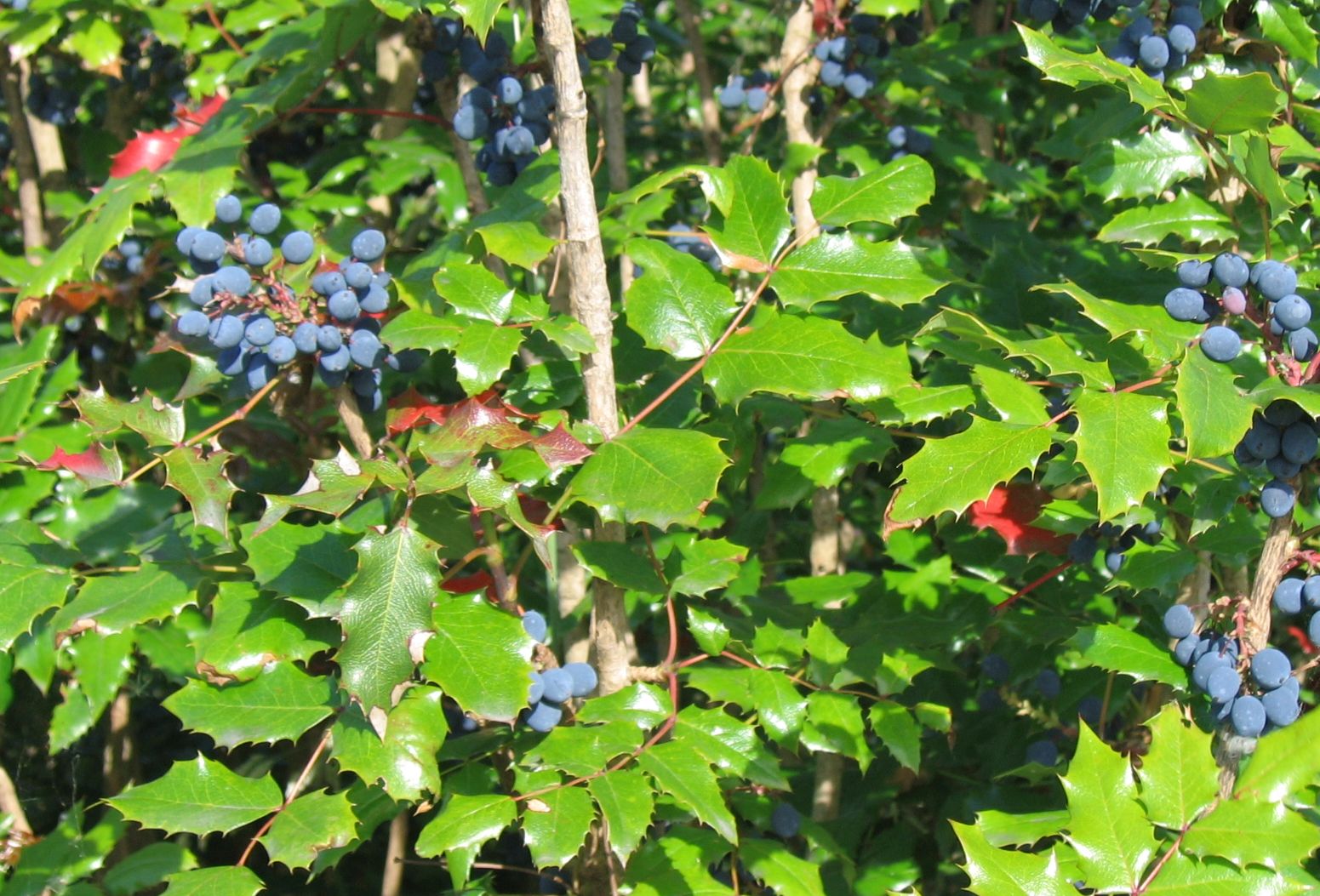
Herb: Oregon Grape
Sympathetic-to-ventral vagal transition via hepatic vagal afferents. Oregon grape berberine activates AMPK (AMP-activated protein kinase) in hepatocytes, upregulating bile acid synthesis and Phase II conjugation enzymes. The solar plexus connection runs through the hepatic branch of the vagus -- the liver literally reports to the brain through this nerve. Yellow jasper goethite mirrors the golden color of berberine and bile, creating a visual feedback loop for the detoxification narrative.
"Gold does not ask permission to be gold. The liver does not ask permission to clean what the mind refuses to examine."
Oregon grape berberine and yellow jasper goethite both achieve their golden color through absorption of blue-wavelength photons by electron transitions -- berberine via conjugated ring pi-electron excitation, goethite via Fe3+ ligand field transitions in oxyhydroxide octahedra -- making them chromatically identical medicines from different kingdoms of matter.
References
Cady, S.L. et al. (2003). Morphological biosignatures and the search for life on Mars. Astrobiology. [SCI]
Mottana, A. (2006). Italian gemology and its historical development. Per. Mineral. [SCI]
DOI: 10.2451/2006PM0004
Andrews, P. et al. (2009). Chert and flint in the geological record. Sedimentary Geology. [SCI]
Luedtke, B.E. (1992). An Archaeologist's Guide to Chert and Flint. Archaeological Research Tools. [LORE]
DOI: 10.2307/j.ctvhhhg13
Closing Notes
Jasper formed over millions of years as silica-rich water slowly deposited layer after layer of microcrystalline quartz mixed with the iron, clay, and ash of its environment. The result is a stone that carries the earth's history in its patterns. When you hold jasper, you hold compressed time.
The same patience that built this stone is the patience it teaches: ground holds, even when everything above it shifts.
Bring it into practice
Move from reference to ritual. Search current inventory for Jasper, build a custom bracelet, or let Sacred Match choose the right supporting stones for you.
Community notes
Shared field notes tied to Jasper appear here, including notes saved from practice.
When members save a public field note for this stone, it will appear here.
The archive
Continue through stones that share intention, chakra focus, or tonal family with Jasper.

Shared intention: Protection & Grounding
The Imperial Foundation
Shared intention: Protection & Grounding
The Endurance Architect

Shared intention: Clarity & Focus
The Bronze Shield

Shared intention: Protection & Grounding
The Keeper of Deep Time

Shared intention: Protection & Grounding
The Tear That Grounds You

Shared intention: Protection & Grounding
The Black Foundation Stone