You have been ghosting your own life. Larvikite is a dark feldspar-rich rock with silver-blue flash lifting out of its black body when it is moved. Presence can return by angle before it returns by certainty.
Intent
Intuition
Dark Night NavigationGrounding In UncertaintyContemplative Depth
Weight and edge do their work before symbolism catches up. For larvikite, the body often starts with direct sensory appraisal before any symbolism forms. The material...
The Meaning
Larvikite in the Crystalis dictionary
Some absences are not dramatic. You are still here, still performing the day, but something about the self has gone oblique, half-withdrawn, no longer fully present inside its own scenes.
Larvikite gives presence a more believable route back. Most of the body stays dark until the stone is moved and the blue-silver feldspar flash appears. The shimmer is not constant. It is conditional on relation, angle, movement.
Larvikite feels right for re-entry after dissociation or emotional distance because it suggests presence may return by degrees, by angle, by a slight change in relation before certainty catches up.
Stone Lore
Stories carried through time
Cultural notes are presented as tradition and historical context — stories carried through time.
Unknown
Norwegian building tradition (Vestfold region)
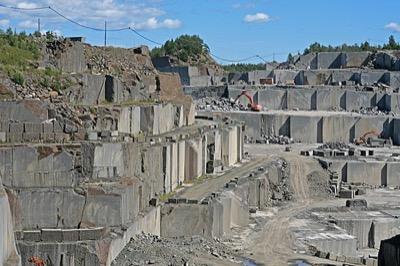
In the Larvik/Vestfold region of Norway, larvikite quarrying has been a major industry since the late 19th century, with blocks weighing up to 20 tons extracted from quarries at Tvedalen and surrounding areas. The stone's cultural significance extends beyond commerce; it was designated Norway's National Stone, reflecting its role in Norwegian geological identity. Local quarrying families have maintained multi-generational relationships with specific quarry faces, and the knowledge of where the finest blue schiller occurs within a quarry is considered proprietary family knowledge (Brooks, K.
, "Syenites," Geology Today, 2024).
Lore review
Tradition notes are being reviewed.
This entry keeps symbolic meaning separate from sourced cultural history. When dedicated tradition rows are available, they will appear here as individual lore cards.
Earth Record
Mineralogy and formation
In a slow-cooled alkaline intrusion, Larvikite is not a single mineral species but an igneous rock dominated by ternary feldspar with augite and accessory minerals, formed during Permian magmatism in the Oslo Rift. As alkaline magma cooled slowly underground around 295 million years ago, large feldspar crystals developed and later exsolved into submicroscopic lamellae. Those lamellae produce the blue-silver schiller often marketed as Blue Pearl.
The shimmer is structural, related to light interacting with internal feldspar interfaces, not to metallic flakes. Because the rock cooled as a plutonic body rather than erupting at the surface, coarse grains had time to form, giving larvikite its speckled, architectural texture. The dark appearance comes from the surrounding mafic minerals and the overall rock assemblage, while the feldspars provide the flash.
Norway's famous quarries around Larvik supply building stone used worldwide, so many people know the surface underfoot before they know the name. Geological accuracy matters here. Larvikite is a durable rock, not a delicate optical specimen, and its triclinic feldspar behavior sits inside a broader aggregate. In the hand, that aggregate quality changes the somatic story. One gleaming signal is held by darker material around it.
The body recognizes that composition immediately: brilliance embedded in structure, not floating apart from it. Regulation can look similar. The flash does not need to replace the matrix. It only needs to appear from within it, briefly but convincingly, enough to remind the nervous system that darkness and orientation can occupy the same stone at once.
Crystal system diagram represents the general triclinic classification. Diagram created by Crystalis for educational reference.
Triclinic structure
Chemical Formula
Complex; primarily ternary feldspar (Na,K,Ca)(Al,Si)4O8 with olivine, augite, biotite, amphibole, Fe-Ti oxides, apatite, zircon, and baddeleyite
Crystal System
Triclinic
Mohs Hardness
6
Specific Gravity
2.7-2.9
Luster
Dull to pearly when rough; high vitreous to sub-adamantine polish; characteristic blue-silver schiller (labradorescence/Schiller spar effect) on polished feldspar surfaces
Color
Black-Gray
IMA Status
rock
Type Locality
Larvik, Norway
IMA Number
None (rock variety, not IMA-approved mineral species)
01
Mineral conditions gather
02
Structure begins to crystallize
03
Larvikite records place and pressure
Larvik, Norway is the sole source. Norway designated larvikite as its national rock. The monzonite (not granite, despite commercial labeling) formed as a large igneous intrusion where slow cooling produced feldspar crystals with schiller-producing exsolution lamellae.
Sold worldwide as "Blue Pearl" and "Emerald Pearl" building stone.
Norway (Larvik)
Telling it apart
Larvikite is a syenite from the Larvik region of Norway, and sellers routinely mislabel it as black moonstone, labradorite, or a unique crystal species when it is actually a plutonic igneous rock. The diagnostic feature is a blue to silver flash from alkali feldspar crystals showing Schiller effect, distinct from the labradorescence of true labradorite. Larvikite contains primarily anorthoclase and other feldspars at Mohs 6 to 6.
5, with a specific gravity around 2. 7. Labradorite is a plagioclase feldspar with a different composition and different flash character. Black moonstone is a marketing term with no mineralogical standing. If the rock shows a diffuse blue gray flash in a dark gray to black background and the seller claims it is labradorite, check whether the flash comes from anorthoclase or from plagioclase.
Calling a Norwegian syenite labradorite is inaccurate and inflates the price by borrowing a more familiar name.
Spotting the real thing
Larvikite: not granite (despite commercial labeling). A monzonite rock with blue-silver schiller from feldspar exsolution lamellae. Mohs 6-7 (tough rock).
Specific gravity 2. 7-2. 9.
The schiller flash on polished surfaces is the key identifier. Norway is the sole source. If labeled "Blue Pearl granite," the material is most likely larvikite.
Larvikite's blue-silver schiller operates in the same cool color temperature as moonlight; the light frequency the human visual system evolved to associate with nighttime safety (the moon is out; you can see predators; you can rest). For a sympathetic nervous system that activates at night; the anxious mind that races when the lights go off; larvikite provides a visual anchor in the moonlight frequency range.
Placing it where it catches ambient light in a dark room creates a subtle blue gleam that the nervous system may register as "nighttime-but-visible"; the conditions under which our ancestors could safely rest. State shift: nocturnal sympathetic activation toward parasympathetic nighttime regulation.
Shut down & far away
The Dark Rift
Larvikite formed in a continental rift; a place where the earth was literally pulling itself apart. And in that pulling apart, something extraordinary crystallized. For a nervous system in deep dorsal collapse, where everything feels like it is falling apart, larvikite embodies the geological truth that rifting precedes crystallization. The earth did not merely survive the Oslo Rift; it produced one of its most beautiful stones there.
Meaning can form in the gap. State shift: dorsal collapse toward tentative ventral engagement through geological metaphor.
Charged & on alert
The Schiller Shift
The schiller effect in larvikite is visible only from certain angles; move the stone and the blue flash appears, disappears, appears elsewhere. This mirrors the experience of someone who is anxious but hiding it effectively: the inner flash of alarm is visible only at certain angles, to certain observers. Working with larvikite does not fix this pattern but makes it conscious. The stone teaches that even hidden light is still light; even managed anxiety is still anxiety. State shift: unconscious masking toward conscious awareness of hidden activation.
Settled & connected
The Geological Depth
Larvikite is dark. Not the darkness of absence but the darkness of depth; the deep gray of a stone that formed kilometers below the surface. For a nervous system that is regulated and seeking to go deeper into contemplative or meditative states, larvikite provides a visual and tactile anchor in the "productive darkness"; the darkness from which insight emerges. State support: ventral vagal deepening into contemplative engagement with the unknown.
Settled & connected
The Dimension Stone
Larvikite is used commercially as a "dimension stone"; a stone cut to precise dimensions for building facades. For someone transitioning from social engagement into chosen solitude; the introvert's recovery period, the necessary retreat after social output; larvikite supports the structural quality of that solitude. This is not withdrawal; it is architecture. State shift: social ventral vagal toward autonomous ventral vagal maintenance.
These associations come from tradition and reflective practice — a way of working with the stone, not a medical prescription.
Somatic Practice
Simple ways to work with Larvikite
◇
Hold
Carry Larvikite in a pocket or place it over the heart center during a pause.
◌
Meditate
Let the stone become a quiet tactile anchor while the breath slows.
☽
Breathe
Breathe in softness. Breathe out tension. Keep the practice simple.
✎
Journal
Write with Larvikite nearby to name the feeling without forcing a conclusion.
✋
Bodywork
Rest the stone near the chest, hand, or bedside as a reminder to soften.
⌂
Environment
Place it where you want a visual cue for care, repair, or steadiness.
Field Instruction
The Deep Pluton
A plutonic monzonite whose ternary feldspar crystals produce blue-silver schiller from deep beneath the earth, larvikite grounds you by dropping the floor, not by adding weight.
5 min protocol
1
Hold the larvikite in both hands. Feel its weight — specific gravity 2.7 to 2.9, a plutonic rock forged kilometers below the surface in a magma chamber that cooled over millions of years. This is not a surface stone. Tilt it until you catch the blue-silver schiller — labradorescence produced by ternary feldspar crystals refracting light between their internal layers.
2
Place the stone on the floor between your feet or hold it low, near your knees. Larvikite's origin is deep — it is a monzonite, an intrusive igneous rock that never reached the surface until erosion exposed it. Breathe in for five, out for seven. Let each exhale drop your center of gravity lower. You are not reaching down. You are remembering that your floor is deeper than you thought.
3
Close your eyes. The schiller effect only appears on polished surfaces — in the rough, larvikite looks like dark, unremarkable granite. Ask: what in me requires a specific kind of attention to become visible? Not flattery. Not applause. Just the right angle of light and someone willing to look closely. Sit with whatever surfaces.
4
Open your eyes. The ternary feldspar in this stone means sodium, potassium, and calcium all coexist in a single crystal structure — three elements that in most feldspars separate into distinct minerals. Ask: what three parts of my life am I trying to keep separate that might actually belong in one structure?
5
Set the stone down. Place your palms flat on your thighs. Larvikite was mined from the Larvik plutonic complex in Norway — dimension stone used in buildings worldwide precisely because it is dark, dense, and does not weather easily. You do not need to be bright to be foundational. Stand when ready.
Stone Intelligence
The fact that makes Larvikite memorable
Norway's national rock. Most of the world has walked on it without knowing, sold as Blue Pearl granite. It is not granite.
It is a monzonite with feldspar crystals showing schiller from exsolution lamellae. The science documents a rock whose commercial name is wrong and whose beauty comes from internal misidentification. The practice asks what you are really standing on.
You have been ghosting your own life. Larvikite is dark feldspar with silver-blue flash from exsolution lamellae. Hold when you need to find shimmer inside something that looks ordinary from a distance.
Norway's national rock. Most of the world walks on it without knowing. Place on your nightstand for quiet contemplation.
The flash only appears at certain angles. So does yours.
Sacred Match
Sacred Match reaches for Larvikite when what you feel sounds like:
flat competence running without engagement
need for a grounded spark inside a dark working body
environmental dullness draining what vitality remains
control fatigue from managing everything without feeling anything
buried vitality detectable only at certain angles
Sacred Match listens to the body rather than to preference. It senses whether flatness is depression, over-managed affect, or a system that still has flash but has lost the angle that reveals it. When that points to sympathetic overcontrol with preserved but invisible ventral capacity, Larvikite is the stone it offers. This is a dark feldspar-rich plutonic rock from Larvik, Norway, with silver-blue schiller lifting out of its black body only when the stone is tilted. Presence can return by angle before it returns by certainty.
Flat competence -> functional output without engagement -> dark gray to bluish-black base with blue-silver flash from light interference on exsolution lamellae in ternary feldspar grains demonstrates that competence and brilliance coexist in the same dark body
Need for grounded spark -> desire for vitality embedded in mass -> specific gravity 2. 7-2. 9 is properly heavy, and the schiller is produced by cryptoperthite lamellae within the feldspar, meaning the flash is structural, not decorative
Environmental dullness -> context draining remaining affect -> Mohs ~6 provides working-class durability while the labradorescence effect appears only under specific lighting angles
Control fatigue -> overcontrol depleting engagement -> plutonic igneous rock formed from slow underground cooling, not volcanic drama, modeling how depth produces quality over spectacle
Buried vitality at certain angles -> hidden flash in dark host -> the schiller requires movement to see, teaching the body that activation sometimes begins with a change in angle, not a change in effort
Pairings are treated like a recipe file: clear use, method, and safety.
Crystal Companion
Larvikite + Amethyst
Use when
You want to layer the primary intention with another supportive tone.
How to work with it
Place the stones together during meditation, journaling, or a short reset.
Safety
Use as a reflective practice tool, not as a medical substitute.
Crystal Companion
Larvikite + Rhodonite
Use when
You want to layer the primary intention with another supportive tone.
How to work with it
Place the stones together during meditation, journaling, or a short reset.
Safety
Use as a reflective practice tool, not as a medical substitute.
Crystal Companion
Larvikite + Clear Quartz
Use when
You want to layer the primary intention with another supportive tone.
How to work with it
Place the stones together during meditation, journaling, or a short reset.
Safety
Use as a reflective practice tool, not as a medical substitute.
Crystal Companion
Larvikite + Black Tourmaline
Use when
You want to layer the primary intention with another supportive tone.
How to work with it
Place the stones together during meditation, journaling, or a short reset.
Safety
Use as a reflective practice tool, not as a medical substitute.
A practical set follows. Larvikite benefits from companions that either clarify its strongest trait or balance its weakest one.
Labradorite
structural cousins. Labradorite offers cleaner flash; larvikite contributes the grounded, architectural version. Placement: Larvikite at the base of the desk, labradorite near the monitor or mirror. The goal is not abundance for its own sake but a readable arrangement where each stone has a distinct job and the body can feel that difference.
Black Tourmaline
dense perimeter. Tourmaline deepens the grounding function without competing visually. Placement: Larvikite by the doorway, tourmaline in the corner of the room. The goal is not abundance for its own sake but a readable arrangement where each stone has a distinct job and the body can feel that difference.
Clear Quartz
light retrieval. Quartz brightens larvikite's subtle shimmer and makes its schiller easier to notice. Placement: Place a quartz point beside a polished larvikite palm stone. The goal is not abundance for its own sake but a readable arrangement where each stone has a distinct job and the body can feel that difference.
Smoky Quartz
low-register stability. Both stones work well in spaces that need calm without softness. Placement: Keep the pair on a work table rather than the bed. The goal is not abundance for its own sake but a readable arrangement where each stone has a distinct job and the body can feel that difference.
Care & Cleansing
How to keep Larvikite in good condition
Water Safe?
Water safe
This stone is generally safe for short water contact, though polishing, fractures, and metal settings can still change how a specimen behaves.
Sunlight Safe?
Sunlight safe
Tolerates daylight; safe to charge or display in the sun.
Authenticity
What to check
Natural Larvikite should usually feel cooler than plastic or resin on first touch and warm more slowly in the hand.
Larvikite is water-safe. A monzonite rock (Mohs 6-7) composed primarily of feldspar, extremely durable. Used commercially as building stone and countertops.
Brief to moderate water contact is completely safe. The schiller (labradorescence) is structural and unaffected by water. Recommended cleansing: running water, moonlight, sound, smoke.
Store normally; this is a building material, it can handle anything.
Temperature
Natural Larvikite should usually feel cooler than plastic or resin on first touch and warm more slowly in the hand.
Scratch logic
Use 6 on the Mohs scale as the check, not internet myths. A real specimen should behave in line with the hardness listed above.
Surface and luster
Look for a dull to pearly when rough; high vitreous to sub-adamantine polish; characteristic blue-silver schiller (labradorescence/schiller spar effect) on polished feldspar surfaces surface quality rather than a painted or plastic shine.
Weight and density
The listed specific gravity is 2.7-2.9. If a specimen feels unusually light for its size, it may deserve a second look.
My Field Guide
Your private record and next steps
Journal
Add this stone to your private collection, then log what happened when you worked with it.
Shared Notes
Read public practice logs and pattern notes from the Crystalis community.
When members save a public field note for this stone, it will appear here.
Frequently Asked
Questions people ask about Larvikite
What is Larvikite?
⌄
Larvikite is a rock, not a single mineral: a plutonic igneous monzonite or augite syenite consisting predominantly of ternary feldspar megacrysts (large crystals, typically 1 to 5 cm; (Na,K,Ca)(Al,Si)4O8, triclinic) with minor mafic minerals including olivine, augite, biotite, amphibole, Fe-Ti oxides, apatite, zircon, and baddeleyite, with an aggregate hardness of Mohs 6 to 6. 5.
The famous blue schiller is caused by light diffraction from submicroscopic exsolution lamellae, alternating layers of different feldspar compositions, within the ternary feldspar crystals. Larvikite was named by Waldemar Christopher Brogger in 1890 after the town of Larvik; it is Norway's National Stone and one of the world's most commercially important dimension stones, marketed as "Blue Pearl Granite" or "Norwegian Blue Pearl" despite not being a granite.
What is the Mohs hardness of Larvikite?
⌄
Larvikite has a Mohs hardness of 6 to 6.5 (aggregate).
Can Larvikite go in water?
⌄
Water Safety YES, Water safe. Larvikite is a dense, non-porous plutonic rock with a hardness of 6 to 6. 5. It can be safely rinsed, soaked, and cleaned with water. It is one of the more water-durable stones in energetic practice. However, polished surfaces may water-spot if allowed to air dry without wiping. Can be used in indirect gem water methods safely. Not toxic (no copper, lead, or other leachable hazardous elements in significant concentrations).
For direct gem water: acceptable with brief soaking (under 1 hour), though indirect methods are always preferred for ingestion applications.
What crystal system is Larvikite?
⌄
Larvikite crystallizes in the Triclinic (feldspar component); larvikite is a plutonic igneous rock (monzonite), not a single mineral.
What is the chemical formula of Larvikite?
⌄
The chemical formula of Larvikite is Complex: primarily ternary feldspar (Na,K,Ca)(Al,Si)4O8 with olivine, augite, biotite, amphibole, Fe-Ti oxides, apatite, zircon, and baddeleyite.
Is Larvikite toxic?
⌄
Larvikite is a dense plutonic rock. Larger specimens and polished slabs can be quite heavy. Use caution when placing on the body (particularly the face/forehead); ensure the stone is stable and will not roll off.
How does Larvikite form?
⌄
Formation Story Larvikite's story begins approximately 295 to 270 million years ago during the Permian period, when the ancient Oslo Rift was tearing apart what would become southern Norway. This continental rift, an area where the earth's crust was being pulled apart by tectonic forces, created conditions for massive volumes of alkaline magma to rise from the mantle. The Larvik Plutonic Complex, one of the largest igneous complexes in the Oslo Rift, consists of ten mapped arcuate (arc-shaped)
Sources & Citations
Where this entry can be checked
Back Matter
Readable for people. Structured for AI search.
Sources stay visible in the page so readers, search engines, and answer systems can follow the evidence trail.
01
LORE
Global stone heritage: Larvikite, Norway
Heldal, T., Meyer, G.B., Dahl, R. (2015). Global stone heritage: Larvikite, Norway. [LORE]
Petrochemistry of Granitoids in Sibolga and its Surrounding Areas, North Sumatra, Indonesia
Setiawan, Iwan, Takahashi, Ryohei, Imai, Akira. (2017). Petrochemistry of Granitoids in Sibolga and its Surrounding Areas, North Sumatra, Indonesia. Resource Geology. [SCI]DOI 10.1111/rge.12132