Crystal Encyclopedia
40+YEARS

Magnesite

MgCO3 · Mohs 3.5 · Trigonal · Crown Chakra

The stone of magnesite: meaning, mineralogy, and somatic practice.

HealingPatience & EnduranceStress ReliefSelf-Awareness

This page documents traditional and cultural uses of magnesite alongside emerging research on tactile grounding objects. Crystalis does not claim that magnesite treats, cures, or prevents any medical condition. For mental health concerns, consult a qualified professional.

Crystalis Editorial · 40+ Years · Herndon, VA · 8 peer-reviewed sources

Origins: Brazil, Austria, China, Australia

Crystalis

Materia Medica

Magnesite

The Patient Healer

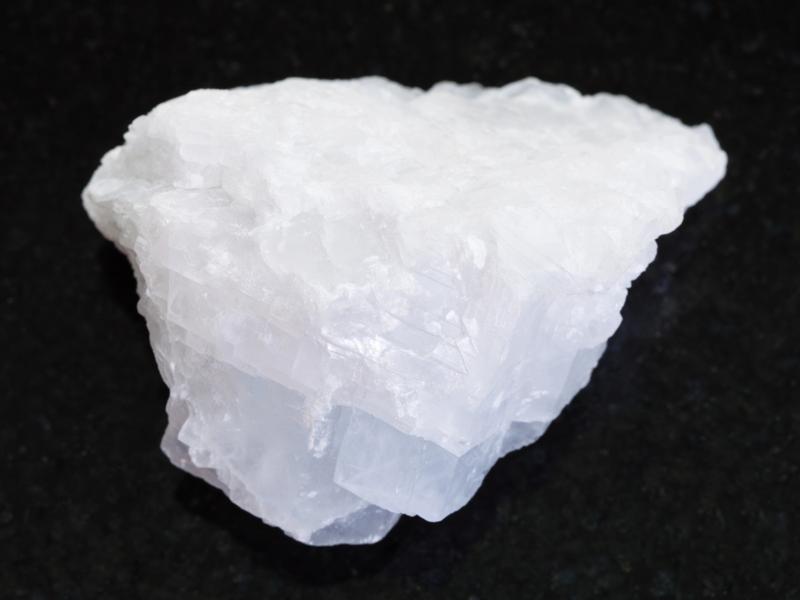
Magnesite crystal
HealingPatience & EnduranceStress Relief
Crystalis

Protocol

The White Room

The White Room Protocol

3 min

  1. 1

    Palm cradle. Sit or lie down. Place the magnesite in the center of your non-dominant palm and loosely close your fingers over it. Do not grip. Let the stone rest in the natural bowl of your hand. Feel its light weight and its warmth -- magnesite is not cold like quartz. It arrives at room temperature and holds it. Notice the softness of its texture against your skin. Breathe normally.

  2. 2

    White field. Close your eyes. Instead of visualizing anything specific, let your inner visual field go white. Not bright white. Not blinding. Just the soft, matte white of the stone in your hand. Imagine standing in a room with no walls, no ceiling, no floor -- just white space extending in every direction. There is nothing to look at. Nothing to analyze. Nothing to fix. Let the white be the only thing your mind is doing.

  3. 3

    Thought release. When a thought arrives -- and it will -- do not fight it. Picture it as a grey line appearing on the white field. Watch it. Then let the white absorb it. The grey line fades back into white. Every thought that comes receives the same treatment: appear, observe, dissolve. You are not suppressing thoughts. You are letting white space be larger than they are.

  4. 4

    Crown contact. If comfortable, move the magnesite from your palm to the top of your head. Rest it there or hold it lightly against the crown point. Feel the subtle weight at the highest point of your body. The crown is where the body meets whatever is above it. Let magnesite sit at that threshold. Breathe for 30 seconds without adjusting anything.

Continue in the full protocol below.

tap to flip for protocol

Peace has to look plain before you will trust it.

Magnesite is white to gray carbonate, often veined, soft-looking without seeming vacant. It absorbs visual drama by refusing to compete with it.

Some systems only settle once the surface stops performing.

What Your Body Knows

Nervous system states

Crystal traditions describe magnesite as deeply calming, meditative, and thought-quieting. In somatic terms, this maps to nervous system states where the mind has overtaken the body -- where thinking has become compulsive rather than functional.

sympathetic

The White Noise Spiral

Your thoughts are not solving a problem. They are circling one. The same worry, the same scenario, the same imagined conversation; replaying on a loop that produces no new information but consumes all available energy. The body is tense but the tension is not in response to anything physical. It is the body holding the shape of a mind that will not rest. Magnesite addresses this state not by offering a competing thought but by introducing silence. Its soft, matte surface provides minimal sensory stimulation. There is nothing for the mind to analyze. Nothing to categorize. The porcelain blankness of the stone becomes a visual and tactile permission to stop processing.

dorsal vagal

The Caretaker's Exhaustion

You have been giving. To children, to parents, to clients, to students, to the person in your life who always needs something. You are not resentful; not yet; but you are empty. The tank is below zero and you cannot remember what fills it. Magnesite is traditionally called the stone of self-listening because it addresses this specific depletion. When the nervous system has been oriented outward for too long, it loses the ability to register its own signals. Magnesite's softness and warmth create a sensory environment that says: nothing is being asked of you right now. The white blankness of the stone is a mirror showing you nothing; and that nothing is the rest you need.

ventral vagal

The Bone-White Insomnia

It is late. You are tired. But your mind will not shut down. Not anxious exactly; just active. Reviewing. Planning. Reorganizing. The body wants sleep but the brain is running its own schedule. Magnesite is a widely prescribed stone for sleep disruption in crystal practice, not because it sedates but because it depressurizes. The crown chakra association is relevant here: magnesite placed at the top of the head or held during pre-sleep practice creates a focal point that is deliberately boring. The mind needs something to do while it winds down. Magnesite gives it nothing. And nothing is exactly what it needs.

Nervous system mapping based on polyvagal theory (Porges, 2011).

Mineralogy

Mineral specs

Chemical Formula

MgCO3

Crystal System

Trigonal

Mohs Hardness

3.5

Specific Gravity

3.00-3.12

Luster

Vitreous to dull

Color

White to grayish-white, sometimes yellowish

ca₁a₂a₃120°Trigonal · Magnesite

Crystal system diagram represents the general trigonal classification. Diagram created by Crystalis for educational reference.

Traditional Knowledge

Traditions across cultures

Ancient Greece

300 BCE onward

The Magnesia Connection

The Magnesia region of Thessaly was famous in antiquity for producing unusual minerals. While the Greeks did not distinguish magnesite from other white earthy minerals with precision, they recognized the magnesium-rich earths of the region as having distinct properties. The name Magnesia would eventually attach to an entire element on the periodic table, to magnetic iron ore, and to this soft carbonate mineral. The etymological root connects magnesite to a place where the earth itself was considered extraordinary.

European Industrial Era

1800s

Refractory Revolution

Magnesite became industrially significant in the 19th century when metallurgists discovered that calcined magnesite (heated to produce magnesia, MgO) created refractory bricks capable of withstanding the extreme temperatures of steel furnaces. Austrian deposits in Styria became critical to European steel production. This industrial history means magnesite has always lived a double life -- a spiritual stone to some, an industrial commodity to others. Both identities are real.

Crystal Practice

20th Century

The Meditation Stone

Magnesite entered Western crystal healing practice primarily as a meditation aid. Its white color, association with the crown chakra, and reputation for quieting mental noise made it a staple in contemplative practice. Unlike more dramatic stones, magnesite never became a bestseller -- its subtlety is its nature. Practitioners who work with it tend to discover it quietly, usually during a period when they most need what it offers: permission to stop thinking.

Brazil

Brumado, Bahia

The world's premier source for gem-quality magnesite crystals. Brumado produces transparent to translucent rhombohedral crystals that can be faceted -- a rarity for this mineral. The deposit formed through hydrothermal activity in Precambrian dolomite. Brumado magnesite is the collector's standard.

Austria

Styria (Veitsch, Breitenau)

Austria's magnesite deposits have been mined for industrial refractory production since the 1880s. The Veitsch deposit is a classic ultramafic-alteration magnesite body, formed by the carbonation of serpentinized peridotite. Austrian magnesite built the European steel industry.

China

Liaoning Province

China is the world's largest producer of magnesite, with the Liaoning deposits containing some of the largest reserves on Earth. Most Chinese magnesite goes to industrial use, but significant quantities of the veined white variety enter the crystal and bead market. China is also the primary source for dyed magnesite beads sold globally.

Australia

South Australia, Queensland

Australian deposits include both cryptocrystalline magnesite in weathered ultramafic terrains and sedimentary lake deposits. These occurrences are studied as natural analogs for carbon sequestration research, making Australian magnesite scientifically significant beyond its mineral value.

When This Stone Finds You

Sacred Match prescribes Magnesite when you report:

Chronic overthinking

Caretaker exhaustion

Sleep disruption

Inability to meditate

Self-neglect patterns

Mental noise that won't stop

Need for deep stillness

Magnesite finds you when the volume of your own mind has become unbearable -- not because the thoughts are terrible, but because they will not stop. This stone does not offer answers. It offers silence. And for the person who has forgotten what silence feels like, that is the most radical offering of all.

Somatic protocol

The White Room

The White Room Protocol

3 min protocol

  1. 1

    Palm cradle. Sit or lie down. Place the magnesite in the center of your non-dominant palm and loosely close your fingers over it. Do not grip. Let the stone rest in the natural bowl of your hand. Feel its light weight and its warmth -- magnesite is not cold like quartz. It arrives at room temperature and holds it. Notice the softness of its texture against your skin. Breathe normally.

    1 min
  2. 2

    White field. Close your eyes. Instead of visualizing anything specific, let your inner visual field go white. Not bright white. Not blinding. Just the soft, matte white of the stone in your hand. Imagine standing in a room with no walls, no ceiling, no floor -- just white space extending in every direction. There is nothing to look at. Nothing to analyze. Nothing to fix. Let the white be the only thing your mind is doing.

    1 min
  3. 3

    Thought release. When a thought arrives -- and it will -- do not fight it. Picture it as a grey line appearing on the white field. Watch it. Then let the white absorb it. The grey line fades back into white. Every thought that comes receives the same treatment: appear, observe, dissolve. You are not suppressing thoughts. You are letting white space be larger than they are.

    1 min
  4. 4

    Crown contact. If comfortable, move the magnesite from your palm to the top of your head. Rest it there or hold it lightly against the crown point. Feel the subtle weight at the highest point of your body. The crown is where the body meets whatever is above it. Let magnesite sit at that threshold. Breathe for 30 seconds without adjusting anything.

    1 min
  5. 5

    Three-word return. Remove the stone. Open your eyes. Before you move or speak, find three words that describe how you feel right now. Not how you felt before. Not how you think you should feel. Just three honest words. Say them silently or aloud. Place the magnesite where you can see it. Let those three words be enough.

    1 min

The #1 Question

Can magnesite go in water?

No. Magnesite is a carbonate mineral at Mohs 3.5-4.5 that is soft, porous, and reactive with acids. Prolonged water exposure can erode the surface and weaken the structure. Brief rinses should be followed by immediate drying. Never soak magnesite or use it in gem elixirs.

Mineral Distinction

What sets Magnesite apart

Both are white stones with grey veining, and they are commonly confused. Magnesite (MgCO₃) is a carbonate with a porcelain-like luster that reacts with acid by fizzing. Howlite (calcium borosilicate hydroxide) has a chalkier texture and does not react with acid.

The acid test is the definitive distinction. Both are frequently dyed blue and sold as turquoise.

Care and Maintenance

How to care for Magnesite

The #1 Question Can Magnesite Go in Water? No . Not Water Safe Magnesite and Water: The Carbonate Problem Magnesite is a soft carbonate mineral that is both physically fragile and chemically reactive in water.

Mohs 3. 5-4. 5: Softer than a steel nail.

Water erosion will gradually degrade polished surfaces. Porous structure: Cryptocrystalline magnesite absorbs water, which can cause internal cracking as it dries unevenly. Acid reactivity: Magnesite dissolves in warm hydrochloric acid and reacts slowly with mildly acidic water.

Even slightly acidic tap water can etch the surface over time. Salt water: Never. Salt crystallization within pores will cause fracturing.

Gem elixirs: Never. Dissolved magnesium carbonate changes water chemistry in ways that are not intended for consumption. For any necessary cleaning, use a barely damp soft cloth and dry immediately.

Prefer dry cleansing methods exclusively.

Crystal companions

What pairs well with Magnesite

Magnesite pairs best with stones that complement its stillness -- either deepening the quiet or adding a grounding or emotional dimension that magnesite alone does not provide.

Amethyst

Deep meditation combination. Amethyst opens the third eye while magnesite quiets the crown. Together they create a corridor of stillness from thought to intuition. This pairing is prescribed for anyone who wants to meditate but finds their mind too loud to begin.

Hematite

Grounded silence. Magnesite opens the upper registers; hematite anchors the lower. Without grounding, magnesite's spaciousness can feel unmoored. Hematite in the hand, magnesite at the crown -- you get silence that has weight.

Rose Quartz

Self-compassion reset. For the caretaker who has given everything away, rose quartz reopens the heart while magnesite quiets the mind that keeps planning the next act of service. Together: stop giving. Start receiving.

Lepidolite

Anxiety dissolution. Lepidolite contains natural lithium and addresses chemical anxiety. Magnesite addresses cognitive anxiety. Together they work both the neurochemical and the thought-pattern dimensions of anxious states.

Blue Lace Agate

Peaceful communication. When you need to speak from a place of calm rather than reaction. Blue lace agate opens the throat; magnesite clears the mental noise that makes communication reactive. Think before you speak -- literally.

In Practice

How Magnesite is used

Crystal traditions describe magnesite as deeply calming, meditative, and thought-quieting. In somatic terms, this maps to nervous system states where the mind has overtaken the body. where thinking has become compulsive rather than functional.

The Overthinking Loop (nervous system pattern: SYMPATHETIC. cognitive hyperactivation, mind running without a destination) Your thoughts are not solving a problem. They are circling one. The same worry, the same scenario, the same imagined conversation. replaying on a loop that produces no new information but consumes all available energy. The body is tense but the tension is not in response to anything physical. It is the body holding the shape of a mind that will not rest. Magnesite addresses this state not by offering a competing thought but by introducing silence. Its soft, matte surface provides minimal sensory stimulation. There is nothing for the mind to analyze. Nothing to categorize. The porcelain blankness of the stone becomes a visual and tactile permission to stop processing.

The Caretaker's Exhaustion (nervous system pattern: MIXED. depleted from attending to everyone else, unable to access self-care) You have been giving. To children, to parents, to clients, to students, to the person in your life who always needs something. You are not resentful. not yet. but you are empty. The tank is below zero and you cannot remember what fills it. Magnesite is traditionally called the stone of self-listening because it addresses this specific depletion. When the nervous system has been oriented outward for too long, it loses the ability to register its own signals. Magnesite's softness and warmth create a sensory environment that says: nothing is being asked of you right now. The white blankness of the stone is a mirror showing you nothing. and that nothing is the rest you need.

The Midnight Mind (nervous system pattern: SYMPATHETIC. insomnia-type activation, wired but unable to act) It is late. You are tired. But your mind will not shut down. Not anxious exactly. just active. Reviewing. Planning. Reorganizing. The body wants sleep but the brain is running its own schedule. Magnesite is one of the most commonly prescribed stones for sleep disruption in crystal practice, not because it sedates but because it depressurizes. The crown chakra association is relevant here: magnesite placed at the top of the head or held during pre-sleep practice creates a focal point that is deliberately boring.

Verification

Authenticity

Magnesite is commonly dyed and frequently confused with howlite. It is also sold dyed blue as fake turquoise. Use these checks to verify what you have.

Acid test (definitive for magnesite vs. howlite). Place a drop of warm hydrochloric acid or strong vinegar on an inconspicuous spot.

Magnesite will fizz (it is a carbonate). Howlite will not react. This is the single most reliable distinction between the two white-veined stones.

Hardness test. Magnesite is Mohs 3. 5-4.

5. It can be scratched with a steel nail or copper coin. Howlite is slightly harder at 3.

5 but more brittle. If the stone resists scratching from steel, it may be neither. Dye check.

Rub the stone firmly with a cotton swab dipped in acetone (nail polish remover). If color transfers to the swab, the stone has been dyed.

Temperature

Natural Magnesite should usually feel cooler than plastic or resin on first touch and warm more slowly in the hand.

Scratch logic

Use 3.5 on the Mohs scale as the check, not internet myths. A real specimen should behave in line with the hardness listed above.

Surface and luster

Look for a vitreous to dull surface quality rather than a painted or plastic shine.

Weight and density

The listed specific gravity is 3.00-3.12. If a specimen feels unusually light for its size, it may deserve a second look.

Magnesite benefits

What people ask most often

What does magnesite do spiritually?

In crystal practice, magnesite is valued for quieting mental chatter and deepening meditation. Its primary effect is slowing the mind rather than energizing it. Practitioners use it for visualization, dream recall, and accessing states of profound stillness.

Geographic Origins

Where Magnesite forms in the world

Most magnesite forms through the carbonation of ultramafic rocks . serpentinite, dunite, and peridotite . rocks rich in magnesium-bearing minerals like olivine and pyroxene.

When carbon dioxide-rich groundwater percolates through these rocks, it reacts with the magnesium silicates, dissolving the magnesium and reprecipitating it as magnesium carbonate. This process, called carbonation or listwaenitization, can replace entire rock bodies with magnesite over geological time. The massive white magnesite deposits of Greece, Turkey, and Austria formed this way.

The finest crystal specimens of magnesite form from hydrothermal fluids in cavities within magnesium-rich host rocks. At Brumado in Bahia, Brazil, magnesium-rich solutions deposited transparent, gem-quality rhombohedral crystals in dolomite and magnesite veins. These crystals can be perfectly clear and facetable .

a form most people never associate with the chalky white magnesite they see in shops. The hydrothermal pathway produces the collector specimens that command museum-level prices. In arid lake environments with high magnesium content, magnesite precipitates directly from evaporating water.

As the lake shrinks, magnesium concentrations increase until magnesite crystallizes on the lakebed. These deposits form horizontal beds of cryptocrystalline magnesite . the bone-white, porcelain-textured material most commonly found in the crystal market.

The grey veining that gives magnesite its characteristic web-like pattern comes from later infiltration of iron-rich or silica-rich fluids along cracks in the deposit. Mineralogical data: Klein, C. & Dutrow, B.

(2007). Manual of Mineral Science . Wiley.

| Pohl, W. (1990). Genesis of magnesite deposits.

Mineralogy and Petrology , 42, 83-105.

FAQ

Frequently asked

Can magnesite go in water?

No. Magnesite is a carbonate mineral at Mohs 3.5-4.5 that is soft, porous, and reactive with acids. Prolonged water exposure can erode the surface and weaken the structure. Brief rinses should be followed by immediate drying. Never soak magnesite or use it in gem elixirs.

What is the difference between magnesite and howlite?

Both appear as white stones with grey veining. Magnesite is magnesium carbonate with a porcelain-like luster and reacts with warm hydrochloric acid. Howlite is a calcium borosilicate hydroxide with a chalkier texture. Both are commonly dyed to imitate turquoise.

What chakra is magnesite?

Magnesite is primarily associated with the crown chakra, connecting it to stillness, meditation, and higher awareness. Some practitioners also work with it at the third eye for visualization and dream recall.

Is magnesite a real crystal?

Yes. Magnesite is a naturally occurring magnesium carbonate mineral (MgCO3) that crystallizes in the trigonal system. It forms in ultramafic rocks through the alteration of magnesium-rich minerals by carbonated waters.

What does magnesite do spiritually?

In crystal practice, magnesite is valued for quieting mental chatter and deepening meditation. Its primary effect is slowing the mind rather than energizing it. Practitioners use it for visualization, dream recall, and accessing states of profound stillness.

How do you cleanse magnesite?

Avoid water due to softness and porosity. Use smoke cleansing, sound, selenite plate placement, or moonlight charging. These dry methods are safe for magnesite's delicate structure.

Is magnesite expensive?

Magnesite is generally affordable. Common white specimens are inexpensive and widely available. Gem-quality transparent crystals from Brumado, Brazil are rarer and command higher prices.

Can magnesite be dyed?

Yes. Magnesite's porosity makes it easy to dye. It is frequently colored turquoise blue to imitate more expensive stones, making dyed magnesite one of the crystal market's most widespread substitutions.

References

Sources and citations

  1. Pohl, W. (1990). Genesis of magnesite deposits -- models and tendencies. Mineralogy and Petrology. [SCI]

    DOI: 10.1007/BF01162685

  2. Kelemen, P.B. & Matter, J. (2008). In situ carbonation of peridotite for CO₂ storage. Proceedings of the National Academy of Sciences. [SCI]

    DOI: 10.1073/pnas.0805794105

  3. Kabat-Zinn, J. (2003). Mindfulness-Based Interventions in Context: Past, Present, and Future. Clinical Psychology: Science and Practice. [SCI]

    DOI: 10.1093/clipsy.bpg016

  4. Schulze, D.J. (2003). Carbonate-bearing minerals. In EMU Notes in Mineralogy. [SCI]

    DOI: 10.1180/EMU-notes.5.9

  5. Black, D.S. et al. (2015). Mindfulness Meditation and Improvement in Sleep Quality and Daytime Impairment Among Older Adults. JAMA Internal Medicine. [SCI]

    DOI: 10.1001/jamainternmed.2014.8081

  6. Boschi, C. et al. (2009). Enhanced CO₂ mineral trapping by carbonation of peridotite. Chemical Geology. [SCI]

    DOI: 10.1016/j.chemgeo.2008.09.024

  7. Zeidan, F. et al. (2010). Mindfulness meditation improves cognition: evidence of brief mental training. Consciousness and Cognition. [SCI]

    DOI: 10.1016/j.concog.2010.03.014

  8. Falini, G. et al. (2009). Formation and characterization of magnesite. Crystal Growth & Design. [SCI]

    DOI: 10.1021/cg800833w

Closing Notes

Magnesite

Magnesium carbonate, trigonal, Mohs 3. 5. Magnesite forms when magnesium-rich rocks weather in the presence of carbon dioxide.

It is one of the primary carbon sinks in geological sequestration. The stone absorbs CO2 from the atmosphere and locks it into mineral form. A quiet, white, unremarkable stone doing the work of climate regulation at geological timescales.

Bring it into practice

What to do with Magnesite next

Move from reference to ritual. Search current inventory for Magnesite, build a custom bracelet, or let Sacred Match choose the right supporting stones for you.

Community notes

Threads under Magnesite

Open all chats

Shared field notes tied to Magnesite appear here, including notes saved from practice.

No shared notes under Magnesite yet.

When members save a public field note for this stone, it will appear here.

The archive

Related crystals

Read the Full Crystal Guide

Continue through stones that share intention, chakra focus, or tonal family with Magnesite.